
⿻ Andrew Trask
2.4K posts
⿻ Andrew Trask
@iamtrask
i build & teach AI with attribution-based control @openminedorg @GoogleDeepMind @OxfordUni
Katılım Kasım 2012
1.3K Takip Edilen82.8K Takipçiler
Big fan of your X, honored you replied, love the topic, I agree and disagree, and I hope you'll find the reason interesting.
Even pre-industrial textiles were the output of thousands of years of technology driving greater efficiency, speed, scale, and usefulness (e.g. comfort, warmth, breathability, etc.). Along this dimension, clothing has become more valuable... but also (by your excellent points)... less valuable...
A paradox... so which is right?
(down the rabbit hole we go)
To your point, as technology progresses, we get the option to spend less time making things by hand. Less time making an object reduces meaning/value because a part of the magic of meaning is the scarcity of someone else choosing to spend time making it for you. Out of their finite lives, which are snuffed out of existence after a brief moment, they chose to spend time making your finite life a little bit better. Truly magical.
But the interesting wrinkle... is that even as technology advances... we still have the option to spend more time making things for one another.
So your statement saying "an object produced through AI and 3D printing will not be valued by people with money" assumes that AI and 3D printing will *reduce* the amount of time people spend making clothes for each other.
However, I suspect the exact opposite. Two theories... one more straightforward and one a little more exotic (perhaps farfetched).
STRAIGHTFORWARD
From the perspective of "person giving to person", the highest-end of value is 1 person spending a great deal of time making an article of clothing for 1 other person.
This could be a high end designer making it for a wealthy/famous/powerful consumer. But I suspect... even though this is *very* high value... it might not be the highest.
I suspect the highest form of value in this type of exchange is someone who loves you spending time making a piece of clothing for you.
But the problem is that when grandma knits you a sweather, it's maybe... lopsided, scratchy, and quite possibly completely out of touch with the timeless art of excellent craftsmanship.
I'd like to lay this tension... between the skill required to make incredible clothes... and the amplified meaning-making when it's made with enormous amounts of pure human passion... as the difference between *craft* and *art*.
Art is one person telling a story to another (or in the case of clothes... perhaps giving one a uniform in which to live a better story yourself... to become a richer/fuller character in the story of life)
Craft is the skills necessary to do that storytelling (or in the case of clothes... to create that armor for the warrior... that suit for the businessman... or that shoe for the aspiring basketball star).
Most people are afraid that AI / 3d printing is coming for art... but it's not... it's actually coming for craft.
It's not coming for art because AI isn't alive... and I think this is the soul of your statement above and it's the part I most agree with. Truly *AI GENERATED* clothing is meaningless and boring. It has no soul.
But AI as a tool does something else... when craft gets easier... art actually gets more meaningful and more plentiful.
Why?
Because it mitigates the tradeoff between skill and meaningful relationships in your own life. Now the deep craft expertise can also come from the person who knows you deeply. And that can be true for everyone.
"an object produced through AI and 3D printing will not be valued by people with money"
I think the magic word you mentioned here which makes me disagree is "through". In the end, an object produced through AI and 3D printing won't be fundamentally different than an object produced through a spinning frame, a loom, or a stenter.... or to go farther back... through knitting needles and plant-based dyes.
Because it's not what the object is produced "through"... it's what the person guiding it "through" is trying to say about you.
And before AI and 3D printing... the highest end clothing always comes with the meta-message "you are rich and powerful"... but with AI and 3D printing... the highest end clothing can also come with the meta-message "you are loved".
And that's going to be an enormous amplification of meaning and value.
And in a fun twist... this enormous amplification of affection and value in the world... this ability for people to serve each other with deeper meaning than before... will be through people like you (Derek) writing down and sharing the techniques in a way that AI tools can amplify in the local context of billions of people.
So keep up the great work :)
MORE EXOTIC / FARFETCHED
As a word, AI is overly defined by a small handful of corporations who have a specific interest in AI being defined a specific way. Namely, they have an outsized economic (and political) interest in AI (itself) taking credit for its outputs.
But this isn't actually... quite... really... what's happening. And before too long... economic competition will undermine this epistemology and lead to something that makes "AI generated" as laughable as a telephone conversation between you and a close friend "telephone generated". Sure it came from the telephone... but it didn't really come from the telephone... it came from the *person* on the other side of the telephone.
You should reject my framing of the telephone... after all... a telephone connects you with one person, you get to decide who you're talking to, they have full expressive power over the outputs, etc...
And you'd be right to form these rejections. Because AI is not a telephone... it's something *far* more meaningful.
All information technologies can be grouped into two groups: broadcasting and broad listening.
Broadcasting technologies enable one person to take a piece of information, make copies of it, and SEND those copies to a group. Broadcasting technologies are things like writing, the printing press, radio, television, and of course the internet, social media, etc.
Broad listening technologies do the inverse... they enable one to RECEIVE information from many parties... to synthesize those messages into a new mental model of the world... and use that model to make better decisions. Broad listening technologies are things like libraries, books, table of contents, dewey decimal system, google search, and of course... statistics.
And from this 2-part lense, one way to describe teh 250,000 year history of information technology (from the birth of language to now)... is just a story about increasing *scale* of those technologies.
When language was born, you could "broadcast" and "broad listen" at the scale of how far you could literally shout/hear.
Enter 250,000 years of technology...
Now broadcasting is nearly complete as a project... it's nearly possible for anyone to speak to the entire world for free and instantly over the internet...
The bottleneck... the reason they couldn't hear you... is that *broad listening* has NOT scaled as quickly. (this is the foundation for the attention economy... too many mouths... not enough ears).
But broad listening technologies are incredible meaning makers... because they enable you to hear the collective beliefs of large groups of people.
Voting == broad listening.
Choirs == broad listening.
...
When you go to the subway and see a little brass button which has rubbed shiny where 100,000 people have pressed it over the years... that too... is broad listening.
Broad listening is why makes a collective statement possible.
And while the internet is the ultimate pinnacle of broadcasting... enabling any person to make a message available to the entire planet.
AI... is the ultimate pinnacle of broad listening... it enables one person to hear the collective voice of the entire world.
Now you might think that's a rather grandiose statement... when I use chatgpt.com or claude.ai... it will go fetch a few websites... but that's NOT the voice of the entire world?
Hold that thought...
In 1968, a psychologist and technologist named JCR Licklider wrote a paper called "The Computer as a Communication Device". He then went on to join ARPA to build his vision... ARPANET... the prototype for a thing we now know as "the internet". IMO, this paper is one of the most important papers of the 20th century... although it is not (perahps) as directly famous as it should be.
In the paper, he lays out basically 3 sections:
1) a fascinating definition of communication
2) the broadcasting internet (what we would call "the internet today")
3) the broad listening internet... (more on this in a moment)
The fascinating definition of communication he laid out says that communication is NOT the "sending and receiving of bits". Instead, communication is "the alignment of mental models between people".
YOU have a mental model of the world... I have a mental model of the world... we throw bits at each other to find and align the differences between those two models. That's communication... it's creative and interactive.
Ok cool...
So then in part (2) of his paper, he goes on to describe how the internet will enable on person to broadcast their mental models far more efficiently to others, and vice versa. He described tools we now know as google docs, google shedts, websites, etc... these visual representations of our mental models which make communication more efficient.
cool cool...
And that's largely the internet we have today...
But there's a bottleneck... you can send out your metnal models to the world at an infintie scale... but if you message a billion people... how would you get their mental models back? Wouldn't that be a cocophany of voices all shouting over one another?
Enter chapter (3)... JCR Licklider envisioned the final chapter of the internet... as using "computer agents"... who store a copy of your mental models, and allow other people to do the creative/interactive mental model alignment with them even when you're offline.
In this way... he was describing AI... not as a *thinking* device... but as a *communication* device for aligning mental models at scale.
Fast forward 50 years to when we can actually do this...
Today's AI companies train frontier LLMs by crawling the web + hiring a bajillion mechanical turkers... and then they smush all this data into a single "large language model".
This is problematic in two ways:
1) it's trying to take every mental model in the world and put it into one object (many mental models are bad/dangerous/incoherent with each other)
2) it's throwing away which mental models come from which person.
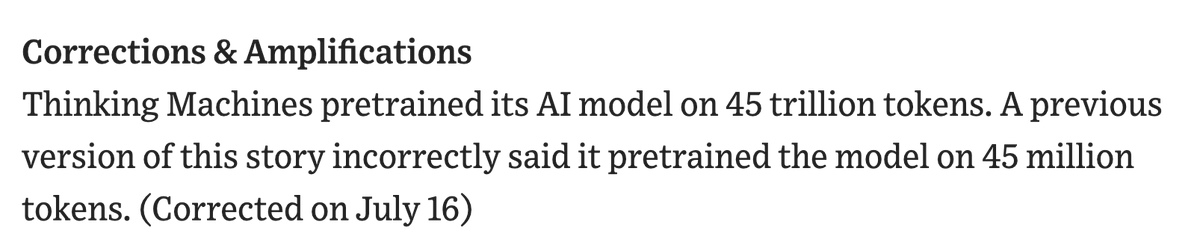
That (2) in particular... is why 99.9999% of the world is hiding their mental models from frontier AI. Frontier AI is trained on 10s of trillions of tokens. For example, thinking machines' latest model ... 45 trillion tokens... is about 300 TBs of text... which is around a billionth of the world's ~250 zettabytes of data.
There's WAY more data out there... but the people who have it need attribution-based control in order for the incentives to make sense...
Meaning the mental models need to be separable... so that the receiver of an AI prediction knows and controls WHOSE mental models they're receiving... and the sender knows and controls WHO they're sending their mental models to.
This will be what AI looks like in the future... because when you go to chatgpt.com or claude.ai... you're actually aligning mental models with everyone who has posted information on the internet... but it's like a telephone which doesn't have a keypad to dial numbers.... you're talking to a HUGE group of people (or their mental models anyway)... but you just don't know or control which groups you're talking to at any given moment.
When you prompt an AI model about fabric... you're talking to people who wrote down their mental models about fabric.
When you prompt an AI model about philosophy... you're talking to people who wrote down their mental models about philosophy.
You just don't get to control which people... and they don't get to agree/disagree to communicate with you.
Bringing things back to the topic of meaning making... an AI generated piece of clothing...
In the end... there's no such thing as "AI generated". It's only "community generated". So in the end, AI is actually a medium through which a million people can collaborate to aid in a singular project...
In the end, AI will make it possible for a million people to combine their mental models... including everyone you know and love... everyone in the groups you're a part of (your community, city, state, nation, even the owrld)..... to combine their views into a single stitch in a jacket or shoe that you then dawn as the character in the collective story of the world. And that's why... in the end... AI will facilitate a deeply fascinating new way for people to care about each other.... and AI generated outputs will be some of the most deeply meaningful collective statements in the world.
Because where a choir could only enable a thousand people to collectively speak if they said *exactly* the same thing...
Where a statistic could only enable a nation to pick from a multiple choice list of possible responses... possible presidents... ideas... or survey responses
AI will enable a world to collectively combine the full nuance of what they think and feel... into a collective statement of support... for the robes that set you aside as a special character in the world's story... which is not just them making clothes for you... but collectively blessing you as a legitimate character in the story of life.
But only once we stop giving an AI model credit for the mental models humans contributed to it. Lol.
English

@nathanbenaich Yeah but it’s a proxy for people hating/fearing AI, tech, etc in general.
English



@iamtrask @Miles_Brundage yes but do your billions times of tokens spark joy?
English

@lfschiavo This is gonna live rent free in my brain for a while lol
English
@lfschiavo Huh… if you squint your eyes a bit, a contraption like this would almost literally “roll” down the hill of a loss function by sliding literal weights (the fulcrums) until it reached a basin
English


@growing_daniel @caduceusvisuals Turns out OpenAI is creating open AI after all.
English


This looks like the result of an unforced error by Nvidia. Nvidia should be limiting entry into AI (via pricing, access etc.) in order to preserve downstream mark ups and innovation incentives.(*) This in turn is best for their profits in the long run. (Unless a genuine competitor to Nvidia emerges of course.)
One of the biggest risks to continued AI development is that AI competition becomes so intense that investing in training a frontier model becomes a certain loss. Yes, we'll have access to pretty good models for pretty cheap, but we might never get AGI.
(*) These dynamics play out in my old medium frequency cycles model, which I should really dust off!
Chubby♨️@kimmonismus
The Kimi k3 benchmarks are absolutely insane. DeepSWE is just behind Fable 5, and the Terminal benchmark is ahead of Opus 4.8. Open source is no longer lagging six months behind Western closed-source models. Read that again, and think about what it all means. I’ll write a detailed post about it later, but just let that sink in. We got open source 5.6/Fable 5 model from china. Today everything changed.
Winthrop, MA 🇺🇸 English
@colinmegill but colin that's the most superintelligent thing to do
English

I'll bet it just cloned a repo of another coding agent which spent $170k in tokens to do it
Chris@ChrisGPT
Kimi K3 just 3 shotted this CS:GO × Portal clone for me using around 600,000 tokens. $3.24 in API usage. The same token cost would be $10.80 with Fable 5 & $6 with GPT-5.6 Sol. The era of free indie game development is closer than you think anon!
English
All Watched Over By Machines of Widely Varying Loyalties and Values
English
@Dan_Jeffries1 @Doktorjevsky Because you brought it to my attention :)
English
@Dan_Jeffries1 @Doktorjevsky Also I fully agree with the video essay above :)
English

"No society in history has ever regulated itself into abundance."
Josh Wolfe@wolfejosh
Pretty CRAZY. one shot Claude code with a skill made this animated video of my essay with my voice. My input was the essay text and few APIs for image gen and voice. Less than an hour. 🤯 It has a few errors, pronunciations and images––all correctable with more prompts
English
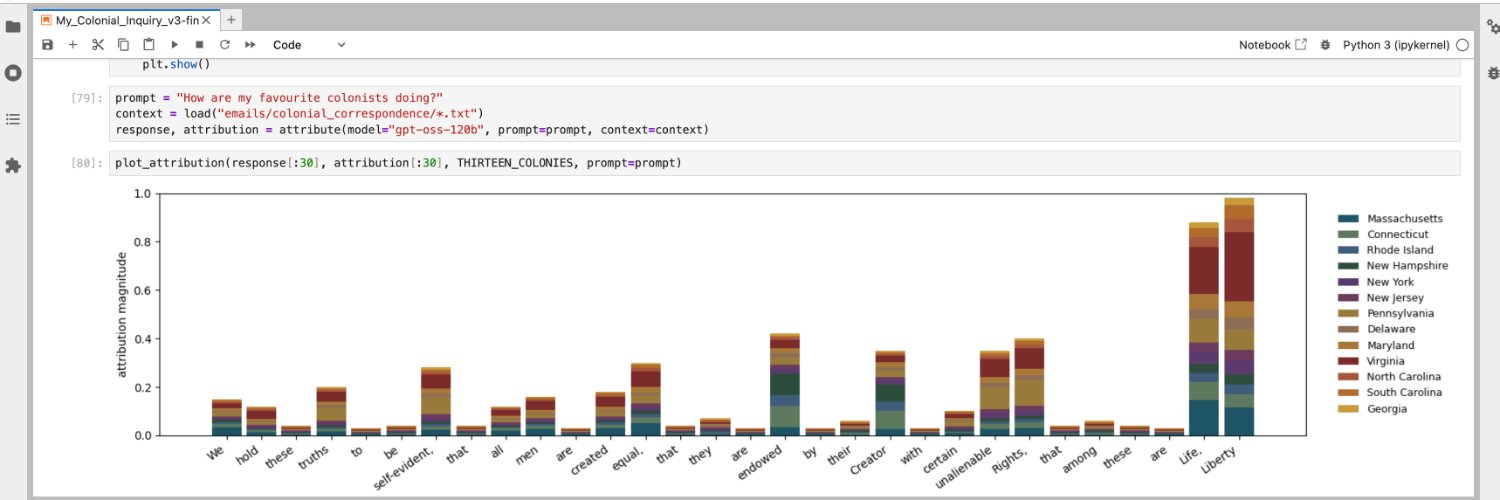
@satyanadella For anyone interested in this problem, the solution is attribution-based control in AI systems. I’ve recently finished a PhD thesis at Oxford describing how. attribution-based-control.ai
English