Ashok Karanth

2.7K posts

Ashok Karanth banner
Ashok Karanth

Ashok Karanth

@akaranth

Sports fan and marketer, in that order.

India Katılım Aralık 2008
899 Takip Edilen448 Takipçiler
Ashok Karanth retweetledi
Vasant Shetty | Building Mundhe Banni
The last 6 months have been one of the most fascinating and intense learning phases of my life. From an idea at concept stage in April and May to launching by August, and building one of Karnataka’s most interesting IPs in the form of the @mundhebanni podcast, the journey has been deeply fulfilling. Every founder we have spoken to has genuinely enjoyed the conversation. Many of them told us there was a latent need for something like this, and that we were filling that gap. That feedback has meant a lot. But the podcast was never the end goal. It was not about launching a high production value show with great conversations. That was only the visible layer. The real intent was to create a funnel into something much deeper, a community. A community where entrepreneurs, small or big, from anywhere in Karnataka, from Bengaluru to Karwar, from Hubballi to Kolar, feel safe. A space where no one judges them. A space where they can join, learn through webinars, newsletters, meetups and podcasts, and when they need help, simply drop a message on the WhatsApp group and receive support from people who genuinely care. At the heart of this effort was one belief. If we can remove language barriers and build confidence, more people will pursue entrepreneurship with courage. I am happy to say that alongside the podcast, the community has gained strong traction. We now have close to 2,500 entrepreneurs, students, professionals and aspiring founders who are part of this journey. That community is our biggest strength. We have also reached 2500 unique individuals through our webinars, 400+ entrepreneurs via our physical meetups in this journey. If we are able to host quality webinars, publish thoughtful newsletters, conduct meetups in places like Hubballi, or bring rare and inspiring founders onto the podcast, it is because the community stands behind us. This year, we want to double down. Double down on content production. Increase podcast reach. Produce more district level conversations. Create more value for the community through regular meetups, webinars, workshops, explainer videos and short form content across platforms. Everything we do must create tangible value for the entrepreneurs who are part of Mundhe Banni. That is the single goal driving us. We are also planning state level conclaves later this year and building an online forum where entrepreneurs can network, seek help, offer help and truly grow together. As we step into 2026, we are excited about what lies ahead. If you would like to join this journey, whether by supporting, sponsoring or collaborating in any way, please reach out. When a community comes together with shared intent, there is no greater force multiplier than that. If this mission resonates with you, here is the link to support us: mundhebanni.org/en/patron @Shishir_S_U @akaranth
Vasant Shetty | Building Mundhe Banni tweet media
English
2
37
170
5.8K
Ashok Karanth
Ashok Karanth@akaranth·
@gssudharsan Oh wow, did I really write that, or is it AI? 😅 Yeah, it's a question of when, not if, and should probably be multi-millionaire, come to think of it. No pressure!
English
1
0
2
17
Sudharsan GS
Sudharsan GS@gssudharsan·
I read this note daily for motivation. Will frame it and keep on my table soon @akaranth
Sudharsan GS tweet media
English
1
0
1
81
Ashok Karanth retweetledi
Vasant Shetty | Building Mundhe Banni
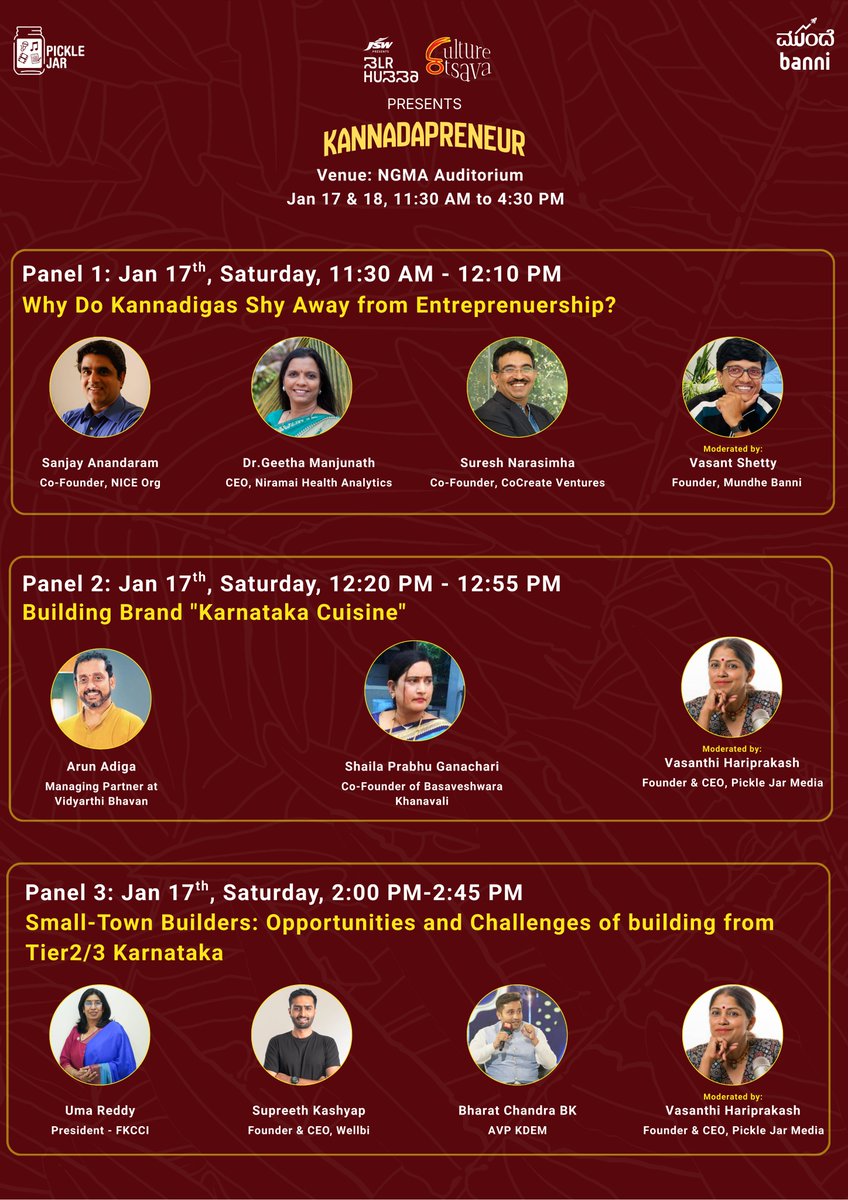
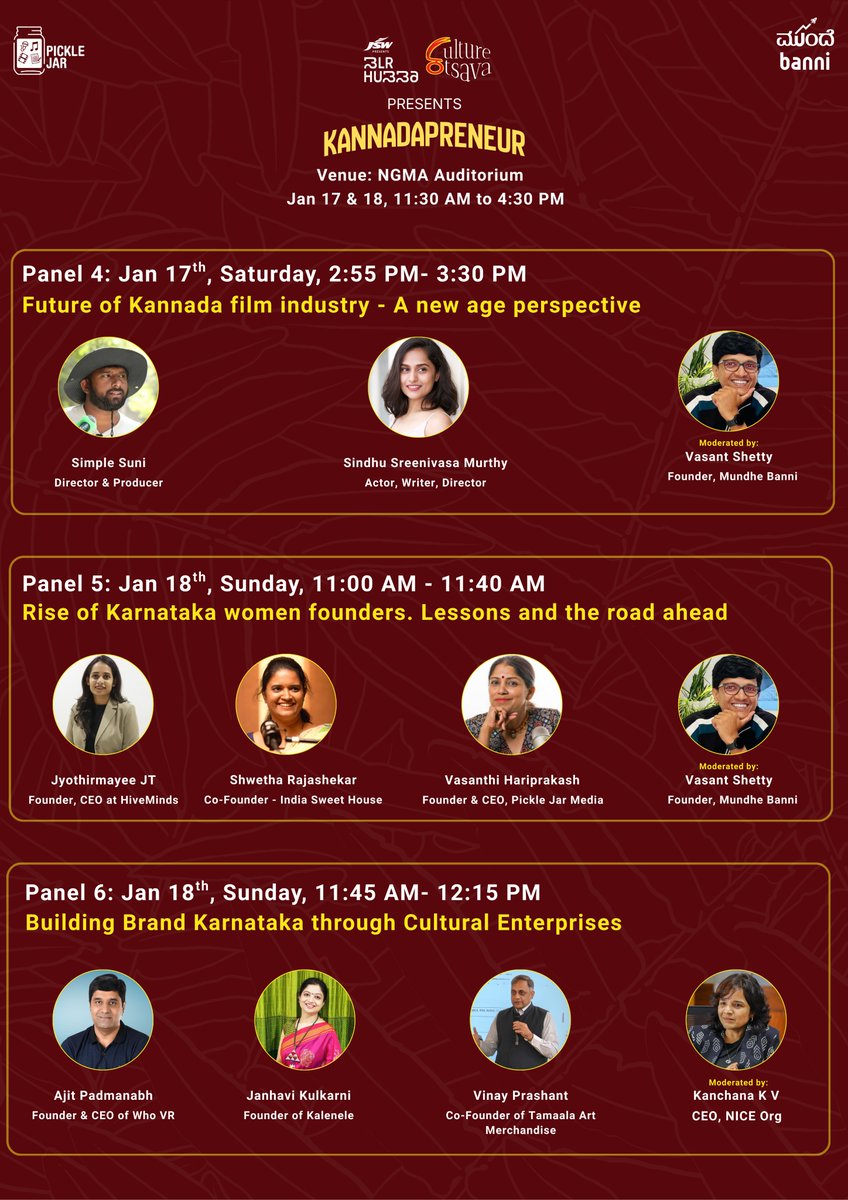
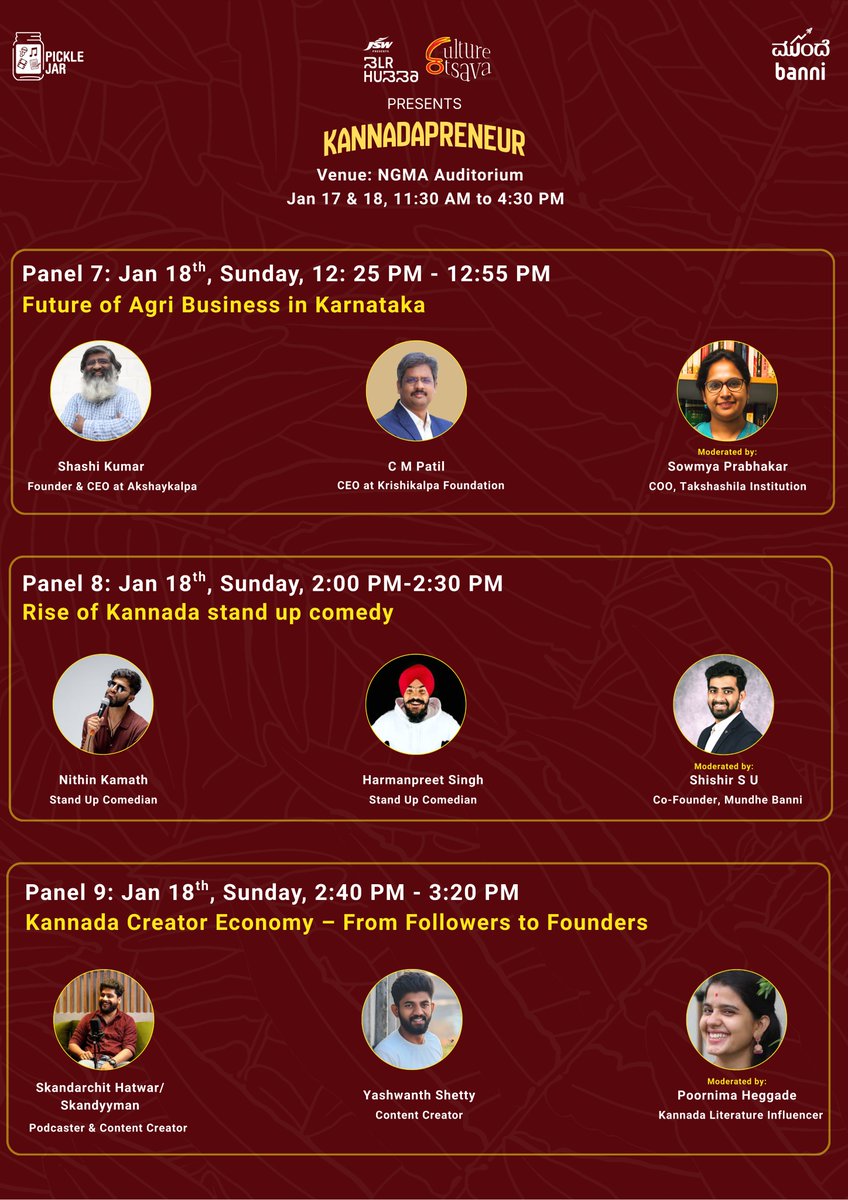
@BengaluruHabba is happening on 17th and 18th January, and this year it feels extra special. For the first time, there is a dedicated Kannada track called Culture-Otsava(ಕಲ್ಚರೋತ್ಸವ), curated by Pickle Jar Media, with @mundhebanni coming on board as the knowledge partner for one of the tracks. This came out of a conversation with @sowmyanandan from Takshashila Institution, who shared that they were building multiple thematic tracks for Bengaluru Habba. When the themes were laid out, Aata, Oota and Paata, celebrating Karnataka’s traditional games, cuisine, and history, it felt natural to ask one more question. If we are celebrating Karnataka, why not also celebrate the entrepreneurial spirit of Karnataka. That question led to the birth of the Data track within Culture-Otsava, focused entirely on entrepreneurship, creators, and new ideas emerging from Karnataka. Over two days, at the beautiful green campus of NGMA on Palace Road, you can explore traditional Karnataka games, taste diverse Karnataka cuisines, dive into our history and culture, and also engage with ideas shaping our future. On the Data track alone, we are hosting 9 panel discussions. 4 on Saturday and 5 on Sunday. The conversations span women founders, building and branding Karnataka cuisine, entrepreneurship in tier 2 and tier 3 towns, why Kannada speakers shy away from entrepreneurship, the Kannada creator and comedy economy, agribusiness in Karnataka, and more. A diverse, thoughtful set of guests. Honest conversations. Real stories from Karnataka. Grateful to @vasanthihari from Pickle Jar Media and Bengaluru Habba for trusting Mundhe Banni with this collaboration. Join us on 17th and 18th January. Come celebrate the culture, creativity, and entrepreneurial spirit of Karnataka. Register here: 👇 blrhubba.in/events/culture… @skandyyman @Nithin_m_kamath @thiruka @jyothirmayee @SimpleSuni
Vasant Shetty | Building Mundhe Banni tweet mediaVasant Shetty | Building Mundhe Banni tweet mediaVasant Shetty | Building Mundhe Banni tweet media
English
5
23
124
5.9K
Ashok Karanth
Ashok Karanth@akaranth·
‘If not you, then who’ summarizes my chat with @vasantshetty81. What has followed ever since by @Shishir_S_U and Vasant is crazy. The feeling of fulfillment can’t be replicated. Inspiring to see the hunger that exists for the work @mundhebanni . Miles to go but what a start.
Vasant Shetty | Building Mundhe Banni@vasantshetty81

When I look back at 2025, it feels less like a single year and more like the culmination of a long, layered journey that began much earlier. For nearly two decades, my life has been deeply intertwined with Kannada and its evolving cultural ecosystem. Long before startups or platforms entered the picture, I was writing, curating, and engaging with ideas around society, education, technology, and economics in Kannada. With a few friends, I ran a bookstore for several years, hosted countless conversations on culture, history, science and tech, and watched how language could become a bridge between curiosity and confidence. Those early years shaped my belief that language is not just a medium of expression, but a foundation for identity, co-operation, aspiration, and agency. That belief eventually found a larger form through MyLang. What began as an attempt to bring Kannada literature into the digital age slowly grew into a full fledged publishing and technology effort. We built infrastructure for ebooks and audiobooks, onboarded thousands of titles, and worked with hundreds of publishers and creators. Over time, we expanded into other Indian languages via a creator product and tried to imagine what a truly inclusive digital content platform around stories in Indian languages could look like. It was intense, demanding, and deeply fulfilling work. But it also taught me some hard truths. Building consumer digital businesses in Indian languages is incredibly difficult. The ecosystem is fragmented. Monetisation takes time. User habits change slowly. Capital requirements are high, and patience is tested constantly. Despite the passion, despite the progress, and despite genuine traction, sustainability remained elusive. Eventually, the paths of my co-founder and I began to diverge. What I hoped to build and what the venture could realistically become no longer aligned. Walking away was not easy. It meant letting go of years of effort and a big part of my identity. By the time 2025 began, I was tired, burnt out, uncertain, and searching for direction. I spent months trying to understand where the world was heading, especially with the rapid acceleration of AI. I explored new possibilities, spoke to founders, and even came close to taking up a leadership role at a growing Ed-Tech startup. Yet something felt incomplete. Deep down, I knew that my work had always been about more than building a company. It was about building context, confidence, and community. That clarity truly began to take shape when I connected with @akaranth. When I shared the idea of @mundhebanni and spoke about building a community driven platform to make entrepreneurship more accessible, especially for talent from tier two and tier three regions, his response was immediate. “If not now, then when. If not you, then who.” I have never been someone who naturally places myself at the centre of things, but Ashok’s conviction made me pause and reflect. His belief in the idea and in me pushed me to take a leap I might otherwise have hesitated to take. Around the same time, @Shishir_S_U came on board, bringing with him raw Gen Z energy, deep commitment, and a shared sense of purpose. With the three of us coming together, the vision began to take real shape. That was the moment when Mundhe Banni truly started becoming more than just an idea. The idea was straightforward but deeply rooted. If we want to change outcomes in Karnataka, we need to work on the cultural layer. We need to normalise ambition, make entrepreneurship feel accessible, and tell stories that people can relate to in their own language. Mundhe Banni was never meant to be just a media platform. It was meant to be a movement built on storytelling, community, and shared learning. What followed over the next few months exceeded anything we had imagined. We produced ten podcast episodes, hosted nine webinars, and conducted three in person meetups across Bengaluru and Hubballi. We built a vibrant WhatsApp community of over two thousand entrepreneurs, students, and aspiring founders. Our newsletter grew to a few thousand subscribers. Our Instagram presence reached close to 18k people, with several pieces of content resonating deeply across the ecosystem. None of this happened in isolation. It happened because people showed up. Because Ashok believed when it mattered most. Because Shishir stood shoulder to shoulder through the long hours. And because @kodlady, my co host at Mundhe Banni podcast, brought care, and quiet strength to the journey, always holding space and keeping things moving forward. As I look ahead, I feel a deep sense of gratitude. Not just for the traction or numbers, but for the trust, the friendships, and the shared belief that something meaningful is taking shape. Mundhe Banni is still early in its journey, but the foundation feels strong. 2025 has been a year of reckoning, reflection, and renewal. It reminded me that progress does not always come from speed, but from alignment. And that when purpose meets community, even the most uncertain paths begin to make sense. A heartfelt thank you to @vivekanandahr, @supreetkashyap, @madanpadaki, @Vickypedia_007, @RaghuVineStore, @sachindn, @Vinpatil, @nravishankar75, @agNishchay @AnandaramSanjay @jyothirmayee @rohithbhat for trusting Mundhe Banni with your stories and choosing to share them in Kannada. A big thanks to all those who cheered for us, supported us in one way or another. Here is wishing everyone a prosperous new year ahead in advance.

English
0
2
7
488
Ashok Karanth retweetledi
Vasant Shetty | Building Mundhe Banni
When I look back at 2025, it feels less like a single year and more like the culmination of a long, layered journey that began much earlier. For nearly two decades, my life has been deeply intertwined with Kannada and its evolving cultural ecosystem. Long before startups or platforms entered the picture, I was writing, curating, and engaging with ideas around society, education, technology, and economics in Kannada. With a few friends, I ran a bookstore for several years, hosted countless conversations on culture, history, science and tech, and watched how language could become a bridge between curiosity and confidence. Those early years shaped my belief that language is not just a medium of expression, but a foundation for identity, co-operation, aspiration, and agency. That belief eventually found a larger form through MyLang. What began as an attempt to bring Kannada literature into the digital age slowly grew into a full fledged publishing and technology effort. We built infrastructure for ebooks and audiobooks, onboarded thousands of titles, and worked with hundreds of publishers and creators. Over time, we expanded into other Indian languages via a creator product and tried to imagine what a truly inclusive digital content platform around stories in Indian languages could look like. It was intense, demanding, and deeply fulfilling work. But it also taught me some hard truths. Building consumer digital businesses in Indian languages is incredibly difficult. The ecosystem is fragmented. Monetisation takes time. User habits change slowly. Capital requirements are high, and patience is tested constantly. Despite the passion, despite the progress, and despite genuine traction, sustainability remained elusive. Eventually, the paths of my co-founder and I began to diverge. What I hoped to build and what the venture could realistically become no longer aligned. Walking away was not easy. It meant letting go of years of effort and a big part of my identity. By the time 2025 began, I was tired, burnt out, uncertain, and searching for direction. I spent months trying to understand where the world was heading, especially with the rapid acceleration of AI. I explored new possibilities, spoke to founders, and even came close to taking up a leadership role at a growing Ed-Tech startup. Yet something felt incomplete. Deep down, I knew that my work had always been about more than building a company. It was about building context, confidence, and community. That clarity truly began to take shape when I connected with @akaranth. When I shared the idea of @mundhebanni and spoke about building a community driven platform to make entrepreneurship more accessible, especially for talent from tier two and tier three regions, his response was immediate. “If not now, then when. If not you, then who.” I have never been someone who naturally places myself at the centre of things, but Ashok’s conviction made me pause and reflect. His belief in the idea and in me pushed me to take a leap I might otherwise have hesitated to take. Around the same time, @Shishir_S_U came on board, bringing with him raw Gen Z energy, deep commitment, and a shared sense of purpose. With the three of us coming together, the vision began to take real shape. That was the moment when Mundhe Banni truly started becoming more than just an idea. The idea was straightforward but deeply rooted. If we want to change outcomes in Karnataka, we need to work on the cultural layer. We need to normalise ambition, make entrepreneurship feel accessible, and tell stories that people can relate to in their own language. Mundhe Banni was never meant to be just a media platform. It was meant to be a movement built on storytelling, community, and shared learning. What followed over the next few months exceeded anything we had imagined. We produced ten podcast episodes, hosted nine webinars, and conducted three in person meetups across Bengaluru and Hubballi. We built a vibrant WhatsApp community of over two thousand entrepreneurs, students, and aspiring founders. Our newsletter grew to a few thousand subscribers. Our Instagram presence reached close to 18k people, with several pieces of content resonating deeply across the ecosystem. None of this happened in isolation. It happened because people showed up. Because Ashok believed when it mattered most. Because Shishir stood shoulder to shoulder through the long hours. And because @kodlady, my co host at Mundhe Banni podcast, brought care, and quiet strength to the journey, always holding space and keeping things moving forward. As I look ahead, I feel a deep sense of gratitude. Not just for the traction or numbers, but for the trust, the friendships, and the shared belief that something meaningful is taking shape. Mundhe Banni is still early in its journey, but the foundation feels strong. 2025 has been a year of reckoning, reflection, and renewal. It reminded me that progress does not always come from speed, but from alignment. And that when purpose meets community, even the most uncertain paths begin to make sense. A heartfelt thank you to @vivekanandahr, @supreetkashyap, @madanpadaki, @Vickypedia_007, @RaghuVineStore, @sachindn, @Vinpatil, @nravishankar75, @agNishchay @AnandaramSanjay @jyothirmayee @rohithbhat for trusting Mundhe Banni with your stories and choosing to share them in Kannada. A big thanks to all those who cheered for us, supported us in one way or another. Here is wishing everyone a prosperous new year ahead in advance.
Vasant Shetty | Building Mundhe Banni tweet media
English
14
14
127
9.6K
Ashok Karanth
Ashok Karanth@akaranth·
My cricket commentary hall of fame - Nasser Hussain, Ricky Ponting, Atherton - in that order. I am enjoying David Warner’s calls this Ashes - he’s able to see what’s going to happen better than most. He’s climbing up my rankings.
English
0
0
0
168
Ashok Karanth retweetledi
Vasant Shetty | Building Mundhe Banni
A message to Hubballi and Mangaluru.. "Do not sell nostalgia. Do not recreate Bengaluru." There is a popular way of framing cities like Bengaluru today. Too big, too crowded, too expensive, and increasingly unmanageable. That framing is not wrong. But it is incomplete. The other side of the story is that scale has produced something rare and powerful. Talent density. When enough ambitious people gather in one place, belief becomes ambient. People move faster, think bigger, and take risks not because they are fearless, but because they see others doing the same. The city quietly convinces you that growth is normal. This is why attempts to spread development beyond Bengaluru, to places like Hubballi or Mangaluru, often hit an invisible wall. The wall is not infrastructure. It is psychology. In many smaller cities, talented people struggle to believe that staying back can meaningfully expand their lives. The environment does not naturally reinforce ambition. Worse, familiarity works against reinvention. When you try to build something in your native place, you are surrounded by people who know your past. Their judgement is rarely malicious, but it is persistent. That quiet scepticism drains energy over time. At the same time, critics of this view are not wrong either. Some argue that we romanticise large cities too much. For every success story, there are many invisible failures. Big cities are also exhausting, isolating, and unforgiving. Smaller towns, they say, are not anti ambition. They are simply risk aware. With fewer safety nets, families behave cautiously because the cost of failure is genuinely higher. Others point out that geography matters less today. Remote work, online communities, and distributed capital have weakened the argument that belief must be local. A motivated person even in a tier 3 town with internet access can now tap into global ambition without relocating. There is also truth in the idea that anonymity is not always a virtue. In smaller towns, reputation creates accountability, trust, and long term thinking. The same social fabric that suppresses wild experimentation can also enable durable businesses. So where does this leave us? The reality is that all three positions are simultaneously true. Large cities accidentally manufacture belief through concentration. Smaller cities optimise for stability and social continuity. And technology has blurred the lines between physical and psychological proximity. The mistake we make is assuming that belief will automatically emerge everywhere if we just replicate physical infrastructure. It will not. If initiatives like Come Back to Mangaluru or Come Back to Hubballi want to succeed, they must stop positioning themselves as emotional appeals and start acting like belief systems. A few practical implications follow. First, do not sell nostalgia. Sell trajectories. People do not come back because they miss home. They come back when they can clearly see what they can become by returning. Second, stop trying to recreate Bengaluru. Every region needs a sharp, believable identity. Not a broad startup hub narrative, but a specific one. Manufacturing, climate, logistics, deep tech, education, or creative industries. Belief grows when a story feels coherent. Third, create new social containers. The biggest fear for returnees is not financial failure, but social regression. Initiatives must help people escape old judgement loops by placing them in fresh peer groups, curated circles, and ambition aligned communities. Fourth, make success visible and local. Not unicorns, but real companies employing 20 people, exporting globally, paying salaries, and growing steadily. These stories rewire belief far more effectively than distant icons. Fifth, anchor everything around institutions, not events. Events create excitement. Institutions create trust. Accelerators, serious university programs, long term funds, and founder fellowships signal that the ecosystem will outlast individual enthusiasm. Finally, returnees must come back with roles, not just intent. Builder, mentor, investor, operator, ecosystem steward. When people see structure, they feel safe aligning their lives to it. In the end, decentralising ambition is not about fighting Bengaluru. It is about recognising why it works, and then deliberately recreating its most important ingredient elsewhere. Not density of people, but density of belief. And belief, unlike buildings, has to be designed.
Vasant Shetty | Building Mundhe Banni tweet media
English
16
54
289
26K
Ashok Karanth retweetledi
Vasant Shetty | Building Mundhe Banni
When we began the @mundhebanni podcast, our guest list had around 30 names. In just 3 months, as the community grew, we received more than 250 referrals from listeners. These guests come from diverse fields including food, consumer electronics, quantum computing, AI, and IoT, etc. Our studio based format required significant time and coordination, which limited us to two episodes a month. This also made it difficult to feature many founders in Bengaluru and entrepreneurs from Karnataka who live elsewhere. We are now also shifting to a shorter remote recording format so that we can cover many more voices while keeping production quality high. To set this up, we are looking to procure some recording equipment. Since we are still a young initiative, we are open to second hand options. If you or your friends have any of the items below and are willing to sell, please connect with us. Production requirements 1. Logitech Master Series MX Brio 4K Ultra HD Pro Business Webcam with built in mic 2. Ring light 3. Shure MV7 USB or XLR podcast microphone 4. Shure mic stand 5. Headphones 6. Hawk pop filter
Vasant Shetty | Building Mundhe Banni tweet media
English
1
25
85
4.1K
Ashok Karanth
Ashok Karanth@akaranth·
Live sport benefits - non-scripted, non-AI, and the best in-person experience you can get. Expect sports media rights and the live event experience economy to grow rapidly. PS: Over-simplification max, but will trend this way PPS: Time horizon for this to play out is TBD
English
0
0
0
56
Ashok Karanth
Ashok Karanth@akaranth·
Unintended consequence of the AI boom: - Productivity increases dramatically - People have more free time for leisure - AI slop ticks people off - thereby increasing demand for authentic, non-AI content - Value of in-person, IRL experiences goes up 1/2
English
1
0
1
74
Ashok Karanth
Ashok Karanth@akaranth·
A panel oozing with insights from @supreetkashyap and Raffic Aslam of @Zoho on marketing for early stage companies. The best part - the entire discussion is in Kannada. Room full of aspiring entrepreneurs from Karnataka, many from outside Bangalore. A @mundhebanni meet-up.
Ashok Karanth tweet media
English
0
5
8
1.4K
Ashok Karanth
Ashok Karanth@akaranth·
The Jemimah @JemiRodrigues interview after her record-breaking run chase today was such raw emotion. Millions of moist eyes! Thanks @RaunakRK for letting that emotion come through.
English
0
2
42
3K
Ashok Karanth retweetledi
DP SATISH
DP SATISH@dp_satish·
Renowned Kannada writer SL Byrappa is no more. He was 94.
English
22
40
420
23.5K
Ashok Karanth retweetledi
Vasant Shetty | Building Mundhe Banni
I’m a big fan of @nikhilkamathcio's WTF Podcast. A few months ago, when I watched an episode on the Creator Economy featuring some of India’s biggest and most successful content creators, I started wondering: what’s the scene of creator economy in Kannada? That’s how the idea of doing a Creator Economy episode for @mundhebanni was born. Creator Economy is not just about videos and likes, it’s also about how creators build culturally relevant content, get their audiences and brand associations, and how brands are now putting big chunks of their marketing money on these influencers to drive real sales and conversions. And when I thought doing an episode on this, two names came to mind immediately: @Vickypedia_007 and @RaghuVineStore. Both have millions of followers. Both are really grounded personalities inspite of being celebrities in their own sense. And both have stories worth telling. Take Vickypedia for example - he had a plan to dedicate 10 years of his life to an uncertain goal: becoming a successful content creator. He was completely relentless in this pursuit. And like Paulo Coelho says in The Alchemist: when you truly follow your calling, the world conspires to make it happen. Raghu Gowda’s story is similar. He worked as a system administrator in an IT firm for 6–7 years. But his passion was always content creation. He started making content with whatever tools he had. When he saw traction and realized people enjoyed it, he created a 6-month financial buffer for his family and jumped into content full-time. When someone puts their heart and soul into their craft and relentlessly pursues it, success becomes inevitable. So here’s a masterclass, here’s a fun space where you can laugh, learn, and also understand the playbook of the Creator Economy in Kannada. We loved making this episode, and I hope you’ll love watching it too. Full episode: 👇👇 youtube.com/watch?v=HRtSoh… Don't forget to subscribe to the channel and share the episode with your friends. @kodlady @Shishir_S_U @akaranth
YouTube video
YouTube
English
5
86
717
80.8K
Ashok Karanth retweetledi
Vasant Shetty | Building Mundhe Banni
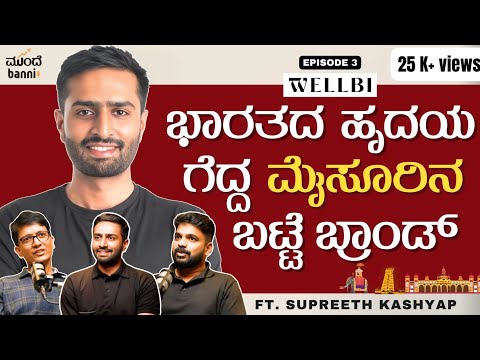
No MBA. No family business. No big investors. Just grit, clarity, and smart execution from Tier-2 India. The story of how @supreetkashyap built @Wellbi_in, one of India's fastest growing D2C fashion brands from Mysuru. Now streaming on YouTube. Watch and share and let it reach all those dreamers from tier 2/3 towns of Karnataka 🙏 Link: 👇 youtube.com/watch?v=fZ3unS… Requesting a shout out 🙏 from @kaase_baasu @keylimepie2000 @KirtiHegde_ @kodlady @megharaj_g_k @MNVGowda @mundhebanni @RekhaTipaturu @Rishhari @SandeepHegde @Sheru_Katte @svinz @chandansgowdru @Amara_Bengaluru @girishkargadde @srinidhi_Blore @srinualavilli @terminalfix @RupayiRaja @fitness_kannada @Manojrs008 @hemanthrao11
YouTube video
YouTube
English
2
31
147
23K
Ashok Karanth retweetledi
Vasant Shetty | Building Mundhe Banni
You are what you consume ಅನ್ನುವ ಮಾತಿದೆ. ನೋಡಿದ ಮರು ಕ್ಷಣ ಮರೆತು ಹೋಗುವ ರೀಲ್ಸ್, ತಲೆ ಹಾಳು ಮಾಡುವ ಒಣ ರಾಜಕೀಯದ ಗೌಜು-ಗದ್ದಲಕ್ಕಿಂತ ಸಮಾಜದಲ್ಲಿ ಹಲವು ಉದ್ಯಮಗಳನ್ನು ಕಟ್ಟಿ, ತಮ್ಮ ಕೆಲಸದ ಮೂಲಕ ದೊಡ್ಡ ಮಟ್ಟದಲ್ಲಿ ಬದಲಾವಣೆ ತಂದಿರುವ ಕನ್ನಡದ ಉದ್ಯಮಿಗಳ ಕತೆಯನ್ನು ಕನ್ನಡದಲ್ಲಿ ಕೇಳಲು ನಿಮ್ಮ ಈ ವಾರಾಂತ್ಯ ಬಳಸಿಕೊಳ್ಳಿ. ಕಾಲೇಜು ಓದುತ್ತಿರುವವರಿದ್ದರೆ ಅವರಿಗೂ ತಿಳಿಸಿ. ಈ ವಾರಾಂತ್ಯ ಮದನ್ ಪದಕಿ ಅವರ ರೋಚಕವಾದ ಉದ್ಯಮದ ಪ್ರಯಾಣವನ್ನು @mundhebanni ಪಾಡ್ಕಾಸ್ಟ್ ಅಲ್ಲಿ ನೋಡಿ. ಬರೀ ನೋಡಬೇಡಿ, ಹತ್ತು ಜನಕ್ಕೆ ಹಂಚಿ. ಸಮಾಜಕ್ಕೆ ಹಿಂದೆಂದಿಗಿಂತಲೂ ಹೆಚ್ಚು ಪಾಸಿಟಿವಿಟಿ ಬೇಕಿದೆ. ನಿಮ್ಮ ಸಹಕಾರ ಇರಲಿ.. Full episode: 👇 youtu.be/DRhtQeNL8Cw?fe…
YouTube video
YouTube
ಕನ್ನಡ
2
31
144
9.5K
Ashok Karanth retweetledi
Vasant Shetty | Building Mundhe Banni
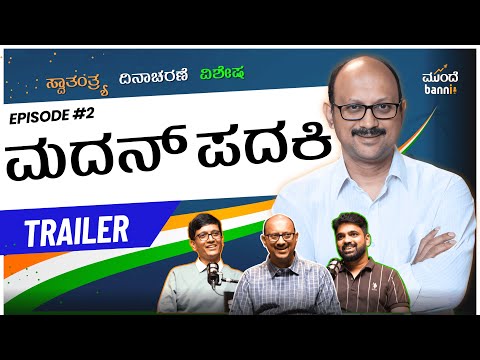
We’re super excited to drop the trailer for Episode 2 of the @mundhebanni podcast! This time, we’re joined by the incredible Madan Padaki, founder of MeritTrac. Long before today’s entrepreneurs had a world of digital tools at their fingertips, Madan built a company that has conducted skill assessments for over 6 crore people in India - yes, you heard it right, 6 crore! 🇮🇳 His journey is nothing short of inspiring, packed with grit, creativity, and some truly amazing stories. This episode is going to be another banger, the trailer is just a glimpse of how delightful, funny, and wonderfully quirky Madan is. We loved recording it, and we’re sure you’ll love listening to it. 🎥 Here’s the trailer - enjoy! youtu.be/LGMM-PRmfhQ?si… #Kannada
YouTube video
YouTube
English
3
18
100
3.2K
Ashok Karanth retweetledi
Vasant Shetty | Building Mundhe Banni
ಮುಂದೆ ಬನ್ನಿ ಪಾಡ್ಕಾಸ್ಟ್ ಎರಡನೆಯ ಸಂಚಿಕೆಯಲ್ಲಿ ನಮ್ಮೊಡನೆ ಇದ್ದಾರೆ ಮೆರಿಟ್ ಟ್ರ್ಯಾಕ್ ಸಂಸ್ಥೆಯ ಸ್ಥಾಪಕರಾಗಿದ್ದ ಮದನ್ ಪದಕಿ ಅವರು. ಇಪ್ಪತ್ತೈದು ವರ್ಷಗಳ ಹಿಂದೆ ಸ್ಮಾರ್ಟ್ ಫೋನ್ಸ್, ಸೋಶಿಯಲ್ ಮಿಡಿಯಾ ಯಾವುದೂ ಇಲ್ಲದ ಕಾಲದಲ್ಲಿ ಸ್ಕಿಲ್ ಅಸೆಸ್‍ಮೆಂಟ್ ಕುರಿತ ಒಂದು ಸಂಸ್ಥೆ ಸ್ಥಾಪಿಸಿ ಇಂದಿಗೆ ಸರಿ ಸುಮಾರು ಆರು ಕೋಟಿಗೂ ಹೆಚ್ಚಿನ ಸ್ಕಿಲ್ ಅಸೆಸ್‍ಮೆಂಟ್ ಮಾಡಿರುವ ಖ್ಯಾತಿ ಅವರ ಸಂಸ್ಥೆಯದ್ದು. ಸಕತ್ ತಮಾಶೆ, ತಿಳುವಳಿಕೆ ಮತ್ತು ಜೀವನಾನುಭವ ತುಂಬಿರುವ ಈ ಸಂಚಿಕೆ ನಿಮಗೆ ಖಂಡಿತ ಹಿಡಿಸುತ್ತೆ. ತಮ್ಮಲ್ಲಿ ಒಂದು ಮನವಿ. ಈ ಟ್ರೇಲರ್ ಲಿಂಕ್ ಅನ್ನು ನಿಮ್ಮ ಸ್ಟೇಟಸ್ಸಿಗೆ ಹಾಕಿ. ನಾಲ್ಕು ಜನರಿಗೆ ಹಂಚಿ. ಕರ್ನಾಟಕದ ಸಣ್ಣ-ಪುಟ್ಟ ಊರುಗಳಲ್ಲಿರುವ ಕನಸು ಕಂಗಳ ಹುಡುಗ/ಹುಡುಗಿಯರಿಗೆ ಉದ್ಯಮದತ್ತ ಚಲಿಸಲು ಇಂತಹ ಸಂಚಿಕೆ ಖಂಡಿತ ನೆರವಾಗಬಲ್ಲದು. ಇದರತ್ತಲಿನ ನಮ್ಮ ಶ್ರಮಕ್ಕೆ ಸಾರ್ಥಕತೆ ಸಿಕ್ಕಲು ನಿಮ್ಮ ಸಹಕಾರ ಬೇಡುವೆವು 🙏 ಮರೆಯದೆ, ಈ ಟ್ರೇಲರ್ ಲಿಂಕ್ ಅನ್ನು ನಿಮ್ಮ ಸ್ಟೇಟಸ್ಸಿಗೆ ಹಾಕಿ. ನಾಲ್ಕು ಜನರಿಗೆ ಹಂಚಿ. youtube.com/watch?v=LGMM-P… @mundhebanni
YouTube video
YouTube
ಕನ್ನಡ
0
8
30
797