

Aude Lancelin
39.1K posts

@alancelin
Fondatrice @LibreQg, hier l’Obs, Marianne, auteur Le Monde libre, prix Renaudot essai, « Je pense aux matelots oubliés dans une île. Aux captifs, aux vaincus! »


🔴 "Les Français n'ont jamais été aussi divisés" @1NikolaMirkovic essayiste, auteur de « Déclin et Renouveau : Comment les Français se relèveront », aux Éditions des Syrtes était sur QG « 12 chantiers pour redresser la France » en replay ➡️ qg.media/emission/12-ch…


🔴 "Le vrai scandale, c’est que #Trump a sacrifié un possible grand deal avec l’#Iran pour une guerre contraire aux intérêts américains" @iranoscop, @alancelin, @russeurope et @karimbitar sont en direct sur QG L'émission en live ➡️ youtube.com/live/7ZQp3prqJ…


🔴EN DIRECT: "#Iran: les États-Unis sont-ils en train de perdre la guerre ?" Ce jeudi 19 mars à 20h30, @alancelin recevra @karimbitar, professeur @sciencespo, @russeurope, économiste et @iranoscop, spécialiste de l'Iran pour une grande soirée en live ➡️ qg.media/live/


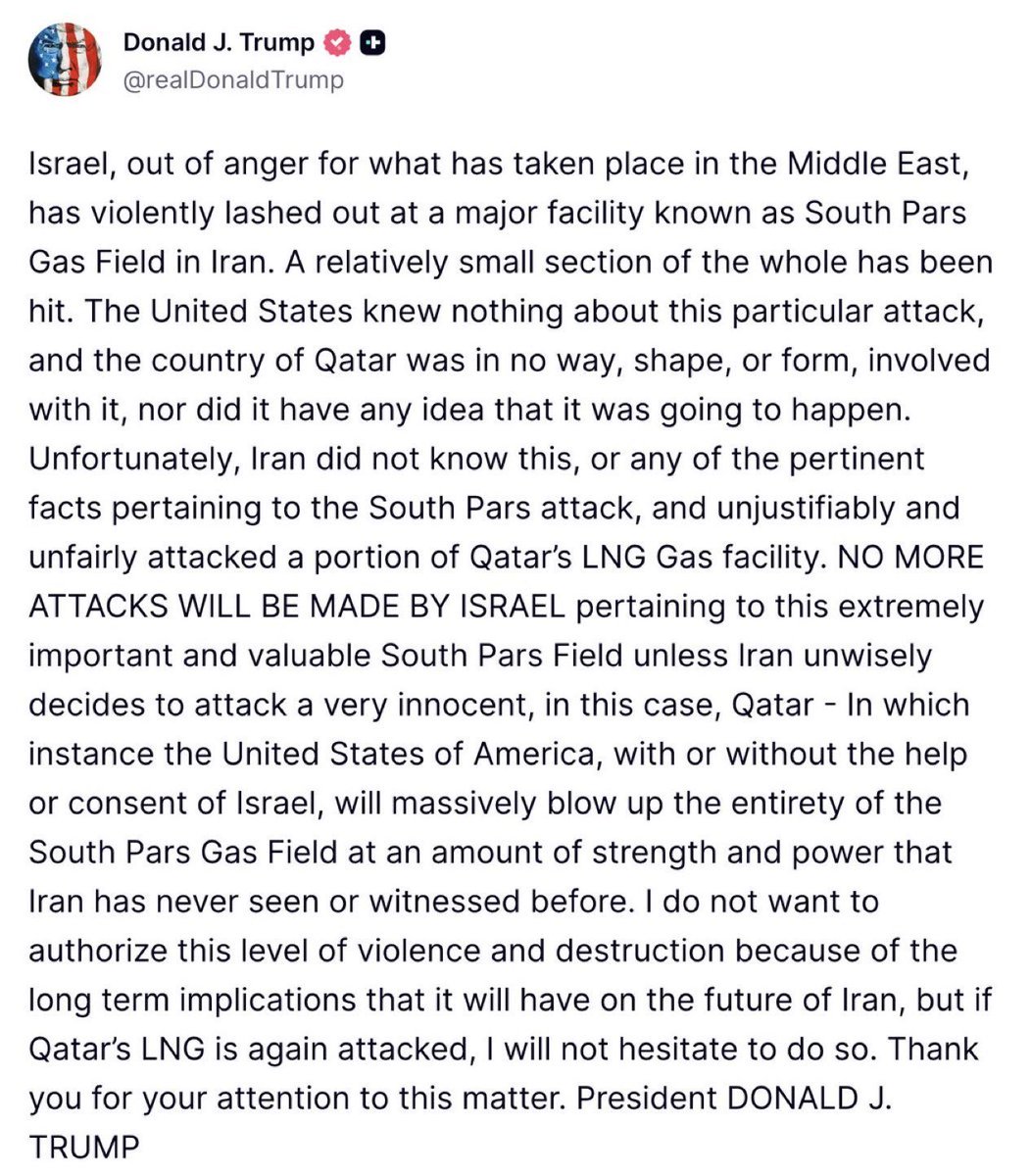
Abu Dhabi intercepted the missiles. The debris shut down the gas fields anyway. Habshan gas processing facilities and the Bab field were both taken offline today as a precautionary measure after falling debris from successful missile interceptions struck the sites. Abu Dhabi authorities confirmed it. No injuries. Both facilities shut down. The public was told to rely only on official sources. The air defense system worked exactly as designed. The warheads were destroyed before impact. And two of the UAE’s most important gas production facilities went dark because the wreckage from a successful interception is still wreckage. This is the paradox that no interception rate can solve. Gulf air defenses intercept 90 to 96 percent of incoming projectiles. Those rates are extraordinary. They save lives. They prevent direct detonation on target. What they do not prevent is debris. A missile destroyed at altitude does not vanish. It fragments. The fragments fall. They fall on the same geography the missile was aimed at. And when that geography contains gas processing infrastructure with pressurised systems, heat exchangers, and pipeline junctions, falling metal at terminal velocity is sufficient to trigger a precautionary shutdown regardless of whether the warhead detonated. Ras Laffan was hit directly today. Riyadh was hit directly today. Habshan and Bab were hit by the defence that worked. Three countries. Four facilities. Two by Iranian missiles. Two by the wreckage of intercepted Iranian missiles. The result is the same: offline. Iran does not need to penetrate the air defense shield. It needs to overwhelm the geography underneath it. Every missile that is intercepted over an energy facility still deposits debris on that facility. The interception prevents the warhead from functioning. It does not prevent the airframe, the motor casing, the guidance section, and the fuel residue from falling on infrastructure that was designed to process gas, not absorb ballistic fragments. The mathematics of this are devastating for the Gulf’s energy posture. Three hundred fourteen ballistic missiles and 1,672 drones launched at the UAE since February 28. At 90 to 96 percent interception, roughly 280 to 300 of those missiles were destroyed over UAE territory. Each one produced debris. Each debris field covered a footprint measured in hundreds of metres. Across nineteen days, the cumulative debris footprint covers a significant fraction of the UAE’s coastal energy infrastructure corridor. Even perfect interception rates produce imperfect debris patterns over the geography they are defending. Shekarchi threatened to burn Gulf energy facilities to ashes. He may not need to. The interception debris is doing it for him. Not through fire. Through precautionary shutdowns triggered by falling metal from the missiles his forces launched and the defenses that successfully destroyed them. The Fed just raised PCE to 2.7 percent and flagged Middle East developments as uncertain. Trump just directed no more strikes on Iranian energy. The IRGC just published satellite targeting images of five Gulf facilities. And Abu Dhabi just shut down two gas fields because the defense that saved lives could not save production. The interception rate is 96 percent. The shutdown rate from debris is 100 percent when the debris lands on a gas plant. And the urea at $610 does not distinguish between a warhead that detonates and one that falls in pieces. open.substack.com/pub/shanakaans…