
alexluyet

1.4K posts

alexluyet banner
alexluyet

alexluyet

@alexluyet

Responsable Suisse Romande @SATW_ch, founder & partner https://t.co/22ORFnRLac | @neurhone @tedxmartigny @ScienceValais @kizytracking #conexkt

Lausanne, Switzerland Katılım Ocak 2012
1.4K Takip Edilen481 Takipçiler
alexluyet retweetledi
Dr. Jon Slotkin
Dr. Jon Slotkin@slotkinjr·
I have a guest essay in @nytimes today about autonomous vehicle safety. I wrote it because I’m tired of seeing children die. Done right, we can eliminate car crashes as a leading cause of death in the United States @Waymo recently released data covering nearly 100 million driverless miles. I spent weeks analyzing it because the results seemed too good to be true. 91% fewer serious-injury crashes. 92% less pedestrians hit. 96% fewer injury crashes at intersections. The list goes on. 39,000 Americans died in crashes last year. More than homicide, plane crashes, and natural disasters combined. The #2 killer of children and young adults. The #1 cause of spinal cord injury. We’ve accepted this as the price of mobility. We don’t have to. In medicine, when a treatment shows this level of benefit, we stop the trial early. Continuing to give patients the placebo becomes unethical. When an intervention works this clearly, you change what you do. In driving, we’re all the control group. Cities like DC and Boston are blocking deployment. And cities are not the only forces mobilizing to slow this progress. It’s time we stop treating this like a tech moonshot and start treating it like a public health intervention that will save lives. Link to article below. 👀 this video of Waymo cars evading crashes with people and vehicles. I especially note the ones that require it having a 360° view. My sincere thanks to Alex Ellerbeck and @acsifferlin for their wisdom and sure hand in editing this piece.
English
334
1K
6.4K
1.8M
alexluyet retweetledi
a16z speedrun 🧊
a16z speedrun 🧊@speedrun·
Ben Horowitz on the brilliant advice you often get from investors
a16z speedrun 🧊 tweet media
English
110
349
6.5K
935.6K
alexluyet retweetledi
The Nobel Prize
The Nobel Prize@NobelPrize·
BREAKING NEWS The Royal Swedish Academy of Sciences has decided to award the 2025 Sveriges Riksbank Prize in Economic Sciences in Memory of Alfred Nobel to Joel Mokyr, Philippe Aghion and Peter Howitt “for having explained innovation-driven economic growth” with one half to Mokyr “for having identified the prerequisites for sustained growth through technological progress” and the other half jointly to Aghion and Howitt “for the theory of sustained growth through creative destruction.” #NobelPrize
The Nobel Prize tweet media
English
432
5.2K
11.8K
5.6M
alexluyet retweetledi
TechDev
TechDev@TechDev_52·
“If I put $100 in Bitcoin in 2010 I’d have $2.8B now.” No. If you bought $100 of Bitcoin in 2010 and watched it go to: $1k → $100k → $1.7M and did nothing Then watched $1.7M go to $170k and still did nothing Then watched $170k go to $110M and still did nothing Then watched $110M wither to $18M and still did nothing Then watched $18M surge to $390M and still did nothing Then watched $390M deteriorate to $85M Then watched $85M climb to $1.6B and still did nothing Then watched $1.6B shrink to $390M and still did nothing Then watched $390M surge to $2.8B and then for some reason finally decided to do something… Then yes, $100 in 2010 would be worth $2.8B today.
English
1.2K
4.6K
69.4K
3.6M
alexluyet retweetledi
swissinfo.ch
swissinfo.ch@swissinfo_en·
Switzerland’s success shows that a nation can revalue its way to prosperity. buff.ly/gGMxAWq
English
5
9
31
2.4K
alexluyet retweetledi
signüll
signüll@signulll·
cs used to be a cheat code… high pay, low overhead, tight feedback loops. now the baseline is commoditized & the bar for differentiation moved up stack, toward taste, product sense, compounding execution, actual leverage.
signüll tweet media
English
64
67
1.2K
126.2K
alexluyet retweetledi
Arnaud Bertrand
Arnaud Bertrand@RnaudBertrand·
I just read this WSJ article on why Europe's tech scene is so much smaller than the US's and China's. I'm afraid that, like most articles on this topic, it largely misses the mark. Which in itself illustrates a key reason why Europe is lagging behind: when you fail to understand the root causes of an issue, you have zero chance to solve it. What makes me competent to speak on this topic? Back in the late 2000s and early 2010s, I founded and led HouseTrip which at the time was one of Europe's top startups. We were the first historical startup in which all top 3 VC investors in Europe invested. So I have a pretty intimate knowledge of the European entrepreneurship ecosystem and what it takes to create and grow a tech company in Europe. We were pretty promising as a startup. In fact as promising as it can possibly get. We had a similar concept to Airbnb (with some notable differences I won't bore you with), except we created the company 1 year before they did. Which means we were the first-mover - globally - with a multi-billion-euro concept, strong financial backing by the 3 top investors in Europe and, at some point, a team of 250 people with some of the brightest minds in tech in Europe. Everything we needed to succeed. And yet we didn't succeed: ultimately we were essentially crushed by our American competitor Airbnb in our home turf - Europe - and we had no choice but to sell ourselves to another American company, Tripadvisor. Believe me, I've reflected long and hard on how that could have happened. In fact after I left the company in 2015 I even spent 3 months in isolation in the Annapurna mountains in Nepal to reflect full time on exactly that 😅 And I then moved to China, where I spent the next 8 years and where I had the chance to study their ecosystem to understand why they're successful and Europe isn't. So all in all, I think I have some degree of legitimacy to comment on this topic. The WSJ article says that Europe lags behind due to the usual suspects, the reasons you constantly hear about: too much regulation, fragmented European markets, limited access to financing, a culture that isn't conducive to the startup grind, etc. Some of those are true, but imho all are secondary. Take excessive regulations for instance, which gets mentioned all the time. If they were such a hindrance to startups, why would American startups succeed in Europe - like Airbnb in our case - and European startups not? We all face the same regulations 🤷 Or take fragmented markets. Same question: how could US startups successfully conquer these fragmented EU markets when European startups can't? Because that's the real elephant in the room, and really the story of the European tech scene since the advent of the internet: US startups have shown a remarkable ability to capture European markets despite the supposed barriers, making many of the "usual suspects" explanations for Europe's tech struggles very unconvincing. In other words, logically, any explanation where both US and European startups face identical barriers fails to address the fundamental difference in outcomes we consistently observe. Based on my experience, the key problem faced by European startups can be summarized in one word: patriotism. There is virtually none in Europe, and more than anything that's what's killing EU startups, or preventing them from developing. It used to drive me absolutely nuts at HouseTrip. What a startup needs first and foremost, especially a consumer-facing startup like we were, is marketing, to become famous. At first, when I created the company and before Airbnb was even a thing, I used to pitch the company to the media and the general response I would get was almost one of contempt, as in "why would I belittle myself to write about your startup? And furthermore, who would be stupid enough to stay in an apartment when there are hotels? You guys have no future..." And then Airbnb got launched and the American media started their thing, hyping the company like it was the greatest innovation since sliced bread, like they were national heroes, giving them hundreds of millions in free publicity. That's when European media started to take notice. Not of us, god forbid, but of Airbnb. The concept was promoted by Silicon Valley, see... so now it was valid. So I went back to pitch HouseTrip to European media. This time around I was met with a different kind of contempt: "So you guys are like Airbnb? Why would we cover a European copycat when we can just write about the real American original?" Luckily I'm not violent but lets say those moments really tested my civility 😅 All in all, we arrived in the absolutely grotesque situation where, despite Airbnb not having yet set foot in Europe, they were already a cultural phenomenon there, promoted by European media, for free, when the European original - yours truly - had to spend millions on paid marketing (mostly to Google and Facebook, American companies) to achieve a small fraction of the brand recognition. Which means that, insanely, Airbnb was probably doing more business in Europe than we did before even opening an office there, simply on the back of the free publicity they were getting. How on earth can you even compete with that? This dynamic was at play with general European elites too. I remember very clearly having dinner next to a legendary European entrepreneur and investor - who I won't name, a man who supposedly, on paper, is dedicating his life to furthering the European tech ecosystem. We naturally got to talk about HouseTrip and he literally told me, and this is an exact quote: "you know I don't really like copycats, they really hurt the European ecosystem." Another big test for my civility that night... And even if we had been a copycat, so what? That's how China got started, there's nothing to be ashamed of. You need to learn to walk before you can run. In fact if you study the history of innovation you'll find that every major tech power, including the US, started by imitating and adapting others' innovations before developing their own. Speaking of China, again a country that I know in depth for having lived there for 8 years after HouseTrip, I've come to the conclusion that patriotism, a deeply rooted mindset of sovereignty, is truly the magic ingredient behind their success. Contrary to popular belief, they don't do it in a stupid way by just banning competition. Those cases are actually very rare and only occur if the companies in question violate Chinese law in pretty egregious ways. Most of the time it's the exact contrary: they welcome foreign companies and competition, but create conditions where local alternatives can thrive alongside them, giving Chinese users and businesses legitimate options to choose domestic champions. Which means you end up with, for instance, Apple doing well in China but simultaneously allowing the rise of Huawei or Xiaomi. Or Tesla doing well in China but simultaneously allowing the rise of BYD or Nio. Etc. And China is, interestingly, more comparable to the EU than most people realize. It is, again contrary to popular belief, extremely decentralized when it comes to doing business, with various provinces competing against each other much the same way EU countries compete against each other. But they do it in such a way where, again, the overarching sense of Chinese sovereignty never gets sacrificed at the altar of provincial competition. And where the ultimate goal is to develop Chinese champions which can successfully compete on the global stage. So there you have it, the dirty little secret behind Europe's lag. We're essentially witnessing a "colonization of the minds" whereby Europe has structurally internalized its technological inferiority, celebrating American startups while dismissing its own homegrown companies. Why does this barely ever get talked about? Think about it: do you seriously think that the Wall Street Journal would start advocating for, essentially, policies hostile to American tech dominance? Much better to focus on the usual red herrings like too much regulation or fragmentation which, conveniently, would primarily result in clearing obstacles for American tech giants to dominate European markets even further, rather than nurturing homegrown competitors. This article is, in itself, an illustration of the "colonization of the minds".
Arnaud Bertrand tweet media
English
684
1.4K
6.8K
822.7K
alexluyet retweetledi
Steve Jurvetson
Steve Jurvetson@FutureJurvetson·
The Moore's Law Update NOTE: this is a semi-log graph, so a straight line is an exponential; each y-axis tick is 100x. This graph covers a 1,000,000,000,000,000,000,000x improvement in computation/$. Pause to let that sink in. Humanity’s capacity to compute has compounded for as long as we can measure it, exogenous to the economy, and starting long before Intel co-founder Gordon Moore noticed a refraction of the longer-term trend in the belly of the fledgling semiconductor industry in 1965. I have color coded it to show the transition among the integrated circuit architectures. You can see how the mantle of Moore's Law has transitioned most recently from the GPU (green dots) to the ASIC (yellow and orange dots), and the NVIDIA Hopper architecture itself is a transitionary species — from GPU to ASIC, with 8-bit performance optimized for AI models, the majority of new compute cycles. There are thousands of invisible dots below the line, the frontier of humanity's capacity to compute (e.g., everything from Intel in the past 15 years). The computational frontier has shifted across many technology substrates over the past 128 years. Intel ceded leadership to NVIDIA 15 years ago, and further handoffs are inevitable. Why the transition within the integrated circuit era? Intel lost to NVIDIA for neural networks because the fine-grained parallel compute architecture of a GPU maps better to the needs of deep learning. There is a poetic beauty to the computational similarity of a processor optimized for graphics processing and the computational needs of a sensory cortex, as commonly seen in the neural networks of 2014. A custom ASIC chip optimized for neural networks extends that trend to its inevitable future in the digital domain. Further advances are possible with analog in-memory compute, an even closer biomimicry of the human cortex. The best business planning assumption is that Moore’s Law, as depicted here, will continue for the next 20 years as it has for the past 128. (Note: the top right dot for Mythic is a prediction for 2026 showing the effect of a simple process shrink from an ancient 40nm process node) ---- For those unfamiliar with this chart, here is a more detailed description: Moore's Law is both a prediction and an abstraction. It is commonly reported as a doubling of transistor density every 18 months. But this is not something the co-founder of Intel, Gordon Moore, has ever said. It is a nice blending of his two predictions; in 1965, he predicted an annual doubling of transistor counts in the most cost effective chip and revised it in 1975 to every 24 months. With a little hand waving, most reports attribute 18 months to Moore’s Law, but there is quite a bit of variability. The popular perception of Moore’s Law is that computer chips are compounding in their complexity at near constant per unit cost. This is one of the many abstractions of Moore’s Law, and it relates to the compounding of transistor density in two dimensions. Others relate to speed (the signals have less distance to travel) and computational power (speed x density). Unless you work for a chip company and focus on fab-yield optimization, you do not care about transistor counts. Integrated circuit customers do not buy transistors. Consumers of technology purchase computational speed and data storage density. When recast in these terms, Moore’s Law is no longer a transistor-centric metric, and this abstraction allows for longer-term analysis. What Moore observed in the belly of the early IC industry was a derivative metric, a refracted signal, from a longer-term trend, a trend that begs various philosophical questions and predicts mind-bending AI futures. In the modern era of accelerating change in the tech industry, it is hard to find even five-year trends with any predictive value, let alone trends that span the centuries. I would go further and assert that this is the most important graph ever conceived. A large and growing set of industries depends on continued exponential cost declines in computational power and storage density. Moore’s Law drives electronics, communications and computers and has become a primary driver in drug discovery, biotech and bioinformatics, medical imaging and diagnostics. As Moore’s Law crosses critical thresholds, a formerly lab science of trial and error experimentation becomes a simulation science, and the pace of progress accelerates dramatically, creating opportunities for new entrants in new industries. Consider the autonomous software stack for Tesla and SpaceX and the impact that is having on the automotive and aerospace sectors. Every industry on our planet is going to become an information business. Consider agriculture. If you ask a farmer in 20 years’ time about how they compete, it will depend on how they use information — from satellite imagery driving robotic field optimization to the code in their seeds. It will have nothing to do with workmanship or labor. That will eventually percolate through every industry as IT innervates the economy. Non-linear shifts in the marketplace are also essential for entrepreneurship and meaningful change. Technology’s exponential pace of progress has been the primary juggernaut of perpetual market disruption, spawning wave after wave of opportunities for new companies. Without disruption, entrepreneurs would not exist. Moore’s Law is not just exogenous to the economy; it is why we have economic growth and an accelerating pace of progress. At Future Ventures, we see that in the growing diversity and global impact of the entrepreneurial ideas that we see each year — from automobiles and aerospace to energy and chemicals. We live in interesting times, at the cusp of the frontiers of the unknown and breathtaking advances. But, it should always feel that way, engendering a perpetual sense of future shock.
Steve Jurvetson tweet media
English
547
2K
8.4K
12.9M
alexluyet retweetledi
Max Roser
Max Roser@MaxCRoser·
Until 50 years ago, CO₂ emissions developed in lockstep with economic growth in France. Since the early 1970s, the opposite has been true: emissions declined as people in France got richer.
Max Roser tweet media
English
143
842
4.7K
1.5M
alexluyet retweetledi
Valais-Wallis Time Machine
Valais-Wallis Time Machine@timemachinevs·
📜 À Sion, vivez "La Fabrique de la Constitution 1907-2023" : une immersion dans le riche héritage de la constitution valaisanne. Jusqu'au 15 déc. 📍 Médiathèque Energypolis, Rue de l’Industrie 23, Sion ➡️ timemachinevs.ch/news/la-fabriq…
Valais-Wallis Time Machine tweet media
Français
0
7
14
549
alexluyet retweetledi
Stephen Stapczynski
Stephen Stapczynski@SStapczynski·
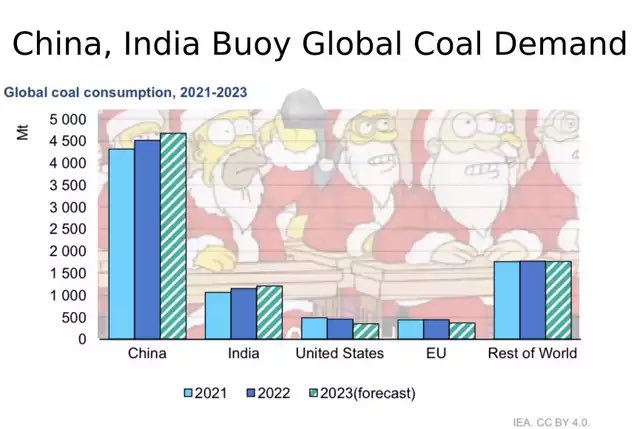
Global coal consumption set to hit another record-high this year, @IEA says 🪨⚠️ 📈 Demand to inch higher by 0.4% to 8,388 Mt in 2023 🇨🇳 Higher consumption in China and India will offset declines in Europe and the US 👀 Demand forecast to remain flat (-0.1%) in 2024
Stephen Stapczynski tweet media
English
7
102
171
80.7K
alexluyet retweetledi
Johann Roduit
Johann Roduit@JohannRoduit·
🎉 "Seizing Hope" is now live! A documentary we've worked on for 2+ years, using design thinking for #SciComm. 🧠 It's about the challenges of drug-resistant epilepsy and the promise of neurotechnology. 🤖 More than a film, it's a conversation about tech, ethics and humanity!
Neuroethics Canada@NeuroethicsUBC

📣#SeizingHopeFilm, the documentary exploring new technology for pediatric drug resistant epilepsy, is NOW AVAILABLE ONLINE! 🎉 Join us at youtu.be/KmkKbt3TA6s and watch the hope, trust, & empowerment journey of families w/ children suffering from DRE.🧠 #EpilepsyAwareness

English
0
1
2
169
alexluyet
alexluyet@alexluyet·
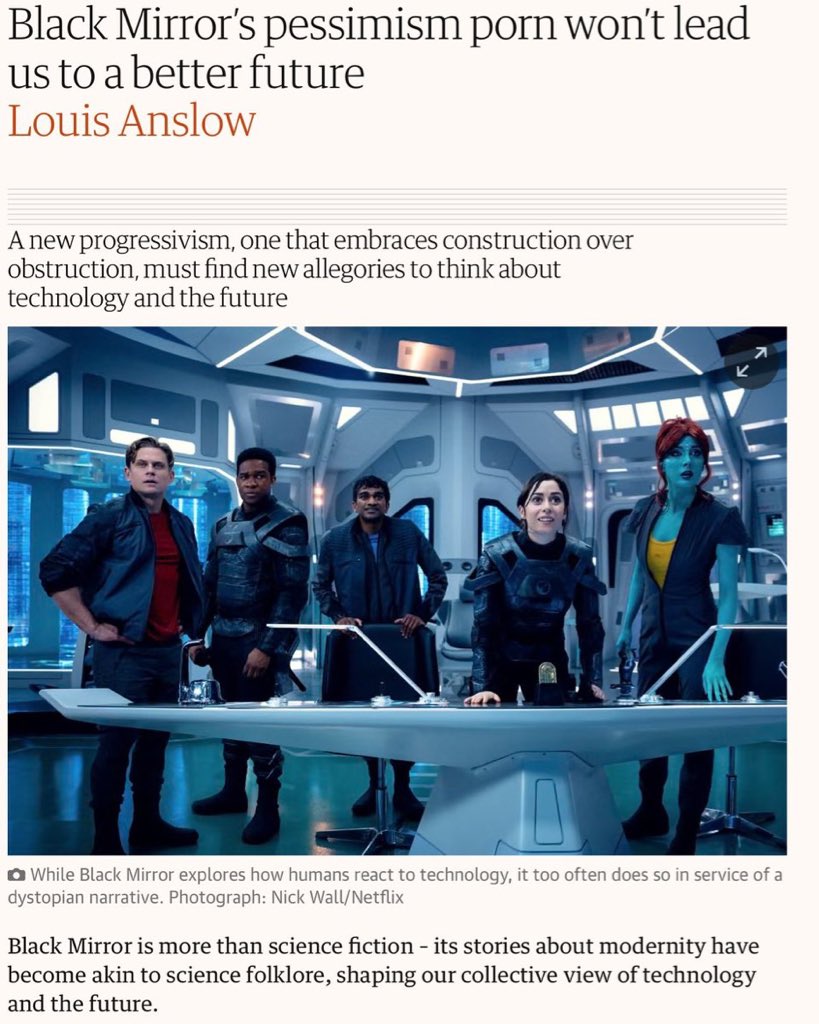
« The biggest danger we face today, if we care about actually making the future a more perfect place, […] is that we will cease believing in the one force that raised humanity out of tens of thousands of years of general misery: the very idea of progress. » 🌍💡
Vox@voxdotcom

It’s boom times for doom times. But the apocalyptic mindset that has gripped so many of us not only understates how far we’ve come, but how much further we can still go. Read @bryanrwalsh on the necessity of progress. vox.com/the-highlight/…

Valais, Switzerland 🇨🇭 English
0
0
2
71
alexluyet retweetledi
Wissenschaft im Dialog
Wissenschaft im Dialog@wissimdialog·
#Wisskomm-Praktiker*innen, die in ihrer Arbeit Angriffe oder Anfeindungen erlebt haben, können an einer Interview-Studie des @uzh_ikmz teilnehmen. 👇 #Wissenschaftsfeindlichkeit #HateSpeech
Niels G. Mede@nielsmede

Are you a #science #communication professional? Have you experienced #attacks or #hostility against you or colleagues? We’d like to #interview you for an upcoming study – sign up if you're interested: rq3281.customervoice360.com/uc/hostility #SciComm #WetenschapVeilig #WissKomm 👇 More info 👇

Deutsch
0
9
9
2.4K