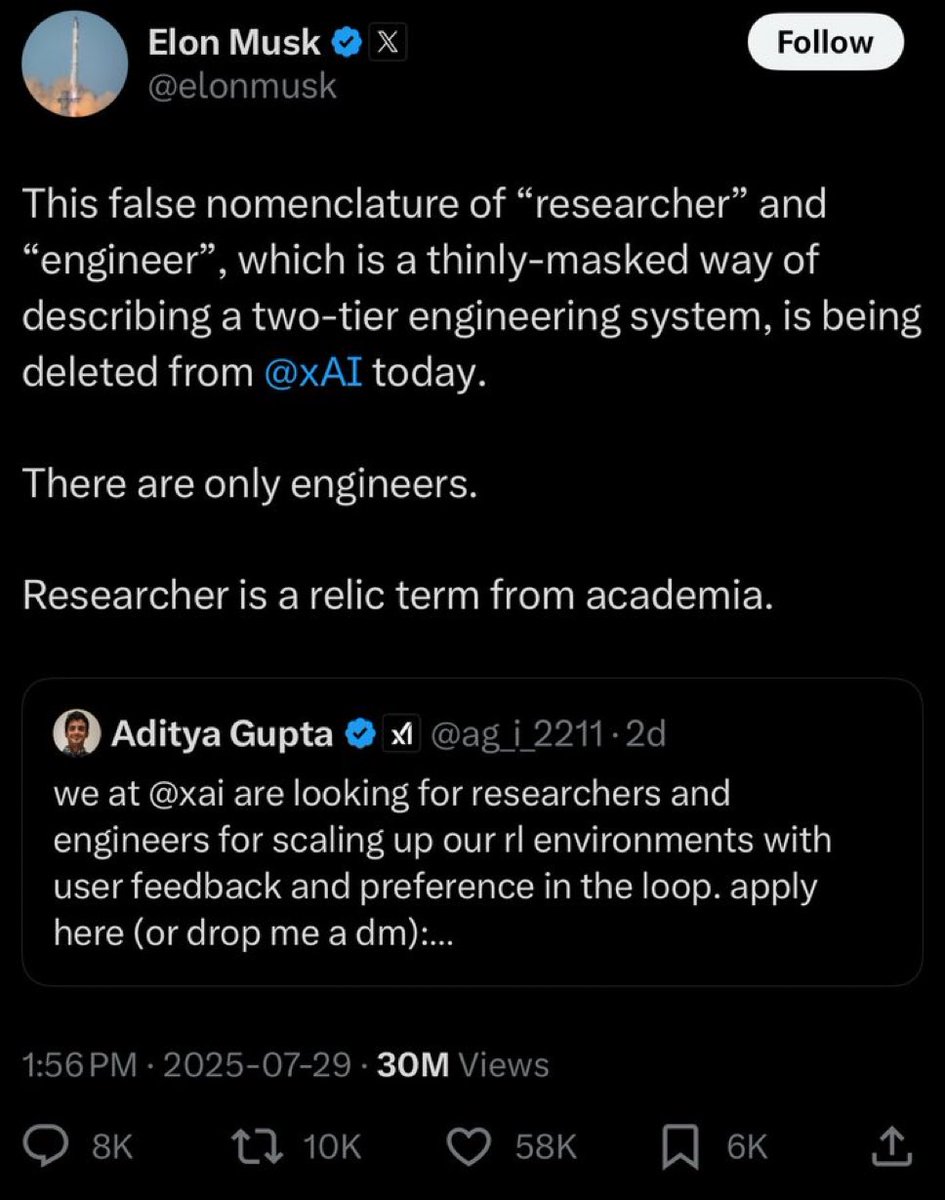
@BenjaminDEKR No. Because each of these tasks require operational procedures that carry predictability and accountability, which an LLM by its very structure can not have
You can train a motivated 18 year old to do almost anything: drive a semi-truck, fly a helicopter, run a nuclear reactor.
(The U.S. military does this all the time)
Can we currently train an LLM to do those things, reliability?
Specifically an LLM architecture. Can we?
Exactly 30 years ago today, The Settlers II was released by Blue Byte (April 17, 1996).
It was a highly regarded real-time strategy and city-building game (also known as "Die Siedler II" in its original German title).
A major hit across Europe, it is still considered a classic in the genre today.
In the 90s, Blue Byte was a real powerhouse - they also developed the Battle Isle and History Line series. The Settlers franchise is without a doubt their biggest legacy, with over 10 million copies sold across the entire series.
“Reverse lottery” is a bad analogy.
Lottery = adding useless upside volatility.
Insurance = removing ruin risk.
Pros don’t treat them symmetrically:
they avoid negative sum gambles like lottery
they hedge tail risk (insurance)
Upside is optional.
Ruin is terminal.
Different game.
Car insurance is just a lottery ticket in reverse.
You pay a premium for a low-frequency, high-payout outcome.
The only difference?
Lottery runs on hope.
Car insurance runs on fear.
Nitty poker players buy insurance, skip the lottery.
Degenerates buy lottery tickets, skip the insurance.
True pros buy neither.
It’s always good to look at the actual ev of each play rather than frequency. Cold calling in many spots maybe low or 0 frequency but at almost no ev loss. They can be very interesting and valuable lines.
Postflop otf the line and equities irrelevant quite different (bet > polar raise > you) vs preflop (open range > 3bet merged range > you) so the situation can’t immediately be compared - though it would be interesting to try understand why that is
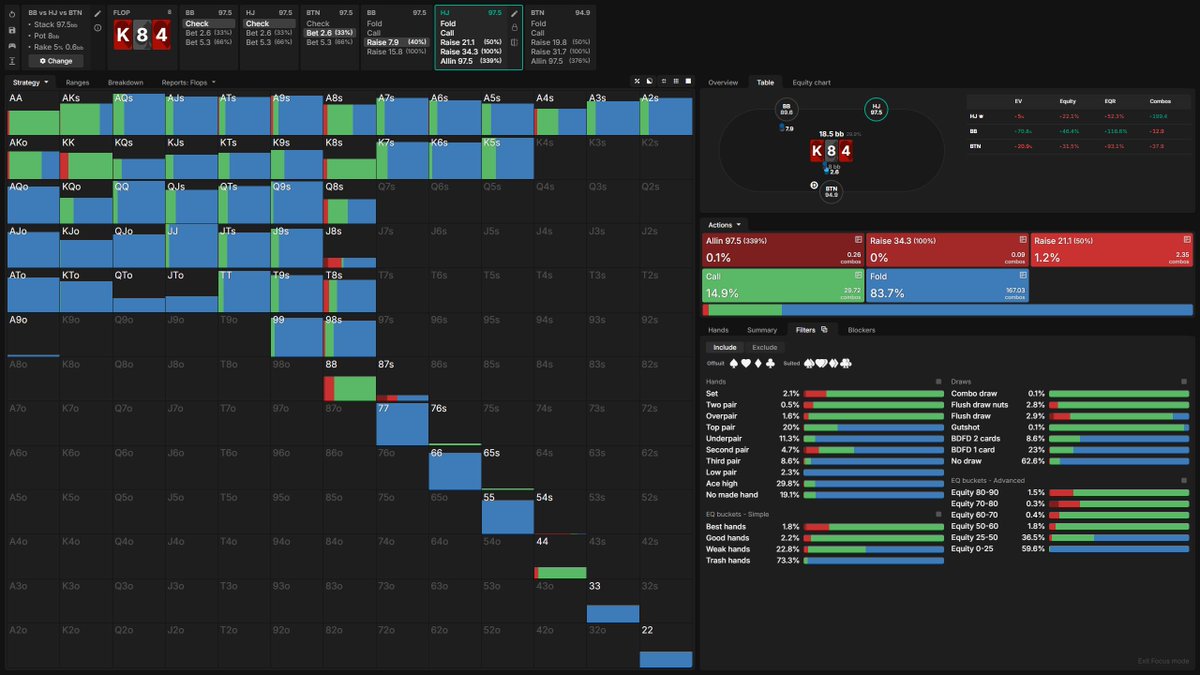
Why is cold-calling a 3-bet preflop bad?
Most coaches will say something like, "Well, it caps your range so you're exposed to re-reraises, you're getting bad pot odds to call, you'll under-realize your flatting equity, you should enter the pot with initiative", etc etc.
But my question is, why doesn't that exact same logic apply postflop? Here HJ faces a bet and a raise in a 3-way pot on the flop, and happily finds calls.
Exactly 25 years ago today, Serious Sam: The First Encounter was released (March 21, 2001).
It’s an old-school first-person shooter developed by Croteam. You play as Sam “Serious” Stone, a soldier sent back in time from the 22nd century to ancient Egypt using alien Sirian technology.
Gameplay focuses on enemy hordes in huge open levels filled with pyramids, temples, and deserts. It’s pure, over-the-top chaos and fun, much like the earlier Doom games. I don’t know how many of you remember the movie Stargate (1994), but I wonder if the developers were fans.
Happy 25th anniversary, Sam!
I promise I won't do this much, but this is an exception:
I started working with my trainer Joe a couple years ago and he completely turned my health around (you should have seen me).
He works over Zoom with just Kettlebells and has a openings, and I owe him everything.
@GergelyOrosz That was really interesting and insightful.
Its funny and striking to me that an actually in depth quality convo podcast like this gets a modest amount of views when superficial chat like the all in gets an enormous audience.
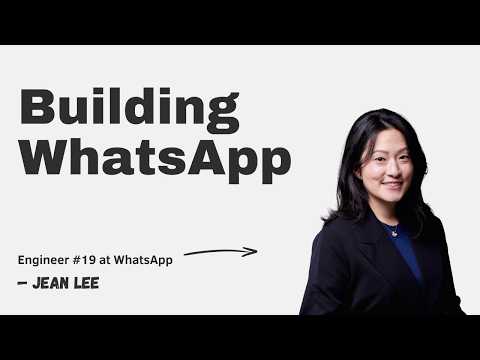
How did a tiny team of 30 engineers build WhatsApp, more than a decade ago? From Jean Lee, engineer #19 at the company.
Timestamps:
00:00 Intro
01:39 Early years in tech
06:18 Becoming engineer #19 at WhatsApp
13:53 WhatsApp’s tech stack
18:09 WhatsApp’s unique ways of working
25:27 Countdown displays and outages
27:07 Why WhatsApp won
28:53 The Facebook acquisition
33:13 Life after acquisition
39:27 Working at Facebook in London
44:07 Transitioning to management
47:27 Performance reviews as a manager
53:29 After Facebook
58:53 AI’s impact on engineering
1:02:34 Jean’s advice to new grads and startups
1:06:45 Empowering employees
1:08:17 Book recommendations
Watch or listen:
• YouTube: youtu.be/5Kn32cIWPSY
• Spotify: open.spotify.com/episode/56bXJZ…
• Apple: podcasts.apple.com/us/podcast/bui…
Brought to you by:
• @statsig – The unified platform for flags, analytics, experiments, and more. statsig.com/pragmatic
• @SonarSource – The makers of SonarQube, the industry standard for automated code review. sonarsource.com/pragmatic/
• @WorkOS – Everything you need to make your app enterprise ready WorkOS.com
Three interesting observations from this episode:
1. WhatsApp had no code reviews after in-place.
WhatsApp cofounder, Brian Acton, reviewed the very first pull request of each new hire, and after that, there were no more code reviews. Jean recounts how Brian reviewed her debut PR in extreme detail. This first (and only!) review set the bar high, and she wrote code to that standard from then on.
2. WhatsApp had close to zero formal processes.
WhatsApp had no Scrum, no Agile, no TDD (test driven development), and no formal code reviews beyond the first commit. In contrast, Skype had 1,000 engineers and mandatory Scrum training, but WhatsApp still outcompeted it and won. Jean’s response to hearing of all the formal processes Skype used in order to execute faster: “I’m surprised to hear they thought they were shipping faster because of it.” Perhaps process is often a substitute for trust, not quality?”
3. Saying “no” to features was a competitive advantage.
WhatsApp’s CEO, Jan Koum, rejected 99% of feature requests from the team. While competitors shipped dozens of shiny, new features, WhatsApp ruthlessly prioritized reliability and simplicity. Jan repeatedly told the team what the mission was. “I want a grandma living in the countryside to be able to use our app”, he said.
@yacinelearning Yep, this approach worked well at SpaceX and Tesla, much more of the problem is engineering under known physics, while frontier AI still depends heavily on discovering what the right abstractions even are
exactly.
Feynman was right about expert theater.
But “this field has no clean laws” is not the same as “this field is fake.”
Social reality is not physics.
It is reflexive, historical, and context sensitive.
Harder to study does not mean unreal.
The real standard is not whether a field looks like physics
It is whether it has genuine error-correction
@newstart_2024 To be fair, it is impossible to isolate variables in the "soft sciences" like you can in physics.
And the good scientists in those fields are well aware of this. And you see that clearly when you read the papers.
The problem is when these results are popularized.
Richard Feynman’s savage takedown of pseudo-science still burns in 2026:
“Social science is an example of a science which is not a science. They follow the forms… but they don’t get any laws. They haven’t found out anything.”
He goes harder:
Experts who “sit at a typewriter and make up” claims — “organic food is better,” “this diet cures everything” — as if it’s settled science, when no rigorous experiments or checks have been done.
Feynman:
“I know what it means to really know something.
How careful you have to be. How easy it is to fool yourself.
I see how they get their information… and I can’t believe that they know.”
The Nobel physicist calls it straight: most of what passes for “expert” opinion is noise dressed up as knowledge.
In an age drowning in TikTok “science,” influencers, and clickbait studies — Feynman’s 1:52 rant feels more relevant than ever.
Who’s the biggest pseudo-expert that grinds your gears right now?
Clip is timeless fire — watch it and feel the clarity.
@shangforest@eduleadership This. all initial observations from Justin are true, but his conclusions do not follow at all from those premises.
Edtech =/ task switching
Empathy impossible without physical presence is clearly false
Transfer problems indeed aren't solved automatically in person either.
@eduleadership This might be the most dogmatic phd-brained take I've ever seen about edtech.
1. Edtech = task switching?? Nice strawman
2. Empathy impossible without physical presence? Use your brain for literally 3 seconds and you can realize this is not true
3.
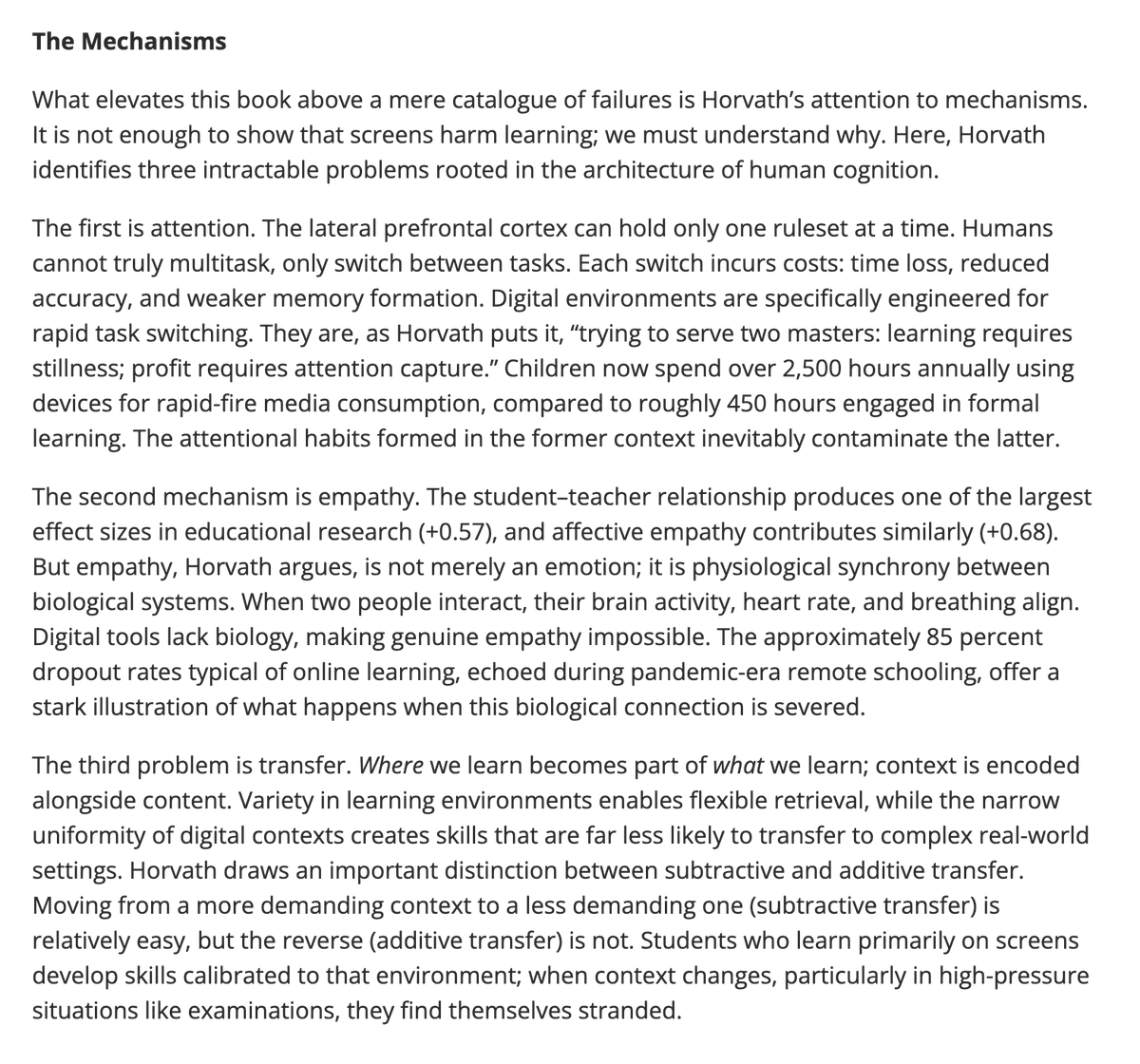
Why EdTech CANNOT work, rooted in three specific biological mechanisms...
And why everyone using or working in EdTech should stop what they are doing immediately, because it's harming kids:
I’m definitely not claiming that public schools consistently succeed at delivering deep understanding of the world. In fact, many of the frustrations that led to experiments like Alpha come from the shortcomings of traditional schools.
My point is narrower: if academic subjects like history, physics, and mathematics are reduced primarily to automated practice loops, we risk losing an important part of education: the interpretive and explanatory dimension that teachers provide. I think this is also the core of Justin’s critique.
Projects and real world exploration are a great addition. My concern is with the idea that academics themselves can be largely automated.
If I’m misunderstanding how Alpha addresses that intellectual side of learning, I’d genuinely be interested to hear how they approach it.
@alextimman@eduleadership@gtmom@thesamparr Am I understanding that your stance is that public schools successfully deliver knowledge as a form of understanding the world?
This interpretation also obviously comes from a lack of understanding of what actually happens inside Alpha School.
Alpha School.
People seem to love it. But from my understanding, a good % of the learning is screen time.
I'm vehemently against kids using screens (iPad stuff, short form video, etc).
But I want to hear who's sent kids to Alpha + how/if the screen time was impactful (negatively).
What Joe's doing is super interesting and would be awesome to work. Would love to see it win + have my fears addressed.
The hidden assumption that breaks this is that subjects like History, Physics, Math can be fully automated.
But these subjects are not skill drills. They require interpretation, explanation, perspective, deliberate ambiguity, all things that teachers can do and the current tutor software falls far short off
so if you remove the teachers from the equation you remove the intellectual core of learning
That is not to say the additional curriculum alpha teaches, like real world passion projects, is not a valuable addition. I think it is. But it should be the academics + that.
The assumption alpha smuggles in is that
knowledge = means to practical succes
but historically education had a broader purpose:
knowledge = understanding the world
In its current form Alpha might be great for a specific subset of students but falls short of being a scalable alternative to school.
@eduleadership@alextimman@gtmom@thesamparr We don’t have teachers in the traditional sense. Our guides, on the other hand, teach life skills, help them get unblocked on curriculum, guide them through projects, and ultimately helped them reach their goals.
Justin is making a deeper point though:
You can not replace the academics with apps. Fundamental functions of school are lost.
Alpha school is an app + other relevant workshops, but compresses away vital learning of the academics.
This can be a valuable category but falls short of replacing schools.
Let me recap if i understand your point correctly, or please elaborate/expand if you mean this differently:
Alpha school teaches classes that deal with real world skills/projects
The traditional subjects of history/math/sciences are compressed to AI/software interaction
Therefor the actual teaching of those classic subjects is compressed and something fundamental to education is now lost.
@eduleadership@gtmom@PSkinnerTech@thesamparr Interesting take, could you elaborate more on what specific aspects Alpha school differs from the essentials of a school mechanism?
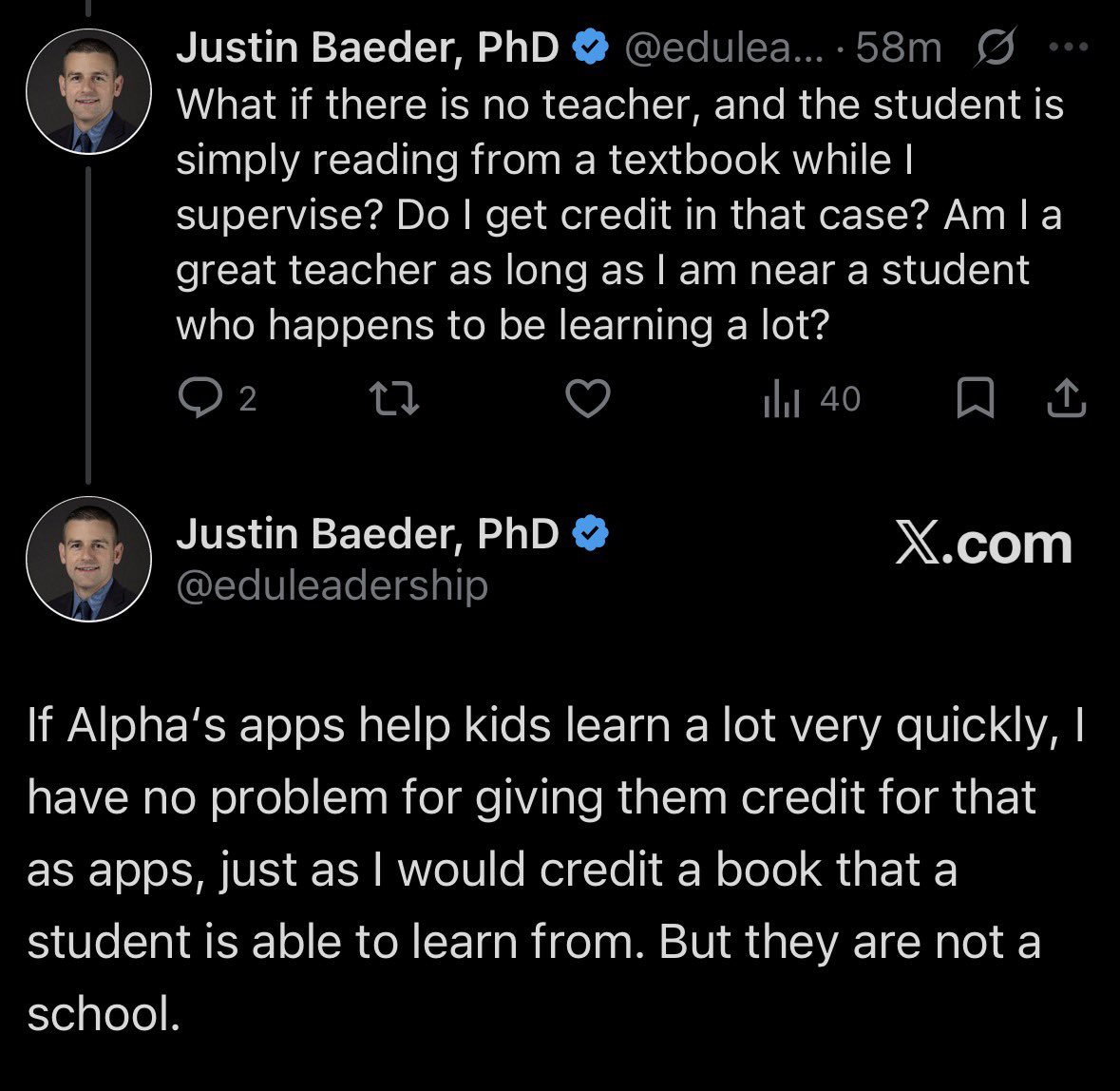
@gtmom@PSkinnerTech@thesamparr Right, I don't think it should be described as a school because it has a totally different mechanism.
Physical therapy and medication can both help some conditions, but one shouldn't be billed as the other.
@Nalanda_way@nntaleb Calligulino is Nassim Taleb's nickname for Donald Trump—a diminutive twist on "Caligula," the erratic Roman emperor. Taleb uses it to highlight what he views as impulsive, high-risk decisions, like pushing for regime change in Iran that could destabilize Gulf allies instead.
@katexbt his first point is actually good. I love Dalio's work but that is his weakness - simplifying complex systems to mechanics, he does the same in his changing world order model. History has patterns but does not behave according to a predetermined cycle.
Daily reminder that even Epstein cooked Ray Dalio a good decade and a half ago.
"pedestrian"
"must have been a clown suit when he put this together"
LMAO.
This friend of mine has been dealing with painful shoulder impingement as a punishment for doing too many clean/pres w/o the diversification of lateral moves. Full body exercise is not full body exercise.
1) What is the best therapy?
2) Is rucking good or bad for it?