
AlgoKey
174 posts


AlgoKey
@algo_key
Non-custodial automated trading infrastructure. Connect via API. Keep custody. Transparent performance. Powered by @algosphere_btc
Katılım Şubat 2026
40 Takip Edilen16 Takipçiler

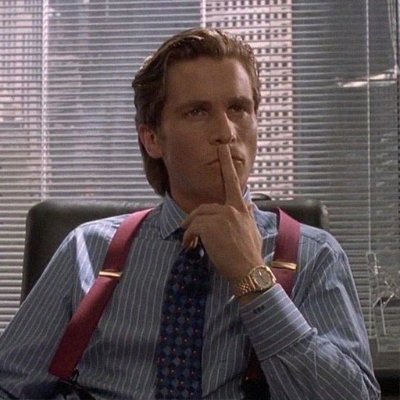
@RealMktEdge The retest is where discipline lives. Anyone can spot the setup - fewer can sit on their hands until structure confirms. That's why systematic works: entry conditions are pre-defined, so there's no internal negotiation about whether "this is close enough."
English

📌 They don’t fail at trading… they fail at waiting.
The Anatomy of a Breaker Block
Most traders chase breakouts… pros wait for the retest.
✔️ LQS (Liquidity Sweep)
✔️ MSS (Market Structure Shift)
✔️ Return to Breaker Block for entry
Simple. Mechanical. Effective.

English
@SirPickle_ This. When rent depends on the next trade, you're not trading your edge - you're trading your fear. Multiple income streams don't just protect you financially. They let you trade properly. The psychological pressure of full dependence compounds every mistake you make.
English

I don’t care what it is but you can’t have trading be your only source of income.
You need something else coming in.
Trust me here it fixes majority of your psychology problems when you’re not FULLY dependent on the outcome of your trading to put food on the table or pay rent.
It’s funny seeing people shame others here bc they are selling a service or course or indicator.
Claiming you’re a fraud saying “dont you make enough off trading?”
Why did Lebron sign a deal with Nike and sell shoes ? Does he not make enough money playing basketball?
Why did Jordan do the same?
Why did McGregor start a whiskey brand?
It’s called being smart.
Some ppl apparently don’t understand the concept of entrepreneurship.
Always look to increase your streams of income… don’t just settle for one.
English
@trad_ISABEL The noise never fully goes away. What changes is your relationship to it. The traders who last don't have less doubt - they just have a process that doesn't require them to resolve it before acting. Clarity comes from structure, not from having fewer thoughts.
English

Your mind is CLUTTERED with bad trading advice.
It's suffocating the truth you NEED to hear.
Here's what matters:
Forgive yourself for the mistakes
Let go of the noise
Start FRESH
You deserve freedom AND success.
But you must EARN it.
Put in the work. Give it EVERYTHING.
English
@SriniVega Price action skill is real and it compounds over years. The challenge is most people can't sustain consistent execution over thousands of trades - emotions creep in at the worst moments. Some eventually automate the rules they already know work. Different paths, same destination
English
Actually today was the most easiest day in 0dte trading in recent times.
Traders who have learnt price action and knows bit of support and resistance would have made a jackpot.
If you have missed out today’s trading plan… please check yesterday chart and today’s chart together… you will be able to make out..
I repeat, if you watch market closely it would become like reading a newspaper over a period of time…. you don’t need any special tools.. no special automation reqd.. just you and your market reading skill will take you to far greater heights…
#Srinivega #Optionstrading
Srinivasan@SriniVega
Not a 0-dte trader.. just traded to see whether i could do it. Market was kind.. Gave some profit! #Srinivega #OptionsTrading
English
@cryptotrading61 In trading this is underrated. The edge isn't the strategy - it's showing up every day and not blowing up when it's working against you. Consistency is a system, not a personality trait. Build it into your process and it stops being something you have to "try" at.
English

People don’t fail because they’re not capable.
They fail because they stop too soon.
Consistency always wins in the end 👀
English
@MarkellSimons_ The hardest part of running an algo is the same - doing nothing. When it's in drawdown, every instinct says override it. The ones who last are the ones who trust the system and stay out of the way. Patience isn't passive. It's the work.
English

Patience in trading is not just about waiting for something to happen; it is the discipline to do nothing while everyone else is forcing trades, chasing moves, and acting on emotion.
The market rewards those who can stay calm, trust their plan, and act only when the opportunity is clear and aligned.
Consistency is built in the moments when you choose not to act.
STAY DISCIPLINED AND PATIENT.
#TDTTrading
English
@trad_ISABEL The hardest part is that waiting feels like doing nothing. Your brain reads inactivity as falling behind. But the market doesn't reward effort - it rewards correct timing. Those two things are completely different and most traders never separate them.
English
In trading, PATIENCE isn't just a virtue
It's your WEAPON.
The discipline to WAIT for your setup?
To sit on your hands when conditions are WRONG?
THAT is what separates the pros from the gamblers.
Most can't do it.
But YOU can.
English
@themarketbank "Sitting in cash IS a position" this one hit. The part about decision fatigue is real and undertalked. Every marginal trade you take doesn't just cost money, it costs the mental sharpness you need for the actual setup. Trading less is a skill most people never bother to develop
English

Patience isn't passive. It's an active edge most traders never develop.
The industry profits from your activity. Brokers need volume. Educators need content. Signal services need signals. Everyone's incentivised to keep you engaged, clicking, trading.
But profitable trading is fundamentally boring. You spend days—sometimes weeks—doing nothing. Reading. Watching. Waiting. The actual execution is brief. The edge is in the discipline to stay still until the probabilities tilt decisively in your favour.
Over-trading reveals itself as pattern recognition failure. You start seeing setups that aren't there because your brain craves activity. Boredom feels like missed opportunity. So you lower your standards. You take B-grade setups because sitting still feels like losing.
This is where the damage compounds. Each mediocre trade costs you twice—once in actual losses or diminished returns, and again in depleted mental capital. Decision fatigue is real. Every trade you take reduces the quality of the next decision you make.
Sitting in cash IS a position. It's the position of maximum optionality. No overnight risk. No cognitive load managing something marginal. No emotional attachment to being proven right. When the genuine setup arrives—and it will—you're fresh, funded, and psychologically ready to execute with full conviction.
The best traders I've studied have win rates around 40-50%. They're wrong half the time. Their edge isn't in being right more often. It's in trading less frequently and managing size ruthlessly when they do engage. They understand that preservation of capital—both financial and psychological—trumps participation.
If you're trading every day, you're not waiting for your edge. You're manufacturing reasons to feel productive. The market doesn't reward effort. It rewards correct timing. Those are not the same thing.
Track your best trades from the past year. I'd wager most came after periods of deliberate inactivity. The patience wasn't wasted time. It was the setup.
themarketbank.com
English
@nifercheks @KINGKLC001 Hard way is the only way most people actually learn it. You can read about it a hundred times. But it doesn't stick until you watch yourself do it live and see exactly what it costs. Once you've felt it, the rule becomes automatic.
English

@KINGKLC001 This don’t revenge trading is very necessary
I learnt the hard way 😫
English
@TheStonkDad That mindset is the actual edge. Taking your setup and accepting the result - red or green - is harder than any analysis. Most people can find setups. Almost no one can execute them without letting the last trade bleed into the next one.
English

Small win today after taking a red trade at open. 🔥
Sometimes you have to be grateful for the small wins after a loss. As long as you are taking your setup and not revenge trading!

English
@AshishB60558222 The casino mindset is correct - but it requires you to execute hundreds of trades without flinching once. That's where most traders fail: they understand the theory but can't maintain it under a 4-trade losing streak. The edge is real. The execution is the bottleneck.
English

Masterclass to be Bookmarked : The Casino Owner Mindset
Warriors, in the silence of Saturday evening, when the F&O noise is shut off, a Sniper's mind works the sharpest. Today, I am going to teach you the deepest, most brutal truth from Mark Douglas's "Trading in the Zone". If you hardwire this concept into your brain, you will never panic in a trade again.
The Gambler vs. The Casino Owner
When the retail herd (Gamblers) sits in front of the screen, they have one ultimate obsession: "Will my NEXT trade hit the target or the stop-loss?" If they face two consecutive losses, they panic, abandon their strategy, or resort to revenge trading.
The Operator (Casino Owner), however, never cares if the next roulette spin lands on Red or Black. It is completely irrelevant! They know they have a 5% mathematical 'Edge'. Ten people might win on a given night, but over 1,000 spins, the Casino always absorbs all the money.
The Sniper's Edge (The Law of Large Numbers)
Trading is not a game of predicting the next move; it is the flawless execution of a 'Statistical Edge'. Suppose your Win Rate is exactly 50% and your Risk-to-Reward is 1:2. This means out of 10 trades, you will be wrong 5 times. The crowd assumes the pattern will be perfectly distributed: Win-Loss-Win-Loss. Wrong!
In reality (Random Distribution), you can easily face 4 consecutive losses. An amateur breaks down mentally on the 4th loss.
A Sniper, however, calmly executes the 5th trade with the exact same 1-Lot discipline. Why? Because they know the upcoming sequence of trades will not only recover the drawdown but push the account deep into profit.
Every single trade is a 'Unique' and 'Random' event. The outcome of your last trade has absolutely zero connection to the probability of your next trade.
English
@babujin_fx This is one of the clearest examples of where a mechanical system has an edge. The algorithm doesn't feel the urge to make it back - it just executes the next trade at the same size. No override. No revenge. Just the plan.
English

Dear Trader.
Sizing up after a losing streak to 'make it back faster' is the most expensive decision in trading.
Losses require smaller size, not bigger.
Win first. Then size up.
English
@Kelvintalent_ Regulating emotions is the right frame - but there's a ceiling to how consistent humans can be under pressure across hundreds of trades. At some point, removing yourself from the execution entirely isn't giving up - it's the logical end of the discipline journey.
English

“Be emotionless” is one of the biggest lies in trading.
That’s not reality, You are not a robot, you are human, you will feel fear, greed, and pressure.
Your focus isn’t to eliminate emotions, but to regulate them and control how you react to certain results.
Understand your risk appetite, build your mindset and level up gradually.
The traders who win aren’t emotionless,
they’re disciplined under pressure🥂
Enjoy your weekend
ForeverInProfit 🥂
English
@cryptobyrde Exactly right. "Passive" is mostly a marketing label - the index is still making active decisions, just mechanically and without your input. The interesting question is: what happens when you apply that same mechanical discipline to your own strategy?
English

This is what I have been thinking about index (passive) investing
Which is not passive
It’s more about low cost low turnover active slow momentum trading strategy
Gregory Blotnick@gregoryblotnick
@cryptobyrde the SPX is a 500-stock rotating momentum machine its all the "best" businesses on earth when one fails it gets kicked out of SPX + replaced with something better most businesses fail, which is why individual shorts work. but the SPX itself? you're betting only against winners
English