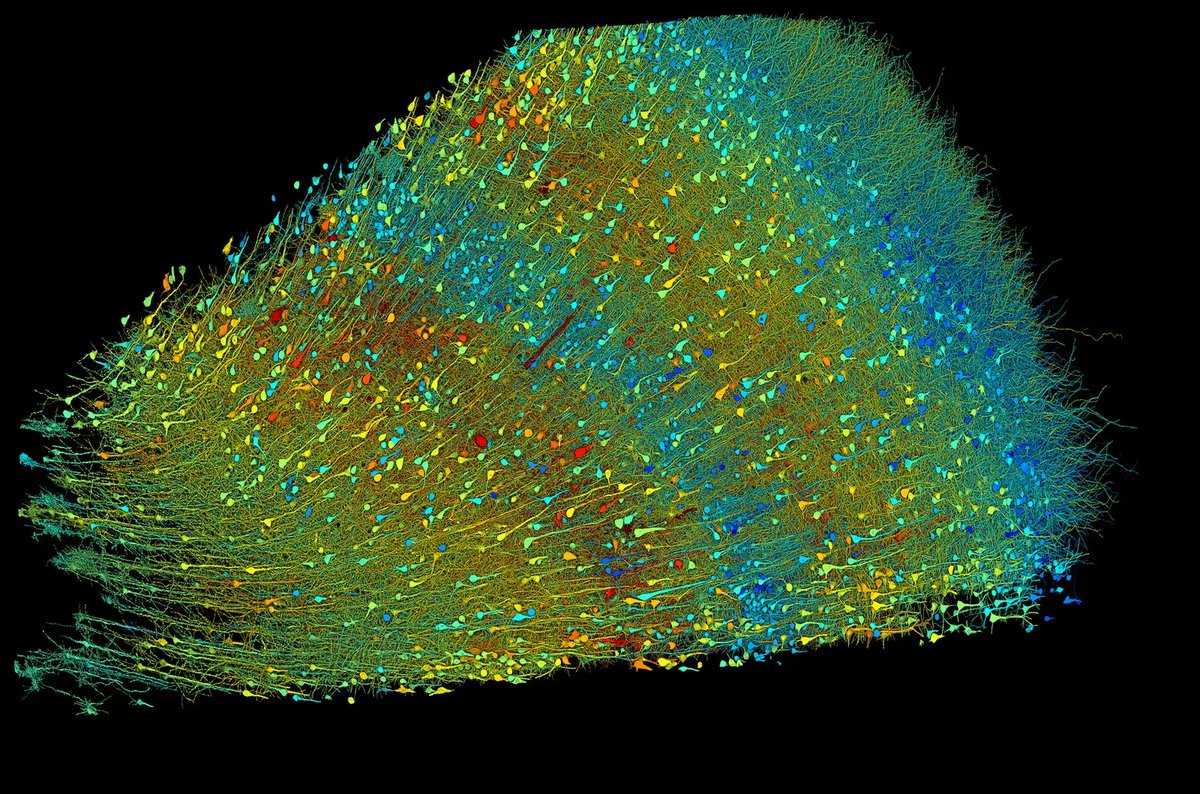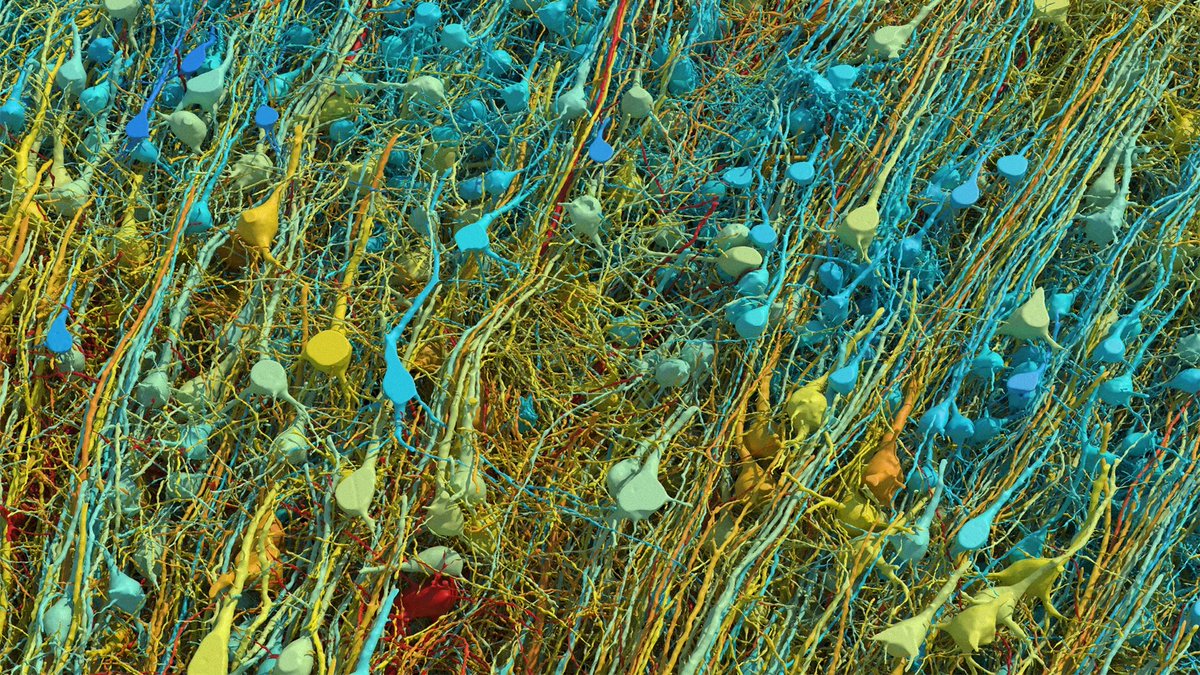
A spatial map of cell types in first trimester-developing human lung by simultaneous analysis of >30 proteins 📷: Sanem Sariyar et al @burcu_ayoglu @Prof_Lundberg labs @scilifelab in @NatureComms ➡️: bpod.org.uk/archive/2024/1…
Alper Aydemir
927 posts

@alpervm
used to program robots for @NASA, then started a computer vision company @Volumental and such, proud backer @rerundotio @sunriserobots and others

A spatial map of cell types in first trimester-developing human lung by simultaneous analysis of >30 proteins 📷: Sanem Sariyar et al @burcu_ayoglu @Prof_Lundberg labs @scilifelab in @NatureComms ➡️: bpod.org.uk/archive/2024/1…

B2B customer proof/logo wall tiers: Tier 8: "Loved by people who use other unrelated products" Tier 7: A few users who happen to work at famous companies Tier 6: One team somewhere in the company uses it Tier 5: Companies use the product but didn't give their permission to use their logo in marketing Tier 4: Actual contracted customers with wall to wall instals and with logo permissions acquired Tier 3: Customer story / video Tier 2: They build their company operations around your product and call it “the [Company] way” Tier 1: Their CEO mentions you unprompted in an all-hands, investor update, or earnings calls

Unpopular opinion: If I started a company today, founders & founding employees shouldn’t fully vest in 4 years. Building a real company takes a decade. What I recommend to founders: Founders 6-year vesting, 1-year cliff Back-weighted: Year 1 — 10% Year 2 — 15% Year 3 — 15% Year 4 — 20% Year 5 — 20% Year 6 — 20% Founding Eng / Growth • 2–5%+ equity • ~$120k salary • 6-year vesting, normal weight • 1-year cliff Employees • 4-year vesting • 1-year cliff


Same chinese train driver taken 26 years apart


What if we're approaching robotic manipulation all wrong? @ilyasut makes a fascinating point here: Current approaches throw massive amounts of data at the problem — millions of simulation steps, huge compute. And still, robots can't match human dexterity. Real-world learning of new skills? "Very out of reach." Meanwhile, humans pick up manipulation tasks almost instantly. Our dexterity is unmatched. And we do it with remarkable robustness — no reward shaping, no curriculum design, no training instability. Why the gap? Evolution. 500M years of optimisation for locomotion, vision, and manipulation. For these ancient sensorimotor tasks, maybe brute-force data isn't the answer. Maybe we should be copying the biological algorithms that already solved it. CC: @dwarkesh_sp

🇪🇺🔥 Europe’s manufacturing edge is at real risk – too much capacity is moving to China, and what stays is hard to scale. The surprising solution might be a two-arm robot cell being built in a new lab in Ljubljana. I visited Sunrise Robotics to see how they’re building a new type of automation that could reshape European industry. Why it matters: • Europe is the world’s #2 manufacturing hub (~17–18%) • 50%+ of output is small-batch (high-mix/low-volume) → hard to automate • Millions of workers will retire or be out of job due to outsourcing • Sunrise created a standardized, simulation-trained cell • One operator can supervise multiple of these stations to build more complex products • This is a key to keeping factories – and competitiveness – in Europe I truly think Sunrise can become a global automation leader – disclaimer: I was their first (small) investor and first (big) fan. 🔥 The video shows everything: the test lab, the simulation stack, the UI, the assembly line, the first production batches… and a deep dive with CEO @tomazstolfa on the vision behind it. Full video link in the reply. If you enjoy it, please like + subscribe on YT – this really helps boost this kind of content. 🔥 If you care about robotics, automation, European competitiveness, or the future of work – checkout this video. PS: I was absurdly sick during the shoot… apologies for any sloppy camera work and spaced-out staring 😅


🇪🇺🔥 Europe’s manufacturing edge is at real risk – too much capacity is moving to China, and what stays is hard to scale. The surprising solution might be a two-arm robot cell being built in a new lab in Ljubljana. I visited Sunrise Robotics to see how they’re building a new type of automation that could reshape European industry. Why it matters: • Europe is the world’s #2 manufacturing hub (~17–18%) • 50%+ of output is small-batch (high-mix/low-volume) → hard to automate • Millions of workers will retire or be out of job due to outsourcing • Sunrise created a standardized, simulation-trained cell • One operator can supervise multiple of these stations to build more complex products • This is a key to keeping factories – and competitiveness – in Europe I truly think Sunrise can become a global automation leader – disclaimer: I was their first (small) investor and first (big) fan. 🔥 The video shows everything: the test lab, the simulation stack, the UI, the assembly line, the first production batches… and a deep dive with CEO @tomazstolfa on the vision behind it. Full video link in the reply. If you enjoy it, please like + subscribe on YT – this really helps boost this kind of content. 🔥 If you care about robotics, automation, European competitiveness, or the future of work – checkout this video. PS: I was absurdly sick during the shoot… apologies for any sloppy camera work and spaced-out staring 😅