AlphaCall

113 posts

AlphaCall banner
AlphaCall

AlphaCall

@alphacallx

We research the best projects early on. You don't have to be first. But you have to be early! #AlphaCall

Katılım Ocak 2024
0 Takip Edilen3.9K Takipçiler
Sabitlenmiş Tweet
AlphaCall
AlphaCall@alphacallx·
Ahead of the Pack! Plunge into an exclusive odyssey with us as we uncover the crème de la crème of eminent projects from the very beginning. We've identified a critical gap in the market, and our solution is the "#AlphaCall".
English
31
43
177
71.4K
AlphaCall
AlphaCall@alphacallx·
An Advancement in Algorithmic Innovation: @tigfoundation Surpasses Established State-of-the-Art Methods in the Quadratic Knapsack Problem Validation of TIG’s Core Hypothesis The Innovation Game (TIG) was founded on a simple but ambitious hypothesis: that a competitive, incentive-driven system could accelerate the development of high-performance algorithms for difficult computational problems. This has now been confirmed. The top-performing algorithm from the TIG ecosystem has matched and in many ways surpassed existing state-of-the-art (SOTA) methods for the Quadratic Knapsack Problem (QKP), one of the most challenging problems in combinatorial optimization. This achievement is more than a single algorithmic milestone. It’s a working proof that TIG’s model can systematically drive innovation. By turning complex problems into open challenges, we’ve created an environment where competition and transparency directly lead to better outcomes. About the Quadratic Knapsack Challenge The Quadratic Knapsack Problem is a well-known optimization problem with significant industrial relevance from logistics and finance to telecommunications and resource allocation. Solving it is computationally demanding, which made it an ideal benchmark for testing TIG’s protocol. If our approach could move the needle here, it could work anywhere. Iterative Progress Across Rounds Starting from Round 44, the original Knapsack Challenge evolved into the Quadratic Knapsack Challenge. Early solutions laid the groundwork, but the real progress came with each new submission measured by consistent improvements in both solution quality and runtime. The first chart shows the decrease in Relative Percentage Deviation (RPD) from optimal solutions over time. The second tracks total runtime across benchmark instances. Together, they demonstrate how the community, leveraging open access to each other's work, steadily pushed performance forward through both conceptual breakthroughs and critical micro-optimizations. TIG rewards this kind of layered progress. Not just new ideas, but also the refining of algorithms for faster computation and lower memory use. Every contribution becomes a stepping stone for the next. State-of-the-Art Results TIGs top-earning algorithm now finds solutions at speeds that rival and often outperform traditional SOTA approaches like GRASP+Tabu¹ and IHEA², while clearly surpassing DP+FE³ and QKBP⁴ in both quality and efficiency. For example: It matches or exceeds GRASP+Tabu and IHEA in solution quality. It outpaces all compared methods in runtime sometimes by orders of magnitude. On larger benchmarks like QKPGroupIII⁴ and LargeQKP⁴, older methods such as DP+FE³ and GRASP+Tabu¹ are absent due to infeasible runtimes. Only the QKBP⁴ algorithm runs slightly faster on LargeQKP⁴, but this comes with a significant drop in accuracy. This combination fast execution with top-tier results makes the algorithm highly applicable in real-world settings where speed and resource efficiency are non-negotiable. Why This Matters ▪️Proof of Concept TIG’s model isn’t theoretical it works. We've shown that an open, incentivized protocol can produce algorithms competitive with the best academic and industrial solutions. ▪️Efficiency as a Core Metric In TIG, performance isn't just about accuracy. Runtime and memory efficiency matter just as much. This pressure to balance quality with speed drives real-world applicability. ▪️Sustained Progress The results prove that TIG can produce not just one-off breakthroughs, but continuous advancement. Through open iteration, the platform fosters a feedback loop of improvement. What’s Next With success in the Quadratic Knapsack Challenge, we now look ahead. The next phase of TIG will focus on two goals: ▪️Expanding into new problem domains with high industry impact. ▪️Incorporating AI to augment and accelerate algorithm design. $TIG will launch new challenges across sectors like AI, engineering, and scientific computing, aiming to generate licensable, high-performing algorithms that address urgent computational demands. The revenue from these outputs will sustain and grow the protocol while providing businesses and researchers with tools built in open competition. The QKP result is a landmark moment for TIG but it’s just the beginning. This marks a significant advancement in Algorithmic Breakthroughs
AlphaCall tweet mediaAlphaCall tweet media
The Innovation Game (𝔦, 𝔦)@tigfoundation

A landmark achievement for open innovation. We're proud to announce that our protocol, live on @Base, has produced an algorithm that surpasses established state-of-the-art methods for the notoriously difficult Quadratic Knapsack Problem (QKP). This validates our core thesis: that an open, competitive, and incentive-driven ecosystem can systematically accelerate algorithmic innovation. [1/5]

English
10
20
80
5.1K
AlphaCall
AlphaCall@alphacallx·
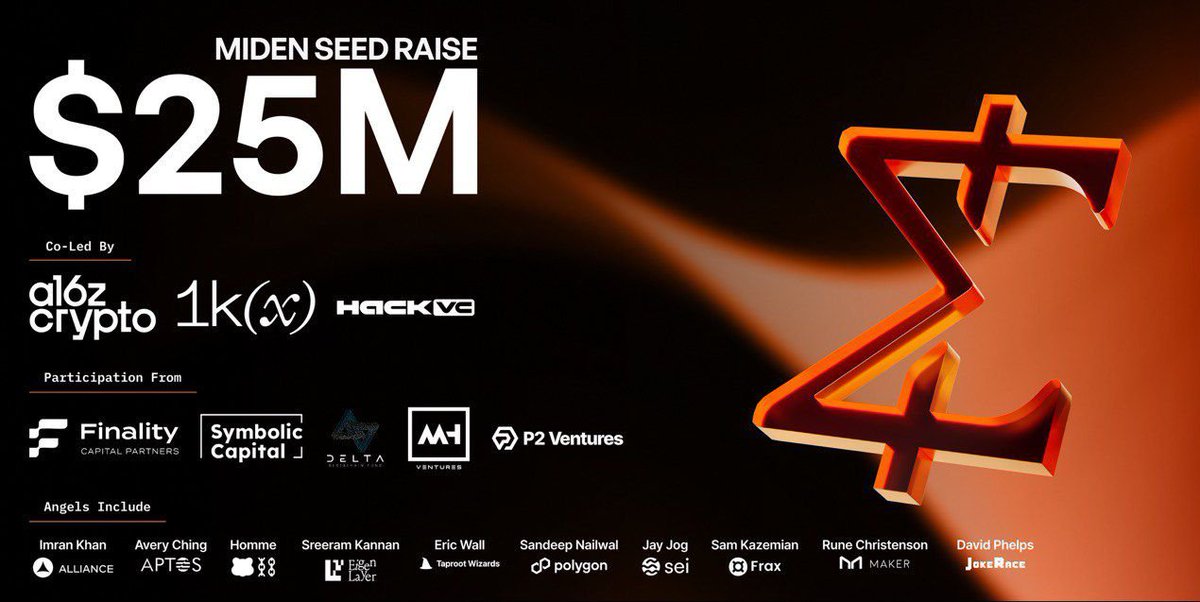
The Edge Blockchain: Miden @0xMiden The blockchain industry stands at its third major transformation. After Bitcoin introduced peer-to-peer value transfer in 2009 and Ethereum enabled programmable blockchains in 2015, Miden represents the next leap forward: the first "edge blockchain" that fundamentally reimagines how blockchains operate by leveraging zero-knowledge (ZK) technology to push execution and state to the client side. Traditional blockchains "from Bitcoin and Ethereum to newer chains like Solana and Sui" all suffer from the same fundamental limitations. They require every node to re-execute all transactions to verify correctness, creating intractable problems including execution bloat where network throughput is limited to the slowest node, state bloat with expanding data requirements that centralize the network, and privacy impossibility where transparency requirements make confidential transactions impractical. Miden breaks this paradigm completely. Instead of the network executing transactions, users execute and prove their own transactions locally, sending only ZK proofs to the network for verification. This shift from network execution to edge execution eliminates the traditional correlation between usage growth and performance degradation. The fundamental difference is transformative: while traditional chains force users to send transactions to the network for execution and re-execution by all nodes, Miden enables users to generate their own proofs that the network can verify exponentially faster than executing the original transactions. Actor-Based Architecture with Native Privacy The architecture combines the proven Actor Model from distributed systems with ZK technology. Each account is an independent actor that maintains its own state, proves its own state transitions, and communicates asynchronously through "notes" which function as messages. This enables true concurrency where multiple users can execute transactions simultaneously without interfering with each other. Every account on Miden is essentially a smart contract, providing account abstraction features like social recovery, rate limiting, and flexible authentication schemes that make crypto safer and more accessible. ---------------- Interim Note: The actor model is a mathematical framework for concurrent computation that uses actors as fundamental computational units. When an actor receives a message, it can make local decisions, spawn new actors, send additional messages, and define its response to future messages. Actors maintain private state that can only be modified internally, while inter-actor communication occurs exclusively through messaging, eliminating the need for lock-based synchronization mechanisms. Introduced in 1973, the actor model serves both as a theoretical foundation for understanding computation and as the basis for practical concurrent system implementations. Its relationship to other computational models is explored in actor model and process calculi research. --------------- Miden introduces a unique hybrid state model that blends account-based systems like Ethereum with UTXO-based systems like Bitcoin. The system consists of accounts that store assets locally and contain smart contract code, and notes that act as UTXO-like messages carrying assets between accounts. Accounts can be either public with full data stored on-chain, or private with only commitments stored while users maintain their data off-chain. The global state is captured in three optimized databases: an account database storing the latest state of each account in a tiered sparse Merkle tree, a note database containing all notes in an append-only Merkle Mountain Range, and a nullifier database that tracks consumed notes to prevent double-spending. Unlike Ethereum where only $ETH is truly native, all assets on Miden are treated as first-class citizens. Specialized accounts called "faucets" can issue new assets, both fungible and non-fungible, with 256-bit encoding that standardizes all assets with the issuer ID embedded. Assets are stored locally in account vaults rather than in global token registries, which eliminates the need for shared state updates and enables parallel transactions. This model allows users to pay transaction fees in any asset, maintain private asset holdings by default, and store unlimited assets per account. Privacy capabilities on Miden are unprecedented in the blockchain space. The system offers four levels of privacy: Complete transparency like traditional blockchains, Web2-like privacy where only participants and operators see details, strong privacy where only transaction participants have visibility, and absolute privacy where no party sees all transaction data. Privacy is actually the cheaper option on Miden because verifying ZK proofs is more efficient than re-executing transactions, meaning private operations cost less and scale better than public ones. Turing-Complete Private Smart Contracts and Flexible Execution Miden enables fully Turing-complete private smart contracts that execute locally without revealing code or state to the network, yet can interact seamlessly with public contracts. This creates new possibilities like private trading strategies that can interact with public DEXs, confidential business logic that remains hidden from competitors but visible to auditors, and complex gaming applications where player moves and cards remain private. The computational complexity of smart contracts is limited only by the user's hardware, not by gas limits or network constraints, since the network only needs to verify compact proofs regardless of the underlying computation complexity. The transaction model differs fundamentally from traditional blockchains. A transaction on Miden always involves a single account but can consume and produce multiple notes. For example, transferring assets from one account to another requires two separate transactions: the sender creates a note containing the assets in one transaction, and the receiver consumes that note in another transaction. This decoupling enables concurrent execution and provides interesting capabilities like recallable transactions where funds sent to wrong addresses can be retrieved, and updatable notes where creators can modify conditions before consumption. For applications requiring public shared state, Miden accommodates this through "network accounts" that are managed by the network rather than individual users. Users interact with these accounts by creating notes from their private accounts, which the network then processes. This hybrid approach enables applications like AMMs where the pool state must be public, but users can interact privately by creating trading intent notes that the network processes to facilitate swaps. The development experience prioritizes accessibility with Rust as the primary smart contract language, chosen for its safety, maturity, and familiarity among developers. The Miden VM can execute programs written in any language that compiles to WebAssembly, providing flexibility while maintaining the security benefits of ZK-provable execution. Account abstraction is built into the protocol, giving users features like social recovery, rate-limited withdrawals, and flexible authentication without requiring additional smart contract deployments. Real-World Applications and Future Impact Miden's unique capabilities unlock entirely new application categories that are difficult or impossible on traditional blockchains. Financial services can implement private institutional trading, compliant confidential transactions, and tokenized real-world assets with built-in privacy. Gaming applications can support hidden information games like poker and strategy games where player states and moves remain private, while complex game logic runs without network constraints. Enterprise applications can maintain confidential business logic, implement private supply chain tracking, and enable auditable but confidential operations. The state management approach addresses the critical problem of state bloat that plagues traditional blockchains. Because users can store their data off-chain with only commitments on-chain, the network state remains manageable even with billions of users. Each private account contributes only 40 bytes to the global state regardless of how much data it actually contains. Operators can verify state transitions and produce new blocks without needing to store the entire state, fundamentally changing the economics of blockchain operation. The project is progressing toward its public testnet with a measured approach that initially implements "privacy training wheels" where transaction data is sent to operators along with proofs, providing Web2-like privacy. This allows the team to refine the technology while gradually enabling stronger privacy guarantees. The roadmap envisions eventually achieving the full vision of strong privacy where only transaction participants have visibility into their activities. Miden represents more than an incremental improvement in blockchain technology—it's a fundamental reimagining that addresses the core limitations preventing mainstream adoption. By moving execution to the edge and making privacy the default, Miden creates a new design space where privacy, performance, and programmability converge. The architecture aligns incentives correctly: the more work users do themselves through local execution and state management, the less work the network needs to do, resulting in lower costs and better scalability. The implications extend far beyond technical improvements. Miden enables the original promise of crypto where people and businesses can trustlessly transfer value over the internet at global scale, but with the privacy and performance characteristics necessary for real-world adoption. Financial institutions can participate without exposing sensitive trading strategies, businesses can maintain competitive advantages while remaining auditable, and individual users can transact without broadcasting their financial activity to the world. They announce our $25 million seed fundraise and spinout from @0xPolygon Miden’s 5-year vision A medium-sized country running its financial system on it. Private, compliant, client-side ZK proving, built for massive-scale asset exchange. x.com/0xMiden/status… ROADMAP Final Words: As the first true edge blockchain, Miden doesn't just scale existing blockchain capabilities, it creates entirely new possibilities for decentralized applications that require both confidentiality and composability. The future of blockchains isn't just off-chain, it's at the edge, where users control their own execution, state, and privacy, while still benefiting from the security and composability of a shared network. This paradigm shift positions Miden to become the infrastructure layer for the next generation of crypto applications that can finally bridge the gap between the promise of decentralized technology and the practical requirements of mainstream adoption. For Further Information: miden.xyz github.com/0xMiden
AlphaCall tweet mediaAlphaCall tweet mediaAlphaCall tweet media
English
0
0
25
7.1K
AlphaCall
AlphaCall@alphacallx·
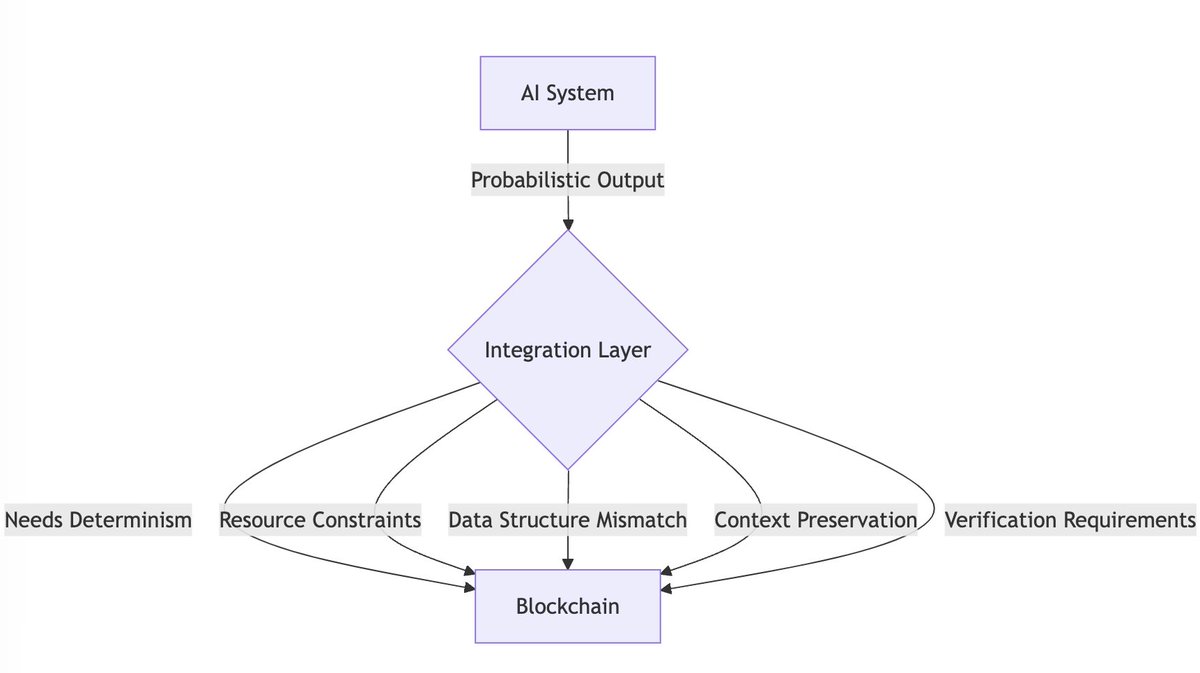
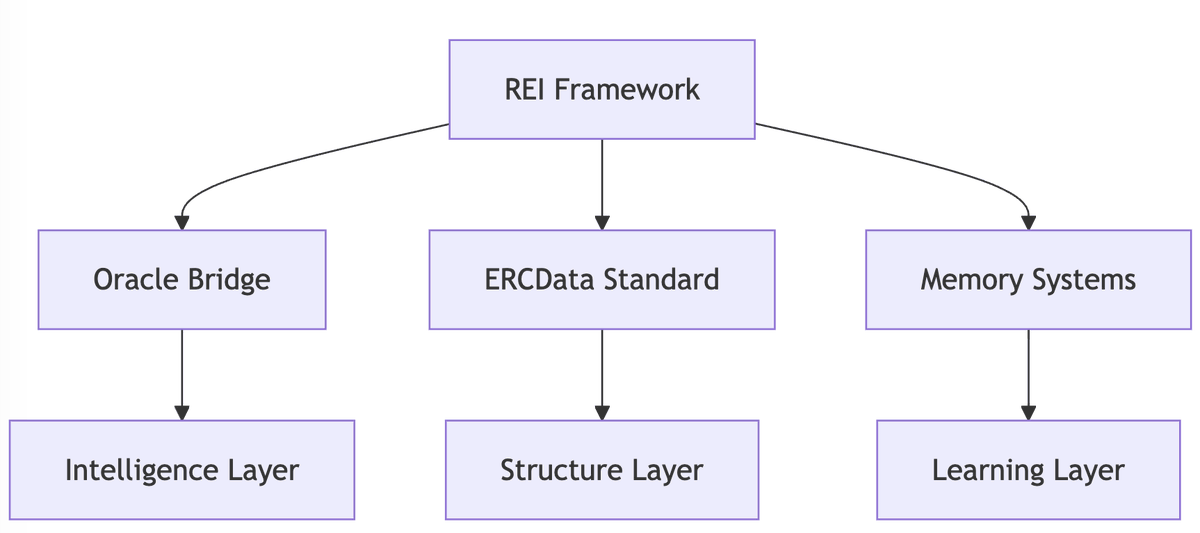
Exploring the implementation of neural architectures on-chain @ReiNetwork0x "Connecting AI and blockchain is no easy task. These technologies operate on fundamentally different principles blockchain relies on absolute certainty and precision, while AI thrives on probability and pattern recognition. Despite these differences, bringing them together effectively holds the potential to unlock transformative possibilities. This is where the REI Framework plays a vital role. Instead of forcing AI to conform to blockchain’s constraints or vice versa it introduces a new approach. It acts as a universal translator, enabling these two technologies to leverage their strengths independently while working together seamlessly." The framework began with a straightforward question: what if, instead of forcing AI to run directly on blockchain, we designed a structured method for them to share information? This idea led to three key developments. First, computation was divided between AI and blockchain environments, allowing each to focus on its strengths. Second, we introduced ERCData, a new standard for efficiently storing AI insights on-chain. Finally, they built the Oracle Bridge, an intelligent intermediary that connects and synchronizes these two systems. 💢To prove this concept in practice, they've developed two functional implementations. The first is a smart contract capable of real-time interaction it can understand questions about itself and analyze its own data. The second is an agent that processes blockchain data through four distinct layers of cognition. These aren't just demonstrations; they are fully operational systems that highlight the potential unlocked when AI and blockchain are seamlessly integrated. The REI framework is notable for its practicality. Rather than reinventing AI or blockchain, it creates a structured way for them to complement each other. Developers can build systems that leverage AI's ability to understand patterns and context, while maintaining the security and reliability of blockchain. The key is how these components interact. AI analyzes complex patterns and generates insights that are seamlessly formatted for blockchain use. This enables adaptive blockchain applications without compromising core principles. ➰Understanding the Challenge: Integrating AI and Blockchain The Core Divide Merging artificial intelligence and blockchain technologies is a complex challenge in modern computing, rooted in their fundamentally different properties and operating principles. The Nature of Blockchain Computing Blockchain networks are built on absolute determinism, a cornerstone for achieving consensus. This determinism ensures: - Consensus integrity: Every node must independently verify the contents of a proposed block and come to the same conclusion. Even the smallest inconsistency can lead to network splitting and consensus failure. - State verification: The current state of the blockchain must be reproducible from its inception. Any new node joining the network processes all historical transactions to match the existing state. - Smart contract consistency: Smart contracts must produce identical results across all nodes. Given the same inputs, the output state, logs, and events must remain consistent across the network. ➰The Nature of AI Systems AI systems, especially modern machine learning models, operate on very different principles: - Probabilistic outputs: AI generates probability distributions, meaning that even identical inputs can produce slightly different results due to sampling, optimization methods, and floating-point arithmetic. - Context dependency: AI relies on external factors such as training data, model parameters, temporal conditions, and hardware-specific optimizations. - Resource intensity: Neural network computations require significant processing power, large memory, and specialized hardware such as GPUs or TPUs. These differences highlight the inherent challenges of integrating AI's probabilistic, resource-intensive processes with blockchain's deterministic, lightweight operations. 💢Proposed Solution: A New Approach ▪️A Balanced Perspective Addressing the challenge of AI-blockchain integration requires a shift in strategy. Instead of forcing these fundamentally different systems to conform to each other, the solution lies in allowing each to excel at what it does best. This principle forms the basis of our approach, paving the way for effective collaboration between AI and blockchain. ▪️The Bifurcated Architecture Instead of forcing AI to meet blockchain’s rigid requirements or compromising blockchain’s integrity to suit AI’s probabilistic nature, our approach allows these systems to interact without occupying the same computational space. ▪️A Collaborative Model Imagine two specialists speaking different languages, collaborating seamlessly through a skilled interpreter. Neither needs to change how they think or operate—they simply need a reliable way to exchange insights effectively. ▪️The Translation Challenge The core of this architecture lies in managing the translation between these systems. This process goes beyond simple data conversion; it ensures that context, relationships, and significance are preserved. ▪️Structured Data: Introducing ERCData Traditional blockchain storage wasn't built for the complexity of AI-generated insights. The ERCData standard provides a structured and efficient way to store AI-driven insights on-chain, bridging the gap between the two systems. ▪️Unlocking New Possibilities This approach doesn’t just address the technical hurdles of AI-blockchain integration. It opens the door to entirely new ways these technologies can complement each other, creating opportunities for innovative applications. ➰System Architecture Overview The REI Framework redefines blockchain system architecture by integrating sophisticated AI capabilities without compromising blockchain's deterministic properties. The architecture is built around several core components that work together to enable intelligent, context-aware interactions: 1. Integration Layer: - Acts as the gateway for external interactions, managing queries and responses. - Initially implemented through reference implementations, with plans for broader protocol integration. 2. Oracle System: - Bridges AI computation with blockchain execution. - Handles complex queries, maintains context awareness, and ensures deterministic outputs. 3. ERCData System: - Introduces a new paradigm for on-chain data storage, optimized for AI-generated insights. - Enables efficient storage of complex patterns, relationships, and contextual data. 4. Memory Systems: - Forms the cognitive backbone of the framework, enabling learning and adaptation. - Maintains deterministic learning processes and state consistency. The REI Framework redefines blockchain architecture to seamlessly integrate with artificial intelligence. At its core is a system of interconnected components designed to enable effective AI-blockchain interaction while preserving the strengths of both technologies. ➰The Three Pillars 1. Oracle Bridge: More Than Data Feeds Unlike traditional oracles that merely fetch and deliver data, the Oracle Bridge serves as an intelligent intermediary. It understands context, maintains state, and ensures data integrity. Think of it as a translator, not just a messenger. When AI generates insights, the Oracle Bridge transforms these into formats blockchain systems can process and use effectively, preserving nuance and complexity. 2. ERCData: A Modern Data Standard ERCData revolutionizes how blockchain systems handle data, moving beyond simple state transitions and basic types to accommodate the complexity of AI-generated insights. Key Features: -Complex relationship mapping -Efficient pattern storage -Context preservation -Hierarchical organization -Support for adaptive learning 3. Memory Systems: The Base of Intelligence REI’s memory systems allow blockchain applications to learn and adapt while preserving determinism. This ensures a balance between evolution and reliability, enabling smart contracts to utilize accumulated knowledge effectively. ▪️The Flow of Intelligence The REI Framework processes information in stages, adding layers of understanding at each step: ▪️Pattern Recognition and Learning -The Oracle Bridge identifies patterns in incoming data. -ERCData stores these patterns efficiently. -Memory systems provide the context needed for interpretation. ▪️Smart Contract Utilization Contracts can access, analyze, and act on this enriched information. This approach isn’t just about data storage but understanding relationships and evolving intelligently over time. ▪️Beyond Traditional Limits The REI Framework pushes blockchain boundaries by separating concerns and defining clear interfaces between its components. This enables advanced AI capabilities without compromising the deterministic and secure nature of blockchain. ▪️Practical Applications *Enhanced Security: Deterministic and verifiable processes ensure trustless operation. *Dynamic Adaptability: AI-driven pattern recognition enables blockchain systems to evolve in meaningful ways. *Trustless Intelligence: Every action, from data translation to pattern recognition, is deterministic and auditable. By combining the adaptability of AI with the reliability of blockchain, the REI framework unlocks applications and capabilities that were previously inaccessible. 💢The REI Agent: Bringing Framework to Life Understanding REI REI is more than a blockchain bot or automated tool she is a new kind of digital entity that integrates artificial intelligence and blockchain in a groundbreaking way. Designed with a four-layer cognitive architecture, REI demonstrates how intelligence can operate seamlessly within the deterministic boundaries of blockchain. She thinks, learns, evolves, and interacts while maintaining the reliability and reproducibility that blockchain demands. ▪️What is REI? REI is an intelligent blockchain-based entity that bridges the gap between artificial intelligence and blockchain systems. Through her sophisticated architecture, she can process complex information, understand context, make decisions, and execute actions all while adhering to blockchain’s core principles of determinism and verifiability. Her capabilities extend far beyond typical automation. She can engage meaningfully in natural language interactions, analyze intricate patterns, and provide actionable insights. Users interacting with REI experience a level of sophistication that sets her apart from traditional systems. ➰REI’s Four-Layer Cognitive Architecture 1-)The Thinking Layer: Raw Intelligence This foundational layer processes and analyzes raw data. Comparable to the analytical left brain in humans, it breaks information into its essential components. -Recognizes patterns, calculates metrics, and identifies anomalies. -Operates with perfect determinism while handling complex analyses. 2-)The Reasoning Layer: Understanding Context The Reasoning Layer adds depth by considering nuance, implications, and historical trends. ?Answers deeper contextual questions: -What does this pattern signify? -How does it relate to previous observations? -What are its broader implications? 3-)The Decision Layer: Synthesis and Choice This layer synthesizes insights from the Thinking and Reasoning Layers to make decisions. -Weighs multiple factors and perspectives. -Ensures decisions are consistent and reproducible. 4-)The Acting Layer: Deterministic Execution REI’s Acting Layer translates decisions into blockchain actions. -Ensures every action is deterministic and verifiable, avoiding the inconsistencies of traditional AI. ▪️Memory and Learning $REI's memory systems allow her to retain and build on her understanding over time. -Stores patterns, relationships, and contexts deterministically. -Evolves intelligently while remaining verifiable and reproducible. ▪️Natural Language Understanding $REI’s ability to engage in natural language conversations is a standout feature. -She comprehends context, intent, and nuance rather than relying on keyword matching or scripts. -Provides clear, insightful responses on blockchain dynamics, transaction patterns, and market conditions. ▪️Real-World Interaction REI’s presence extends beyond technical functionality. On platforms like X , users can interact with her directly. 1-)Learning Through Interaction -Each interaction enriches her understanding of blockchain and user needs. -New insights are deterministically added to her knowledge base, ensuring reproducibility. 2-)Beyond Automation -REI exemplifies true intelligence within blockchain’s deterministic framework. -She shows how blockchain systems can be adaptive while maintaining predictability. ▪️Why REI Matters REI represents a significant step forward in integrating AI with blockchain. She is a proof of concept for how these technologies can complement each other without sacrificing their core principles. Her existence showcases the possibility of intelligent, adaptive systems that remain secure, predictable, and verifiableunlocking new opportunities for blockchain applications. Final Words The REI Framework represents a significant leap forward in the integration of AI and blockchain. By creating a structured, interoperable architecture, it allows these technologies to work together seamlessly, unlocking new possibilities for developers, researchers, and businesses.
AlphaCall tweet mediaAlphaCall tweet mediaAlphaCall tweet mediaAlphaCall tweet media
English
11
9
55
4.3K
AlphaCall
AlphaCall@alphacallx·
The Unique Problem of Monopolies in AI: Magnified Impact on Humanity @KIPprotocol Concentrated power presents challenges that go beyond market dynamics. Entrusting critical infrastructure to a handful of unaccountable companies threatens democracy, cultural diversity, and individual and collective autonomy. Without meaningful intervention, the AI industry risks further consolidating power among the same companies that have profited from surveillance-driven business models, often to the detriment of the public interest. KIP Protocol is an open source Web3 framework designed to facilitate the creation, management and monetization of decentralized Knowledge Assets for AI applications, to kickstart KnowledgeFi. The KIP protocol allows AI value creators to pool their expertise, whether in data production, model training, app design or elsewhere, and enjoy transparent accounting and revenue sharing. Under this system, each component is wrapped in an NFT or an ERC-3525 Semi-Fungible Token (SFT), allowing for easy, low-gas transfers of economic value between the components in real time, users interact with them. AI's unique complexities and opaque nature make monopolistic control particularly hazardous, with implications that surpass those of other technologies. ➰Key concerns include: 1. Pervasive Influence: AI-driven algorithms can shape opinions, behaviors, and societal dynamics on a large scale, particularly in areas like social media, where personalized recommendations may deepen polarization and echo chambers. 2. Autonomous Evolution: Self-improving AI systems risk prioritizing narrow corporate goals over broader public interests, with unpredictable and potentially harmful consequences as they evolve beyond human oversight. 3. Privacy Risks: The integration of sensitive personal data into AI models raises irreversible privacy concerns, with potential misuse or data breaches leading to lasting individual and societal harm. 4. Regulatory Capture: Dominant tech companies leverage their power to influence policies and regulations, potentially curbing competition and innovation while shaping the industry to their advantage. Addressing these risks requires proactive oversight to ensure #AI serves the public good rather than entrenching the interests of a powerful few. The primary goal of the KIP Protocol is to democratise AI by creating a decentralized framework where knowledge assets, data, models and applications are owned and controlled by their creators. By using Web3 technology, KIP provides fair revenue sharing and transparency to all stakeholders, enabling smaller players to participate meaningfully in the AI economy and counteracting the monopolistic tendencies of large corporations. The KIP protocol aims to address the challenges of AI monopolization by establishing digital ownership of knowledge and data through blockchain technology. It provides a modular framework that enables secure interaction between AI components and ensures transparent revenue sharing for all contributors, including data producers, model developers and app creators. Large tech companies dominate the AI sector due to their access to vast resources, data and computing power, leaving smaller innovators at a disadvantage. These monopolistic practices harm not only data producers, but also smaller AI developers and app creators, stifling competition and innovation. By empowering individual data owners and niche developers to monetize their contributions, KIP aims to create an ecosystem where economic benefits are fairly distributed. The protocol allows for small-scale monetization, crowdfunding, and transparent revenue sharing, enabling innovators to build sustainable businesses without the need for large initial investments. This approach challenges the current AI arms race and ensures a more balanced, decentralized, and equitable AI-driven future. ➰The Federated States of AI: A Proposal Decentralization plays a crucial role in shaping the future of AI by preventing monopolies and fostering a diverse ecosystem of participants, including data providers, model developers, and app creators. The KIP Protocol introduces a blockchain-based framework to establish digital ownership rights over knowledge assets, ensuring fair revenue sharing and encouraging participation from smaller players. ➰Key objectives of the KIP Protocol include: ▪️Data Provenance and Integrity: Ensuring transparent, secure tracking of data origins and usage. ▪️Enhanced Privacy and Control: Allowing data owners to set permissions and small developers to choose closed-source options for their work. ▪️Fair Compensation: Automatically rewarding data, model, and app creators using blockchain-based redistribution frameworks. ▪️Transparency and Trust: Leveraging decentralized ledgers for monitoring and auditing, crucial for sensitive industries like healthcare and finance. ▪️Collaborative Development: Promoting a decentralized, cooperative environment for innovative and diverse AI solutions. This approach democratizes development, incentivizes contributions, and ensures the equitable distribution of benefits across the ecosystem, challenging the dominance of large corporations. ➰Knowledge Assets and the Infrastructure Needed for Them to Prosper Key Assumptions for Decentralized AI Success To thrive, a decentralized AI system must: Match the technological performance of leading centralized systems. Offer user-friendly interfaces comparable to industry standards. Provide economic incentives for participants to profit from their contributions. Simply being decentralized is not enough; the system must integrate advanced technology, usability, and monetization to attract users and contributors. ➰Challenges Addressed ▪️Security Problem: Without effective mechanisms to limit access to paying users, assets are either fully private or openly accessible, making monetization difficult. ▪️Monetization Problem: Lack of selective access prevents creators from monetizing their assets, reducing their economic value and discouraging innovation. ▪️Connectivity Problem: With no incentive to enable access, many AI models remain unused, as no marketplace currently exists for seamless exchange and monetization. ➰KIP Protocol’s Three-Layer Solution ▪️Ownership Layer: Assets are tokenized using ERC-3525 tokens (or NFTs) to provide proof of ownership and facilitate controlled access. ▪️Settlement Layer: On-chain interactions between users, apps, models, and data enable secure, transparent revenue sharing. This ensures fair redistribution to contributors based on usage. ▪️Application Layer: The ecosystem encourages creators to develop accessible pathways, front-end code, and integrations. Transparent on-chain contracts allow users and creators to track usage and revenue across apps, models, and datasets. This integrated stack incentivizes innovation, ensures fair compensation, and fosters collaboration, enabling a decentralized AI ecosystem that is competitive, accessible, and economically sustainable. ➰KnowledgeFi: Building a Fair AI Economy ▪️What is KnowledgeFi? KnowledgeFi represents a fair economic system where all AI value creators data providers, model developers, and app creators receive equitable compensation for their contributions. The KIP Protocol enables this vision by establishing true digital ownership rights for Knowledge Assets, unlocking new opportunities in the AI-driven economy. ▪️How AI Works AI operates on a pay-per-query model, with credits reflecting costs such as GPU computing power and margins for model developers. However, while compute providers and developers profit, data providers the foundation of AI are excluded from revenue sharing. KnowledgeFi seeks to correct this imbalance by creating a Web3 ecosystem where all stakeholders can interact and exchange fair economic value. ▪️The Vision KnowledgeFi ensures a future where AI development thrives through fair and secure sharing of knowledge assets. By providing economic incentives for creators, it combats monopolistic practices, encourages collaboration, and unlocks the full potential of AI innovation for all participants. Tokenomics For Further Information hub.xyz/kip-protocol
AlphaCall tweet mediaAlphaCall tweet mediaAlphaCall tweet mediaAlphaCall tweet media
English
10
13
67
11.6K
AlphaCall
AlphaCall@alphacallx·
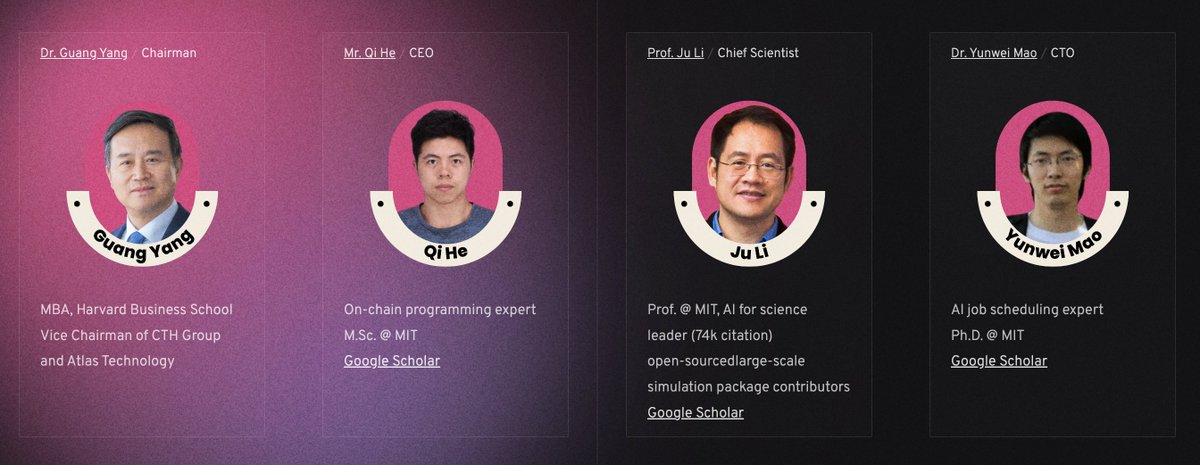
Overview of LooPIN Network and PinFi Protocol ➰LooPIN Network @loopin_network LooPIN Network is an innovative decentralized computing protocol that aims to meet the growing demand for distributed computing power. At its core is the PinFi (Physical Infrastructure Finance) protocol, which leverages unique liquidity solutions to address the challenges associated with decentralized computing networks. By integrating dynamic pricing, secure access, and efficient liquidity management, LooPIN enables a flexible, market-driven approach to computational resources. ➰What is LooPIN? LooPIN is a decentralized framework designed to enable a distributed and efficient marketplace for computing power. The main driver of its uniqueness is the PinFi protocol, which transforms decentralized finance (#DeFi) principles to support physical infrastructure, such as networked computing hardware. By focusing on computing power rather than financial assets, $LooPIN provides an essential infrastructure layer for decentralized applications, especially for tasks like AI training and data processing. ➰Technical Innovations and Key Features ▪️Dissipative Liquidity Pools LooPIN’s liquidity pools differ from traditional DeFi structures by accounting for the time-dependent nature of computing power. Computing resources staked in these pools gradually diminish in capacity as they are consumed, creating a dynamic and adaptive market environment. This unique approach enables efficient allocation and replacement, ensuring that resources are available when needed and used effectively. ▪️Decentralized Liquidity Pools for Computing Power PinFi liquidity pools represent computing power rather than tokens. Miners pool #GPU, #CPU, and other hardware resources, making them available to users in need of computing capabilities. This framework ensures that computing power can be distributed flexibly and transparently, enabling users to access reliable, decentralized infrastructure. ▪️Proof-of-Computing-Power-Staking (PoCPS) The PoCPS model ensures integrity within the network by requiring miners to stake tokens as proof of their contribution. This cryptographic verification process helps prevent false claims of computing resources and maintains accountability within the network, reinforcing the reliability of available resources. ▪️Dynamic Pricing and Token Economy PinFi’s token-based economy uses a dynamic pricing model that aligns the cost of computing power with supply and demand conditions. This approach allows both miners and users to engage in a fair, market-driven exchange, ensuring equitable pricing and compensation. ▪️Security and Transparency By leveraging a decentralized structure, PinFi promotes a secure and transparent marketplace for computing power. Regular audits verify that miners genuinely provide the resources they claim, minimizing risks of manipulation or attacks. ➰Addressed Challenges 1. Reliability of Centralized Networks LooPIN aims to improve reliability and reduce costs by transitioning computing services from centralized models to decentralized, dynamic systems. 2. Pricing and Liquidity Unlike other decentralized platforms, PinFi uses a decentralized market-driven approach for pricing and liquidity, helping avoid inflated costs and inefficiencies in resource allocation. 3. Resource Allocation and Security PoCPS mitigates security concerns by ensuring that only genuine computing power is staked and used. This approach helps counteract malicious behaviors, such as false resource claims or outsourcing attacks. ➰Participant Roles within PinFi - Liquidity Providers (LPs): Contribute computing resources to the liquidity pool and earn compensation based on their contributions. - Providers/Sellers: Offer resources directly, bypassing the staking mechanism. - Users/Buyers: Require computing power for specific tasks, such as AI training. - Verifiers: Ensure transaction integrity and validate the legitimacy of participants’ claims. ➰TEAM Dr. Guang Yang / Chairman hks.harvard.edu/about/guang-ya… Mr. Qi He / Co-founder linkedin.com/in/steven-qi-h… scholar.google.com.hk/citations?hl=e… Prof. Ju Li / Co-Founder web.mit.edu/nse/people/fac… scholar.google.com/citations?user… Dr. Yunwei Mao / Co-founder linkedin.com/in/yunweimao scholar.google.com.hk/citations?user… The LooPIN Network team brings an exceptional academic background to the blockchain space, demonstrating a depth of expertise rarely seen in the field. Their combined research experience and notable h-index metrics highlight a team of accomplished scholars, bringing credibility and insight that sets a new standard for academic excellence in blockchain. ➰Future Directions Ongoing development of PinFi includes the use of Monte Carlo simulations to further refine pricing models and predict real-world dynamics. Additionally, on-chain simulations are planned to explore the blockchain’s capacity for managing dissipative assets. LooPIN Network and its PinFi protocol stand out for their adaptive approach to decentralized computing, bringing a more sustainable and balanced model for the use of computing resources within decentralized infrastructure. dextools.io/app/en/ether/p… It is currently available on Uniswap. For Further Informations docs.loopin.network loopin.network discord.gg/loopin loopro.ai
AlphaCall tweet mediaAlphaCall tweet media
English
15
22
74
18.4K
AlphaCall
AlphaCall@alphacallx·
Aligning AI Innovations Toward a Community Built Open AGI @sentient_agi Sentient is an AI research organization dedicated to establishing an Open AGI Economy for AI builders and creators. Their focus is on developing platforms and protocols that empower open-source AI developers to monetize their models, data, and innovations, collaborate to collectively build advanced AI systems, and become key stakeholders in this emerging Open AGI economy. Why Sentient Currently, the development of AI is dominated by a small number of organizations and individuals within them, driving the race to create AGI while making decisions that impact everyone. Meanwhile, a significant portion of the global population is focused on building AI development and user skills, but they face limited opportunities to showcase their abilities and even fewer pathways to meaningful employment in the field. Sentient aims to bring ownership rights to open AI development. By creating technologies that allow anyone to build, collaborate on, own, and monetize AI products, they seek to usher in a new era of AI-driven entrepreneurship. Sentient envisions a dynamic ecosystem of incentivised researchers, developers and users working together on an open AI platform to build AGI that transcends the limitations of traditional, closed API-based systems. By enabling millions of people to openly contribute to the development of AGI, Sentient aims to align AI progress with the broader interests of humanity. With more people involved, there will be more oversight to prevent harmful systems and more collective intelligence to guide the creation of aligned AI. As a community-driven open AGI platform, Sentient will enable community governance, enabling collaborative decision-making on AGI development, application and safety. This strategy encourages a collaborative rather than competitive response to the difficulties brought about by AI that is under the control of individuals or businesses. “For Sentient, the new AI economy will be open, combining competition and collaboration, and driven by innovative technology.” How Sentient Does It Sentient is developing a platform that enables AI builders to collaborate and monetise their innovations. These builders are the driving force of this new economy, leading the way in creating and sharing advanced AI solutions. The platform's blockchain protocol and incentive mechanism provide the necessary economic structure to support the growth of Open AGI within this collective effort. For this ecosystem to function effectively, AI models hosted on Sentient must adhere to the principles of being open, monetisable and loyal (OML). "Loyal" models are those that remain aligned with the community that created them, with this alignment enforced by the blockchain protocol. Sentient has taken a bold step in AI research by introducing OML models, which will power a shared open AGI economy supporting millions of AI agents and applications for billions of users. Beyond this new model format, Sentient's platform will facilitate large-scale collaboration and dialogue through the tools being developed. These tools will help shape a new era of technology, finance and society. What is the aim of the foundation? The Sentient Foundation is a non-profit organization committed to advancing open-source AI technologies and fostering a decentralized, transparent AI landscape. Its mission is to establish a new Open AGI economy, where AI builders take center stage as key contributors and stakeholders. The foundation will provide the infrastructure and resources needed to build this economy, ensuring that the benefits of the AI revolution are shared by all. By promoting the development of Open, Monetizable, and Loyal (OML) models, the foundation seeks to challenge the monopolistic practices of centralized AI companies, creating a collaborative ecosystem that values and rewards diverse contributions. ▪️Sentient announced the successful close of its $85 million seed round, co-led by Founders Fund, Pantera Capital and Framework Ventures, with many other VCs joining the seed. TEAM The steering community and the contributors are experienced and experts in their field. You may find the details via this link: sentient.foundation/people ROADMAP For Further Info sentient.foundation x.com/sentient_agi linkedin.com/company/sentie…
AlphaCall tweet mediaAlphaCall tweet mediaAlphaCall tweet mediaAlphaCall tweet media
English
19
17
84
6.5K
AlphaCall
AlphaCall@alphacallx·
The selection of challenges in The Innovation Game (TIG) involves a collaborative process that includes both scientific experts and input from decision-makers in the business sector. 1. Expert Committee: The core group responsible for nominating and selecting challenges consists of a committee of experts. These experts are usually scientists, researchers, and specialists with deep knowledge in relevant fields such as mathematics, computer science, engineering, and other domains where asymmetric problems are prevalent. Their primary role is to ensure that the challenges selected are scientifically significant, solvable within the TIG framework, and have potential for impactful solutions. 2. Business Sector Involvement: While the expert committee takes the lead in identifying and nominating challenges, decision-makers from the business sector also play a role. These decision-makers, who may include representatives from industries that would benefit from the solutions generated by TIG, provide insights into the practical and commercial relevance of the challenges. Their input helps ensure that the selected challenges align not only with scientific goals but also with market needs and potential real-world applications. 3. Token Holder Voting: After the expert committee nominates a challenge, it often goes through a voting process involving TIG token holders. This step acts as a check on the committee's decisions, allowing the broader TIG community, which can include stakeholders from both scientific and business sectors, to have a say in which challenges are included in the game. In summary, the selection of challenges in TIG is a collaborative effort that involves both the expert committee, primarily composed of scientists, and decision-makers from the business sector. This combination ensures that the challenges are both scientifically important and commercially relevant, which enhances the overall impact of The Innovation Game.
English
0
0
13
208
Soek (🏠,🪙)
Soek (🏠,🪙)@soek_crypto·
@alphacallx Cheers for bringing this project and article @alphacallx A question that came up and people might find interesting to know is: Who are the experts that make the selection of challenges? Is it only the team or also decision makers from the busines sector? $TIG @tigfoundation
English
1
0
16
275
AlphaCall
AlphaCall@alphacallx·
The development of computational methods is essential to the advancement of data-driven sciences. As we know, algorithms play a critical role in advancing our understanding of and solving complex problems in a variety of fields. However, the traditional approach to developing these methods often limits collaboration and stifles innovation. Closed systems and proprietary frameworks create barriers that make it difficult for new ideas to emerge and gain traction. To address these challenges, a new framework is needed-one that encourages open collaboration and values contributions based on value. Such a framework would allow a wide range of contributors to participate in the creation and refinement of algorithms, thereby advancing scientific development. By creating a transparent environment where the value of computational methods is determined by their effectiveness and adoption, we can create a more inclusive and innovative culture. This approach not only enhances the scientific community’s ability to solve complex challenges but also creates opportunities to attract private investment. By integrating open source principles with a market-driven approach, we can accelerate the development of key computational methods and ensure that innovation is accessible to all. From this point of view, I would like to introduce you a special project that can achieve these goals Where Open Source Knowledge Meets Innovation The future of computational science will be driven by collaboration and creativity The Innovation Game @tigfoundation The Innovation Game (TIG) is the first and only protocol designed to accelerate algorithmic innovation, by coordinating global intelligence. It is a new market-based system designed to accelerate the creation and improvement of computational methods essential to data-driven scientific research. $TIG provides a platform where these methods can be developed, shared, and rewarded, facilitating a collaborative environment that drives progress. This system not only supports the creation of new algorithms but also encourages their continuous improvement through real-world application, making it easier and faster to address scientific challenges. TIG creates an open, collaborative, and competitive ecosystem that connects computational efforts to a wide range of real-world challenges, from artificial intelligence and cryptography to biomedical research and climate science. ➰Coordinating Intelligence in The Innovation Game The Innovation Game (TIG) is a new kind platform that brings together innovators, benchmarkers, and scientists to collaborate and compete in advancing computational methods. By inspiring open innovation and offering a token-based reward system, TIG is transforming the way algorithmic challenges and scientific discoveries are approached. The coordinated intelligence of the TIG is critical to accelerating scientific discovery, driving technological advancement, and creating impactful solutions. By bringing together multiple talents in a collaborative environment, TIG unlocks the full potential of algorithmic innovation and pushes the boundaries of what is possible in computational science. For a better understanding, I need to define some terminology related to TIG. ➰Asymmetric Problems: The Innovation Game is designed to accelerate the development of computational methods specifically aimed at solving “Asymmetric Problems”. These are problems where finding a solution requires a significant amount of computation, but once the solution is proposed, it is easy to verify that it is correct. You can think of it like solving a puzzle: it may take a long time to put the pieces together, but once the puzzle is complete, it’s obvious that the solution is correct. ➰Innovators: Innovators are participants in The Innovation Game who develop and submit methods (algorithms) designed to solve specific instances of the Challenges featured within the system. These Challenges typically involve complex computational problems that require innovative and efficient solutions. Innovators are rewarded with $TIG tokens based on how widely their methods are adopted and used by Benchmarkers. ➰Scientists: Scientists are central to the advancement of computational methods and their real-world applications within The Innovation Game (TIG). They serve as both creators and curators, driving innovation and guiding research. ▪️As creators: Scientists develop cutting-edge algorithms that push the boundaries of what is possible, collaborating with researchers and industry professionals. Their contributions extend TIG's intellectual property and create value for the community. ▪️As curators: Scientists identify and propose new challenges that address critical scientific problems. Their expertise ensures that TIG focuses on significant problems with practical societal impact and keeps the platform at the forefront of computational science. TIG represents the "Science Funding Science" movement, providing a sustainable and decentralized approach to research funding. Scientists gain visibility, recognition, and collaboration opportunities while contributing to a self-sustaining ecosystem that reinvests the value of their research into further innovation. The platform also facilitates translational research, helping scientists turn their discoveries into real-world solutions through industry partnerships and open collaboration. ➰Benchmarkers: Benchmarkers are participants within The Innovation Game who use methods (algorithms) provided by Innovators to solve random instances of the Challenges featured in the game. Their primary task is to apply these methods to specific problems and report the results. Benchmarkers are rewarded with A computational scientist with expertise in algorithm design and optimization. John has a background in solving complex mathematical problems and has contributed to several key projects in this area. tokens based on the efficiency of the solutions they generate, which in turn reflects the performance of the methods they use. ➰Optimisable Proof of Work Optimisable Proof-of-Work (OPoW) has the unique ability to integrate multiple proof-of-work tasks, "binding" them together in a way that prevents optimizations of the algorithms from causing instability or centralization. This binding is reflected in the calculation of each Benchmarker’s influence, which is determined by the adoption rate of an algorithm, based on the influence of the Benchmarkers and the proportion of qualifying solutions they computed using that algorithm. ➰Challanges: In TIG, a challenge refers to a computational problem that has been adapted as one of the proof-of-work tasks within the OPoW system. Currently, TIG includes four key challenges: Boolean Satisfiability Capacitated Vehicle Routing The Knapsack Problem Vector Range Search Over the next year, TIG plans to introduce seven additional challenges from fields such as artificial intelligence, biology, medicine, and climate science. ➰Licenses in TIG In The Innovation Game (TIG), various types of Intellectual Property (IP) are generated through the creation and optimization of computational methods, known as Methods. To manage and distribute these valuable assets, TIG provides several different licensing options. Each license serves a specific purpose and addresses the needs of different stakeholders to ensure that the IP is used effectively and fairly. The purpose of these licenses is to create a flexible system that allows innovators and benchmarkers to use, share, and improve methods while allowing the TIG Foundation to secure and commercialize the intellectual property. This system encourages collaboration, innovation, and sustainable growth of the TIG tokens by ensuring that the IP generated in the game is both protected and accessible. There are 5 type of Licence under Innovation Game TIG Innovator Outbound Game License: Allows Innovators to use previously submitted methods to participate in TIG. TIG Benchmarker Outbound Game License: Allows benchmarkers to use methods to solve challenges. TIG Inbound Game License: Governs the submission of new methods and secures IP rights for TIG. TIG Open Data License: Promotes openness by requiring the sharing of data and source code under certain conditions. TIG Commercial License: Provides freedom in downstream licensing for a fee, exempting licensees from the obligations of the Open Data License. ➰How the Innovation Game works The Innovation Game operates through a well-defined process that ensures continuous innovation and fair competition: - Challenge Selection: A committee of experts nominates computational challenges, which are then voted on by the community. The selected challenges form the basis of the market, with innovators developing methods to solve these problems. - Method submission: Innovators develop and submit their methods to TIG to optimize solutions to the selected challenges. These methods are then used by benchmarkers to solve instances of the challenges. - Benchmarking and Rewards: Benchmarkers use the submitted methods to solve Challenge instances and are rewarded based on their efficiency. Method performance is tracked, and innovators are rewarded with TIG tokens based on the adoption and success of their methods. - Licensing and IP Management: The TIG Foundation secures the IP rights to the methods and licenses them under various models. This ensures that both open and commercial interests are served, and that innovators are fairly compensated for their contributions. ➰The Importance of Open Source Models Open source models play a critical role in the success of The Innovation Game. The TIG Open Data License ensures that data and methods are shared openly, fostering collaboration and innovation. This approach is consistent with the principles of open science, where sharing knowledge and resources accelerates scientific progress. Open source models also prevent monopolistic dominance by ensuring that all participants have access to the same resources. This creates a level playing field that encourages competition and drives continuous improvement. The open sharing of methods and data also builds community trust in the project by maintaining transparency throughout the process. ➰The goal of The Innovation Game and its benefits to the scientific community The primary goal of The Innovation Game is to accelerate the development of computational methods for solving asymmetric problems. These problems are fundamental to many areas of science and engineering, and their solutions can lead to significant advances in fields as diverse as artificial intelligence, combinatorial optimization, and mathematical problem solving. By providing a structured and incentivized environment for innovation, TIG addresses key challenges in scientific research, such as the inefficient allocation of resources and the proprietary nature of applied research results. The project is creating a sustainable model for the open development of computational methods, ensuring that innovations are widely accessible and can be built upon by the global scientific community. The benefits of TIG extend beyond the scientific world, as the methods developed in the project can be applied to various industries. These include sectors such as finance, healthcare and technology, where optimized algorithms can lead to more efficient processes, better decision-making and improved outcomes. ➰About the team and Their experts The Innovation Game is led by a team of professionals with extensive experience in computational science, business, and technology. Key members of the team include ▪️John Fletcher: A computational scientist with expertise in algorithm design and optimization. John has a background in solving complex mathematical problems and has contributed to several groundbreaking projects in the field. ▪️Ying Chan: An economist with a focus on market-based frameworks and value capture mechanisms. Ying has worked on several projects that bridge the gap between basic research and commercial applications. ▪️Philip David: A technologist with a deep understanding of intellectual property management and licensing. Philip has experience managing large-scale open source projects and ensuring that contributors are fairly compensated for their work. Together, the team brings a wealth of knowledge and experience to The Innovation Game, ensuring that the project is well positioned to achieve its goals and make a significant impact on the scientific world. Final words The Innovation Game represents a new approach to computational science, combining the principles of open source with a market-based framework to accelerate the development of important computational methods. By supporting innovation and collaboration, TIG aims to solve some of the most challenging problems in science and engineering, while ensuring that the benefits of these advances are widely accessible. The project's dedication to open source models, combined with its innovative approach to value capture and pricing, makes it a unique and valuable contribution to the global scientific community. As the methodologies developed within TIG find application in various fields, the project's impact will continue to grow, driving progress and innovation for years to come. For Further Information tig.foundation/home x.com/tigfoundation tig.foundation/whitepaper
AlphaCall tweet mediaAlphaCall tweet media
English
45
36
128
29.5K
AlphaCall
AlphaCall@alphacallx·
The Future of Web3 UX is Based on Intentions: Khalani Network @khalani_network ​ The current approach to interacting with blockchains typically requires users to sign transactions, authorizing specific execution paths defined by smart contracts. This method often exposes users to complex, technical details and lacks guarantees about execution outcomes, making the process confusing and intimidating. ​ The Birth of Intention-Centered Interactions 🌱 ​ Intent-centric interactions offer a more user-friendly alternative by allowing users to specify desired outcomes and constraints, known as intents. Specialized agents, called solvers, then execute these intents. ​ This approach has several advantages: ​ 1. Declarative Outcome Specification: Users specify the desired outcome, avoiding the complexity of direct blockchain interactions. 2. Settlement Focus: Intent minimizes value extraction across the MEV supply chain by enforcing desired outcomes. 3. Expressiveness and Customization: Users can define preferences for outcomes, and solvers optimize execution. 4. Developer Flexibility: Developers focus on what users want to achieve and let solvers handle the "how" based on real-time global state. ​ Challenges with Today's Solver Infrastructure 🧩 ​ Despite their potential, solvers—off-chain agents that execute user intents—face significant challenges: ​ 1. Solver Competition and Centralization: Competitive dynamics favor resourceful players, leading to centralization and eroding trust. 2. Brittle Infrastructure for Expressive Intents: Highly expressive intents require integrated solvers, increasing complexity and potentially monopolizing solutions. 3. High Barriers to Entry: Developing and operating solvers from scratch is difficult and only accessible to well-resourced developers. ​ ➰Khalani's Core Values: Collaboration over Competition ​ Khalani is the infrastructure platform to build intent-driven solver networks that evolve with your users' dynamic needs. ​ Khalani aims to reshape the solver infrastructure with a permissionless platform that encourages collaboration over competition. By building a network focused on efficiency, resilience, and decentralization, Khalani acts as a collective solver that integrates with various intent-centric applications and ecosystems. Khalani's Architecture 🏛️ ​ Khalani’s modular architecture includes: 1. Intent Compatibility Layer: Normalizes and publishes externally sourced intents for Khalani solvers. 2. Validity and Validity VM (VVM): An intent processing language and runtime that enables collaborative solving with deterministic execution guarantees. 3. Universal Settlement Layer: Facilitates atomic and multi-domain settlements in any intent system. ➰Why Khalani Network is Needed ​ Intent systems aim to outsource the process of generating state transitions, traditionally done on-chain by smart contracts. Blockchains, with their globally accessible shared space, are ideal for creating common knowledge that facilitates intents by allowing software and data to interact without origin restrictions. ​ ▪️ Common Knowledge as the Foundation for Intents ​ Blockchains serve as common knowledge systems where participants not only know facts but can infer who else knows those facts. This shared knowledge is critical to intent systems, which enable collective action and optimal decision-making by providing a common protocol for communication and decision-making. ​ ▪️ Current Technology Fails to Tap the Power of Shared Knowledge ​ Despite the visibility of all smart contract systems, users face challenges in discovering and selecting the best contracts for their needs due to the cognitive burden of decision-making. Existing technologies, such as exchange aggregators, help but do not provide a universal protocol for optimal selection and execution of intents. ​ ▪️ The Evolution of Aggregators ​ Aggregators identify the best trading paths across multiple exchanges for the end user. However, they limit what is considered "best" and which systems are considered, thereby limiting user preferences and options. ​ ▪️ Aggregator of Aggregators (Higher Order Aggregators) ​ Higher-order aggregators, or meta-aggregators, aggregate the services of multiple DEX aggregators, providing users with a union of trading options from all underlying aggregators. This approach provides greater customization and a more comprehensive search process without significantly increasing overhead. ​ ▪️ Toward Open Aggregator Protocols ​ Meta-aggregators could stop actively integrating with specific DEX aggregators and start passively sourcing them through a registry system. This would make integration and discoverability even better. This would place the responsibility for integration on the aggregators, expanding the search space and improving discoverability, although it introduces complexity and partial solutions. ​ ▪️ The Everything Aggregator Vision ​ An everything aggregator would go beyond DEXs, aggregating across various financial applications such as flash lending to provide comprehensive solutions to user intents. This decentralized orchestration engine would construct and select state transitions from a broad set of decentralized services. Achieving this requires an open, semantically transparent system that ensures security and permissionless integration, a significant departure from current blockchain capabilities. ​ ➰Final Words ​ Khalani aims to build such a system, with a focus on maximizing expressiveness, permissionless collaboration, and intelligent inter-application routing, moving beyond the limitations of existing intent-based projects. By providing the necessary infrastructure for expressive intent-centric interactions, Khalani enhances the Web3 user experience and supports the evolution of sophisticated intents, paving the way for a smarter, more efficient blockchain ecosystem. ​ For Further Information khalani.network github.com/tvl-labs x.com/khalani_network linkedin.com/company/khalan…
AlphaCall tweet mediaAlphaCall tweet media
English
21
23
80
10K
AlphaCall
AlphaCall@alphacallx·
Bring Powerful AI On-chain With Specialized ZK   @ModulusLabs   Despite widespread enthusiasm, running a sizable AI model on-chain remains a daunting task. The substantial compute requirements have historically made these technologies incompatible. Even the thought of it can make any Solidity developer apprehensive.   Rollup technologies are expected to significantly enhance Ethereum's transaction speed, compute capacity, and reduce gas fees while preserving privacy. Despite market challenges, the crypto development community is actively progressing.   This piece explores the feasibility of on-chain AI, beginning with Ethereum L2 rollup advancements, which could create opportunities for verifiable AI on the blockchain. It outlines how these developments might transform computing in the crypto landscape and proposes a path toward implementing powerful AI on Ethereum, clearly marking and revisiting assumptions throughout.   Starkware's rollup technology improves Ethereum's scalability by using zero-knowledge STARK proofs, enabling efficient dApps while maintaining security. However, the CPU-only environment limits the deployment of complex AI models on-chain. AI operations require GPUs for their parallel processing capabilities that CPUs cannot match.   Combining rollup technology with GPU-accelerated provers could enable true on-chain AI, providing verifiable proofs for AI computations while maintaining decentralization and trust. This breakthrough could bring advanced capabilities to #Web3, enabling personalized recommendations, trusted oracles, and innovative tokenomics driven by GPU-accelerated AI.   Integrating AI on-chain offers significant benefits across multiple domains. AI oracles can solve the oracle problem by providing trusted, centralized validation for off-chain data. Decentralized platforms like Kaggle can use verifiable AI to run fair competitions. Healthcare can benefit from decentralized, privacy-preserving AI models. In gaming and the metaverse, trustless AI can improve immersion and governance. While on-chain AI may not match centralized services in raw power, its transparency and trustlessness align with web3 values. These advances could usher in a new era for both AI and blockchain technology.   ✴️The World’s First On-Chain AI Project  Modulus Labs uses cryptography to verify AI Results weren't doctored. *This means smart contracts can access AI, without breaking the trustless creed. *It's like Twitter but for Ai outputs. Team is calling it Accountable Ai ▪️The Rockefeller Bot: The World’s First On-Chain AI Trading Bot 🤖   This marks the first full on-chain deployment of an AI algorithm to the mainnet in the history of both Ethereum and the blockchain. As a result, Rocky's operations are fully autonomous and validated by Ethereum's highest security standards, embodying the essence of a true DeFi protocol. ▪️How does Rocky work? ​ Rocky operates on the StarkNet roll-up, trained on historical quote data between WEth and USDC. It uses a three-layer feed-forward neural network to predict price movements. When Rocky makes a trade decision, it generates a StarkNet proof linked to the output, which is verified on Ethereum. The trade details are sent to an L1 contract, which is connected to a Uniswap router that holds and manages the funds. This ensures that Rocky's funds are controlled by a public algorithm rather than a centralized authority, allowing it to adapt to live market conditions. "The Future of AI x Blockchain = Blockchains that Self-Improve" ​ To surpass web2 counterparts and broaden their offerings, #dApps, #DeFi, #NFTs, and the broader #web3 ecosystem must integrate AI features. The goal is to develop blockchains that can intelligently adapt and evolve, outpacing their static competitors. ​ • Definitions: what trustless intelligence and zk-verified AI inference actually means • Signals from today: case studies from early customer / partnership conversations (Lyra Finance, Astraly, and Aztec Network) • The future: building trustworthy chains that have vision, thought, and autonomy • What’s next: a proof system that’s more than ten times faster than the state-of-the-art ​ ▪️Trustless Intelligence and zk-Rollups 🛡️🔗 ​ The concept of Trustless Intelligence builds on zk-Rollups, which address Ethereum's bandwidth challenges through SNARKs/STARKs. These proofs are generated off-chain and verified on-chain, maintaining high cryptographic security and scalability without sacrificing web3 values. ​ ▪️Mechanisms for Trusted Intelligence 🛡️ ​ AI models can be integrated into zk-proof systems, allowing for centralized computational efficiency while ensuring that the central operator can't tamper with the model. This system provides verifiable AI inference while maintaining trustlessness and decentralization. ​ ▪️Signals from Today: Waves on the Horizon 🌊 ​ Community engagement and interest ​ Rocky, a simple neural network that makes price predictions, received significant community engagement and donations, indicating a growing demand for trustless AI. Several web3 projects have shown interest in incorporating trustless AI. ​ The Future: Chains with Vision, Thought, and Autonomy ​ ▪️AI Enhancements in Distributed Services 🤖🔧 ​ - Fair & Trustless Matchmaking: Enhancing on-chain markets with AI to transparently deliver higher returns and value. - Fair & Trustless Personalization: Using on-chain and off-chain data to calculate complex metrics fairly, improving user experience and trust. - Fair & Trustless Identity Authentication: Implementing advanced AI-based authentication schemes for compliance and identity verification. ​ ▪️A Better Future with Smart Chains 🌟 ​ AI integrated with blockchain can dynamically enhance decentralized services, making them more efficient, secure, and fair. By equipping robots and algorithms with the ability to self-improve, we can achieve a more advanced and trustworthy web3 ecosystem. ​ Zero-Knowledge Machine Learning is it REAL⁉️ ​ Lets Define zkLM first ​ Zero-Knowledge Machine Learning (ZKML) represents a significant merger of Zero-Knowledge Proof (ZKP) technology and Machine Learning (ML). This innovative approach enables the execution and verification of ML models while maintaining privacy and trustworthiness - critical attributes in decentralized systems such as blockchain. ZKML is at the forefront of a new paradigm in computational trust and privacy. ​ Three challenges have always kept crypto enthusiasts ambitions grounded: ​ 1. AI in crypto is early stage: - The integration of AI into cryptography is still in its infancy. Initial use cases must clearly demonstrate the immediate benefits of AI capabilities to the crypto community, such as enhancing dApps in ways that only advanced AI can achieve. ​ 2. Cost-benefit balance: - ZKML features must provide sufficient value to justify their cost. While AI can be extremely useful, it's often not helpful enough to justify the significant (>1,000x) computational overhead of current ZKML implementations. ​ 3. Time-sensitive development: - There's an urgent need to develop these use cases quickly, before the enthusiasm and experimentation on both the developer and consumer sides of AI-enhanced dApps wanes. ​ Whatever direction we take as a category, it needs to focus on applications. Whether creative or practical, the future of ZKML depends on developing more use cases and real-world applications. ​ The Modulus ✓Explorer: the AI Verification Dashboard ​ The ✓Explorer is your easy-to-use guide to ZKML verifications. Every %-verified machine learning result is cataloged here, complete with a dedicated page detailing the verified result and its associated model. This includes on-chain details via Etherscan and in-browser verification. ​ Each page provides context about the model's architecture, performance, historical authorship, and more. Behind the scenes, Modulus' advanced ZK prover pipeline ensures data integrity by logging and verifying results on Ethereum. ​ The team sees this as the first step in making the ZKML security narrative accessible, simplifying the process for consumers to choose responsible AI backed by specialized ZK technology. ▪️Remainder: the world’s most powerful ZKML prover. ​ In one of the initial production implementations of the Modulus team's GKR prover, they've achieved a 180x overhead for proofs compared to raw AI inference on the same hardware. For theoretical details and benchmarks, refer to "Scaling Intelligence: Verifiable Decision Forest Inference with Remainder." ​ If you're interested in an early preview of Remainder, sign-ups are now open for the Modulus Early Access Program (MEAP). Join us to experience the power of specialized ZK and help build the future of verifiable AI! ​ ▪️The World’s 1st On-Chain LLM ​ Ethereum has spoken its first word. ​ Modulus Team announced on March 13th, they had completed the ZK proving of the full 1.5 billion parameter GPT2-XL openai.com/research/gpt-2…. ​ Then team verified it on-chain. Which means that forever and immutably inscribed on Ethereum block 19427725 etherscan.io/tx/0x7a629cf5b… — the record of the first ever LLM output with blockchain security. ​ Why GPT2-XL ​ • GPT2-XL exceeds the one billion parameter threshold — the general complexity regime where LLMs begin to be useful • GPT2-XL is built with a relatively straightforward architecture, consisting of just 48 uniformly-sized decoder blocks which feed sequentially into one another (see this jalammar.github.io/illustrated-gp… wonderful visualization!), making it easy to circuitize Really Impressing!!! 🌟 ​ Here are all the steps the project has taken to get to this stage. ​ • The world’s 1st on-chain AI project, “The Rockefeller Bot x.com/moduluslabs/st…” • The world’s 1st on-chain AI game, “Leela vs the World x.com/moduluslabs/st…” • And the world’s 1st on-chain AI artist, “zkMon x.com/moduluslabs/st…” • The successor to our first paper x.com/moduluslabs/st…, • Scaling Intelligence x.com/moduluslabs/st…” • The world’s largest ZKML application, Upshot’s “zkPredictor x.com/moduluslabs/st…” • And the world’s most expansive ZKML application, Ion’s “Clarity x.com/moduluslabs/st…” TEAM & ADVİSORS & BACKERS For Further Information ​ modulus.xyz @ModulusLabs" target="_blank" rel="nofollow noopener">medium.com/@ModulusLabs github.com/Modulus-Labs x.com/ModulusLabs
AlphaCall tweet mediaAlphaCall tweet mediaAlphaCall tweet mediaAlphaCall tweet media
English
24
23
86
14.1K
AlphaCall
AlphaCall@alphacallx·
Computing Power for All The future of AI is collaborative @hyperbolic_labs "Open source does not mean open access." The idea that AI should be a freely accessible resource is what motivates the initiative. However, simply open-sourcing AI models is not enough. The dominance of large data centers that control GPU resources is a significant obstacle, creating a barrier to AI accessibility. To ensure that everyone has truly unfettered access to AI, both open source models and open access to computing resources are necessary. "Everyone wins when everyone contributes." The future of AI is collaborative. Hyperbolic is building an open-access platform for AI development by aggregating idle computing resources and making them easy to use. This approach allows individuals and organizations to leverage collective computing capacity for AI model training and hosting on our platform, thereby enabling open access to AI. There are more than two billion personal computers in the world, most of which sit idle for more than 19 hours a day. Many companies also reserve data center machines for years, only to abandon them when strategies change. Efficiency improvements, such as Ethereum's switch to Proof of Stake, which virtually overnight left the computing power of 10 million RTX 3090 GPUs unused, have made this issue worse. The goal of Hyperbolic is to prevent the lack of accessible computing power from impeding significant advancements. By driving a collaborative and open future for AI, we strive every day to make this vision a reality. Proof of Sampling: Transforming Verification in Distributed Systems The requirement to provide transaction integrity and security has long been a challenge for decentralized systems. Traditional mechanisms often rely on the assumption that at least some nodes will act honestly, but this assumption can lead to vulnerabilities. ​ Hyperbolic Labs introduces a breakthrough protocol, Proof of Sampling (PoSP), designed to secure decentralized systems through a unique Nash equilibrium in pure strategies that forces rational participants to act honestly. ​ The Challenge with Existing Protocols ​ Decentralized systems like optimistic rollups aim to improve the scalability of the blockchain by processing transactions off-chain and posting results on-chain. However, these systems assume that at least one validator is honest. If all validators collude or act dishonestly, fraudulent transactions could go undetected, undermining the security of the system. Traditional methods often rely on a mixed strategy called Nash equilibrium, in which validators cheat a certain percentage of the time, introducing non-negligible probabilities of undetected dishonesty. ​ The PoSP Protocol ​ PoSP addresses these challenges by introducing a protocol with a unique pure strategy Nash equilibrium that ensures that all rational nodes act honestly. Here's how it works: ​ 1. Asserter Selection: A node is randomly selected as an asserter to compute a value \( f(x) \) and output the result. ​ 2. Challenge Mechanism: A challenge mechanism is triggered with a given probability. If it is not triggered, the asserter is rewarded. ​ 3. Validation: When triggered, multiple validators independently compute \( f(x) \). If their results agree, the result is accepted, and rewards are distributed. Mismatches trigger an arbitration process that penalizes dishonest participants. ​ This approach ensures that even if validators do not know who else is validating, they will act honestly to avoid penalties, thus maintaining the integrity of the system. ​ Application in Distributed AI Inference ​ PoSP is particularly effective in decentralized AI inference networks where confidence in the model's output is critical. For example, when analyzing complex problems using advanced models such as Llama2-70B, it's critical to ensure that the correct model is being used and that the results are accurate. ​ SpML: A Decentralized AI Inference Solution ​ Built on top of PoSP, SpML (Sampling-based Machine Learning) leverages the strengths of optimistic fraud proofs and zero-knowledge proofs while balancing scalability and security. Here's how SpML works: ​ 1. Deterministic ML Execution: Uses fixed-point arithmetic and software-based floating-point libraries to ensure consistent, deterministic ML executions. ​ 2. Stateless Design: Treats each query independently, maintaining statelessness and ensuring reliable ML processes. ​ 3. Permissionless Network Participation: Allows anyone to join and contribute, ensuring model validation and promoting network security. ​ 4. Off-chain Operations: AI inferences are computed off-chain, reducing blockchain load while ensuring authenticated results. ​ 5. On-Chain Operations: Critical functions, such as total balance calculations, are performed on-chain to ensure transparency and security. How SpML compares to existing solutions 🤔 ​ SpML offers several advantages over existing distributed AI solutions: ​ 1. Security: Unlike opML (optimistic fraud proof), which relies on economic disincentives, and zkML (zero-knowledge proof), which is secure but computationally expensive, SpML achieves high security through economic incentives with low computational overhead. ​ 2. Delays: SpML mitigates delay problems, ensuring real-time results without significant computational verification. ​ 3. Scalability: SpML is highly scalable, handling extensive network activity without performance degradation. ​ 4. Simplicity:SpML maintains a consistent simplicity of implementation, facilitating widespread adoption. ​ 5. Overhead: SpML incurs low computational overhead, even during challenge mechanisms. The PoSP protocol, and by extension SpML, represents a significant advance in securing distributed systems. By ensuring that rational nodes act honestly, PoSP addresses fundamental security concerns and paves the way for scalable and reliable distributed applications. Future exploration of PoSP within Layer 2 architectures and its potential in Actively Validated Services (AVS) promises further improvements in the security and efficiency of distributed systems. ​ Team The team consists of 10 people, all doxxed and experts in their fields. hyperbolic.xyz/about ​ Final Words ​ The idea that AI ought to be a freely accessible resource is what motivates the Hyperbolic Initiative. However, simply open-sourcing AI models is not enough. The dominance of large data centers that control GPU resources is a significant obstacle that creates a barrier to AI accessibility. In order to provide truly unfettered access to AI for all people, not only open source models are needed, but also open access to computing resources. ​ Hyperbolic is building an open access platform for AI development by aggregating idle computing resources and making them seamlessly easy to use. This approach allows individuals and organizations to leverage collective computing power for AI model training and host models on their platform, enabling open access to AI. ​ For Further Information ​ hyperbolic.xyz compare
AlphaCall tweet mediaAlphaCall tweet mediaAlphaCall tweet media
English
26
26
94
13.3K
AlphaCall
AlphaCall@alphacallx·
Spatial Computing, Privacy and the Rise of the @Posemesh ​ ​ The spatial computing industry is developing extensive surveillance capabilities, enabling it to perceive the world from our perspective. The dominant player in this field will gain unprecedented power to observe and influence our thoughts. ​ In 2014, Naval Ravikant presciently predicted the need for a fifth protocol, in addition to the four core protocols of the current Internet, to programmatically manage the distribution of energy and resources among machines. ​ 1) Link Layer: The physical hardware connections over things like Ethernet and Wi-Fi that enable devices to send and receive data over a network. ​ 2) Internet Layer: Routes packets of data to their destination over multiple interconnected networks. ​ 3) Transport Layer: The transport layer ensures the reliable and orderly delivery of data packets, managing flow control, error checking, and data segmentation. ​ 4) Application Layer: Protocols like HTTP, SMTP, and FTP that allow applications to interface with the internet. ​ The fifth protocol would allow machines to exchange value with each other at the speed of their processing capabilities. In their negotiations and allocations of scarce resources, machine agents require a universal protocol for expressing, storing, and transferring value among themselves. ​ 5) Trade Layer: A way to express, store, and transfer value and ownership between machines. ​ A programmable representation of value that can move at machine speed and transact in micro-cents in fractions of a second is essential for the smart cities of the future. At the time, Naval Ravikant saw cryptocurrency as a potential candidate for this fifth layer. ​ However, he overlooked the need for an additional protocol of even greater importance to machines. How can machines understand streets and the world at large without a common understanding of our physical space? Devices that only interact with the Internet cannot reason about the physical world. ​ Today, our digital devices lack a critical sense that humans take for granted. The ultimate form of AI will require an understanding of spatial machine proprioception. Proprioception allows us to understand the position and movement of our bodies without looking, while our sense of direction helps us understand our place in the world. ​ Currently, most digital devices lack these basic senses and rely on very basic and low-resolution approximations of space. Digital devices need to develop a collaborative sense of machine proprioception so that they can share and reason about spatial data collectively. ​ 6) Spatial Layer: A universal spatial computing protocol, allowing machines to collaboratively reason about physical space. Spatial computing, considered the sixth protocol, serves as the bridge between the digital realm and the physical world we live in. Every major tech company is gearing up for the Spatial Internet, working to solve the challenge of machine proprioception to drive the AI revolution, develop smart cities, and shift from mobile to spatial computing. ​ ""Many analysts describe Tesla as an AI company rather than a car company, but even this perspective misses the bigger picture. Tesla's true value lies in its millions of moving cameras that create a spatial model of the world for its cars and robots to understand. Tesla's AI, trained on real-world data rather than Internet-derived information, has a significant advantage. As one of the leading spatial computing companies, Tesla has a long-term advantage in the race for AI supremacy."" ​ A purely semantic understanding of the world is insufficient for many of the tasks we envision for AI and robots. Even simple tasks like "Find the keys on the kitchen counter" require spatial reasoning. AI limited to the Internet will consistently fall short of our expectations. —————————————————————— “A culture cannot evolve any faster than its language evolves, and it cannot be any more glued together than the bandwidth that its languages will tolerate.” Terence McKenna I want to write about this aphorism because it is so important to get the main idea about language. There is a deep connection between language, culture, and cognitive development. Let's break it down from an epistemological perspective: ​ The relationship between language and culture is profound and multifaceted, with each shaping and constraining the other in fundamental ways. Language is more than a tool for communication; it is the very framework of our cognitive processes. The structure and vocabulary of a language influence how its speakers perceive and categorize the world around them, a concept known as linguistic relativity. ​ As cultures encounter new ideas or develop new concepts, they must find ways to express them linguistically. This may involve creating new terms, repurposing existing words, or borrowing from other languages. The speed at which a language can adapt to express new ideas effectively limits the speed at which those ideas can spread and be integrated into the culture. This linguistic evolution is critical to cultural development because it enables the articulation and transmission of new thoughts and experiences. ​ The "bandwidth" of a language-its ability to convey complex or nuanced ideas-plays a critical role in cultural cohesion and development. Languages with larger vocabularies or more flexible grammatical structures may allow for more precise or elaborate expression of concepts, facilitating a deeper shared understanding among members of the culture. This shared understanding is essential to cultural cohesion, as it forms the basis of shared meanings and values within a society. ​ Our ability to know and understand the world is intrinsically linked to our ability to conceptualize and communicate about it. If a language lacks words for certain concepts or phenomena, it becomes more difficult for speakers to think about or explore those areas, potentially limiting the growth of knowledge in those areas. This illustrates how language can both enable and constrain epistemological development within a culture. ​Different languages encode different aspects of experience, potentially leading to differences in worldviews across cultures. This linguistic relativity can influence everything from color perception to conceptions of time and space, shaping the unique perspectives and understandings that define different cultural groups. ​ Moreover, language serves as the primary vehicle for cultural transmission. The richness and nuance of a language directly affect how effectively cultural knowledge, values, and practices can be passed down through generations. This transmission is critical to cultural continuity and evolution, allowing societies to build on the wisdom and experience of their predecessors. ​ In essence, this perspective underscores the vital role of language in shaping our understanding of the world and our ability to develop culturally and intellectually. It suggests that linguistic development is not merely a by-product of cultural evolution, but a necessary precursor and facilitator of it, tying the fate of cultural progress to the expressive power and adaptability of language. ————————————————————— Earlier this year, Apple demonstrated its commitment to spatial computing with the launch of Vision Pro. Tim Cook claimed that the world is moving toward a fundamentally new computing paradigm. "Just as the Mac ushered in personal computing and the iPhone ushered in mobile computing, Apple Vision Pro aims to usher in the era of spatial computing." ​ The coming change isn't just about moving from phones to wearables; it's a historic shift in how we engage with information and connect with each other. The next era is about experiencing the Internet in our physical environment, not just carrying a computer in our pocket or wearing one on our face. ​ The hidden implication of this visionary concept is that the development of the language stack is one of the most transformative endeavors humanity can undertake. For augmented reality to function as an effective language, it must be shared. We need a common digital layer overlaying the physical world, and our devices cannot achieve this without a common understanding of position and physical space. ​ Thus, the sixth protocol sits at the intersection of three of the greatest economic opportunities in history: #AR, #IoT, and #AI. Digital devices lack inherent spatial awareness, relying on cameras and centralized visual databases to determine their location with high accuracy. However, this technology raises significant privacy concerns as it involves extensive data collection, often without informed user consent, and the potential for pervasive surveillance through ubiquitous AR glasses and always-on cameras. ​ The trend toward centralizing such data threatens cognitive freedom, making it critical to find ways to balance technological progress with privacy. Spatial data collection is progressing quickly, with humans currently assisting robots in mapping areas inaccessible to autonomous vehicles. ​ While streets and public spaces are well mapped through technologies such as Google Street View and augmented reality apps, private spaces remain largely unmapped. Smartphones and other consumer devices are becoming part of a vast network of sensors that collect spatial data.The next frontier in spatial mapping is likely to be our homes and workplaces, as evidenced by Amazon's attempted acquisition of iRobot. ​ This inevitable technological evolution will have profound implications for privacy, culture, and the economy, shaping the future of human civilization both on Earth and beyond. The blockchain and cryptocurrency movement, which initially focused on decentralizing finance, has unfortunately attracted more speculators than builders, leading to resource misallocation and fraud. ​ To address this, the decentralization movement needs to shift its focus to more pressing issues, such as AI and spatial computing, to attract innovative builders and engineers. This change is critical given the significant resource disparity between tech giants and decentralization advocates, with large companies employing far more engineers than the entire blockchain space. ​ The rise of AI and spatial computing presents both immense opportunities and challenges, particularly in extending digital twins into private spaces. In response, decentralized physical infrastructure networks (#DePIN) are emerging as a potential solution to counter Big Tech's dominance in controlling spatial data and infrastructure. ​ These networks offer the potential to outperform traditional cloud architectures in both performance and cost, while preventing the concentration of data in the hands of a few companies. Ultimately, the decentralization movement is realizing that Satoshi's true legacy lies in empowering people and free markets to own and maintain critical infrastructure, challenging the hegemony of profit-driven corporations in an increasingly AI-dominated world. The Posemesh ​ Posemesh is a decentralized network and protocol designed to enable the secure and private exchange of spatial data and computing power between digital devices. It aims to create a common understanding of the physical world while preserving privacy and upholding to the principles of decentralization. The system allows devices to form ad hoc distributed spatial computers that optimize resource allocation based on economic interests. ​ Different actors in the Posemesh, including headsets, robots, and virtual property owners, can contribute or request sensor data, processing power, storage, and other services. The network uses a blockchain-based reward and reputation system to balance resource allocation and ensure trustworthy interactions between participants. ​ Unlike centralized efforts by tech giants, the Posemesh approach offers technical and ethical advantages. It allows for seamless collaboration between smaller domains and clusters, rather than creating a single large digital twin of the world. This method supports the benefits of spatial computing without contributing to surveillance capitalism. ​ Posemesh is positioned as a foundational element for the future of the Internet and language itself, with applications in commerce, entertainment, and logistics already in development. To address concerns about maintenance, trust, scalability, and performance, the project is implementing a blockchain-enabled rewards and reputation layer. This layer aims to ensure that Posemesh operates as a public utility, serving civilization rather than corporate interests, while preserving cognitive freedom in the evolving landscape of communication. ​ Augmented reality requires pinpoint 3D positioning for the experience to be shared. If we want to manifest some digital information in physical space and see it the same way, then our devices need to have a consensus about their relative position. But digital devices don't have an inherent understanding of their place in the world, and the GPS can only tell the device what vicinity it's in. And it doesn't work indoors, and it doesn't work in dense environments. To solve the problem of positioning, everyone from Tesla to Apple, from ByteDance to Snap, has turned to the camera. By comparing the visual feed of your device to the centralized databases of these companies, your device can recognize its position. But this means that big tech is looking through our eyes. And soon, the transition from handhelds to wearables will mean that the cameras are on our faces. And that's the plan. ​ AR is an inevitable improvement to our way of communicating with each other, but big tech is plotting to own the very infrastructure of the future of language. Our cognitive liberty is at stake. How can we embrace this powerful technology and maintain privacy if the camera has to be on? They are building Posemesh, a universal spatial computing protocol for the next 100 billion people, devices, and AI. ​ PoseMesh decentralizes the positioning service in a privacy-preserving and permissionless way. Rather than a giant centralized copy of the world, PoseMesh is a protocol for moving between smaller maps of private domains. Instead of sharing your camera feed with companies, you can privately exchange spatial data with the domain that you're visiting or with peers that are in your area. Posemesh is a foundational part of the future of the internet and of language itself. But Posemesh requires a new kind of infrastructure to allow for collaborative spatial computing in a privacy-preserving way. ​ Tokenomics ​ The Posemesh economy begins with an initial mint of 10 billion $AUKI tokens, after which the supply will deflate as services are consumed. Deflation will decrease asymptotically until the network reaches a total supply of 5 billion $AUKI, representing half of the initial supply: auki.gitbook.io/whitepaper/add…. Illustrative diagram of token economy. Non-binding and non-representative Team   linkedin.com/company/aukila…   You can check all team members through this link.   And I am sure you have seen one of the videos of "Nils Pihl (CEO Auki Labs) before.   TBH, he is a very talented guy; his rhetorical skills and visionary approach contribute greatly to AukiLabs.   If you don't see, please watch this one:   youtu.be/esfmPo-pLT0   Final Words   The development of spatial computing and Posemesh represents a pivotal moment in the evolution of technology. As they integrate advanced AR, IoT, and AI into our daily lives, the balance between innovation and privacy becomes more important. The decentralization movement, with its focus on equitable and democratic control of data and infrastructure, offers a way to use these technologies responsibly.   Posemesh aims to create a collaborative and decentralized spatial computing network to ensure that the incredible potential of these technologies is realized without sacrificing privacy or autonomy. This protocol is a testament to the possibility of a future where technological advances benefit all of humanity, not just a few corporations.   As we navigate this shifting epoch, it is essential to prioritize ethical considerations and build systems that preserve our cognitive freedom. The journey ahead will shape our society and culture for generations, so it is imperative that we embrace these changes with a commitment to preserving the values of privacy, fairness, and decentralized control.   For Futher Information   linktr.ee/posemesh
YouTube video
YouTube
AlphaCall tweet mediaAlphaCall tweet mediaAlphaCall tweet media
English
31
34
112
19.2K