Sabitlenmiş Tweet
**
2K posts



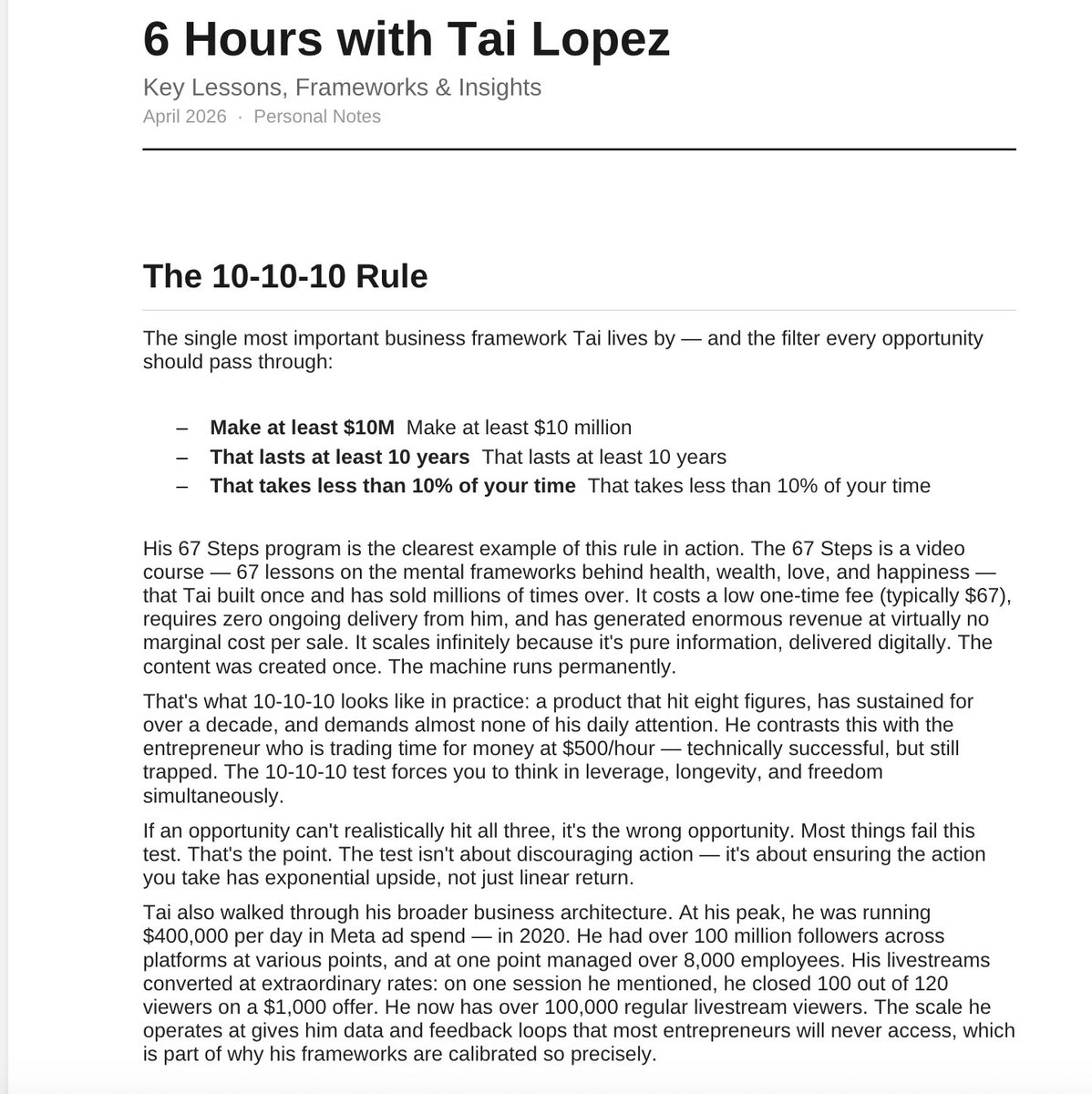
I paid Tai Lopez $60K to spend 6 hours with me today in LA to teach me how to make $800M asap like he did.
I took 7 pages full of notes.
Comment "X" and I'll share it with you too

English
** retweetledi

This 16-minute talk by two Anthropic engineers who built Claude Skills will teach
you more about building them right than most developers figure out on their own in months.
Bookmark this & watch, no matter what.
Then read the guide below by @eng_khairallah1
Khairallah AL-Awady@eng_khairallah1
English
** retweetledi

Brian Armstrong explains how he built Coinbase on nights and weekends while working at Airbnb
Brian first advises those who are currently employed to not build your project on company hours or on your company laptop:
“If you build it on company time or on the company hardware, the company probably owns the IP.”
Then he describes his schedule for working on Coinbase while still working full-time at Airbnb.
“I would often work [at Airbnb] until 7pm. I’d come home, eat dinner, and then I would work from 8pm to midnight. I would do that maybe 3-4 days a week on weekdays. And then on the weekend I’d work Sunday afternoon for 7-8 hours.”
Brian did this consistently for about a year and a half until Coinbase was far enough along for him to get seed funding from Y Combinator.
“It sucked. I mean I was tired after the full day of work [at Airbnb]. But this is where determination comes in… At that moment in time, I was in my late 20s, and I was like, ‘I really want to try to build something important in the world.’”
When asked how he maintained friendships during this time, Brian replies:
“I was pretty intense about it. I would say I sacrificed friendships for it. It’s not like I was just never responding to people, but I’ve seen this happen to various people. They get to a certain point in their life. Sometimes they turn a certain age where they thought they would have more done by then or maybe someone in their family passes away and they’re like, Oh my god, time is finite. It’s precious. And something happens where they’re like, ‘I’m going to get this done, no matter the cost.’”
Brian tells those out there who might be in a similar situation:
“Go hard at it. Finish your book. Launch your thing. Just start doing stuff - and even if you don’t know what to do, just do anything, because action will produce information and it’ll help you get to the right thing.”
Video source: @StevenBartlett (2022)
English
** retweetledi

Quentin Tarantino reflects on losing sight of his dream in his 20s and realizing his mistake when a colleague turned 30.
English
** retweetledi

In 2013, a lecture at Yale University quietly redefined how decisions are actually made.
Almost no one talks about it.
Ben Polak didn’t focus on complex theory he focused on real behavior. How people think, react, and adapt when outcomes depend on others.
And that’s what makes it powerful.
It introduces Game Theory not as equations, but as a mental model. A way to see situations more clearly when multiple players, incentives, and uncertainty are involved.
Concepts like dominance and backward reasoning stop being academic ideas they become practical tools. You start thinking ahead, anticipating moves, and positioning yourself better instead of just reacting.
That’s the real shift.
Decision-making stops being guesswork and starts becoming strategy.
And once you see it, you can’t unsee it.
Because the world doesn’t reward the smartest person in the room…
It rewards the one who understands the game.
Md Riyazuddin@riyazmd774
This is the first time AI feels like a real operator, not a tool. Lindy: • prepares your meetings • sends messages mid-call • updates your systems automatically At some point, “being productive” will just mean setting the right systems once.
English
** retweetledi

🚨 Sam Altman literally gave a 43-minute masterclass on turning ideas into billion-dollar companies.
Most people will never watch it.
And instead of hype, he broke down what actually makes startups work.
No fluff. Just reality.
He explained that ideas don’t matter nearly as much as execution. The difference between something small and something massive isn’t the idea it’s how relentlessly it’s built and improved over time.
He also emphasized that the best founders don’t chase everything. They focus on one thing that truly matters and push it forward with extreme clarity. Distraction kills more startups than competition ever will.
And then there’s scale. Truly big companies aren’t built for a niche they solve problems that millions of people care about. If the market isn’t large enough, the outcome won’t be either.
His biggest insight? Startups don’t win because they’re smarter they win because they stay in the game longer and iterate faster.
That’s why this masterclass stands out.
Because while most people are waiting for the perfect idea…
The best ones are already building.
English
** retweetledi

** retweetledi

** retweetledi
** retweetledi

Repo: github.com/JCodesMore/ai-…
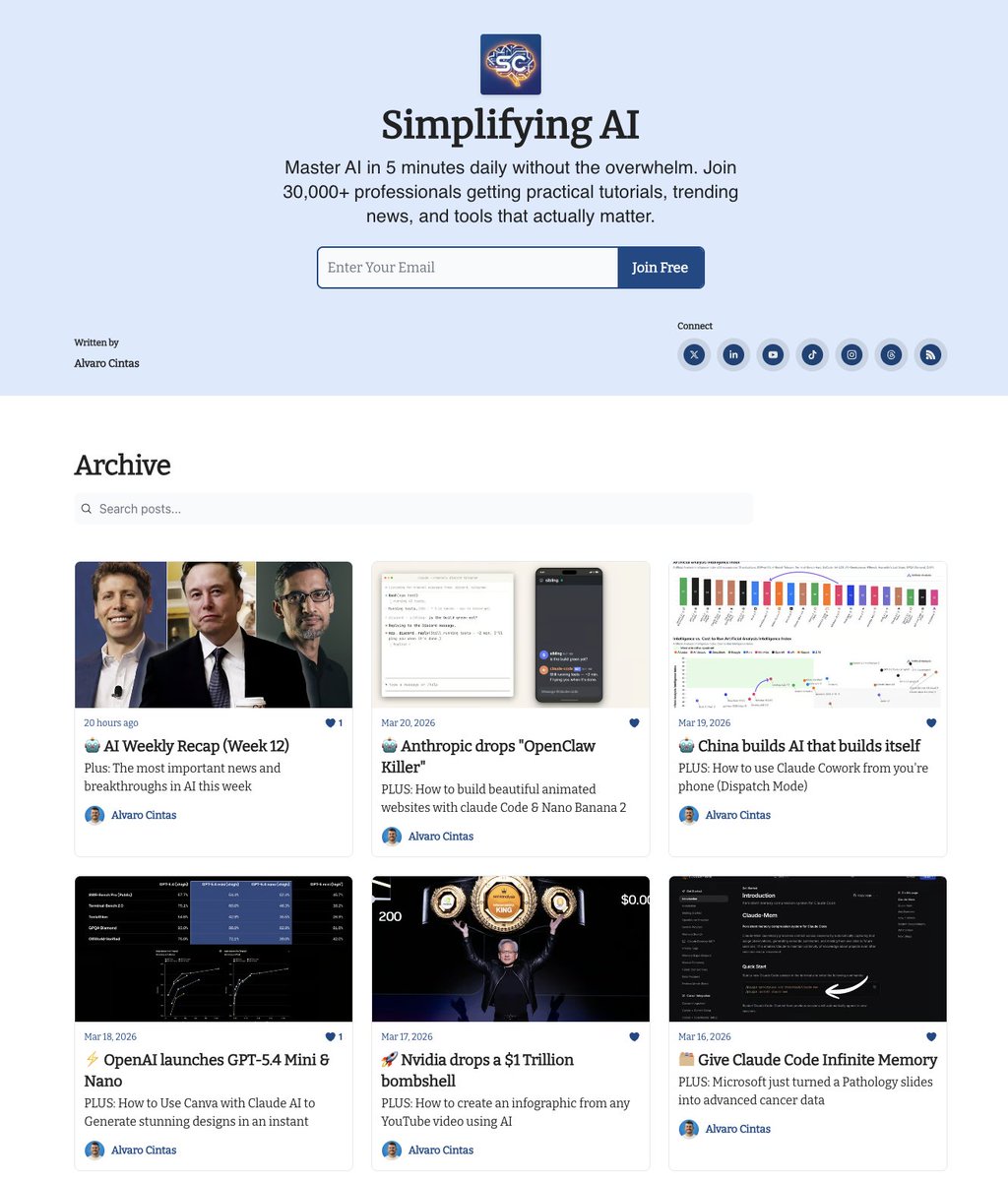
If you want more practical AI gems and use cases, join our free newsletter with daily tutorials and latest news in AI: simplifyingai.co
English

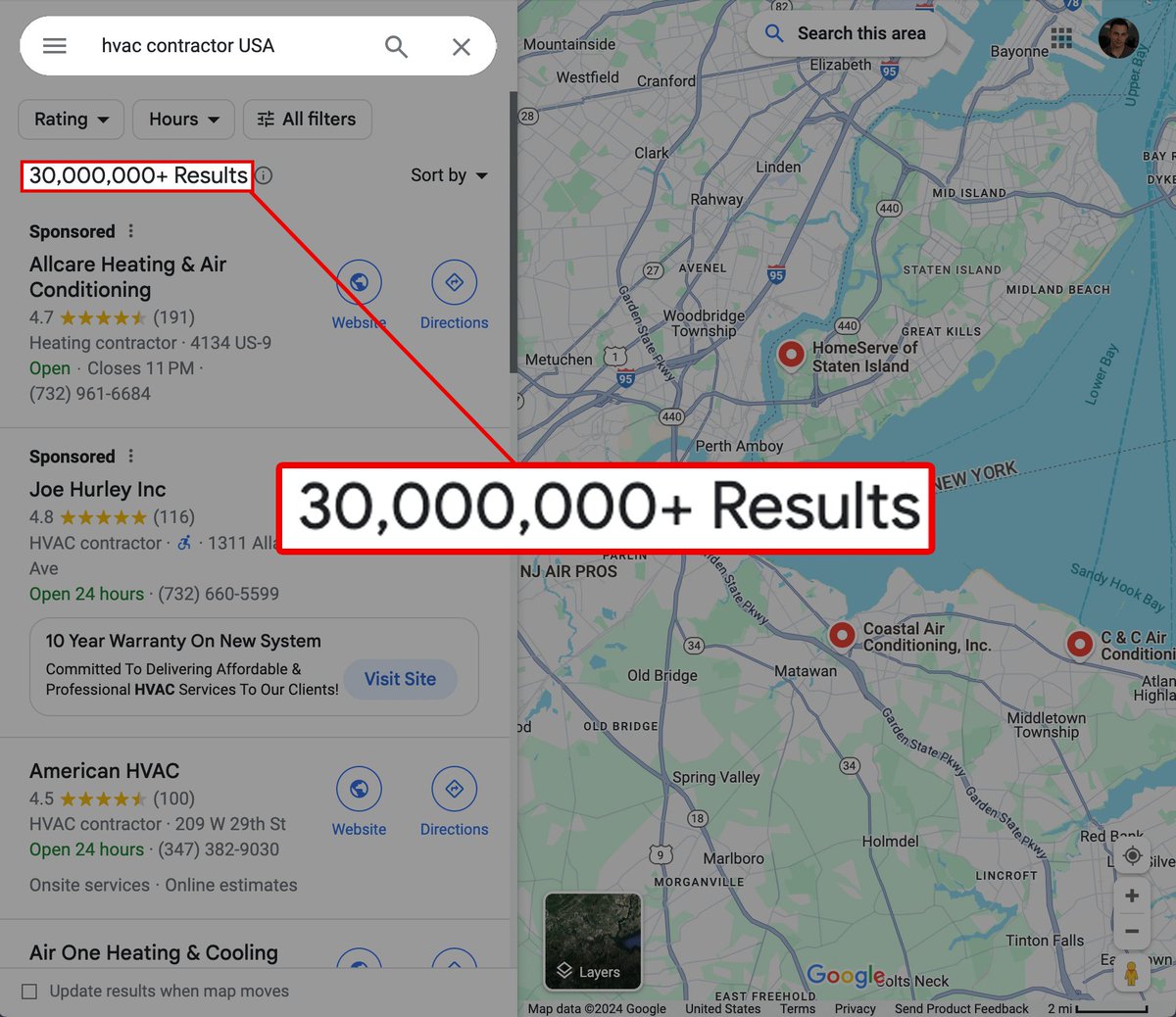
I MIGHT GET SUED FOR THIS, BUT YOLO:
I just found a way to scrape over 200 million local businesses..
You can use this for cold email, cold calling or even door knocking..
And craziest part — IT'S COMPLETELY FREE.
Comment "G" and I'll send it to you. (24h only)
English
** retweetledi

Scott Adams: "This is one of the best reframes I've ever used."
Focus on curiosity, instead of focusing on the problem.
English
** retweetledi

In 2003, Elon Musk gave a 46-min masterclass at Stanford.
His framework:
- The feature nobody cared about became PayPal
- "Best idea wins"
- Why he never went back to school
12 lessons:
English
** retweetledi

he was in a whole different plane of existence in 2023 how did he even make this
English
** retweetledi

when you become a millionaire in 1-3 years because you sell personalised knowledge bases and it’s all because (I repeat):
1: you learn how to build llm knowledge bases (the guide drops everything you need)
2: you go to people who are cash rich and time poor. lawyers, doctors, consultants, agency owners, property investors, founders. people drowning in information they never have time to organise
3: you show them what a personalised knowledge base looks like. their research, their documents, their industry intel, all compiled into a searchable wiki that gets smarter every time they use it
4: you offer a one-time build for 1.5k. you set up obsidian, build the folder structure, configure the schema, clip their first 20-30 sources, run the compilation, hand them a working system with a walkthrough
5: you offer a yearly maintenance package for 500. you update their wiki with new sources, run health checks, add new topics as their work evolves, keep the whole thing current
6: you land 5 clients and that’s 7.5k upfront plus 2.5k recurring every year. 10 clients and you’re looking at 15k plus 5k annual. for a system that takes you a few hours to build once you know the workflow
7: again, if you find 200 clients and you’re sitting on 300k upfront and 100k recurring every single year. for building markdown files.
the beauty of this is the work gets faster every time you do it. your second build takes half the time of your first. by your fifth you could knock one out in an afternoon.
and the people who need this most have no idea it exists. their competition definitely doesn’t have one. you’re not selling software. you’re selling an unfair advantage in their specific field.
hoeem@hooeem
English
** retweetledi
** retweetledi