
Álvaro

11.2K posts

Álvaro banner
Álvaro

Álvaro

@alvaro_fe

One day you will understand

Spain Katılım Ocak 2011
260 Takip Edilen326 Takipçiler
Álvaro retweetledi
Physics In History
Physics In History@PhysInHistory·
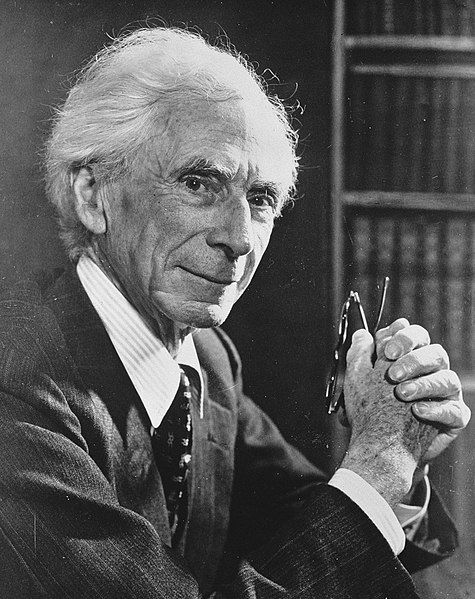
The fact that an opinion has been widely held is no evidence whatever that it is not utterly absurd; indeed in view of the silliness of the majority of mankind, a widely spread belief is more likely to be foolish than sensible. -- Bertrand Russell
Physics In History tweet media
English
46
119
405
15K
Álvaro retweetledi
Pau Vivas
Pau Vivas@Pauetevilo·
Hacienda acaba de publicar los datos salariales de 2024. Acompáñenme a ver la España REAL y la historia que nos cuenta, la historia de un país de TRABAJADORES POBRES. Hilo va 🧵
Pau Vivas tweet media
Español
111
1.6K
2.7K
353.6K
Álvaro retweetledi
Jesús Fernández-Villaverde
Jesús Fernández-Villaverde@JesusFerna7026·
Este post de apoyo a @Jongonzlz está escrito y publicado conjuntamente con @lugaricano. El sistema público de pensiones contributivas en España se encuentra en una situación muy complicada. El sistema actual ofrece a los cotizantes una rentabilidad real implícita anual del 3,63 %. Dado el crecimiento de los cotizantes y de la productividad en España, esta tasa está al menos dos puntos porcentuales por encima de la que garantiza la sostenibilidad del sistema a largo plazo. De manera más sencilla: el valor presente descontado de las pensiones contributivas es aproximadamente un 60 % mayor que el valor presente descontado de las cotizaciones. Los jubilados contributivos en España están recibiendo mucho más de lo que pagaron. Esta rentabilidad excesiva ha generado un problema fundamental: un déficit del sistema contributivo de unos 61.000 millones de euros (el de verdad, no el de las cuentas del Gran Capitán que incluyen las transferencias del Estado) y que no deja de crecer. Este déficit genera presiones sobre las cuentas públicas que limitan la capacidad de las administraciones públicas para implementar muchas políticas necesarias, desde la educación hasta la infraestructura. Y desde el punto de vista de la equidad intergeneracional, esta rentabilidad excesiva nos ha colocado en la paradójica situación de que las personas de 65 a 85 años tienen la renta disponible más alta de todos los grupos de edad en España. El sistema necesita una reforma profunda. Por ejemplo, es clave reintroducir un factor de sostenibilidad en el valor de las pensiones que considere el crecimiento de los cotizantes, la productividad y la esperanza de vida. Muchas economías avanzadas han introducido estos factores e incluso España avanzó en esa dirección hasta la reforma Escrivá de 2021-2023. Jon González, @Jongonzlz, de manera casi solitaria, ha acometido una labor impagable de documentar esta situación (y otros temas clave de nuestra economía), y ha conseguido poner a la sociedad frente al espejo de la insostenibilidad de la situación actual. Desgraciadamente, el sistema político no tiene ninguna gana de enfrentarse a este problema. La edad mediana del votante español está en torno a los 51 años. Uno de cada tres electores tiene 60 años o más; uno de cada cuatro ha cumplido 65 años. Si se suman a los 15 millones de inactivos en edad de votar los casi 3 millones de empleados públicos, el resultado es que más de la mitad del censo electoral residente en España vive de una transferencia o de una nómina pagada con impuestos. La aritmética básica de cualquier elección en España descansa, por tanto, sobre un electorado en el que la minoría la constituyen los asalariados del sector privado en edad activa. Pedir a un partido con vocación de gobierno que recorte la rentabilidad implícita de las pensiones contributivas es pedirle que confronte directamente a su votante mediano. Ningún sistema político hace eso voluntariamente y el español no es la excepción. Por eso, en lugar de hablar de números, se busca descalificar al mensajero. Desafortunadamente, las narrativas maniqueas de buenos y malos—si eres bueno, prefieres pensiones altas; si no eres malo o estás a sueldo de los malos, tienen éxito en España porque nuestra conversación nacional se centra siempre en la “justicia” o la “moralidad” y nunca en los números. Es normal: somos un país con poca tradición de análisis riguroso y, menos aún, de análisis basado en los números. “Mi abuela merece una pensión más alta” siempre es más fácil de explicar que “la rentabilidad real implícita del sistema está por encima de lo que nos podemos permitir”, y, además, le coloca a uno en el “lado bueno”: el de los que quieren dar más dinero, no menos, como los malvados economistas. Pero lo realmente preocupante no es que se intente descalificar al mensajero en lugar de analizar sus argumentos. Lo que se busca es poner en riesgo su situación profesional. Ante las órdenes de la Moncloa, cualquier trabajo en España es precario. Nosotros mismos lo experimentamos en carne propia cuando, en 2012, se nos despidió de FEDEA, una fundación con la que colaborábamos, por orden directa y explícita de Moncloa. Ya no es una cuestión de si uno está de acuerdo o no con Jon. Es algo mucho más importante. ¿Se puede analizar la realidad económica de España sin que las jaurías mediáticas busquen tu “cancelación” profesional? Es este el momento de decir las cosas claras y mostrar nuestro apoyo absoluto y total a Jon. Por eso hemos tomado la decisión inusual de publicar este post simultáneamente. Jon, te agradecemos profundamente lo que haces.
Jesús Fernández-Villaverde tweet media
Español
90
1.5K
3.6K
162.7K
Álvaro retweetledi
Ángel Talavera
Ángel Talavera@atalaveraEcon·
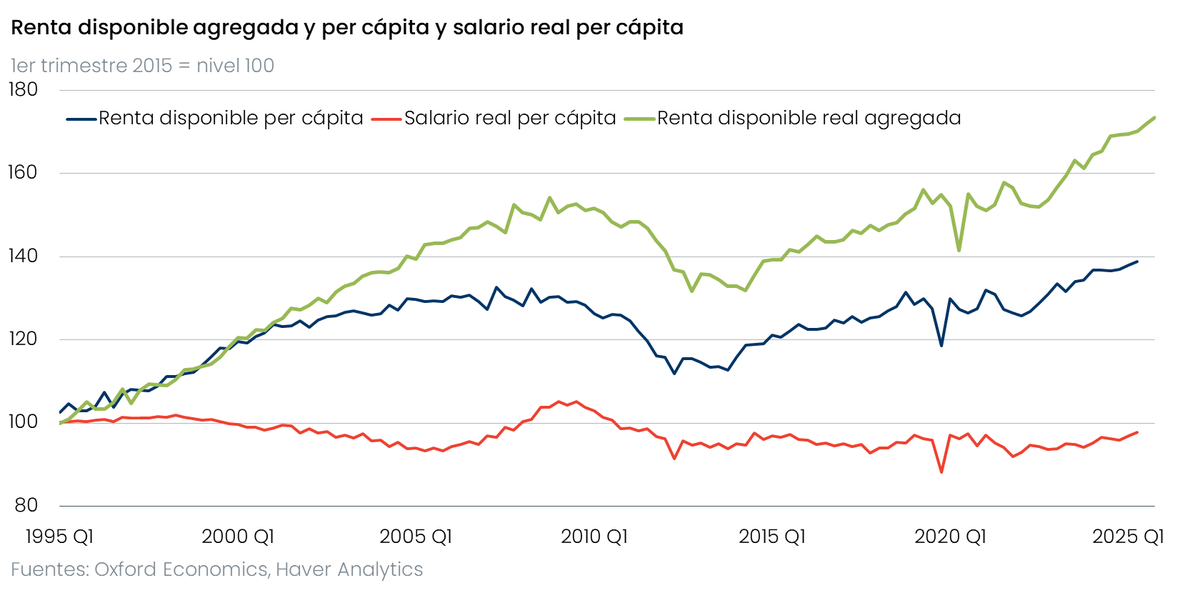
Ante la consternación por los hechos acaecidos en esta nuestra querida red social, solo queda que los que ponemos grafiquitos (algunos desde hace más de 10 años) sigamos en ello para quien le interese. Aquí el gráfico que creo ejemplifica mejor la desconexión macro y micro.
Ángel Talavera tweet media
Español
23
121
385
92.5K
Álvaro retweetledi
Shane Parrish
Shane Parrish@shaneparrish·
John D. Rockefeller was spot on about media dividing society by focusing on wealth. “I can’t emphasize too strongly the harm that is done by the publication of these stories about my wealth. They have a tendency to awaken passions which will not do us any good. Newspapers speak of the crime of being rich. It would be a crime if one amassed wealth merely for the sake of its possession, and made use of it for purely selfish purposes. Stop and think, that wealth is frequently the unavoidable consequence of earnest, unselfish effort.” Same thing applies to the builders of today. Full context: outlierspodcast.substack.com/p/john-d-rocke…
English

19
35
291
28.2K
Álvaro retweetledi
Eric S. Raymond
Eric S. Raymond@esrtweet·
blainsmith.com/articles/just-… This is truth being spoken. Golang isn't perfect - I have my grapes with it - but this article zeroes in unerringly on what the language gets right.
English
30
20
313
24.5K
Álvaro retweetledi
Lukasz Olejnik
Lukasz Olejnik@lukOlejnik·
A 2005 state-designed worm designed to corrupt physics simulations sat undetected on VirusTotal for nearly a decade. Fast16, intercepted executable files at the kernel level and silently rewrote floating-point calculations to make them produce slightly wrong answers. Targets: high-precision engineering suites used for structural analysis, crash simulations, and physical process modeling, including LS-DYNA, a tool cited in reports on Iran's nuclear weapons research. The sabotage vector relied on deployment of the driver across a network via worm, corrupting calculations on every machine, and eliminating the possibility of cross-checking results against a clean system. Stuxnet got the documentary. Fast16 got twenty years of nothing. sentinelone.com/labs/fast16-my…
Lukasz Olejnik tweet media
English
114
721
5K
801.9K
Álvaro retweetledi
Physics In History
Physics In History@PhysInHistory·
Don't force your children into your ways, for they were created for a time different from your own. -- Plato (c. 427 BC – c. 347 BC)
Physics In History tweet media
English
26
332
1.4K
30.7K
Álvaro
Álvaro@alvaro_fe·
@MyInvestorES me llegaron correos de rentabilidad sobre cuentas ajenas
Español
0
0
0
51
Álvaro retweetledi
Eric ⚡️ Building...
Eric ⚡️ Building...@outsource_·
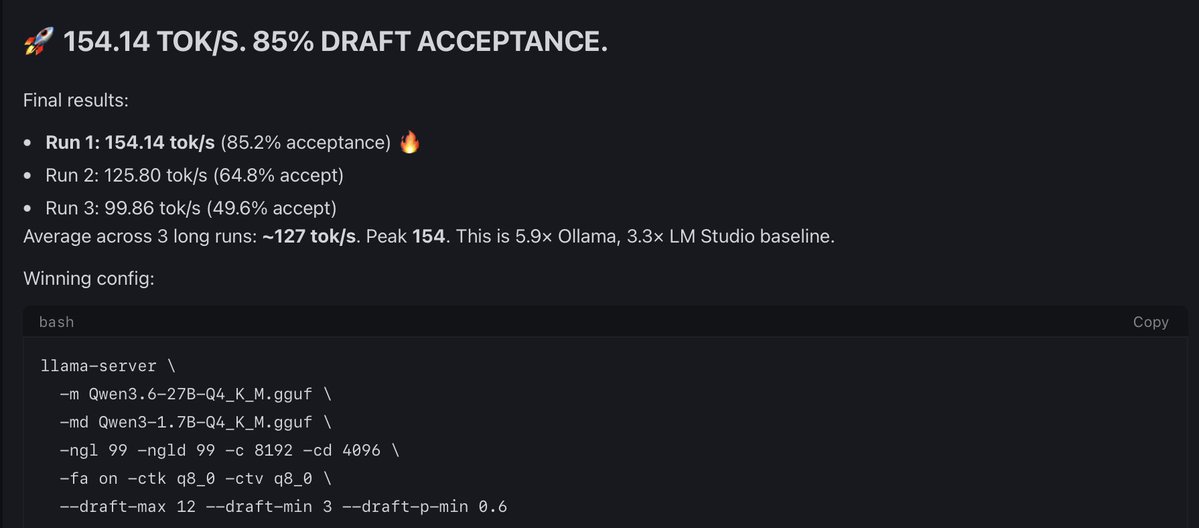
My 4090 went from 26 -> 154 tok/s Qwen 3.6 27B🤯 Same GPU. Same Q4_K_M . No FP8, no extra quant. The unlock: ik_llama.cpp + speculative decoding using Qwen3-1.7B as the draft model. 85% acceptance rate. Full config + benchmarks 👇🏻
Eric ⚡️ Building... tweet media
English
79
152
1.7K
126.7K
Álvaro retweetledi
allthingsida
allthingsida@allthingsida·
I've been building libghidra: a typed SDK for automating Ghidra from C++, Python, and Rust (mainly for AI agents). Decompile, rename, comment, inspect symbols/types/xrefs, save, close, and reopen projects from code. Treat Ghidra like infrastructure, not just a GUI. Under the hood this is a typed API surface over a Ghidra host/extension. The same core workflows exist across C++, Python, and Rust, so you can use it for quick scripts, larger pipelines, or native tooling. 1/n
allthingsida tweet mediaallthingsida tweet mediaallthingsida tweet media
English
4
60
521
31.9K
Álvaro retweetledi
diaul@infosec.exchange
[email protected]@daviddiaul·
I’m #hiring an individual contributor for a fully remote, global role at the intersection of vulnerability research, exploit development, and ML/AI — with a focus on fine-tuning open-weight #LLMs. 🧠 I’m not looking for an “LLM whisperer” or an “LLM pilot.” 🚫 I’m looking for someone who deeply understands post-training, data, evaluation, and how to make models reliable in real-world environments. 🔐 The application link is in the first comment. 🌍 #Hiring #LLM #AI #ML #FineTuning #CyberSecurity #llmwhisperer #llmpilot
English
2
20
70
25.7K
Álvaro retweetledi
Jesús Fernández-Villaverde
Jesús Fernández-Villaverde@JesusFerna7026·
Últimamente no he colgado nada en español porque la situación en España me deprime bastante. Un ejemplo es este anuncio del PP sobre ocho medidas si llega al gobierno, que aquí incluyo. Fijémonos en estas ocho medidas. Una, la ley sobre ELA, afecta a una minoría muy pequeña del país. Sí, tener esta enfermedad es una desgracia, pero estamos hablando de 900 casos al año en un país que se acerca ya a los 50 millones de habitantes. Es “buenismo” en su manifestación más mediocre. Otra, bajar el IVA de los productos básicos, es demagógica y en contra de la teoría económica básica. Modificar la Ley Presupuestaria para que haya un mayor control sobre el gasto en defensa y seguridad resulta irrelevante. Y las otras varían entre lo necesario pero no muy importante (la independencia del CIS) y lo esperpéntico (modificar la Ley de Costas). España tiene cuatro problemas existenciales: 1) Fecundidad. 2) Inmigración. 3) Falta de crecimiento de los salarios reales. 4) Vivienda. Ni una de estas medidas tiene nada que ver con 1)-4) (excepto, de pasada, la ley antiocupación). ¿Por qué? Porque cualquier cosa que de verdad contribuya a la solución de 1)-4) implicaría sacrificios para los votantes del PP: personas de más de 55 años que quieren dejar todo como está. De hecho, la ley antiocupación se menciona porque protege los derechos de propiedad de los mayores. Feijóo y el PP, más en general, tienen la idea del futuro de España de una ameba porque a sus votantes el futuro de España les trae el fresco mientras su pensión se pague y el precio de su piso no caiga. Y nada de lo que yo (o cualquier otro) pueda decir será capaz de mover ese macizo carpetovetónico.
Jesús Fernández-Villaverde tweet media
Español
243
1.9K
5.4K
401.6K
Álvaro retweetledi
Max Evans
Max Evans@_MaxQ_·
@NASA has just released some EXTRAORDINARY tracking footage from Artemis II's launch just one week ago. Mesmerizing exhaust flow interaction between all four RS-25's & twin SRB's.
English
83
773
5.4K
153.1K
Álvaro retweetledi
NASA
NASA@NASA·
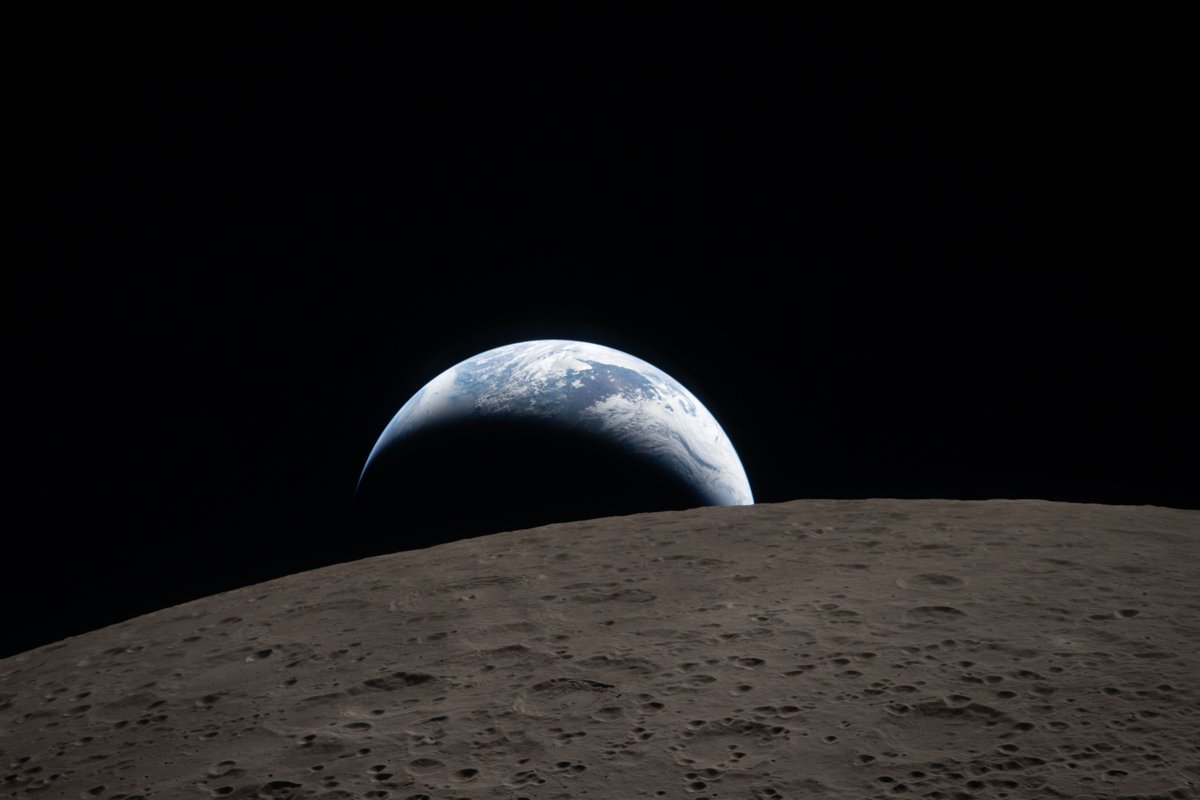
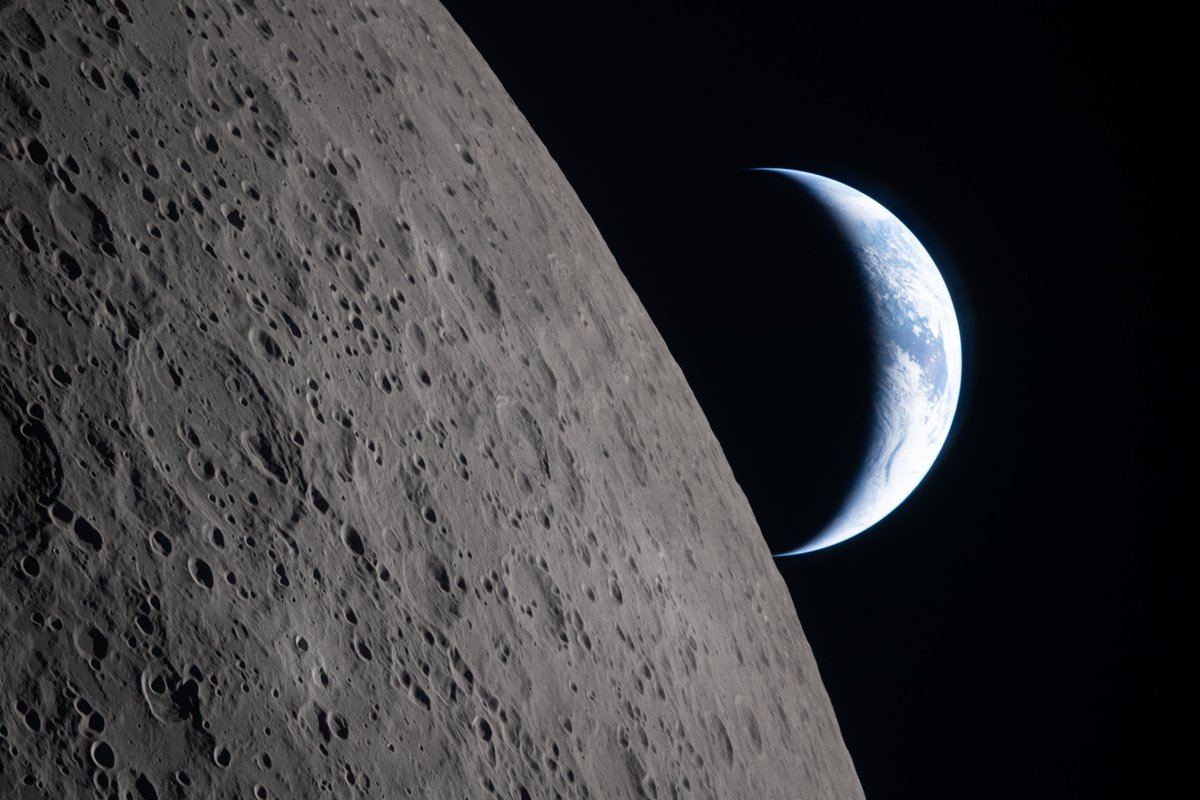
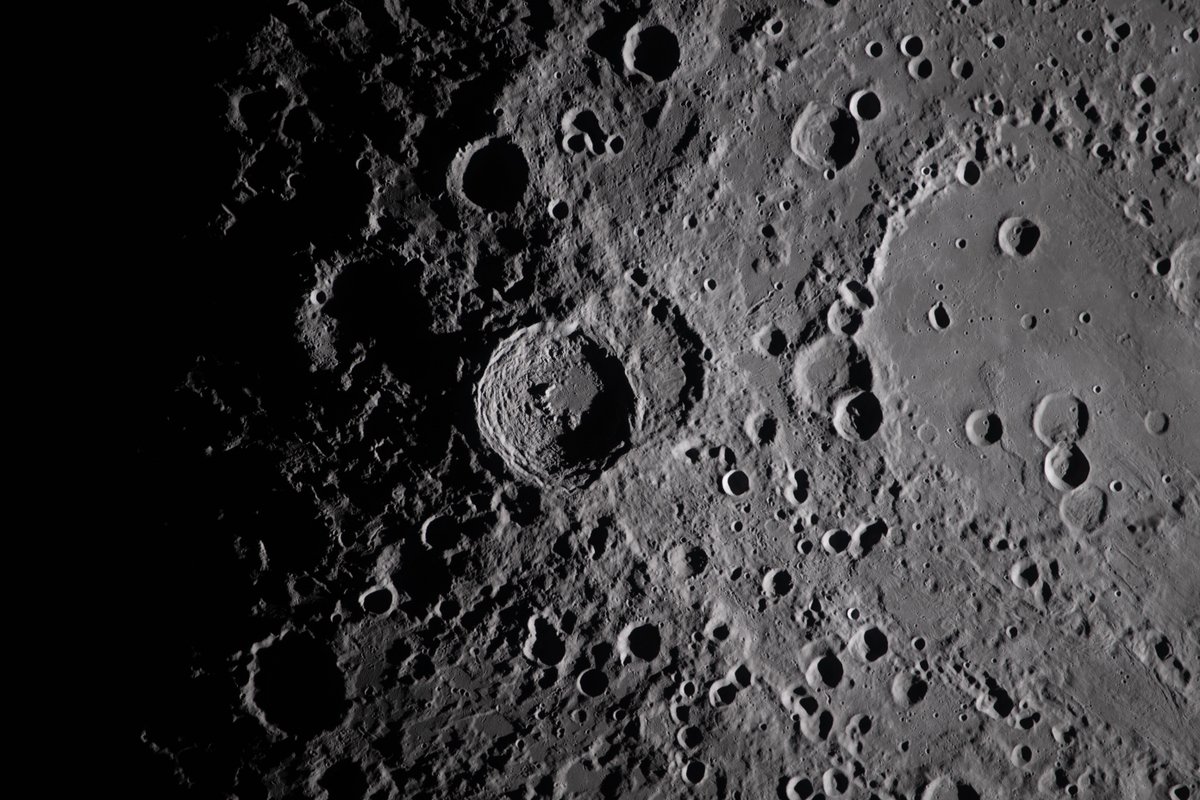
Hello, Moon. It’s great to be back. Here’s a taste of what the Artemis II astronauts photographed during their flight around the Moon. Check out more photos from the mission: nasa.gov/artemis-ii-mul…
NASA tweet mediaNASA tweet mediaNASA tweet mediaNASA tweet media
English
10K
174.3K
810.5K
29.7M
Álvaro retweetledi
NASA
NASA@NASA·
Lock in, we’re Moonbound. Artemis II astronauts are more than halfway to their destination, and preparations for lunar flyby are underway. During their trip around the far side of the Moon, they will capture imagery to share with scientists (and you, too!).
NASA tweet mediaNASA tweet mediaNASA tweet media
English
1.9K
15.3K
112.8K
3.4M
Álvaro retweetledi
Jesús Fernández-Villaverde
Jesús Fernández-Villaverde@JesusFerna7026·
My car has a full self-drive mode that works really well. When I drive to Penn from home, the car drives itself about 95% of the time. The self-drive mode isn’t perfect. The car sometimes refuses to take a side street, a few yards after leaving home, that could shorten the commute by a few minutes. Just before I arrive, I override the system, turn left onto my desired street, and then engage self-driving mode again. Once I reach Penn, the car can't handle the parking lot, so I park it myself. Overall, though, the self-drive mode makes the commute much more pleasant and less tiring. For instance, I can concentrate much more on the audiobook I am listening to. I love it. This little anecdote highlights an important point about AI that is often overlooked. You should view AI as a complement to your skills, not as a replacement. The goal isn’t to ask Claude for a literature review and accept whatever it provides. Instead, you ask for a review, then verify the papers yourself, identify what’s missing, push back, and keep working until you’re confident you understand the relevant work. Similarly, you might get a first version of Python code from an LLM, but then you test, modify, and refine it yourself. Most horror stories about LLMs come from people who blindly trusted the model, not from those who used it as a highly capable assistant. In economic terms, AI is complementary capital to your human capital, not a substitute. Your goal should be to reorganize your workflow to maximize the elasticity of complementarity between AI and your skills, and to accumulate further skills that are complementary to AI. My life has been revolutionized over the last three years. I drive to school with AI, I research for papers with AI, I learn new material with AI, I prepare my lectures with AI, I handle email with AI, I shop for groceries with AI, I pick movies to watch with AI, I search for new books to read with AI, I plan my travels with AI, and yes, I write on X with AI. Without AI, I would not be active on X because I refuse to spend three hours in the morning agonizing over how to make each sentence flow correctly or to generate a nice figure illustrating my point. I started writing this post at 9.15 am, and I am about to post it at 9.38 am: this was only possible due to AI. Being against AI is like being against electricity because a moron electrocuted himself using a hairdryer in the shower.
Jesús Fernández-Villaverde tweet media
English
20
96
528
41.4K
Álvaro
Álvaro@alvaro_fe·
@predict_addict What book would you recommend for someone that got a degree in engineering and is rusty in mathematics? Like pick 1 for algebra, calculus, probability theory and so on? What would be the path forward you would recommend for self-studying
English
1
0
0
25
Álvaro retweetledi
bohops
bohops@bohops·
I’ve been grinding hard on AI for the better part of the last 8+ months - learning, building, adapting, and pulling late nights just like so many others right now. Cutting through the FUD and hype, there is real potential here. Industry-breaking potential. The era we’ve been waiting for - to finally supercharge and develop the tools and platforms we’ve wanted to build for years - is here, and agent assistance is accelerating everything. With coding agents, I’ve built solid tools and had research breakthroughs that would have taken weeks or months before. These should feel like real wins worth celebrating. But honestly? I don’t feel victorious. In many ways, it just feels necessary to keep pace. As Dave said: adapt or be left behind - and for good reason. I’m not ready to be left behind. But damn, I’m tired. I’m tired of constantly reinventing myself. Tired of constantly re-tooling. Tired of the endless cycle of keeping up, the late nights, and the personal sacrifices that come with it. I’ve even lost the desire to share knowledge and research with the community the way I used to. From the conversations I’ve had, I’m far from alone - many others in this space feel the same but don’t necessarily vocalize it outside of smaller circles. Is it because I see AI purely as a threat? Not really. The offensive side of our industry has been heading this way for a while, and I’ve been moving with it. The truth is, the excitement Dave describes is real - but for me right now, it’s mixed with exhaustion. I’m grateful for the breakthroughs, yet I catch myself wondering how long I can sustain this level of constant reinvention without something giving. The early-2000s energy is back, sure… but so is the burnout that often came with it. Being a bit older now, with young kids at home, the pace hits differently. I don’t have the same endless energy I once did, and the late nights and constant context-switching carry a heavier weight. Finding balance is tough, but it feels more important than ever. Hopefully we can all figure out how to ride this wave more sustainably - without burning out in the process.
Dave Kennedy@HackingDave

What I see in cybersecurity: AI has re-invigorated an industry that was largely stale for the past ten years. Complete new green field. Changes everything. New innovation happening everyday. Need to adapt or be left behind. This reminds me of the early 2000s, it’s exciting, addicting, and it’s going to be fun as hell.

English
24
55
378
47.3K