
Amit Prakash

567 posts

Amit Prakash banner
Amit Prakash

Amit Prakash

@amitp42

Co-founder, CTO ThoughtSpot Author: Elements of Programming Interviews

SF Bay area Katılım Nisan 2009
427 Takip Edilen614 Takipçiler
Sabitlenmiş Tweet
Amit Prakash
Amit Prakash@amitp42·
If you are someone who has not closely followed the Deep Learning and NLP literature but is curious about what innovations led to ChatGPT, this is my attempt at making that material accessible. Hope you enjoy reading this as much as I enjoyed writing it. amit.thoughtspot.com/p/what-is-chat…
English

5
3
24
5.1K
Amit Prakash
Amit Prakash@amitp42·
A few thoughts, 1. We have learned to lose fidelity on memory of the distant past in a way that we can reconstruct most of it. Compaction needs to do something similar. Not summarize, but optimize for reconstruction fidelity, may be an auto-encoder that optimizes for, forgetting what LLM already knows, and keeping new info in a compact representation. 2. Retrieval should be coupled with inference. IT could be that we emit a set of retrieval instructions that is more complex than vector search. This is an RL problem. 3. Context needs to be a stack, not a compressed linear thing. We know when to discard near-term memory when we are done with something specific.
English
0
0
0
96
Andrej Karpathy
Andrej Karpathy@karpathy·
There was a nice time where researchers talked about various ideas quite openly on twitter. (before they disappeared into the gold mines :)). My guess is that you can get quite far even in the current paradigm by introducing a number of memory ops as "tools" and throwing them into the mix in RL. E.g. current compaction and memory implementations are crappy, first, early examples that were somewhat bolted on, but both can be fairly easily generalized and made part of the optimization as just another tool during RL. That said neither of these is fully satisfying because clearly people are capable of some weight-based updates (my personal suspicion - mostly during sleep). So there should be even more room for more exotic approaches for long-term memory that do change the weights, but exactly - the details are not obvious. This is a lot more exciting, but also more into the realm of research outside of the established prod stack.
Awni Hannun@awnihannun

I've been thinking a bit about continual learning recently, especially as it relates to long-running agents (and running a few toy experiments with MLX). The status quo of prompt compaction coupled with recursive sub-agents is actually remarkably effective. Seems like we can go pretty far with this. (Prompt compaction = when the context window gets close to full, model generates a shorter summary, then start from scratch using the summary. Recursive sub-agents = decompose tasks into smaller tasks to deal with finite context windows) Recursive sub-agents will probably always be useful. But prompt compaction seems like a bit of an inefficient (though highly effective) hack. The are two other alternatives I know of 1. online fine-tuning and 2. memory based techniques. Online fine-tuning: train some LoRA adapters on data the model encounters during deployment. I'm less bullish on this in general. Aside from the engineering challenges of deploying custom models / adapters for each use case / user there are a some fundamental issues: - Online fine-tuning is inherently unstable. If you train on data in the target domain you can catastrophically destroy capabilities that you don't target. One way around this is to keep a mixed dataset with the new and the old. But this gets pretty complicated pretty quickly. - What does the data even look like for online fine tuning? Do you generate Q/A pairs based on the target domain to train the model? You also have the problem prioritizing information in the data mixture given finite capacity. Memory based techniques: basically a policy for keeping useful memory around and discarding what is not needed. This feels much more like how humans retain information: "use it or lose it". You only need a few things for this to work: - An eviction/retention policy. Something like "keep a memory if it has been accessed at least once in the last 10k tokens". - The policy needs to be efficiently computable - A place for the model to store and access long-term memory. Maybe a sparsely accessed KV cache would be sufficient. But for efficient access to a large memory a hierarchical data structure might be beter.

English
275
299
4.6K
587.5K
Amit Prakash
Amit Prakash@amitp42·
A mentor once told me: "We don't make right choices. We make our choices right." I don't have all the answers. This is a hypothesis. But I wrote a longer version with frameworks for healthcare, finance, law, engineering.
English
1
0
0
175
Amit Prakash
Amit Prakash@amitp42·
For the better part of a century, we've had a deal: Go to school. Get good grades. Follow directions. Get a safe job. That deal is breaking.
English
1
0
0
604
Amit Prakash
Amit Prakash@amitp42·
How about a metric based on Conditional Kolmogorov Complexity? Define the "Slop Index" as the ratio of the length of the text to the length of the shortest prompt required to reproduce it (or a close semantic match). High Slop = A short, low-effort prompt generating massive, smooth, generic text. As you noted, easy to intuit, but computationally intractable to solve for the optimal prompt.
English
0
0
1
132
Andrej Karpathy
Andrej Karpathy@karpathy·
Has anyone encountered a good definition of “slop”. In a quantitative, measurable sense. My brain has an intuitive “slop index” I can ~reliably estimate, but I’m not sure how to define it. I have some bad ideas that involve the use of LLM miniseries and thinking token budgets.
English
940
159
4.2K
650.2K
Shiva Singh Sangwan
Shiva Singh Sangwan@shivassangwan·
We all know the stat: 70% of revenue is driven by the top 30% of salespeople. Now imagine if you could lift everyone else to that level. Not through more hiring, more coaching, or more time… but through AI that learns what your best reps do — and scales it across the team. That’s the future @amitp42 is building at AmpUp.Ai Instead of guessing who will perform… Instead of spending months ramping sales reps… Instead of losing deals because someone didn’t say the right thing at the right moment… Amit’s vision is simple: Help every rep sell like the top 1%. AI analyzes calls, emails, sales collateral, internal playbooks — and surfaces the right support at the right time… making sales execution predictable, repeatable, and scalable. This isn’t replacing reps. It’s unlocking their best version.
English
3
1
2
227
Amit Prakash
Amit Prakash@amitp42·
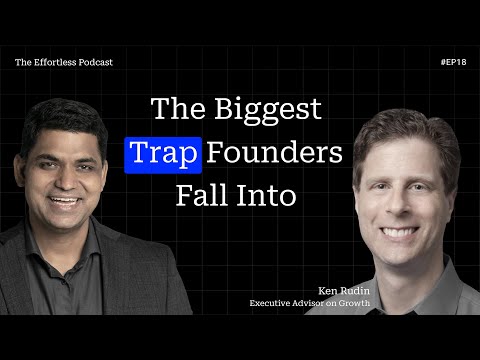
@krudin founded the growth function at both Meta (when it was Facebook) and Google. He led the transformation of ThoughtSpot from Sales lead GTM to Hybrid, PLG, and SLG motion. Now he is helping startups use these ideas. There is no one better than Ken to learn about product-led growth. I sat down with Ken for the latest Effortless Podcast episode to dig into what actually works in growth. We covered everything from early-stage tactics to scaling challenges youtu.be/z4pRzZAo0DE
YouTube video
YouTube
English
0
0
0
112
Amit Prakash
Amit Prakash@amitp42·
@krudin founded the growth function at both Meta (when it was Facebook) and Google. He led the transformation of ThoughtSpot from Sales lead GTM to Hybrid, PLG, and SLG motion. Now he is helping startups use these ideas. There is no one better than Ken to learn about product-led growth. I sat down with Ken for the latest Effortless Podcast episode to dig into what actually works in growth. We covered everything from early-stage tactics to scaling challenges. Listen here: youtu.be/z4pRzZAo0DE?si…
YouTube video
YouTube
English
0
0
0
15
Amit Prakash retweetledi
Rahul Goel
Rahul Goel@rahul_nlu·
Introducing AmpUp! Having spent my time at Google building AI agents, I’ve seen firsthand the immense potential of LLM agents, but also the deep technical challenges that remain. Many of the critical components, like robust planning, tool use, and reliable evaluation are still open research questions. Generic, off-the-shelf agents often fail because they lack the specific context of a business. They don’t understand how a specific team actually works and wins. That’s the challenge we’re tackling with AmpUp. We’ve built a platform that allows sales teams to create their own custom, self-learning AI agents. These agents are built on the knowledge, strategies, and insights from your own top performers, creating a system that truly understands your business. We are making it possible for great performance to be repeatable. Our goal is to move beyond generic AI and empower teams with tools built from their own expertise.
English
6
11
33
3.7K
Amit Prakash
Amit Prakash@amitp42·
Early results have been promising. Sales teams are seeing their execution variance drop significantly. The future of sales isn't hoping for heroes; it's building a system of excellence.
English
0
0
0
86
Amit Prakash
Amit Prakash@amitp42·
AmpUp AI learns from what your best reps actually do—not generic best practices. Connect it to your existing tools, and it starts identifying the patterns that separate top performers from everyone else.
English
1
0
0
104
Amit Prakash
Amit Prakash@amitp42·
Today, we're announcing AmpUp AI—a new AI platform for Sales teams.
English
3
6
11
1.7K