Ancient Indians

96 posts

Ancient Indians banner
Ancient Indians

Ancient Indians

@ancient_indians

A journey through Ancient India.
Katılım Nisan 2024
10 Takip Edilen65 Takipçiler
Ali Minai
Ali Minai@barbarikon·
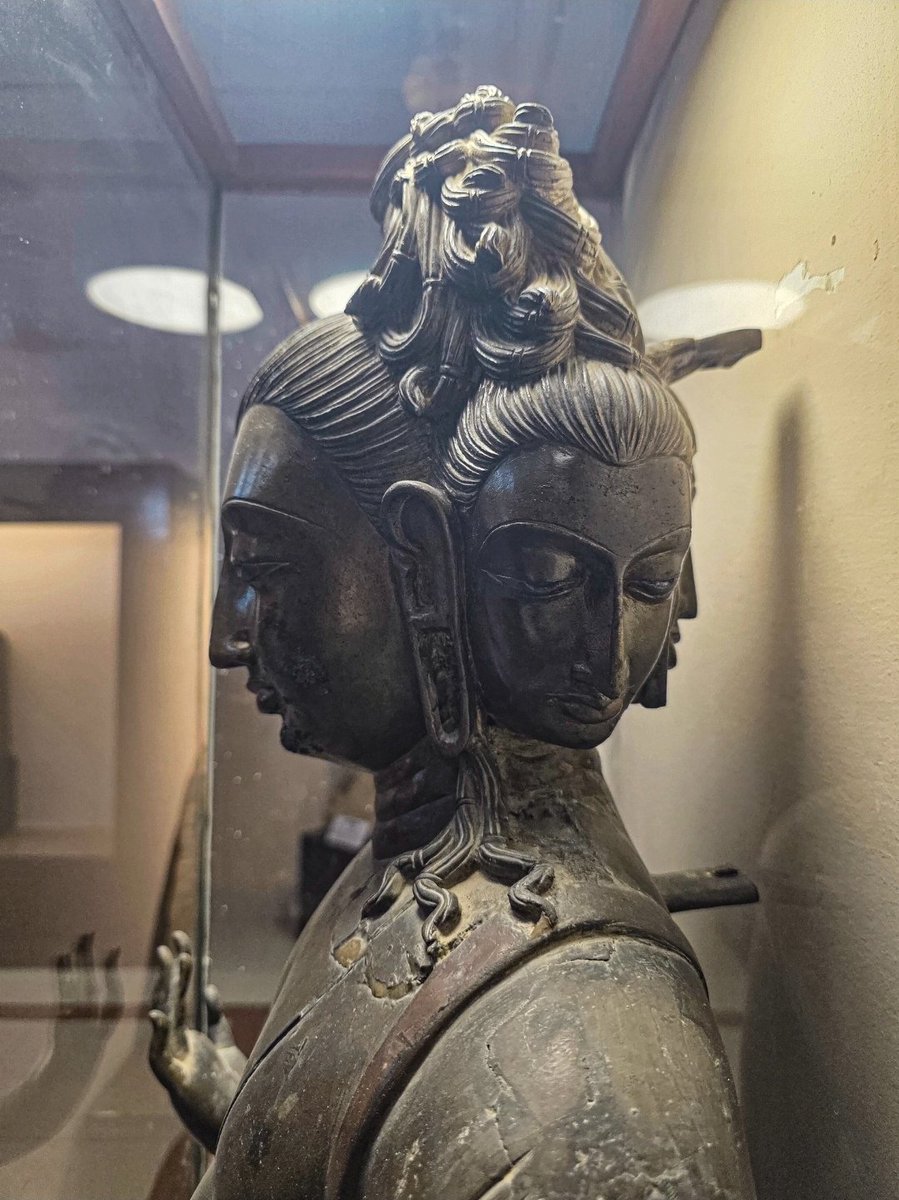
The responses to this thread from a number of Indian posters reflect an astonishing degree of ignorance. Museums in Pakistan - especially Karachi, Lahore, Taxila, and Peshawar - have thousands of Buddhist and Hindu artifacts, including incredible sculptures like these. Far from being destroyed or neglected, they are preserved and displayed prominently. The guide on our recent visit to Lahore museum - a young Muslim lady - was very well-informed on the religious history and beliefs of Hinduism and Buddhism (though not as accurate on Mughal history!)
English
46
10
83
30.7K
Sam Dalrymple
Sam Dalrymple@SamDalrymple123·
This week I finally got to visit Pakistan's two greatest Gupta masterpieces: the Brahma of Mirpur Khas in Karachi...
Sam Dalrymple tweet media
English
113
169
1.4K
175.8K
Ancient Indians
Ancient Indians@ancient_indians·
Chess has its roots in India, where an early form called Chaturanga took shape. ♟️ It’s documented by around the 6th century CE, and that’s the point where it clearly enters history. And while the written record starts in the early medieval period, it likely grew from much older Indian traditions of board games and strategic play long before it was named and standardised. Chaturanga reflects the four arms of an army, shaping the logic of the pieces and the strategy. From India it spread to Persia (chatrang/shatranj) and then across the world. A game of war, wisdom, and calculation, born in Ancient India and loved everywhere. #Chess #Chaturanga #IndianHistory #AncientIndians
Chess Feed@chess_feed

Your country gave us….

English
0
0
1
106
Desi king
Desi king@DesiKing_·
This Harappan stepwell in India is 5000 years old, The Hindu Civilization is the oldest and Greatest in human history.
Desi king tweet media
English
19
230
2.2K
24.7K
Ancient Indians
Ancient Indians@ancient_indians·
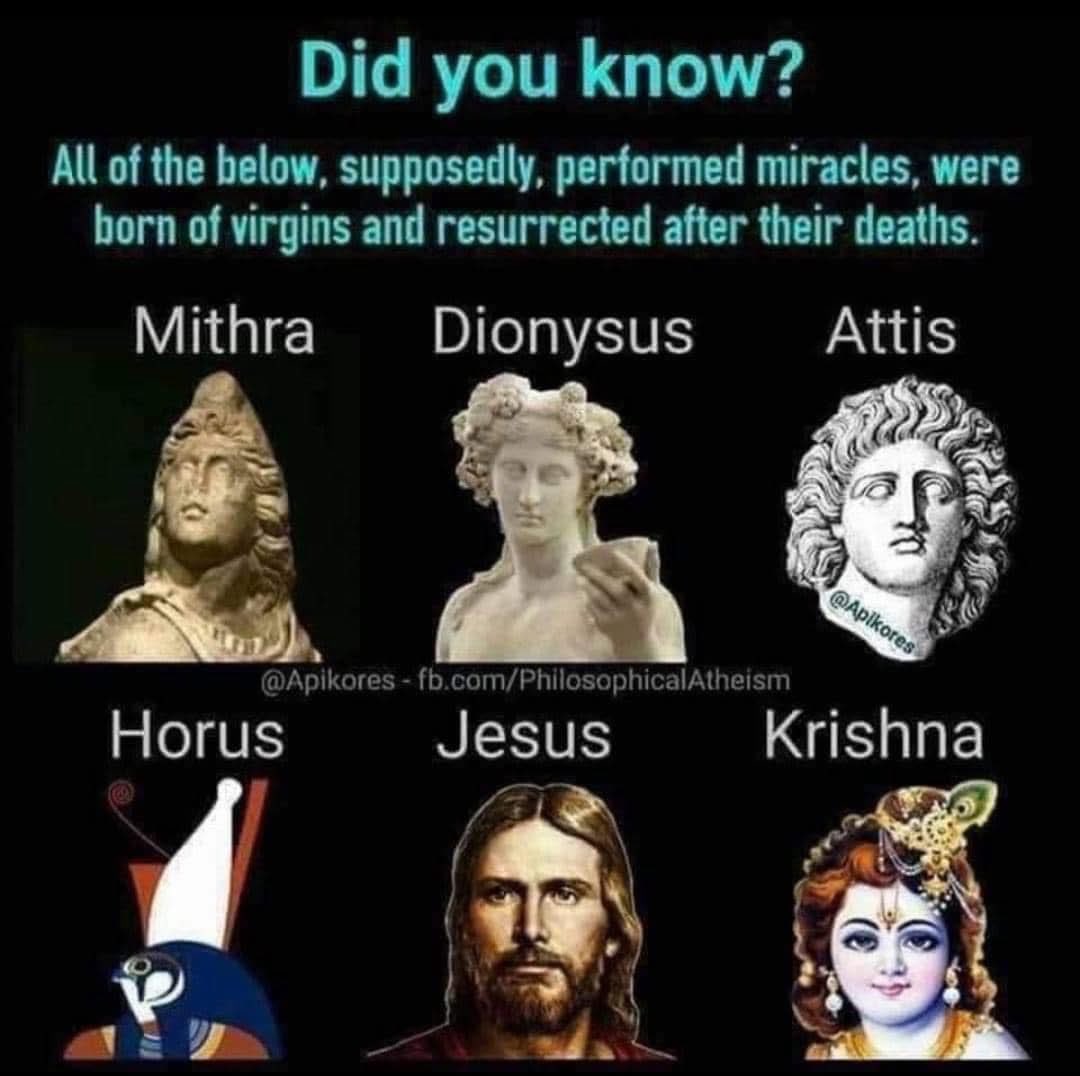
@TheSkeptic4122 This meme gets Krishna wrong. In Hindu texts, Krishna is the 8th son of Devaki and Vasudeva, not a virgin birth, and he does not “resurrect” after death, even though he performs many miracles. Seems the author was inspired by the movie Heretic.
English
0
0
1
369
Ancient Indians
Ancient Indians@ancient_indians·
Indian wrestling didn’t begin with the Persian word koshti. In India it’s already there in the Sanskrit epics as malla-yuddha, with malla as “wrestler,” over 2,000 years ago. The later Indian word kushti is almost certainly borrowed from Persian koshti, but that’s just the label from the Indo-Persian court age – the art itself is much older and Indian. And this debate wasn’t even originally about wrestling styles, it was about club training. The heavy mace and wooden club – gadā, mudgara, jori – have a clearly ancient Indian pedigree: mace heads in South Asia from the Indus/early historic period, Bhīma and Duryodhana’s gadā-yuddha, Hanuman’s gadā, Viṣṇu’s Kaumodakī, and centuries of akhāṛā wrestlers training shoulders and grip with wooden gadas long before the Islamic era. By contrast, the formal zurkhāneh / varzesh-e pahlavānī system with its ritual pit, music and codified meel routines is a medieval/early-modern Iranian development – important in its own right, but historically younger than India’s attested malla-yuddha and gadā culture. None of this takes anything away from pre-Islamic Iran – Achaemenid, Parthian and Sasanian warriors, the gorz mace, heroic koshti in the Shāhnāmeh all have a rich history. It just means this specific style of heavy clubs and wrestling-club training has an older, independent lineage in India and doesn’t need to be rebranded as “originally Persian” to respect either culture.
English
0
1
2
114
Ancient Indians
Ancient Indians@ancient_indians·
The clubs in the video are basically replicas of the old Indian clubs Europeans saw in akhāṛās in the 1800s – same shape, same swinging patterns. Western manuals literally call them Indian clubs because they copied them from Indian wrestlers, not from Iran. In India, the gadā / mudgara tradition goes back to the Sanskrit epics and Purāṇas (Bhīma, Hanuman, Viṣṇu’s Kaumodakī), and mace-like weapons show up archaeologically in the Indus period. By the time zurkhāneh meel are described in Persian sources, India has already had club/mace weapons and club training for well over a thousand years. Given the long history of Indo-Persian contact under the sultanates and Mughals, and the fact that the modern clubs are identical to the documented Indian ones, it seems that this style of wooden club and training travelled from India into Persia.
English
0
0
1
1.4K
Epic Clip Vault
Epic Clip Vault@EpicClipVault·
Bodybuilder strength vs Persian calisthenic strength.
English
401
193
4.3K
3.9M
Ancient Indians
Ancient Indians@ancient_indians·
Latin is not the “mother” of Sanskrit. Both are sister languages in the Indo-European family, descended from an earlier common ancestor (usually called Proto-Indo-European). Modern linguistics has been clear on this for 200+ years. The “oldest Latin script is 7th c. BCE, Sanskrit only 1st c. BCE” line confuses writing with language. Old Latin inscriptions like the Praeneste fibula and Duenos inscription are from the 7th–6th c. BCE. But the Rigveda, in Vedic Sanskrit, was composed around 1500–1000 BCE (some scholars even posit earlier layers), long before those Latin inscriptions, and preserved orally. The earliest Sanskrit inscriptions in Brahmi script are 1st c. BCE, yes, but Brahmi itself is in use from at least the 3rd c. BCE, mainly for Prakrit. That tells you when people started carving Sanskrit into stone, not when Sanskrit or Vedic hymns began.
English
0
0
1
359
Ancient Indians
Ancient Indians@ancient_indians·
Prof. K.K. Muhammad is entitled to his view, but calling the last 11 years the ‘darkest age’ for ASI ignores a lot of facts. – ASI’s budget has increased, not shrunk – over ₹9,600 crore allocated between 2014–24, with ₹1,273.91 crore in 2024–25 alone. – India has added new UNESCO World Heritage Sites in this period (Sacred Ensembles of the Hoysalas, Charaideo Moidams, Maratha Military Landscapes, etc.). – ASI has led major overseas conservation projects at Ta Prohm, Preah Vihear, My Son, Vat Phou and other sites as part of India’s heritage diplomacy since 2014. – 642 of 655 stolen antiquities returned to India since 1976 have actually come back after 2014. There are valid criticisms about delays, centralisation and under-investment in excavations, but to label this entire period as the ‘darkest age’ for ASI is more rhetoric than balanced assessment If he has based his opinion on the slowdown of excavations under the current government (possibly), it’s worth remembering that in earlier eras — including during Congress rule — large-scale excavations have opened up opportunities for antiquities to be exported or sold abroad. Given how many pieces have surfaced in international markets or have had to be repatriated, one cannot ignore that past excavation drives have contributed to loss of India’s heritage materials.
English
0
3
11
9.4K
Divya Gandotra Tandon
Divya Gandotra Tandon@divya_gandotra·
When a respected ASI veteran like Prof. K.K. Muhammad a man who has spent decades preserving India’s archaeological record calls the last 11 years “the darkest age” for the ASI, it cannot be brushed aside as political commentary. It forces tougher questions: • How did an institution once known for scientific rigor fall into alleged bureaucratic paralysis? • Why are key excavations, conservation projects, and heritage mappings delayed or abandoned? • Has archaeology a discipline meant to protect India’s civilizational memory become collateral in political battles? • Who is accountable when national heritage is reduced to headlines instead of research? Heritage is not Left vs Right. It’s India’s legacy and its loss will cost every generation.
Ritu #सत्यसाधक@RituRathaur

When a respected ASI veteran like Prof. K.K. Muhammad says: “The last 11 years of BJP have been the darkest age for the Archaeological Survey of India” it should shake every Indian to the core. #Watch ⬇️

English
87
1K
5.4K
391.3K
Ancient Indians
Ancient Indians@ancient_indians·
Prof. K.K. Muhammad is entitled to his view, but calling the last 11 years the ‘darkest age’ for ASI ignores a lot of facts. – ASI’s budget has increased, not shrunk – over ₹9,600 crore allocated between 2014–24, with ₹1,273.91 crore in 2024–25 alone. – India has added new UNESCO World Heritage Sites in this period (Sacred Ensembles of the Hoysalas, Charaideo Moidams, Maratha Military Landscapes, etc.). – ASI has led major overseas conservation projects at Ta Prohm, Preah Vihear, My Son, Vat Phou and other sites as part of India’s heritage diplomacy since 2014. – 642 of 655 stolen antiquities returned to India since 1976 have actually come back after 2014. There are valid criticisms about delays, centralisation and under-investment in excavations, but to label this entire period as the ‘darkest age’ for ASI is more rhetoric than balanced assessment.”
English
0
0
4
7.2K
Ritu #सत्यसाधक
Ritu #सत्यसाधक@RituRathaur·
When a respected ASI veteran like Prof. K.K. Muhammad says: “The last 11 years of BJP have been the darkest age for the Archaeological Survey of India” it should shake every Indian to the core. #Watch ⬇️

English
275
4.1K
15.3K
1.1M
Ancient Indians
Ancient Indians@ancient_indians·
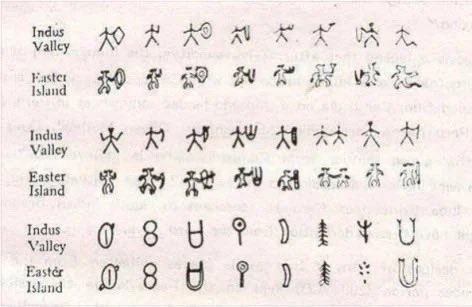
They already have analysed Rapa Nui DNA. Modern genetic studies show Easter Islanders are basically a mix of Polynesian ancestry plus some Native American and European admixture from later contact. There’s no sign of a South Asian / Indian / Indus-like genetic layer hiding in there. So if there had been some big ancient connection to Indus traders or an Indian-speaking group, you’d expect at least a faint South Asian signal in the genome. Right now, it’s just not there – which is exactly why specialists don’t take the “Indus → Easter Island” theory seriously.
English
0
1
3
65
Archaic Lens
Archaic Lens@ArchaicLens·
Friendly reminder that the Easter island script appears to be derived entirely from the Indus Valley script. At the very least I think this suggests a migration of the Indus Valley script from the Indus Valley to Easter Island. Surely this is not a crazy thing to suggest?
Archaic Lens tweet media
English
98
398
2.4K
118.1K
Ancient Indians
Ancient Indians@ancient_indians·
Yes, like every non-African population, the ancestors of Polynesians ultimately come from the Out-of-Africa migration ~60–70,000 years ago. The same is true for Europeans, Indians, Chinese, Native Americans, everyone. That tells us nothing at all about whether Polynesians ever met Indus traders 4,000 years ago – and there’s no evidence that they did. The Indus people were long-distance traders, but in a specific, well-documented zone: across the Arabian Sea and up the Persian Gulf into Oman, Bahrain (Dilmun) and Mesopotamia. Indus-type seals, beads and pottery actually turn up there. Their goods probably reached Egypt too, mostly indirectly through this same Gulf–Mesopotamia network, and much later, in the Greco-Roman period, Indians absolutely did sail directly to Egyptian Red Sea ports like Berenike and Myos Hormos. And that’s exactly the point: when contact really happened, it leaves a trail – objects, ports, texts, coins, cargoes. For Island Southeast Asia, Melanesia and Polynesia we have none of that: no Indus or early Indian artifacts, no South Asian genetic signal, no obvious South Asian loanwords in Polynesian languages. Appealing to a 70,000-year-old shared origin of all non-Africans doesn’t make an Indus–Easter Island connection “likely”; it just ignores the fact that when real historical contact exists, you can actually see it, and here we simply don’t.
English
1
0
1
20
William
William@TheDailySledge·
@ancient_indians @ArchaicLens They likely contacted Indus Valley travelers. The Polynesian story originates in Africa 70,000 years ago; the same migration that led to Australian Aboriginals also led to Polynesian ancestors, who separated genetically in Southeast Asia.
English
1
0
2
35
Ancient Indians
Ancient Indians@ancient_indians·
We don’t know the Indus language, but we know Polynesian languages extremely well, and they show no sign of an Indus contact layer. When you combine that with zero archaeological or genetic trail between the Indus and Rapa Nui, the ‘derived from Indus script’ claim has nothing left to stand on.
English
0
1
3
84
Ancient Indians
Ancient Indians@ancient_indians·
“In traditional Hindu iconography Shiva isn’t horned, so this must be ‘shamanism’” is doing way too much work off one detail. Iconography changes over millennia. The neat, standard temple image of Shiva (jata, crescent moon, Ganga, trident, etc.) is a late, classic form. The Mohenjo-daro seal is ~4,000 years older. You can’t freeze a god’s image in one historical moment and then declare anything older that looks different “not Shiva, so it must be something else.” Marshall’s ‘proto-Śiva’ reading was about the whole package, not just horns. He pointed to a combination of traits: 1. a central male figure, 2. in a yogic posture, 3. surrounded by powerful animals (Lord of beasts / Pashupati vibe), 4. in a culture that also gives us stone/phallic cult objects, mother-goddess figures and sacred trees. You can disagree with him, but that’s a serious, context-based comparison, not “horns = Shiva.” It is even sometimes suggested that the elaborate horned headdress is an early visual form of what later becomes stylised as Shiva’s trishul. That specific link is obviously speculative, but it shows how long people have seen continuity in the imagery. Horns ≠ automatic ‘shamanism’. Horned crowns show up everywhere in the ancient world on fully institutional gods and kings. Treating horns as a universal badge of “shamanism” is just modern New-Age shorthand, not evidence. Logically, where should we look first for parallels? If you find a seal in the Indus region showing a seated yogic figure with animals, the first comparison should be to religious traditions that actually grew in that same land, where a very similar god is still worshipped. Why rush to label it “generic shamanism” by analogy with cultures half a world away, while refusing to even consider continuity with the tradition that survives right where the seal was dug up? That’s exactly what the early British excavators did do: Marshall compared it to an early, non-Vedic, proto-Śiva/Pashupati figure and argued that Indus religion fed into later Shaiva and Hindu traditions. We can be cautious and say “possible proto-Śiva, not proven.” But saying “Shiva doesn’t wear horns in modern murti art, therefore this can’t be related and must be shamanism” is just bad history and worse logic. #IndusCivilization #PashupatiSeal #AncientIndians
Kshatrap (𑀔𑀢𑀧)@Frithnkr

In traditional Hindu iconography, the god Shiva is not typically depicted wearing a horned headdress. This is considered to be a tradition from the early period of ancient human civilization, also known as Shamanism.
English
1
4
7
311
Ancient Indians
Ancient Indians@ancient_indians·
Yes, the AI “Pashupati-Shiva” art with “Longest Running Civilization” is stylised and modern. But the basic intuition – that there’s a deep civilizational continuity from the Indus cities to many strands of later Hindu practice – is not some fringe internet take. It was literally the reading of the original British excavator. If anything, the irony is that a British official in the 1920s was more willing to see that continuity than most Indians in this comment section today.
English
0
0
1
2.4K
Ancient Indians retweetledi
Narendra Modi
Narendra Modi@narendramodi·
The 8.2% GDP growth in Q2 of 2025-26 is very encouraging. It reflects the impact of our pro-growth policies and reforms. It also reflects the hard work and enterprise of our people. Our government will continue to advance reforms and strengthen Ease of Living for every citizen.
English
3.3K
13.2K
87.1K
11.3M
Ancient Indians
Ancient Indians@ancient_indians·
“Indus Valley is not India, it’s in Pakistan” is wrong on both geography and logic. The Harappan / Indus civilisation was never just “modern-day Pakistan.” Yes, Harappa and Mohenjo-daro are there, but hundreds of Harappan sites are in India too – Rakhigarhi, Dholavira, Kalibangan, Lothal and many more – and India actually has more known IVC sites today, with new ones still being discovered in Haryana, Rajasthan, Gujarat etc. The civilisation sat across what is now both India and Pakistan along the Indus–Saraswati system. Heritage isn’t just “whatever happens to fall inside my current borders.” It’s about civilisational continuity and what a society actually lives and recognises as its own culture. In India, Indus symbols and ideas still fit into a living civilisational frame: sacred pipal, proto-Pashupati–type imagery, goddess figures, ritual tanks, ornaments and everyday patterns that make sense inside an unbroken cultural memory. By contrast, Pakistan’s dominant narrative says its history “begins” with Muhammad bin Qasim and insists it is a separate people with nothing in common with Hindus, often styling itself as Arab/Mughal in identity. If you define yourself that way, then IVC becomes for you what British Raj buildings are for us: history on your land, not heritage you claim from within. And the Taj Mahal analogy actually backfires. The Taj and Red Fort were built on Indian soil, with revenue raised in India and artisans from India, by a dynasty ruling from India. That’s why Indians see them as part of Indian historical heritage, even if the Mughals had foreign roots. And who made Pakistan the custodian of the Mughal Empire anyway, when so many of the Mughals’ own descendants still live in India and their greatest monuments stand on Indian soil? So no, India recognising the Indus civilisation as part of its civilisational heritage is not like Pakistan randomly claiming the Taj. If anything, denying India’s Indus roots while cherry-picking Harappa for yourself is the real distortion.
Shaheen Mazhar Mehmood@ShahMaz66

Indus Valley is not India. It’s in Pakistan. Its actual name is “Harappan Civilisation”. It existed from 3300-1300 BC in modern day Pakistan. Claiming of it by India is just like claiming of all Mughal architecture including Taj Mahal and Red Fort by Pakistan 🇵🇰 on the logic that the Muslim rulers of India built Taj Mahal, so it must belong to us. Agreed?

English
0
2
3
88
Ancient Indians
Ancient Indians@ancient_indians·
"The claim that Shankaracharya "expelled" Buddhists from India is historically inaccurate. The decline of Buddhism was a complex, centuries-long process due to: ⚔️ Turkic invasions destroying monasteries (Nalanda). 👑 Loss of royal patronage. 🔄 Cultural absorption into a resurgent Hinduism. 💬 Intense philosophical debates, which Shankaracharya dominated, but these were intellectual, not a mass expulsion order. No historical evidence of Shankaracharya ordering an expulsion. The decline was gradual and multifaceted. Before this, Hinduism and Buddhism existed peacefully for over a thousand years. #History #IndiaHistory #Buddhism #Hinduism #FactCheck"
English
1
0
8
1.4K
The Saintly King
The Saintly King@bhaktSenapati·
The spread of Buddhism from India to China and other Asian regions carried Indian spiritual influence abroad. After declining in India due to philosophical debates with Vedic scholars like Shankaracharya, Buddhism flourished in places like China. Shankaracharya expelled Buddhists from India, leading them to settle in China, Japan, and Burma. Their worship methods resemble Indian practices, including offering lamps, burning candles, and showing respect, with brahmacaris and sannyasis following similar principles. They worship Lord Buddha accordingly. Indian monks like Li Dan, traveling to China via the Silk Road, contributed to Vedic cultural diffusion. Li Dan’s South Asian, Brahmin-like ancestry highlights India’s ancient role as a global teacher.
English
17
12
132
27.4K
Xu Feihong
Xu Feihong@China_Amb_India·
Genetic analysis proved that Mr. Li Dan, who kept spreading Buddhism in northern China 1400 years ago, is an ancient Indian descendant. His tomb in northern China contained both Chinese and Indian elements, which is a gem of cultural exchanges on the Silk Road.🤝🤝
Xu Feihong tweet media
English
286
2.7K
16.1K
597K