Anirudh Kala

868 posts

Anirudh Kala banner
Anirudh Kala

Anirudh Kala

@anikala

Psychiatrist@MindPlusLudhiana MentalHealthPolicyGroupMOHGOI, 2011-14. Writer-'UnsafeAsylum..','Two&aHalfRivers','Most of What You Know About Addiction Is Wrong'

Ludhiana Katılım Temmuz 2009
974 Takip Edilen2.8K Takipçiler
Anirudh Kala retweetledi
Om Prakash, MD
Om Prakash, MD@ompsychiatrist·
Schizophrenia is becoming social media content while patients and families are left confused between science and viral claims. This is exactly why psychiatrists and mental health professionals need to speak more openly online. Half-knowledge presented as a “hidden truth” can easily push vulnerable people away from proper treatment. A 60-second reel cannot replace clinical science, long-term research, or real patient care. — Om Prakash, MD @ompsychiatrist x.com/i/trending/205…
Om Prakash, MD tweet media
English
9
6
26
3.6K
Anirudh Kala retweetledi
Om Prakash, MD
Om Prakash, MD@ompsychiatrist·
Psychiatry is not “profit and control,” and it is not pseudoscience. Psychiatry is medicine practiced in the most complex terrain we know: the human brain, behaviour, and suffering. It uses evidence, clinical patterns, long-term outcomes, neuroscience, and constant revision similar to other medical fields that lack single biomarkers. Is it imperfect? Yes. Are diagnoses evolving? Yes. Do treatments sometimes fail or cause harm? Yes; that demands accountability, consent, and better care. Dismissing psychiatry wholesale ignores millions who are alive, functioning and connected because someone listened, assessed carefully and intervened. Medicine is not defined by certainty. It is defined by responsibility under uncertainty. Psychiatry does that work every day. Rejecting it entirely doesn’t protect patients; it abandons them.
Om Prakash, MD@ompsychiatrist

Psychiatry doesn’t hide behind scans. We diagnose schizophrenia, bipolar disorder and depression through listening, insight and judgment; without help of biomarkers or imaging. That’s not a weakness. That’s clinical mastery.

English
26
21
97
10K
Anirudh Kala
Anirudh Kala@anikala·
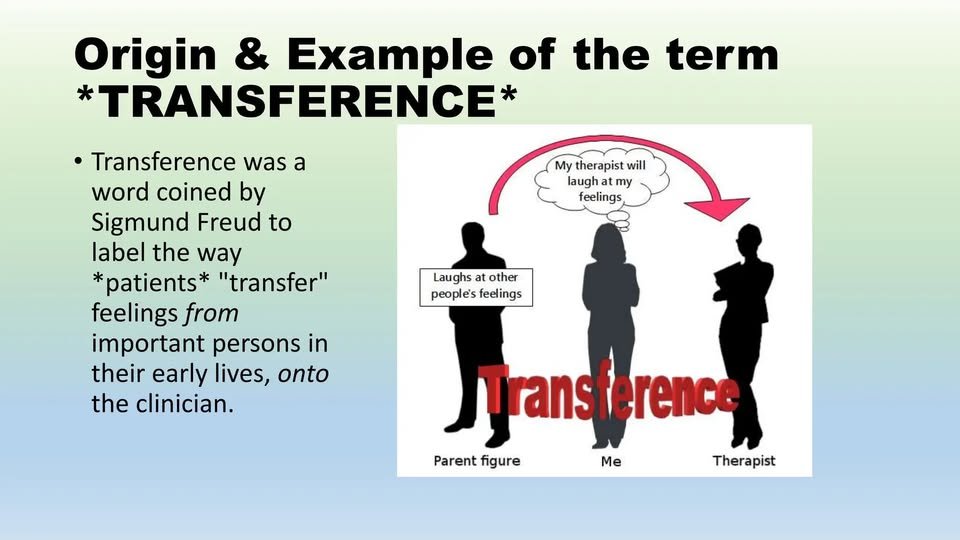
‘Transference’ is a situation which occurs during psychotherapy and involves patient's feelings towards the therapist. Feelings from a significant adult in patient’s past, usually a parental figure are projected on to the therapist not deliberately but unconsciously, without the patient being aware of it. However, transference can and does occur outside therapy too, in one’s whole gamut of relationships, without the person knowing about it. The woman looking for a match who reminds her unconsciously of her father in an emotionally positive way and the corresponding situation in men are examples of transference like situation. A young man not getting along with a superior, who unconsciously reminds him of his father, may be another example. However, the term ‘transference’ is strictly used only in context of therapy. In psychotherapy, transference is not considered an interference but is expected and used as a useful therapeutic tool. When the therapist finds that a transference is occurring during therapy, he can at an opportune moment provide a glimpse of it to the patient. This must be framed in a context; for example, in the context of therapy having hit a block and patient clamming up or talking of frivolous details in order to not confront an important issue (like she used to clam up as a child, before her father out of a fear of ridicule or rejection). This confrontation is done in small steps over a time in a delicate manner, otherwise it can invite even more resistance. The transference can be either positive in which the therapist is seen as a person of exceptional worth, ability, and character, or negative when he is the embodiment of what the patient experienced or feared from a parental figure in the past. That both are totally unrealistic is besides the point. Transference can become eroticized when it becomes a hindrance in treatment. Negative transference can be exhibited by the patient in a labile, volatile, and even explosive way particularly in persons with borderline and narcissistic personalities. Sometimes the patient takes undue interest in details of therapist’s personal life, looking up his house address on internet or trying to make contact outside the appointment hour. In classical psychotherapy this is not encouraged; transference should happen from out of the interactions during therapy without any help or hindrance from externalities. That is the reason, therapists involved in analytic psychotherapy do not keep their family or holiday pictures on their office table. If a patient’s father was critical or judgmental to her as a child, and the therapist makes an observation that the patient perceives as judgmental, she might lash out at the therapist, transferring the hostility she felt toward her father in the past to the therapist in the present. The therapist may ask her to explore the reaction. This could facilitate a discussion about the patient’s unresolved problems with her father, so the pair could understand how those emotions might influence her today and how to move forward. A mature therapist acknowledges it to himself and views his interventions and perceptions about a patient in the light of the counter transference that he has observed in himself; like looking forward too eagerly to a particular appointment or on the other hand forgetting about an appointment till the very last moment.
Anirudh Kala tweet media
English
0
0
7
255
Anirudh Kala
Anirudh Kala@anikala·
What is Counselling, what is Therapy and what is Psychotherapy ? Terms counselling, psychotherapy, CBT, and therapy (and counsellor, psychotherapist, and therapist) are often used loosely and interchangeably and should not be Counselling is directive approach addressed to ‘here and now’ situations. It often includes advice on how to sort out relationship difficulties which are ongoing but can include other ongoing difficulties like with colleagues at work In addition, there are terms like ‘life-coaching’ used in non-clinical settings besides several shades of ‘therapy’ used to enhance work efficiency. The latter are usually organised and financed by employer companies Psychotherapy is based on the premise that causes of current psychological problems lie in the past conflicts and trauma, and to that extent psychotherapy is exploratory in nature. It takes much longer than counselling. The aim is to achieve an insight enabling the client to see his current problems in the light of events which happened long back, even during childhood and about which the person does not have a conscious memory. Aim of the treatment is revisiting those events under supervision and developing an insight which is not an intellectual insight(that is easy) but an emotional insight. Psychotherapy is not a directive process nor a set of advices nor is it a 'how to do instruction book' It is more of a 'nudging' rather than do this or do that. Cognitive Behaviour Therapy(CBT), aims to correct distorted cognitions like in persons with mild depressions, OCD, and phobias 'Therapy' is a generic term which obfuscates more than it clarifies. It can include all the above but also as diverse and informal things as music therapy and aroma therapy Counselling and psychotherapy are treatment modalities conducted by qualified mental health professionals and should happen in formal treatment settings. I have heard some patient accounts where they were ‘counselled’ in a café since the patient had expressed some reservations about being ‘seen’ at a clinic or a psychiatrist’s or psychologist’s office. This is highly unprofessional and does not work and may create additional complications. It may even be unsafe. One’s most private and intimate thoughts should be divulged in a safe, formal place, where you can also be sure that the person you are talking to is a qualified person. Remember you are looking for a professional, not a friend. Those you already have. Friends/ family members cannot be objective, they are too invested and they cannot do counselling. Their advice is is friendly advice which can be quite helpful in a crisis, but must lead to formal treatment from a professional. Even if one is a mental health professional one should not do formal counselling or psychotherapy for a friend or a relative. It will be a disaster, trust me. The client will lose a friend and not gain a therapist
Anirudh Kala tweet media
English
0
0
3
280
Anirudh Kala retweetledi
Atul Ambekar
Atul Ambekar@atulambekar·
Our brief paper in @LancetRH_SEAsia. A delicate balance: risking ⬇️ acess if a med is stringently regulated under NDPS Act vs risk of addiction if easily available. India has both concerns - genuine patients have difficulty accessing Rx while recreational users can get anything!
Atul Ambekar tweet media
English
0
8
22
1.3K
Anirudh Kala retweetledi
Om Prakash, MD
Om Prakash, MD@ompsychiatrist·
🚫 No Recording Zone: Hospitals are for healing, not filming. Hoardings must speak louder than violators. Caregivers must read this. #NoRecording #PatientPrivacy
Om Prakash, MD tweet media
English
1
9
22
1.4K
Anirudh Kala
Anirudh Kala@anikala·
'The Moral Support Void' by Aritra Sarkar The Loneliness That Comes from Being Uncheered. In cities that never stop talking, a strange kind of silence has spread. It isn’t the silence of solitude or heartbreak. It’s quieter, subtler, and often mistaken for strength — the silence that grows when no one says, I believe in you. This silence has a name: The Moral Support Void. It’s the hollow space between effort and affirmation, between what we try to do and what the world reflects. It forms when people who should cheer us — family, colleagues, mentors, friends — instead offer indifference, criticism, or polite neutrality. Over time, the absence of faith corrodes motivation, leading to fatigue, doubt, and emotional withdrawal. We often talk about loneliness as a social or romantic issue. But for millions, it begins in a far less visible way — the day their enthusiasm met silence. It's the pervasive, insidious loneliness that comes not from being alone, but from being uncheered. In a world obsessed with achievement and performance, we've inadvertently created an environment where the most fundamental human need – for validation, for active encouragement – is systemically lacking. The Moral Support Void isn't merely the absence of people; it’s the absence of believing witnesses. It attacks our self-efficacy, fuels imposter syndrome, and makes our greatest efforts feel invisible, ultimately eroding our spirit. It refers to emotional encouragement: the sense that someone sees your struggle, believes in your potential, and stands beside you in spirit. It’s not financial aid or physical help; it’s the invisible validation that makes effort feel worthwhile. When this feedback loop breaks, we enter the moral support void — a psychological condition marked by emotional fatigue, diminished self-belief, and isolation even in company. In neuroscience, this concept is linked to the reward deficiency hypothesis: when positive reinforcement from others is absent, the brain’s dopamine circuits — responsible for motivation and pleasure — underactivate. People stop chasing goals not because they are lazy, but because their emotional chemistry has run out of reward cues. A 2023 study in Frontiers in Behavioural Neuroscience confirmed that verbal encouragement activates the same brain pathways as tangible rewards. The lack of it, conversely, produces neural dullness similar to chronic stress. In simpler words, being unseen hurts the brain like hunger. The Invisible Weight of Discouragement: A man who once dreamt of running a café now calculates spreadsheets he doesn’t care about. A homemaker who used to paint keeps her brushes in a box under the bed. A student who once stayed up sketching inventions now memorises formulas to please a parent. They haven’t failed. They’ve been unseen. The moral support void doesn’t begin with cruelty. It begins with practical advice, disguised concern, and social conditioning. Families say, “Be realistic.” Employers say, “Don’t overreach.” Friends say, “You’re lucky to have what you do.” Each phrase sounds reasonable, yet each subtracts a sliver of faith from the heart. Encouragement is a renewable energy. Discouragement, even mild, is a slow toxin. The Moral Support Void manifests in countless ways, often cloaked in pragmatism or ignored amidst the clamour of "success." Consider these urban vignettes: 1. The Husband Who Wanted to Be a Travel Vlogger: A thirty-five-year-old insurance manager in Kolkata spends his weekends filming travel vlogs. When he finally tells his wife he wants to pursue it full-time, she hesitates. Two children, school fees, rent — the calculus of survival kicks in. She doesn’t shout, she doesn’t forbid; she simply says, “Think again. We can’t afford failure.” Her words, though rational, drain his spirit. Each video he uploads gets fewer views. The dopamine rush that once replaced her applause fades. Eventually, he stops filming. This is a textbook example of support withdrawal: when emotional validation is replaced by pragmatic caution. The result? Learned helplessness — the belief that success is futile without explicit, unwavering permission, or more critically, without active encouragement. 2. The Silent Mother of the Empty House: Her son has moved to a faraway city for a prestigious job. Her husband remains absorbed in his own routines. She busies herself with a pile of self-imposed deadlines of household chores, preserving the shape of his absence. Everyone praises her son’s success. No one asks how she’s coping. A 2024 National Institute of Mental Health and Neurosciences (NIMHANS) study found that 38% of urban homemakers above fifty reported feeling “emotionally redundant.” They’re surrounded by people but excluded from emotional exchange. Their moral support has nowhere to go, and in giving endlessly without receiving any, they burn out silently. This form of loneliness is not the absence of company; it’s the starvation of purpose that comes from being uncheered for their own silent contributions. 3. The Architect Who Confused 'Busy' with 'Happy': A forty-year-old corporate architect in Mumbai works seventy-hour weeks. He lives by his calendar: meetings, deadlines, gym, and an obligatory one-hour "family time" slot. He earns well and is respected, yet he hasn't truly enjoyed a meal or felt rested in years. His wife calls him a "ghost of productivity"; he's present but not engaged. One Friday, after his firm wins a massive contract, he finds himself alone in his office, not celebrating, but staring blankly at the cityscape, feeling nothing. The achievement registers as just another item crossed off a list. This is a classic manifestation of Hedonic Adaptation combined with the Perfectionism Paradox. He continually resets his baseline of success (the "hedonic treadmill"), chasing higher highs that provide diminishing returns of happiness. The unrelenting pressure to maintain this high-performance façade prevents him from ever experiencing genuine presence or satisfaction, leading to a state of high-functioning emotional burnout. His life is externally full, but internally bankrupt—a testament to being uncheered for simply being, rather than doing. 4. The Grandmother Who Lived in the Blue Glow: A sixty-year-old grandmother in Delhi, whose children have given her a smartphone to "keep in touch," spends her days scrolling through family WhatsApp groups and Facebook updates. She sees pictures of her grandchildren at school events, family vacations she wasn't invited to, and detailed plans she only learns about secondhand. She comments with heart emojis, but no one calls back for a real conversation. Her identity, once tied to her role as the family matriarch, has been relegated to an audience member. The endless stream of curated, perfect online life she witnesses leads to what sociologists call "Comparison Fatigue" and "Vicarious Exclusion." She feels constantly excluded from inclusion—part of the digital group, yet deeply isolated from genuine, spontaneous connection. Technology intended to connect creates a pervasive feeling of being on the outside looking in, replacing meaningful interaction with low-effort, superficial communication, and eroding her sense of value as a cherished, uncheered elder. 5. A twenty-year-old commerce student in Chennai works two part-time jobs—a weekend gig at a mall and freelance data entry—to cover her younger brother's school fees and contribute to her family's rent after her father's fatal accident at the factory, tying him to his bed forever. Her weekdays are a blur of classes, library work, and late-night freelance deadlines. She is perpetually exhausted. She maintains a B average, which is deemed "satisfactory" by her family. They often tell her, "Just finish your degree, that's your job." No one praises her for balancing classes and two jobs; they see it as the required cost of her education. When she misses a social event or declines to join a study group, her friends simply assume she's "too serious" or "just an average student." By the end of the year, her grades are slipping, not from lack of ability, but from chronic stress and sleep deprivation. She feels a deep, isolated resentment. This scenario illustrates the Moral Support Void as the absence of recognition for invisible labour. Her success isn't just a GPA; it's a monumental act of survival and self-sacrifice. Because her efforts are seen as a transactional necessity ("your job"), rather than an extraordinary feat requiring stamina, her moral energy is never refuelled. The void tells her that her struggle is normal and that her burnout is her fault, not a consequence of having an impossible burden placed on an uncheered spirit. She collapses under the weight of responsibility because no one acknowledges the immense load she carries. 6. The Analyst Who Became His Algorithm: A twenty-seven-year-old financial analyst in Bangalore spends his workdays analysing data and his evenings meticulously curating his personal brand on Instagram and LinkedIn. He selects outfits based on what his feed's algorithm rewards, adopts "side hustles" that look good in an 'About Me' section, and frames every setback as a "pivotal learning experience." He's exhausted not from the work, but from the labour of self-presentation. When a close friend asks him, "What do you actually enjoy doing, when no one's watching?" he can't answer. He has outsourced his identity to his online persona. This is the toll of Performative Living and Authenticity Deficit. He is constantly engaged in impression management, striving for an ideal self that is perpetually approved of by an unseen digital jury. The result is a profound self-estrangement, where the individual loses touch with their core values and desires, living instead as a carefully optimised, market-ready version of themselves. The fear is not failure, but being seen as ordinary, and therefore, uncheered. Why has this void become so prevalent in our modern urban landscape? The Transactional City: In high-cost, high-competition urban centres, every interaction risks becoming transactional. Encouragement is replaced by networking and performance reviews. When rent, school fees, and social status depend on not failing, the risk of encouraging an unconventional dream becomes too high, as seen with the Vlogger's wife. We become reluctant to cheer for anything that isn't a guaranteed success. The Digital Façade: Social media, while offering a semblance of connection, often provides shallow validation. "Cheering" is replaced by "liking," creating a "performance economy" where people compete for attention, not authentic connection. This constant exposure to curated, perfect lives also breeds comparison fatigue, making us less likely to genuinely cheer for others' messy, genuine efforts, as the Grandmother experienced. We are more likely to envy than to encourage. The Cult of Independence: Modern society often equates emotional needs with weakness. Asking for encouragement is seen as a sign of dependency or a lack of grit. This contributes to the "Silent Burden," where individuals suffer in isolation, projecting an image of unshakeable strength while secretly yearning to be cheered on. The Ecosystem of Support: The cure is personal, practised daily, and profoundly impactful. It requires us to consciously rebuild an ecosystem of encouragement. The Shift from A-pplause to A-sking: We need to move beyond superficial greetings to active emotional checking. Instead of a perfunctory "How are you?", try, "What felt hard this week?" or "What little win did you have that no one saw?" This validates the struggle and the effort, not just the outcome. Validation of effort over outcome is critical: shifting praise from "You're so successful" to "I saw how hard you worked on that, and it's inspiring." Creating a "Permission-to-Fail" Culture: We must cultivate designated "safe spaces"—whether in friendships, families, or communities—where the goal is shared vulnerability and encouragement, not networking or comparison. The power of proximity and consistent presence, not just eloquent speeches, makes all the difference. Sometimes, simply showing up and saying, "I see you, and I'm here," is the loudest cheer of all. Self-Encouragement and Internal Dialogue: For those caught in the void, practices to restore internal validation are crucial. Instead of saying, "We can't afford failure", actively recognising one's own small, private victories. Journaling, mindfulness, and even self-compassion exercises can help rebuild the inner cheerleader when external ones are scarce. The Closing Reflection: The Moral Support Void is a silent thief of potential, spirit, and connection. But by becoming conscious of its presence, by actively seeking to fill it in our own lives and for others, we can begin to heal this hidden epidemic. We have the power to be the believing witness someone needs, to validate the effort before the outcome, and to understand that our biggest achievements are often fueled by the simple, radical act of being sincerely cheered on. Let's make our cities not just places of endless talking, but places of genuine, unwavering encouragement. Yours Truly Aritra Sarkar
Anirudh Kala tweet media
English
0
5
11
495
Anirudh Kala
Anirudh Kala@anikala·
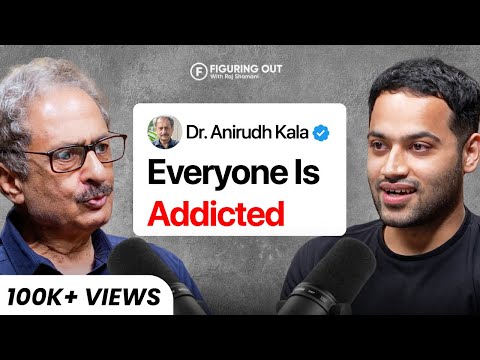
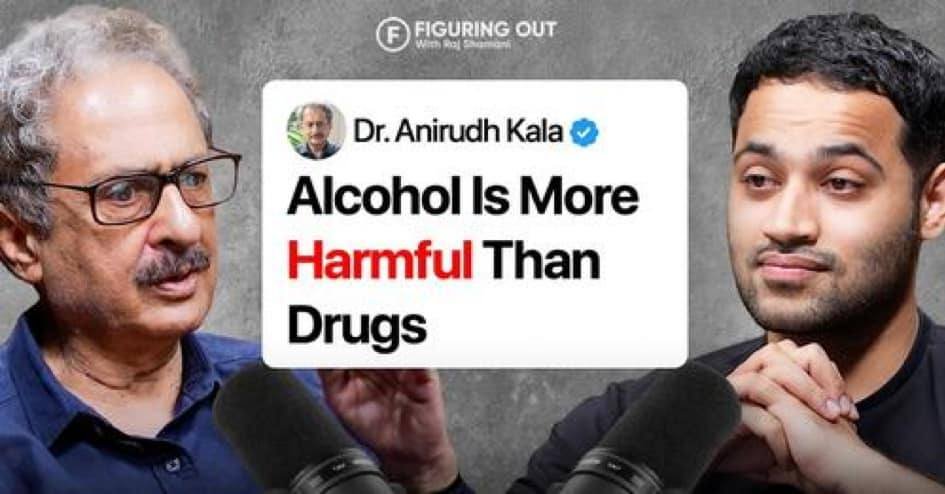
Figuring Out with Raj Shamani. One year back, I was invited by the popular influencer and pod-caster Mr. Raj Shamani to Bombay for the recording of this podcast. The podcast is an overview about the nature of addictions in general and is more encompassing than indicated by the very narrow and specific headline here. Also, drugs too kill in large numbers and destroy families youtube.com/watch?v=Z-aR18…
YouTube video
YouTube
Anirudh Kala tweet media
English
1
2
9
750
Anirudh Kala retweetledi
Om Prakash, MD
Om Prakash, MD@ompsychiatrist·
Let's stop taxing Mental Health Medicines @GST_Council @nsitharaman @PMOIndia #GSTReforms
JDA_PtJNMMC RAIPUR@JdaRaipur

Mental Illness Is Common In India, over 45 million people live with depression. Millions more suffer from anxiety, schizophrenia, bipolar disorder, and substance use problems. Almost 1 in 4 adolescents shows symptoms of depression. Many people don’t seek help because of stigma or shame. But even when they do, cost becomes the next big barrier. Mental health treatment often involves long-term medication. Medicines like risperidone, used for schizophrenia, or fluoxetine, an antidepressant, are essential. But they are not cheap—especially for patients who need them every day, often for years. Many families pay out of pocket, as these medicines are not always covered by government schemes or insurance. The Role of GST—and Why It Matters Currently, most psychiatric medicines are taxed at 5% under the Goods and Services Tax (GST). That may seem small, but it adds up—especially for patients with limited means. In September 2025, the GST Council reduced tax on many medicines from 12% to 5%—a welcome step. Some life-saving drugs, like those for cancer and rare diseases, were made GST-free. It’s time we consider doing the same for psychotropic medicines—those that treat mental health conditions. Why 0% GST on Mental Health Medicines Makes Sense Removing GST from antipsychotics and antidepressants would: 👉Lower medicine costs by 5–12% 👉Improve adherence to treatment 👉Reduce relapses, hospitalizations, and suicides Encourage early help-seeking, especially among low-income and rural populations Mental illness doesn’t just affect the mind—it affects families, livelihoods, and lives. And medicines are a vital part of healing. Other Countries Are Already Doing This Many nations have already removed taxes on essential mental health medicines: 👉The Philippines exempts them under the CREATE Act. 👉The UK and Ireland apply zero VAT on all prescription drugs. 👉Most U.S. states do not charge sales tax on prescription medicines, including those for mental health. India, as the “pharmacy of the world,” supplies 40% of global generic medicines. We should lead the way in making these medicines affordable at home too. Small Fiscal Cost, Big Public Health Gain Some worry about revenue loss. But the public health benefits far outweigh the minimal tax revenue from Schedule H1 drugs (which include most psychiatric medications). This reform would support the Mental Healthcare Act, 2017, which promises affordable mental health care to all, and strengthen schemes like Ayushman Bharat. Let’s Put Mental Health on Equal Footing We don’t tax insulin for diabetes or chemotherapy for cancer. Mental health medications are no less essential. They help students stay in school, adults keep their jobs, and families stay together. Making these medicines GST-free is not just a tax change—it’s a statement: that India values mental health as much as physical health. As a psychiatrist who sees the reality on the ground every day, I respectfully offer this suggestion through the proper channels. I hope policymakers will consider this small but powerful step toward a more inclusive, mentally healthy India.@ompsychiatrist @tribesindia @cghealth_ @JanmanCg @ChhattisgarhCG1 @truth_finder04 @rdxten @TribalArmy @TribalAffairsIn @vishnudsai @vijaysharmacg @KabirdhamDist @tribalvoice99 @DainikBhaskar @narendramodi @PMOIndia @rashtrapatibhvn @ThePrintIndia @SumiSukanya @MoHFW_INDIA @HealthCgGov @JPNadda @ShyamBihariBjp @RAIL @rdxten @truth_finder04 @NewIndianXpress @the_hindu @TheHitavada1911 @ThePrintIndia @thebetterindia @MoHFW_INDIA @HealthCgGov @DghsIndia @ChhattisgarhCMO @DPRChhattisgarh @CIDA27032017 @CGVOICE00777 @truth_finder04 @RaipurNews22 @CGVOICE00777 @DPRChhattisgarh @dhirendra_sao @RemaNagarajan @DrReshamSingh3 @DrKaranjuneja @drlakshyamittal @DrMeet_Ghonia @NMC_BHARAT

English
1
2
7
468
Anirudh Kala
Anirudh Kala@anikala·
Another Mental Health Day around the corner. It is great for increasing awareness. But increasing awareness without providing affordable services leads to even more distress " A Day In the Life of A Psychiatrist". My piece for the Mental Health Day issue of OutlookIndia Thank you@chinkis outlookindia.com/mental-health/…
Anirudh Kala tweet media
English
0
3
6
197
Anirudh Kala
Anirudh Kala@anikala·
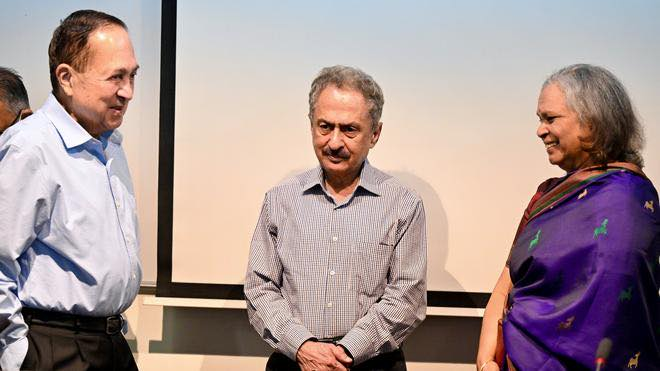
Delivered the keynote Keshav Desiraju Memorial Lecture in Chennai followed by a discussion with Dr Sujatha Rao, former Union Health Secretary with inputs from Mr. N. Ram of the Hindu Group of the newspapers. The program was hosted and organised by the The Banyan. Message: We de-institutionalised in hurry. We still need institutions for long term care in public sector. Smaller, modern and more transparent. @banyanbalm thehindu.com/news/cities/ch…
Anirudh Kala tweet media
English
0
1
11
776
Atul Ambekar
Atul Ambekar@atulambekar·
@mnwsth Dance like nobody is watching. Write papers like nobody is reading.
English
1
0
1
172