Ankur Banerjee

11.4K posts

Ankur Banerjee banner
Ankur Banerjee

Ankur Banerjee

@ankurb

Senior Product Director @zama. Co-founder @cheqd_io. Co-chair of Technical SteerCo @DecentralizedID. Ex @FinTechLabLDN, @inside_r3, @Accenture

Paris, France Katılım Ekim 2008
1.4K Takip Edilen4.7K Takipçiler
Sabitlenmiş Tweet
Ankur Banerjee
Ankur Banerjee@ankurb·
Things I wish I could do with AI (that is still surprisingly hard) 🧵
English
6
0
16
663
Ankur Banerjee
Ankur Banerjee@ankurb·
Loved collaborating with the product and design/UX teams @blockscout…when information isn’t public on a chain, what changes in the assumptions of what good UX looks like? This led to a lot of rich discussion, with the first part being better parsing and display for confidential tokens. Second big factor while building this: focus on standards and interoperability. While Zama is one of the first to have ERC-7984 tokens live on Ethereum mainnet, the groundwork that has already been done will allow another protocols with their implementations of confidential tokens to also be supported out-of-the-box…or with minimal edits specific to how they achieve confidentiality. This is just a start. As confidentiality becomes more common in a wider range of smart contracts *beyond* just tokens, it’s an opportunity to reimagine what confidentiality is for onchain finance.
Blockscout 🔭@blockscout

Blockscout now supports ERC-7984 confidential tokens built with Fully Homomorphic Encryption by @zama Balances and transfer amounts stay encrypted, while activity remains verifiable onchain 😎 Because privacy and transparency don’t have to be opposites Learn more 👇 blog.blockscout.com/zama-confident…

English
0
2
10
477
Ankur Banerjee
Ankur Banerjee@ankurb·
AI on our devices has enough signals to understand when it should screen calls vs not. But it's still a blunt instrument. By default, I have iOS unknown caller screening turned on, which is the right choice 90% of the time. But if Apple Intelligence was actually smart, it would do a better job on the other 10% of the time. It should treat calls from unknown callers differently in scenarios such as: - A delivery is expected that day (it can already read notifications from apps like Amazon, Deliveroo, DoorDash, or from SMS if no app is installed) - An email or text message says "I'll call you on Tuesday" or gives a specific time Instead, it just routes everything to the default screening message. Delivery drivers hang up the moment they hear that robotic screening message. Thus, resulting in a missed delivery, rather than screening a real spam call. 🤦🏾‍♂️
English
0
0
3
37
Ankur Banerjee
Ankur Banerjee@ankurb·
- Take a week's worth of meal prep recipes + shopping list from a Substack (which uses American/imperial units) - Put items into shopping basket for either of my two favoured French supermarket chains: needs conversion to metric (easy), find item name in French (sort-of easy, translations are not literal sometimes), find closest match to local ingredients (surprisingly hard?) - I don't even care about them checking out and actually ordering, I will take the win of just putting it into a basket. I have tried asking ChatGPT Atlas and Openclaw, and both gave up on this as "too hard"
English
2
0
10
232
Ankur Banerjee
Ankur Banerjee@ankurb·
Things I wish I could do with AI (that is still surprisingly hard) 🧵
English
6
0
16
663
Ankur Banerjee retweetledi
JeffG
JeffG@erskingardner·
JeffG tweet media
ZXX
35
1.2K
5.3K
81.4K
eric zakariasson
eric zakariasson@ericzakariasson·
whats going on with chatgpt these days? almost all responses ends with clickbaity questions "if you want, i can tell you the one mistake that almost everyone forgets"
English
931
250
11.7K
1.1M
Ankur Banerjee
Ankur Banerjee@ankurb·
Yet another edition of government databases are not fit for purpose to storing confidential and sensitive personal details. 😠 This time from the medical records stored in the UK BioBank, with records from over 500k volunteers stored (including myself). theguardian.com/science/2026/m…
Ankur Banerjee@ankurb

Data breach at FICOBA (the French national bank account registry) leads to 1.2 million records leaked. 🤯 “…the perpetrator (or perpetrators) obtained login credentials belonging to a civil servant authorized to use the database and then used those credentials to explore its contents.” Why a single civil servant's account should be allowed to access or export 1.2 million records without triggering any data loss protection alarms is a massive red flag. 🚩 If a private company with SOC2 or ISO 27001 certification allowed a single admin to export 1.2mn PII records without triggering an immediate lockout or requiring multi-party authorization, they would fail their audit instantly. Why should government infosec standards lower than most modern startups?! We need to stop "protecting" the perimeter and start making the database blind. - Stop acting as a custodian of data. Move to a model where the government verifies a proof provided by the resident, rather than holding the raw data in a central "honey pot." - With Fully Homomorphic Encryption, e.g. @zama, the government can query the database without ever seeing the raw PII. The data remains encrypted even during computation. Governments have shown time and again they cannot be trusted with centralized databases. It’s time to move from "Trust us, we’re the government" to "Trust the cryptography." helpnetsecurity.com/2026/02/19/fic…

English
2
1
12
617
Ankur Banerjee
Ankur Banerjee@ankurb·
Okay, it's a bit dumber than I expected. It DOES full-text search if you access via "Search" in the sidebar. But not in the search interface that's shown by clicking on "Chats" 🤦🏾‍♂️
English
2
0
6
96
Ankur Banerjee
Ankur Banerjee@ankurb·
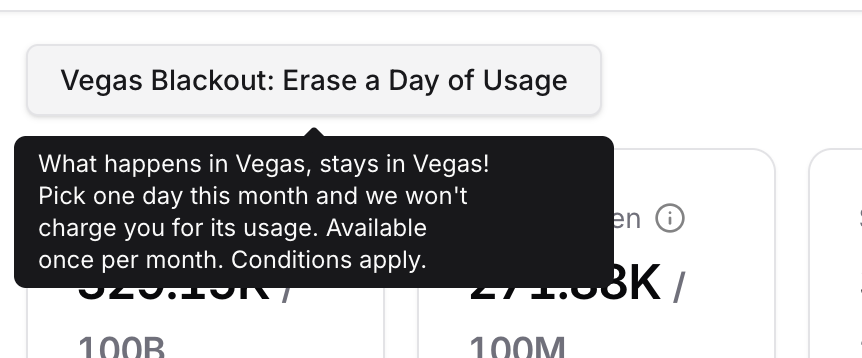
I seriously do not understand how it's 2026, and the search function in @claudeai Desktop can still ONLY search chat titles, rather than also searching within the text of chats. FWIW, ChatGPT, Gemini, Grok...all of them support full-text search. Useful when trying to find a previous chat on a topic where it might be in text body rather than in title.
Ankur Banerjee tweet media
English
4
0
11
206
Ankur Banerjee
Ankur Banerjee@ankurb·
Truly disappointed to read this. 😞 Fine dining kitchens are intense, but some of the details here (chefs being punched and left bleeding, being poked with BBQ forks) are shocking. As a Taste Buds member, I want to believe @nomacph can demonstrate credible accountability and make things right, but if they don’t show a path for this, I can’t continue supporting them in good conscience. Noma’s cookbooks and fermentation guides have been an inspiration for my own journey as a home cook (although I’m very, very far away from their level). I hope they can live up to the values of the future of food they preach.
The New York Times@nytimes

Breaking News: Dozens of former workers at Noma, one of the top-ranked restaurants in the world, say its chef physically abused employees. nyti.ms/3OWQksf

English
1
0
5
201
Joshua Lim
Joshua Lim@joshua_j_lim·
love to see these rare photos of brokers on the Aave trading floor that coindesk sourced
Joshua Lim tweet media
English
42
24
676
38.1K
chriswilder.eth
chriswilder.eth@realchriswilder·
Conviction is when you decide to put your heart and soul into something and strive for the best out of it. Whether paid or unpaid because at the end of the day good name comes with profits one way or the other! New version is up on Google Play Store. What's new? 1. Almighty dark mode support 2. @privy_io wallet back up added so you can export your wallet to wherever you want 3. Nav bar upgrade and you will love it. 3. Major updates across the entire app. I have a few spots left for closed testing so if you are interested let me know so I can onboard you. I am putting much effort into this so I can bring Confidential payments via @zama to every pocket.
chriswilder.eth tweet media
chriswilder.eth@realchriswilder

Your confidential app as your daily driver! Powered by $ZAMA protocol. 🔐 Shield your ERC 20 Tokens on your favourite chain 💸 Send confidential payments that nobody can track the amount you sent. 📩 Request payments via QR codes or payment links 👁 Decrypt your balance only when you choose This is how I have bundled the holy grail of cryptography, FHEVM into an app to give you freedom and confidentiality! Follow @zpayyapp and stay tuned. DM if you want to get part of closed testing on Android. iOS is undergoing submission so test flight is coming soon as well.

English
12
5
25
1.6K
Ankur Banerjee
Ankur Banerjee@ankurb·
@GustavoValverde @randhindi Using OAuth/OIDC in Zentity is one of the really smart product decisions 100%, especially in context of where EUDI wallets are currently. Also I think the older systems will need to coexist with new ones for a long, long time.
English
1
0
2
41
Gustavo Valverde
Gustavo Valverde@GustavoValverde·
Based on the "operational architecture" of how KYC and verification platforms works right now, there's little option for flexibility. For example, if you use different services with different requirements, even if through the same identity provider (let's say Persona), on each service you need to do the process; and I won't same the "same" process because it can vary by service provider, but nonetheless, you have to repeat the process. There's not a platform where I can go and update my information, in case a new service provider needs more info. If most service providers needs basically the same information, I shouldn't be doing the full re-verification again and again. And even though this is different on what you're framing (and I do agree with that), the thing is that the overall framing on how identity verification needs to happen is just not enough to allow for more novel scenarios (like using OAuth/OIDC embedded as part of the identity verification) to basically change the way service providers interact with identity verification systems.
English
1
0
1
43
Ankur Banerjee
Ankur Banerjee@ankurb·
This is exactly the nuance a lot of discussions about ID verification on Discord is missing...that there's actually TWO different purposes behind a lot of the online safety laws. And the needs are in direct competition with each other. The weak spot of "purer" implementations of selective disclosure or "age above or below certain range" is that they don't provide enough signals to figure out, say, if it's a sexual predator trying to pass themselves off as a minor. And applying the same KYC as for adults doesn't quite work because kids typically don't have ID documents. What would make a real difference is such online safety laws allowing for a basic level, and then enhanced checks where other signals indicate they are fraudulent. Rather than making everyone go through the same process.
Rick Song@rickcsong

I believe there’s so much unnecessary confusion, frustration, and debate around age verification because we're treating two very different problems as one: 1/ Stopping kids from seeing inappropriate content 2/ Stopping adults from pretending to be kids I get why these are discussed together. Too much of (2) increases the risk of (1). But not all platforms face both challenges and certainly not at the same level, and treating them as the same problem leads to the wrong solutions and the wrong tradeoffs. I’m not a policy maker, but from our work at Persona, I’ve seen that the challenges, risks, and solutions for each of these problems are wildly different. Keeping kids from inappropriate content is a household-level problem. I don’t want to downplay the risks of social media or exposure to adult content. However, sacrificing broad privacy to solve what is fundamentally a parental controls problem doesn’t feel like a great bargain. Stopping adults from impersonating kids is a platform-level problem. It jeopardizes the safety and integrity of the community and at its core, it's fraud where adults have far more resources than kids. Unfortunately, the challenge is that more effective solutions tend to compromise more privacy. The best approaches evaluate how much of a tradeoff is worthwhile given the risks. When the risks of a technology don’t match the benefits of the problem it solves, public concern is justified. Applying fraud prevention techniques to what should be a parental controls problem is overreach. And a half-baked solution to adult impersonation is possibly worse. It’s security theatre where privacy is sacrificed but minimal assurance is gained. The more I work on this and the more I hear from all of you, the more I believe that if some privacy must be lost, some privacy should be gained elsewhere in return. The right framework is one that splits knowledge to prevent abuse. No single organization should know both: 1/ who you are 2/ what you are doing If Persona has to know who you are, we should make sure we don’t know what you’re doing or what app you’re using. And if a platform knows what you’re doing, they shouldn’t know who you are. This is not where the world is at today, and this framework is by no means perfect. But I think it’s better, and I’d love your feedback as we build it.

English
9
0
21
2.6K
Ankur Banerjee
Ankur Banerjee@ankurb·
Most existing ZK / FHE ID are single level proofs (e.g., a ZK/FHE proof of age or residence). To get regulators/politicians assured, identity consumers (apps/services that need ID) need to have ability to signal and request additional proof. In the same scenario, "In your case, ZK/FHE proof of age is not sufficient. Prove additional facts in a ZK/FHE fashion, e.g., to prove you don't appear on any sexual offender registries, you aren't a previously banned user from the service etc" The problem is all apps/services are immediately incentivised under current laws to ask for the full set of every question/data point possible, rather than ask for the least. As I was telling @GustavoValverde, no regulator/politician wants to ask for less data, and then see a headline that they allowed children to come to harm because of not requesting all possible data points that could be used to figure out fraud. So any viable system that uses ZK/FHE needs to convince regulators that it can provide the same, or even better, MORE data points than traditional tech to identify fraud / bad actors. Any solution that says it will provider fewer data points than current systems is DOA.
English
1
0
4
94
Rand
Rand@randhindi·
@ankurb Interesting take. Does ZK / FHE ID solves this?
English
7
0
12
1.1K
Ankur Banerjee
Ankur Banerjee@ankurb·
I agree with so many elements of this! When I was one of the lead engineers at Accenture's innovation lab 10 years ago, most POCs used to take 4-12 weeks to make something meaningful. And I totally see the equation changing now where it's easier to create and launch POCs. What I think becomes even more important in this era is distribution and acquisition. Since it's easier than ever to create and launch something, the challenge is on how to stand out and actually drive users to the product to understand and test product-market fit. And, as a user, I've raised my expectations on how durable a product is. I don't want to spend time getting to know someone's vibe coded slop if I expect them to not continue supporting the product. Once a wider set of users start getting burnt by products that are abandoned faster, I think this will lead to users getting even more entrenched in established apps.
English
2
0
3
123
Ankur Banerjee
Ankur Banerjee@ankurb·
This is a fantastic initiative! I do think there's a few ways to improve it, since women are more likely to be carer roles (in many families) and therefore ONLY allowing this access on a specific Sunday might not fit with their schedule. Perhaps instead of only allowing on Sunday, 8th March, Lovable could allow participants to choose a day when they get access for. This would allow participants to fit it around their schedules. (Alternatively, provide the access for a longer period, but I appreciate that might be more expensive.)
English
0
1
6
775
Lovable
Lovable@Lovable·
To celebrate International Women's Day on March 8th, we're making Lovable completely free to use for the day, powered by @AnthropicAI. That day we're also hosting a global build day through SheBuilds, where anyone can build with us. Community-led events are happening around the world with experienced builders on hand to help you ship. Every participant also gets $100 in Claude API credits and $250 in Stripe fee credits. See more: shebuilds.lovable.app
Lovable tweet media
English
118
220
1.4K
299.1K
Ankur Banerjee
Ankur Banerjee@ankurb·
Politics is a large part of it. For users who are genuine, a lot of the zk/selective disclosure approach work great. But for people who are malicious and WANT to be deceptive, it's untested at scale whether it will be sufficient to detect bad actors. And that's what scares a lot of regulators/politicians, because they don't want to be the subject of headlines where "new tech" they wanted to try resulted in harm for kids. I mean specifically about age checks for social media like in Australia, or the UK age safey law.
English
1
0
1
73
Gustavo Valverde
Gustavo Valverde@GustavoValverde·
@ankurb I'm honestly not grasping where the issue lies here. I might be too naive, but it doesn't seem like a technological issue; there are ways to make a feasible solution. If it's a political one, well that's a whole different story.
English
1
0
1
110
Ankur Banerjee
Ankur Banerjee@ankurb·
It’s a great joke 😂 …but one of the reasons to ask for a selfie (whether traditional KYC or World) is to check it’s the real person linked to those details sending the request, and not just someone who found that biographical data through a data breach. (Not EVERY interaction should require that. There’s many, many use cases where this could be replaced with some form of selective disclosure or zk.)
Grafton (Disco)@satsdisco

Wow, look how convenient

English
4
0
11
397