
Adam Nima Pourahmadi

15.1K posts

Adam Nima Pourahmadi banner
Adam Nima Pourahmadi

Adam Nima Pourahmadi

@ANPour

Journalist/Producer @CNN International. fmr. @VICENews, @HuffPost, @AJEnglish. @StAntsCollege alum

London, England Katılım Kasım 2008
1.7K Takip Edilen2.7K Takipçiler
Adam Nima Pourahmadi retweetledi
Arash Reisinezhad
Arash Reisinezhad@arashreisi·
Iran, unlike countries like China and France, has historically been a predominantly land-oriented state from a geopolitical perspective. Threats have largely emanated from its land borders, and opportunities have mostly been found on land. As a result, Iran’s strategic mindset has long treated its land borders as defensive fortresses, while its maritime coasts have been seen less as gateways to development and more as endpoints. Yet the logic of geography suggests otherwise. With over 6,000 km of land borders and nearly 5,800 km of coastline in the north and south, and with oversight of critical maritime chokepoints at the intersection of Asia, Europe, and Africa, Iran has the potential to emerge as a middle land-sea power. In the context of the current war, however, this equation may be shifting. The conflict is likely to reshape how Iranian decision-makers think about maritime power projection. Control over the Strait of #Hormuz may represent the first step, and the first concrete manifestation, of this evolving strategic mindset. This point should be seen as complementary to the argument I made in @ForeignPolicy last week 👇
Arash Reisinezhad tweet media
Foreign Policy@ForeignPolicy

The Iran war highlights a deeper and broader lesson about modern conflict. In an era of artificial intelligence, cyberwarfare, satellites, and autonomous precision weapons, geography still exerts profound influence over the course of war. foreignpolicy.com/2026/03/23/ira…

English
6
59
253
29.2K
Adam Nima Pourahmadi retweetledi
Sana Noor Haq • سناء نور حق
US-Israeli bombing on Iran has struck a factory producing cancer medication and a psychiatric hospital in recent days, according to state-backed outlets, as aid agencies raise alarm over attacks on health facilities. One of Iran’s largest producers of anti-cancer drugs and anesthetics was hit on Tuesday, the state-run Islamic Republic of Iran Broadcasting (IRIB) reported. Earlier this week, the newly-built Delaram Sina Psychiatric Hospital in Tehran was significantly damaged by an attack on the Iranian capital according to the state-run Islamic Republic News Agency (IRNA). About 30 patients were in the hospital at the time of the strike late Monday, the head of the hospital told IRNA. “Doors and window were shattered, and the walls of the building were also damaged,” said the doctor. CNN has reached out to CENTCOM and the Israeli military for comment. The US-Israeli assault on Iran has laid waste to entire neighborhoods, killed hundreds of people and depleted key services. At least 190 health and medical centers have been hit since the start of the war on February 28, according to the Iranian deputy health minister. An official from the International Federation of Red Cross and Red Crescent Societies in Iran said 17 of the agency’s centres have been struck and nearly 100 ambulances damaged or destroyed. “These are not just vehicles. They are often the only hope people have when the bombs fall,” said Maria Martinez, the IFRC’s head of delegation in Iran. Read our reporting, with @ANPour ✍🏽 cnn.com/2026/03/31/wor…
English
0
18
27
2.6K
Adam Nima Pourahmadi retweetledi
Sana Noor Haq • سناء نور حق
At least two people have been killed by a US-Israeli strike on an orphanage west of Tehran, Iran’s semi-official Fars News Agency reported Monday, as human rights advocates warned against the scale of destruction. Five others were injured in the attack on a newly built orphan charity complex in the city of Fardis, about 25 miles west of Tehran, the agency quoted a regional official as saying. Rights groups have condemned the number of civilians and children killed in US and Israeli strikes and the targeting of educational establishments and residential areas. In Iran alone, strikes have killed at least 230 children and injured a further 1,800, the state-run Islamic Republic News Agency reported on Sunday. On Friday, the UN human rights chief escalated calls for the White House to publish an investigation into a likely US strike on an elementary school in Minab, southern Iran, on the first day of the war that Iranian media said killed 168 children and 14 teachers – the single deadliest attack so far. “The images of bombed-out classrooms and grieving parents showed clearly who pays the highest price for war: civilians with no power in the decisions that led to conflict,” Volker Türk, the UN high commissioner for human rights, told a Human Rights Council meeting last week. Read our reporting, with CNN’s Adam Pourahmadi ✍🏽 edition.cnn.com/2026/03/30/wor…
English
27
567
1.1K
418.2K
Adam Nima Pourahmadi retweetledi
Janina Dill
Janina Dill@JaninaDill·
I first wrote this up in response to an enquiry by CNN about attacks against universities. Their report is published here: edition.cnn.com/2026/03/31/mid…
English
1
1
0
118
Adam Nima Pourahmadi retweetledi
Vali Nasr
Vali Nasr@vali_nasr·
Iran has asked for guarantees in any deal with US. Word is that Pakistan Foreign Minister is going to Beijing to get a guarantor for the potential deal. Likely that is Iran’s condition for talks with US. And FM would not be going to China without having floated the idea with both Washington and Beijing. No guarantees of China biting but Beijing is now the frontline in the diplomatic effort
English
325
1.8K
7.9K
1.4M
Adam Nima Pourahmadi retweetledi
IAEA - International Atomic Energy Agency ⚛️
Based on independent analysis of satellite imagery and knowledge of the installation, the IAEA has confirmed the heavy water production plant at Khondab, which Iran reported had been attacked on 27 March, has sustained severe damaged and is no longer operational. The installation contains no declared nuclear material.
IAEA - International Atomic Energy Agency ⚛️ tweet media
English
86
533
1.1K
204K
Adam Nima Pourahmadi retweetledi
Allegra Goodwin
Allegra Goodwin@goodwinallegra·
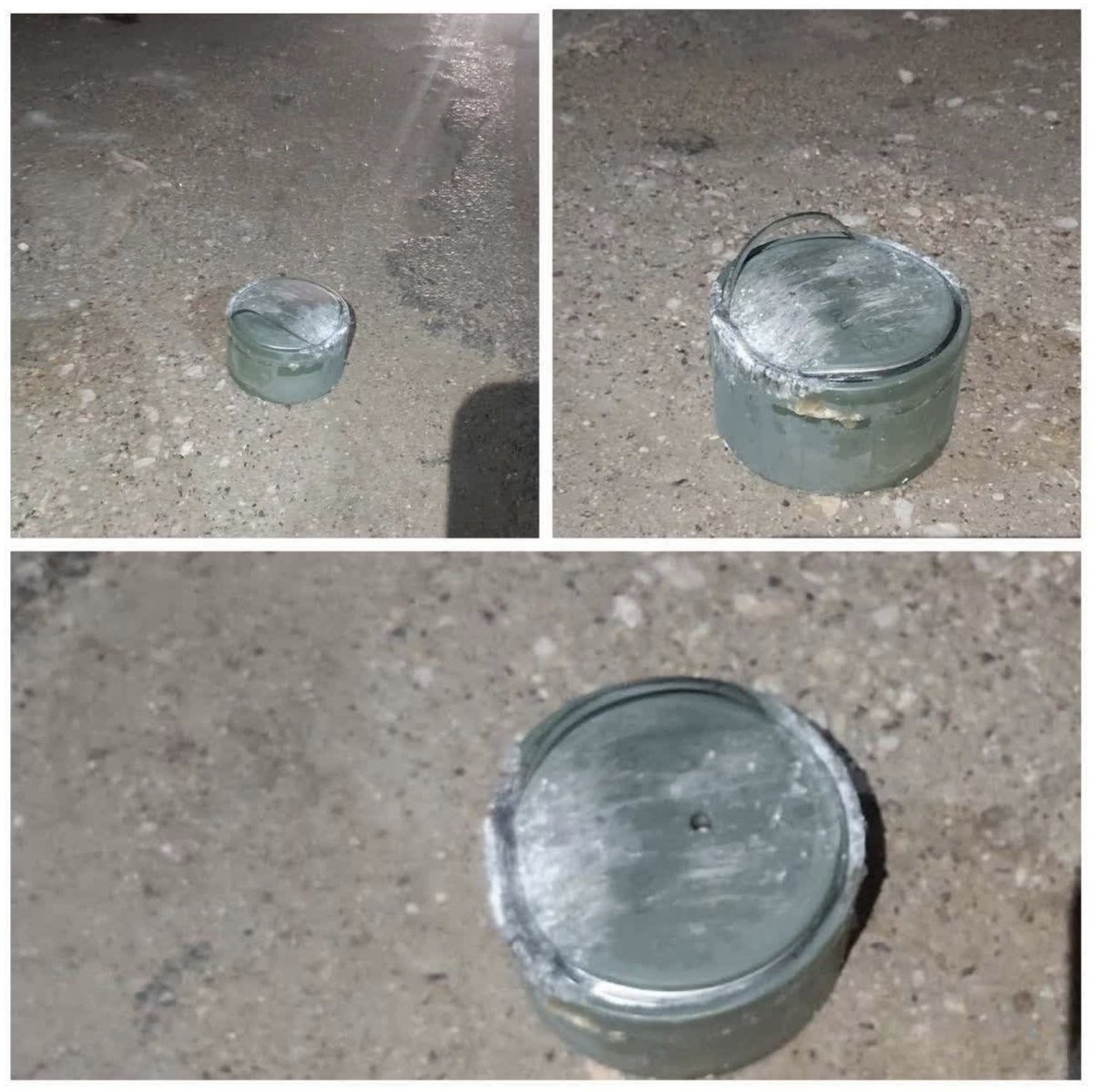
NEW: Images from Iran appear to show US-origin landmines dropped in village, @cnn analysis shows If confirmed this would mark their first known use by US forces in more than two decades. with @anpour and @nadeenebrahim9 cnn.com/2026/03/27/wor…
Allegra Goodwin tweet media
English
2
12
10
2.6K
Adam Nima Pourahmadi retweetledi
Vali Nasr
Vali Nasr@vali_nasr·
Larijani’s replacement will be appointed by IRGC. With every assassination U.S. and Israel engineering greater radicalization of Iran’s leadership. It will makes for a bleak future for Iran, Iranians, the region and ultimately makes it far more difficult for U.S. to disentangle itself from endless conflict in the region.
English
1.5K
1.9K
7.6K
1.5M
Adam Nima Pourahmadi retweetledi
Chris Murphy 🟧
Chris Murphy 🟧@ChrisMurphyCT·
I was in a 2 hour briefing today on the Iran War. All the briefings are closed, because Trump can't defend this war in public. I obviously can't disclose classified info, but you deserve to know how incoherent and incomplete these war plans are. 1/ Here's what I can share:
English
4.4K
18.9K
92.6K
12.1M
Adam Nima Pourahmadi retweetledi
Vali Nasr
Vali Nasr@vali_nasr·
I write in @nytimes it is perhaps not Venezuela but a fast-tracked version of Syria that has captured Trump's imagination, bombing to get to state collapse and an Iranian version of Ahmad al-Sharaa. But Mojtaba's selection as Sumpre Leader makes one thing clear: rather than compelling Iran to change course, Trump’s war plan is pushing it to dig in. Surrender is not an option for the Islamic Republic, it is opting for resistance.nytimes.com/2026/03/09/opi…
English
30
242
680
158K
Adam Nima Pourahmadi
Adam Nima Pourahmadi@ANPour·
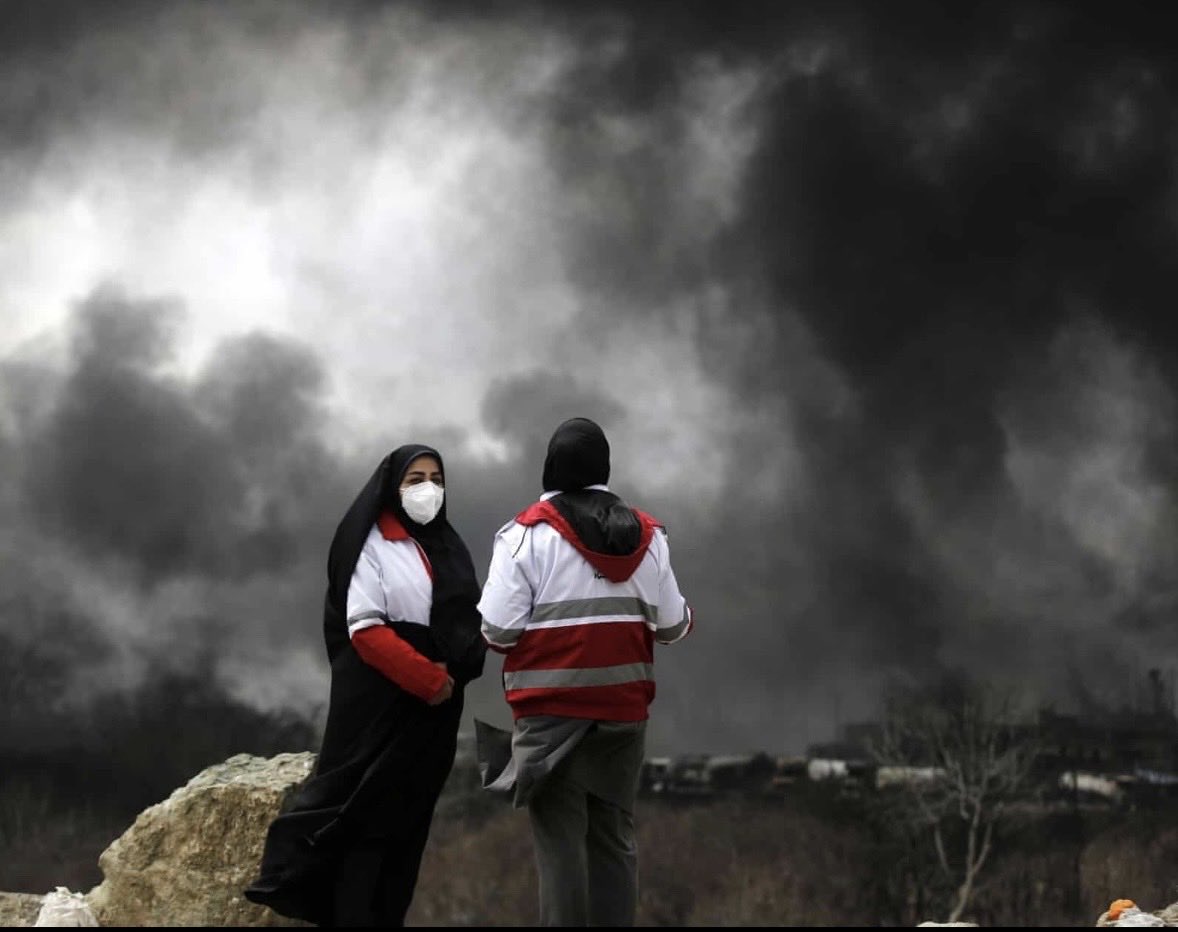
When there’s a new pope: white smoke When there’s a new Supreme Leader: black smoke
Adam Nima Pourahmadi tweet media
English
0
0
0
84
Adam Nima Pourahmadi retweetledi
Esfandyar Batmanghelidj
Esfandyar Batmanghelidj@yarbatman·
I’ve been thinking a lot about how so many Iranians in the diaspora have not been to Iran for decades, or if they are younger, have never been to Iran at all. We can call them the distant diaspora. Many of the loudest calls for military intervention came from people who had recent experience of repression at the hands of the Islamic Republic. Their calls for war were motivated by the intensity of Iran’s crisis. They felt the potential benefits outweighed the potential harms—something had to change. But I believe that for those who have been distant from Iran, a different dynamic mattered, one that was less about weighing the benefits and harms. For many in the distant diaspora, a lack of familiarity with the place made it inherently easier to call for military intervention—Iran did not feel real and the idea of the country being in a war was necessarily abstract. But I also believe, that at some subconscious level, many of these same people welcomed the war because they knew it would be destructive. It would be easier for them to remain alienated from an Iran that had been destroyed, than to grapple with the fact that they have been unable or unwilling to remain connected to a place of such profound beauty and meaning. For many Iranians, it has been difficult to admit that Iran remained beautiful and joyous despite the repression of the Islamic Republic. They told themselves that the Islamic Republic had destroyed the country, but the resilience and vitality of the true Iran was still clear in the stories told by friends and family or the images that would seep through on social media, piercing through all the dark news. By believing that the Iran they loved ceased existing in 1979, they could mourn its death. This mourning was easier than the daily, needling grief of exile, whether forced (as it often was, at the hands of repressive leaders) or self-imposed. For people struggling with these feelings, the prospect of Iran being destroyed by war and beset by insecurity may represent a kind of release. If Iran is a failed state, many in the diaspora will feel less regret about not being there. It will be easier to let go, or at least not to reach out. In the aftermath of this war, the question of why they do not go to Iran will no longer hang over the distant diaspora in the same way—they always said Iran was a ruined country, and it will finally be so. The war will make it easier to justify their alienation from their homeland and this alone will feel like a kind of freedom. I don’t say this with any judgement—ultimately, I am describing a kind of coping mechanism that allows people to deal with very heavy feelings of alienation and powerlessness. But I do think we need to understand why the diaspora pushed for actions that brought so much destruction to Iran. It was not out of naivety, at least not entirely. Many knew destruction would come and they were seeking its release.
Esfandyar Batmanghelidj tweet media
English
180
281
1.4K
207.8K
Adam Nima Pourahmadi retweetledi
Chris McGuire
Chris McGuire@ChrisRMcGuire·
Reuters reports that an object struck an AWS data center in the UAE, causing a fire and shutting it down. Assuming this was an Iranian drone strike, it is the first time a commercial data center was physically targeted in a conflict. It won’t be the last. reuters.com/world/middle-e…
English
35
699
1.8K
347K
Adam Nima Pourahmadi retweetledi
Esfandyar Batmanghelidj
Esfandyar Batmanghelidj@yarbatman·
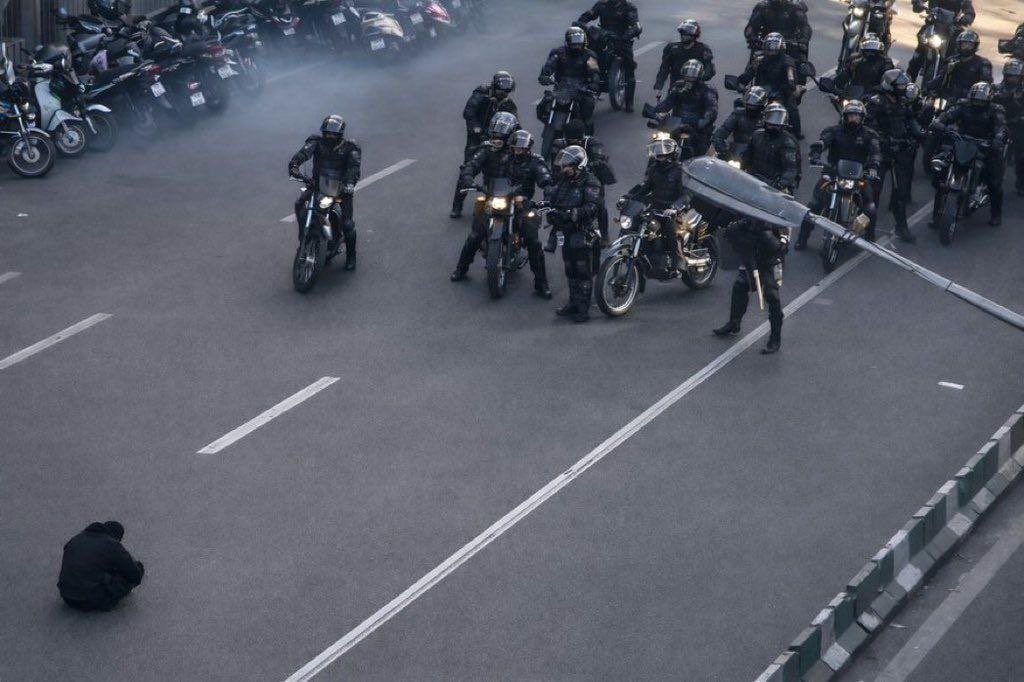
In a recent op-ed, @vali_nasr wrote that Iran is “entering a transition like the one China went through from Mao to Deng Xiaoping.” Iran in 2025 and China in 1978 are very different places, but the historical analogy seems especially apt today—many have drawn a parallel between this scene from Tehran and the famous “Tank Man” image from Tiananmen Square. Ultimately, the analogy is useful because it clarifies that countries can undergo profound transformations without outright revolutions. This remains the likeliest outcome for Iran. We should be careful not to foist unreasonable expectations on the protestors, especially as they put themselves in harm’s way. From the outside and on the internet, a view emerges that protests in Iran will only truly succeed if they bring about the end of the Islamic Republic. Implicit in this view is a rejection of the idea of “reform.” But the picture is more complicated than a simplistic dichotomy between reform and revolution. The “Women, Life, Freedom” protests did not lead to revolution, but they did enable Iranian women to assert their rights in public space, forcing the authorities to capitulate on the issue of the mandatory hijab. Was this an example of the authorities opting for reform? Not exactly. Consider that no new freedoms for women have even been codified. Still, the protests were a success. Between revolution and reform lies the real terrain of the fight to create a more just and prosperous society in Iran. The terrain is one of contestation and capitulation. Ordinary Iranians are contesting various issues, through protests and other means, in an attempt to force a range of capitulations whereby the state cedes power back to the people. In isolation, none of these capitulations seems significant enough, none seem to address depth of the crises, none provide the catharsis of revolution. But their cumulative effects can be profound and we are beginning to witness those effects. Once authorities begin to capitulate, ordinary people regain their ability to reshape the structures, priorities, and behaviours of the state, even without healthy democratic institutions. In this sense, the Iranian people are currently “revolutionaries without a revolution.” Revolutionary events are occurring in Iran, and have been occurring for years. While they may not have an organised revolution to partake in, the Iranian people have nonetheless asserted their moral authority, even as they have struggled to assert their material power. That has been enough to force the authorities to make certain concessions. This durable process will continue, and if we pin our hopes on this process, we can remain both optimistic *and* realistic about Iran’s potential for transformation.
Esfandyar Batmanghelidj tweet media
English
48
84
266
62.2K
Adam Nima Pourahmadi retweetledi
Louisa Loveluck
Louisa Loveluck@leloveluck·
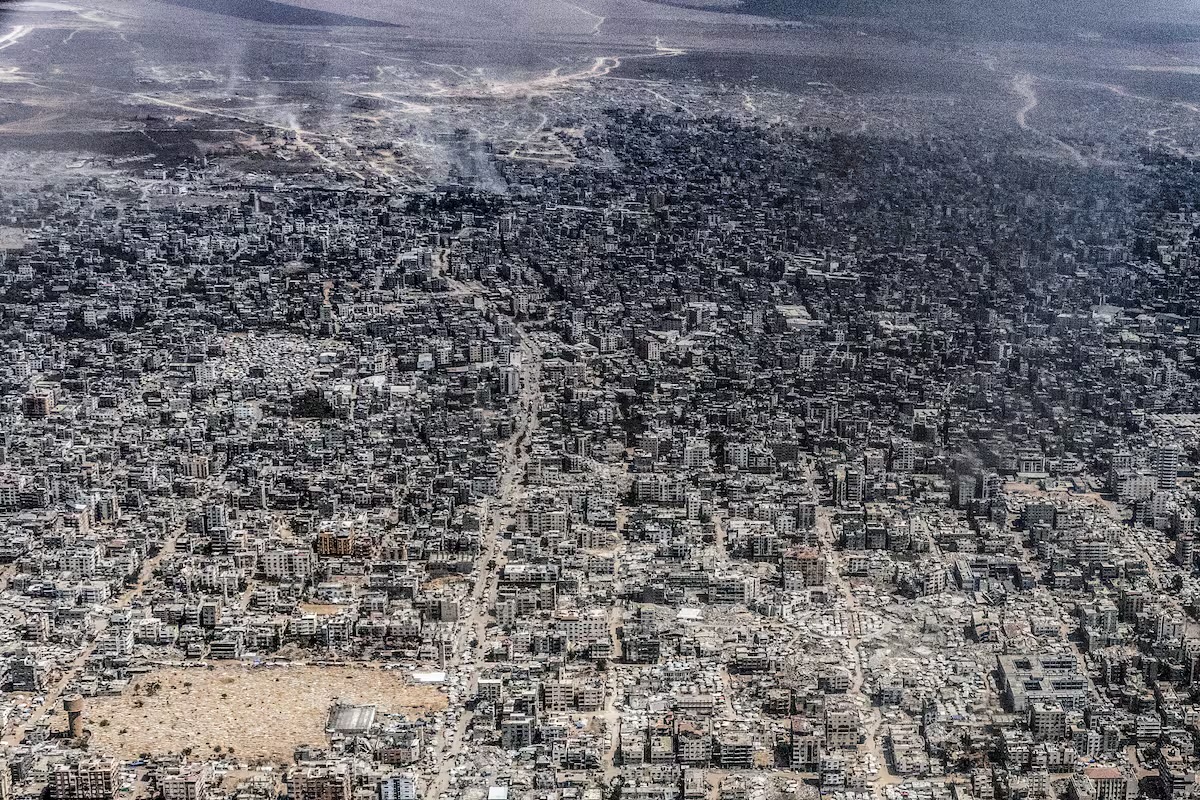
An aerial view of what the Gaza City area looked like this week. Taken from a Jordanian military aircraft, by our colleague @Heidiphotos.
Louisa Loveluck tweet media
English
745
5.5K
8.9K
5.3M
Adam Nima Pourahmadi retweetledi
Barzan Sadiq
Barzan Sadiq@BarzanSadiq·
She is back Live on IRIB.
Barzan Sadiq tweet media
English
9
18
46
17.3K