Anurag Saxena

13.7K posts

Anurag Saxena banner
Anurag Saxena

Anurag Saxena

@anurag4d

20+ years at the intersection of technology, public policy, financial inclusion, and AI, not as separate stops, but as a single, deepening journey

India/Asia/US Katılım Temmuz 2009
1.4K Takip Edilen1.4K Takipçiler
Sabitlenmiş Tweet
Anurag Saxena
Anurag Saxena@anurag4d·
It's always about execution! AI is also becoming an execution game. Value is shifting from 'results' to 'outcomes'. Its not experimentation but integration with existing technology that brings the distinction in business models. Gradually the relevance of use cases will be tested using 'measurable unit economics'. Ship solutions that compound value for business/customers. Governance and ethics frameworks (sounds boring to many) are getting a place in board meeting discussions. The discussions about energy consumption, and cost-to-serve have started, and are quite important. In short, AI is not an add on, but integral part of your business plans. And, when you mean business, be ready for some boring (real) work as well:) What do you think? @vijayshekhar @a1purva @chandrarsrikant
English

1
1
2
513
Anurag Saxena
Anurag Saxena@anurag4d·
@dhruv_rathee To get attention, don't hit the level so low. Criticism is fair but you are crossing lines here and shaming your own country.
English
0
0
0
733
Dhruv Rathee
Dhruv Rathee@dhruv_rathee·
Modi deserves to be humiliated everywhere he goes. He has not given a single press conference in 12 years since he became the Prime Minister. He fails to fulfill the basic transparency and accountability requirements of being a leader. I would like to encourage foreign journalists from other European countries to ask him questions wherever they see him, just like @HelleLyngSvends did. Embarrass him so much that he is forced to show some accountability in front of people. You will be doing great service for India’s progress.
English
6K
11.1K
61K
3.1M
Anurag Saxena retweetledi
Gul Panag
Gul Panag@GulPanag·
Not cool. You can dislike a Prime Minister, disagree with a government, protest, debate and vote differently. That’s democracy. But reducing the office of India’s Prime Minister, the man, the office, and what he represents abroad, to a joke on foreign soil -doesn’t feel like the right thing or dissent - to me. It diminishes him, the institution, and ultimately, us.
Dhruv Rathee@dhruv_rathee

Modi deserves to be humiliated everywhere he goes. He has not given a single press conference in 12 years since he became the Prime Minister. He fails to fulfill the basic transparency and accountability requirements of being a leader. I would like to encourage foreign journalists from other European countries to ask him questions wherever they see him, just like @HelleLyngSvends did. Embarrass him so much that he is forced to show some accountability in front of people. You will be doing great service for India’s progress.

English
1.3K
2K
14.1K
1.3M
Anurag Saxena retweetledi
Crypto India
Crypto India@CryptooIndia·
WATCH: 🇮🇳 Mukesh Ambani says Jio will cut the cost of AI intelligence in India like it did with mobile data. Jio will invest ₹10 lakh crore in AI infrastructure over the next 7 years.
English
161
297
3K
271.9K
Anurag Saxena
Anurag Saxena@anurag4d·
@sama Create employment opportunities for all, at scale by creating easy to use AI models in vernacular languages and micro business models around the same.
English
0
0
0
14
Sam Altman
Sam Altman@sama·
what problem do you most hope AI will solve in the future? maybe we can help!
English
14K
668
11.5K
2.9M
Anurag Saxena
Anurag Saxena@anurag4d·
@elonmusk You will use AI to shortlist the ‘world-class’ engineers who may write the bullet points using AI😀
English
0
0
0
532
Elon Musk
Elon Musk@elonmusk·
SpaceX is actively hiring world-class engineers/physicists for SpaceXAI, even if you have zero prior experience in AI. Smart humans figure it out fast. Please send an email with ~3 bullet points demonstrating evidence of exceptional ability to ai_eng@spacex.com.
English
11.7K
23.8K
176.8K
48.9M
Anurag Saxena
Anurag Saxena@anurag4d·
@sabeer It's good to see a number of pitches about business model innovation and not simply putting an AI wrapper on everything. I am assuming that you don't see scale in those ventures and are looking for lean tech start-ups. Do write a blog about your reflections.
English
0
0
0
75
Sabeer Bhatia
Sabeer Bhatia@sabeer·
I’m back from a fantastic 6 day trip to India. On this trip I probably heard 40+ pitches from entrepreneurs. About 80% were business model innovations. The remaining 20% were AI-based. A great many were variations of health protein bars — purity of ingredients, percentage of protein, shape of product, calorie count specificity etc. I was disappointed that I didn’t hear many truly “out of the box” ideas. I was also surprised by the language many founders used during pitches: “Basically this is…” “It is very simple…” These aren’t phrases seasoned venture capitalists like to hear. Great founders simplify complexity without sounding simplistic.
English
60
41
387
32.5K
Anurag Saxena retweetledi
Melissa Chen
Melissa Chen@MsMelChen·
Singapore’s Foreign Minister, Dr Balakrishnan casually explaining how he built his own AI agent (a 2nd brain for diplomacy) using Claude & WhatsApp integration etc. on a Raspberry Pi “You cannot govern a technology you have only been briefed on.” 🇸🇬
English
178
2.1K
11.1K
2.2M
Anurag Saxena retweetledi
Nithin Kamath
Nithin Kamath@Nithin0dha·
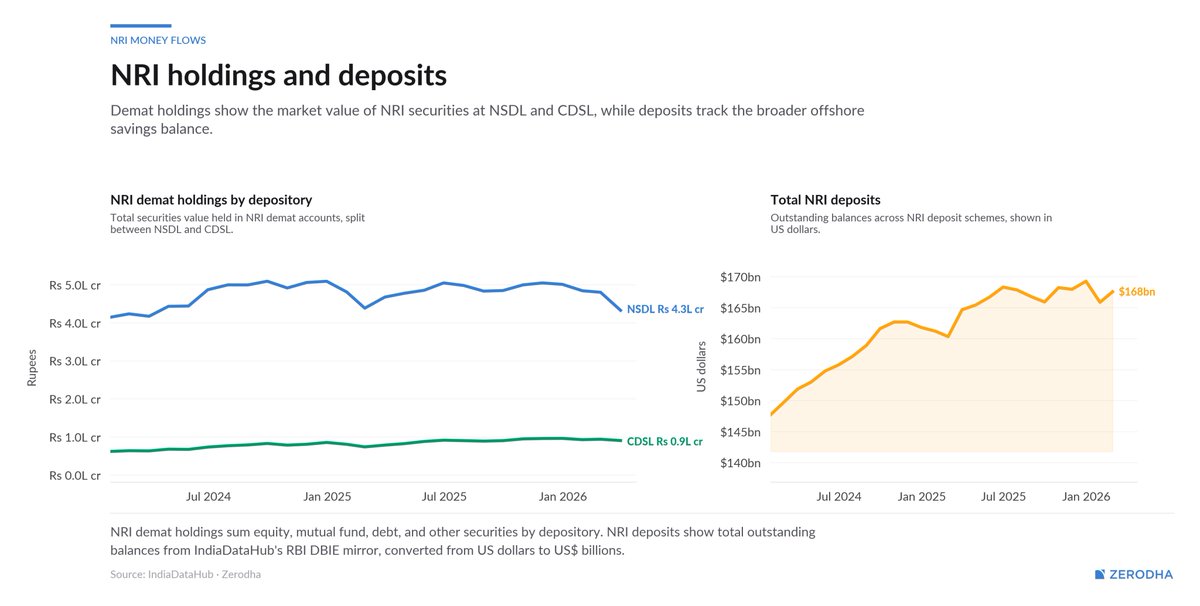
One thing that feels under-discussed in all the conversations about attracting foreign capital into India is the Indian diaspora. There is a large population of NRIs who are emotionally and financially interested in investing in India. But today, for many of them, the process of opening accounts, completing documentation, and actually investing in Indian markets is still far more painful than it needs to be. Making life easier for NRIs could be one of the lowest-hanging fruits for attracting long-term capital into India. This is something we’ve been focusing on heavily at @zerodha as well. Over the last year or so, we’ve made several changes to make investing as seamless as possible for NRIs. But there are still many frictions that exist because of regulatory and compliance requirements. Hopefully, SEBI and the government look at this more closely and think about how to make it easier for NRIs to bring money into India and participate in Indian markets. For a country trying to attract global capital, the Indian diaspora seems like the most obvious place to start.
Nithin Kamath tweet media
English
272
238
1.8K
549.3K
Anurag Saxena retweetledi
Deedy
Deedy@deedydas·
Billionaire Michael Milken joked “if a US company replaces the US-born CEO with a CEO born in India, I buy the stock” But he reveals he hasn’t backtested the idea. So we did. In the last 15yrs, that would’ve 50x’d your money: 7.5x more $$ and >2x IRR vs S&P500: 30% vs 14%!
English
560
1.7K
15.3K
3.6M
Anurag Saxena retweetledi
Aravind
Aravind@aravind·
The number of people without electricity by country. Look what happened after 2016. Someone started fixing India for real. Many things at a time. Still some way to go. The lag of last 60 is that bad.
English
343
5.8K
22.4K
673.9K
Anurag Saxena retweetledi
Anuradha Tiwari
Anuradha Tiwari@talk2anuradha·
My appeal to PM Modi- In order to save petrol & diesel, please make it mandatory for bureaucrats, MLAs & MPs to use public buses and metro instead of large convoys. It will also be a good opportunity for them to experience world-class infrastructure they are building for us.
English
1.6K
11.8K
37.7K
726K
Alex Lieberman
Alex Lieberman@businessbarista·
I want to start an AI community for executives. This will be a space for people to share killer use cases, agentic workflows/agents, post-AI org structure, AI governance, AI training/enablement, change management, and more. Comment “AI-native” if you want to join.
English
1.8K
33
1.1K
182.8K
Anurag Saxena retweetledi
Narendra Modi
Narendra Modi@narendramodi·
Mission Drishti by GalaxEye marks a major achievement in our space journey. The successful launch of the world’s first OptoSAR satellite and the largest privately-built satellite in India is a testament to our youth’s passion for innovation and nation-building. Heartiest congratulations and best wishes to the founders and the entire team of GalaxEye. @GalaxEye
English
1.7K
8.1K
50.6K
12.1M
Anurag Saxena retweetledi
Aakash Gupta
Aakash Gupta@aakashgupta·
India is the hottest country on Earth right now. Amravati 42°C. Bilaspur 42°C. Delhi 40°C. It is April. Here is the number every India bull is missing. McKinsey projects that lost labor hours from heat will put 2.5% to 4.5% of Indian GDP at risk every year by 2030. That works out to $150 to $250 billion in annual losses. The ILO converts the same effect into 34 million full-time job equivalents lost to heat exposure that physically caps how long humans can work outdoors. The IMF projects India passes Japan to become the 3rd largest economy this decade. Those forecasts assume normal labor productivity. They are not pricing in 167 billion labor hours already lost to heat in India in 2021 (Lancet), or heat-related deaths rising 55% over two decades. Now look at the cooling curve. 8% of Indian households own an AC. The U.S. is at 87%. Chinese urban households average more than one AC per home. China was also at 8% in 1995, and added 200 million ACs over the next 15 years. India is starting the same curve right now, with 110 million units already installed and another 130 to 150 million expected by 2035. Here is where the grid math breaks. Indian peak power demand hit 240 GW in 2024. ACs already account for 40 to 50 GW of that load. UC Berkeley projects room ACs alone will add 180 GW of peak demand by 2035. That is the entire installed electricity capacity of Germany. From cooling. The Central Electricity Authority is already modeling a 26 GW peak shortfall by 2028. The grid is roughly 70% coal-fired generation. Every AC switched on pulls harder from a thermal plant that is itself part of the heating loop. So the rate limiter on India becoming the world's 3rd largest economy is the grid. The country needs roughly 240 million more air conditioners to keep its workforce productive through a six-month summer. The grid can supply maybe a third of that load without rolling blackouts that destroy the same productivity the AC was meant to save. The map at 42°C in April is the GDP forecast getting marked down in real time.
Aakash Gupta tweet media
English
139
374
1.5K
212.4K
Anurag Saxena retweetledi
Vikas Vij
Vikas Vij@TheClubJunto·
Bernstein: India’s Ambitions are Hollow Without R&D Investments 1. No nation in history became a developed economy with R&D @ 0.65% of GDP 2. Labor Arbitrage Economy: Demand broken as wages stagnate for 10 yrs. You raise wages, you can’t compete. AI dents it further. INSIGHTS: R&D Intensity (% of GDP) 2000s Korea: 3.12% Taiwan: 2.7% China: 1.32% India: 0.82% 2010s Korea: 4.29% Taiwan: 3.3% China: 2.11% India: 0.75% 2020-25 Korea: 5.21% Taiwan: 4.0% China: 2.8% India: 0.65% Widening Innovation Gap: China’s GDP is 5X of India. Its R&D budget is 4X in % of GDP. So, in dollar terms, China is 5x4 = 20X of India’s R&D every year. Labourers vs. Innovators a. India’s Top 10 Companies: Combined R&D Expense 2025 (Thinking in Quarters): Below $1B b. China Companies R&D Expense 2025 (Thinking in Decades): BYD $8B; Huawei $14B; Xiaomi $5B c. Korea: In 1970s, private to government R&D share was 20:80. In 1990s, the ratio became 80:20. Korean government forced private sector to invest in R&D, reject short-termism, and massively incentivized firms with export credits and R&D tax credits. d. Taiwan: In 1980s, the government funded research labs for semiconductors. The “seed” was sown by the government; the “scale” was led by private sector. Today a single company TSMC controls 70% world market share in semiconductor pure-play, driven by AI demand. e. China: In 1980s, India and China had similar R&D investments. China realized that technology was their only guarantee of national survival. The government and private sector formed a combined “war machine” to become the “IP owner” and not just the “world’s factory” for tech goods. India’s Scarcity Mindset a. While Korean and Chinese companies operate in a culture that rewards global innovation, Indian companies operate in a culture that rewards bowing down before bureaucrats and ministers. b. To grow in India, you don’t need to build world-beating products. You just need to operate in those areas of the domestic economy where government policy favours Indians over foreign businesses. c. Think of a student whose father owns the school, and no other students are allowed to sit in the exam. What will be his capability? While other countries demand global dominance as a point of national pride, Tata, Reliance, and Adani cannot even make a candy that sells in the world market. d. Curse of Cheap Labor: Indian IT companies realized that when you can make 20% margin by selling cheap labor, why build a semiconductor factory that requires $20 billion CapEx? They kept distributing lakhs of crores in dividends (mainly to promoters) while the world invested in AI and chips. e. The GCC Paradox: India now has over 50% of the world's Global Capability Centers (GCCs). From Google to Walmart to Mercedes, the world’s best tech innovation and research is happening in India, but the Intellectual Property (IP) belongs to other countries. So, we remain only “cheap labour” for others. Low Wages; Broken Consumption a. Labour arbitrage economies enjoy GDP growth till wages keep rising. But wage growth stalls when other poor economies like Bangladesh or Philippines catch up with lower wages. That’s when their dream of becoming a “developed economy” gets a reality check. b. From 2015 to 2025, real wages in India have stagnated. Rural wages have seen a negligible CAGR of 0.1%, and entry-level IT salaries have famously remained stuck at ₹3.5 LPA. China’s real wages (inflation-adjusted wages) have grown at 8 to 9% CAGR during the same period. c. Indian companies continue to operate in low-complexity, me-too product/service segments where low wages are a competitive advantage. But now AI is the new emerging threat to IT sector and GCCs. Endpiece In absence of an urgency to shift from Labour Arbitrage to Innovation Premium, India risks falling into the Middle Income Trap. India’s demographic dividend is ending by 2040. Without investing patient capital in R&D, India will squander its opportunity to achieve a developed nation status by 2047. @arabicatrader
English
104
605
1.6K
103.9K
Anurag Saxena retweetledi
DPIIT India
DPIIT India@DPIITGoI·
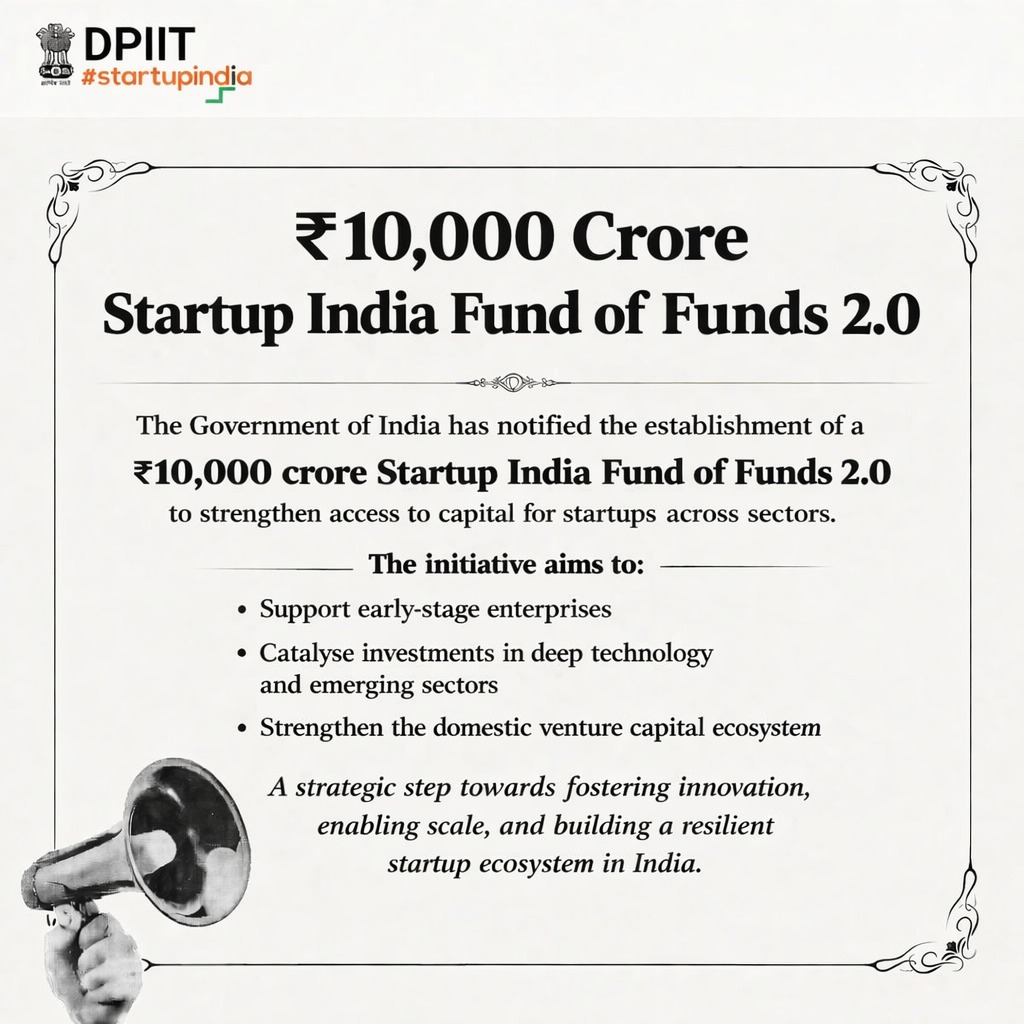
₹10,000 crore Startup India Fund of Funds 2.0 notified. Driving deep tech, manufacturing, and early-stage innovation through AIFs—backing startups with capital, mentorship & scale. Read more here: egazette.gov.in/WriteReadData/…
DPIIT India tweet media
English
23
79
531
37K
Anurag Saxena retweetledi
Aravind Srinivas
Aravind Srinivas@AravSrinivas·
Perplexity started as a small business tool for ourselves. We had 4 people and no revenue with AI at our fingertips. The pivot to Computer is actually a full circle. Founders are using it to grow companies that matter to the economy and their communities.  It’s rewarding to see it now powering small businesses and startups in big ways. Perplexity is still a startup. We just 5X’ed revenue from $100M to $500M with only 34% growth in team size. 2x revenue growth in 2026 with same small team. And we’re just warming up. Everyone here works at a small business, and everything we build is for people who build.
Perplexity@perplexity_ai

What would you like to search for?

English
223
182
2.2K
864.6K
Anurag Saxena retweetledi
Mario Nawfal
Mario Nawfal@MarioNawfal·
🇮🇳 Factory workers in India are wearing head-mounted cameras so AI can watch exactly how humans do physical work. Every hand movement, every adjustment, every shortcut. The workers are training their own replacements in real time, on the job, getting paid to do it. The most honest description of this is also the most uncomfortable one. Source: longliveai on IG
English
524
2.8K
8.3K
1.5M