Jacques 羅漢

1.9K posts

Jacques 羅漢 banner
Jacques 羅漢

Jacques 羅漢

@aprioricity

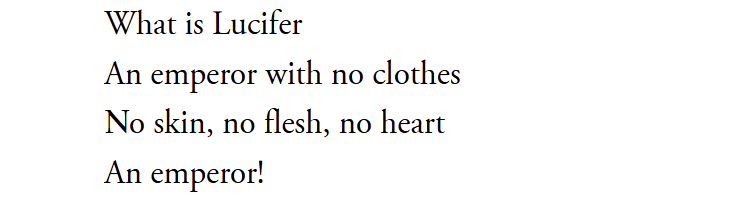
depicted iconographically as white in color with one face and two hands

代々木 Katılım Mayıs 2020
602 Takip Edilen301 Takipçiler
Jacques 羅漢
Jacques 羅漢@aprioricity·
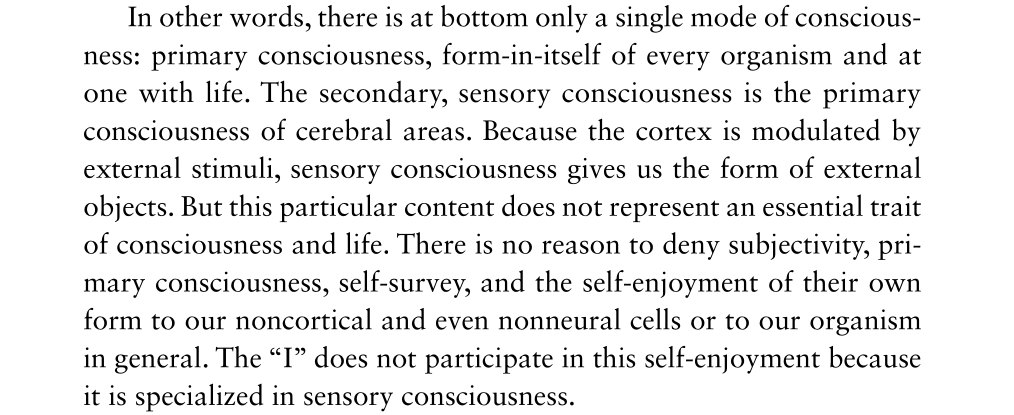
Ruyer on I-consciousness as a subset of primary consciousness, the body itself a multiplicity of primary consciousnesses
Jacques 羅漢 tweet media
English
0
0
4
172
ɑׁׅ֮ꪀׁׅꪀׁׅɑׁׅ֮ ƙׁׅ֑ᨰׁׅ ✨
I’m so sick of the Platonists, especially the Jungians. “Running from dark truths is good actually! Let’s play with pretty colors and go schizo and do magic instead!” You are unserious. All of you are unserious. Jungians are children who have failed to grapple with the violence and brutality of being an adult sexed being who has to face the determination of their sexuation through the ineluctable familial mediation of desire. This is also why Deleuze & Guattari too are an absolute regression on the pursuit for truth. Freud was serious, Lacan was serious. Jung, Deleuze, Guattari, this is theory for irresponsible adults who prefer to imagine themselves as little kids. It’s retarded and I have zero tolerance for it now. I want people to bring their full selves to the task of thought. You can be creative and play and so on but to use that as an excuse to avoid reality is something that shouldn’t be tolerated. Unfortunately, the vast majority of people are irresponsible, retarded, and want to act like kids; serious people are the minority. But for us, there is always Lacan.
Nornal Guy 🧙‍♂️@theralkia

Psychology should have chosen the colorful circles schizophrenic wizard instead of the weird sex pervert who wanted to bang his mom


English
86
15
326
48.2K
Rebecca Newberger Goldstein
Rebecca Newberger Goldstein@platobooktour·
I began my intellectual life focused on what philosophers call the Hard Problem of Consciousness: how physical matter gives rise to subjective experience. I wrote my PhD dissertation on that problem and lived with it for years. But over time, what came to seem more urgent to me was not subjectivity alone, which we share with all other conscious creatures, but the uniquely human longing to matter, making us the values-seeking creatures that we are. The Mattering Instinct is my attempt to understand how beings made of matter come to care so deeply, and how science, far from undermining meaningfulness and morality can guide us toward it.
English
155
137
1.5K
286.8K
Jacques 羅漢
Jacques 羅漢@aprioricity·
@hereandnow44 @platobooktour there's all kinds of nonhuman sign use, including chimpanzees, parrots and corvids. that's just an empirically false claim, made in support of an extreme eliminativism about non-human consciousness (which would also apply to human children and infants)
English
0
0
0
68
Z.L. Nickels
Z.L. Nickels@hereandnow44·
@rosejn @platobooktour Modern cognitive neuroscience is adept at analyzing reliable dispositions toward external stimuli. As animals cannot form concepts—cannot give or ask for reasons—they cannot take themselves to be doing anything
English
1
0
0
55
Jacques 羅漢
Jacques 羅漢@aprioricity·
@hereandnow44 @platobooktour if we sophistically conflate experience with language use then it's trivially true that nonhuman animals don't have experience (provided we squint when confronted with nonhuman sign use)
English
1
0
0
73
Z.L. Nickels
Z.L. Nickels@hereandnow44·
@platobooktour Non-humans do not have subjective experiences. They aren’t sapient; there is no way for them to recognize their “experiences” as such.
English
2
0
2
239
florence ⏹️
florence ⏹️@morallawwithin·
Whenever I read something from another time period or culture I’m always surprised at how relatable it is. My provisional hypothesis is that everyone everywhere and at every time is basically exactly the same, but that’s not an interesting thing to say so you only see people say the contrary.
The Atlantic@TheAtlantic

A common assumption is that throughout history, people have experienced the same basic range of emotions. A radical field of history now challenges this assumption, Gal Beckerman reports. theatln.tc/KD2QRX9Y People tend to imagine that other people “have the exact same set of emotions that we have,” Beckerman writes. “We perform this projection on any number of human experiences: losing a child, falling ill, being bored at work. We assume that emotions in the past are accessible because we assume that at their core, people in the past were just like us, with slight tweaks for their choice of hats and of personal hygiene.” Rob Boddice, a leader in the field of the history of emotions and senses, mistrusts this universalism, a philosophy that emerged during the Enlightenment, when European intellectuals began to assume that all people share a common nature. Many critics now understand that they were attempting to exert power and order over a world that had recently become bigger and stranger. “By the time we get to our current globalized culture, in which a Korean thriller can win Best Picture at the Oscars and Latin pop stars dominate the U.S. charts, the notion that our emotional registers are all essentially alike feels self-evident,” Beckerman continues. “Boddice starts with the opposite premise, that we are not the same,” Beckerman writes. “Rather than being a constant—extending across space and time—human nature for Boddice is a variable and unstable category, one with infinite possible shades.” Although his approach might seem “squishy and postmodern,” Beckerman writes, Boddice’s research layers his own thinking on top of the most recent advances in neuroscience. At the link, read more about the field of study that is pushing historians to reconsider their assumptions about the people of the past. 🎨: Nicolás Ortega

English
15
5
87
7.5K
Jensen Suther
Jensen Suther@jensensuther·
@ianpaulwright @HEAVEYMETAL1985 No empirical discovery can invalidate absolute idealism because the conditions it articulates are the conditions for any possible empirical discovery. Otherwise, one is begging the question of the “empirical.”
English
4
2
9
1.6K
Jensen Suther
Jensen Suther@jensensuther·
it’s no use being a hegel soldier or a kant soldier or an adorno soldier or whatever. there is only pure thought thinking itself; all the rest is error, dogmatism, distortion.
English
9
6
88
13.3K
Jacques 羅漢
Jacques 羅漢@aprioricity·
@bratton "computationalism implies a normative justification of global capitalism" is a pretty ridiculous claim to the extent that it's legible at all
English
0
0
2
115
Jacques 羅漢
Jacques 羅漢@aprioricity·
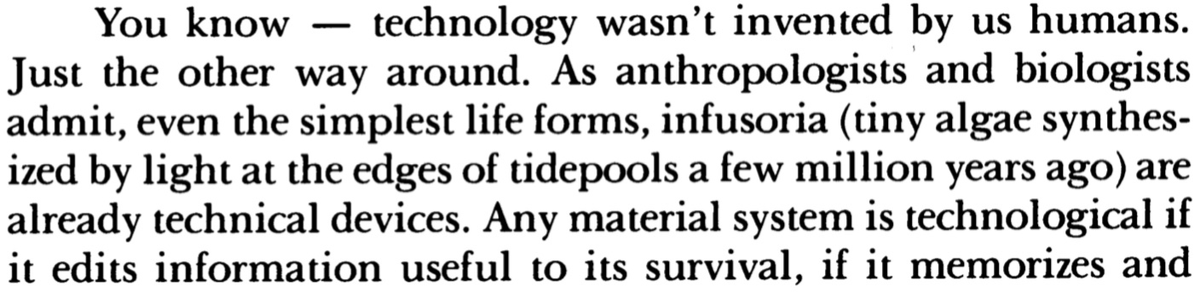
using computation as a model to illuminate aspects of an opaque target system doesn't mean the target is literally computing any more than Fourier's equations mean that wave propagation is literally heat diffusion
Benjamin Bratton@bratton

it is literally computation as the entire field of computational neuroscience explores. It is a messy, massively parallelized, slow, beautiful, and extremely error tolerant form of continuous self-updating computation. It is not, however, like a "computer" in the everyday sense.
English
1
0
9
1.9K
Jacques 羅漢
Jacques 羅漢@aprioricity·
@bratton so you ignore my argument, stipulate your conclusion and then just invent a random personal motive. is this the highest argument quality google money can buy?
English
1
0
3
144
Benjamin Bratton
Benjamin Bratton@bratton·
computation in this case is not a just a "model." It is actually happening in two places at the same time, in ways that are both different and identical. My guess is that your reluctance is that this seems to imply a normative justification and naturalization of global technological capitalism, which for you is unacceptable, and so you are bending the analysis to suit the moral priors.
English
1
0
2
132
Jacques 羅漢
Jacques 羅漢@aprioricity·
@bratton but even ontologically, the position that living systems are just information processing machines seems like it would have difficulty explaining the origination, and not just the lossy compression, of information (as Ruyer argues)
English
2
0
3
187
Jacques 羅漢
Jacques 羅漢@aprioricity·
@bratton you're hypostasizing an abstractive idealization into a real process. the fact of some practically-relevant similarity between model and target doesn't warrant the claim that the target just is the model in a transcendentally real sense
English
1
0
6
178
Jacques 羅漢
Jacques 羅漢@aprioricity·
@bratton "it's literally computation" "it's not really like a computer" I see, it's like one of those computers that's not like a computer at all
English
1
0
3
227
Benjamin Bratton
Benjamin Bratton@bratton·
it is literally computation as the entire field of computational neuroscience explores. It is a messy, massively parallelized, slow, beautiful, and extremely error tolerant form of continuous self-updating computation. It is not, however, like a "computer" in the everyday sense.
English
1
0
3
2.1K