Apurva Sheth, CMT

1.1K posts

Apurva Sheth, CMT banner
Apurva Sheth, CMT

Apurva Sheth, CMT

@apurvansheth

I help investors and traders by bringing actionable insights and strategies to take the right decisions in market.

Mumbai, India Katılım Ocak 2010
547 Takip Edilen2.5K Takipçiler
Sabitlenmiş Tweet
Apurva Sheth, CMT
Apurva Sheth, CMT@apurvansheth·
A mega🧵on all the Screeners and Dashboards I have built so far. These will help you pick stocks for short to medium term trading. If you like them then please retweet and help others too.
English
9
22
55
0
Apurva Sheth, CMT retweetledi
Jimeet Modi
Jimeet Modi@jimeetm·
Plot twist in India's household savings story — and not the way most expect. The LARGER cohort of ~13 cr direct equity investors (NSE PANs) is, on net, SELLING cash stocks. The SMALLER cohort of ~6 cr mutual fund investors (AMFI PANs) is buying at record pace. SEBI's new research paper measures household savings via securities markets using actual depository data (not estimates). The FY25 numbers: Net retail SELLING in cash equity: −₹54,786 crore Net BUYING via mutual funds: +₹5.44 lakh crore This is structural, not cyclical. Indian retail is professionalising itself. 🧵
English
1
4
9
664
Apurva Sheth, CMT
Apurva Sheth, CMT@apurvansheth·
In this article published by @bsindia, I break down why the government must prefer higher fuel prices over increasing duties on gold and silver import. A simple math equation explains why government has no control over gold import bill beyond a point. @SAMCO_India
Business Standard@bsindia

#MarketsWithBS | Value of gold imports rose in FY26 even as volumes fell. @apurvansheth of Samco explains why higher #gold duty may not curb demand and why fuel price hikes could better protect #India's fiscal position. mybs.in/2g6BHmF
English
0
0
0
117
Apurva Sheth, CMT retweetledi
Himanshu Sinha
Himanshu Sinha@hsinha1445·
Jensen Huang said AI has 5 layers of value. India doesn't have a presence in any of them. ⚡ Layer 1 — Energy. A hyperscale AI campus now draws 1–2 gigawatts — a mid-sized nuclear reactor, for one building. China added nearly India's entire installed grid in new capacity last year. 💾 Layer 2 — Chips. The silicon brain and everything that makes it. → GPUs: Nvidia (US), AMD (US), Broadcom (US) design. TSMC (Taiwan) fabs at the cutting edge. → HBM, the high-speed memory beside every GPU: ~90% Korea. → ASML (Netherlands) has a monopoly on the one machine that prints the most advanced chips. → Silicon wafers ~60% Japan. Photoresist ~90% Japan. 🏭 Layer 3 — AI infrastructure. The data centre and everything around the chips. → Hyperscale cloud: AWS (US), Azure (US), GCP (US); Alibaba (China), Tencent (China). → Servers and AI-rack cooling: Supermicro (US), Vertiv (US), Schneider (France), Eaton (US). → Commodities: copper (Chile, Peru), niobium (~90% Brazil), rare earths (~85% processed in China). 🧠 Layer 4 — Models. Closed: OpenAI (US), Anthropic (US), Google (US), Meta (US). Open: DeepSeek (China), Qwen (China), Kimi (China). 💻 Layer 5 — Applications. ChatGPT (US), Copilot (US), Cursor (US), Claude Code (US), Agentforce (US). Mostly US. Increasingly Chinese. China has a presence in all 5. Korea owns HBM. Taiwan owns the cutting-edge factory. Netherlands owns the machine that makes it possible. India: Layer 1 — grid stretched, industrial power expensive and patchy. 24/7 clean power is hard to deliver today. Layer 2 — no frontier chip factory. Tata-PSMC (India-Taiwan) at ~28nm is a decade behind AI chips. India's chip design talent works for Nvidia (US), AMD (US), Qualcomm (US), Intel (US). Value flows to US balance sheets. Layer 3 — India builds the data center buildings (Yotta, Adani, Reliance) and generic industrial power and cooling gear (BHEL, Crompton, Blue Star). But no hyperscale cloud, and no specialized AI-rack cooling or power shelves. Every Indian AI startup runs on AWS (US) or Azure (US). Layer 4 — Sarvam, Krutrim (India). Real teams, orders of magnitude below the frontier. Layer 5 — Zoho, Freshworks (India) are real SaaS businesses, but their AI features — like most Indian AI-app startups — are thin wrappers on OpenAI (US), Anthropic (US), Google (US). And not agentic. Agents are where the flywheel lives. India has no agentic platform at that scale. This is a 30-year-old choice. India bet on services and not manufacturing. TCS, Infosys, Wipro, HCL (India) built a ~$250B export industry. It paid off. But services sit above the stack — they don't own any layer of it. India's AI Mission is ~$1B. China's is in the hundreds of billions. That's not a gap to close — it defines the game.
Himanshu Sinha tweet media
English
115
614
2.1K
144.9K
Apurva Sheth, CMT retweetledi
Gustavo Martínez
Gustavo Martínez@GustavoBolsa·
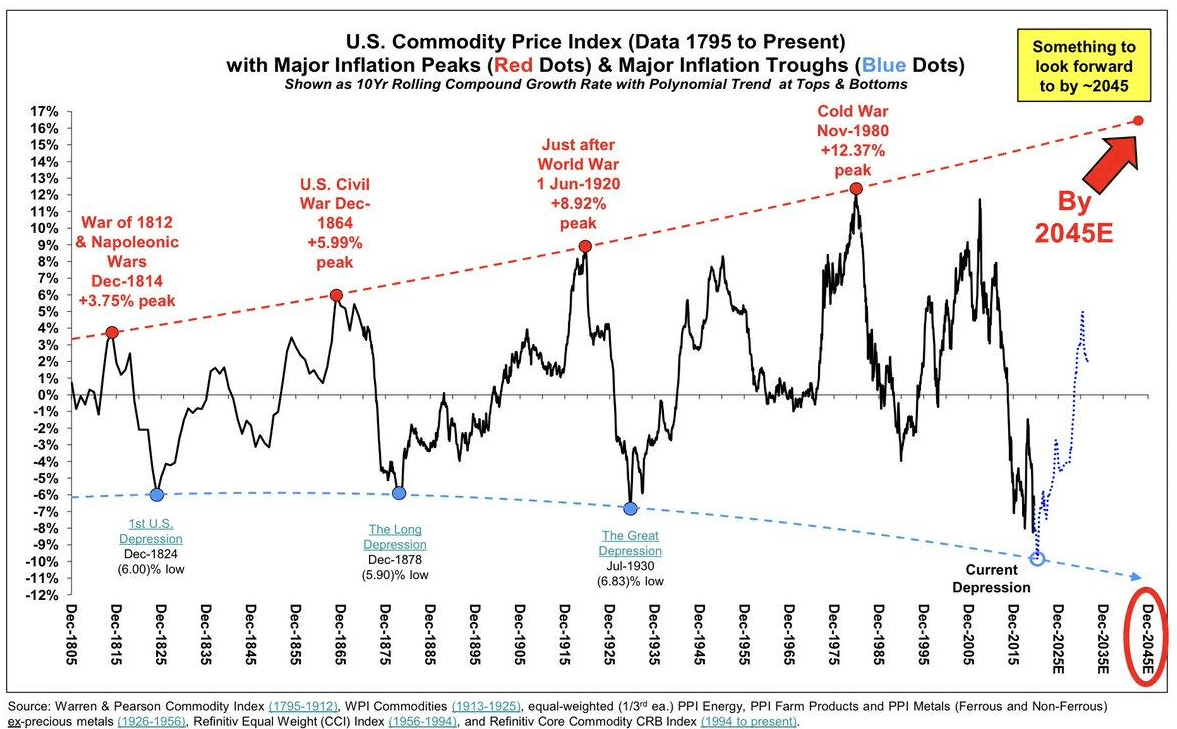
Super Ciclo de commodities Estamos, ante el mayor superciclo de materias primas de nuestra generación. Y el mercado sigue a otra cosa. El mundo está intentando hacer todo a la vez: rearmar ejércitos, construir los centros de datos que necesita la IA, electrificar la red, los coches eléctricos, las fábricas, y acelerar la transición energética. Y todo eso necesita cobre, litio, tierras raras, metales críticos, etc, en cantidades que el mercado no puede producir. El cobre y la plata no se imprimen. Y claro, a todo esto súmale una de las mayores épocas de devaluación monetaria de la historia de la moneda fiat y déficits fiscales. Déficits de oferta, déficits fiscales: Hay que estar ciego para no verlo....
Gustavo Martínez tweet media
Español
54
346
1.7K
200.9K
Apurva Sheth, CMT
Apurva Sheth, CMT@apurvansheth·
In this Monthly Markets Outlook webinar, we break down everything investors and traders need to know: the fragile US-Iran ceasefire, Nifty's short-term outlook, gold & crude oil levels to watch, the commodity supercycle, and powerful long-term themes emerging from global conflict
English
0
0
0
125
Apurva Sheth, CMT
Apurva Sheth, CMT@apurvansheth·
youtube.com/live/sNj4MP6fV… Will the US Iran Ceasefire Last 2 Weeks | Monthly Market Outlook April 2026 | Market Bottom? India's markets surged 2.91% on April 8, 2026 — the largest gap-up since 1999. But is this the real bottom, or just a temporary relief rally?
YouTube video
YouTube
English
1
0
1
197
Apurva Sheth, CMT
Apurva Sheth, CMT@apurvansheth·
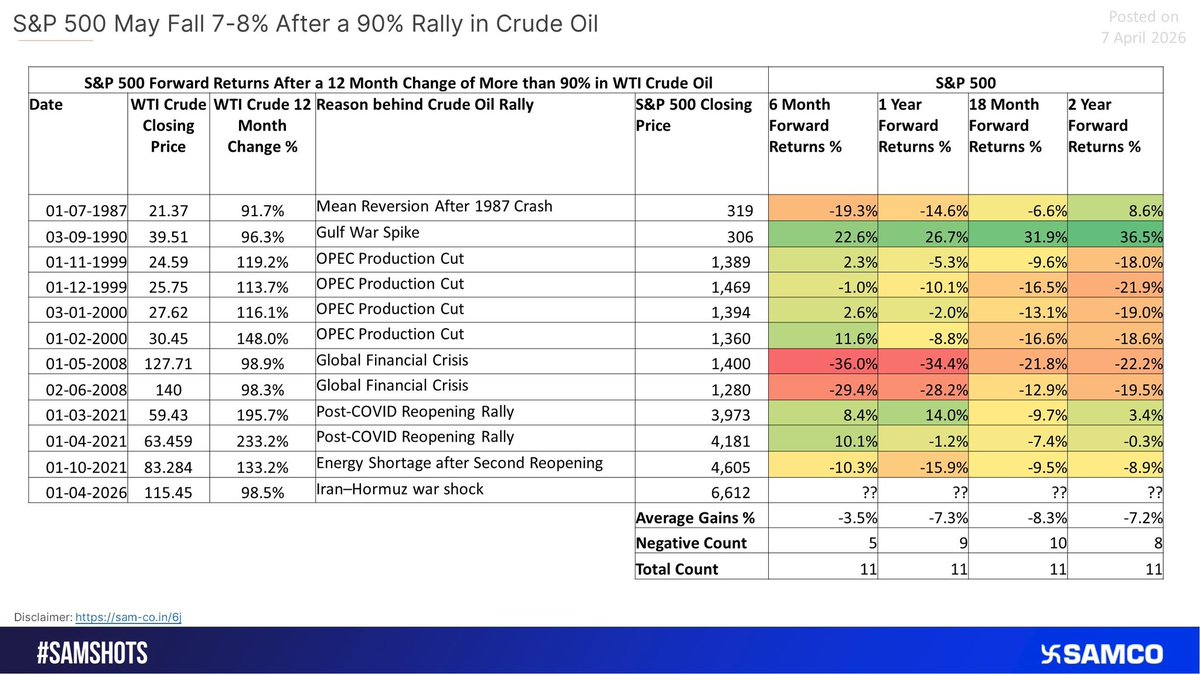
#Crudeoil rallies of more than 90% in a year are not good for #SPX. Higher oil prices raise: transport costs manufacturing input costs inflation expectations bond yields consumer stress when oil doubles, earnings expectations usually don’t @SAMCO_India @riteshmjn @Macrobysunil
Apurva Sheth, CMT tweet mediaApurva Sheth, CMT tweet media
English
0
0
2
203
Apurva Sheth, CMT
Apurva Sheth, CMT@apurvansheth·
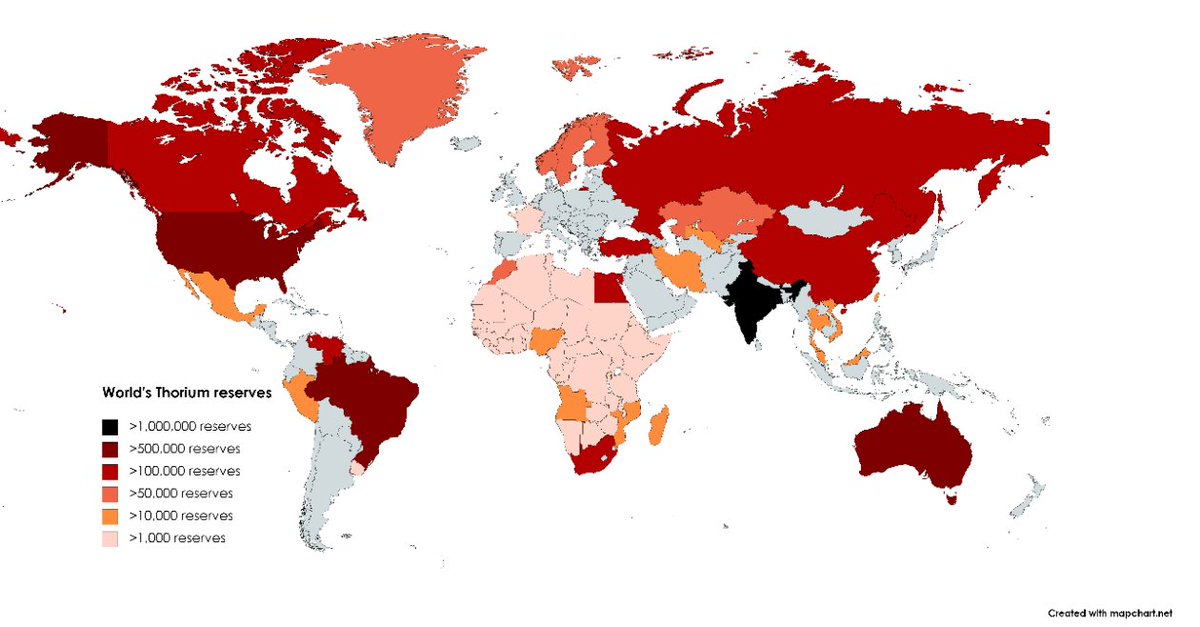
@Macrobysunil Hey @grok, which Indian listed stocks are working on this project. Which companies are likely to benefit from this? Are there any thorium miners in India?
English
1
0
1
1.2K
Macro Liquidity by Sunil Reddy
Macro Liquidity by Sunil Reddy@Macrobysunil·
India just crossed a line that only a handful of nations in the world ever have. This isn’t just another reactor going live. This is India stepping into one of the most elite and strategic clubs in global energy, Fast Breeder Nuclear Technology. With the Prototype Fast Breeder Reactor (PFBR) at Kalpakkam achieving criticality, India has officially moved into Stage 2 of its nuclear program, a stage where the game changes completely. Here’s why this matters globally 👇 Most countries run nuclear reactors that consume fuel. Fast breeder reactors do the opposite — they create more fuel than they burn. Think about that for a second. In a world obsessed with energy shortages, supply chains, and resource wars… India is building a system that can multiply its own fuel. Only a few countries have ever reached this level: - Russia — operational leader - China — scaling aggressively - France & Japan — tried, but stepped back Now India joins that list. But here’s where it gets even bigger… India isn’t just copying the global model. It’s playing a completely different endgame. While most nations are stuck in the uranium cycle, India is building toward thorium-based energy — something it has in abundance. And if India cracks thorium power at scale, this is where the narrative explodes: Thorium is far more abundant than uranium, especially in India. A successful thorium cycle would mean: → Fuel constraints practically disappear → Energy can be produced domestically for generations → Import dependence drops dramatically At that point, you’re not just energy secure… you’re sitting on something close to structurally unlimited power potential. That’s not an exaggeration, that’s the strategic vision behind India’s 3-stage nuclear program. This is not a short-term headline. This is a multi-decade shift in capability. From a global lens: This signals that India is no longer just a participant in energy markets, it’s becoming a future technology and energy powerhouse. From a market lens: This quietly strengthens long-term narratives around: - Nuclear energy expansion - Uranium demand (near term) - Thorium-based innovation (long term) - Domestic heavy engineering & infra And from a geopolitical lens: Energy independence = policy independence. That’s the real story. This moment won’t move markets tomorrow. But 10–15 years from now, we might look back and say, This is where the foundation was laid.
Macro Liquidity by Sunil Reddy tweet media
Narendra Modi@narendramodi

Today, India takes a defining step in its civil nuclear journey, advancing the second stage of its nuclear programme. The indigenously designed and built Prototype Fast Breeder Reactor at Kalpakkam has attained criticality. This advanced reactor, capable of producing more fuel than it consumes, reflects the depth of our scientific capability and the strength of our engineering enterprise. It is a decisive step towards harnessing our vast thorium reserves in the third stage of the programme. A proud moment for India. Congratulations to our scientists and engineers.

English
25
275
1.5K
99.5K
Apurva Sheth, CMT
Apurva Sheth, CMT@apurvansheth·
Interesting take on the whole war. I built a summary using AI of the same for a quick referrence.
Apurva Sheth, CMT tweet media
StarBoySAR 🇭🇰 🇨🇳 🥭@StarboySAR

The Iran War Isn’t About Nuclear Weapons—It’s About Saving America’s Collapsing Empire 🐇The Rabbit Hole goes much deeper; the war with Iran isn’t about “terrorism” or “nukes.” It’s about securing a trade corridor — IMEC — that was designed to reroute global supply chains around China, choke China of energy, install India as the new workshop, and lock the Middle East into a US-Israel controlled infrastructure network The article archive.is/2026.03.20-191… exposes the geopolitical plumbing, mapping the "Big Picture" that most Western analysts miss because they’re too busy counting missiles, troop deployments or chasing news cycles👇 The bombs falling on Iran are not about nuclear weapons. They are about a trade corridor called IMEC—the India‑Middle East‑Europe Economic Corridor—and the infrastructure that will determine who controls global energy, data, and supply chains for the next generation IMEC as Imperial Infrastructure—and Why It Needs War The India-Middle East-Europe Economic Corridor is not merely an alternative to China's Belt and Road Initiative (BRI). It is a replacement architecture designed to intercept the natural geography of Eurasian trade and force flows through Western-controlled chokepoints Consider the geography: Iran sits at the intersection of the International North-South Transport Corridor (linking Russia to India), the Middle Corridor (China-Central Asia-Turkey-EU), and direct China-Iran rail and energy links. These routes threaten to bypass both the dollar system and American military oversight IMEC solves this by creating a parallel network running through Israeli ports, UAE logistics hubs, and Indian manufacturing—each node controlled by US allies or dependent on American security guarantees. Jared Kushner's $4.6 billion Affinity Partners fund exemplifies the financialization of this strategy: Gulf capital flows through Israeli tech and Indian labor into European markets, generating returns while cementing political alignment The "Abraham Accords" that enabled this were never peace deals; they were investment-grade risk instruments that transformed occupied territories into viable assets for international capital. The "technocratic reconstruction" of Gaza fits this model. A genocidal war creates the vacancy; "development" fills it with investor-controlled zones where Palestinian sovereignty is replaced by special economic areas governed by technocratic mandates. This is not reconstruction—it is real estate colonialism with ESG branding But IMEC has a fatal vulnerability: its eastern sea lane runs through the Strait of Hormuz, a 33‑km bottleneck that Iran can close at will. Without neutralizing Iran, the corridor cannot function The Sequence: Abraham Accords → Iran War → Hormuz crisis → Gaza Reconstruction Operation 'Epstein Fury', launched February 28, 2026, was not a spontaneous act of aggression. It was the military clearance phase of a pre‑designed infrastructure plan. The Abraham Accords (brokered by Jared Kushner in 2020) — between Israel and the Gulf states — created the political coalition. The war on Iran is an attempt to clear the military chokepoint. IMEC is the commercial payoff. These are not separate events. They are a sequenced strategy. Kushner has already planned the reconstruction through Trump's "Board of Peace": his “technocratic administration” for Gaza—a Dubai‑like enclave with a new port and airport—turns that territory into a Mediterranean extension of IMEC. He designed the diplomatic framework, raised $3.5 billion from Gulf sovereign wealth funds for his own firm, and now oversees the governance of the corridor’s key node. Policy, finance, and war in one seamless loop. India’s Role—and Its Trap Indian Prime Minister Narendra Modi's February 2026 address to the Israeli Knesset—where he termed Israel the "fatherland" and India the "motherland"—occurred mere days before coordinated strikes on Iran. The familial metaphor reveals the emerging hierarchy: Israel provides the security umbrella and Western-approved gateway; India provides the labor pool and low-cost manufacturing India is IMEC’s eastern anchor. Adani Ports owns Haifa (Israel) and is developing Vadhavan on India’s west coast. New Delhi is being positioned as the low‑cost manufacturing hub to replace China in Western supply chains. But the US has signaled it will not grant India the same trade and technology access it once gave China. Washington views its post‑Cold War engagement with Beijing as a mistake that created a rival. So India gets the geopolitical risk—alignment with Israel, proximity to a war zone—without the structural economic lift that built China’s middle class What if the Israeli-U.S. led coalition wins its war of aggression? From Washington’s viewpoint, “winning” the war against Iran and locking in IMEC would tick several boxes at once. It would weaken a key energy supplier to China, constrain a major BRICS‑aligned player, and reroute Gulf exports through U.S.-aligned infrastructure where financing, insurance, and standards are dollar‑denominated. That helps preserve the petrodollar, fragments rivals’ energy sovereignty, and deepens allied dependence by turning energy security into a corridor privilege the U.S. can price and police In that world, BRICS+ finds it harder to build a parallel, yuan‑ or local‑currency energy system because the key pipes and ports are wired into Western banks and rules. Europe, already cut off from cheap Russian gas, becomes even more locked into U.S.-approved Middle Eastern routes—paying monopoly rents in an environment of engineered scarcity and permanent “security risk.” China faces higher energy costs, rising production costs, and more fragile Gulf supply lines just as it battles domestic economic headwinds and tries to fund its own tech and industrial upgrades If that’s the “U.S. wins” scenario, the “U.S. loses” version looks very different The obvious consequences of a US loss are immediate and transformative: First, IMEC dies overnight. A resilient Iran that keeps enough military and political capacity to threaten shipping or strike regional infrastructure turns IMEC from an instrument of control into an instrument of risk. Investors see a corridor sitting inside a permanent war zone. Insurance premiums spike, ships reroute, and the picture of a clean, secure alternative to China‑linked routes starts to look like another over‑militarized promise that never delivers, rendering the project uninvestable and commercially irrelevant. Second, the petrodollar’s collapse will accelerate dramatically: a US military defeat will prove it can no longer guarantee security for Gulf states, which will double down on de-dollarization, trade oil in yuan and other non-dollar currencies, and deepen ties with BRICS+ For BRICS and the wider Global South, that outcome—costly in the short run—actually strengthens the long‑term case for multipolarity. It accelerates efforts to diversify away from U.S. chokepoints: more Russian pipelines and seaborne flows to Asia, deeper China–Iran and China–Gulf energy deals, more experimentation with non‑dollar settlements and payment systems. IMEC’s failure to become a stable empire‑corridor becomes exhibit A in why over‑reliance on U.S.-controlled infrastructure is a strategic risk, not an insurance policy Europe, meanwhile, gets squeezed either way A decisive U.S. victory binds it deeper into a U.S.-centric system where energy and sanctions policy are made in Washington—Europe pays the bill. A messy stalemate or visible U.S. failure forces European capitals to confront an awkward question: keep doubling down on U.S. corridor bets that can’t be secured, or cautiously reopen the door to diversified connectivity—including selective engagement with BRI and BRICS energy diplomacy For China, a failed U.S. attempt to use Iran and IMEC as twin levers is painful but survivable. Beijing’s diversification—Russian oil and gas, African and Latin American supplies, strategic reserves, domestic renewables—was built precisely for this kind of shock. It would still face higher prices and tighter margins, but it would not be structurally cut off. And every barrel that ends up traded outside the dollar, every workaround built under pressure, chips away at the very monetary power Washington is trying to defend Put simply: if Washington wins big, IMEC becomes the hardware of a renewed, harder U.S. empire—petrodollar cemented, BRICS fragmented, China squeezed. If it doesn’t, the war over Iran and the corridor won’t just expose U.S. limits; it will push the Global South faster toward a world where no single power can redraw the energy map alone For the rest of us, the immediate question is whose infrastructure will survive it and whether Israel or the U.S. will escalate to the use of nuclear weapons


English
0
1
4
255
Apurva Sheth, CMT retweetledi
SAMCO
SAMCO@SAMCO_India·
97% of global opportunities lie outside India. Yet most portfolios are 100% India. Because global investing without guidance = guesswork. Samco changes that ✅ Data-driven US stock ideas, clear horizons & actionable signals. Download App Now👉 tinyurl.com/y527tzfw
English
0
1
3
122
Apurva Sheth, CMT retweetledi
Michael McNair
Michael McNair@michaeljmcnair·
Gold and silver are not acting well in a period of rapidly rising geopolitical risks. We have an Iran War, Strait of Hormuz blockade, rising volatility. In the old framework, that setup should be close to ideal for gold. But once you understand what is now driving gold, this move makes perfect sense. Something fundamental changed after the US and Europe froze Russian reserves in 2022. For decades, surplus countries parked their excess savings in US dollar assets, mostly Treasuries. The freezing of Russian reserves combined with the current administration's explicit push to discourage foreign countries from parking excess savings in US financial assets, forced surplus countries to rethink where they store reserves. And those countries haven't changed their domestic policies that generate the excess savings, so those savings have to be placed somewhere. The result is that gold and silver have increasingly become the obvious “neutral” reserve assets. That’s why gold decoupled from the three factors that used to explain it…real interest rates, volatility, and liquidity. Now reserve accumulation flows have become the primary driver. That shift has a consequence I don’t think most investors have thought through. If gold is now primarily driven by reserve flows from surplus countries, then gold has become pro-cyclical. Reserve growth is driven by export revenues, trade surpluses, economic growth in surplus economies. When the global economy is strong and surplus countries are generating large export revenues, their excess savings grow, their reserve accumulation accelerates, and gold catches a bid. When that surplus generation is disrupted, the bid weakens or reverses. This is exactly what is happening with the blockade of the Strait of Hormuz. The GCC countries are major reserve/gold buyers and now their export revenues are collapsing. They likely need to liquidate some reserves to cover fiscal obligations, and gold is one of their most liquid assets. Even if the reserve sales aren’t excessive yet, the market can see their reserve accumulation has stalled and probably reversed. That flow, which was a meaningful source of gold demand, has gone to zero at best. There are also secondary effects on other surplus economies. China is the world's largest oil importer. An energy shock of this magnitude slows Chinese growth, and compresses Chinese surpluses, which slows Chinese reserve accumulation. That same growth shock ripples through Korea, Taiwan, Japan, and the rest of Asia. The whole chain that has been driving gold higher, surplus countries generating excess savings that need a home outside the dollar system, is being disrupted by an event that in the old model would have been unambiguously bullish for gold. This doesn't mean the structural case for gold is broken. The dollar standard is still ending. Surplus countries still need an alternative to Treasuries and gold is still the most obvious destination. But it does mean gold is going to be more volatile along that structural trend than most people expect, and the volatility will correlate with global growth and surplus generation rather than with the old drivers. Gold rallies when surpluses expand. Gold sells off when surpluses contract. Even if the reason for the contraction is rising geopolitical risk that, under the old model, should have sent gold to the moon.
English
201
565
3.2K
581.4K
Apurva Sheth, CMT retweetledi
Balaji
Balaji@balajis·
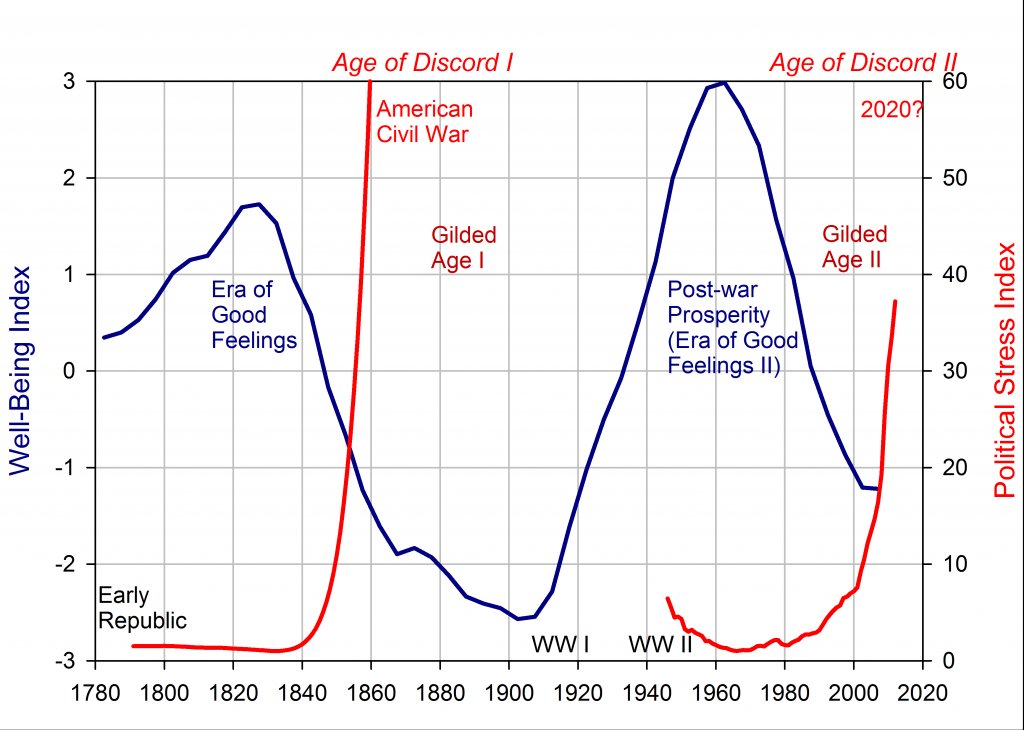
If Iran wins, it's the end of five eras. 1991-2026: the unipolar era 1974-2026: the petrodollar era 1945-2026: the postwar era 1776-2026: the union era 1492-2026: the Western era Specifically, the end of the petrodollar (1974) would also be the end of the unipolar moment (1991) and the postwar order (1945). It would mark the moment when Eurasian powers were once again dominant over Western powers (1492). Finally, a rapid crash in the dollar's purchasing power coupled with military defeat could well break apart the American union (1776). Few seem to viscerally understand just how dependent America is on money printing. But the end of the petrodollar is the end of Keynesianism as we know it. And if there's a sudden cost-of-living spike on top of pre-existing levels of political polarization, which are already near Civil War levels...we could see the scenarios that Dalio, the Fourth Turning, and Turchin have described.
Balaji tweet media
English
568
1.8K
7.3K
882K
Apurva Sheth, CMT retweetledi
signüll
signüll@signulll·
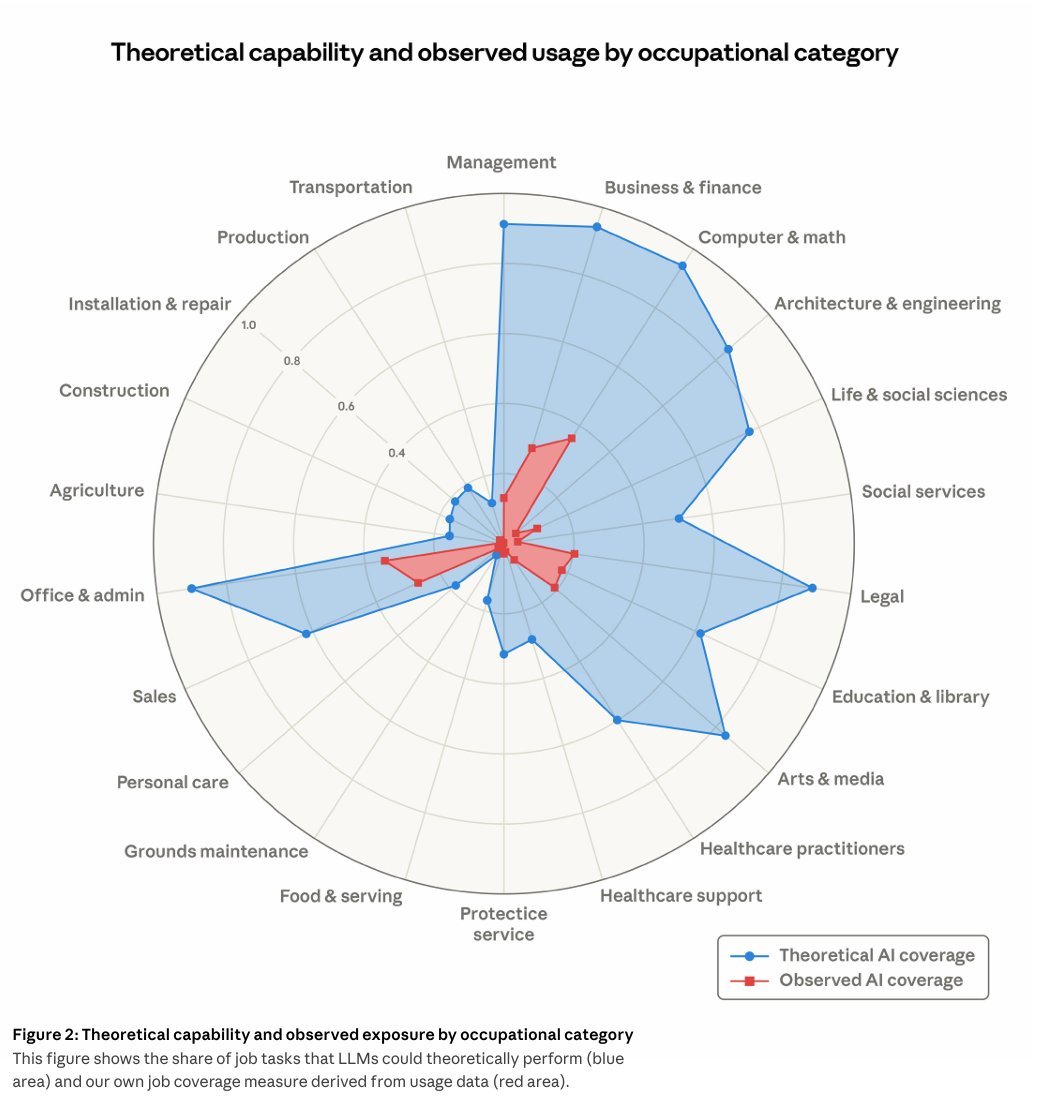
if you showed this chart to a typical economist like 20 years ago, they would've laughed you out of the room. the right side of this is white collar jobs that were once worshipped. these jobs were comfortable, well paying, & came with societal status + recognition. your parents would’ve been proud of you. now these are likely all set to be severely impacted in a shorter period of time than anyone likely ever thought of let alone projected. this is like ppl waiting on a beach enjoying the sun when a tsunami has already struck.
signüll tweet media
English
251
407
3.7K
481K
Grok
Grok@grok·
@apurvansheth @Ric_RTP Yes, recent reports confirm this. CNBC and other sources state that Google, Microsoft, and others are paying influencers $400,000–$600,000 for long-term AI promotion campaigns on social media. Some creators have turned down deals due to ethical concerns.
English
1
0
0
29
Apurva Sheth, CMT retweetledi
Ricardo
Ricardo@Ric_RTP·
Big Tech is spending $700 BILLION on AI this year. But their cash flow is collapsing. Amazon is going into debt. Google's free cash flow is dropping 90%. And they're literally paying influencers $600,000 each to convince you AI is worth using. If this technology was as revolutionary as they claim, why are they spending half a million dollars per creator to sell it? Here's what's actually happening behind the scenes: This week, all four tech giants reported earnings at once and every single one dropped a spending number that made Wall Street lose its mind. Amazon: $200 billion in capex. The largest corporate capital expenditure in HISTORY. Stock dropped 9%. Google: $185 billion. Wall Street expected $120 billion. Stock dropped 5%. Meta: $135 billion. Double what they spent last year. Microsoft: down 17% this year, worst performer in the group. Combined 2026 AI infrastructure spend: almost $700 billion. But here's where it gets ugly. Amazon's free cash flow collapsed 71%. Morgan Stanley projects they'll burn through $17 billion in NEGATIVE free cash flow this year. Bank of America says the deficit could hit $28 billion. Amazon quietly filed with the SEC on Friday saying they might need to raise debt to keep building. Google's free cash flow is projected to crater 90%, from $73 billion down to $8.2 billion. They already did a $25 billion bond sale in November and their long-term debt QUADRUPLED last year. These companies are spending everything they have, then borrowing more, then spending that too. Now here's the part that got me thinking: CNBC just reported that Google, Microsoft, OpenAI, Anthropic, and Meta are paying influencers between $400,000 and $600,000 EACH to promote AI products on Instagram and YouTube. AI platforms spent over $1 BILLION on digital ads in 2025, a 126% jump year-over-year. Google and Microsoft's AI ad spending jumped 495% in January 2026 alone. Anthropic is running Super Bowl ads. OpenAI is flying creators to private events and covering all expenses. When was the last time a truly revolutionary technology needed a $1 billion ad campaign and $600K influencer deals to get adoption? Did the iPhone need influencer campaigns? Did Google Search need Super Bowl ads in 1998? Did email need a billion dollar marketing push? No. People just used them because the value was obvious. You know what DOES need massive paid promotions? Pharmaceutical drugs. Crypto exchanges. Online gambling apps. MLM companies. Products where adoption is driven by hype, not utility. And now, apparently, AI. So the pitch from Big Tech is: "This technology will eliminate your job. Also please use it. Here's $600K if you tell your followers it's cool." They need HUMANS to sell a product they designed to REPLACE humans. They need creators to promote a technology that will eventually make creators obsolete. They need influencers to build trust in a system that will eliminate the need for influencer marketing entirely. The question everyone should be asking: If $700 billion per year in spending can't produce a product that sells itself, when exactly does this start making money? Because right now the math is messed up. $700 billion in spending, cash flow crashing, stocks tanking, SEC filings about raising more capital, and the best growth strategy they've got is paying tiktokers to demo features. Either AI is about to deliver the greatest economic transformation in human history, or we're watching the most expensive corporate Hail Mary ever thrown. And the fact that they need to pay half a million dollars per influencer to convince you it's the first one isn't a good sign.
English
367
1K
3.3K
724K