Patrick Walugembe

8.4K posts

Patrick Walugembe banner
Patrick Walugembe

Patrick Walugembe

@apwalugembe

PhD/Sociology/Population Studies/Child Rights/Monitoring and Evaluation/Pan African/Trees/ICT4D/Digital Learning/John 3.16

Nairobi, Kenya Katılım Eylül 2011
4.9K Takip Edilen1.4K Takipçiler
Patrick Walugembe
Patrick Walugembe@apwalugembe·
We keep talking about scaling ed-tech in Uganda. Yet UNESCO Institute for Statistics reports zero data on how many secondary schools have computers. You can’t scale what you don’t understand. #EdTechResearch #UgandaEducation
English
0
0
1
33
Patrick Walugembe
Patrick Walugembe@apwalugembe·
A teacher in Tigray. Displaced. Family members lost to conflict. Expected to be emotionally present for 50 traumatized children. Nobody asked how she was doing. She showed up anyway. We call that resilience. BUT, it is a system failing its teachers.
English
0
0
0
32
Patrick Walugembe
Patrick Walugembe@apwalugembe·
@StatisticsUg Additionally, access is one thing, but functionality is another. Do we know how many of these HC IIIs are fully staffed and equipped to deliver the minimum service package, particularly in low-coverage regions? Availability doesn’t always translate into effective access.
English
0
0
0
22
Patrick Walugembe
Patrick Walugembe@apwalugembe·
Important insight on geographic inequality in primary healthcare access — from universal coverage in Kampala to just 42.5% in Karamoja. Qn: How is this distribution being used to guide resource allocation and facility planning—especially in historically underserved regions like Karamoja? Are we prioritizing expansion where coverage gaps are most severe?
English
0
0
0
25
Patrick Walugembe
Patrick Walugembe@apwalugembe·
We’ve been counting the wrong children for 20 years. Orphans are not the most likely to drop out of school. We targeted visibility—not vulnerability. Read about our research here: linkedin.com/pulse/weve-bee…
English
0
0
4
107
Patrick Walugembe
Patrick Walugembe@apwalugembe·
@drkasenene I agree with your view on the current education system. However, in the context of Uganda, what do you consider to be "meaningful, enjoyable work that supports life goals and pays the bills"? If you were speaking to young people in Uganda, what would you say this work is?
English
2
0
0
32
Dr. Kasenene
Dr. Kasenene@drkasenene·
Who else agrees with me that the current education system is outdated, ridiculously expensive, and completely failing to prepare people for meaningful, enjoyable work that actually supports their life goals and pays the bills? It’s time for a major pivot!!!!!
English
62
52
332
12.3K
Patrick Walugembe
Patrick Walugembe@apwalugembe·
@SabrinaKitaka Privilege. He pursued two master’s degrees out of curiosity—a luxury that many African youths do not have. Advising them to “get a job first” highlights his lack of understanding of our reality. Pursuing higher education is often a significant part of the hustle!
English
0
0
15
482
Sabrina Kitaka
Sabrina Kitaka@SabrinaKitaka·
The African Master’s Degree Obsession--Education Without Direction Let me start with my own credentials—I hold two master’s degrees in Law, both earned in the UK. The second one was funded by a £10,000 student loan, not because I couldn’t pay for it myself (I covered my first degree and first master’s out of pocket), but because a friend convinced me to leverage debt smartly and invest my cash instead. That decision paid off. I didn’t need those two master’s degrees to practise law. I pursued them purely out of intellectual curiosity—and because I could afford to. But what baffles me is the growing trend among Africans, particularly those back home, who are obsessed with acquiring master’s degrees they neither need nor can afford. The Unemployed Master’s Candidate Phenomenon Almost weekly, I get messages from Facebook "friends" and distant relatives in Africa asking me to fund their master’s degrees. But when you dig deeper, here’s what you find: 1. They’ve never worked a single day after their first degree. 2. They have no clear career plan—just a vague belief that a master’s will magically open doors. 3. They can’t afford the degree themselves, yet they’re pressuring others to foot the bill. 4. If you haven’t secured a job with your bachelor’s degree, what exactly is the master’s for? More unemployment with extra letters behind your name? The Western vs. African Education Mindset In the UK/US, people typically: 1. Work first, then pursue a master’s if it aligns with their career. 2. Pay for it themselves (or take loans they intend to repay). 3. Target degrees that actually increase earning potential (MBAs, STEM, etc.). 4. In Africa? It’s become: 1. Degree stacking without experience. 2. Begging for funding instead of earning it. 3. Pursuing random master’s programs with zero ROI. When a Master’s Makes Sense (And When It Doesn’t) Makes sense: You’ve worked, identified a skills gap, and are pursuing a specialized degree (e.g., Finance → MBA). Doesn’t make sense: You’re unemployed, studying "International Relations" with no diplomatic ambitions, and expecting strangers to pay for it. Education is an investment, not a trophy. If you can’t monetize your first degree, adding another won’t fix that. Worse, if you’re begging for tuition, you’re not just unemployable—you’re financially illiterate. So to all the "Master’s or nothing" crowd: Get a job first. Save money. Then upgrade—if it actually matters. Otherwise, you’re just decorating your CV while your bank account stays empty. A master’s degree won’t compensate for a lack of hustle. And nobody owes you funding for your academic tourism. Is there something I am missing here? --Chris-Vincent Agyapong facebook.com/share/p/1635vV…
English
112
447
1.2K
125.8K
Patrick Walugembe retweetledi
NTV Kenya
NTV Kenya@ntvkenya·
Thank you for your 16½ years of service @SmritiVidyarthi
English
220
1.2K
5.9K
268.8K
Patrick Walugembe retweetledi
Southern Voice
Southern Voice@SVoice2030·
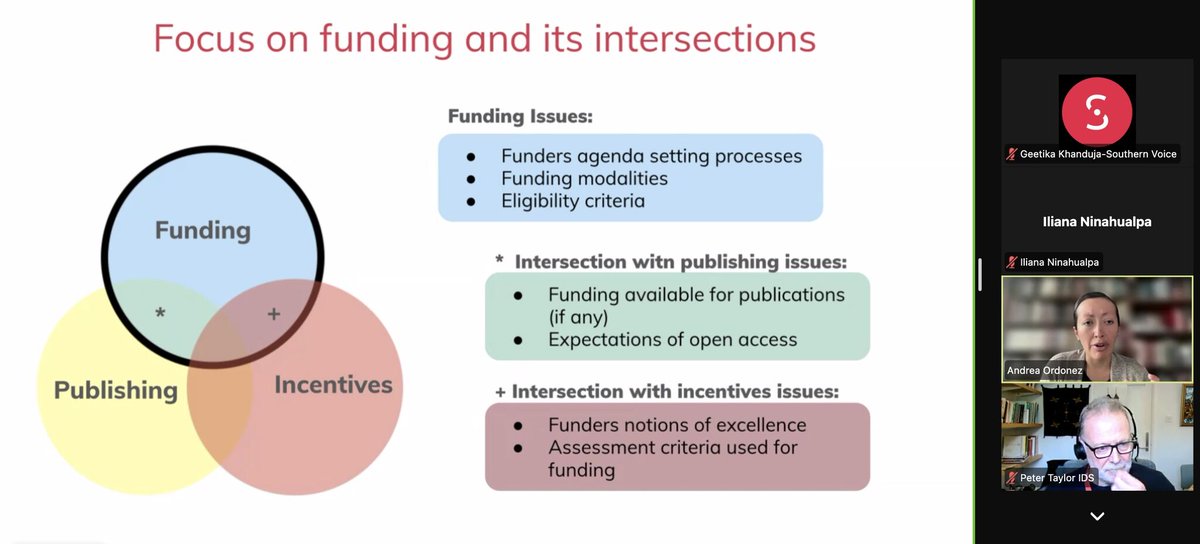
Last week, we held a public webinar with @IDS_UK focused on the complexities and challenges of promoting #equity in research, bringing together perspectives from across the Global South and North. Some key takeaways were: 💡 The 3 spaces for change for systemic transformation are 1) funding practices and norms, 2) academic rules and incentives, and 3) publication and dissemination practices 💡 It's important to discuss the difference of an equal partnership and an equitable partnership 💡 There is a need to adjust or modify the policies and terms and conditions (T&Cs) of collaborations to prioritize justice 💡 Locally-led research is easier said than done because a large portion of work and resources and are handled by contractors, and think tanks are sub-contractors 💡 Support to indigenous research has gradually increased, but support to indigenous brokering has not increased much
Southern Voice tweet mediaSouthern Voice tweet media
English
0
3
6
176
Patrick Walugembe retweetledi
Global Partnership for Education
Global Partnership for Education@GPforEducation·
🔴 Did you know? Children with disabilities are 42% less likely to achieve foundational reading and numeracy skills than their peers without disabilities. ➡️ Retweet if you believe that every child deserves the chance to succeed.
Global Partnership for Education tweet media
English
0
16
27
1.4K
Global Partnership for Education
Global Partnership for Education@GPforEducation·
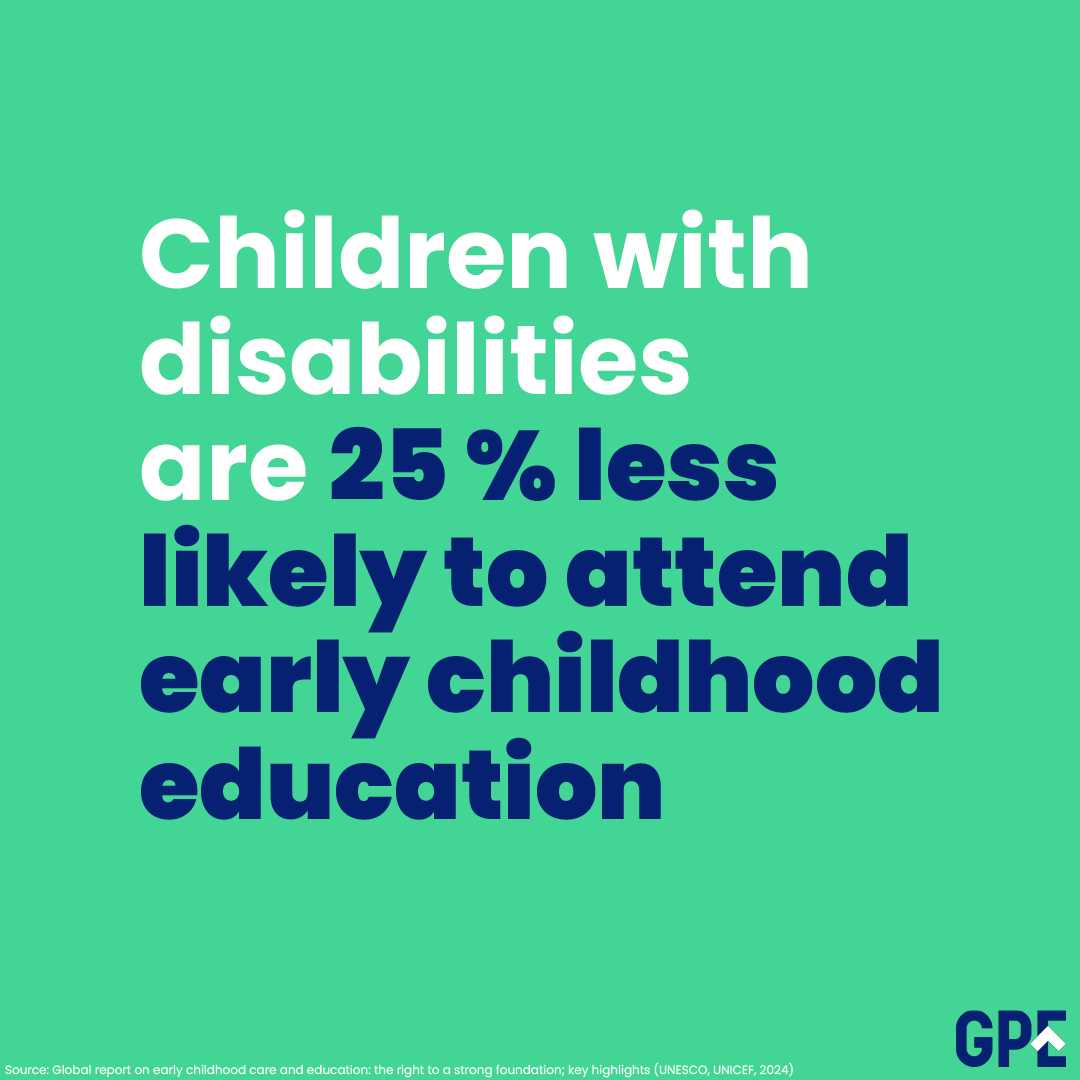
Early childhood education is crucial for children's development, growth and lifelong learning. A new GPE-supported report from @UNESCO and @UNICEF calls to prioritize the most vulnerable children and make sure that children with disabilities are not left further behind.
Global Partnership for Education tweet media
English
1
16
29
1.5K
Dr. Lillian Sekabembe
Dr. Lillian Sekabembe@SekabembeL·
🌟Honored to be appointed as the new Country Representative of @PSIUganda! Thank you to @PSIimpact for the vote of confidence. Excited to work with a young, agile, bold, creative team & to serve in this new capacity with innovation, confidence and dedication. #Leadership #Health
Dr. Lillian Sekabembe tweet media
English
80
41
382
16.2K
Patrick Walugembe
Patrick Walugembe@apwalugembe·
"Education has a critical role to play in determining whether the future direction that the digital transformation may take us in will be gender-balanced or not." unesco.org/gem-report/en/…
English
0
0
2
109