arc

132 posts

arc banner
arc

arc

@arcbjorn

🇨🇦🇩🇪🇦🇷 七転び八起き Software engineer

🇦🇷 Katılım Mart 2016
153 Takip Edilen78 Takipçiler
arc
arc@arcbjorn·
Honestly feels like the pinnacle of code editor experience right now. It’s as light and blazingly fast on any moderate hardware as NeoVim when it’s needed. The Vim motions implementation is a chef’s kiss. So it totally captures old school senior engineers. It’s fully featured for the majority of mainstream languages as a true classic flagship editor when it’s needed — very easy to set up. Capturing the majority of engineers. And when needed, it rivals the best agentic coding editors with its own thread implementation and concurrent agents view. So now it captures non-technical folks — vibe coding looks pretty slick. Testing Zed since the private beta back in 2022 was an interesting experience. Seeing it grow is mesmerising. Best-in-class pair coding experience, best-in-class rendering performance, and the ability to just switch off AI when it’s not needed then switch back to a fully fledged editor. It truly feels like NeoVim 2.0. It’s virtually winning in most types of coding tool competitions (even competing with dedicated agent harnesses), except for JetBrains products which are also awesome and incredible feats of engineering, in a league of their own with a slightly different philosophy. It’s very inspiring to see the @zeddotdev team making the right decisions one after another, especially with the latest open source and license changes. Amazing job from super smart engineers.
Zed@zeddotdev

We've shipped more than a thousand versions of Zed, but all of them began with zero. Today, that changes. zed.dev/blog/zed-1-0

English
29
21
748
69.2K
arc
arc@arcbjorn·
While majority focus on latest and greatest frontier models - fair enough, there are some hidden gems. Quite surprisingly, free Big Pickle from @opencode is 80% of any frontier model in engineering tasks. The biggest advantage of frontier is user friendliness for non tech people
English
0
0
1
74
arc
arc@arcbjorn·
Refreshing
Clara Gold@Clara_Gold

6 months ago, I moved to San Francisco. It’s the best place in the world to build, and one of the worst places to stay human. My unfiltered take: 1. SF is both overhyped and underrated The overhyped part: there are a lot of people with incredible resumes who are deeply unimpressive in real life. They were at the right company, at the right time, in the right market, and got carried by the wave. They made money, got comfortable, and now spend their time “exploring opportunities” over coffee, wasting your time. The underrated part: the top 1% here is insane. But almost impossible to get. Hiring in SF feels like being a guy on a dating app: everyone you want is out of your league, and everyone in your league wants someone out of theirs. The best people have unmatchable packages, endless options, and are optimizing for maximum impact: labs, frontier companies, or startups raising $100M pre-seed rounds. If you raised $10M from Tier 1 investors, you’re not hot shit here. You’re a B-player. It’s humbling. 2. There are fewer mission-driven people than I expected Especially on the application layer. A lot of people are in “secure the bag before it’s too late” mode. And honestly, it gives me the ick. The real religious builders I’ve met are often in labs, hardware, biotech, deeptech, defense — places where the work is hard enough that you can’t fake obsession. 3. The status game favors builders This is what SF does better than anywhere else. It rewards obsession. It rewards weirdness. It rewards people who make building their entire personality. Europe punishes that. SF gives it status. If you’ve felt like an outsider your whole life because you care too much, work too much, think too radically, or refuse to be chill about things that matter, this city will make you feel less insane. 4. The market liquidity is absurd Even if you don’t build a billion-dollar company, if you manage to build a strong product with a great team, someone smart might still acquire you for $ 100M. Yeah I know, it’s not your dream outcome as a founder, but on the days you feel desperate, it helps to keep going. 5. SF does not care about the meaning crisis that’s coming Anyone paying attention here can feel that something massive is happening with AI. But I’m shocked by how little people talk about the meaning crisis coming next. Everyone wants to talk about AI liberating humanity. Almost no one wants to talk about what happens when work — the thing that gives most people identity, structure, dignity, status, and purpose — starts disappearing. The vacuum will not be peaceful. People are underestimating the chaos that comes from humans suddenly having no idea why they matter. And I really feel like no one cares. 6. Personally, I’ve never been more unhappy I moved to SF and entered the matrix. I’ve always been intense. I’ve always worked crazy hours. But here, I lost the last parts of myself that were not about building. I don’t go to events. Most networking events feel like theater for people pretending to be important. The only events worth going to are small, curated dinners with people who are actually alive. I’ve made 0 real friends. I don’t do well with transactionality. I don’t do well with people constantly performing greatness. I don’t do well with rooms where everyone is optimizing and no one is being honest. So yes, SF is lonely, transactional, delusional, addictive, inspiring, boring, extraordinary, and completely insane. But it is still the only place to be right now if you’re a founder trying to build the next wave of humanity. And for now, that’s enough.

English
0
0
0
68
arc
arc@arcbjorn·
Always knew that Singapore is a great nation… this is however sci-fi level of greatness. Lee Kuan Yew would be proud
Vivian Balakrishnan@VivianBala

Thanks @Gavriel_Cohen. You’re right. I never used an IDE. Claude Code made all edits. No @karpathy ‘vibe coding’. All I did was ‘tool assembly’ to create a utility that worked in my domain!

English
0
0
0
48
arc retweetledi
vitalik.eth
vitalik.eth@VitalikButerin·
Now, account abstraction. We have been talking about account abstraction ever since early 2016, see the original EIP-86: github.com/ethereum/EIPs/… Now, we finally have EIP-8141 ( eips.ethereum.org/EIPS/eip-8141 ), an omnibus that wraps up and solves every remaining problem that AA was intended to address (plus more). Let's talk again about what it does. The concept, "Frame Transactions", is about as simple as you can get while still being highly general purpose. A transaction is N calls, which can read each other's calldata, and which have the ability to authorize a sender and authorize a gas payer. At the protocol layer, *that's it*. Now, let's see how to use it. First, a "normal transaction from a normal account" (eg. a multisig, or an account with changeable keys, or with a quantum-resistant signature scheme). This would have two frames: * Validation (check the signature, and return using the ACCEPT opcode with flags set to signal approval of sender and of gas payment) * Execution You could have multiple execution frames, atomic operations (eg. approve then spend) become trivial now. If the account does not exist yet, then you prepend another frame, "Deployment", which calls a proxy to create the contract (EIP-7997 ethereum-magicians.org/t/eip-7997-det… is good for this, as it would also let the contract address reliably be consistent across chains). Now, suppose you want to pay gas in RAI. You use a paymaster contract, which is a special-purpose onchain DEX that provides the ETH in real time. The tx frames are: * Deployment [if needed] * Validation (ACCEPT approves sender only, not gas payment) * Paymaster validation (paymaster checks that the immediate next op sends enough RAI to the paymaster and that the final op exists) * Send RAI to the paymaster * Execution [can be multiple] * Paymaster refunds unused RAI, and converts to ETH Basically the same thing that is done in existing sponsored transactions mechanisms, but with no intermediaries required (!!!!). Intermediary minimization is a core principle of non-ugly cypherpunk ethereum: maximize what you can do even if all the world's infrastructure except the ethereum chain itself goes down. Now, privacy protocols. Two strategies here. First, we can have a paymaster contract, which checks for a valid ZK-SNARK and pays for gas if it sees one. Second, we could add 2D nonces (see docs.erc4337.io/core-standards… ), which allow an individual account to function as a privacy protocol, and receive txs in parallel from many users. Basically, the mechanism is extremely flexible, and solves for all the use cases. But is it safe? At the onchain level, yes, obviously so: a tx is only valid to include if it contains a validation frame that returns ACCEPT with the flag to pay gas. The more challenging question is at the mempool level. If a tx contains a first frame which calls into 10000 accounts and rejects if any of them have different values, this cannot be broadcasted safely. But all of the examples above can. There is a similar notion here to "standard transactions" in bitcoin, where the chain itself only enforces a very limited set of rules, but there are more rules at the mempool layer. There are specific rulesets (eg. "validation frame must come before execution frames, and cannot call out to outside contracts") that are known to be safe, but are limited. For paymasters, there has been deep thought about a staking mechanism to limit DoS attacks in a very general-purpose way. Realistically, when 8141 is rolled out, the mempool rules will be very conservative, and there will be a second optional more aggressive mempool. The former will expand over time. For privacy protocol users, this means that we can completely remove "public broadcasters" that are the source of massive UX pain in railgun/PP/TC, and replace them with a general-purpose public mempool. For quantum-resistant signatures, we also have to solve one more problem: efficiency. Here's are posts about the ideas we have for that: firefly.social/post/lens/1gfe… firefly.social/post/x/2027405… AA is also highly complementary with FOCIL: FOCIL ensures rapid inclusion guarantees for transactions, and AA ensures that all of the more complex operations people want to make actually can be made directly as first-class transactions. Another interesting topic is EOA compatibility in 8141. This is being discussed, in principle it is possible, so all accounts incl existing ones can be put into the same framework and gain the ability to do batch operations, transaction sponsorship, etc, all as first-class transactions that fully benefit from FOCIL. Finally, after over a decade of research and refinement of these techniques, this all looks possible to make happen within a year (Hegota fork). firefly.social/post/bsky/qmaj…
English
310
412
2.4K
309.5K
arc
arc@arcbjorn·
Very intriguing which country will take place after China’s engineering reign
English
0
0
0
20
arc
arc@arcbjorn·
Pretty sad that Tesla while being a pioneer, bringing so many innovative patents and essentially leading the industry standards for years, has its cars left so far behind in basically every aspect - apart from FSD ofc
English
1
0
0
33
arc
arc@arcbjorn·
“Imitation is the sincerest form of flattery that mediocrity can pay to greatness.”
Marques Brownlee@MKBHD

I lived with a Chinese EV for a few weeks to see if the hype is real. The car costs $42K, and turns out it feels like $75K+ EASILY One of the most impressive things I've ever reviewed: youtu.be/Mb6H7trzMfI - A+ software and features. Feels like what would happen if Apple made a car - Build quality is excellent all the way around. And materials (leathers, metals, etc) are all premium - It crushes all the fundamentals to make it livable: 320 miles range, super comfortable seats, excellent air suspension, active noise cancellation, great displays and cameras, bright clear HUD, Self driving - It has a MODULAR interior design (detailed in the video) - Performance is sneaky great. This is just the "SU7 Max" spec, but 660 horsepower 0-60 in 2.8 seconds? Sheesh
English
1
0
0
219
arc retweetledi
vitalik.eth
vitalik.eth@VitalikButerin·
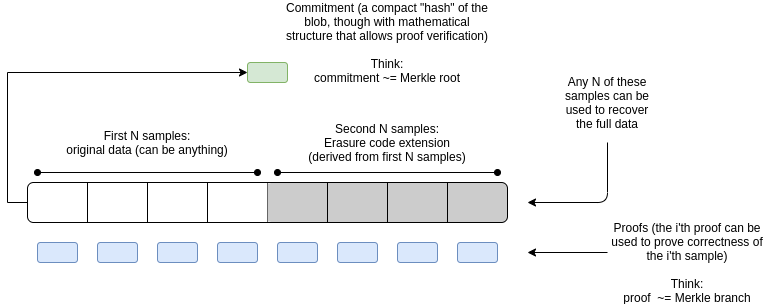
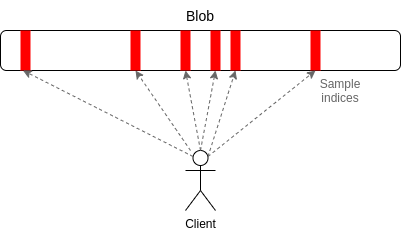
PeerDAS in Fusaka is significant because it literally is sharding. Ethereum is coming to consensus on blocks without requiring any single node to see more than a tiny fraction of the data. And this is robust to 51% attacks - it's client-side probabilistic verification, not validator voting. Sharding has been a dream for Ethereum since 2015 , and data availability sampling since 2017 ( github.com/ethereum/resea… ), and now we have it. That said, there are three ways that the sharding in Fusaka is incomplete: * We can process O(c^2) transactions (where c is the per-node compute) on L2s, but not on the ethereum L1. If we want to scaling to benefit the ethereum L1 as well, beyond what we can get by constant-factor upgrades like BAL and ePBS, we need mature ZK-EVMs. * The proposer/builder bottleneck. Today, the builder needs to have the whole data and build the whole block. It would be amazing to have distributed block building. * We don't have a sharded mempool. We still need that. But even still, this is a fundamental step forward in blockchain design. The next two years will give us time to refine the PeerDAS mechanism, carefully increase its scale while we continue to ensure its stability, use it to scale L2s, and then when ZK-EVMs are mature, turn it inwards to scale ethereum L1 gas as well. Big congrats to the Ethereum researchers and core devs who worked hard for years to make this happen.
vitalik.eth tweet mediavitalik.eth tweet media
English
530
772
4.4K
361.9K
arc
arc@arcbjorn·
There is something special about Claude. It’s nice to have winning benchmarks, but arguably even Sonnet 4.5 real-world output is a lot more predictable, stable and trustworthy than other winning models. With time all of these seem to focus on different types of tasks, Claude’s just clearer vision on SWE
Claude@claudeai

Introducing Claude Opus 4.5: the best model in the world for coding, agents, and computer use. Opus 4.5 is a step forward in what AI systems can do, and a preview of larger changes to how work gets done.

English
0
0
0
56