Sabitlenmiş Tweet

The prime signal newsletter is up & running ! Don't miss a beat if you are a founder, a leader or a student of your craft !
Subscribe 👇and let me know your thoughts writing.aref.vc
English
❈Aref❈
32.3K posts

@aref_vc
Co-Founder @FalconHQ_AI | Sponsorship Intelligence, simplified. 🦅 https://t.co/QfCLUU0V8v / Newsletter ✉️: https://t.co/f8FX7JxmuW ❈Audere est Facere❈


Mistakes happen. As a team, the important thing is to recognize it’s never an individuals’s fault — it’s the process, the culture, or the infra. In this case, there was a manual deploy step that should have been better automated. Our team has made a few improvements to the automation for next time, a couple more on the way.

Accurate. Japanese live in a high context culture where we prefer implicit messages in context and dislike direct expression.


X in Japan is just honne (true self) vs. tatemae (public face) in digital form. Facebook flopped because real-name policies are a social death sentence there. X lets you wear a mask, which is the ultimate Japanese luxury. The linguistics also play a key role for adoption. Kanji is high-density data compression. One tweet in Japanese is basically a medium-form blog post in English. You can fit an entire philosophy into 280 characters which is not the case for other languages. It’s also the "infrastructure of the now." Ever since the 2011 earthquake, it’s been the unofficial emergency broadcast system. Combine that with a culture of "muttering" (tsubuyaki) on long train commutes, and you have a platform that fits the national psyche like a glove. It’s the only place where the salaryman and the otaku can both scream into the void without losing their jobs.

why is x huge in japan? what structural properties make it fit well within the japanese culture? is it anonymity as a core part of the platform or something more?

End of Prioritization I’ve been thinking about the tension between exploitation and exploration lately - mathematically best described by the multi arm bandit problem. You can’t do everything because trying something has a cost. Just as so many other laws of physics are changing with AI, I think this one is about to change too. For any intelligence+execution bound work you can imagine the cost of exploitation (trying something) is rapidly approaching zero (modulo inference). In that world, the value of exploration goes up dramatically — you can simply try more things. This is a broad, important concept that applies to thousands of trade-offs in companies and society that we previously took as immutable. It also tells you something about where value accrues in the future. People who can identify compelling new paths to explore will have far more value to add than people who are experts at specialized exploitation of known paths. I have a feeling this might even have implications for the multi-armed bandit problem in the formal mathematical sense, but that’s a bit beyond my expertise. Think about a growth team that A/B tests two landing pages a week because each variant costs real design and eng time — now they test fifty. Or a product team that agonizes over which feature to build next because they can only ship one — now they build all of them and let users decide. It’s like Monte Carlo simulation for everything, except you’re not simulating — you’re actually doing it. Every path gets run. Prioritization as we know it is obsolete. You don’t pick what to do — you do all of it. The only art left is knowing which bandits are worth arming.
Over the past week, you may have seen an anonymous post about Delve. While we responded to it in a day, we want to provide more details about what’s true, what's not, and some changes we’ve made. There’s one question behind everything: did Delve fabricate compliance evidence or issue fraudulent audit reports? No. We did not. → Delve is an AI compliance platform that connects customers with independent auditors. We are not an auditor, just as tax preparation software is not an accountant. We have never signed an audit report. → Using default templates for our customers, just like any other compliance platform, is not “faking evidence.” These are meant to serve as a starting point for customers. → Delve does have automation in the platform, with 600+ automated integration tests, an AI Copilot to guide customers through compliance, AI code scanning, and more. -- We built Delve to accelerate innovation by bringing AI to compliance. In doing that, we pushed hard on automation. However, we now realize we didn’t provide enough clarity about what is automated, what is customer-provided, and what is independently audited. We have been working relentlessly to make improvements over the last week. -- On our auditor network: Delve connects customers with independent auditors. Some customers choose their own auditors, but many use firms in our network. Questions have been raised about some of those firms, including ones used by other platforms. Going forward we will set a higher bar in how our auditor relationships are structured and how the process is experienced by customers. Delve is rebuilding our auditor network, removing firms that don’t meet our standards, and offering complimentary re-audits and penetration tests to every customer. On platform templates for our customers: Delve provides default templates, just like many other platforms, for policies, board meetings, risk assessments, and more. These are designed to be starting points only. We should have been more explicit about how they are meant to be reviewed and customized by customers. We are making that indisputably clearer within the platform. On draft audit reports: Third-party auditors are responsible for independently reviewing all evidence and issuing final reports. We built automation that interacts closely with independent audit workflows to help expedite the process on behalf of our customers. However, this contributed to confusion about where automation ends and independent judgment begins. From now on, Delve will no longer automate these parts of the process. Furthermore, customers have a direct line of communication with their auditor to enhance transparency in any audit communications. -- We started Delve because we went through compliance ourselves and saw how slow, expensive, and manual it was. To anyone that wants to sit down and discuss our product philosophy and improvements, please reach out and let’s chat about it.
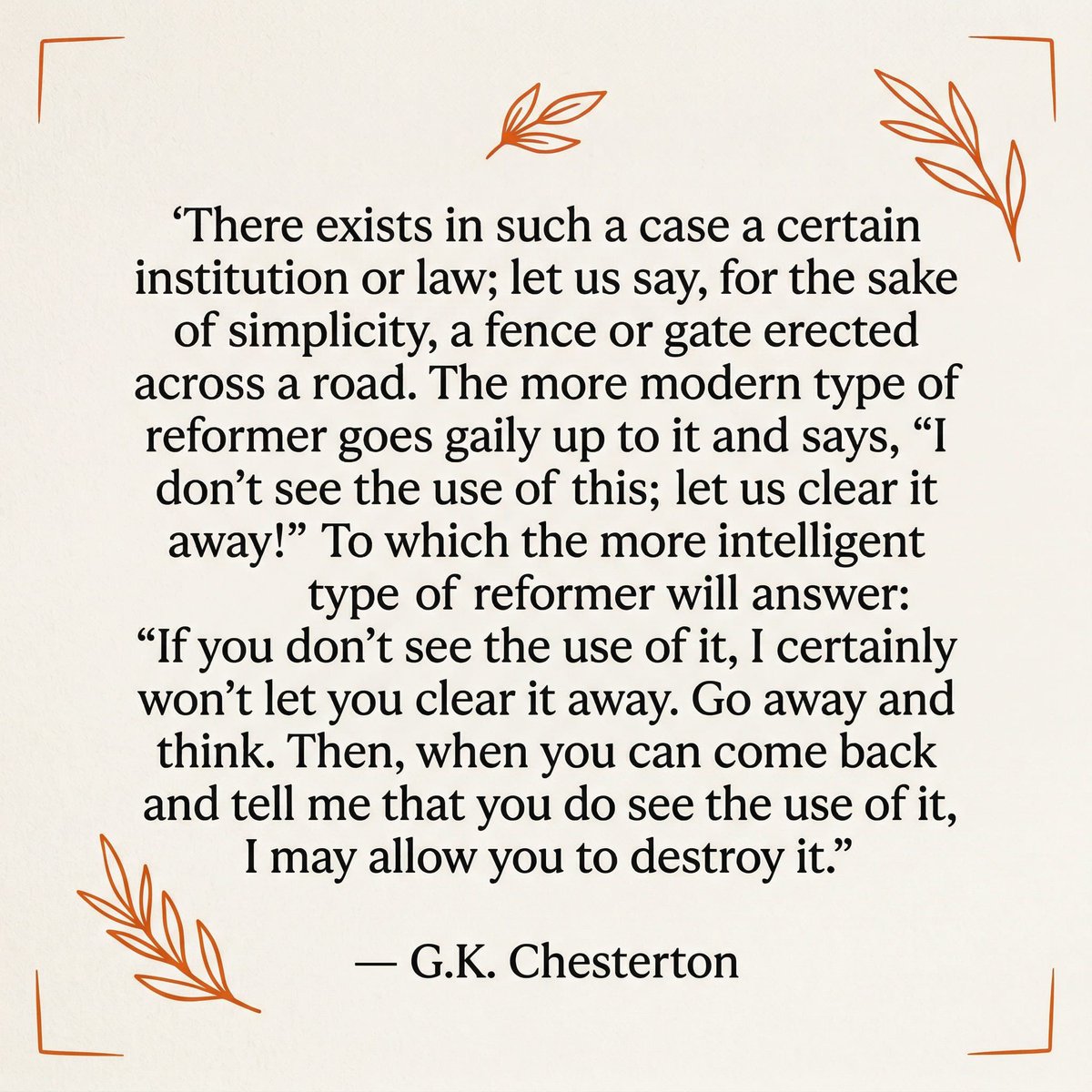
people who blindly follow rules without ever questioning them genuinely unsettle me.