Ari Heistein

11.1K posts

Ari Heistein banner
Ari Heistein

Ari Heistein

@ariheist

U.S., Israel, DefTech innovation, Yemen, strategy. RT or Likes =/= endorsements.

Israel Katılım Temmuz 2014
3.4K Takip Edilen1.6K Takipçiler
Ari Heistein retweetledi

Alex Rif
Alex Rif@AlexRif3·
ויאצ׳סלב (סלבה) וידמנט, בן 52, אב לילדה, הוא ההרוג מפגיעת הטיל בתל אביב אתמול. סלבה עבד כמאבטח מטעם חברת שמירה, והוצב למנוע ביזה מהבתים שנפגעו במטח בתחילת המלחמה. בערב האסון, הוא סיים את משמרתו סמוך לשעה , נשאר באזור והמתין להסעה שתאסוף אותו לביתו באשדוד. סלבה היה עולה ביחד עם שומרים נוספים בהסעה מהדרום, מגיעים בשבע בבוקר ועובדים עד שבע למחרת, בשכר מינימום, בתנאים קשים של עשרות אזעקות. באזעקות רבות אחרות הוא נצפה באחד המקלטים בשכונה, אבל דווקא באזעקה האחרונה - סלבה לא נכנס למרחב מוגן. הוא נפגע ישירות מטיל מצרר ונהרג במקום. זהו סיפור טרגי על אדם שיצא לעבודה ולא חזר הביתה. במקום כבר נסלל כביש חדש, ואין עדות או זכר לכך שמצא כאן את מותו אדם שׁהוצב כדי לשמור על הביטחון שלנו. אנחנו משתתפים בצערה העמוק של המשפחה ושולחים להם תנחומים וחיזוקים בשעה קשה זו. יהי זכרו ברוך. 🕯️
Alex Rif tweet media
עברית
44
103
1.1K
29.9K
Ari Heistein
Ari Heistein@ariheist·
After staying out of the conflict for nearly a month, the Houthis’ limited strikes against Israel reflect the group’s dilemmas as “survival-first ideologues” My latest for @JISS_Israel jiss.org.il/en/heistein-ar…
English
0
8
11
6.8K
Ari Heistein
Ari Heistein@ariheist·
“Yet they joined a month into the conflict, driven either by growing external pressure or an assessment that they could manage domestic fallout. Despite initial caution, they may yet escalate further if they do not meet pushback” My comment in @Telegraph telegraph.co.uk/world-news/202…
English
0
1
4
367
Ari Heistein retweetledi
Emanuel (Mannie) Fabian
Emanuel (Mannie) Fabian@manniefabian·
Footage shows the moment a suspected Houthi drone from Yemen was shot down by air defenses over Eilat.
English
9
48
196
30.1K
Ari Heistein retweetledi
David Albright
David Albright@DAVIDHALBRIGHT1·
Been listening with 🙄 to people who know little about Iran’s nuclear program or its efforts to get nuclear weapons assert how Iran made a mistake by not “choosing” to build nuclear weapons. Israel attacked in June 2025 in large part because it saw that Iran was too close to deciding to build them. The effort over the last 25 years has been to prevent Iran from building nuclear weapons, despite Iran wanting to and trying to. That effort has worked remarkably well, and the recent wars, regardless of one’s thought on them, have seriously set back Iran’s nuclear weapons capabilities, both in terms of hardware and personnel. The struggle to prevent Iran getting nuclear weapons is not yet over and that should be the focus, to remove the last vestiges of Iran’s enrichment and nuclear weaponization programs, not giving any credence to Monday morning quarterbacking by people who didn’t even see the game.
English
15
90
286
34K
Ari Heistein retweetledi
Fatima Alasrar
Fatima Alasrar@YemeniFatima·
1. Houthis were the most capable proxy in Iran's network and the last to act. A month of silence followed by intercepted missiles tells you something about what the war has done to the axis. Here is what to understand: cnn.com/2026/03/28/wor…
English
2
15
39
11.4K
Ari Heistein retweetledi
Jason Brodsky
Jason Brodsky@JasonMBrodsky·
There are some who argue that Operation Epic Fury will produce a rally 'round the flag effect in #Iran. But here, Iranian authorities on Saturday shut down all branches of the popular café chain Lamiz after it used cups featuring a 1975 painting by renowned Iranian artist Farshid Mesghali, a design hardliners interpreted as mocking the empty chair of slain Supreme Leader Ali Khamenei. iranintl.com/en/202603284105
Jason Brodsky tweet media
English
18
111
384
13.7K
Ari Heistein retweetledi
AlKhadher Sulaiman الخضر السليماني السعدي
The Houthis are doing it again; weaponizing the suffering of others to expand their reach. This escalation will probably net them another 100,000 child soldiers. This is not resistance; it is exploitation. It must be ended—militarily and decisively.
AlKhadher Sulaiman الخضر السليماني السعدي tweet mediaAlKhadher Sulaiman الخضر السليماني السعدي tweet media
English
0
1
2
229
Ari Heistein retweetledi
Rafik Halabi
Rafik Halabi@halabi_rafik·
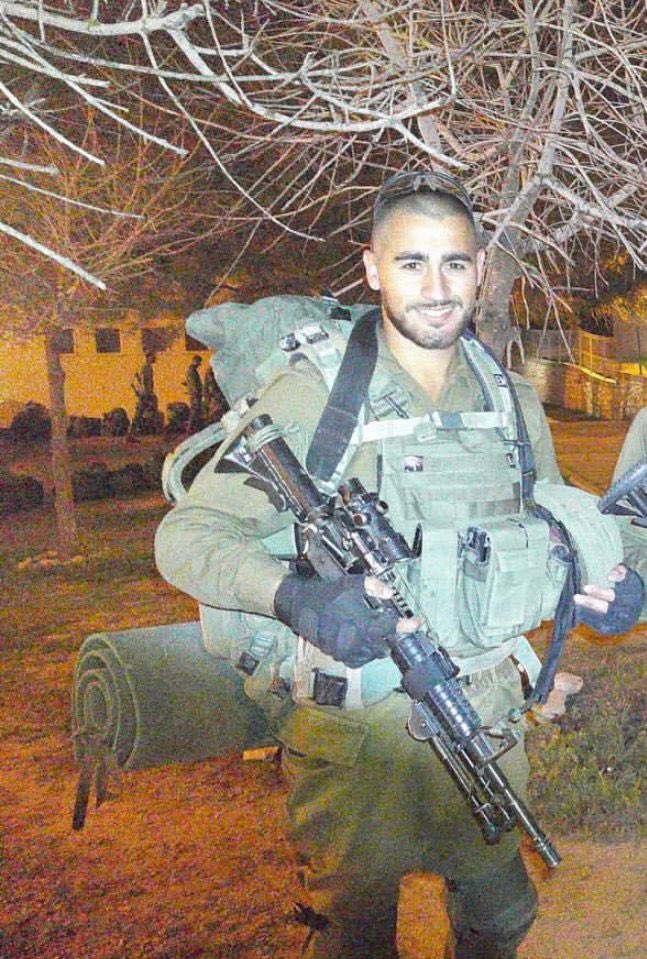
החלמה מהירה לגיבור שלנו איזאר באסל נסראלדין אתמול נפצע הצנחן בן היישוב בקרבות בדרום לבנון פצעים בינוניים והוא בסדר ואנחנו מאחלים לו בשם כל היישוב החלמה מהירה. אוהבים ומחבקים אותך איזאר היקר
Rafik Halabi tweet media
עברית
169
134
2.6K
51K
Ari Heistein retweetledi
Raz Zimmt
Raz Zimmt@RZimmt·
Some insights on Iran’s situational assessment nearly a month into the campaign: A. Iran is interested in a ceasefire. However, from its perspective, there is a worse scenario than a ceasefire, namely, a temporary ceasefire. Following the 12-day war in June, senior Iranian officials and commentators warned that it would only be a temporary ceasefire and that the U.S. and/or Israel would resume attacking Iran in the near future. Tehran is not prepared for endless cycles of war and therefore insists on ending the current campaign with guarantees that no further attacks will occur. B. Surrender has never been part of the Islamic Republic’s lexicon and is not on the table even a month after the outbreak of the war. Regardless of the Iranian leadership’s current assessment of its situation, it is not willing to concede to American demands. This is also tied to the identity of Iran’s current leadership, which is largely composed of veterans of the Islamic Revolutionary Guard Corps, whose formative experience is the Iran–Iraq War. Iran’s leaders belong to hardline circles that not only viewed the 8-year war as a national trauma shaping their strategic outlook, but also adopted the revisionist narrative of a “stab in the back,” according to which Khomeini was forced to “drink the poison chalice” after being betrayed and misled by politicians led by Akbar Hashemi Rafsanjani and Mir-Hossein Mousavi, who compelled him to accept a ceasefire with Iraq. Will the new leadership in Tehran nevertheless be willing to make certain compromises that Iran rejected prior to the war? Possibly. Will it eventually conclude that it cannot bear the costs of the war and become willing to make even more far-reaching concessions? Perhaps. But for now, this is clearly not on the agenda. C. To this should be added Tehran’s current assessment, which is based on several assumptions: 1) They believe that, after the initial blow they suffered in the early days of the war, they have managed to adapt to the situation. 2) They assess that there is currently no significant threat to regime stability. The growing number of reports citing intelligence assessments and leadership circles in Washington and Jerusalem that the war will not lead to the collapse of the Iranian regime, alongside the adjustments made by security forces to attacks on IRGC bases, Basij headquarters, and internal security forces, reinforce this assessment in Tehran. 3) Tehran has adopted a “mindset of achievement” (and perhaps even a sense of victory), based on the belief that not only will the Islamic Republic survive the war, but that it can leverage its asymmetric capabilities—foremost among them the (partial) closure of the Strait of Hormuz and attacks on critical infrastructure in Gulf states—as a strategic leverage. This could enable Iran not only to return to the pre-war status quo but also to establish a new regional architecture based on recognition of its sovereignty over the strait, and possibly even the withdrawal of U.S. forces from the region, taking into account Iran’s regional standing and its capacity to inflict damage on the global economy. 4) In Tehran’s assessment, the two main escalatory options available to the U.S. are strikes on Iran’s energy and electricity infrastructure, and a ground operation to seize control of the strait or one of the islands (Khark or Abu Musa). Iran does not ignore this possibility, but believes that its own escalation could at the very least disrupt American plans. In the event of strikes on Iranian infrastructure, Iran has the capacity to retaliate in ways that would severely damage critical infrastructure across the region. In the case of a ground operation (even if successful), it is doubtful that it would allow for the immediate reopening of the strait. Seizing Khark Island would expose U.S. forces to Iranian fire, and it is uncertain whether the high economic cost to Iran would translate into immediate Iranian concessions, as Tehran may be able to absorb the economic consequences for weeks or even months while continuing to impose high costs on U.S. forces, regional states, and the global economy. Even a successful operation in the strait itself would not necessarily prevent Iran from continuing to threaten tanker traffic, for example, by drones, and this alone provides a level of deterrence that could prevent the resumption of activity in the strait even in the event of a successful U.S. military operation. In sum, Iran is open to diplomacy, negotiations, and possibly even significant compromises—but without relinquishing minimum demands, including guarantees against the resumption of hostilities, sanctions relief (which could be framed as reparations), and the preservation of certain nuclear capabilities, especially missile capabilities. If an agreement with the U.S. cannot be reached based on Iran’s position, Tehran is prepared to continue a prolonged war of attrition, based on its assessment that its resilience and stamina are greater than those of the U.S. and its regional allies. In any case, from Tehran’s perspective, the cost of total capitulation remains far higher than the risks of continuing the war.
English
28
141
438
195.9K
Ari Heistein retweetledi
Ali Al-Sakani | علي السكني
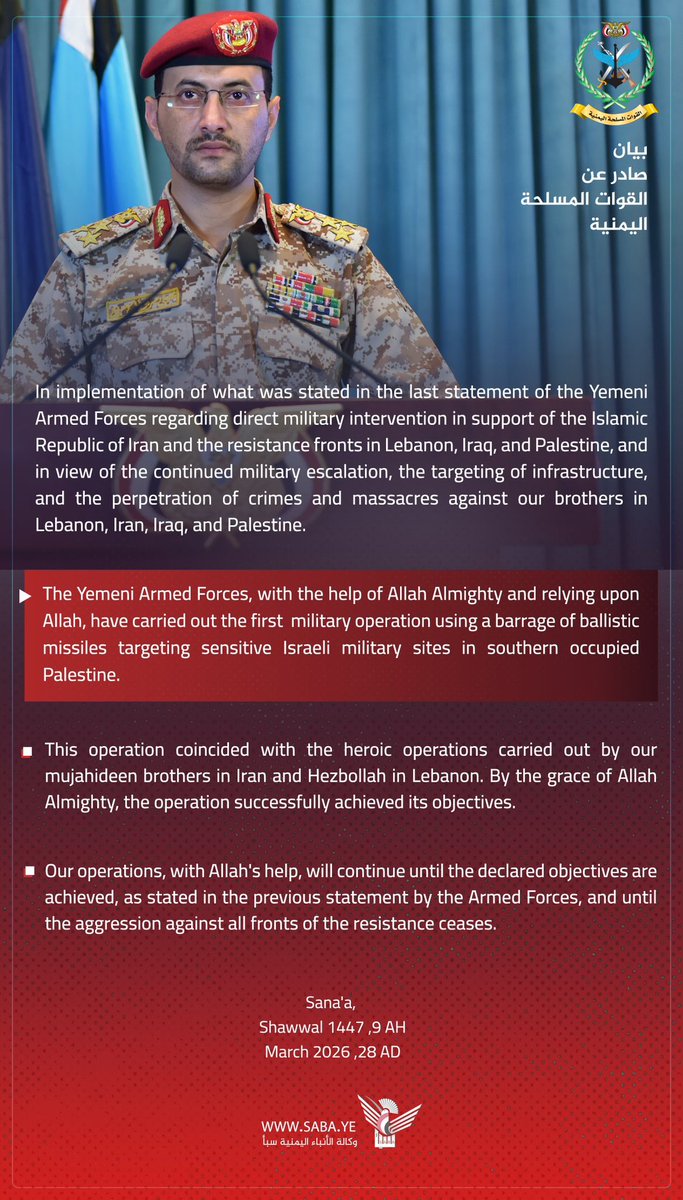
Iran-backed #Houthis announce their first ballistic missile operation targeting Israeli military sites in support of #Iran and axis of resistance in Lebanon and Iraq, vowing to continue operations until the attacks on Iran stop.
Ali Al-Sakani | علي السكني@Alsakaniali

#Breaking Houthis military spokesperson says they will intervene militarily if: -New alliances join the U.S. and Israel against Iran and the Axis of Jihad and Resistance -The #RedSea is used to launch operations by the U.S. or Israel against #Iran -Escalation continues against Iran and the Axis of Resistance.

English
6
7
16
7.1K
Ari Heistein retweetledi
Michael Knights
Michael Knights@Mikeknightsiraq·
I usually agree with @glcarlstrom but here I have. Different instinct. Saddam hung on for 12 years after Desert Storm, and that was after a significant percentage of Iraq was occupied briefly AND he lost Kurdistan provinces for good AND a majority of other provinces fell out of control briefly AND he had zero shipped crude sales for years (until Oil for Food) AND he had no fly zones on him. Iran had a more sanctions-proofed economy by far. I think Iran struggled to contain protests when it had the safety catch ON, in "make-believe civil democracy" mode. As soon as it turned brutality up to 10%, it quashed protests. Now brutality will possibly never be lower than 20% intensity from here on out. They can probably operate in their current mode for a long time.
Gregg Carlstrom@glcarlstrom

This is why the whole "survival is victory for the regime" argument is short-sighted. Iran went into the war with an increasingly worthless currency, sky-high inflation, a deep well of popular anger over economic problems The longer the war goes on, the worse those problems get. More narrowly, a prolonged war also chips away at both the IRGC's economic power and the defense-industrial base it needs to rebuild its capabilities The theory of an infinitely resilient regime only works if you ignore material conditions in Iran nytimes.com/2026/03/27/wor…

English
7
24
89
23.6K
Ari Heistein retweetledi
Ibrahim Jalal | إبراهيم جلال
I’ll be live on Al Jazeera English in 30 minutes to discuss the latest fist Houthi strike on Israel since February 28, long anticipated as layer one escalation when the moment comes. The Houthis have joined the war, so why, how and what comes next?
English
1
2
12
1.5K
Ari Heistein
Ari Heistein@ariheist·
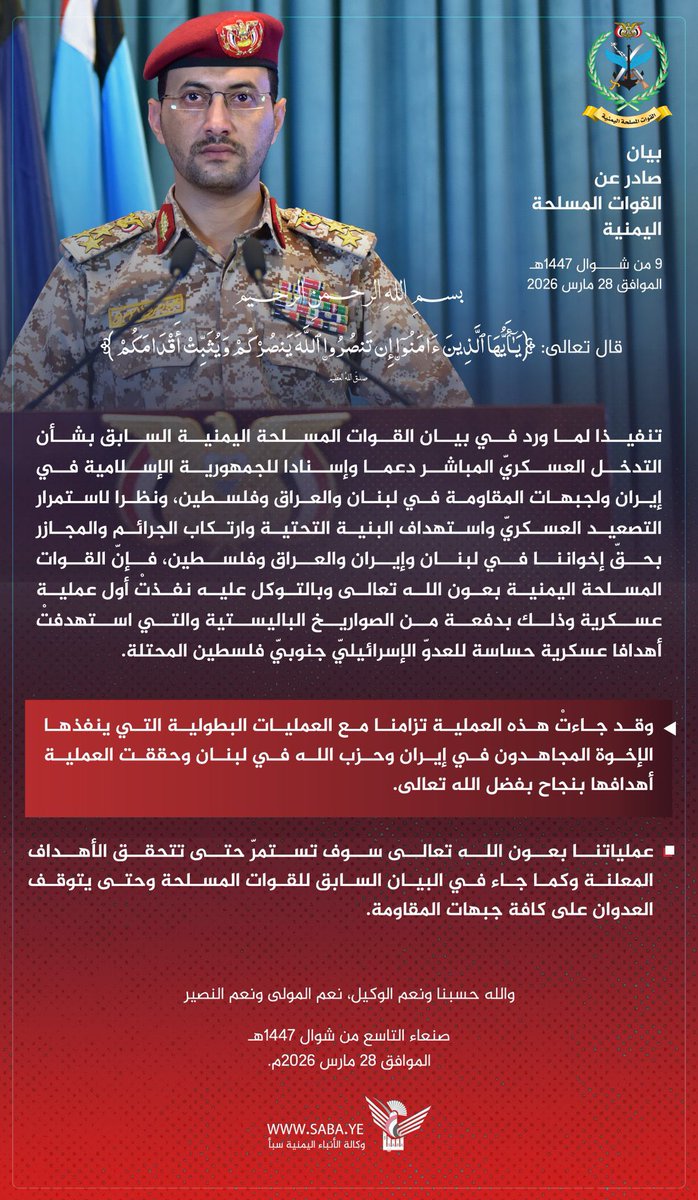
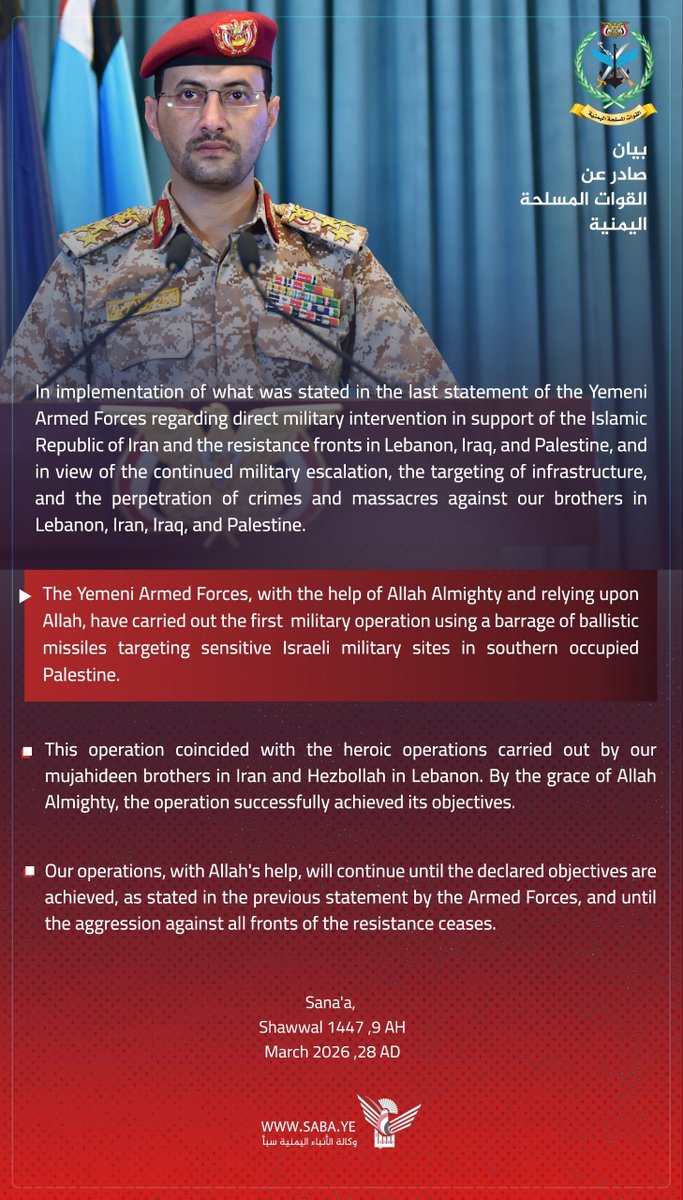
By their own admission, Houthi involvement in this war is unrelated to Yemeni interests - will be interesting to see if this generates additional friction with between the regime and the public.
Ari Heistein tweet media
English
0
0
1
106
Ari Heistein
Ari Heistein@ariheist·
probing Israel's deterrence, though other explanations are possible. Either way, expect the Houthis to muddy the waters.
English
0
0
2
65
Ari Heistein
Ari Heistein@ariheist·
promptly deleted the tweet, presumably to avoid indirectly claiming responsibility. This suggests an effort to distance themselves from the launch, most likely to maintain plausible deniability while
English
1
0
0
50
Ari Heistein
Ari Heistein@ariheist·
Before 7 AM, Israel identified and intercepted a launch from Houthi territory. Have the Houthis declared war? The short answer: not exactly. What's telling is the silence following this morning's launch.
Ibrahim Jalal | إبراهيم جلال@IbrahimJalalYE

The Houthis have joined the war, following Hezbollah & PMF, showing IRGC command over strategic decision remains intact Today, IDF intercepted a missile fired from Yemen. Houthis often claim attacks after launch & adopt a phased escalation approach Red Sea risk is now EXTREME

English
2
0
3
1.3K