Arjun Sethi

4.8K posts

Arjun Sethi banner
Arjun Sethi

Arjun Sethi

@arjunsethi

Judeo-Christian Values. Work with founders from early-stage companies to IPO and early protocols to launch to list. @tribecap @krakenfx

Katılım Aralık 2008
1 Takip Edilen57.1K Takipçiler
Arjun Sethi retweetledi
WOO X
WOO X@_WOO_X·
WOO X, a leading global centralized digital asset exchange, and Payward Services, the B2B infrastructure platform from Payward, the company behind global crypto platform @krakenfx, have signed a Memorandum of Understanding (MOU) with the intent to bring crypto trading to WOO X's European users through Payward Services’ trading-as-a-service offering. Under the agreement, the companies intend to enable spot crypto trading for WOO X’s EU users powered by Payward's regulated European infrastructure and licensing. WOO X would join a growing roster of financial institutions using Payward Services’ trading-as-a-service offering, including bunq, one of Europe's leading neobanks. Risk Disclaimer: The above content is for general informational purposes only and does not constitute legal, investment, or financial advice. We recommend consulting a qualified independent advisor before making any decisions. WOO shall not be liable for any loss or damage arising from the use of this information.
English
309
1K
1.2K
160.2K
Arjun Sethi retweetledi
The Block
The Block@TheBlockCo·
THE BLOCK: SK Hynix’s $26.5 billion U.S. listing was made available to Telegram users as tokenized shares via xStocks. solana:SKHYhSjuRWHgikq8eRKbtBbpABgJSkd7ytQV14i9EQ3 Wallet in Telegram, the native crypto wallet built into the messaging app, offers access.
The Block tweet mediaThe Block tweet media
English
11
1
38
17.6K
Arjun Sethi retweetledi
ink
ink@inkonchain·
1/ InkWorks is our builder program. Spark is the flexible, early support inside it: for teams with a live product, a novel idea, or early traction they're ready to prove. Here's the first set of teams moving through Spark 👇.
English
34
30
215
30.7K
Arjun Sethi retweetledi
World Cup AI Anime
World Cup AI Anime@wcaianime·
How France started moving after the 60th minute
English
14
228
2.6K
148.3K
Arjun Sethi retweetledi
Lorenzo Valente
Lorenzo Valente@LorenzoARK·
Why USDT and USDC are Harder to Kill than Crypto Twitter Thinks: My last Thoughts on Open USD The launch of OUSD has taken Twitter by storm. Many people are now convinced @circle is doomed because a consortium of 150 companies spanning payments, fintech, banks, crypto infrastructure, and consumer technology is somehow going to crush the competition and launch a stablecoin that rivals USDC, and potentially even USDT. I already wrote a tweet on why people are vastly overestimating this initiative and why consortiums are poor organizational structures to conquer anything, let alone a market with an established duopoly. In this short piece, I want to focus on one thing only: the true network effects of stablecoins. Instead of rehashing every argument, I want to walk through a tangible example that everyone is ignoring, because I believe both USDT and USDC have liquidity moats that are vastly misunderstood and underappreciated. Stablecoin network effects are not created by a long list of logos. They are created by liquidity, habit, collateral acceptance, integrations, brand recognition, market depth, settlement flows, and the fear of breaking what already works. This is why I think @tether and @circle are companies that are vastly misunderstood. First, the obvious: OUSD will be GENIUS compliant, which means it cannot share yield directly with users. This isn’t news, yet people are screaming at Circle to pay stablecoin holders, as if OUSD were going to be able to do that. The reality is the opposite: Circle is probably the issuer that passes on the most yield to platforms, and by extension to users, of anyone in the market. This matters because a lot of people are talking as if OUSD will create a fundamentally different yield product for end users. That is not the model. The model is not “pay stablecoin holders.” The model is “share the reserve economics with the platforms and businesses that distribute and use the stablecoin. This is an important distinction. The strongest argument I’ve seen for OUSD is that consortium members will be highly incentivized to entrench it in their businesses because they get a revenue share from the structure. Without knowing the details, let’s assume the economics resemble previous consortiums we’ve seen: Open Standard, the operating company, keeps a 25 bps management fee while each participant keeps 100% of the NIM on any OUSD sitting on their platform, network, or protocol. On paper, that’s a deal anyone signs immediately. But it completely discounts the fact that these companies accrue value in other ways, and in many cases their core businesses depend on the existing liquidity and network effects of USDT, USDC, other stablecoins or simply other FIAT currencies. The NIM from stablecoin reserves is attractive only if pursuing it does not jeopardize a much larger revenue stream. That is the key point. The best case study in the industry, and probably the strongest counterexample to OUSD, is Binance. Binance as the best Case Study @binance is the largest exchange in the industry by several miles. It initially had its own branded stablecoin, BUSD, which peaked at roughly $23B in supply before NYDFS ordered Paxos, the issuer, to shut the product down in February 2023. Look at the three biggest Asian exchanges and you get three clean case studies. Today @binance holds about $45B of USDT, @Bybit_Official about $4B, and @okx about $9B. Binance has been, and remains, Tether’s fortress and crown jewel. USDT is the most liquid counterpair on the biggest exchange in the world. Today, if you want to buy BTC, ETH, SOL, or open a perp position in size, USDT is still the dominant quote currency across much of the offshore exchange complex. Binance helped make that true. USDT is embedded into the deepest order books, the most liquid pairs, the most active derivatives markets, and the workflows of the most important market makers and traders. That is a real network effect. Now many of you must be thinking: why is CZ so naive? Why hasn’t he called Paolo and Giancarlo and demanded at least a portion of the USDT yield, if not most of it? Binance knows it has extreme leverage here. There is an extremely simple reason this has never happened: Binance’s crown jewel, from a revenue and enterprise value perspective, is its trading business. And that trading business is cemented by USDT liquidity. Running the math So let’s run the rough numbers and see why it is entirely rational for CZ not to chase the NIM, or try to replace USDT with a more “aligned” stablecoin. The back-of-the-envelope math below is based on on-chain data and assumptions; none of it is confirmed information. Building it bottom-up: Derivatives (the core engine). Binance runs roughly 40% of global crypto derivatives volume. Call it $40-50B per day on average through the cycle, so $10-15T annually. Blended taker/maker take rate after VIP discounts and BNB rebates is maybe 5 bps. That’s roughly $5B from perps and futures alone. Spot. Maybe $8-10B per day on average, around $3T annually, at a blended 15 bps (much lower than Coinbase’s retail take rate, because Binance’s mix skews heavily VIP and they run zero-fee promos). Call it another $5B. Everything else. Earn and lending spread, margin interest, Launchpool and listing economics, Binance Pay, staking commissions, plus the float: they sit on roughly $46B in customer stablecoins, and while they don’t sweep it like a broker-dealer, the corporate treasury and interest-bearing products around it are meaningful at these rates. Add BNB ecosystem economics and you’re conservatively looking at another $5-7B. And remember, these are bear market numbers. Very conservatively, Binance is a business generating close to $17-20B in bear markets and probably closer to $25B in bull markets. A business of that scale and quality is plausibly worth north of $200B. So why isn’t CZ in a rush to replace USDT or demand better economics from the Tether team? Because the whole reason Binance is what it is today, the reason 300M+ customers keep returning to the platform, is that it is the most liquid venue on earth. Let’s price the trade Binance would actually be making. Binance has $45B of USDT on its platform. Say it struck a deal with OUSD handing Binance 90% of the yield. At an average T-bill yield of 3.8%, that’s about $1.55B a year. Very appealing, until you frame it properly: risking a $25B revenue engine for $1.5B of upside is something only a madman would do. The glue holding Binance’s trading castle together is precisely USDT. There is no incentive in the world that would make CZ rethink which stablecoin to entrench. And we don’t need to speculate, because it has already been tried. Over a year ago, Circle reportedly paid Binance a one-time $60M plus ongoing monthly incentives tied to USDC balances held on the platform. Despite all of that, USDC supply on Binance has been essentially flat at $5B. People are vastly underestimating the network effects these stablecoins generate for the businesses that host them. In most cases, the upside is simply not worth jeopardizing your core revenue engine. For an exchange, the stablecoin is not just cash. It is the quote asset, the collateral asset, the risk-management asset, the working-capital asset, and the unit of account for millions of traders. Switching that substrate is not free. Not All Consortium Members Have the Same Incentives The final point is that the OUSD consortium includes very different types of businesses. They do not all monetize stablecoins in the same way. Broadly, there are two models. The first model is AUM monetization. These are companies and protocols that benefit from idle balances, deposits, or float. For them, reserve economics are directly relevant. A lending protocol, wallet, neobank, or exchange with large customer balances may care a lot about the NIM attached to stablecoin supply. The second model is turnover monetization. These are payments networks, processors, remittance companies, and commerce platforms that monetize transaction flow rather than idle balances. For them, the stablecoin is more of a rail than a balance-sheet asset. They may care more about reliability, cost, compliance, speed, reach, and customer experience than about reserve yield. An @aave and a @WesternUnion do not bring the same thing to OUSD. A DeFi protocol can help create supply by making OUSD useful as collateral or as a yield-bearing venue for liquidity. A payments company may instead move OUSD through its system and burn it quickly at the edge. That can be valuable for volume, but it is very different from creating persistent supply. This is why the consortium structure is less powerful than it appears. The members may all like the idea of shared economics, but their incentives are not identical. Some will create supply. Some will create turnover. Some will integrate deeply. Some will experiment. Some may do very little once the press cycle is over. In equilibrium, it is hard to believe all members will be equally motivated to push OUSD. Some will do the hard work of adoption. Others will coast. That is the classic consortium problem. Conclusion OUSD is not irrelevant. It is one of the more interesting stablecoin experiments we have seen, and the economic model is clearly designed to attack the reserve-income advantage of the incumbents. But the market is overestimating how quickly shared economics can overcome embedded liquidity. Stablecoins are not won by press releases. They are won through deep, repeated, high-trust usage across the venues where money actually moves. That is why USDT remains so powerful. That is why USDC has proven resilient and is growing so fast. And that is why OUSD, despite the impressive consortium behind it, faces a much harder path than the market currently assumes. The core question is not whether OUSD can offer better economics to partners. The core question is whether those economics are valuable enough for partners to risk disrupting businesses that are already built around other currencies or stablecoins. In many cases, the answer will be no.
Lorenzo Valente tweet media
English
37
49
205
163.3K
Arjun Sethi retweetledi
Kraken
Kraken@krakenfx·
Soon
English
98
59
642
84K
Arjun Sethi retweetledi
Senator Cynthia Lummis
This is likely our last chance to get real legislation for digital assets on the books before 2030. If we fail to pass the Clarity Act, we are ensuring another country will write the rules for digital assets and we spend the next decade catching up.
English
820
1.1K
7.9K
393.5K
Arjun Sethi retweetledi
Hedgeye
Hedgeye@Hedgeye·
China's Real Estate Market has erased all gains from the last 20 years
Hedgeye tweet media
English
902
2.1K
12.7K
11.3M
Arjun Sethi retweetledi
Kraken
Kraken@krakenfx·
Piccadilly Lights takeover 🤩 🤝 @WilliamsF1
English
52
33
333
62.1K
Arjun Sethi retweetledi
Kevin Bass
Kevin Bass@kevinnbass·
55 years ago, Rhodesia was a crown jewel of civilization in Africa. Today, it is squalid and destitute, having been "liberated" by violent Marxists. Everywhere, Marxists have chosen squalor, calling it freedom. That is what they are trying to do here.
English
381
4K
15.5K
454.5K
Arjun Sethi retweetledi
Kraken Pro
Kraken Pro@krakenpro·
The new Kraken API Partner Program lets you earn lifetime commissions by plugging into our trading infrastructure. Turn your platform into a global crypto and capital markets venue 👉 blog.kraken.com/product/api/in…
English
7
5
57
5.7K
Arjun Sethi retweetledi
Avi
Avi@AviFelman·
Jersey Mikes is the fastest growing fast food chain in the country, unironically this is an IPO to watch. Dominos stock was one of the best performing stocks of the 2010s and the decline of pizza leaves an opening for sandwhiches
Watcher.Guru@WatcherGuru

JUST IN: Jersey Mike's Subs files for IPO.

English
29
3
275
65K
Arjun Sethi retweetledi
Konstantin Kisin
Konstantin Kisin@KonstantinKisin·
This is because the anti-capitalist left is not actually against people being crazy rich. They're against certain types of people being crazy rich. Artists and athletes make sense to them because they've played music and sports and because their success can be explained by "luck" and "talent". Messi's wealth is not offensive to them because they understand Messi is much better at football than they are. But when it comes to business, the anti-capitalist leftist has no framework for understanding why Jeff Bezos might be super rich since 99% of them have never ever created a product, business or service that was of value to other people. They've never taken entrepreneurial risk. They've never employed people and felt the burden of responsibility that comes with that. They've never pick up a business and given it a play in the way they've picked up a ball or a guitar. They *literally* don't understand wealth creation. They think there is a fixed amount of money and the only thing a business does is split it unfairly. It's why they rage at Elon and other successful business leaders. Because they genuinely don't understand why they're wealthy. Also, and this is just as important, athletes and artists are disproportionately young, attractive, "diverse", left wing etc. Business leaders are "evil" middle aged white men whose success offends the average anti-capitalist leftist because they don't understand a) what it is they do and b) that Elon Musk has the same talent advantage on them as Messi does, it's just harder to measure.
Rob Henderson@robkhenderson

It’s criminal the CEO makes 400X what the average worker makes but it’s perfectly fine that Taylor Swift makes 100000X more than the people who clean the arena after her concerts. A just society is one that rewards the exceptional qualities of the musician but not the executive.

English
1.2K
5.3K
31.6K
3.8M
Arjun Sethi retweetledi
Matthew Zirwas, MD
Matthew Zirwas, MD@MattZirwas·
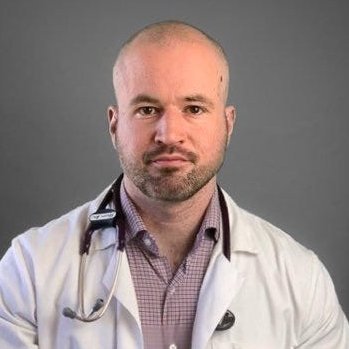
Bryan Johnson doesn’t understand that this picture and this post are related. He asked for help from people working on T-cells. Here it is: There are strong reasons to believe that inadequate sun exposure is a major factor in the modern increase in autoimmune disease: Low vitamin D is associated with autoimmunity but supplementing it doesn’t reverse it. There is a clear latitudinal gradient for many autoimmune diseases. We use UV light to treat T cell driven immune diseases like eczema, psoriasis, vitiligo and a cancer of T-cells called CTCL. We literally take your blood out of your body, expose the T cells to UV light then put them back in as a treatment for graft-vs-host-disease (GVHD) and CTCL. So, eczema, psoriasis, vitiligo, GVHD and CTCL are all T cell diseases that UV light treats. Multiple sclerosis, type 1 diabetes and rheumatoid arthritis are all T-cell diseases that are less common in people who get more sunlight. UV exposure actively generates regulatory T and B cells that protect against autoimmune disease. Autoimmune gastritis is a T-cell disease. I’ll admit that there is no direct evidence showing increasing UV reduces the incidence of autoimmune gastritis. It’s never been studied, so there can’t be. But the chain of reasoning linking the evidence we have about autoimmune disease and UV exposure to autoimmune gastritis being related to inadequate UV exposure is strong. Not to mention the even stronger evidence that UV exposure releases nitric oxide from the skin, driving a substantial reduction in cardiovascular mortality. My advice to Bryan (and everyone else) would be to skip experimental, expensive, unproven stuff and just get as much non-burning sun exposure as you can on a consistent basis. I know it’s boring. But it’s also free, natural and has an enormous body of science behind it. And I know what you’re thinking: SKIN CANCER!!!! Yes, sun exposure increases your risk of skin cancer. But the consistent, non-burning exposure I’m talking about does not increase your risk of dying from melanoma or other skin cancers. That’s the intermittent, blistering-sunburn pattern. In fact, farmers and other outdoor workers are less likely to die of skin cancer than indoor workers. The benefits (less autoimmune disease, less cardiovascular disease, less neurological disease) far outweigh the hassle and scars from seeing a dermatologist once or twice a year. But, but, but photoaging? Yes, sun causes wrinkles and makes your skin look older. But would you rather be a little wrinkled and scarred at your 90th birthday, healthy and surrounded by your family? Or look great at 70 and not make it to 80?
Matthew Zirwas, MD tweet media
Bryan Johnson@bryan_johnson

Bad news #1: I have an autoimmune disease. My stomach is eating itself. Bad news #2: 2–5% of people have this, too. Likely more, because it hides. Good news: I'm going to try and solve it. Will share all. As a kid, I ate sugar cereal, drank sugary soda, and gobbled down fast food. I had a few healthy years in my early 20s but then became a young father of three and began building a business. Juggling that stress and grind, I let my health slip and gained 40 lbs. Within a few years I’d fallen into a deep, chronic depression. Somewhere in that timeline, my body began developing an autoimmune process affecting my thyroid and then my stomach lining. It’s called Autoimmune Gastritis (AIG). My hypothyroidism got diagnosed when I was 21 years old with a routine blood draw. That enabled me to begin proactive management, supplementing levothyroxine and Armour Thyroid. They are the hormones my body should be producing on its own but wasn’t. By taking these pills daily, my body was able to operate as though my thyroid was functioning properly. What I didn’t know was that something else was going on inside my body: my stomach had begun attacking itself. But there was no routine test to find out and I didn’t have any symptoms. I just discovered it in May. I'm unsure how long I've had it. AIG causes irreversible damage: nutritional deficiency, anemia, and over a long horizon, elevated cancer risk. When AIG is discovered today, standard medical care concedes defeat, stating that nothing can be done except managing the condition, no matter how awful or lethal the effects. Looking back over the past few years, I can now see the early signals we were picking up in measurement but hadn’t connected the dots. For 11 years, I’ve had low ferritin, without anemia. We continually tried to raise my iron levels with food and supplementation but nothing would work. We chased the obvious solutions first. A plant-based diet means all my iron is the hard-to-absorb, non-heme kind. Hard training, sauna, and hyperbaric oxygen all raise the body's demand for iron. But none of them explained the core failure: despite me taking iron orally, trialing every formulation, and using every timing trick, none of the iron would stick. What I didn’t fully appreciate until recently is how many stones my previous providers had left unturned. The low ferritin kept getting explained away but not fixed. I overhauled my medical team earlier this year. It was the rebuild to lay the groundwork for Immortals Care, our $1M a year protocol. With greater capacity, we revisited everything. On the surface, my low ferritin was easy to dismiss by most standards of care. My hemoglobin and hematocrit were normal. Ferritin measures stored iron, while hemoglobin measures circulating iron, and because the body drains its reserves first to keep hemoglobin normal, you can be fully iron deficient with a perfectly normal hemoglobin and hematocrit. This is why my low ferritin kept getting dismissed: the numbers that define anemia looked fine, so no one asked why my iron reserves wouldn't refill. My team pressed on that question. They first turned to a colonoscopy. I was 48 years old and overdue. It was good health hygiene to have while also serving a specific purpose of searching for a hidden source of blood loss such as a polyp or even cancer in my bowels. Either one of those would be an explanation of why the iron kept disappearing. At the same time, they began connecting the dots. Iron absorption depends on stomach acid, so one theory was that my stomach acid was disrupted. They also knew that thyroid and stomach autoimmunity often travel together, so often that the pairing has a name: thyrogastric syndrome. Put against my 27+ year history of autoimmune thyroid disease, the pieces pointed to a single hypothesis: my own immune system was attacking my stomach. To our surprise, my colonoscopy came back clean. A perfectly healthy colon, better than 95% of colonoscopies of men, according to the gastroenterologist. That ruled out the first concern and worst possible outcome: slow continuous bleeding from colon cancer, or pre-cancerous polyp. My team had exercised great foresight though, anticipating this possible outcome. In addition to a colonoscopy, they’d ordered an upper endoscopy to be performed at the same time. The combined procedure is a bi-directional endoscopy. Probes would look at my entire intestinal tract, up from below and down the throat. Additionally, we had several blood biomarkers measured ahead of the procedure to try and pick up on any signals that would give the gastroenterologist guidance for what to look for while doing visual inspections. Fifteen minutes before the procedure, my blood results returned, finding elevated levels of anti-parietal-cells-antibodies (APCA). They came back at roughly five times the upper limit of normal (103, against a ceiling of 20 Units/mL). It was a positive result confirming the suspicion of AIG being the culprit behind my low ferritin, the other type of gastritis, driven by a bacterial infection, was already ruled out, as we knew I am negative to H. pylori. Even before this finding, my team had ordered five biopsies to be taken from three regions of my stomach. The biopsies were the critical piece. Had they not been ordered, the bi-directional endoscopy would have been completed and AIG remained undiagnosed as there were no visual signatures of the condition in my intestines. Two days later, the results of biopsies came in, showing clear signs of early autoimmune gastritis: early atrophy confined to the acid-producing lining, with the rest of the stomach still spared. My team had anticipated this, methodically tracing every line of evidence. We now had a formal diagnosis. I have autoimmune gastritis AIG. My stomach is eating itself. So this was never one problem. It was three, linked to one another: the iron deficiency, the autoimmune gastritis driving it, and the autoimmune thyroid disease alongside it. Iron and thyroid feed each other both ways, low iron impairs the conversion of thyroid hormone into its active form, and an under active thyroid impairs how the body uses iron. Each made the other harder to fix. Autoimmune gastritis affects an estimated 2–5% of people, and likely more, because it hides and is challenging to diagnose. It's usually silent for years, surfacing only once the stomach has atrophied enough to do real damage: iron deficiency first, then B12 deficiency, then anemia from both, and over a long horizon, raised stomach-cancer risk. In one study of people with precancerous gastric lesions, roughly 18% carried the autoimmune antibodies, and only about 1% had ever been diagnosed. And the earliest clue, low ferritin, is the one standard medicine waves through. Low iron stores get normalized and rarely investigated at all when anemia hasn't shown up yet. That blind spot is what hid mine for a decade. The good news: the iron deficiency is now corrected. I received a 1,000 mg Monoferric iron infusion. This was chosen for two reasons after considering multiple formulations. First, it can safely deliver a full dose of iron in a single infusion (1,000 mg), while older options like Venofer require several separate appointments to reach the same total. Second, certain other IV iron formulations can cause a drop in blood phosphate levels, an important mineral for bones and energy. Monoferric is much less likely to do this, which matters given how closely we track long-term metabolic and bone health parameters. As mentioned earlier, current medical standards treat AIG as something to be managed, not resolved. It's worth noting that many of you give me a hard time, inviting me to "live life" and engage in self-destructive behaviors like a "normal person". I'm cool with the playful ribbing. Also, had I not taken care of my health during the past five years, my situation could potentially be very serious. You too may have a lurking health issue that is undiagnosed and could increase in severity from unhealthy life choices, without your knowing. The absence of symptoms is not the presence of health. A gentle nudge that minding your health, no matter your situation in life, is good decision making. My team and I are going to try and solve my AIG. This is how we’re approaching it: First, routine monitoring keeps the disease in view: ferritin and iron, B12, the pepsinogen I/II ratio, gastrin, and chromogranin A. Gastrin is the dial to watch. If it climbs, the disease is advancing, and the risk of gastric neuroendocrine tumors climbs with it. Second, we’re doing advanced characterization of the disease. We’ll do a repeat biopsy to read the immune infiltrate, deep cytokine profiling, and T-cell subset analysis, to see which pathways are actually firing. That testing drives the intervention plan, including the experimental approaches we intend to develop. + If gastrin and chromogranin rise: damp the gastrin drive (netazepide) and tighten endoscopic surveillance. If the profile is Th1 / interferon-driven: target JAK/STAT. + If it's Th17 / IL-17-driven: target IL-17 and STAT3. + If regulatory T cells are failing: rebuild them (low-dose IL-2, induced Tregs). + If it's antibody- and B-cell-driven and antigen-specific: engineered cell therapy (CAAR-T). Which organizes into four tiers, from available today to frontier: Tier 1, now: protect and support; zinc-L-carnosine, and acid replacement (betaine HCl with pepsin) under physician supervision. This is specific to my case and not something to self-prescribe, especially given the cancer-surveillance considerations above. Tier 2, target the signaling , JAK/STAT, GSK-3, IL-17, and damp the gastrin drive (netazepide). Tier 3, reset the cells, induced regulatory T cells (iTregs). Tier 4, frontier: engineered T-cell therapy (CAR-T / CAAR-T), custom AI-designed antibodies, or synthetic proteins, that can specifically seek out inactivate or destroy the rogue immune cells attacking my stomach lining. To be clear: there's no approved cure for autoimmune gastritis today. Medicine treats it as something to manage, not solve. Tiers 2 through 4 are investigational preclinical evidence at best, and in several cases therapies that still have to be built. If you're working on autoimmune gastritis, antigen-specific tolerance, regulatory T cells, or CAAR-T for organ-specific autoimmunity, please reach out. Modern medicine has normalized too many conditions that erode our health, function, and comfort, shrinking the goal to monitoring and management while a cure is rarely even attempted. Most of these verdicts were handed down decades ago, in an era that predates nearly all of our current tech and science, and they have gone largely unchallenged. We want to change that. In the age of AI, multiomics, and custom-built DNA, proteins, and cells, no condition should be presumed incurable simply because no one has yet tried to cure it with today's stack. I’ll end on a personal note. We fill our days mostly on things that are trivial next to what we ultimately care about. We know, deep down, however, that in the noise of it all, health is easily forgotten until it’s the only thing that matters. We spend a fraction of our lives truly sober to the preciousness of life. We feel it when someone we love dies, when a child is born, when we come close to death ourselves, or when a diagnosis marks our limit. In those moments, we are sobered, and the rarity of it all becomes self evident. Imagine the existence we’d build together if that clarity didn’t fade. I wish all of you the very best. Care for yourself, care for others, care for the planet and care for our animal friends. Care for life as it’s the most precious gift there is.

English
103
90
1.2K
173.1K
Arjun Sethi retweetledi
Apple Lamps
Apple Lamps@lamps_apple·
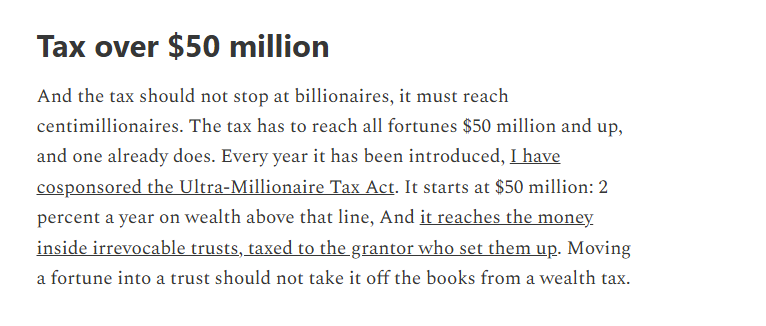
Holy hell, it’s already went from billionaires tax to $50M tax.. Democrats are openly stating their plan to seize wealth from Americans who spent generations building it. They call it “fairness.” It is confiscation. They want to raid private wealth to fund open-border chaos, illegal aliens, dependency, bureaucracy, and the continued decay of the country. Ro Khanna’s own essay starts with billionaires, then quickly expands to fortunes of $50 million and up. That is how every government seizure begins. First they target the people they taught you to resent. Then they work their way down. In any sane country, using the power of the state to loot productive citizens and subsidize national destruction would be treated as a betrayal of the nation itself.
Apple Lamps tweet media
Ro Khanna@RoKhanna

I make the philosophical case for tax fairness and taxing billionaire wealth. I welcome an argument on the merits for this new social contract. Read here: open.substack.com/pub/rokhannaus…

English
251
636
4K
635.6K
Arjun Sethi retweetledi
Chris Martz
Chris Martz@ChrisMartzWX·
On today's date in 1901, over half of the U.S. was at or above 90°F and nearly 9% of the land area was at least 100°F. The same weather occurring this week occurred exactly 125 years ago, but according to most climate alarmists, it was just weather in 1901, but this week's three-day event is undeniable proof that we are facing a climate catastrophe.
Chris Martz tweet media
English
661
6.9K
19.6K
347.1K
Arjun Sethi retweetledi