Andrew Jones

1.1K posts

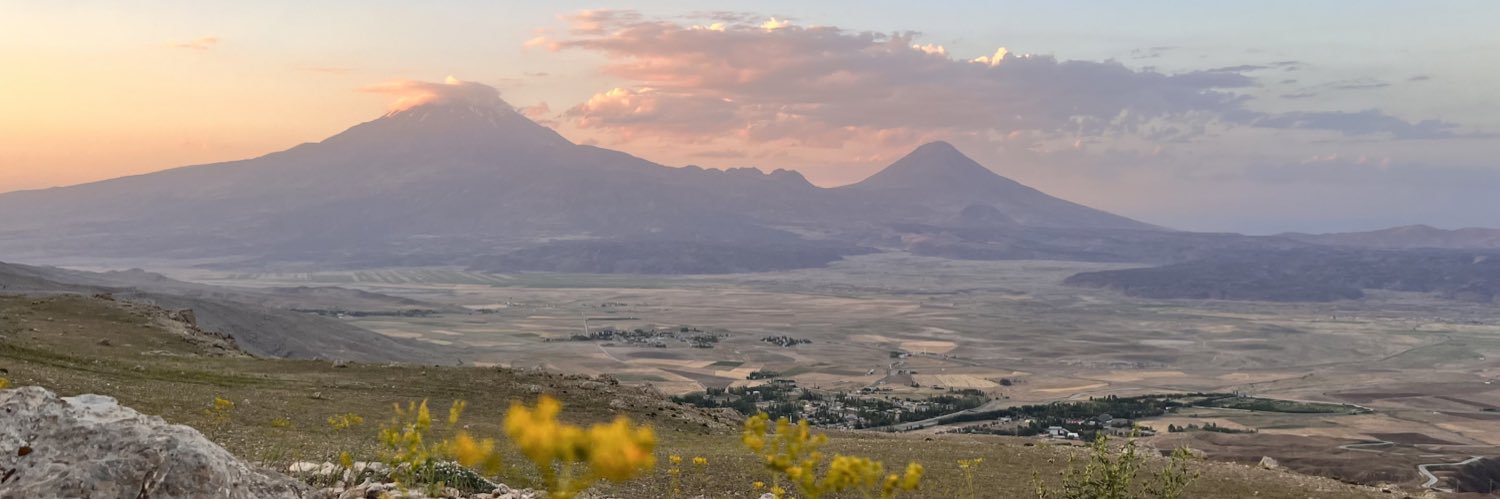
Andrew Jones banner
Andrew Jones

Andrew Jones

@arkeologist

Tour guide, archaeological researcher, explorer, tech geek. Curious of the world I live in but longing for the world to come.

Dogubayazit, Turkey Katılım Ocak 2009
978 Takip Edilen641 Takipçiler
Andrew Jones retweetledi
Noahs Ark Scans
Noahs Ark Scans@noahsarkscans·
Ancient historian Josephus wrote something remarkable nearly 2,000 years ago: “Now all the writers of barbarian histories make mention of this flood, and of this ark…” He goes on to say that remnants of the Ark still remained in Armenia, and that people were carrying pieces of it away. Long before modern documentaries, satellite scans, or archaeological expeditions, the ancient world already treated Noah’s Ark as a real historical event. 
Multiple civilizations preserving memory of the same catastrophe. The world may try to dismiss the flood as myth but ancient history keeps repeating the same story.
English
6
26
203
7.4K
Andrew Jones retweetledi
Noahs Ark Scans
Noahs Ark Scans@noahsarkscans·
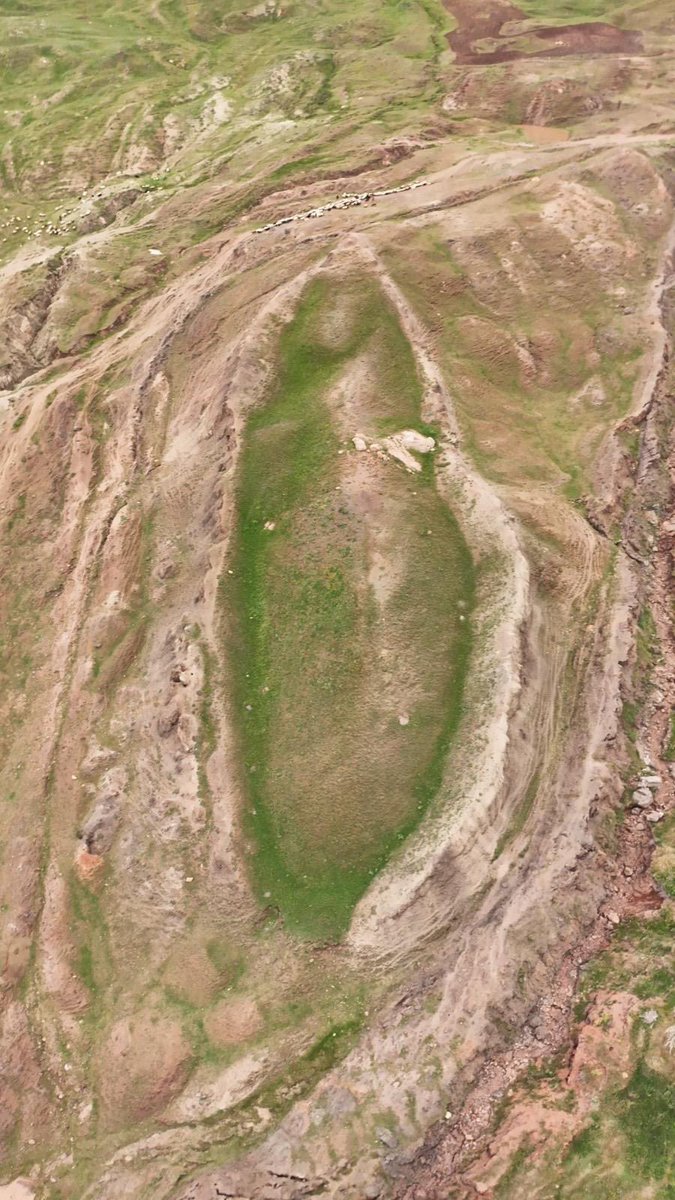
Could this be Noah’s Ark? Inside this massive boat formation in the Turkish mountains, the soil has far more organic matter, potassium, and lower alkalinity — a pattern that may be consistent with ancient decayed wood.
Noahs Ark Scans tweet media
English
26
38
284
5.2K
Andrew Jones retweetledi
Noahs Ark Scans
Noahs Ark Scans@noahsarkscans·
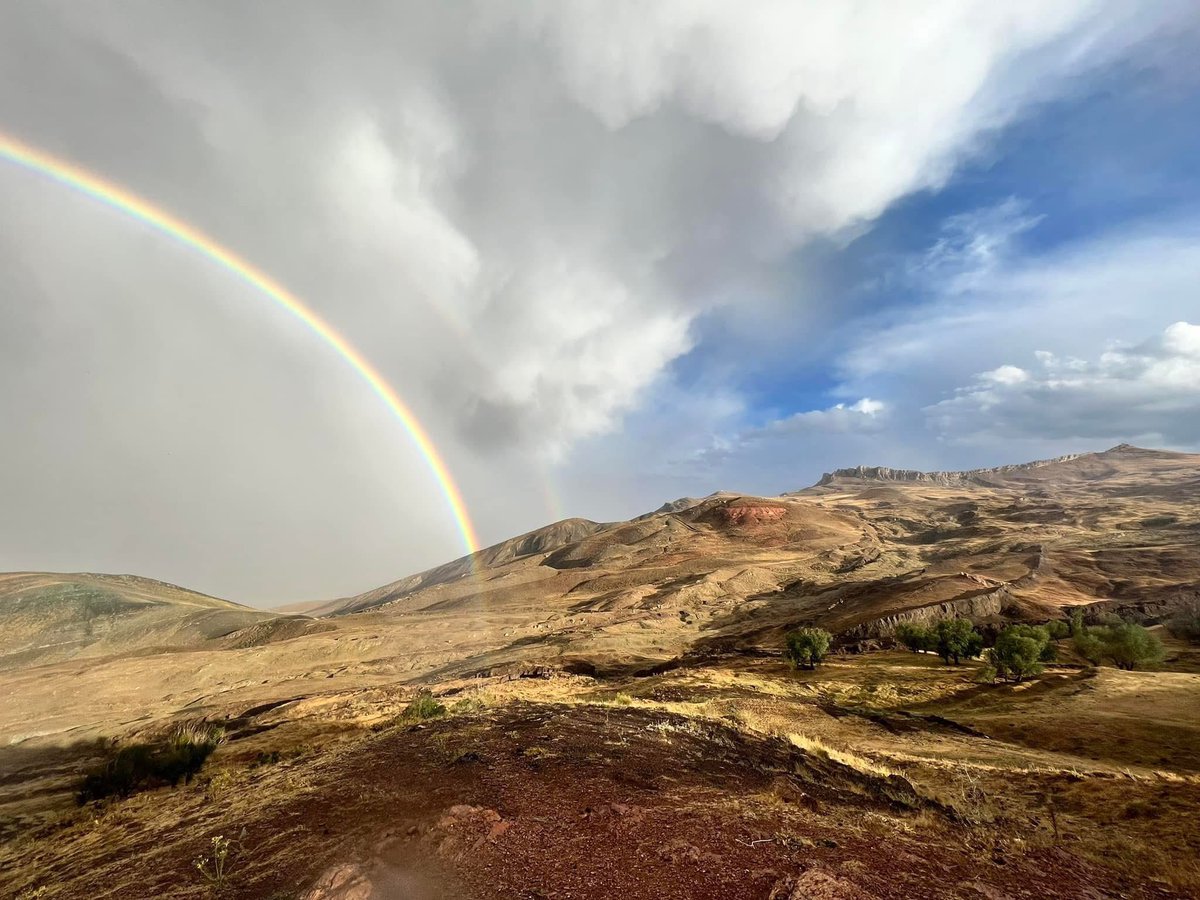
“I set My rainbow in the cloud, and it shall be for the sign of the covenant between Me and the earth.” - Genesis 9:13
Noahs Ark Scans tweet media
English
2
24
168
2K
Andrew Jones retweetledi
Bill Crabtree
Bill Crabtree@NoTillBill·
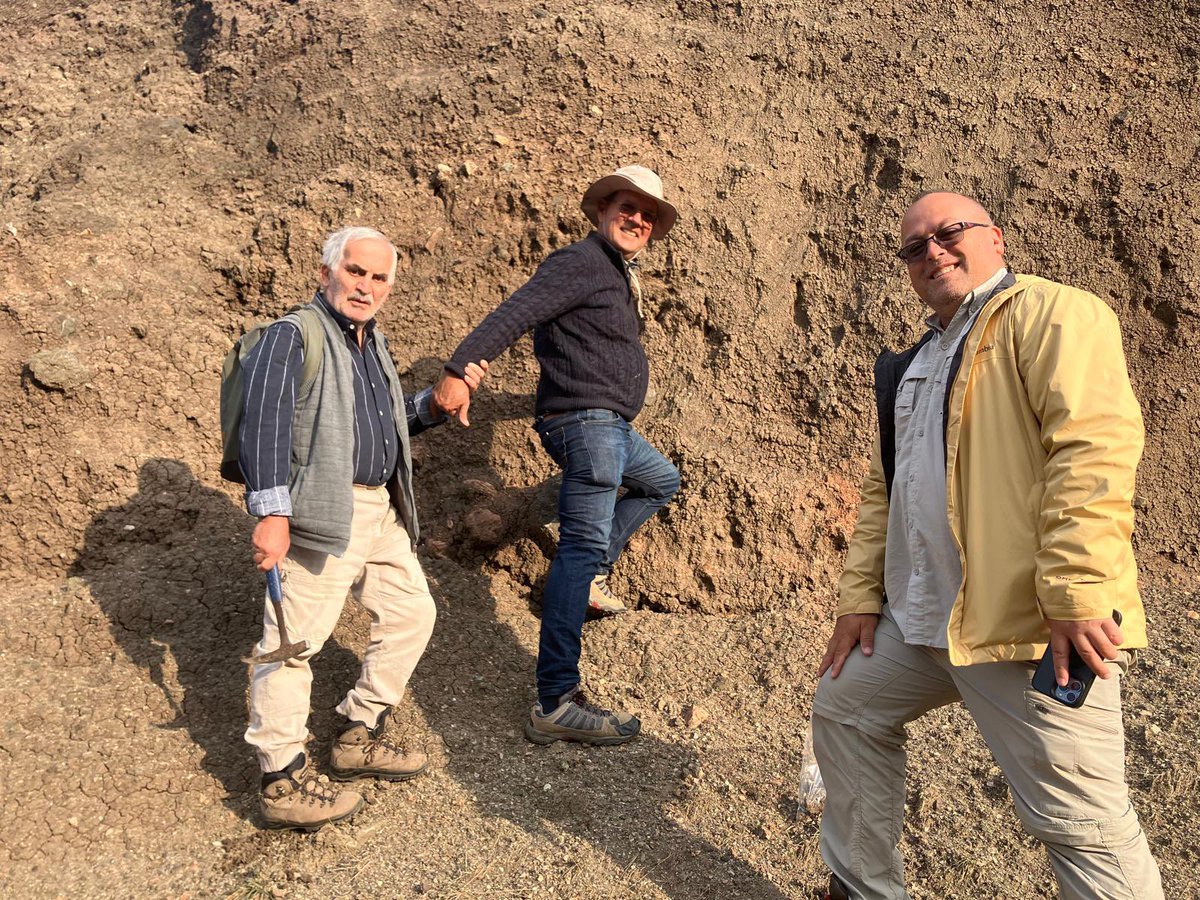
Here we are standing beside the boat shaped object some 6,300 feet above sea level with the Muslim Geological Prof & Andrew - a memory I will always treasure. Slippery soil surrounding us. facebook.com/share/v/1EgqSG…
Bill Crabtree tweet media
English
1
1
5
560
Andrew Jones retweetledi
TopShagger
TopShagger@Plentyshit·
😻
QME
14
668
4.5K
146.9K
Andrew Jones retweetledi
Noahs Ark Scans
Noahs Ark Scans@noahsarkscans·
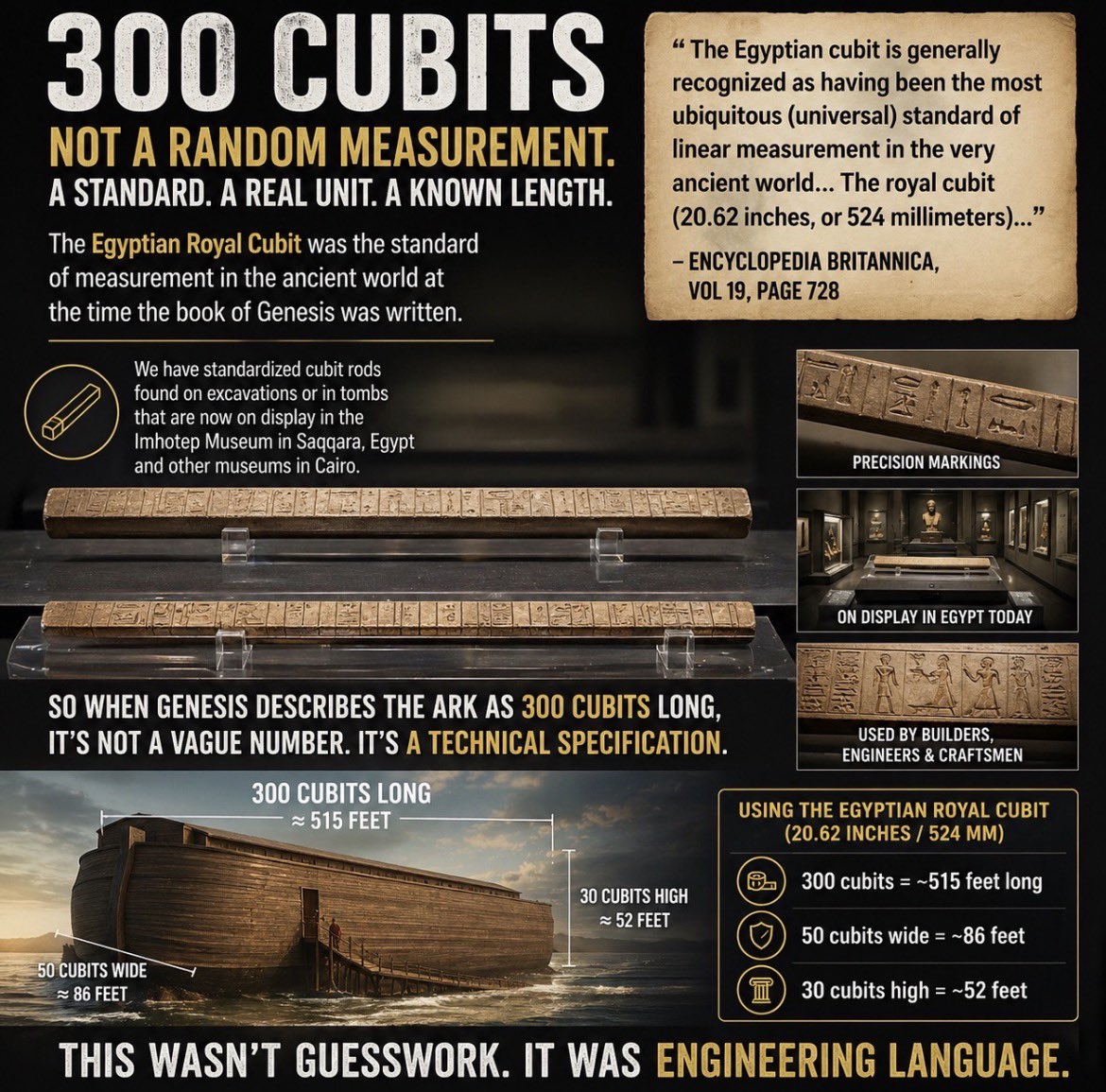
The Bible says the Ark came to rest on the mountains of Ararat—a region, not a single peak. That region was ancient Urartu/Ararat The Durupinar site sits right there: • Same region • Same length (~515 ft) • Boat-shaped formation
English
4
45
409
9K
Andrew Jones retweetledi
Archaeology Magazine
Archaeology Magazine@archaeologymag·
On his return from the Indus Valley, Alexander the Great founded a grand city called Alexandria on the Tigris. But it was abandoned, and even its location was lost. Archaeologists in Iraq, however, made a major discovery this year … archaeology.org/issues/may-jun…
Archaeology Magazine tweet media
English
6
79
382
16.3K
Andrew Jones retweetledi
Noahs Ark Scans
Noahs Ark Scans@noahsarkscans·
It’s not the same dirt! The soil above and inside the Ark is very different, and we can prove it. 2024 Turkish lab tests found nearly 3 times more organic material (carbon) inside the formation than in the surrounding mud. The soil’s test results are consistent with ancient decayed wood and biological remains.
Noahs Ark Scans tweet media
English
27
125
932
21K
Andrew Jones retweetledi
T.C. Schmidt
T.C. Schmidt@ProfTCSchmidt·
Huge discovery! A team has recovered 42 pages from one of the earliest New Testament manuscripts: Codex H (015) of the 6th century. The team used multispectral imaging to decipher the letter tracings of now lost pages impressed on remaining pages. gla.ac.uk/news/headline_…
English
1
19
76
3.3K
Andrew Jones retweetledi
la hora de opinar ⋆˙⟡
Por eso la importancia de darles juguetes didácticos, esos de formas que meten en un cubo cuando son pequeños.
Español
2.8K
31.1K
284.6K
7.2M
Andrew Jones retweetledi
Noahs Ark Scans
Noahs Ark Scans@noahsarkscans·
The discovered resting place of Noah’s Ark isn’t just in the exact region the Bible describes—it also matches its dimensions. The massive impression left behind measures about 515 feet long… precisely the length given in Genesis.
Noahs Ark Scans tweet media
English
6
54
306
5K
Andrew Jones retweetledi
Google Earth
Google Earth@googleearth·
Today, we’re thrilled to announce the launch of Shapefile and 3D model import support on Google Earth. Plus, we’ve also added elevation profiles to the measure tool just for… good measure! goo.gle/4w1MPC0 You’ve made it clear. You want to be able to bring more of your data and models to Google Earth’s real-world canvas. We're excited to take the next step in delivering on that promise with these new features: 🔶 Shapefiles (SHP): Render industry-standard geospatial data as performant, cloud-native layers. 💡 3D Models (GLB): Place custom architectural mock-ups, massings, and more in a visually rich context. 🗻 Elevation Profiles: View detailed terrain data in the measure tool you already know and love. These new features are live now on Google Earth!
English
72
437
3.6K
317.2K
Andrew Jones retweetledi
Noahs Ark Scans
Noahs Ark Scans@noahsarkscans·
We are the guardians of the remains of Noah’s Ark in the Mountains of Ararat. …But don’t just take our word for it. Here is what the experts are saying and have said about the Durupinar Formation:
English
3
18
170
5.1K
Andrew Jones
Andrew Jones@arkeologist·
@NoTillBill My new laptop arrives Friday in Turkey finally so the next week I’ll be able to start editing that video.
English
0
0
0
10
Wes Huff
Wes Huff@WesleyLHuff·
So this whole Noah’s Ark discovery… yah it’s not legit. If we could deal with reality for just a moment and suspend what a lot of people *want* to be true rather than what is true — pretty much everything about the facts coming out of this story are embroiled in sensationalism and non-credible archeology. I believe there was a Noah and an Ark. But the formation in the Anatolian Mountains is almost certainly not the remains of that.
English
494
238
4K
569.7K
Andrew Jones retweetledi
Noahs Ark Scans
Noahs Ark Scans@noahsarkscans·
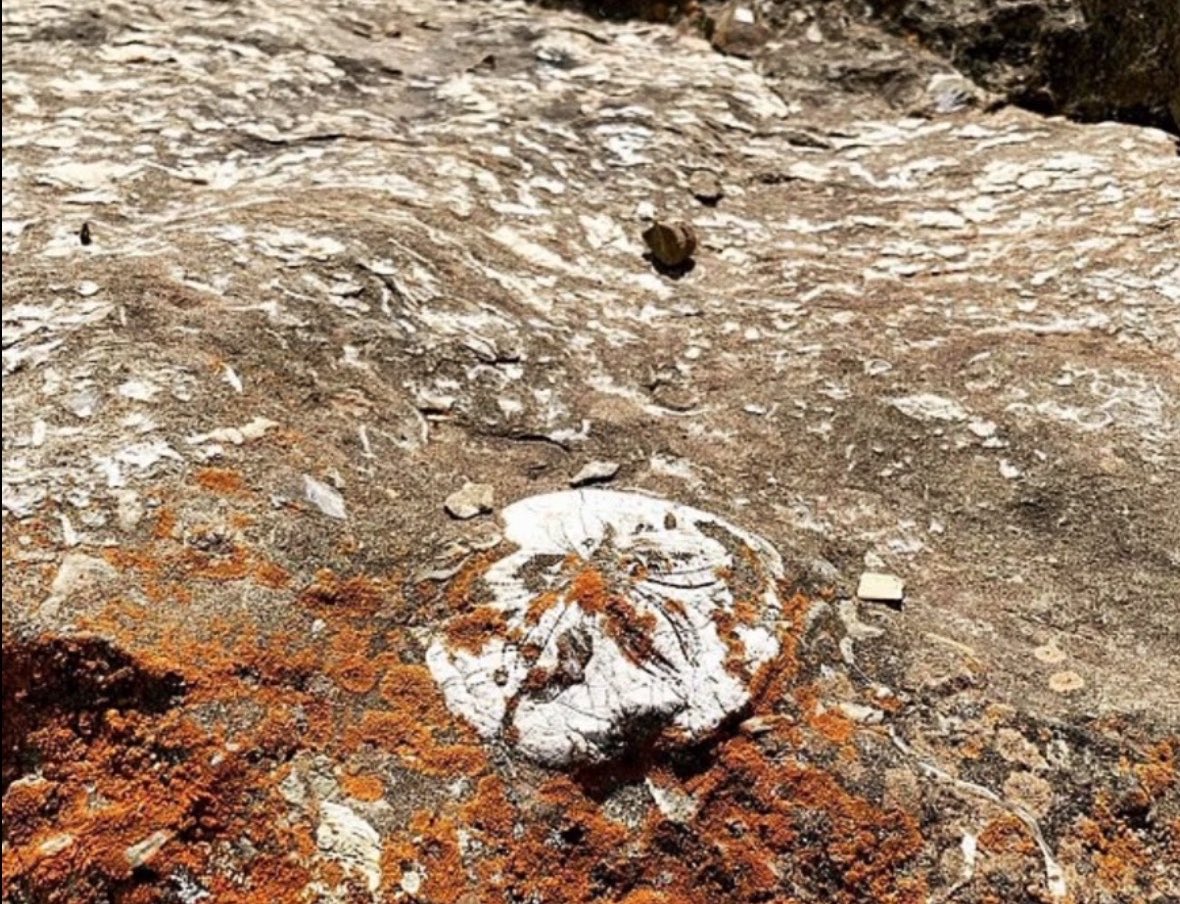
“The team said their discoveries go beyond isolated shells, pointing instead to extensive layers of marine fossils high in the mountains, many of which appear to show signs of rapid burial rather than slow sediment buildup.” Researchers with Noah's Ark Scans believe the physical evidence, particularly the sheer volume and elevation of these fossils, points toward a much more recent and violent aqueous event that reshaped this entire region” - Andrew Jones Thank you to The Daily Mail for covering our exciting Marine Fossil Findings at the site where Noah’s Ark rests.
Noahs Ark Scans tweet media
Daily Mail US@Daily_MailUS

Noah's Ark investigation intensifies with shock 'Great Flood' discovery in ancient mountains

English
7
53
354
10.9K
Andrew Jones retweetledi
Archaeo - Histories
Archaeo - Histories@archeohistories·
A large collection of ancient Greek, bronze Corinthian helmets from the classical period kept in the storeroom of the Archaeological Museum of Olympia in Greece... 🇬🇷 Corinthian helmet originated in ancient Greece and took its name from city-state of Corinth. It was a helmet made of bronze which in its later styles covered the entire head and neck, with slits for the eyes and mouth. A large curved projection protected the nape of the neck. Out of combat, a Greek hoplite would wear the helmet tipped upward for comfort. This practice gave rise to a series of variant forms in Italy, where the slits were almost closed, since the helmet was no longer pulled over the face but worn cap-like. Although the classical Corinthian helmet fell out of use among the Greeks in favour of more open types, Italo-Corinthian types remained in use until 1st Century AD, being used, among others, by  Roman army. Apparently (judging from artistic and archaeological evidence) the most popular helmet during the Archaic and early Classical periods, style gradually gave way to more open Thracian helmet, Chalcidian helmet and the much simpler pilos type, which was less expensive to manufacture and did not obstruct the wearer's critical senses of vision and hearing as the Corinthian helmet did. Numerous examples of Corinthian helmets have been excavated and they are frequently depicted on ancient Greek pottery. Corinthian helmet was depicted on more sculpture than any other helmet; it seems the Greeks romantically associated it with glory and the past. Romans also revered it, from copies of Greek originals to sculpture of their own. Based on the sparse pictorial evidence of the republican Roman army, in Italy the Corinthian helmet evolved into a jockey-cap style helmet called the Italo-Corinthian, Etrusco-Corinthian or Apulo-Corinthian helmet, with the characteristic nose guard and eye slits becoming mere decorations on its face. Given many Roman appropriations of ancient Greek ideas, this change was probably inspired by the "over the forehead" position common in Greek art. This helmet remained in use well into 1st Century AD. Herodotus mentions Corinthian helmet in his Histories when writing of Machlyes and Auseans, two tribes living along the River Triton in ancient Libya (portion of ancient Libya he describes is most likely in modern Tunisia). The tribes chose annually two teams of the fairest maidens who fought each other with sticks and stones. They chose the fairest maiden who was dressed in Greek panoply with a Corinthian helmet. The ritual fight was part of a festival honoring virgin goddess Athena. (Histories, 4.180). #archaeohistories
Archaeo - Histories tweet media
English
17
270
1.9K
55.1K
Andrew Jones retweetledi
Yadong Xie
Yadong Xie@yadong_xie·
很多人好奇这个画布下钻效果是怎么实现的 spec 在这里,大家可以拿回去找自己的 AI agent 加工 github.com/vthinkxie/illu…
中文
16
70
581
48.3K