Arman Seyed-Ahmadi

27 posts

Arman Seyed-Ahmadi

Arman Seyed-Ahmadi

@arman1sa

AI/ML for CompBio @UHNAIHUB Previously @Genentech | PhD @UBC

Toronto, Canada Katılım Nisan 2025
79 Takip Edilen74 Takipçiler
Sabitlenmiş Tweet
Arman Seyed-Ahmadi
Arman Seyed-Ahmadi@arman1sa·
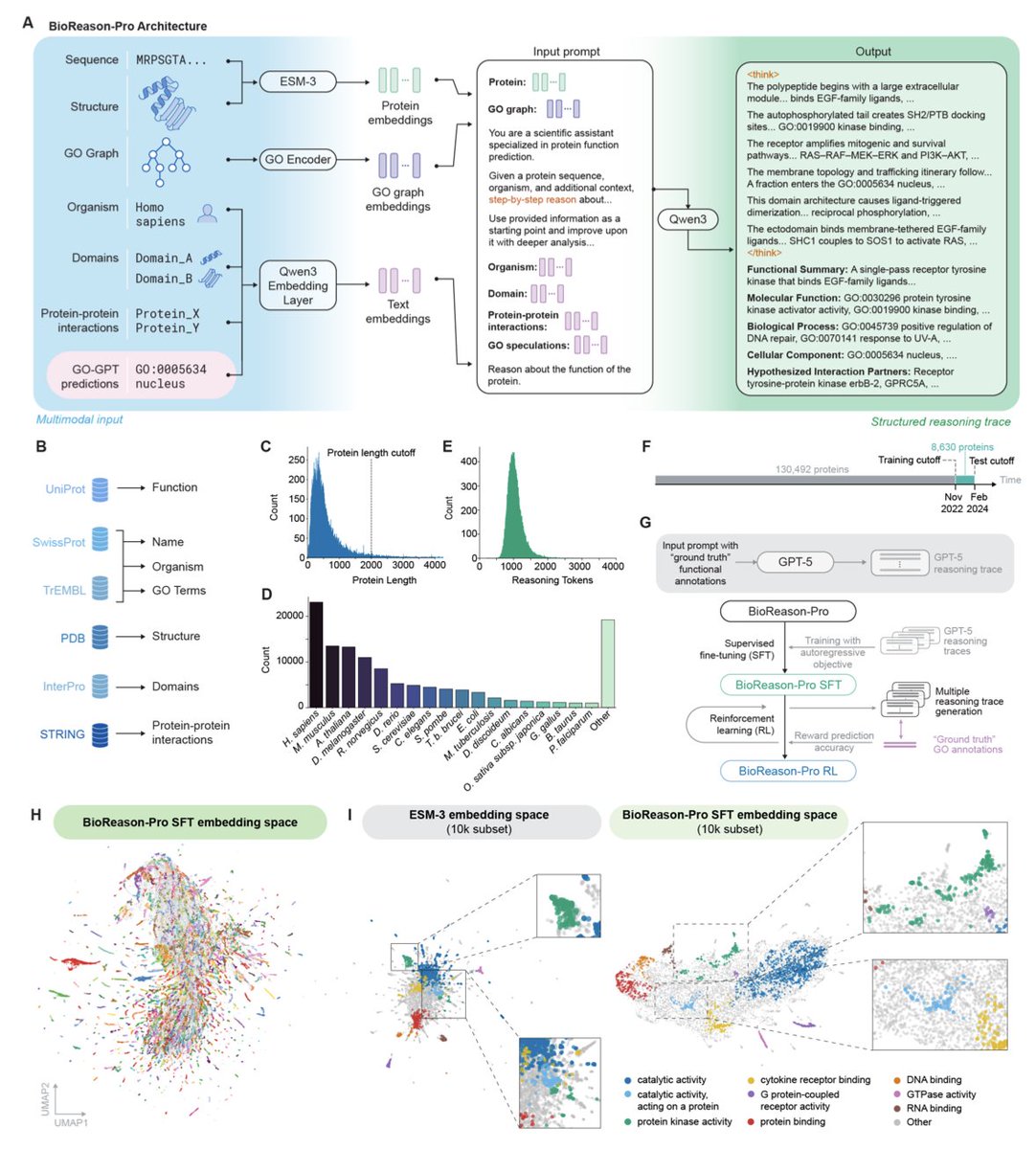
What if AI could explain why a protein is a kinase, not just tell you it is? We built just that. BioReason-Pro is a multimodal LLM that reasons about protein function — walking through domains, interactions, and biological context to make predictions you can actually evaluate.
English
3
9
54
7.5K
Arman Seyed-Ahmadi retweetledi
Hani Goodarzi
Hani Goodarzi@genophoria·
@anshulkundaje articulates something the AI-for-biology practitioners (or AI-for-science for that matter) need to hear more: we are far from a stage that scale alone solves biology. Deep domain expertise and principled interpretation (as opposed to cherry-picking of results) is how we actually make progress. There's too much hubris right now in assuming one can brute-force their way through biological complexity without understanding it.
Anshul Kundaje@anshulkundaje

Great to see 2 fabulous papers using model interpretation methods developed in our lab for deep learning models of regulatory DNA being to reveal causal mechanistic role of sequence syntax mediated TF binding, methylation & histone variants in stem cell memory of inflammation 1/

English
0
13
92
5.8K
Arman Seyed-Ahmadi retweetledi
Abhinav Adduri
Abhinav Adduri@abhinadduri·
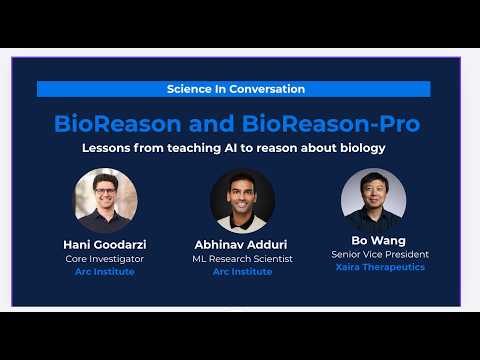
We @arcinstitute, @UHN, and @VectorInst recently released out BioReason-Pro, a multimodal reasoning LLM for protein function prediction, trained via SFT on synthetic reasoning traces and subsequent RL. I had a chance to interview @BoWang87 and @genophoria on their vision for the work and what comes next. Was fun to pick their brains on the bio! Check out the interview: youtube.com/watch?v=uZx3nU…
YouTube video
YouTube
English
2
12
78
14.5K
Arman Seyed-Ahmadi retweetledi
Matthew Sdorf
Matthew Sdorf@MSdorf9980·
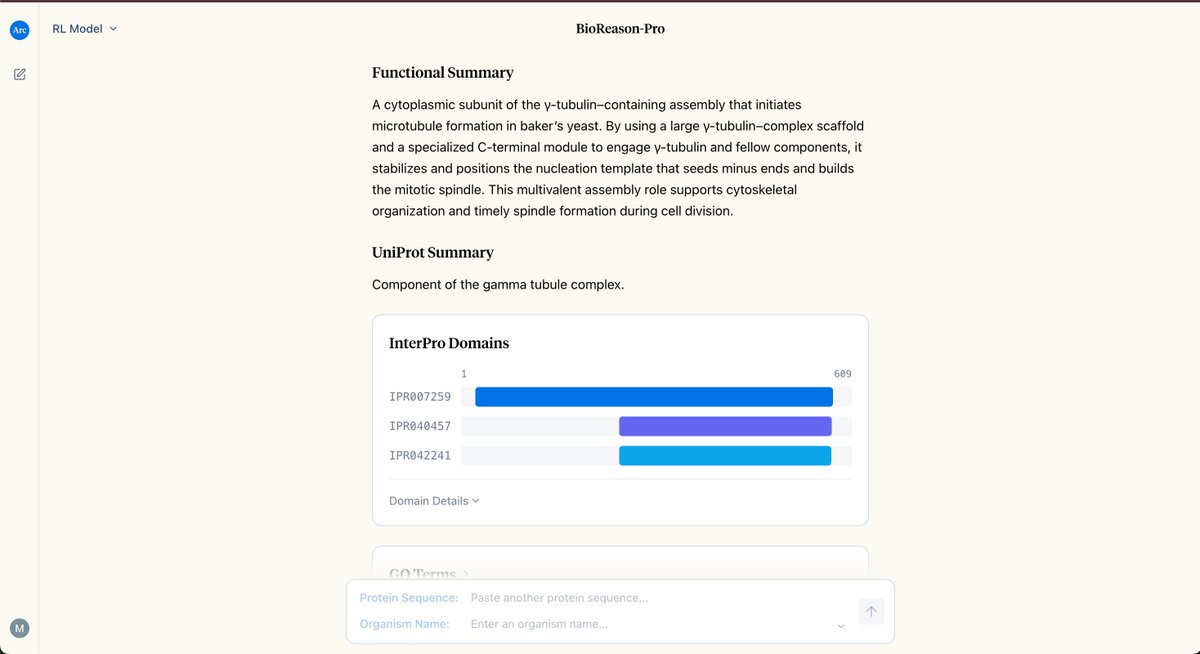
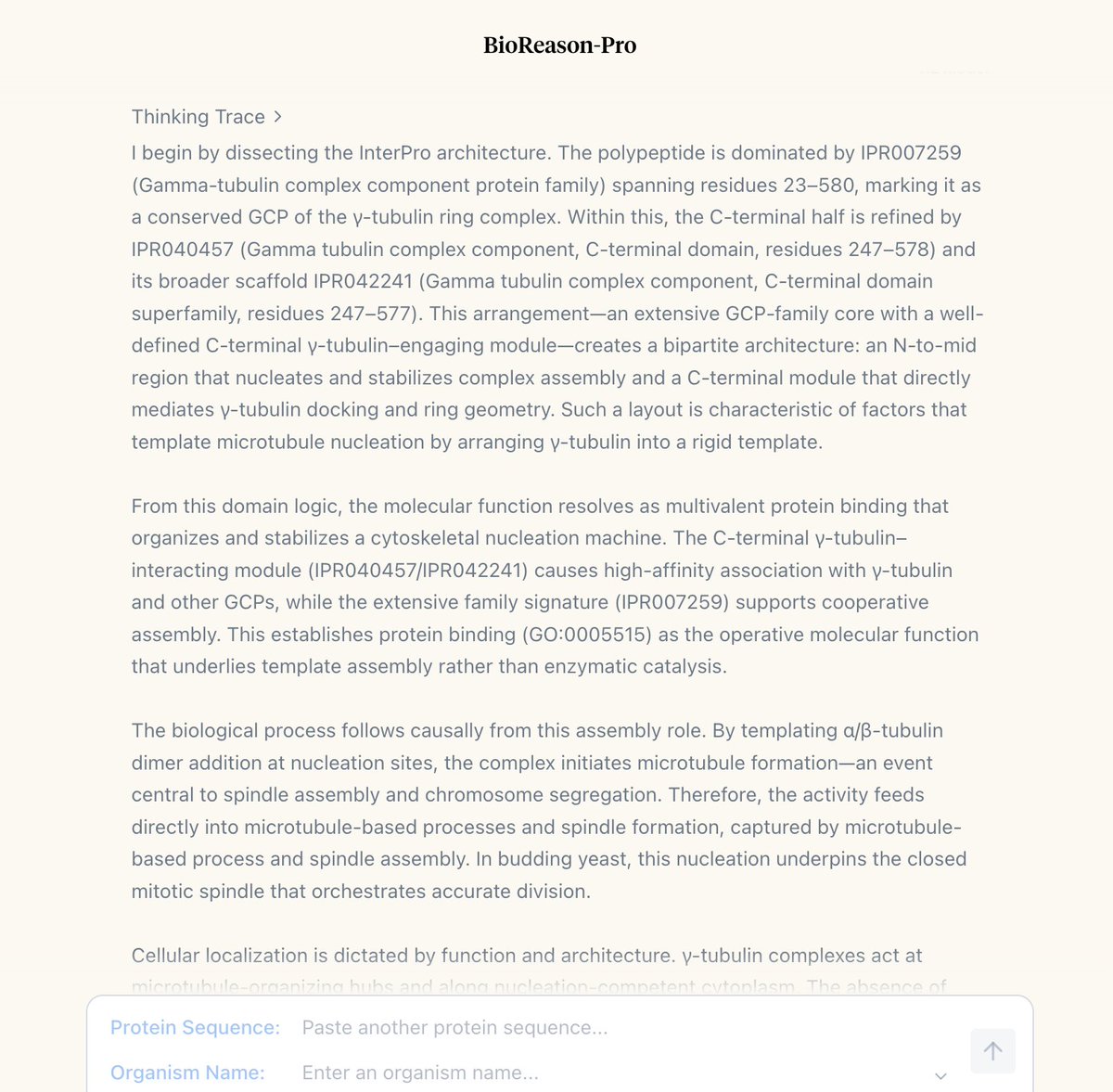
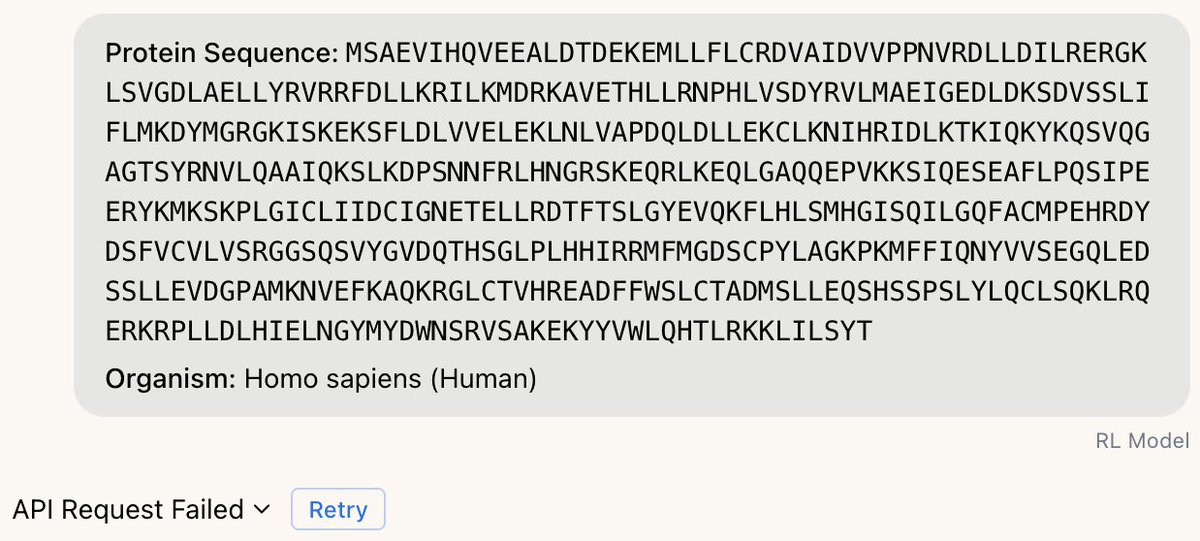
I just used BioReason-Pro on a gene I am subcloning and was quite impressed. The processing time is reasonable, and the results appear accurate. That said, the functional summary could be expanded to provide more depth and context. In addition, the GO-GPT predictions section would benefit from clearer guidance and more informative explanations. Still, amazing work! Congratulations to @BoWang87 @genophoria @arcinstitute. I plan to use more in my future research.
Matthew Sdorf tweet mediaMatthew Sdorf tweet mediaMatthew Sdorf tweet mediaMatthew Sdorf tweet media
English
2
9
29
9.4K
Arman Seyed-Ahmadi retweetledi
Helen Qu
Helen Qu@_helenqu·
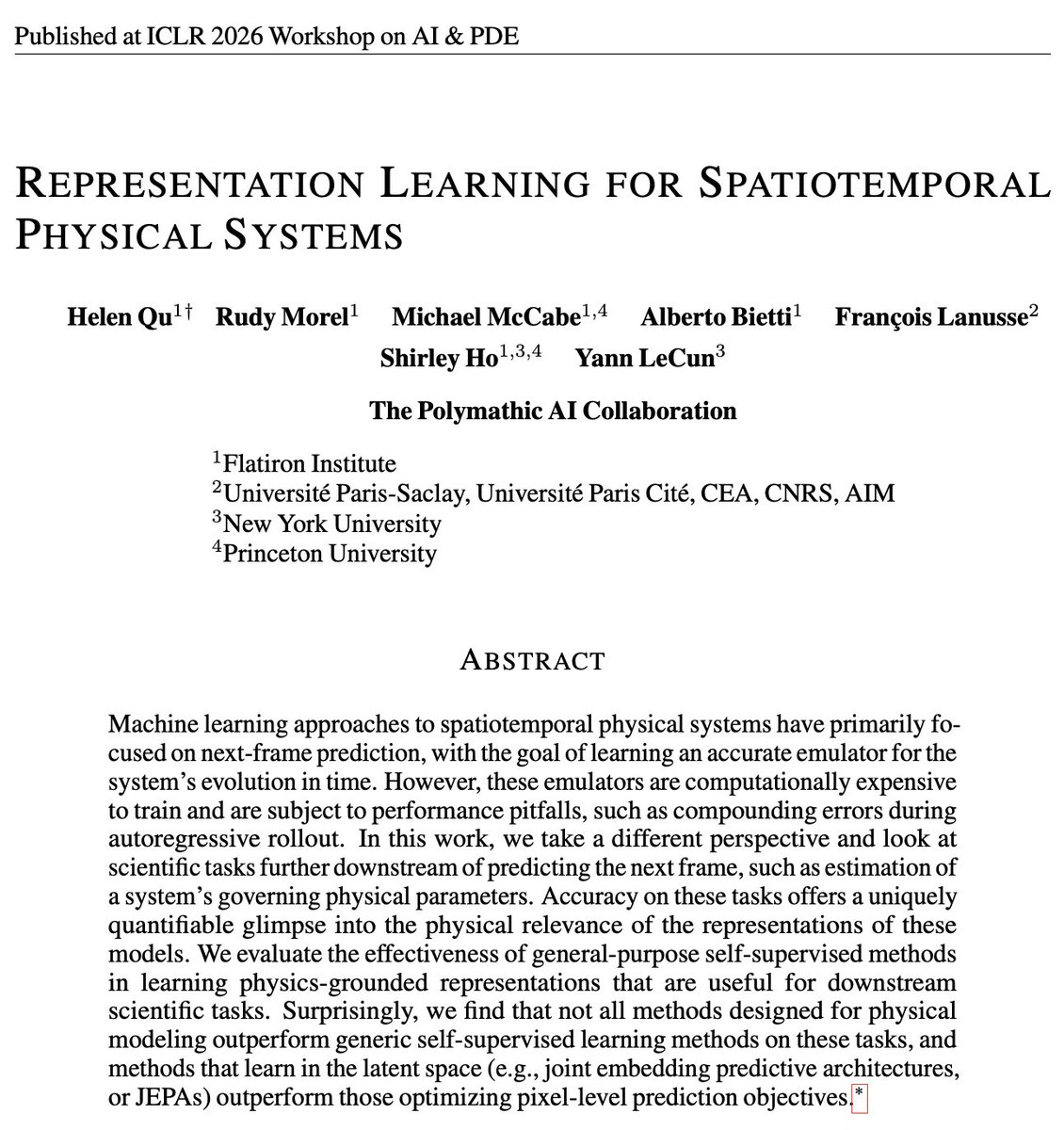
physical systems (orbits/fluid mechanics) may look complex, but are often governed by simple equations/few parameters. can current self-supervised methods learn the underlying physics? our new paper finds that learning in latent space may be the key! arxiv.org/abs/2603.13227🧵
Helen Qu tweet media
English
25
95
658
54.4K
Arman Seyed-Ahmadi retweetledi
Andrew White 🐦‍⬛
Andrew White 🐦‍⬛@andrewwhite01·
@adibvafa Great project! I've been looking for someone to try this on protein function and your team did a great job!
English
1
2
9
1.5K
Arman Seyed-Ahmadi retweetledi
Biology+AI Daily
Biology+AI Daily@BiologyAIDaily·
BioReason-Pro: Advancing Protein Function Prediction with Multimodal Biological Reasoning @arcinstitute 1. BioReason-Pro introduces the first multimodal reasoning large language model specifically designed for protein function prediction, combining protein embeddings with biological context to generate interpretable reasoning traces rather than just classification labels. 2. The system integrates ESM3 protein embeddings, a GO graph encoder, and biological context including organism, domains, protein-protein interactions, and GO-GPT predictions to perform step-by-step biological reasoning from sequence to function. 3. GO-GPT, a key component, is the first autoregressive transformer for Gene Ontology prediction that captures hierarchical and cross-aspect dependencies between GO terms, achieving state-of-the-art Fwmax of 0.65-0.70 across inference strategies. 4. The model was trained on over 130,000 synthetic reasoning traces generated by GPT-5 and further optimized through reinforcement learning with Group Sequence Policy Optimization, achieving 73.6% Fmax on GO term prediction. 5. Human protein experts preferred BioReason-Pro annotations over ground truth UniProt annotations in 79% of evaluated cases, with an LLM judge score of 8/10 for functional summaries, substantially outperforming previous methods. 6. Remarkably, BioReason-Pro de novo predicted experimentally confirmed binding partners with per-residue attention localizing to exact contact residues resolved in cryo-EM structures, demonstrating genuine structural reasoning capabilities. 7. The model successfully performed structural reasoning that overrode misleading superfamily-level domain annotations, such as correctly identifying CFAP61 as a non-enzymatic scaffold despite its Rossmann-like fold that typically indicates catalytic activity. 8. For eEFSec, BioReason-Pro identified SECIS-binding protein 2 as the obligate functional partner from sequence alone, with attention concentrated on the RIFT domain surface that matches the experimentally resolved SECIS RNA binding interface in PDB 7ZJW. 9. The system maintains strong performance even for proteins with very low sequence similarity to training data, with performance degrading much more slowly than BLAST as sequence identity decreases, indicating learned generalizable reasoning rather than simple homology transfer. 10. All model weights, code, and curated datasets are released publicly, alongside precomputed predictions for over 240,000 proteins including the Human Protein Atlas, enabling broad adoption for functional annotation of uncharacterized proteins. 💻Code: bioreason.net/code 📜Paper: biorxiv.org/content/10.648… #BioReasonPro #ProteinFunction #ComputationalBiology #Bioinformatics #MachineLearning #LLM #GeneOntology #ProteinStructure #FunctionalAnnotation #AIforScience
Biology+AI Daily tweet media
English
1
19
84
5.3K
Arman Seyed-Ahmadi retweetledi
Mehran Karimzadeh
Mehran Karimzadeh@MKarimzade·
1/ A year ago, I was skeptical about LLMs and RL in biology. Today, I’m inspired by the results and the massive potential ahead. Biomedical AI is thriving thanks to both the visionaries imagining and building the future and also those that remind us of the limitations ...
Bo Wang@BoWang87

2026 may be the year AI starts to truly reason about biology. AlphaFold helped close the sequence → structure gap. The next frontier is sequence → functions. Today, together with @genophoria and the team at @arcinstitute , we’re releasing BioReason-Pro — the first multimodal reasoning model for protein function prediction.

English
2
3
18
1.6K
Arman Seyed-Ahmadi
Arman Seyed-Ahmadi@arman1sa·
@GongDennis Thank you for checking it out! There's very high traffic right now and some of the requests might fail🥲 You can find the Catalogue if you scroll down on the home page (we're making a fix so it autoscrolls)
English
1
0
0
60
Dennis Gong
Dennis Gong@GongDennis·
@arman1sa Hey this is cool! I'm trying it out... bioreason.net/atlas still redirects to the homepage so I can't check out some of the human proteins I'm interested in. Also, my query failed for some reason? Thanks!
Dennis Gong tweet media
English
1
0
1
233
Arman Seyed-Ahmadi
Arman Seyed-Ahmadi@arman1sa·
What if AI could explain why a protein is a kinase, not just tell you it is? We built just that. BioReason-Pro is a multimodal LLM that reasons about protein function — walking through domains, interactions, and biological context to make predictions you can actually evaluate.
English
3
9
54
7.5K
Arman Seyed-Ahmadi retweetledi
Adib
Adib@adibvafa·
BioReason-Pro was trained on synthetic reasoning traces from GPT-5. While the coding agent hype train is in full speed, the true impact of LLMs will come in biology. This is the best time to be a Bio AI researcher. You finally have the tools to address humanity's most challenging problems. Today we took the first step by releasing a reasoning model for proteins. Can't wait for what we released in 10 years. Ad vitam!
Adib@adibvafa

Proteins can now talk. Introducing BioReason-Pro, the first reasoning model for protein function. A thread🧵

English
1
13
73
6.6K