Bo Wang

1.8K posts

Bo Wang banner
Bo Wang

Bo Wang

@BoWang87

Associate Prof @UofT | Building first Virtual Cell @Xaira_Thera | AI & Bio & Healthcare | Inventor of scGPT, MedSAM, BioReason | Opinions my own

San Francisco, CA Katılım Eylül 2016
3.1K Takip Edilen27.7K Takipçiler
Sabitlenmiş Tweet
Bo Wang
Bo Wang@BoWang87·
Lots of people are asking when MedSAM 3 drops — and I get it, medical video is the frontier. Trust me, we're working on it around the clock. But medical videos are genuinely in a different difficulty class than natural videos, and here's why: Every modality is its own visual universe. An echocardiogram, a laparoscopic surgical feed, a colonoscopy, and a fluoroscopy video look nothing alike. SAM 3 was trained on the internet — coherent lighting, stable textures, rigid objects. Medical video is speckle noise, specular reflections off wet tissue, instruments occluding anatomy mid-frame, and structures that breathe and beat. The targets deform in non-trivial ways. A heart wall isn't just moving — it's changing shape, thickness, and echogenicity across every frame of a cardiac cycle. A bowel segment in surgical video is being physically manipulated. Tracking these requires understanding physiology, not just visual motion. 3D volumes masquerade as video. CT and MRI "videos" are often slice sweeps through a volume — temporally ordered but spatially 3D. A model that treats them like frames of a scene will fail in subtle, dangerous ways. Annotation is the hardest bottleneck. Natural video annotation can be crowdsourced. Medical video annotation requires clinical experts — radiologists, cardiologists, surgeons — reviewing frame by frame. The data pipeline alone is a multi-year effort. We're not just fine-tuning SAM 3 on medical data. We're rethinking what a medical video foundation model actually needs to know. When it's ready, it'll be worth the wait🙏
AI at Meta@AIatMeta

We’re releasing SAM 3.1: a drop-in update to SAM 3 that introduces object multiplexing to significantly improve video processing efficiency without sacrificing accuracy. We’re sharing this update with the community to help make high-performance applications feasible on smaller, more accessible hardware. 🔗 Model Checkpoint: go.meta.me/8dd321 🔗 Codebase: go.meta.me/b0a9fb

English
3
3
18
2.3K
Rodrigo M.S.
Rodrigo M.S.@r0dms·
@BoWang87 @hectorandradel I'd like to see more prompts and reasoning traces included in research papers. Those are as interesting and valuable as the proof themselves!
English
0
0
5
1.3K
Bo Wang
Bo Wang@BoWang87·
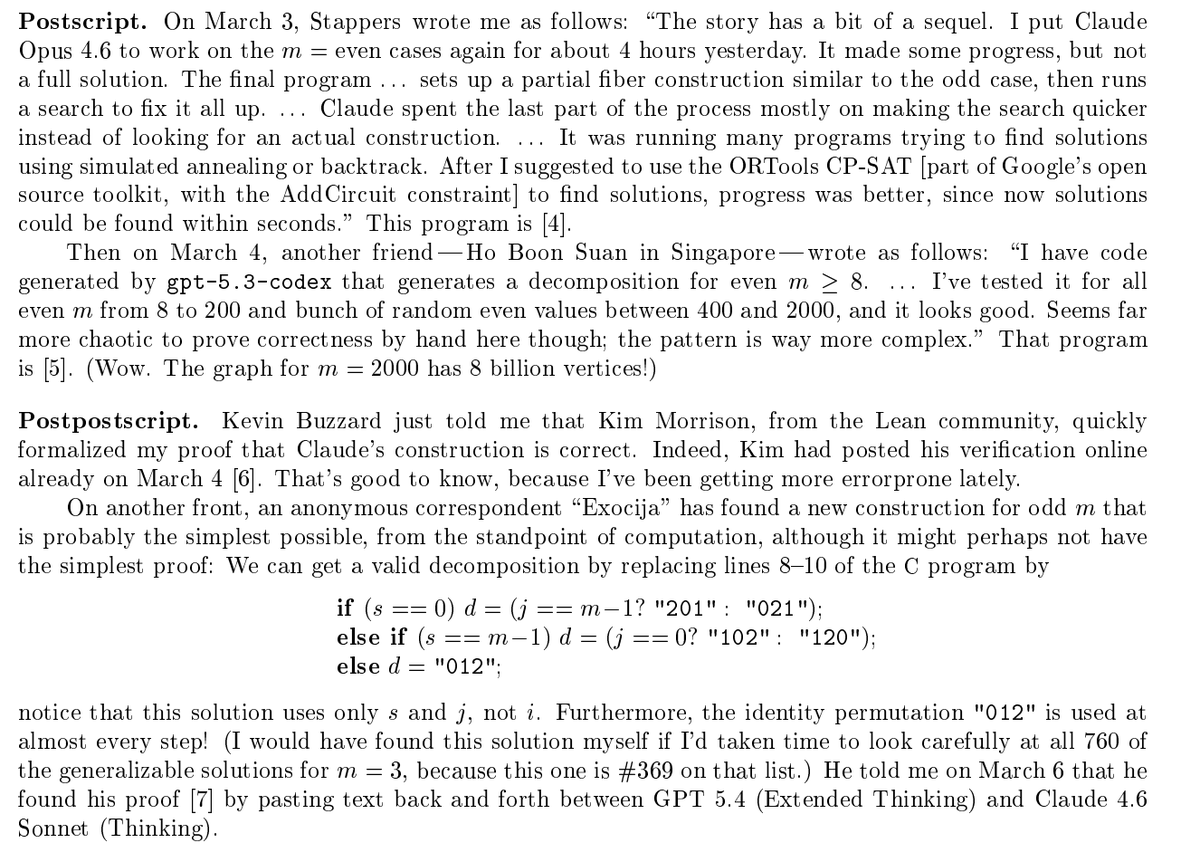
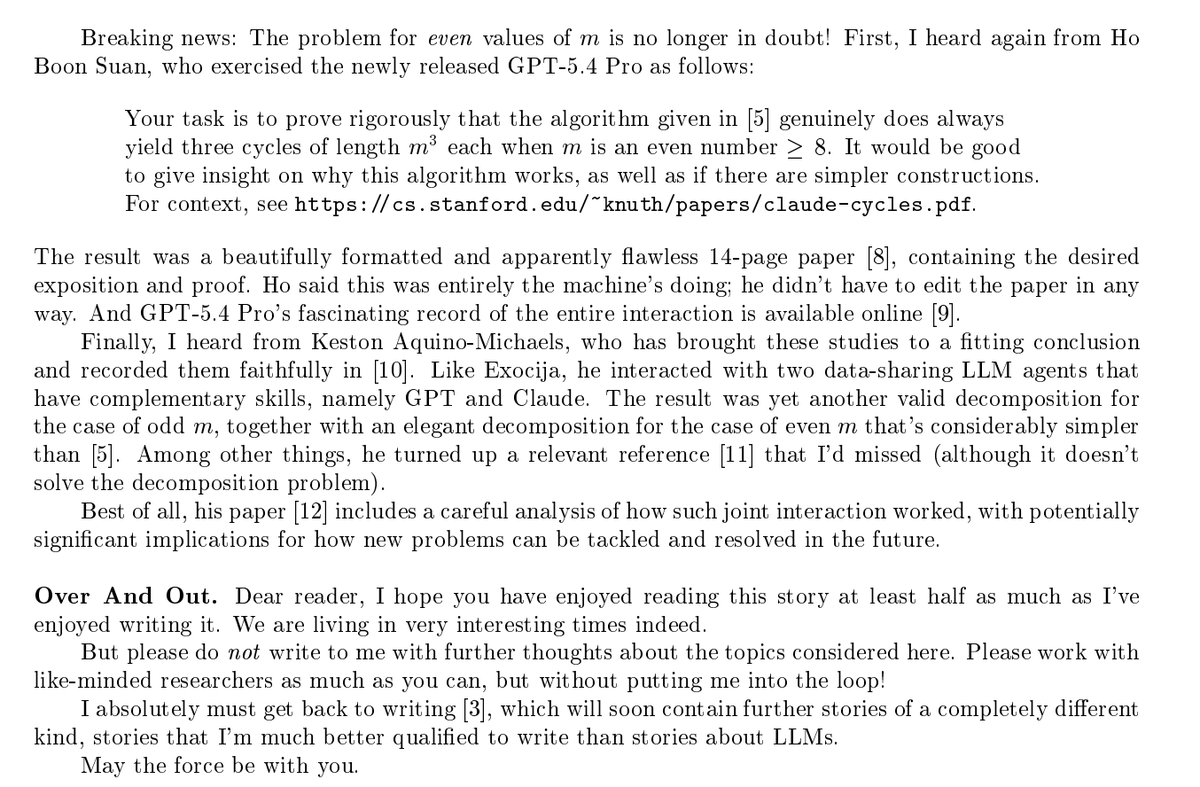
Three weeks ago I shared that Claude had shocked Prof. Donald Knuth by finding an odd-m construction for his open Hamiltonian decomposition problem in about an hour of guided exploration. Prof. Knuth titled the paper Claude’s Cycles. The story didn't end there. The updated paper shows the story got much bigger. For the base case m=3, there are exactly 11,502 Hamiltonian cycles. Of those, 996 generalize to all odd-m, and Prof. Knuth shows there are exactly 760 valid “Claude-like” decompositions in that family. The even case, which Claude couldn’t finish, was then cracked by Dr. Ho Boon Suan using GPT-5.4 Pro to produce a 14-page proof for all even m≥8, with computational checks up to m=2000. Soon after, Dr. Keston Aquino-Michaels used GPT + Claude together to find simpler constructions for both odd and even m, by using the multi-agent workflow. Dr. Kim Morrison also formalized Knuth’s proof of Claude’s odd-case construction in Lean. So yes: the problem now appears fully resolved in the updated paper’s ecosystem of human + AI + proof assistant work! We went from one AI solving one problem to a full mathematical ecosystem (multiple AI systems, multiple humans, formal verification) running in parallel on a problem that stumped experts for weeks. We are living in very interesting times indeed. Paper (updated): www-cs-faculty.stanford.edu/~knuth/papers/…
Bo Wang tweet mediaBo Wang tweet media
Bo Wang@BoWang87

Prof. Donald Knuth opened his new paper with "Shock! Shock!" Claude Opus 4.6 had just solved an open problem he'd been working on for weeks — a graph decomposition conjecture from The Art of Computer Programming. He named the paper "Claude's Cycles." 31 explorations. ~1 hour. Knuth read the output, wrote the formal proof, and closed with: "It seems I'll have to revise my opinions about generative AI one of these days." The man who wrote the bible of computer science just said that. In a paper named after an AI. Paper: cs.stanford.edu/~knuth/papers/…

English
36
208
1.2K
133.4K
Ajay Labade
Ajay Labade@ajaylabade31·
New Lab Alert! 🧬 labadelab.com Thrilled to start the Labade Lab at @AshokaUniv! @TSB_Ashoka @KCDH_A Join us to explore expansion microscopy, nanoscale spatial genomics, and the epigenetics of aging. PhD Program at Ashoka for 2026-27 intake. Apply by 20 April 2026: ashoka.edu.in/programme/phd-… We’re investigating how "inflammaging" alters the epigenome and how to decipher and ultimately reverse those changes. We build new technologies to visualize genome & epigenome changes at the nanoscale and explore ways to make the genome more resilient to aging. #PhD #SpatialGenomics #ExpansionMicroscopy #Inflammaging
Ajay Labade tweet media
English
11
23
115
9.6K
Bo Wang
Bo Wang@BoWang87·
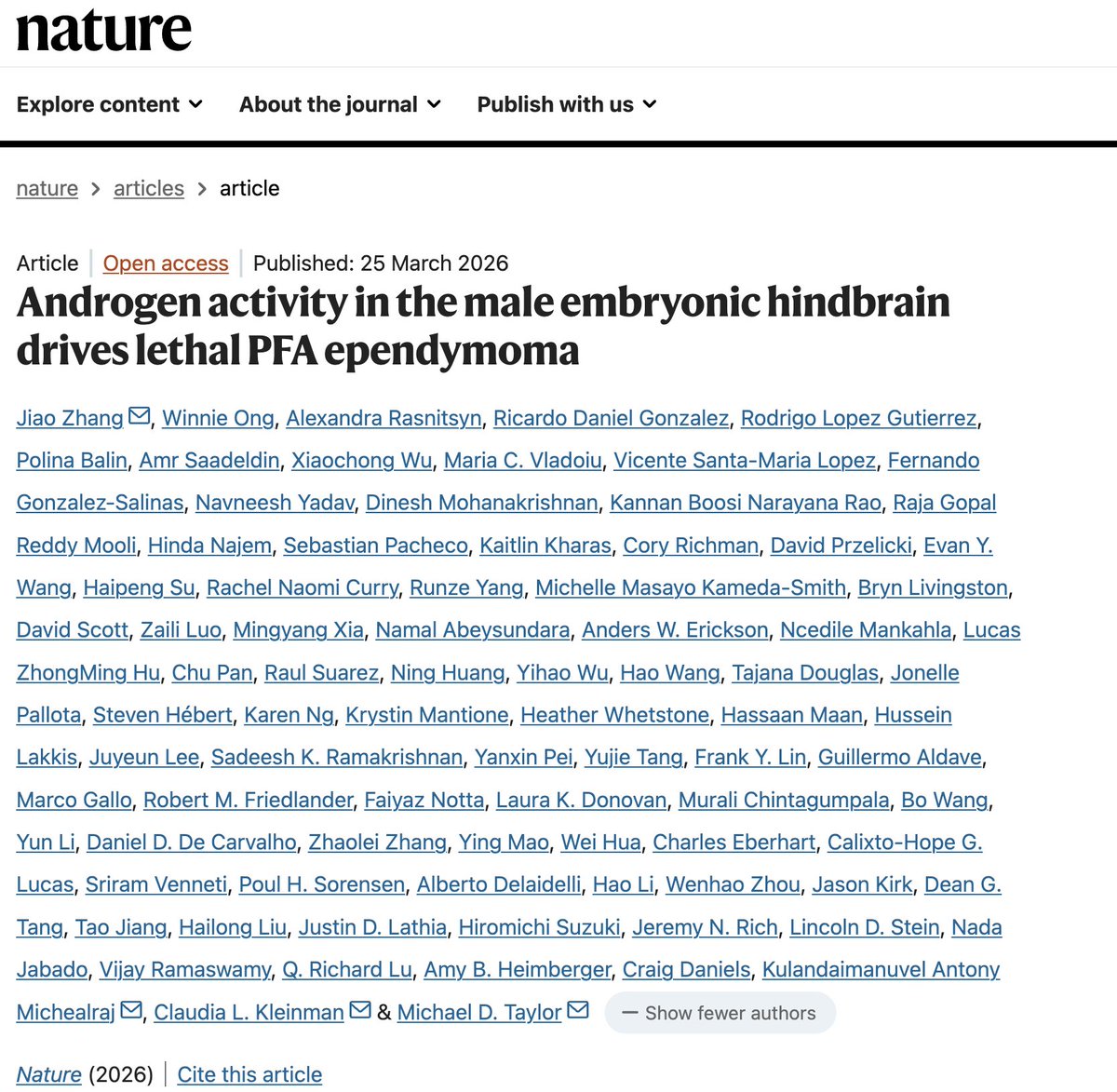
PFA ependymoma is among the deadliest childhood brain tumors. And for years, one of the most striking mysteries was this: boys get it more often, and do worse. Nobody knew why. Now we do. Thrilled to share our new paper in @Nature : Androgen activity in the male embryonic hindbrain drives lethal PFA ependymoma Using scRNA-seq from 26 primary PFA tumors, we found that male tumors are shifted toward a more stem-like, less differentiated state — with a striking enrichment of gliogenic progenitor-like cells. In other words: male PFA tumors appear developmentally “younger,” stalled earlier along the glial differentiation trajectory. Then came the key mechanistic result. Using the four-core genotype mouse model — which cleanly separates sex chromosome effects from gonadal hormone effects. The answer was not chromosomes. It was androgen signaling. Androgens in the embryonic hindbrain delay glial differentiation, keeping progenitor cells immature for longer. That widens the developmental window for malignant transformation, offering a mechanistic explanation for both the male incidence bias and the worse outcomes. Even more exciting: this biology is actionable. The androgen receptor antagonist enzalutamide, already used in the clinic , and the AR degrader MTX-23 both suppressed PFA clonogenicity and growth. Other brain tumor subtypes were far less affected, suggesting this vulnerability may be unusually specific to PFA. A deadly pediatric brain tumor. A long-standing clinical mystery. And now, a developmental and hormonal mechanism that points toward therapy. Huge congratulations to co-first authors Jiao Zhang, Winnie Ong, and Alexandra Rasnitsyn, and to the entire international team from @BCMHouston @TexasChildrens @McGillU @UPitt and many collaborators worldwide. And a very special shoutout to Dr. Michael Taylor for leading this extraordinary project. Truly one of the best brain tumor researchers I know. Paper: nature.com/articles/s4158…
Bo Wang tweet mediaBo Wang tweet mediaBo Wang tweet mediaBo Wang tweet media
English
5
8
43
4.7K
Bo Wang retweetledi
Robert Nelsen
Robert Nelsen@rtnarch·
When we seeded Denali the idea was to break the curse of the blood/brain barrier. It took a decade and tons of faith and money. Biotech is hard. Curing diseases is hard. This is a good summary. markets.financialcontent.com/stocks/article…
English
4
13
109
7.7K
Bo Wang
Bo Wang@BoWang87·
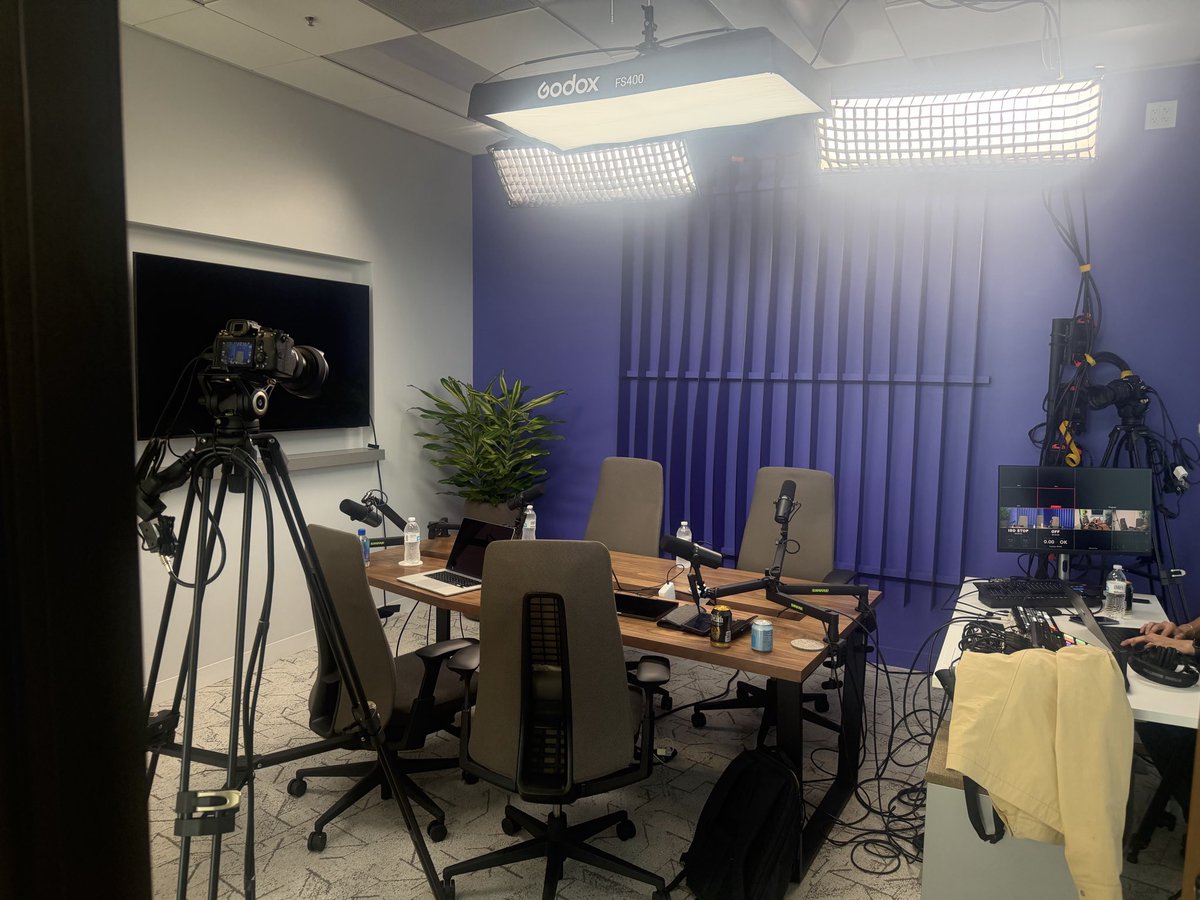
My first podcast to talk about virtual cells! Should be fun 🔥
Bo Wang tweet media
English
1
4
63
3.1K
Bo Wang
Bo Wang@BoWang87·
AI writes code vs AI reviews code
Français
1
0
22
7.9K
Jordan Black
Jordan Black@eyegenedrb·
@BoWang87 Humans hallucinating constraints is definitely worse. At least you can fine-tune a model; convincing a tenured professor requires more parameters.
English
1
0
3
317
Bo Wang
Bo Wang@BoWang87·
Overheard two students at a coffee machine: --"I'm not afraid of AI hallucinating anymore. I'm scared of my professor hallucinating." --"Same. 'Just use AI, this should take you a day.'" they were not my students, btw...😅
English
3
5
46
5.1K
Bo Wang retweetledi
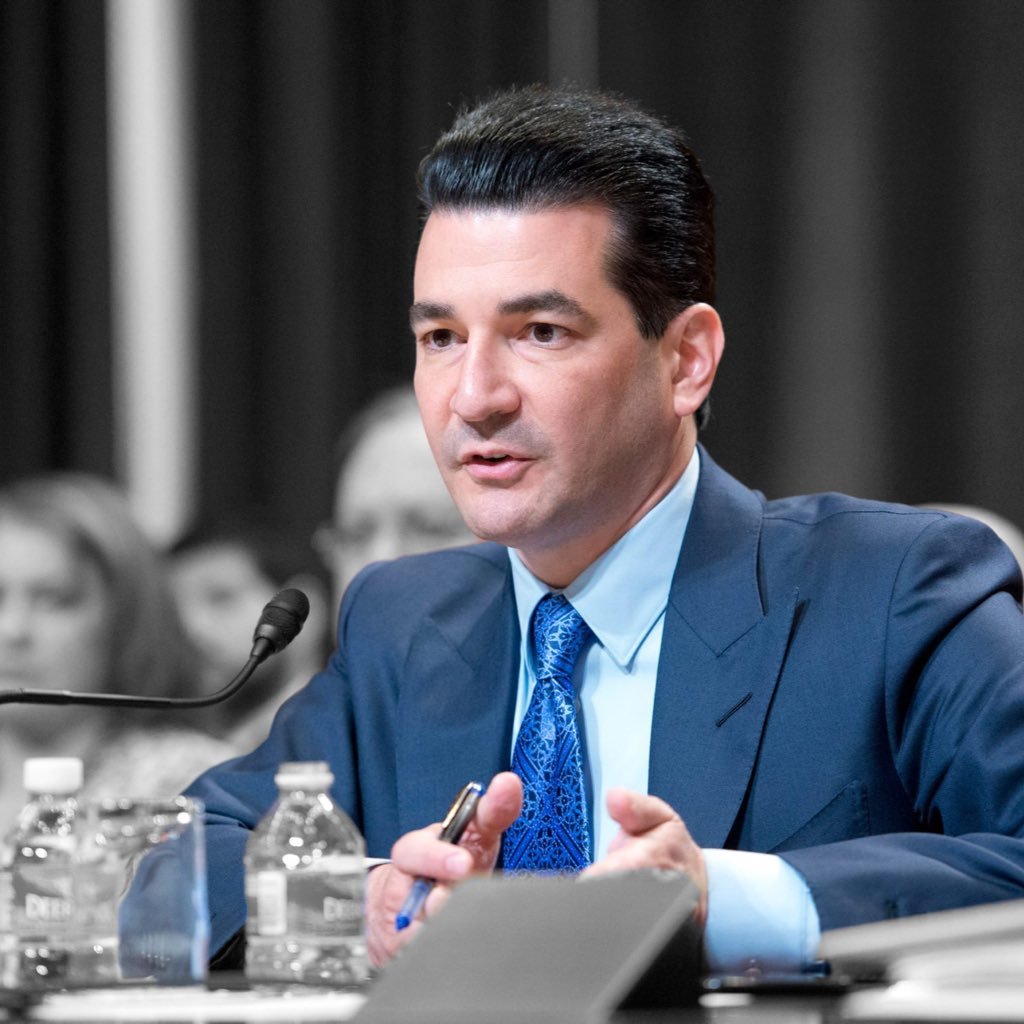
Scott Gottlieb, MD 🇺🇸
Scott Gottlieb, MD 🇺🇸@ScottGottliebMD·
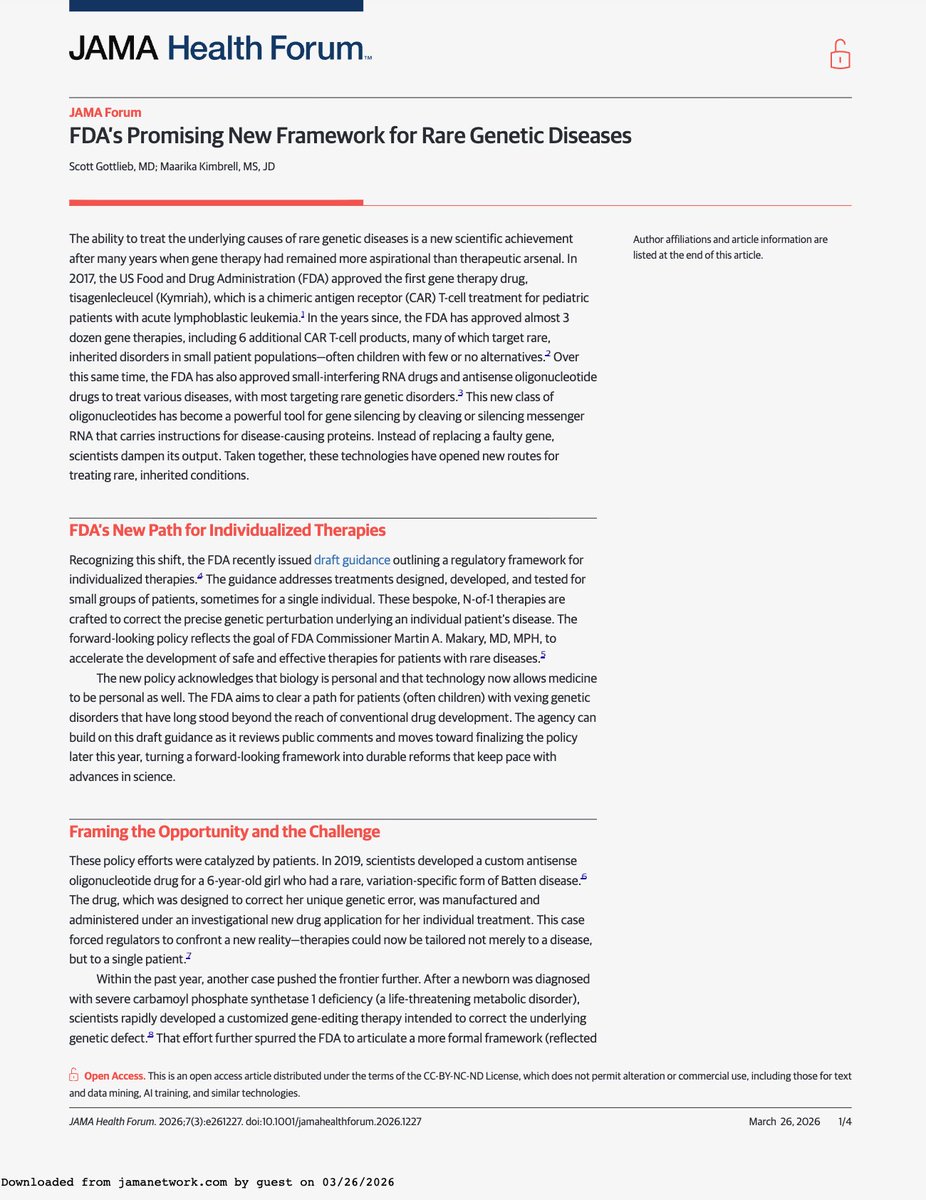
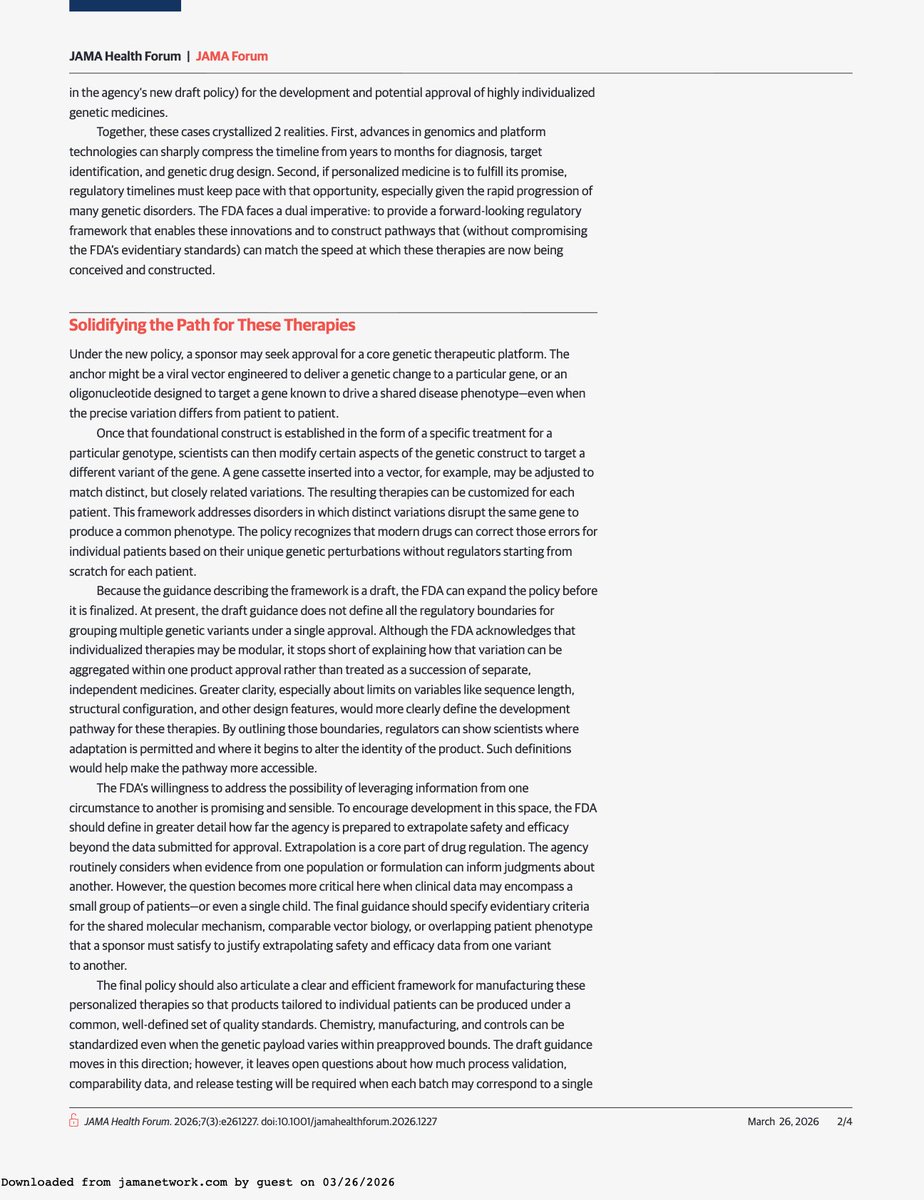
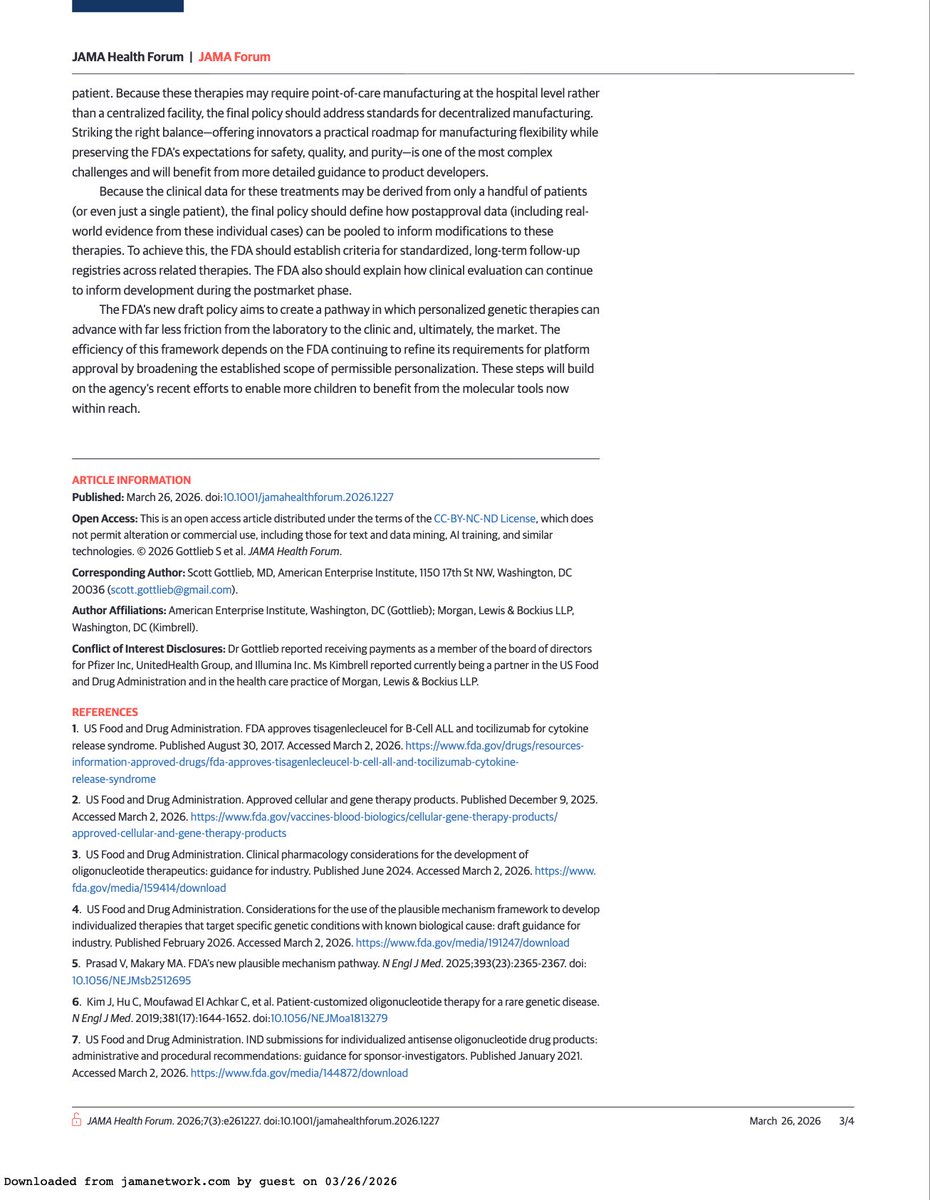
My article in today's issue of the Journal of the American Medical Association Health Forum, on FDA's new rare disease guidance, and how the agency can build on these policy steps to promote innovation for inherited disorders, authored with Maarika Kimbrell. @AEI @JAMA_current
Scott Gottlieb, MD 🇺🇸 tweet mediaScott Gottlieb, MD 🇺🇸 tweet mediaScott Gottlieb, MD 🇺🇸 tweet media
English
0
26
85
53.3K
Tanishq Mathew Abraham, Ph.D.
I had a fun time chatting last week w/ @BoWang87, a leader in biomedical AI research We discussed his awesome work at Xaira Therapeutics (their latest X-CELL model), how AI can impact drug discovery + drug development, the importance of scaling in the biomedical domain, & more!
Tanishq Mathew Abraham, Ph.D. tweet media
English
1
5
38
3.9K
Bo Wang
Bo Wang@BoWang87·
TRIBE v2 from Meta: a trimodal brain encoder (vision + audio + language) that creates a digital twin of neural fMRI activity. The key jump from v1: generalization. Zero-shot predictions for new subjects who were never scanned. That's the foundation model unlock. This has been a topic many hospitals want to do but nobody has much success in zero-shot generalization… this paper is worth to dive deep!
AI at Meta@AIatMeta

Today we're introducing TRIBE v2 (Trimodal Brain Encoder), a foundation model trained to predict how the human brain responds to almost any sight or sound. Building on our Algonauts 2025 award-winning architecture, TRIBE v2 draws on 500+ hours of fMRI recordings from 700+ people to create a digital twin of neural activity and enable zero-shot predictions for new subjects, languages, and tasks. Try the demo and learn more here: go.meta.me/tribe2

English
4
9
57
9K
Bo Wang
Bo Wang@BoWang87·
1 in 3 Americans now use AI chatbots for health information, which is almost doubled in a year. 64% do it weekly. 81% take action afterward: schedule a doctor's visit, change a medication, try a new behavior. The detail that should stop you: 74% are using ChatGPT or Gemini. Not a clinical tool. Not an FDA-cleared system. A general-purpose chatbot. I remember when chatGPT was first launched, the medical community had the most heated debate about "is AI ready for healthcare?" … now this debate has already been decided by users. They didn't wait for the system to be ready. They just started using it and acting on it. Meanwhile 71% of physicians say accuracy and reliability are their top concerns with AI. The reality: consumers acting on general-purpose AI, clinicians not trusting it, seems to be the defining tension in health AI right now. The question isn't whether people will use AI for health decisions. They already do. The question is whether anyone builds models actually calibrated for the stakes involved.
Bo Wang tweet media
English
10
25
93
13.3K
Bo Wang
Bo Wang@BoWang87·
We're launching an AI in Residence program at @Xaira_Thera ! 6-12 months. Own real projects. Work alongside the team building X-Cell — our virtual cell model trained on the largest, most context-diverse genome-wide perturbation dataset ever reported. If you're a recent MS or PhD grad who wants to work at the actual frontier of ML + drug discovery, this is it. Applications open now: job-boards.greenhouse.io/xairatherapeut…
Bo Wang tweet media
English
13
30
206
16.6K
Benjmtt
Benjmtt@benjmttt·
@BoWang87 @Xaira_Thera Virtual cell models trained on perturbation datasets are exactly the kind of multi-step reasoning workflow where stateless LLMs break down. The inference chains are too long and too dependent on prior conclusions to work without persistent state.
English
1
0
2
274