Arnaud Latil
515 posts

Arnaud Latil
@arnaudltl
IP/IT, presse, droit - Maître de conférences @Sorbonne_univ_ chercheur au Cerdi (https://t.co/NmMgzKHK7u)
Paris, France Katılım Mayıs 2016
323 Takip Edilen691 Takipçiler
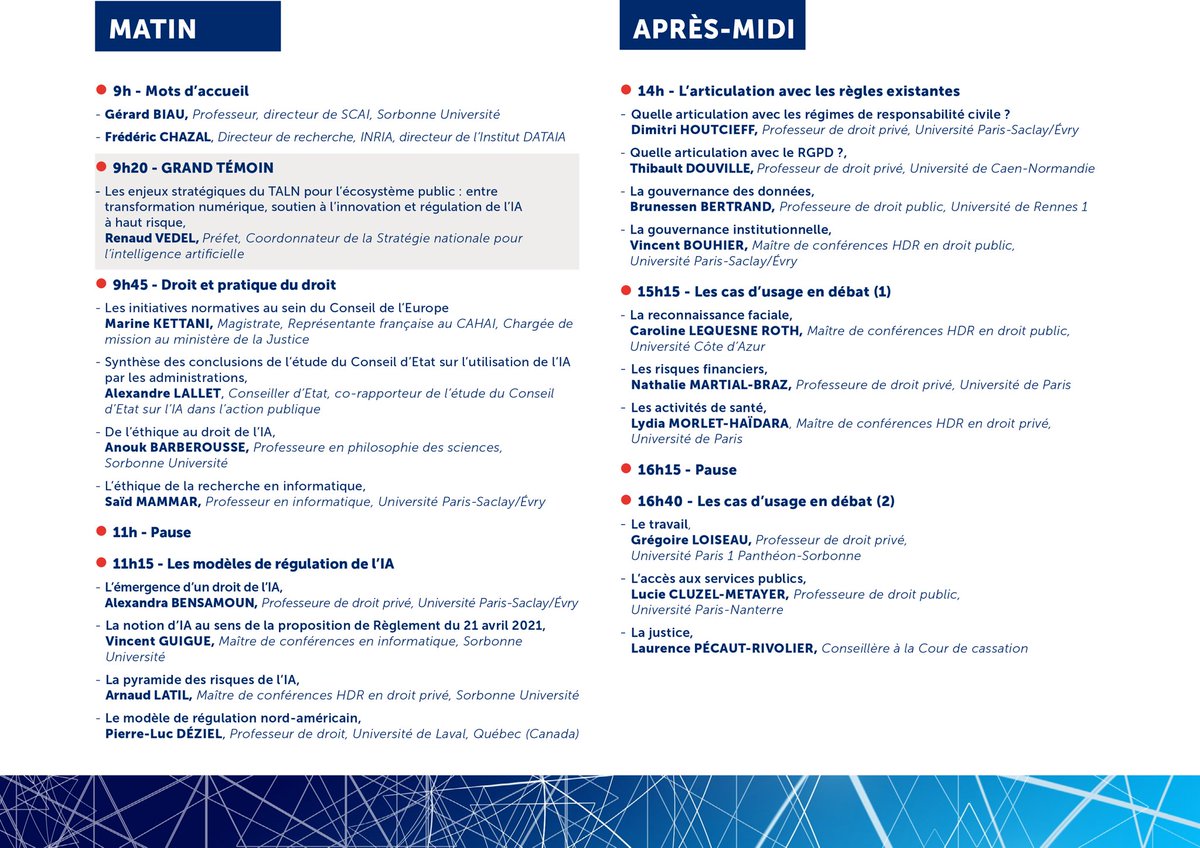
👇c'est demain et j'y présenterai pour ma part la pyramide des risques de l'IA au sens du projet d'IA Act

Français
Arnaud Latil retweetledi

Mise en oeuvre de la gouvernance européenne de l'intelligence artificielle : début des recrutements pour l’Office européen de l’IA #AIAct
acteurspublics.fr/articles/debut…
Français
Arnaud Latil retweetledi

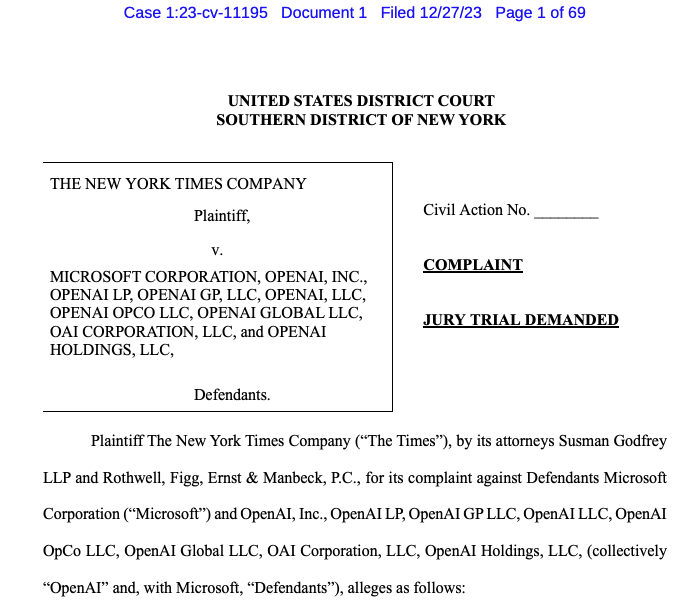
🚨 BREAKING: The @nytimes vs. @OpenAI lawsuit signs massive AI-led changes to the internet as we know it. Here's what's happening:
Large language model-based AI applications need huge amounts of data to be developed, and so far, most of the data has been extracted for free from the internet (scrapping).
To get free data, AI companies rely on two main arguments:
a) that their unlicensed use of copyrighted content (such as NYT articles) to train their AI models represents a new “transformative” purpose and thus "fair use";
b) that their collection and processing of personal data from social networks and other platforms where users post content is a form of "legitimate interest" (EU) or legal unless it's against a website's Terms of Use (US);
-
On item "a," the NYT, in its lawsuit against OpenAI, brought clear arguments against fair use. A quote from the lawsuit:
"Because the outputs of Defendants’GenAI models compete with and closely mimic the inputs used to train them, copying Times works for that purpose is not fair use." (page 4)
After reading the lawsuit, I doubt OpenAI will manage to avoid the NYT's copyright fees. Hopefully, these fees will help compensate the people behind high-quality journalism, and this is good.
-
On item "b" above (EU): according to the GDPR, legitimate interest has its own requisites. Besides complying with a 3-part test, controllers have to follow data protection principles such as transparency and its specific rules.
According to Article 14 of the GDPR, data subjects (all of us) should be warned when their data is being processed by third parties and receive details about the entities processing the data.
Have any of you been warned about OpenAI and other companies using your posts to train AI systems? I wasn't.
For now, my take is that most companies developing LLMs have not complied with GDPR requirements to process data lawfully, and this processing (and any product built with this data) is illegal (at least in the EU).
To change that, as I've been advocating, they must be proactively transparent about their practices, and personal data should be taken seriously.
On item "b" above (US): websites are building code-based and Terms of Service-based barriers against scrapping. With these new walls, the only way to get access to the data would be through individual agreements with the platforms.
My opinion is that these individual agreements are a positive development, as they will end up forcing the platforms to notify people when there are AI companies using the content to train AI models (and people can decide if they continue posting or not).
-
There is so much going on, and even more to come. To keep up with emerging privacy, tech & AI challenges:
- Sign up for my weekly newsletter to receive my analyses, live conversations with experts, resources, job opportunities, and more;
- Join our 4-week privacy, tech & AI Bootcamp and dive deeper into these topics
English
Arnaud Latil retweetledi

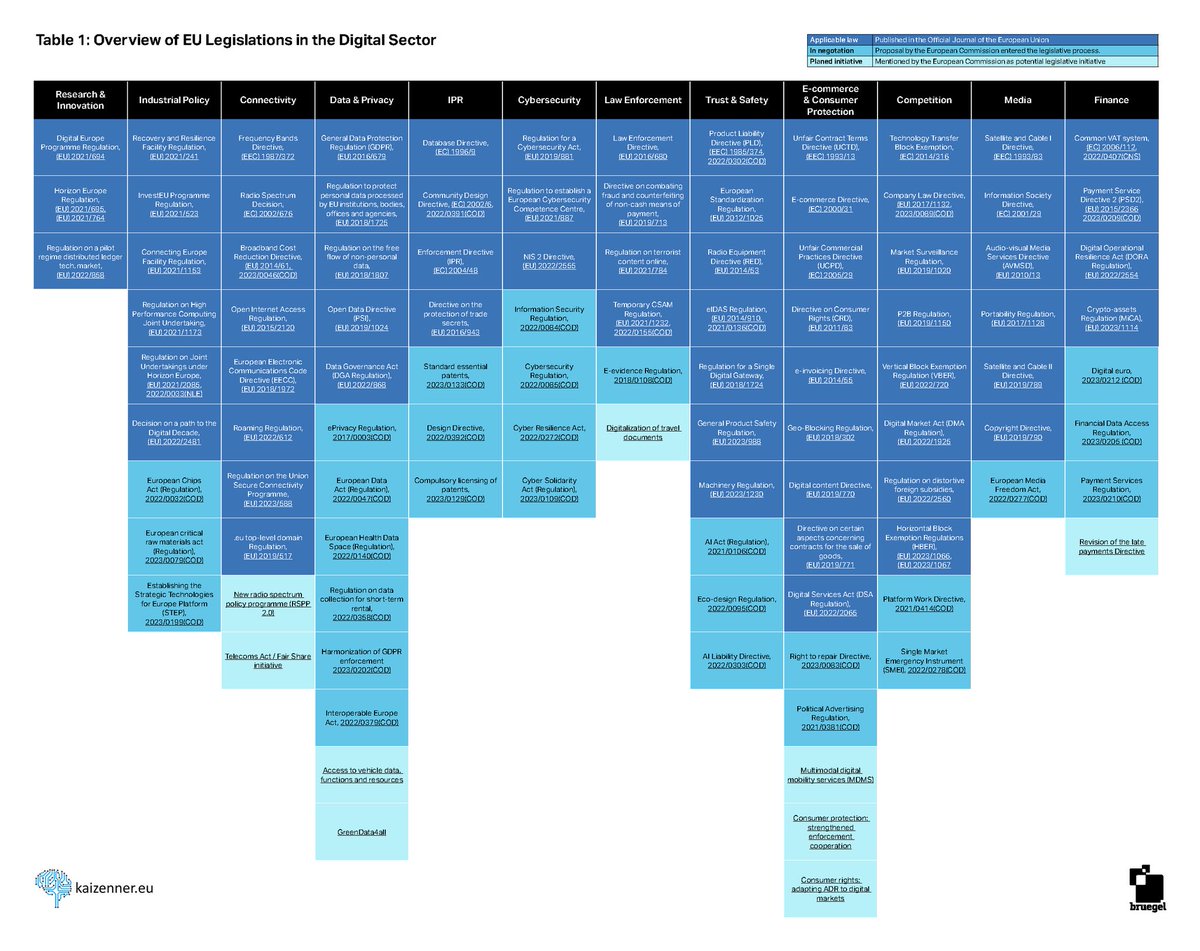
📚Un cartographie instructive des différents textes 🇪🇺 qui régulent le secteur du numérique
Sur les 104 textes référencés:
👉 77 ont été adoptés (ou en cours d’adoption) depuis 2019
👉 27 l’ont été entre 1987 et 2019
Français
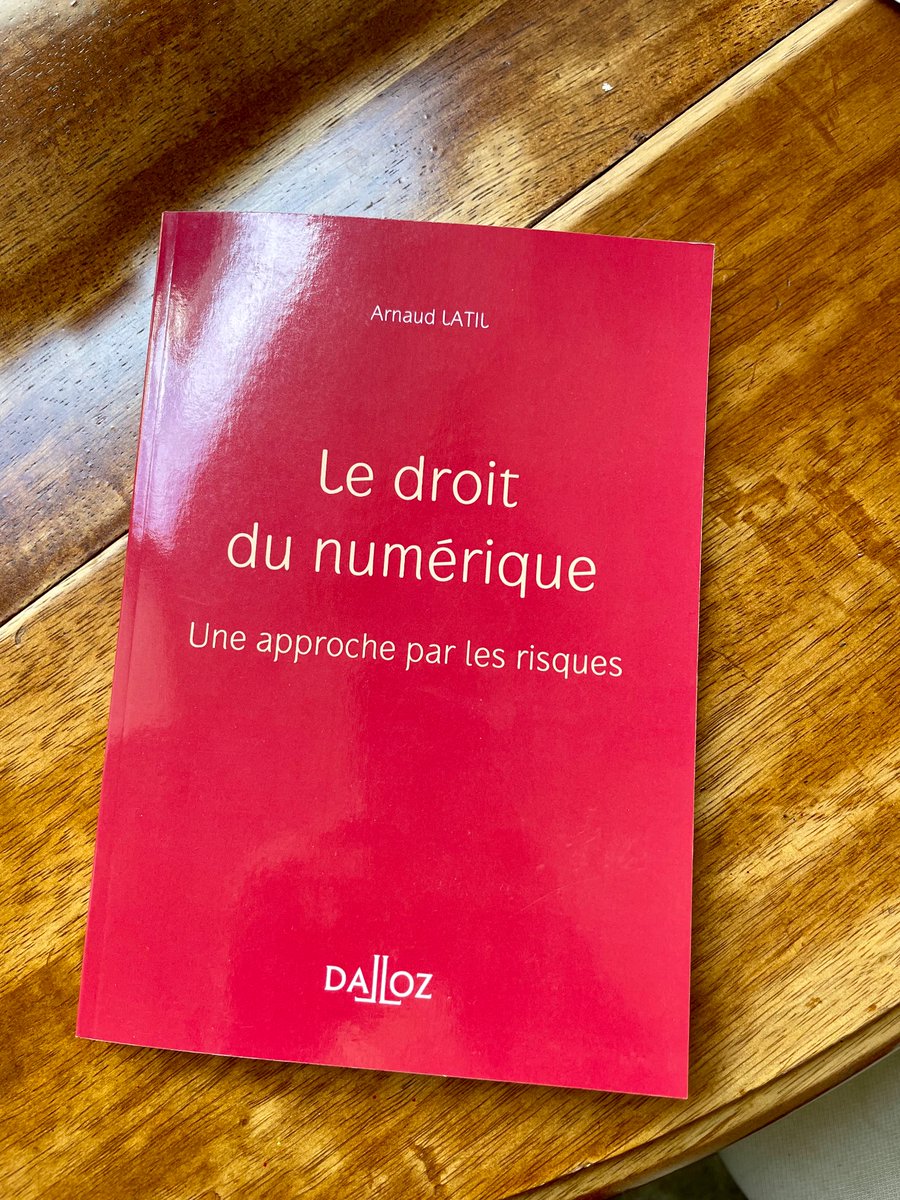
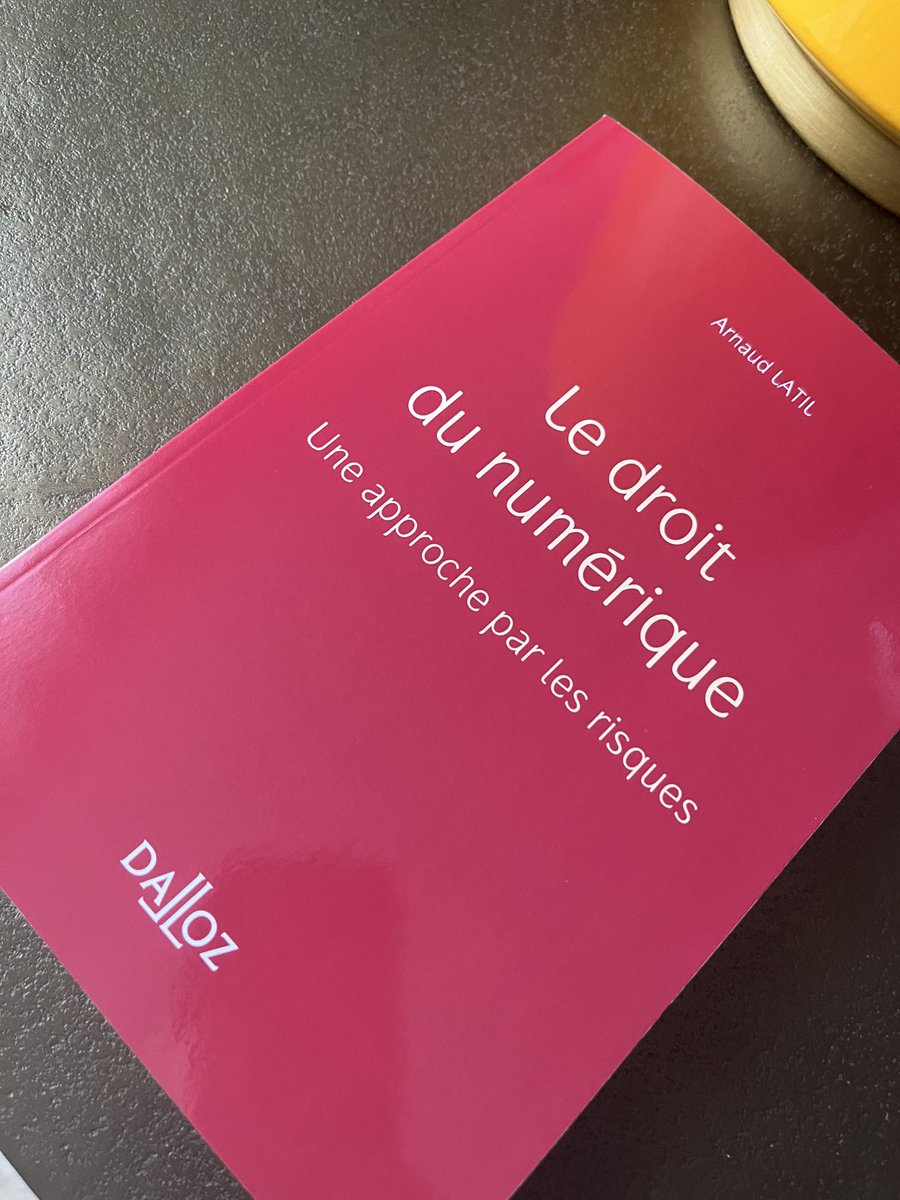
Le droit du numérique, un “droit des risques, trajectif et pragmatique”.
Bravo (et merci!) @arnaudltl pour ces précieuses analyses. Vient à paraître (03.23) chez @Dalloz
Français

Arnaud Latil retweetledi
⚠️🔊Chers collègues juristes: si vous connaissez de TRÈS bons & motivés docteurs en droit (de préférence droit du numérique ou droit 🇪🇺,🌍, droits de l’homme) qui souhaitent travailler sur @AI_Regulation #DataProtection au sein d’une équipe très dynamique @MIAI_UGA, SVP partager!
Chair Legal & Regulatory Implications #AI@AI_Regulation
WE ARE #HIRING (🙏 share!) Do you have a PhD in Law? Interested in @AI_Regulation #DataProtection #Privacy, & other HR in the #AI era? Join a dynamic team of researchers @MIAI_UGA & enjoy great quality of life ⛷ ⛄️ 🚴♀️ 🏃♀️ 🧗♂️ in the heart of 🇫🇷 French Alps! ai-regulation.com/ai-regulation-…
Français
Arnaud Latil retweetledi

#COMMUNIQUÉ La CNIL publie sa position sur le déploiement de #caméras « augmentées » dans les espaces publics et le cadre juridique applicable pour fixer des lignes rouges et apporter de la sécurité juridique aux acteurs 👉 cnil.fr/fr/deploiement…

Français
@UT1Capitole @InstUnivFr @julien_betaille @iejuc Bravo, la méthode empirique est l'un des avenirs de la recherche en droit
Français

📢Découvrez le projet de recherche, du membre junior à l'@InstUnivFr, @julien_betaille @iejuc
➡️"L’Approche Empirique du Droit de l’Environnement : une méthode pour comprendre la contribution du droit à la protection de l’environnement"🌍⚖️
Vidéo complète👉bit.ly/3bRJFw0
Français
Arnaud Latil retweetledi

Très important : Le @Conseil_constit censure les dispositions qui permettent la conservation généralisée & indifférenciée des données de connexion (et donc leur usage en matière pénale).
Il rejoint ainsi la #CJUE, qui s'oppose avec constance à la surveillance numérique de masse.

Conseil constit@Conseil_constit
Décision n° 2021-976/977 QPC du 25 février 2022, M. Habib A. et autre [Conservation des données à caractère personnel pour les besoins de la recherche, de la constatation et de la poursuite des infractions pénales] Non conformité totale conseil-constitutionnel.fr/decision/2022/…
Français
Arnaud Latil retweetledi

On Monday, the French Presidency of the European Union is organizing a conference on European digital sovereignty. Link and program here : economie.gouv.fr/conference-pfu…
English

Arnaud Latil retweetledi
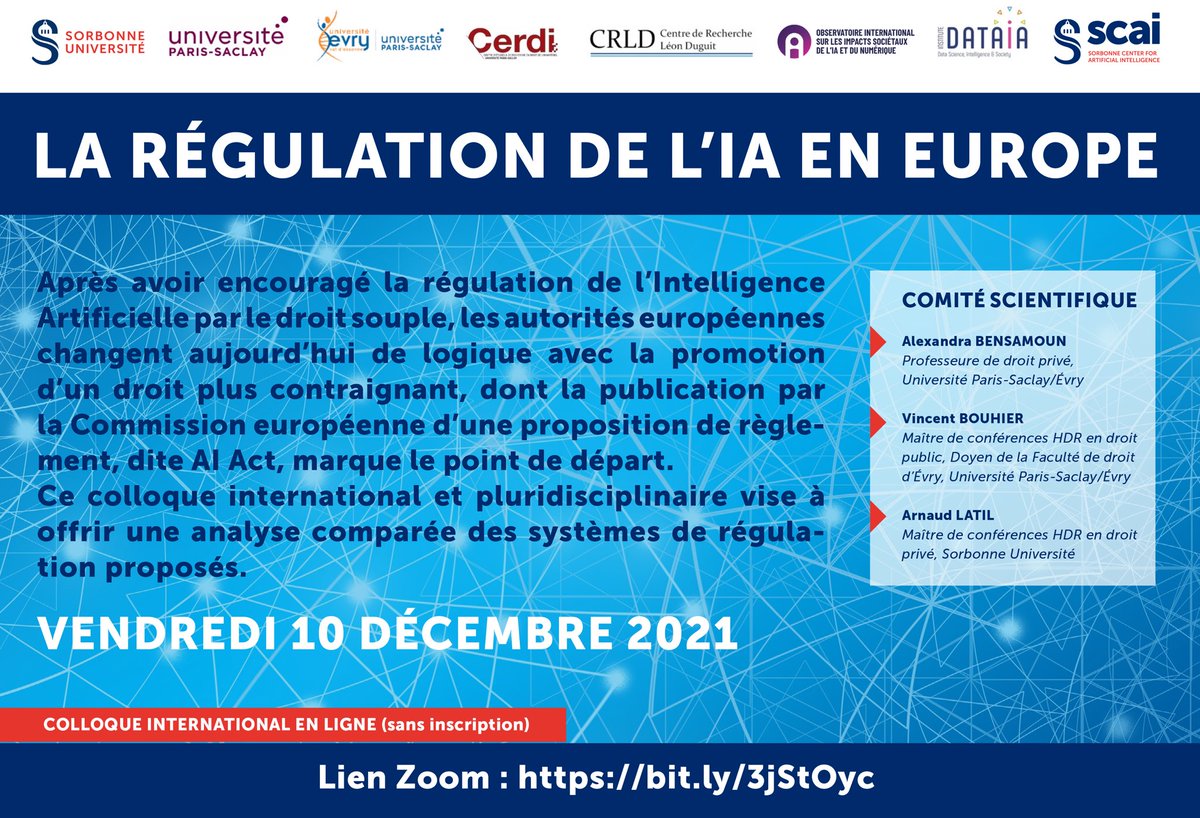
⚠️ Colloque en ligne sur la régulation de l’ #IA le 10 décembre, avec not. @ReVe6el @DHoutcieff @C_LeqRth @Th_Douville @NMBlex @arnaudltl @vbouhier @lydiamorlet @Conseil_Etat @CoE_fr
Un événement @InstitutDATAIA @UnivParisSaclay @CerdiSaclay @CRLD_UnivEvry @Sorbonne_Univ_ #SCAI
Français

@alexbensamoun @ReVe6el @DHoutcieff @C_LeqRth @Th_Douville @NMBlex @arnaudltl @vbouhier @lydiamorlet @Conseil_Etat @CoE_fr @InstitutDATAIA @UnivParisSaclay @CerdiSaclay @CRLD_UnivEvry @Sorbonne_Univ_ Sacré Dream Team sur le sujet ! 🙌🏼
GIF
Français

@alexbensamoun @VincentVigneau @ReVe6el @DHoutcieff @C_LeqRth @Th_Douville @NMBlex @arnaudltl @vbouhier @lydiamorlet @Conseil_Etat @CoE_fr @InstitutDATAIA @UnivParisSaclay @CerdiSaclay @CRLD_UnivEvry @Sorbonne_Univ_ Très beau programme ! Bravo
Français
Arnaud Latil retweetledi

Conseil supérieur de la propriété littéraire et artistique - Lancement d'une mission sur les "Non-Fungible Tokens" (NFT) culture.gouv.fr/Thematiques/Pr…
Français