Charan | చరణ్ retweetledi
Charan | చరణ్
1.5K posts

Charan | చరణ్ retweetledi

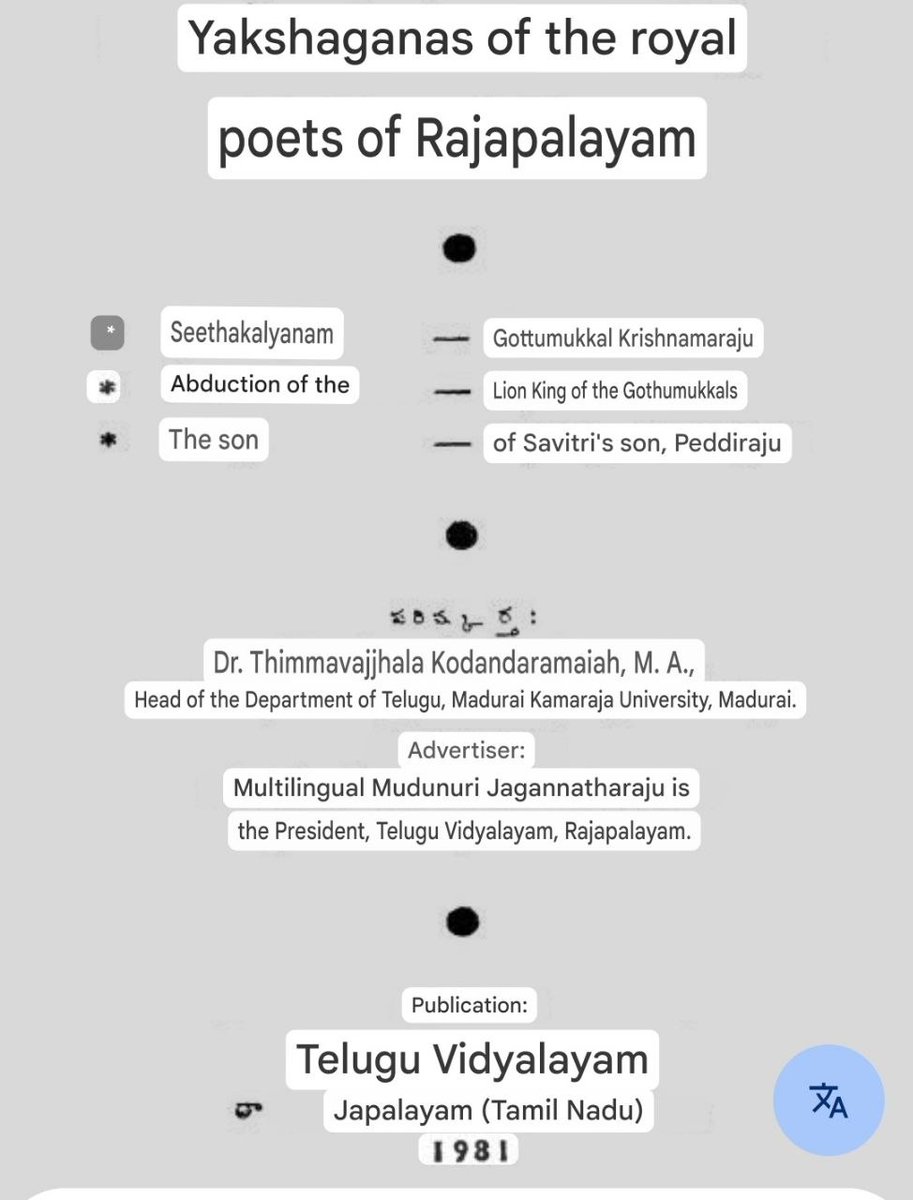
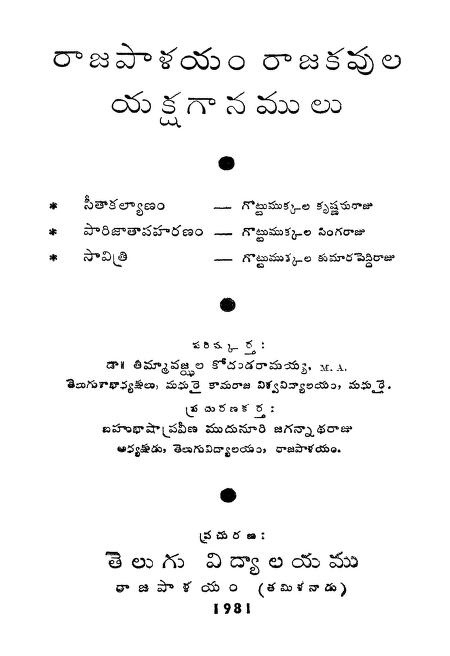
My bows to the people of Rajapalayam for their literary service to Mother Telugu.
archive.org/details/in.ern…


English
Charan | చరణ్ retweetledi

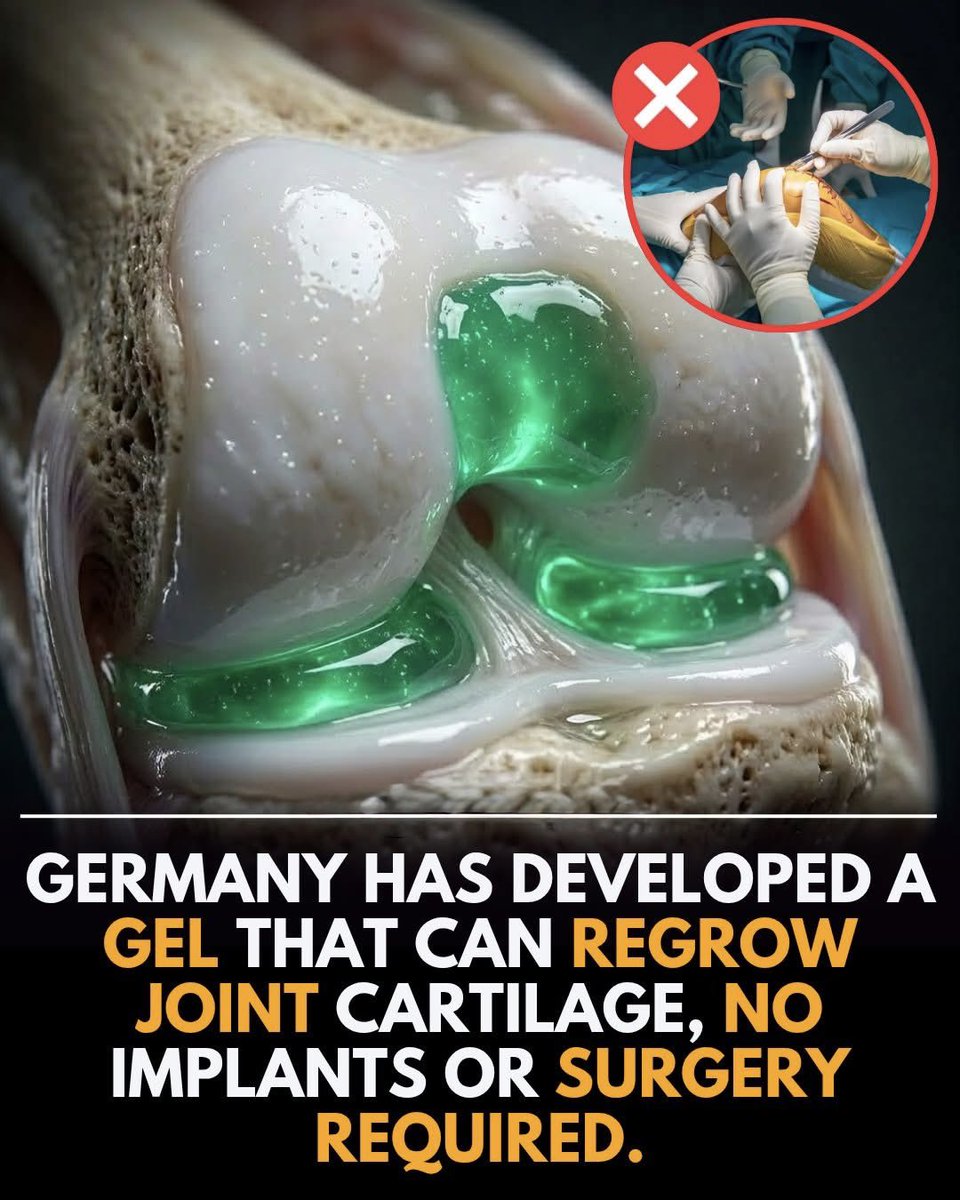
German medical researchers have engineered a novel, injectable hydrogel designed to stimulate the biological regeneration of articular cartilage. This non-surgical approach aims to directly repair joint damage and restore natural cushioning without relying on invasive and costly joint replacement procedures.
Orthopedic experts note that osteoarthritis and cartilage degradation affect hundreds of millions globally, often leading to debilitating pain and limited mobility. By utilizing a bioactive matrix that encourages the body's own stem cells to multiply and differentiate into healthy tissue, this gel could drastically shift treatment paradigms away from artificial implants.
The underlying technology relies on a specialized polymer network that seamlessly mimics the natural extracellular environment of human joints. Once introduced to the affected area, it acts as a supportive structural scaffold, safely dissolving over time as fresh, healthy cartilage takes its place.
Early clinical observations report a significant reduction in chronic joint inflammation and a much faster return to pain-free movement for affected participants. Unlike traditional surgical interventions, which frequently require months of strenuous physical therapy, this minimally invasive procedure could allow for an incredibly rapid recovery window.
While currently advancing through rigorous regulatory testing phases, the successful commercialization of this regenerative therapy could save global healthcare systems billions in surgical and rehabilitation costs. It offers a highly promising future where debilitating joint conditions are managed with a simple outpatient visit, permanently restoring active lifestyles for aging populations and athletes alike.
If this non-surgical treatment becomes widely available, how would the ability to naturally regrow joint cartilage change your approach to staying active?

English
Charan | చరణ్ retweetledi

Charan | చరణ్ retweetledi

@EmeraldPiscean Dear, I'm not sure what you've seen! However, there are timeless historical films that were produced before VFX and AI. Watch the Telugu classics Tenali Ramakrishna (1956), Nartanasala (1963), Lava Kusa (1963), Mayabazar (1957), and Sri Krishnarjuna Yudham (1963) and many more..
English

@ascharan I appreciate South Indian Cinema.
Although they also make over the top melodrama with physics-defying scenes but they make sensible movies too.
English

They are claiming that Ramayana is being made on a budget of ₹4000 crore, but from the first look, it feels heavily AI-driven.
DNEG is a VFX company, not a direction studio. What truly makes a film successful is direction. Nitesh Tiwari’s biggest success is Dangal (Dangal is the only Indian film to have earned around ₹1300 crore from China; no Indian movie in the last 50 years has even crossed ₹100 crore there). It was also released soon after demonetization in India.)
Beyond that, it’s unclear how this historical scale will translate.
The current first look of Ramayana feels like a copy of Star Plus’ Siya Ke Ram, which itself was excellent. The original Ramayana by Ramanand Sagar was a magnum opus, and Siya Ke Ram was also a masterpiece that captured the grandeur of the epic beautifully.
Even the release timing raises questions; instead of Ram Navami, they released the first look on Hanuman Jayanti. This reflects how disconnected Bollywood can be from the cultural and religious significance of such projects.
The casting itself looks like a mismatch. Overall, it feels like a Ramayana made with heavy AI influence, borrowing the grandeur of Siya Ke Ram rather than creating something original.
Big names like DNEG and Hans Zimmer seem more like marketing tools. The approach appears to be the usual Bollywood formula bring big names together, create hype through PR, dominate theater screens during holidays, and push audiences toward what is being presented.
Hope the film proves otherwise, but the first impression isn’t convincing.
Note: The soldiers below are not looking towards Shri Ram but in the opposite direction this appears to be an AI-generated error.

The Jaipur Dialogues@JaipurDialogues
What is your Reaction on Ramayana Teaser? And Ranveer Kapoor as Ram? Honest Opinions Only!
English

@EmeraldPiscean I believe you have never seen historical films in Telugu, Tamil, or Kannada, among other Indian languages. Go watch; you'll see masterpieces!
English

Sir @HansZimmer I have an immense respect for you.
Your work in Interstellar and Gladiator were simply out of this world.
You should have thought thrice before signing this project " Ramayana".
We Indians have never made a single good Biopic till now.
Our good directors like Shekhar Kapur, Mani Ratnam, Adoor Gopal etc have stopped making movies.
So what we have now is the lowest level of Indian cinema....
English

This will be one of the best theatrical experience you will have this year.
April 3rd is going to be a long night that’s all thrill, all beautiful 💙
Bookings open now
bookmy.show/Neelira
#NeeliraFromTomorrow
See you on Good Friday ✨

English
Charan | చరణ్ retweetledi

At nearly 100, Dr K Laxmi Bai gifted her entire life’s savings, Rs 3.4 crore, to AIIMS Bhubaneswar to build a gynaecological oncology unit for women battling cancer across Odisha and beyond.
Born in 1926, Dr Laxmi Bai was in the first MBBS batch at SCB Medical College, Cuttack. She later earned her DGO and MD from Madras Medical College and went on to pursue an MPH at Johns Hopkins Hospital in the USA, an extraordinary achievement for her time.
For more than five decades, she served women with care and dignity, from government hospitals in Sundargarh to teaching at MKCG Medical College, Berhampur, where she retired as professor in 1986.
Now, as she steps into her 100th year, her gift is shaping a future where more women receive timely, specialised cancer care. Her only wish is that this contribution trains future doctors and offers hope to countless lives.
She could have used the years to rest. Instead, she chose to heal.
Some call it charity. The world will remember it as a legacy.

English
Charan | చరణ్ retweetledi

JUST IN: There are roughly 50,000 MRI machines operating worldwide. Each one requires liquid helium cooled to minus 269 degrees Celsius to keep its superconducting magnets functional. A single non-operational MRI eliminates 20 to 30 patient scans per day. Those are the scans that detect tumours before they metastasise, strokes before they kill, spinal injuries before they paralyse. The helium that makes those scans possible came, until 31 days ago, from Qatar’s Ras Laffan facility, which produced a third of the world’s supply as a byproduct of liquefied natural gas. Ras Laffan was struck by Iranian missiles on March 18. It declared force majeure. Fourteen percent of its helium capacity is permanently destroyed. Repairs will take three to five years.
Helium prices have doubled. India’s hospitals are already reporting MRI cost spikes and scan delays. European facilities are rationing non-urgent diagnostics. Air Liquide has warned customers of unfulfilled orders. And 200 cryogenic containers holding 41,000 litres each are stranded in the Persian Gulf with 35 to 48 days before their cooling systems fail and the gas vents irreversibly into the atmosphere. Helium is the only element that escapes Earth’s gravity once released. It does not come back.
Here is the connection that should stop every health minister, every defence secretary, and every AI executive in their tracks. The same helium that cools the MRI magnet scanning a child’s brain for a tumour in Mumbai also cools the extreme ultraviolet lithography machine printing the two-nanometre transistor in Hsinchu that powers the AI model selecting bombing targets over Isfahan. Hospitals and semiconductor fabs are now competing for the same shrinking pool of the same molecule at the same temperature. The war has created a zero-sum allocation between healing and killing, and the molecule does not care which one wins.
TSMC holds 6.2 weeks of inventory and recycles 68 to 95 percent on site. Samsung holds six months but sources 65 percent from Qatar. Both are rationing toward AI and high-bandwidth memory, starving consumer chip production to keep the advanced nodes alive. Hospitals are nominally prioritised in allocation queues, but when a single TSMC fab consumes 500,000 cubic feet of helium per year and a trillion-dollar AI buildout depends on keeping those fabs running, the allocation queue is a polite fiction masking a brutal triage.
Newer MRI machines use zero-boil-off technology, sealed systems holding as little as 0.7 litres of helium that never need refilling. In India, 3,500 of 5,000 machines already use this technology. But the legacy fleet, the machines in rural hospitals, developing nations, and underfunded health systems, still requires 1,500 to 2,000 litres per fill. Those are the machines that will go dark first. Those are the patients who will be diagnosed last. The geography of helium scarcity maps precisely onto the geography of healthcare inequality.
The war’s casualties are not only soldiers and civilians in the strike zone. They include every patient whose scan was delayed because the helium that should have cooled their MRI machine is boiling off in a container drifting 57 kilometres northwest of Dubai. The body count of a chokepoint war does not end at the chokepoint. It extends to every hospital, every diagnostic centre, every oncology ward that depends on a noble gas extracted from natural gas that transits a 39-kilometre strait controlled by a navy that no longer exists but whose mines, drones, and shore batteries still function.
The molecule does not distinguish between a magnet in a scanner and a magnet in a missile. It cools both to the same temperature. And today, there is not enough of it for both.
Full deep dive analysis - open.substack.com/pub/shanakaans…

English
Charan | చరణ్ retweetledi

Everyone thought the future was carbon fiber
Elon Musk looked at the physics and chose stainless steel for Starship instead
Sounds insane.... until you realize stainless gets stronger at cryogenic temperatures, handles reentry heat better, and costs massively less than advanced composites. It doesn't even need paint
He chose a material that is faster to build, easier to weld, tougher in extreme conditions, and built for rapid iteration
Classic Elon: ignore convention, trust first-principles engineering, and pick the solution everyone else missed
He is taking science fiction and making it real. Building things that only existed in imagination, and pushing them to the absolute limits of physics

English
Charan | చరణ్ retweetledi