
Asfandyar Farrukh

5.6K posts

Asfandyar Farrukh banner
Asfandyar Farrukh

Asfandyar Farrukh

@asfandyarf

Eternal Optimist | Obsessed with scaling the Retail & eCommerce ecosystem | Curious about Macroecon, Taxation & Digital Payments | Leather lifer | Football fan

🇵🇰 Katılım Ocak 2012
1.5K Takip Edilen626 Takipçiler
Sabitlenmiş Tweet
Asfandyar Farrukh
Asfandyar Farrukh@asfandyarf·
The following sums up the average Pakistani conversation: Great minds discuss ideas; average minds discuss events; small minds discuss people." - Eleanor Roosevelt This must change, from the bottom up since the top wants to keep the public distracted while they take the spoils.
English
0
0
2
839
Asfandyar Farrukh retweetledi
Yousuf Nazar
Yousuf Nazar@YousufNazar·
A large segment of Pakistan’s TV political commentary class continues to frame the fiscal crisis through the NFC award, “resource distribution,” or simplistic slogans about “expanding the tax base.” This reflects a shallow understanding of the actual structural problem. This type of discourse is counterproductive. Pakistan does not merely have a revenue problem. It has an extractive state problem. The formal, documented, and productive sectors are already heavily taxed through petroleum levies, electricity tariffs, import-stage taxes, withholding regimes, telecom charges, banking channels, and cascading indirect taxation. The state keeps extracting from the same shrinking pool of compliant economic activity while undermining investment, industrial competitiveness, exports, and productivity. Yet many analysts continue to discuss the issue as if Pakistan’s crisis can be solved by reallocating money between Islamabad and the provinces or by introducing another constitutional amendment. That is fiscal illiteracy masquerading as political analysis. The central issue is whether Pakistan can build an export-led growth model capable of expanding productive capacity, attracting investment, generating foreign exchange, and increasing incomes. Without that, every fiscal debate degenerates into a fight over how to distribute stagnation and scarcity. A weak growth model cannot be repaired through more extraction. And a country cannot tax its way to prosperity while systematically weakening the sectors that actually produce growth. thefridaytimes.com/04-May-2026/pa…
English
9
33
75
11K
Asfandyar Farrukh retweetledi
Mehtab Haider
Mehtab Haider@haider_mehtab·
Exclusive interview of Chainstore Association of Pakistan where he dwelt upon issues related to tier-1 branded retailers in the country. The Chairman CAP Asfandyar Furrakh proposed gradual reduction in GST rate over next three years. Full interview @
Mukalima TV@Mukalima_TV

ویڈیو الرٹ🚨 پاکستان کی معیشت،ٹیکس نظام اورکاروباری پالیسیاں 500ارب کامعاشی نقصان،جلد مارکیٹ بندش،بڑھتی کیش اکانومی اورڈیجیٹل پیمنٹ پراعتمادکابحران Full video👇 youtu.be/aOl2ThyOClk?si… #DigitalPayments #CashEconomy #FBR #asfandyarfarrukh @haider_mehtab @waqargillani

English
0
3
10
962
Asfandyar Farrukh retweetledi
Mehtab Haider
Mehtab Haider@haider_mehtab·
The tier-1 retailers and Chainstore Association of Pakistan (CAP) Chairman Asfandyar Farrukh and Secretary General Malik Asim Dogar, in their written proposal forwarded to the budget makers, made five major demands to be incorporated into the coming budget. They asked the government to introduce a predictable 3-year roadmap to gradually reduce the standard GST rate on goods from 18 per cent to 15pc by 1pc each year (17pc in FY2026-27, 16pc in FY2027-28, and 15pc in FY 2028-29) to support documented trade, business planning, investment and competitiveness, while improving compliance incentives when paired with documentation measures. They proposed removing “digital payments acceptance” as a Tier-1 trigger (to avoid discouraging digital payments adoption) and shifting to objective, scale-linked thresholds implemented through a phased, enablement-first rollout that excludes micro/small retailers while capturing all medium/large under-documented businesses to increase the number of integrated retailers." thenews.pk/print/1415981-…
English
0
2
6
675
Asfandyar Farrukh
Asfandyar Farrukh@asfandyarf·
Ridiculous! Whose job is it to make sure untaxed & undertaxed segments are made responsible to pay their fair share? If they want to crowdsource tax enforcement, then reintroduce the POS prize scheme for people to verify their shopping receipts from retailers, amongst others.
ProPakistani@ProPakistaniPK

Pakistanis are now paying over Rs. 414 per litre for both petrol and diesel, and a PM aide says low tax compliance is why the government relied on the petroleum levy instead 🧵

English
0
1
1
34
Asfandyar Farrukh retweetledi
Miftah Ismail
Miftah Ismail@MiftahIsmail·
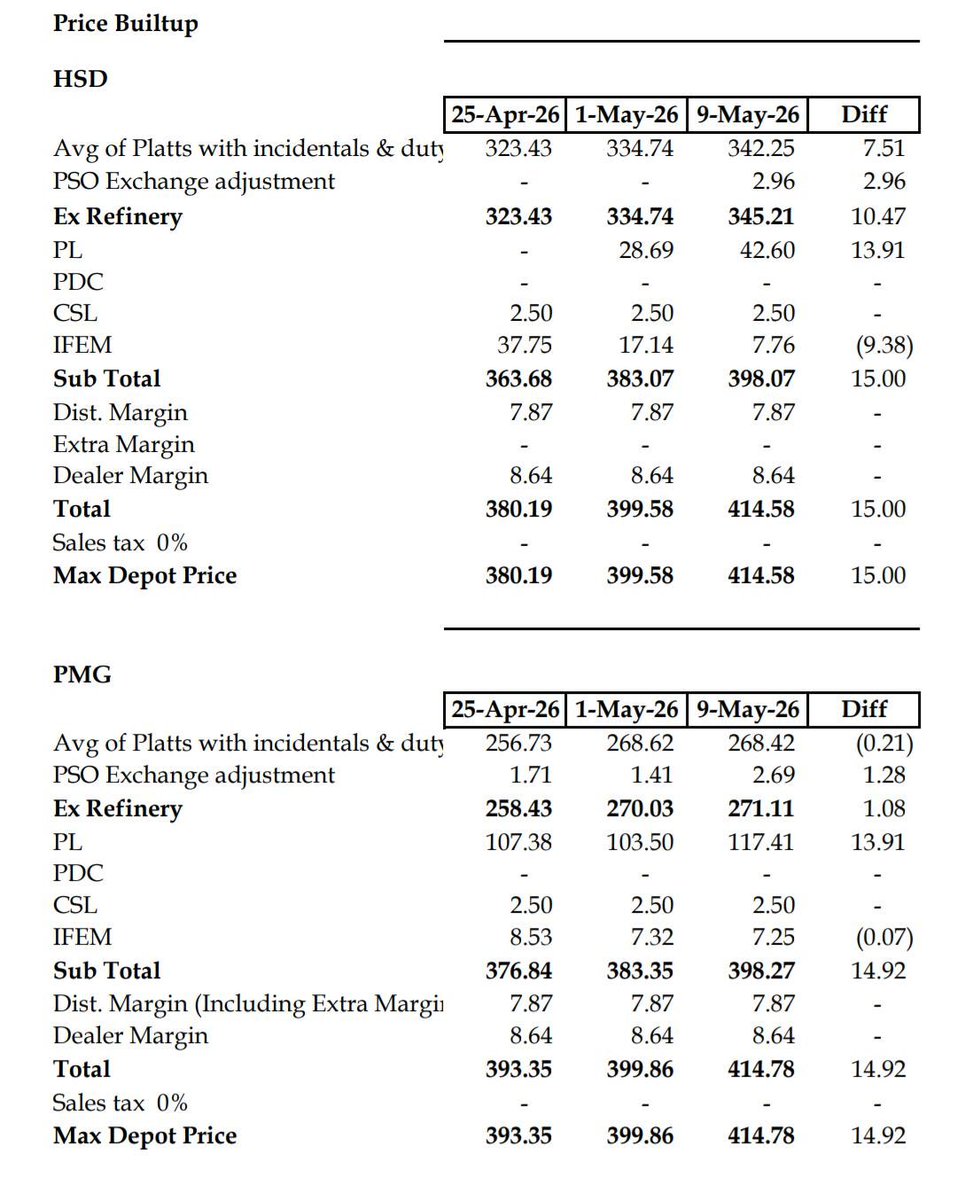
Petrol and diesel prices have been increased by the Noon government by Rs 15 per litre each to Rs 415 per litre. The entire increase in both has been due to increase in levy and taxes. Not due to any increase in prices. For petrol now we pay levy of Rs 120 per litre and for diesel Rs 45 per litre. In addition we pay about Rs 30 per litre as custom for diesel and Rs 20 as duty for petrol. So about 33% of the what you pay for petrol and 16% for diesel goes to the government. Don’t let the government say that they are not passing on the total burden on the people and undertaking any austerity. The entire burden of price increases plus even more taxes are now being charged to the people.
Miftah Ismail tweet media
English
154
1.6K
3.2K
123.8K
Asfandyar Farrukh retweetledi
Shahbaz Rana
Shahbaz Rana@81ShahbazRana·
There was a reduction of 21 paisa in petrol price in international market. But the government further increased the tax by Rs17.91 per litre to increase price to Rs415. What sort of economic management is this? Now Government is charging Rs117.5 per litre levy on petrol. This is even higher than Rs80 per litre agreement with the IMF. Economy has been rendered into an accounting exercise. The cost of failure of FBR and the failure to seek any relaxation from IMF in pre-war targets is paid by common people.
English
135
1.1K
2.5K
233.3K
Asfandyar Farrukh
Asfandyar Farrukh@asfandyarf·
Look at Riyadh, Dubai, Kuala Lumpur, Jakarta, Cairo, etc. The formal retail sector is not asking to stay open till midnight. Instead, a balanced solution is badly needed. The current restrictions are hurting commerce and jobs across the value chain & encouraging corruption.
Asfandyar Farrukh tweet media
English
0
0
0
34
Asfandyar Farrukh
Asfandyar Farrukh@asfandyarf·
Very insightful. For the past month, only 30-40% of commercial activity (retail) is closing at 8 pm across most of the country. Rest is either exempt or open till 10 pm, e.g. malls open because food courts are allowed to stay open till 10 while but individual shops are shut.
Ammar Khan@rogueonomist

Do closing commercial activity earlier in night even helps? Yes. Did a quick simulation, and closing commercial activity by 8pm saves you about PKR 40 billion, and by 10pm, it saves about PKR 20 billion. If you are Karachi, you just lol and move on.. Detailed dashboard and details available here: rogueonomist.github.io/evening_peak_c…

English
0
0
0
77
Asfandyar Farrukh retweetledi
ProPakistani
ProPakistani@ProPakistaniPK·
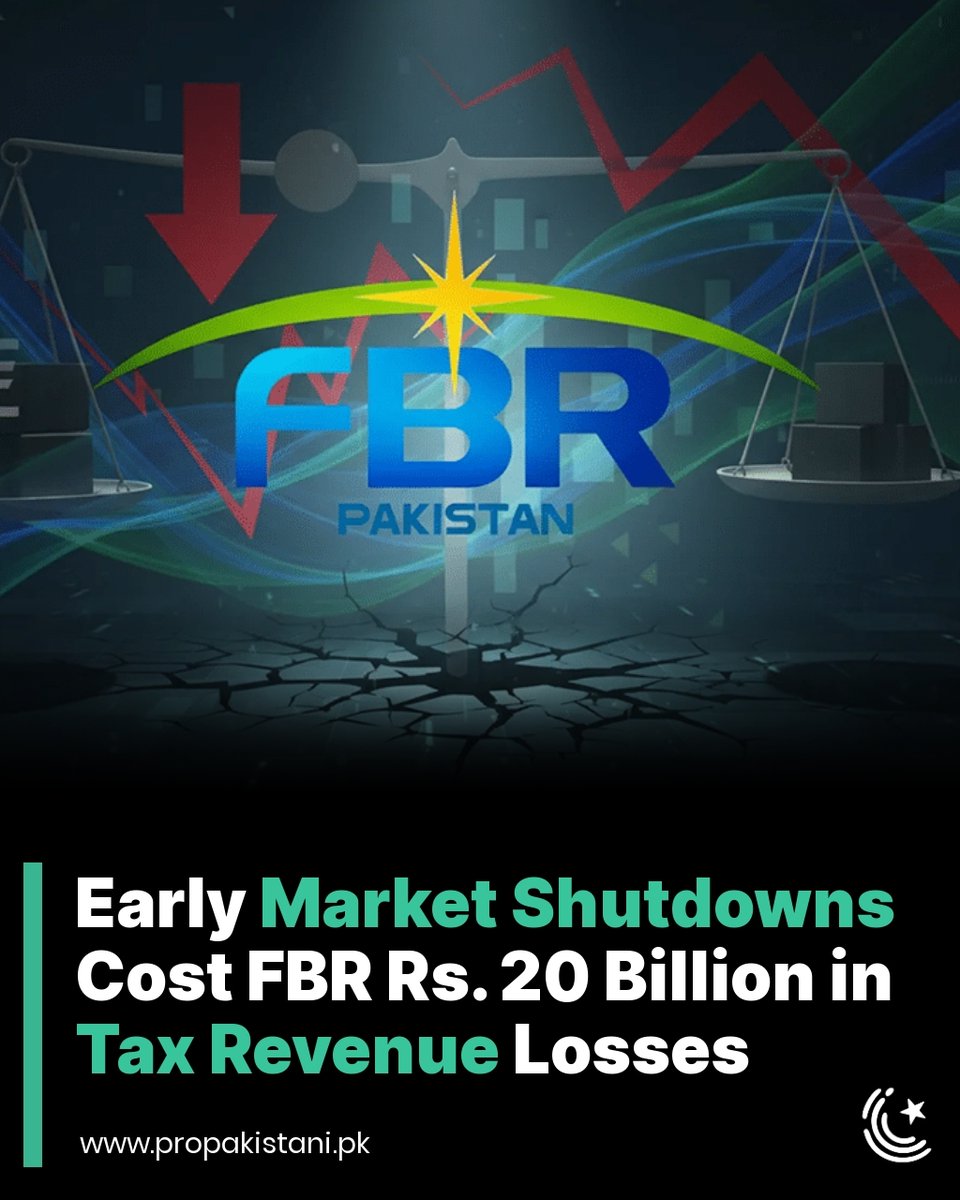
Early market closures may cost FBR Rs. 15-20 billion in tax revenue, officials told a National Assembly panel 🧵
ProPakistani tweet media
English
1
1
0
290
Asfandyar Farrukh
Asfandyar Farrukh@asfandyarf·
@yaserawan Consumers face a "double whammy" of taxes. B/w Advance Income Tax (~15%) and GST/PST on services (typically 19.5%), nearly 1/3rd of every recharge goes to the government. Most countries tax telecom as a utility (low rates), we treat it as a luxury & revenue engine for the state.
English
0
0
0
19
Asfandyar Farrukh
Asfandyar Farrukh@asfandyarf·
@yaserawan Innovation could be better. Tho, PK telcos are punching above their weight in digital service adoption (Fintech & Content) vs. some peers (🇧🇩 🇱🇰 🇻🇳). H/ever, they are vulnerable because underlying connectivity business is taxed at rates that are nearly 2x many regional neighbors.
English
1
0
0
22
Asfandyar Farrukh
Asfandyar Farrukh@asfandyarf·
𝐄𝐚𝐫𝐥𝐲 𝐫𝐞𝐭𝐚𝐢𝐥 𝐜𝐥𝐨𝐬𝐮𝐫𝐞𝐬 𝐰𝐞𝐫𝐞 𝐦𝐞𝐚𝐧𝐭 𝐭𝐨 𝐬𝐚𝐯𝐞 𝐞𝐧𝐞𝐫𝐠𝐲. 𝘐𝘯𝘴𝘵𝘦𝘢𝘥, 𝘰𝘷𝘦𝘳 𝘵𝘩𝘦 𝘱𝘢𝘴𝘵 3 𝘸𝘦𝘦𝘬𝘴, 𝘵𝘩𝘦𝘺 𝘩𝘢𝘷𝘦: Reduced formal activity Shifted demand to informal markets Lowered tax revenues Weakened workforce incomes & jobs
Asfandyar Farrukh tweet media
English
0
0
0
21
Asfandyar Farrukh retweetledi
Yousuf M.Farooq
Yousuf M.Farooq@YousufMFarooq·
🇵🇰Your phone bills are made up of taxes, not excessive telecom profits.. No money left to spend on the networks to improve quality 📶 Telenor 2024 profit PKR 15bn Ufone 2024 loss 10bn Jazz 2024 profit 24bn Zong 2023 profit 14bn FY23 tax collection from telecom 341bn FY24 tax collection from telecom 336bn FY25 tax collection from telecom 402bn (includes PTA deposits 43bn FY25) Source: PTA
English
12
73
467
30.8K
Asfandyar Farrukh retweetledi
Atif Mian
Atif Mian@AtifRMian·
Petrol at Rs 30/litre in Pakistan sounds crazy. It is not. What is crazy is the policy failure that prevents it. Petrol is around Rs 300/litre today, excluding government levy, here's how it can effectively be Rs 30/litre. People do not consume petrol for its own sake; they use it to travel. The average Pakistani rides a motorbike. A fuel-efficient motorbike can travel about 60 km on one litre. An efficient electric scooter can travel about 30 km per kWh, so it needs only 2 kWh to cover the same 60 km. What should 2 kWh cost in Pakistan? Pakistan is one of the best places in the world for solar, with an all-in LCOE cost of around 5 cents per kWh. The electricity cost is 10 cents, or Rs 30/litre of distance travelled! The Rs 30/litre calculation remains the same for cars. The 300-versus-30 gap is the cost of bad policy. It reflects billions of dollars of saving that could instead finance EV infrastructure: charging, distribution, battery swapping, and smart pricing software etc. - boosting much-needed domestic investment. Since solar is highly modular. You do not need massive scale to get reasonable efficiency. That creates business and employment opportunities for small domestic power producers. Instead, Pakistan leaned into large fossil-fuel plants financed by dollar-denominated borrowing and guaranteed returns. Local firms face credit constraints, but solar creates a natural collateralizable cash flow through electricity sales to the grid. With the right regulatory framework, this could have unlocked large private domestic investment, and employment. Battery swapping is another area where small local businesses could have emerged and scaled. Electricity enables smart pricing. When solar supply is abundant, prices can fall, and poor households and firms can shift usage to cheaper hours - automatic demand stabilization Better air quality would mean longer, healthier lives and higher productivity. That is a growth multiplier Green technology industries could be developed domestically with the right industrial policy, easing balance-of-payments pressure while raising employment and investment. Instead, Pakistan chose imported-fuel power plants, protected a backward-looking domestic auto sector, and raised electricity prices by burdening them with the fixed costs of those plants and heavy taxation, slowing EV adoption. Then came the net-metering fiasco, all to keep zombie power plants alive. Pakistan’s energy policy may be the clearest example of a broken nervous system. I hope someone fixes it, because people are paying the price, 300-versus-30
Atif Mian@AtifRMian

Should petrol be 30 rupees a litre in Pakistan?

English
171
898
3K
660.6K