Ash Goyal

1.6K posts

Ash Goyal banner
Ash Goyal

Ash Goyal

@ashwanigl

Reinventing SAP Consulting for the world driven by AI

Australia Katılım Aralık 2010
246 Takip Edilen75 Takipçiler
Ash Goyal
Ash Goyal@ashwanigl·
@theficouple Have read that Mahindra's have an exceptionally high engine life too.
English
0
0
0
49
theficouple
theficouple@theficouple·
How to help your car last 300k miles: -Get a Toyota -Use synthetic oil -Change air filter -Use top tier fuel -Buy a Toyota What would you add?
English
855
64
1.6K
711.9K
Joe Tegtmeyer 🚀 🤠🛸😎
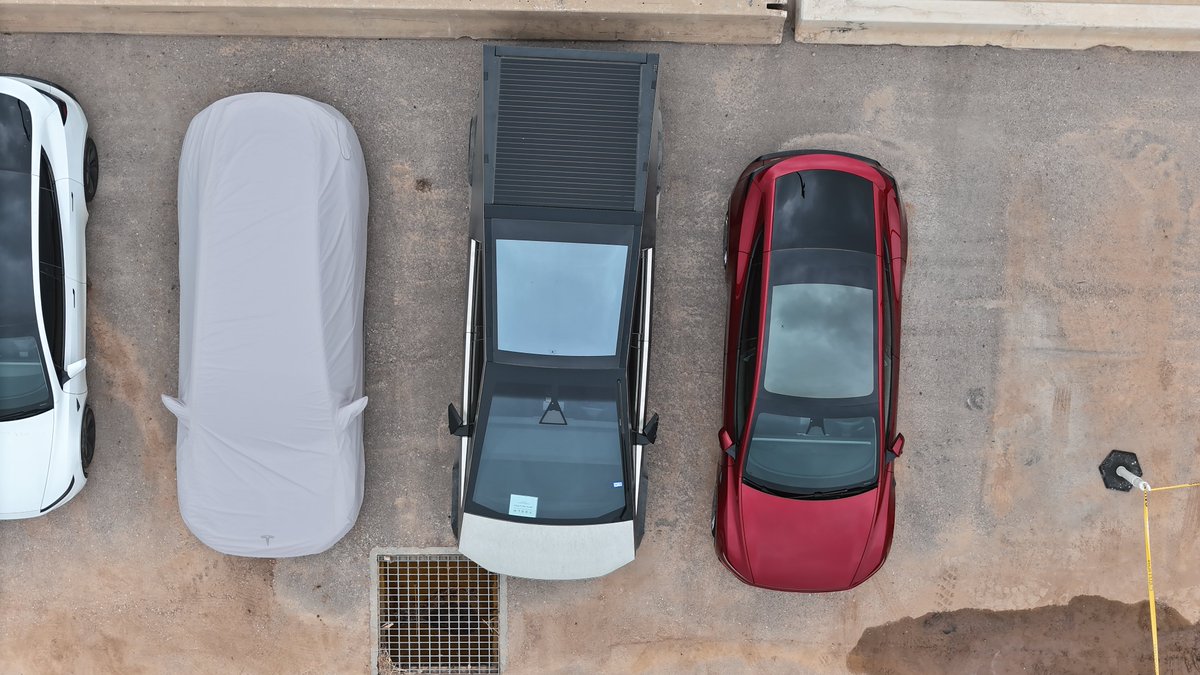
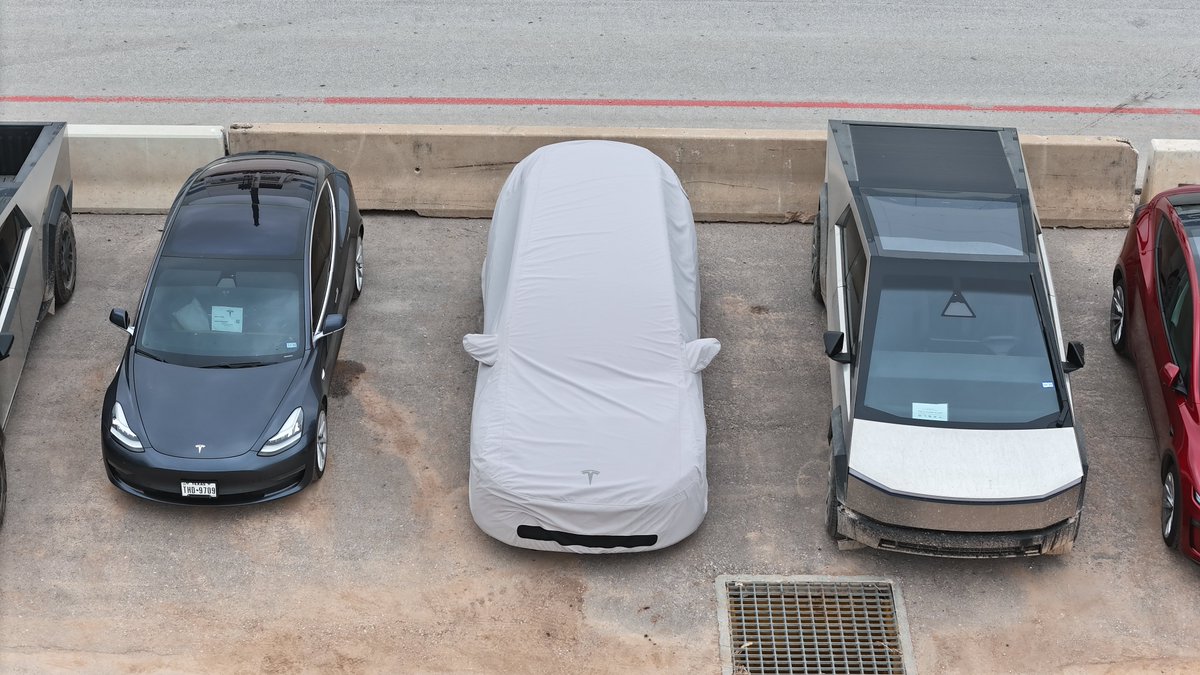
Giga Texas has a new “mystery” car under a cover & the wheels also masked off with white vinyl. Fortunately I was able to get a top-down view of this one next to another Model Y & a @Cybertruck for comparison. Any ideas what this might be? 😎
Joe Tegtmeyer 🚀 🤠🛸😎 tweet mediaJoe Tegtmeyer 🚀 🤠🛸😎 tweet mediaJoe Tegtmeyer 🚀 🤠🛸😎 tweet media
English
269
129
1.5K
486.9K
Ash Goyal retweetledi
Visegrád 24
Visegrád 24@visegrad24·
Congratulations India for throwing the communists out of all state governments for the first time in 59 years. As votes are counted today, it has become apparent that the communists will lose power in Kerala. The commies are out of power across India for the 1st time since 1967
Visegrád 24 tweet media
English
294
2.4K
17.1K
966.6K
Ash Goyal retweetledi
Edge Case
Edge Case@edgecase411·
This is probably one of the clearest instances I’ve seen of FSD responding to hand gestures interpreting the entire context of the scene and then reacting without hesitation. Really impressive!
Vad3r@vad3rt3sla

FSD recognizes officers hand signals. FSD 14.2.2.5 stopped for a police officer who was assisting in a fallen branch and directing traffic. FSD waited until the officer waved me on to go, the car recognized his hand signal.

English
3
12
138
5.5K
Ash Goyal
Ash Goyal@ashwanigl·
This is going to be the operating system of businesses in the future: Training your agents with your domain-specific data Big labs trained AI on math and code. They didn’t train it on your industry knowledge. Start collecting every email, customer note, process doc, and decision inside your business, then train your own agents on it. That’s an edge no outsider can copy.
English
0
0
1
170
Shruti Gandhi / Array VC preseed rounds
TAKEAWAY from Andrej Karpathy's talk about the "obvious in 2026" for founders. #4 is the super insightful. 1/ Training your agents with your domain-specific data Big labs trained AI on math and code. They didn’t train it on your industry knowledge. Start collecting every email, customer note, process doc, and decision inside your business, then train your own agents on it. That’s an edge no outsider can copy. 2/ Redo your interview process. The new test: have a candidate build something so secure that 10 frontier agents can't break it. You're hiring for taste and judgment. 3/ Half of your product shouldn't exist anymore. Old factories had a worker for every step: cut, fold, glue, label, pack. Now one robot does the whole thing. Your product probably has the same problem. Five steps stitched together that one model now does in one go. Redo the workflow. 4/ The great AI rewrite has started. Every app, website, and workflow online was built for humans. All of it gets rebuilt for AI agents. Find parts of your industry that's still human-only and make them agent-native first.
Andrej Karpathy@karpathy

Fireside chat at Sequoia Ascent 2026 from a ~week ago. Some highlights: The first theme I tried to push on is that LLMs are about a lot more than just speeding up what existed before (e.g. coding). Three examples of new horizons: 1. menugen: an app that can be fully engulfed by LLMs, with no classical code needed: input an image, output an image and an LLM can natively do the thing. 2. install .md skills instead of install .sh scripts. Why create a complex Software 1.0 bash script for e.g. installing a piece of software if you can write the installation out in words and say "just show this to your LLM". The LLM is an advanced interpreter of English and can intelligently target installation to your setup, debug everything inline, etc. 3. LLM knowledge bases as an example of something that was *impossible* with classical code because it's computation over unstructured data (knowledge) from arbitrary sources and in arbitrary formats, including simply text articles etc. I pushed on these because in every new paradigm change, the obvious things are always in the realm of speeding up or somehow improving what existed, but here we have examples of functionality that either suddenly perhaps shouldn't even exist (1,2), or was fundamentally not possible before (3). The second (ongoing) theme is trying to explain the pattern of jaggedness in LLMs. How it can be true that a single artifact will simultaneously 1) coherently refactor a 100,000-line code base *and* 2) tell you to walk to the car wash to wash your car. I previously wrote about the source of this as having to do with verifiability of a domain, here I expand on this as having to also do with economics because revenue/TAM dictates what the frontier labs choose to package into training data distributions during RL. You're either in the data distribution (on the rails of the RL circuits) and flying or you're off-roading in the jungle with a machete, in relative terms. Still not 100% satisfied with this, but it's an ongoing struggle to build an accurate model of LLM capabilities if you wish to practically take advantage of their power while avoiding their pitfalls, which brings me to... Last theme is the agent-native economy. The decomposition of products and services into sensors, actuators and logic (split up across all of 1.0/2.0/3.0 computing paradigms), how we can make information maximally legible to LLMs, some words on the quickly emerging agentic engineering and its skill set, related hiring practices, etc., possibly even hints/dreams of fully neural computing handling the vast majority of computation with some help from (classical) CPU coprocessors.

English
8
4
71
11K
Ash Goyal retweetledi
Kees Roelandschap
Kees Roelandschap@KRoelandschap·
Tesla FSD brakes for an invisible van 👀 Just two guys casually talking while being driven around by FSD.. we thought: HUH?! Why would it stop, ah ofcourse FSD already saw what two Human Pilots failed to recognize. A wild invisible van appeared FSD didn’t even blink & said: hold my beer @robotinreallife
English
179
450
4.6K
527.4K
Ash Goyal
Ash Goyal@ashwanigl·
@MarkoMatvikov That's because parent visa are very rarely granted. The queue's clearing rate is extremely low. So the visas stay in the queue for 30 odd years and therefore the queue is large not because they make up the most immigrants but because they nearly never become immigrants.
English
0
0
0
26
Ash Goyal
Ash Goyal@ashwanigl·
Forget that code exists - that's what vibe coding really means.
English
0
0
0
1
Ash Goyal
Ash Goyal@ashwanigl·
When your equity or other investments are up in value, it simply means that there are other people who have become rich. The fact that they are ready to pay higher for your investments means that they have more liquid money to spend on them. Even when you sell those investment, the money sits with the bank. The bank again invests them in instruments such as Equity. That's how banks give you interest.
English
0
0
1
292
Nithin Kamath
Nithin Kamath@Nithin0dha·
I'll admit this might sound odd coming from me, maybe even clichéd. But it's something I've been sitting with for a while, so here goes. When I started out, like most people, I had a simple wealth goal. I'd actually written it down: hit ₹5 crore, retire in Goa, beach shack, done. That was the dream. After the Zerodha journey, I find myself on a very different side of that equation, and the dark inequalities of wealth and opportunity are harder to ignore than ever. We all know the numbers on inequality. The concentration of wealth among the top 1% is severe and getting worse, and it's even starker among the top 0.1%. The post-2008 era of rising asset prices has likely made this worse, because the people who hold financial assets are, by definition, people who already have money. This isn't unique to India. Barring a few exceptions, it's a global phenomenon. I'm cautious about attributing every socio-political problem we face today to inequality, but it's hard to deny the role it's played in the political upheavals we're seeing across the world. History rarely shows that sustained, extreme inequality ends well. To me, it increasingly feels like sitting in a car with the brakes cut, watching a cliff approach. Btw, all of this even before AI, which has a non-trivial probability of making things worse. I'll stop short of prescribing solutions. It's too easy to reach for simple answers to complicated problems, and that's a separate conversation entirely. But I think we need to collectively acknowledge this: wealth that just sits in financial assets whose value keeps compounding upward doesn't do much good for anyone beyond those who already have it. And if that wealth isn't in motion, if it isn't doing some social good, the fabric that holds us together will only continue to fray and lead to cynicism, resentment, and worse yet, nihilism. We're already seeing all of it. What I am saying is that even if a portion of that wealth were channelled into things that could materially improve lives, that seems worth doing. Hoarding wealth, in the grand scheme of things, doesn't really help anyone.
Nithin Kamath tweet media
English
285
332
2.8K
225.5K
Ash Goyal
Ash Goyal@ashwanigl·
ORS is a medical intervention which probably saved most lives in recent history. Other contenders are smallpox vaccine, and antibiotics. Sambhunath De formalized ORS scientifically. Although another Indian scientist, Hemendra Nath Chatterjee, showed it works first.
Parimal@Fintech03

He worked in a lab so small & hot that his sweat would often ruin his notes. He did not build a bomb/a satellite, but he solved a puzzle that was killing millions. In 1959, from a Silo in Calcutta, Sambhunath De discovered the secret pump that drains human life. He is the father of ORS: the ghost behind the most successful medical intervention in history. He was nominated for the Nobel by the world’s greatest giants, yet he died in 1985 traveling by local bus, unrecognized by the very people whose children he had saved. Born in 1915 in a small village in West Bengal, S.N. De did not come from a family of elite scientists. He worked at the Nil Ratan Sircar (NRS) Medical College, Calcutta. While elite scientists were building rockets, De was working in a tiny, cramped lab with barely any ventilation. He did not have high-end sensors. He used his own intuition & rudimentary tools to study how certain invisible forces acted on human cells. S.N. De solved the mystery of Cholera, but in a way that was pure Fluid Physics & Biophysics. For a century, the world thought Cholera was a blood infection. In 1959, in his tiny lab, De proved it was a toxin that attacked the fluid-transport mechanisms of the gut. He discovered the Cholera Toxin (CT). He demonstrated how the toxin created a pump that sucked water out of cells, a masterclass in osmotic pressure & molecular transport. This discovery is the direct reason why ORS (Oral Rehydration Salt) exists. If we/anyone we know has ever been saved by a packet of ORS, we owe our life to S.N. De. In 1954, Nobel Laureate Joshua Lederberg wrote to the Nobel Committee saying that S.N. De’s work was worthy of the prize. He was nominated multiple times, but like many Indian scientists, he was a Ghost in a colony. The prize never came. In 1978, the Nobel Foundation organized a symposium on Cholera. They realized the man who started it all, S.N. De, was still alive in Calcutta. They invited him, & he arrived at the high-end gala in a simple suit, looking like a retired clerk. He was a man of aggressive humility. He lived in a small house, traveled by local buses, & never sought patents for his discovery. He wanted the Signal (the cure) to be free for the world. His own family knew him as a dedicated doc who went to the lab every day. They had no idea that Nobel Prize winners in Europe & America were referencing his 1959 paper as 1 of the most important scientific documents of the 20th century.

English
0
0
0
21
Ash Goyal
Ash Goyal@ashwanigl·
I think BJP really wants to improve Bengal, bring it out of squalor of the last 50 years. With objective comes determination. The violence in Bengal does not sit well in 21st century democracy. It's sad the way elections happen there. It's a disservice to people of Bengal to let that violence continue.
English
0
0
1
279
Normal Guy
Normal Guy@Normal_2610·
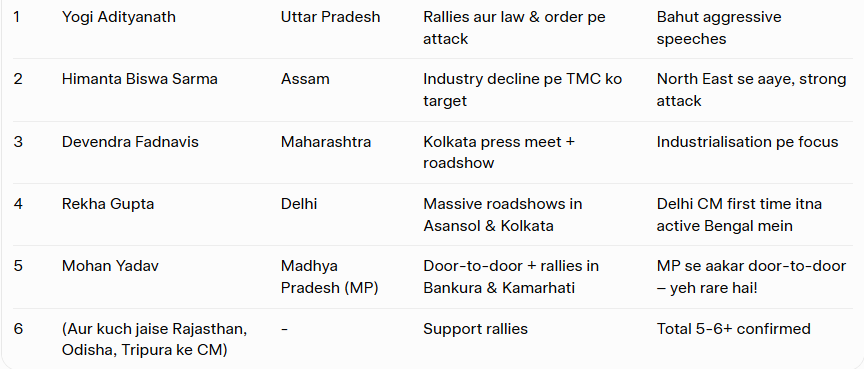
Really interesting to watch out - Bengal election, especially this year. The way BJP has invested its whole election machinery into this, the scale is so big ( 6+ CM ) and many MPs have been going there from the last 1 month, and a few are staying there, like Amit Shah. BJP is highly invested in this. You know, it's hard to breach a few states in India for any party - one is Tamil Nadu for sure, and most importantly Bengal is more riskier because it's violent, and the history of violence there, that's why it's hard to breach. TMC is really strong from the grassroot level, it's hard. And there are illegal dhandas TMC workers run too, so there is no issue of liquidity. Just saying - a normal party cannot win Bengal election at all. BJP did a lot of things in last 5 to stay relevant there, I will not go into that. And the scene is so tough - like I read somewhere, when the Delhi CM was doing a roadshow there, the electricity was cut off in that area... Don't go after my biasness, I am just an observer. So when you look at BJP's ambition and the hungriness for power, and the scale at which they fight the election - everything matters to them, even after they are dominant in India and don't have much issue. But still, the focus is Bengal. The urge to win the election there is mind-blowing, and the dedication of the party, the motivation it takes to do tough things - is really inspiring to learn from them. Study BJP, but like a company :) Opposition have to be better than BJP then only they can touch regime of Delhi :) Otherwise .... BJP 24/7 Election Machine
Normal Guy tweet media
English
10
50
259
51.6K
Ash Goyal
Ash Goyal@ashwanigl·
If the landing conditions are wet, the SOP is to hard land to prevent slippage of the equipment while landing. Hard landing displaces water from the runway due to the extra heat and pressure generated due to landing. This is done for safety reasons and does not benefit the airline in any way and does not mean that they are bad at their jobs.
English
0
0
2
400
Chauhan
Chauhan@Platypuss_10·
Emirates: "Runway's long, let's make it smooth and elegant." Ryanair: "Just slam it down and we're good."
English
329
853
41.6K
6.4M
Ash Goyal
Ash Goyal@ashwanigl·
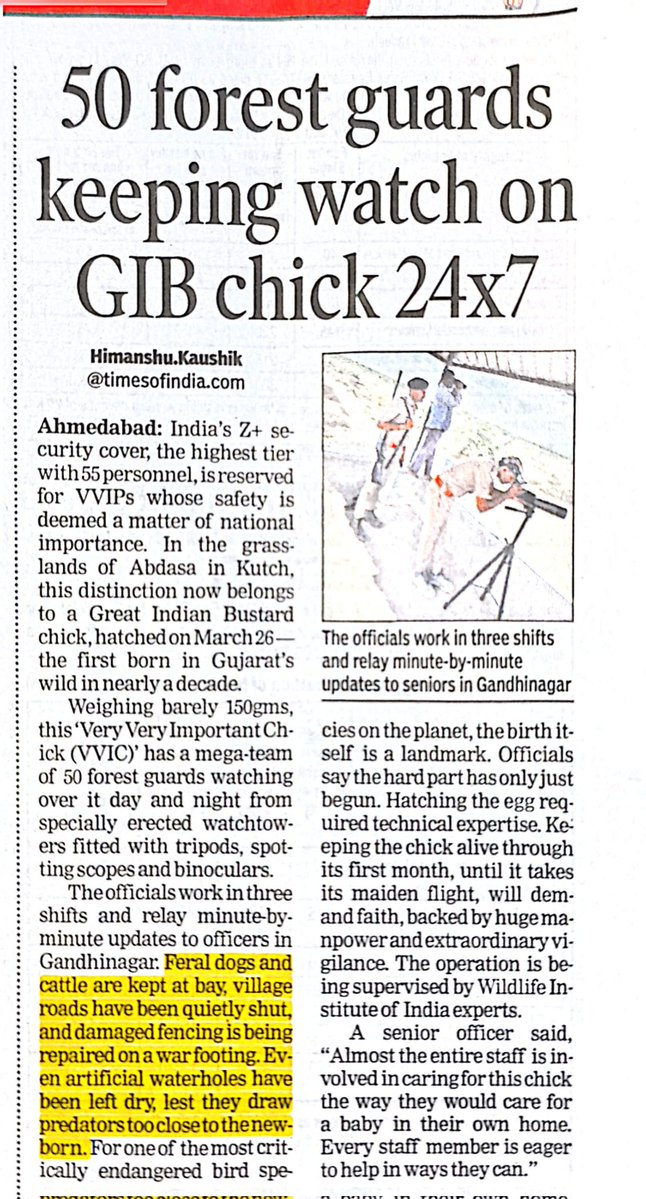
The Great Indian Bustard!
Ash Goyal tweet media
English
0
0
0
14
Ash Goyal
Ash Goyal@ashwanigl·
@hjluks This is a very well written in knowledge nugget. Thanks.
English
0
0
0
18
Howard Luks MD
Howard Luks MD@hjluks·
None of this is complicated, but it requires consistency measured in years. Strength, power, bone density, joint health, recovery, and protein. Each one is manageable. The physiology is on your side if you work with it rather than assuming the decline is inevitable.
English
8
2
84
16.2K
Howard Luks MD
Howard Luks MD@hjluks·
I'm a 62-year-old orthopedic surgeon, trail runner, climber, and cyclist. This is my Midlife Athlete's Playbook. I've combined what I've learned from 30+ years of treating active adults, and from training through my own 50s and 60s. The physiology of aging is real, but most of the decline people accept is optional.
English
35
101
1.2K
255.5K
Anand Ranganathan
Anand Ranganathan@ARanganathan72·
I was ordered by @Lenskart_com to cut my shikha and remove my tilak. When I refused to do so, I was fired. - Zeel Soghasia This is blatant discrimination and bigotry that goes beyond adhering to some internal memo. Mr Soghasia must be recalled and reinstated. @peyushbansal
English
2.4K
27.8K
72.6K
1.3M
Ash Goyal retweetledi
Parimal
Parimal@Fintech03·
Ask anyone about India’s space journey, & you will hear legends like Vikram Sarabhai, Homi J. Bhabha, Satish Dhawan, & A. P. J. Abdul Kalam. But ask about Brahm Prakash… & the story usually begins with a Google search. If Dhawan was the statesman, & Kalam the builder, Brahm Prakash was the alchemist. Not the man who launched rockets, the man who made them possible. He did not design trajectories, he designed the very metals that could survive them. When Brahm Prakash (MIT educated) became the 1st Director of the Vikram Sarabhai Space Centre (VSSC) in Thumba in 1972, he inherited a collection of small, scattered units. Much of the early materials research happened in an old church building. While the West used expensive, pre-made industrial alloys, Brahm Prakash realized India could not import them due to sanctions. He set up the Propellant Fuel Complex (PFC) & the Materials & QC Group. He treated metallurgy as a Sadhana (disciplined practice), ensuring that every batch of indigenous steel was perfect. Early SLV-3 used imported 15CDV6 steel. For larger vehicles like PSLV, stronger, lighter maraging steel (especially 18Ni M250 grade) was needed. Western export restrictions applied due to dual-use (missile/nuclear) nature. Brahm Prakash championed indigenous development at MIDHANI (Mishra Dhatu Nigam Ltd.), where he later served as Chairman (1980-84). India became 1 of the few countries with indigenous high-grade maraging steel production for rocket motor casings, a major strategic autonomy achievement still used in PSLV/GSLV. Before space, he was a key figure under Homi Bhabha in the Department of Atomic Energy (DAE). His pioneering work on zirconium-hafnium separation (using pyro-chemical/vapour phase dechlorination methods) was original & globally acclaimed in the 1950s. Zirconium (neutron-transparent) is essential for nuclear reactor cladding/fuel; hafnium (strong neutron absorber) must be removed. He played a major role in setting up the Nuclear Fuel Complex (NFC) in Hyderabad (as Project Director) & contributed to fuel fabrication for CIRUS and later reactors. Brahm Prakash is the reason India has Strategic Autonomy. Because he mastered the materials, India did not have to beg the world for the special metals required to build the GSLV/the Agni missiles.
Parimal tweet media
English
44
684
1.9K
48.1K
Ash Goyal
Ash Goyal@ashwanigl·
@FollowTheScien4 @visegrad24 Audi had no priority. The priority belonged to Land Rover. Land rover should not have needed to brake in the first place.
English
0
0
2
141
FollowTheScience
FollowTheScience@FollowTheScien4·
@visegrad24 Shit manoeuvre but the Land Rover could have reacted sooner and better.
English
5
2
121
7.3K
Visegrád 24
Visegrád 24@visegrad24·
🇬🇧 Driver avoids jail after crash that overturned a military convoy vehicle and left soldier with broken back Crenguta Aruxandei, 44, received a six-month suspended prison sentence, a 12-month driving ban, and a £154 victim surcharge after a collision in which a military Land Rover Defender flipped over, leaving its driver with a suspected broken back. According to Northamptonshire Police, dashcam footage showed the incident was “completely avoidable.” The video shows Aruxandei changing lanes in an Audi Q2 while exiting, forcing the Land Rover in a convoy to take evasive action, after which it rolled across both lanes.
English
238
252
2.7K
454.1K