Pruthviraj P

1.5K posts

Pruthviraj P banner
Pruthviraj P

Pruthviraj P

@ashwathama

Deep Learning SDE @nvidia · ex-nobody part-time human opinions are my own

California, USA Katılım Ocak 2017
812 Takip Edilen1.4K Takipçiler
Sabitlenmiş Tweet
Pruthviraj P
Pruthviraj P@ashwathama·
From 160 to 480+ followers in a few days… a lot of you are new to my network, so i wanted to share a bit of my story. I’m Pruthviraj. frankly i didn’t have a fancy start, a big network, or someone telling me exactly what to do. after my bachelor’s at PES university, Bangalore, i was honestly lost. i knew I wanted to grow, but I didn’t know the path. from there, i went to Clarkson University for my master’s because that was the option i could make work. the “top schools” were not something i could afford. and honestly, i wasn’t the person with a perfect prep story. while others were grinding LC, hackerrank, building profiles, and preparing with direction… i was behind. frankly didn’t have accounts. no consistency. no mentor. bc i started working as a RA at CITeR and built my foundation in deep learning, but when interviews came, i failed. so i started understanding the game. how interviews work. i tried again. got an interview. cleared it. reached the panel round. was harder. the role expected 5+ years of experience. I had none. but the hiring manager saw potential. instead of a rejection, they opened a new role for a graduate. and today, i’m at NVIDIA hq 💚 just a guy with lot of confusion, failure, learning, and one step forward at a time.

Pruthviraj P tweet media
English
50
9
319
22.3K
Pruthviraj P
Pruthviraj P@ashwathama·
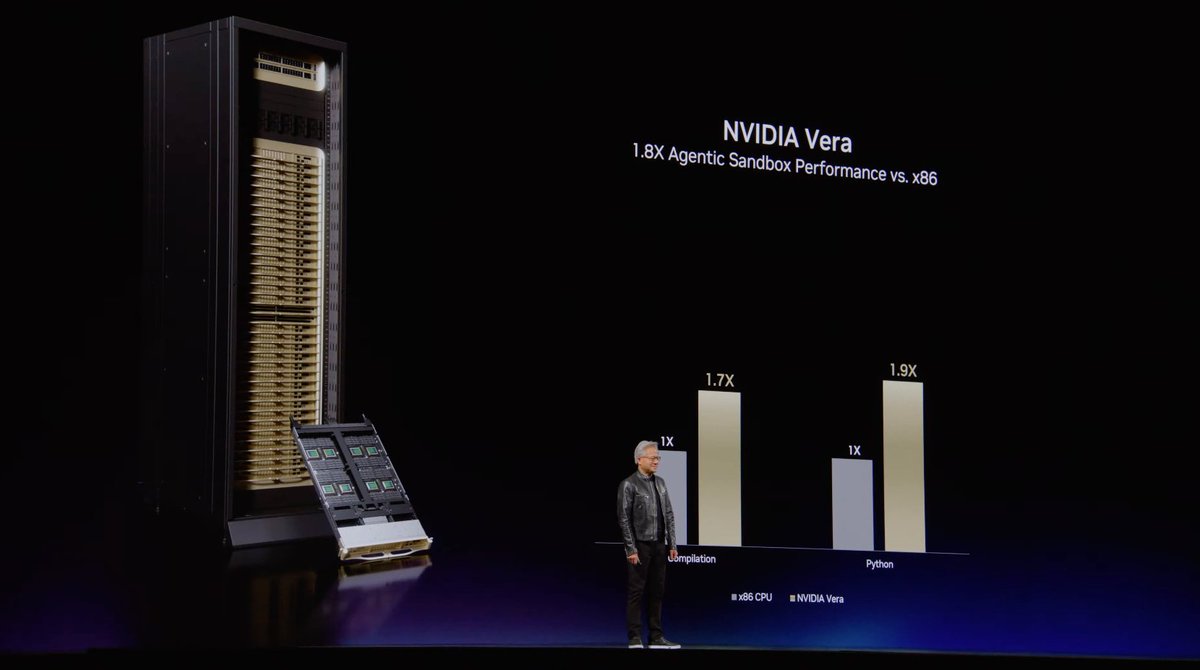
@nvidianewsroom NVIDIA Vera CPU for agents 80 percent faster agentic task completion vs x86. Purpose-built fr
English
0
0
0
361
NVIDIA Newsroom
NVIDIA Newsroom@nvidianewsroom·
The age of AI needs a new kind of CPU. Introducing NVIDIA Vera. The CPU for agents, delivering 80% faster agentic task completion compared with x86 CPUs. Vera is built to power the CPU-intensive work behind modern AI factories, from agentic AI and reinforcement learning to data processing and orchestration.
NVIDIA Newsroom tweet media
English
67
144
895
93.5K
Pruthviraj P
Pruthviraj P@ashwathama·
@yacineMTB When intelligence saturates the battles move to deployment latency cost and tooling fr
English
0
0
0
28
kache
kache@yacineMTB·
There's going to be a point where intelligence saturates meaningfully to be useful for humans, in which case open source will catch up to the closed frontier. Then, the battles will be fought elsewhere. Serving cost mostly probably?
MiniMax (official)@MiniMax_AI

Introducing MiniMax M3: The First Open-Weights Model to Combine Three Frontier Capabilities - Coding & Agentic Frontier: 59.0% SWE-Bench Pro, 66.0% Terminal Bench 2.1, 34.8% SWE-fficiency, 28.8% KernelBench Hard, 74.2% MCP Atlas - MiniMax Sparse Attention scales context to 1M - Natively Multimodal from Step Zero API: platform.minimax.io Token Plan: platform.minimax.io/subscribe/toke… 🚀New! MiniMax Code: code.minimax.io Weights & Tech Report in ~10 Days

English
34
13
345
37.3K
Pruthviraj P
Pruthviraj P@ashwathama·
@RichardSSutton Supervised generative AI cannot make novel discoveries in the strong sense. Controversial but coherent fr
English
0
0
0
61
Richard Sutton
Richard Sutton@RichardSSutton·
A new and possibly controversial perspective: In this video, I explain the sense in which generative AI trained by supervised learning is incapable of making novel discoveries. youtu.be/K5LAFEjTlBA The text of the speech: AI Creativity and Discovery Good day ladies and gentlemen. I regret that I am unable to be with you all today to engage in a back-and-forth discussion, but I am nevertheless pleased to be able to share with you, via this recording, some high-level thoughts about the current and future state of artificial intelligence, and in particular about AI’s relationship to science and mathematics, which is, as I understand it, the central focus of this meeting and of the SAIR Foundation. I would like to start with an old joke; I am sure you have heard it before. It is the one about the researcher whose work is being evaluated, and the review comes back, and says “This work is both novel and good. Unfortunately, the parts that are good are not novel, and the parts that are novel are not good.” My first point about AI is that this assessment applies exactly to large parts of AI as we know it today. Not all of today’s AI, but a large part of it. Pretty much all of what we mean by “Generative AI”---which includes large language models, and the images and video models, and even the new methods for learning world models. All of these AIs take large numbers of examples and produce a “model” which behaves similar to the examples, that is, which generates text like people, or images like artists or nature, and videos like we find on the internet. Don’t get me wrong, Generative AI can be extremely useful. No doubt about that. But the assessment of the joke still applies. These systems can produce output that is both novel and good, but not at the same time. In many ways this is just absolutely not a problem. When we ask an AI for an answer from the internet, or to summarize a document, we don’t want it to be novel. We are happy if the quality of the answer, the goodness, comes from the source material—from the people who wrote the document or the articles on the internet. If the AI’s answer is novel it means it is going beyond the source material, adding something beyond it. This is what we call “hallucinations”. In most cases, we don’t like it when the AI makes something up, when it adds something novel. One exception, of course, is when we are looking not for facts or reality, but for fiction and entertainment. We might ask for a bedtime story for a child, or an image based on existing images on the internet but which is nevertheless different and distinct from them. In these cases, it is never easy for us to know how creative the AI is actually being, as we do not know how close the AI’s story, poem, or image is to the source material. In a real practical sense we can not know this because the internet is too big, the possible sources that the AI may draw upon are too numerous. When we ask for a fiction or novelty, the AI can give it to us because its processing is in part stochastic. Every decision can go multiple ways and will go different ways and produce a different trajectory every time. The trajectory can be random—and thus novel—or it can be based on the training data—and thus “good” because the training data is good, sourced from people or reality. Thus, the trajectory is either novel or good—based on randomness or based on data—but never both at the same time. Really, I think it is okay if the output of Generative AI is never good and novel at the same time. For the researcher in the joke this is a devastating criticism, but for most things it is not, and for Generative AI it is not. Generative AI is meant to be a mimic. This is what supervised learning is for. Generative AI can be extremely useful, even when it just mimics, if it is faster, or cheaper, or smaller, or more customizable, or more copy-able, than the thing being mimicked. It is okay if Generative AI cannot be both novel and good at the same time. It is still a transformative technology. But it is a limitation. And remember we are here to use AI for science and mathematics, and for these areas the assessment of the reviewer in the joke is devastating. For these areas we need true creativity and discovery. Generative AI—or Mimicking AI—will never get where us there. For these we need something more, and indeed we have something more in other parts of AI. We have many AI systems which can give us more. We have AlphaGo with its world-changing move 37, or AlphaZero with its brilliant original chess-playing style. We have GT-Sophy that drives simulated racecars better than any human. We have AlphaFold and AlphaProof and Claude-Code, which have brought true advances in science, mathematics, and programming. We have RL-Lyft which optimizes the assignment of cars to passengers in the ride-hailing business. All these systems have found things that are both novel and good. And, truth be told, some language models have been augmented in ways that make them more than Generative AI based on supervised learning. All these systems have some additional features that make them capable of true creativity and true discovery. It is important for us to recognize what this is—and that it is not present in ordinary, garden-variety Generative AI. It is something that can not come from just supervised learning, from learning from examples. What is it? Well, it is a simple thing, a commonsense thing. It is not new. We have many names for it, but unfortunately none of them are very good names. I will call it Discovery. Basically, Discovery is just the idea of trying many things and seeing which of them work, then keeping those that worked the best. Evolution by natural selection works this way. The scientific method works this way. And just ordinary life and learning works this way. We try things and remember what works. What could be more obvious? In this behavioral case, psychology has two names for it— “instrumental learning” and “operant conditioning”—and in machine learning it is what we mean by “reinforcement learning”. We also see the idea of Discovery in planning and combinatorial search—anything that involves the idea of “generate and test”. The essence of Discovery is to combine three steps: 1. Variation, 2. Evaluation, and 3. Selective retention. Of course, I am not the first to say this. I am not the first to point out that this combination of steps is key to science, to evolution by natural selection, and to animal behavior. I think particularly of papers by Donald Campbell, by Daniel Dennett, and by Gary Cziko. What is new in my remarks is to directly relate the idea of Discovery to modern AI to help us see that it is not present in supervised learning or Generative AI—in particular, that Discovery is not present in backpropagation or gradient descent. Let me say explicitly what is missing from Generative AI. As we have remarked, these systems do have a stochastic aspect, so they do generate a variety of trajectories and behavior. What is missing is the Evaluation step. The generator was pre-trained by supervised learning, leaving no way at runtime to Evaluate what it generates. And of course without Evaluation there can be no Selective retention, and thus no Discovery. The variation can bring novelty, but without evaluation there is no Discovery, and arguably, no creativity. That is, I would say that creativity requires that the new things generated be Evaluated. Without evaluation, and retention of the best, there is nothing created. The novelty flickers into existence but, if its value is unrecognized, it flickers away and is lost. In many cases, Evaluation is done by people to make a discovery. As when we have Generative AI make many pictures for us, and then we pick the one that we like the best. The human+AI system completes the discovery. In many other cases, the Evaluation comes from a clear objective. Some moves lead to checkmate, some steps lead to a proof, some actions result in high reward, some genotypes make more copies, some theories explain the data better. Some prefer the Variation step to be called Blind variation, where “blind” here means that it is uninformed, a shot in the dark. It does not need to be completely uninformed; a good scientist does not select theories to test at random. But neither can it be completely informed and determined. There must be some uncertainty about where the answer lies in order for there to be a discovery. In practice, the variation is partly informed and partly blind, but it is the blind part that corresponds to the discovery. Now let us briefly go all the way to modern deep learning, to the backpropagation algorithm. At first it might seem that backpropagation is incapable of discovery because it is deterministic and thus incapable of variation. But this is not correct. The weight updates of backprop are deterministic, but the weights are initialized to small random values. The random initialization is often downplayed, but in fact it is a necessary form of variation; it must be done properly to get good performance. In backprop this Variation is done once, at network initialization, so its effect is temporary, and later the network may lose its ability to learn. This is the weakness of deep learning that is alleviated with a new algorithm that my group presented in Nature a couple of years ago. Our “continual backpropagation” made one small change: every so often a less-used neuron would be re-initialized to small random weights. This allows the variation to continue and plasticity to be retained. Although there is much more to be said about Creativity and Discovery, this is the key point: they are more than supervised learning, more than pattern recognition, more than prediction, and more than world modeling. Those things are important, but they alone will not bring us to discovery. Discovery requires Evaluation from a person or from an explicit goal, and only in the latter case will we attain full autonomy. So that is my call to arms. If we want the full power of AI scientists, then we should share the goals with them so they can create, evaluate, discover, and in these ways fully participate in achieving the goals. Let’s be bold! Let’s fully automate Creativity and Discovery!
YouTube video
YouTube
English
57
160
1K
361.5K
Pruthviraj P
Pruthviraj P@ashwathama·
@omarsar0 Cheapest context strategy is not fixed as agents reuse docs across turns. Worth reading fr
English
0
0
0
16
elvis
elvis@omarsar0·
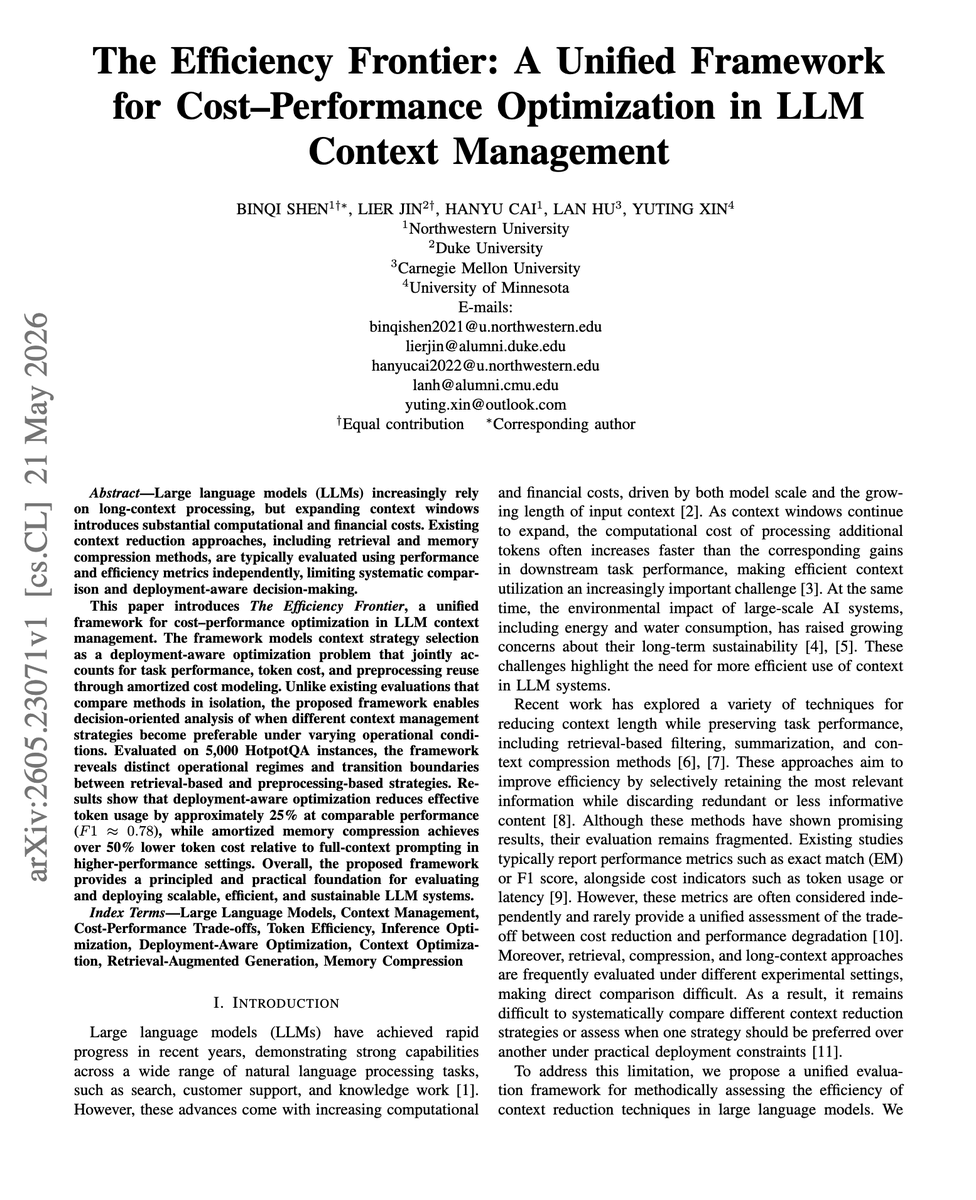
// The Efficiency Frontier // Cool paper on context management. As agents reuse the same documents and histories across many turns, the cheapest context strategy is not fixed. This work describes a principled rule for picking one per deployment instead of defaulting to whatever topped a benchmark in isolation. Retrieval and compression methods are almost always benchmarked on accuracy and cost separately, so you never learn when one actually beats another under real load. The Efficiency Frontier models context strategy selection as a single cost-performance problem, with a log-utility term for diminishing returns from extra context and a reuse parameter N that amortizes preprocessing across repeated queries. Sweep N and the optimal strategy changes, exposing crossover regions where retrieval, compression, or full context each wins. On 5,000 HotpotQA instances, deployment-aware selection cuts effective token usage about 25 percent at the same performance, and amortized memory compression runs over 50 percent cheaper than full-context prompting in higher-performance settings. Paper: arxiv.org/abs/2605.23071 Learn to build effective AI agents in our academy: academy.dair.ai
elvis tweet media
English
7
18
113
11.7K
Pruthviraj P
Pruthviraj P@ashwathama·
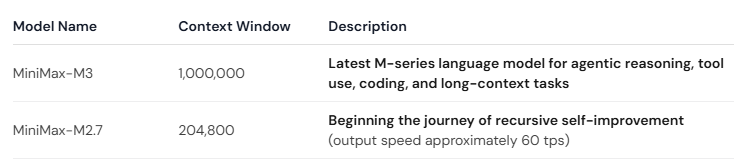
@scaling01 MiniMax M3 with 1 million token context at open weights. Real move fr
English
0
0
0
64
Lisan al Gaib
Lisan al Gaib@scaling01·
MiniMax-M3 will come with a 1 million token context window
Lisan al Gaib tweet media
English
17
5
206
9.9K
John Furr - Base Layer Robotics
Robotics is just plane hard. * Electrical Engineering * Mechanical Engineering * Machine Learning * CAD and Design * Software Engineering CAD/Design is my weakest link for sure and my strongest skill is Machine Learning and coding in general. What about you guys? What are your strongest and weakest skills in robotics?
English
29
8
176
11.2K
Pruthviraj P
Pruthviraj P@ashwathama·
@oprydai Humanoids moving from demos to deployment. That shift showing up everywhere this week fr
English
0
0
0
12
Mustafa
Mustafa@oprydai·
what’s new in robotics this week? the same pattern keeps showing up: robots are moving from demos → deployment. what happened: • humanoids are becoming a manufacturing race → figure says its botq facility scaled from 1 humanoid per day to 1 per hour in under 120 days. the game is shifting from “can it walk?” to “can you build thousands?” • dexterous hands are getting serious → chinese startup linkerbot is building robotic hands for humanoids, reportedly shipping 10,000 hands in 2025 and pushing prices way down. hands may become the real platform layer. • japan vs china humanoid race is heating up → japanese developers showed precision and cultural robot acceptance, while chinese companies are pushing affordability and mass production. • delivery robots are hitting real cities → serve robotics and coco robotics are operating hundreds of sidewalk robots in los angeles, and people are already debating safety, congestion, jobs, and public space. • tactile robotics is becoming a frontier → flexiv is previewing next-gen tactile robotic systems at icra 2026, focused on sensitivity, modularity, and human-robot interaction. the takeaway: robotics is no longer just a lab field. it is becoming a supply chain problem, a manufacturing problem, a data problem, a public infrastructure problem, and a human acceptance problem. the winners won’t just build robots that move. they’ll build robots that can be manufactured, deployed, maintained, trusted, and integrated into messy human environments.
Mustafa tweet media
English
6
2
25
1.8K
Pruthviraj P
Pruthviraj P@ashwathama·
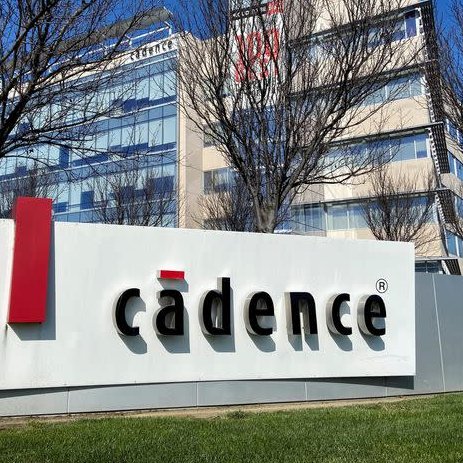
@Kyllechassee Sim to real gap was the biggest blocker. NVIDIA and Cadence closing it fr
English
0
0
0
35
Kyle Chassé/D
Kyle Chassé/D@Kyllechassee·
The biggest blocker to humanoid robots at scale was never intelligence. It was the gap between simulation and the real world. Nvidia and Cadence just made that gap a lot smaller.
Kyle Chassé/D tweet mediaKyle Chassé/D tweet media
English
1
0
2
73
Pruthviraj P
Pruthviraj P@ashwathama·
@spaceandtech_ HMND 01 picking carrying placing totes at Siemens factory two weeks autonomously. Real deployment fr
English
0
0
0
18
Space and Technology
Space and Technology@spaceandtech_·
Humanoid and Siemens successfully tested the HMND 01 humanoid robot in a real factory environment. During a two-week deployment, the robot autonomously picked, carried, and placed totes at the Siemens Electronics Factory. The test demonstrated that humanoid robots can perform practical industrial tasks in factories and warehouses.
English
15
49
157
11.2K
Pruthviraj P
Pruthviraj P@ashwathama·
@robotsdigest Learning future videos and future actions together before acting. That prediction framing is clean fr
English
0
0
0
18
Robots Digest 🤖
Robots Digest 🤖@robotsdigest·
τ0-WM turns robot control into a prediction problem. Instead of directly outputting actions, it learns to imagine future videos and future actions together. By learning "what happens next," the robot develops stronger intuition about object dynamics, contact, and long-horizon task execution. The result is a single world model that can both act and predict.
English
4
11
56
2.7K
Peter H. Diamandis, MD
Peter H. Diamandis, MD@PeterDiamandis·
We said on the MOONSHOTS podcast that when AI hits 50% on Humanity's Last Exam, that is AGI. Opus 4.8 scored 57.9%. We crossed our own threshold WOW!
English
119
113
1.8K
124.7K
Pruthviraj P
Pruthviraj P@ashwathama·
@gauri__gupta Continual learning of agents is the actual product now. Evals were just the precursor fr
English
0
0
1
77
Pruthviraj P
Pruthviraj P@ashwathama·
@rohit4verse Harness patching alone improved 116 of 126 setups. Model frozen. Harness is everything
English
0
0
1
26
Rohit
Rohit@rohit4verse·
2 months ago, I wrote "The Harness Is Everything" 1.3M views. Last week's Life-Harness paper: 116 of 126 model-environment setups improved by patching the harness alone. Model frozen. 88.5% mean lift across 18 backbones. ↓ how Claude Code and Codex actually work under the hood
Rohit tweet media
Rohit@rohit4verse

x.com/i/article/2028…

English
47
86
591
75.2K
Pruthviraj P
Pruthviraj P@ashwathama·
@emollick Knowing when to ask good questions is what makes an agent useful. That matters fr
English
0
0
0
11
Ethan Mollick
Ethan Mollick@emollick·
/goal and other fully automated AI agents are cool, but not a great model for the future of work with people. Instead you want your AI to know when to ask you GOOD questions, maybe because it is stuck, maybe because your taste matters, maybe because you would find it interesting.
English
64
20
361
20.8K
Pruthviraj P
Pruthviraj P@ashwathama·
@steipete Codex as QA assistant with WebVNC and browser-use. Real user testing workflow fr
English
0
0
0
45
Peter Steinberger 🦞
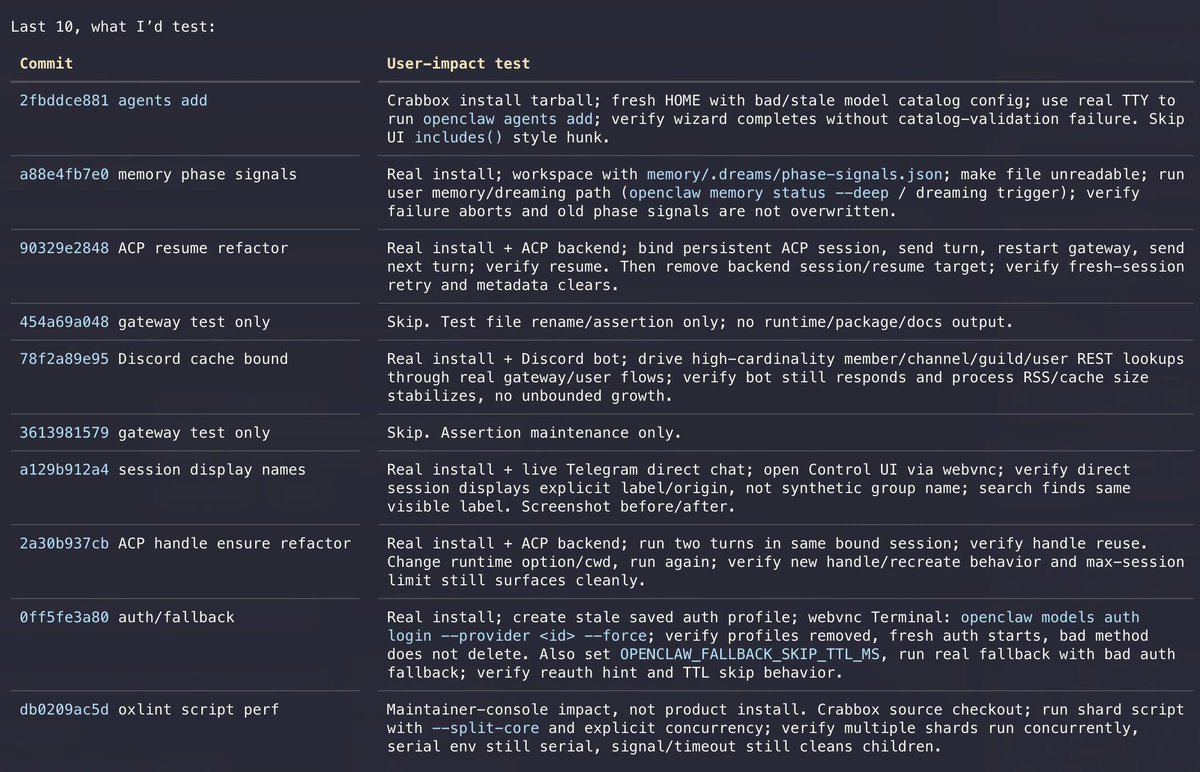
Been teaching codex to be my QA assistant. For every commit it creates a user-test scenario and uses webVNC (crabbox), computer/browser use (peekaboo/mcporter) to test OpenClaw like a user/QA person would. This runs in the background and opens PRs with fixes.
Peter Steinberger 🦞 tweet media
English
51
69
1.1K
57.1K
Pruthviraj P
Pruthviraj P@ashwathama·
weird thing i miss: the chaos. bangalore roads are wild. horns, autos, someone's uncle waving you down in the middle of the lane. the pothole outside my old house was so big we used it to give directions. "take left after the big one." california roads are smooth and empty. almost too quiet.
English
1
0
2
329
Pruthviraj P
Pruthviraj P@ashwathama·
@asimovinc Day 248 building Asimov first steps with new locomotion policy. That long game is real
English
0
0
0
44
Pruthviraj P
Pruthviraj P@ashwathama·
@mikekalilmfg Humanoids at home will take a while says Agility Robotics founder. Grounded take fr
English
0
0
0
68
Mike Kalil
Mike Kalil@mikekalilmfg·
Agility Robotics Founder: 'It's Gonna Be Awhile' for Humanoids at Home Jonathan Hurst, co-founder and chief robot officer at Oregon-based Agility Robotics, says humanoid robots as useful home companions is the ultimate dream. But it's a long ways off. During his new TED Talk, the Oregon State University professor said today's AI-powered humanoid robots are nowhere near ready for homes at scale. He said much more data is needed to unlock general autonomy and that costs must drop dramatically before consumers will consider them. "The big one, the major blocker, is safety," he said. "It is completely unacceptable for a robot to fall on your child." Launched an OSU spinout in 2015, Agility deployed its bipedal robots at GXO Logistics’ distribution center in Flowery Branch, GA under a robots-as-a-service (RaaS) agreement in mid 2024. The humanoids are also working in Schaeffler’s automotive parts factory in South Carolina, handling bin and basket transfers on the production floor. Additional commercial agreements are rolling out with Toyota Manufacturing Canada for assembly support and Mercado Libre at its San Antonio, TX fulfillment center.
English
9
16
41
4.5K
Pruthviraj P
Pruthviraj P@ashwathama·
@animesh_garg COBALT cloud-native teleoperation for large-scale robot demonstrations. Data collection is still brutal
English
0
0
2
133
Animesh Garg
Animesh Garg@animesh_garg·
Robotics is still data starved. Collecting high-quality robot demonstrations remains brutally slow and expensive. Introducing COBALT: A cloud-native teleoperation platform designed for large-scale robot learning. We are democratizing data collection by leveraging the hardware everyone already owns: the smartphone All you need is to download an app (today)! Read on for more!
English
11
38
302
33.5K