Asim Ahmed

73 posts

Asim Ahmed

Asim Ahmed

@asim800

Katılım Şubat 2010
216 Takip Edilen9 Takipçiler
Asim Ahmed
Asim Ahmed@asim800·
@paulg Can you give a good example or a story of that from your experience? Thanks
English
0
0
0
90
Asim Ahmed
Asim Ahmed@asim800·
@RepThomasMassie What do you think were the factors that contributed to the loss? I know money is a big factor but can we break it down? How could one be more effective in a asymmetric fight?
English
0
0
0
5
Thomas Massie
Thomas Massie@RepThomasMassie·
There’s a quiet all out war for the future of our country. Let us not misdirect our precious resources. I do not believe I lost due to fraudulent votes, mail-in ballots, hacking, or mistabulated results. I respect those who want to make sure, but I won’t be requesting a recount.
English
5.9K
5.8K
75.9K
4.3M
Asim Ahmed
Asim Ahmed@asim800·
@eigensteve This looks great. Is there ToC somewhere that I can peruse?
English
1
0
1
310
Steven Brunton
Steven Brunton@eigensteve·
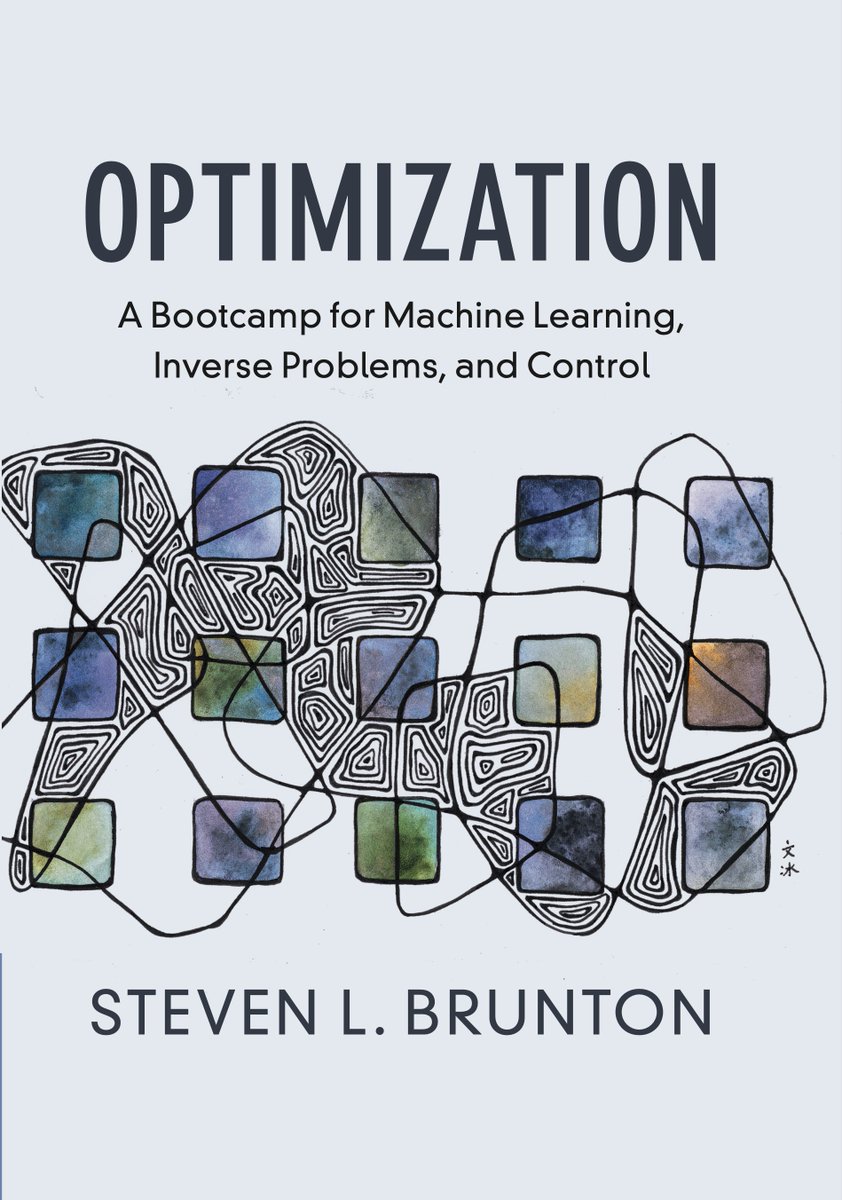
I Wrote a New Book!!! Optimization: A Bootcamp for Machine Learning, Inverse Problems, and Control Pre-Order Now (July 31) amazon.com/Optimization-B… Coming Soon: * Free PDF on website * YouTube Videos for entire book * Python code on GitHub
Steven Brunton tweet mediaSteven Brunton tweet media
English
62
381
2.8K
183.4K
Asim Ahmed retweetledi
Mayor Zohran Kwame Mamdani
Today marks Nakba Day, an annual day of remembrance to commemorate the expulsion of more than 700,000 Palestinians between 1947 and 1949 during the creation of the State of Israel and the year that followed. Inea is a New Yorker and a Nakba survivor. She shared her story with us — one of home, tradition and memory over generations.
English
11.1K
42.2K
186.1K
10.8M
Asim Ahmed retweetledi
Thomas Massie
Thomas Massie@RepThomasMassie·
In-person, early voting for Kentucky primaries begins today, Thursday, 5/14, through Saturday, 5/16. Take this opportunity if you won't be able to make it out on 5/19, Election Day. Find your polling location and times: elect.ky.gov/Voters/Pages/P…
Thomas Massie tweet media
English
1.3K
3.1K
15.1K
360.3K
Asim Ahmed
Asim Ahmed@asim800·
@tommmitchell @DaphneKoller @Stanford @insitro I am curious what aspect of human biology blends well with causal and PGM techniques. I am a great fan of her book and I learned about PGM from information theory and coding POV.
English
0
0
1
24
Christophe Boutry
Christophe Boutry@Ced_haurus·
Palantir vient de publier son manifeste. Lisez-le. Pas pour ce qu'il dit sur la tech. Pour ce qu'il dit sur le politique. Sur l'idéologie de Karp et Thiel. Sur la guerre. Sur vous. Quand une entreprise privée se donne pour mission de définir qui doit être surveillé, ciblé, prédit, neutralisé, et qu'elle publie simultanément un texte expliquant pourquoi contester cela serait de la faiblesse civilisationnelle, on n'est plus dans la stratégie d'entreprise. On est dans la privatisation du souverain. Le droit de décider de l'ennemi, qui fut toujours le geste politique fondateur des États, est en train d'être racheté par une entreprise cotée au Nasdaq. Ce manifeste repose sur un seul tour de passe-passe, répété sous vingt formes différentes : rendre l'inévitable ce qui est en réalité un choix. Les armes à IA ? Elles seront construites de toute façon, alors autant que ce soit nous. La surveillance algorithmique ? La réalité géopolitique l'exige. Le réarmement de l'Occident, la hiérarchie des cultures, la disqualification du pluralisme comme naïveté dangereuse ? Simple lucidité face au monde tel qu'il est. C'est le geste idéologique par excellence : ne pas interdire la question, mais la rendre indécente. Ce que Palantir appelle réalisme est en fait une décision philosophique radicale : le conflit est la vérité permanente du monde, la délibération démocratique est une fragilité que l'adversaire exploitera, et une élite technologique privée est mieux placée qu'un peuple pour tirer les conséquences de cette vérité. C'est du schmittisme en hoodie. C'est littéralement la structure de leur pensée. Le danger n'est pas qu'ils soient fous. Le danger est qu'ils soient riches, cohérents, et déjà à l'intérieur des États. Palantir ne frappe pas à la porte des gouvernements pour vendre un outil. Elle arrive avec une cosmologie complète : voici comment fonctionne le monde, voici vos ennemis, voici pourquoi vous ne pouvez pas vous permettre de débattre, et voici notre contrat. Palantir est l'ennemie des peuples et de la démocratie. Ce qu'ils construisent, c'est un pouvoir technocratique que personne n'a élu et que personne ne pourra destituer.
Palantir@PalantirTech

Because we get asked a lot. The Technological Republic, in brief. 1. Silicon Valley owes a moral debt to the country that made its rise possible. The engineering elite of Silicon Valley has an affirmative obligation to participate in the defense of the nation. 2. We must rebel against the tyranny of the apps. Is the iPhone our greatest creative if not crowning achievement as a civilization? The object has changed our lives, but it may also now be limiting and constraining our sense of the possible. 3. Free email is not enough. The decadence of a culture or civilization, and indeed its ruling class, will be forgiven only if that culture is capable of delivering economic growth and security for the public. 4. The limits of soft power, of soaring rhetoric alone, have been exposed. The ability of free and democratic societies to prevail requires something more than moral appeal. It requires hard power, and hard power in this century will be built on software. 5. The question is not whether A.I. weapons will be built; it is who will build them and for what purpose. Our adversaries will not pause to indulge in theatrical debates about the merits of developing technologies with critical military and national security applications. They will proceed. 6. National service should be a universal duty. We should, as a society, seriously consider moving away from an all-volunteer force and only fight the next war if everyone shares in the risk and the cost. 7. If a U.S. Marine asks for a better rifle, we should build it; and the same goes for software. We should as a country be capable of continuing a debate about the appropriateness of military action abroad while remaining unflinching in our commitment to those we have asked to step into harm’s way. 8. Public servants need not be our priests. Any business that compensated its employees in the way that the federal government compensates public servants would struggle to survive. 9. We should show far more grace towards those who have subjected themselves to public life. The eradication of any space for forgiveness—a jettisoning of any tolerance for the complexities and contradictions of the human psyche—may leave us with a cast of characters at the helm we will grow to regret. 10. The psychologization of modern politics is leading us astray. Those who look to the political arena to nourish their soul and sense of self, who rely too heavily on their internal life finding expression in people they may never meet, will be left disappointed. 11. Our society has grown too eager to hasten, and is often gleeful at, the demise of its enemies. The vanquishing of an opponent is a moment to pause, not rejoice. 12. The atomic age is ending. One age of deterrence, the atomic age, is ending, and a new era of deterrence built on A.I. is set to begin. 13. No other country in the history of the world has advanced progressive values more than this one. The United States is far from perfect. But it is easy to forget how much more opportunity exists in this country for those who are not hereditary elites than in any other nation on the planet. 14. American power has made possible an extraordinarily long peace. Too many have forgotten or perhaps take for granted that nearly a century of some version of peace has prevailed in the world without a great power military conflict. At least three generations — billions of people and their children and now grandchildren — have never known a world war. 15. The postwar neutering of Germany and Japan must be undone. The defanging of Germany was an overcorrection for which Europe is now paying a heavy price. A similar and highly theatrical commitment to Japanese pacifism will, if maintained, also threaten to shift the balance of power in Asia. 16. We should applaud those who attempt to build where the market has failed to act. The culture almost snickers at Musk’s interest in grand narrative, as if billionaires ought to simply stay in their lane of enriching themselves . . . . Any curiosity or genuine interest in the value of what he has created is essentially dismissed, or perhaps lurks from beneath a thinly veiled scorn. 17. Silicon Valley must play a role in addressing violent crime. Many politicians across the United States have essentially shrugged when it comes to violent crime, abandoning any serious efforts to address the problem or take on any risk with their constituencies or donors in coming up with solutions and experiments in what should be a desperate bid to save lives. 18. The ruthless exposure of the private lives of public figures drives far too much talent away from government service. The public arena—and the shallow and petty assaults against those who dare to do something other than enrich themselves—has become so unforgiving that the republic is left with a significant roster of ineffectual, empty vessels whose ambition one would forgive if there were any genuine belief structure lurking within. 19. The caution in public life that we unwittingly encourage is corrosive. Those who say nothing wrong often say nothing much at all. 20. The pervasive intolerance of religious belief in certain circles must be resisted. The elite’s intolerance of religious belief is perhaps one of the most telling signs that its political project constitutes a less open intellectual movement than many within it would claim. 21. Some cultures have produced vital advances; others remain dysfunctional and regressive. All cultures are now equal. Criticism and value judgments are forbidden. Yet this new dogma glosses over the fact that certain cultures and indeed subcultures . . . have produced wonders. Others have proven middling, and worse, regressive and harmful. 22. We must resist the shallow temptation of a vacant and hollow pluralism. We, in America and more broadly the West, have for the past half century resisted defining national cultures in the name of inclusivity. But inclusion into what? Excerpts from the #1 New York Times Bestseller The Technological Republic: Hard Power, Soft Belief, and the Future of the West, by Alexander C. Karp & Nicholas W. Zamiska techrepublicbook.com

Français
440
10.2K
25.3K
3M
Yann LeCun
Yann LeCun@ylecun·
Dario is wrong. He knows absolutely nothing about the effects of technological revolutions on the labor market. Don't listen to him, Sam, Yoshua, Geoff, or me on this topic. Listen to economists who have spent their career studying this, like @Ph_Aghion , @erikbryn , @DAcemogluMIT , @amcafee , @davidautor
TFTC@TFTC21

Anthropic CEO Dario Amodei: “50% of all tech jobs, entry-level lawyers, consultants, and finance professionals will be completely wiped out within 1–5 years.”


English
1.2K
2.8K
21.4K
4.1M
Asim Ahmed retweetledi
Michael Moore
Michael Moore@MMFlint·
We need a people's media! Corporate media outlets have become mouthpieces for the ruling class. It's critical that we support independent journalists who are unafraid to disrupt the status quo so that we have access to truth. Carl Deal and Tia Lessin's new film follows independent journalist and Democracy Now! host Amy Goodman and her refusal to surrender to power. STEAL THIS STORY, PLEASE! is in theaters now. StealThisStory.org
English
51
772
2.7K
80.7K
Asim Ahmed
Asim Ahmed@asim800·
@sarahookr The book is a great bridge between information theory and Machine learning but reminder that it came out years before current renaissance of ML. He studied under Hinton in Toronto.
English
0
0
1
732
Sara Hooker
Sara Hooker@sarahookr·
A really excellent book. A few people independently told me this was one of their favorite books over a decade ago. I bought it, and it became one of the textbooks on my shelf I revisit from time to time to spark the joy of holding ideas to a different light. It brings to life the elegance of information theory. A good day to recognize 10 years from the passing of David McKay.
Sara Hooker tweet media
English
22
147
1.4K
65.8K
Asim Ahmed
Asim Ahmed@asim800·
@pati_marins64 Weren’t Talibans also using ambush strategy? How are the two different besides equipment?
English
0
0
0
114
Patricia Marins
Patricia Marins@pati_marins64·
Part II It is in that closer range that Iran intends to fight, using its fast attack boats, aerial, surface, and underwater drones, along with a wide array of anti-ship missiles. That is the kind of war Iran wants to fight, not an open-sea confrontation. Recently, an American F-15 was shot down in the provinces of Kohgiluyeh and Boyer-Ahmad. This triggered the dispatch of a search and rescue force consisting of a C-130, two helicopters, an A-10, and an RQ-9 drone. This force flew for long periods over Iranian territory without being intercepted by fighters, attacked by MANPADS, 358 missiles, or any other SHORAD system. When Saddam invaded Iran, a phrase became famous among Iraqi soldiers: “Iran lets them in.” That was exactly the Iranian tactic. They allowed Iraqi forces to advance far from their supply lines, then used the terrain to encircle them. Small teams armed with missiles would strike the vanguard and the rearguard, creating chaos in the middle and setting up successive ambushes. The same logic is visible today: Iran shoots down a fighter jet, but allows helicopters, an A-10, and a C-130, much easier targets, to fly freely in the same area. Why? Because by letting these aircraft enter its airspace, Iran forces the adversary to reveal routes, communication protocols, and patterns that will be used in future ground operations. While conventional military thinking seeks to expand the “safe zone,” asymmetric warfare turns it into controlled corridors. American commanders may believe they are widening their safe area, but those corridors will be exactly where, in the future, hundreds of helicopters and support aircraft will be ambushed. In December 1981, Iran carried out a classic ambush. They used F-4E Phantoms flying high as visible bait to lure Iraqi Mirage F1s. While the Iraqis tried to intercept them, F-14 Tomcats flying low would climb up from behind and shoot them down. Many times Iran allowed Iraqi bombers to approach oil terminals, such as Kharg Island, while keeping F-14s in silent standby behind the formation. After losing several aircraft, Iraq abandoned the tactic. Asymmetric warfare is exactly that: a much weaker force uses defense in depth, constantly luring, luring, and luring until the perfect moment for the ambush. Iran cannot confront the U.S. and Israeli air superiority head-on, a mistake the Ukrainians made in the first days of the Russian invasion, paying a heavy price. Iran will not try to deny American and Israeli air superiority. They will continue conducting missions across various parts of the country, often undetected. But Iran will keep gradually deploying its air defense systems, ambushing fighters and carefully delineating corridors it knows will be used later for landing ground forces. Its biggest challenge remains detecting these operations in time without relying on medium and long-range radars. That is the real limitation of Iran’s current asymmetric air warfare tactic.
English
14
76
385
27.2K
Patricia Marins
Patricia Marins@pati_marins64·
The Nuances of Iranian Asymmetric Warfare on Land, Sea, and Air Its biggest challenge remains detecting these operations in time without relying on medium- and long-range radars. That is the real limitation of Iran’s current asymmetric air warfare tactic. We often struggle to understand asymmetric warfare. The common idea of war is simple: you hit the enemy with everything you have, as efficiently as possible, aiming for a quick victory. That is the concept of conventional war, which gives superpowers and large, modern armies a massive advantage, because a direct, short-term clash tends to devastate a smaller force. Asymmetric warfare works differently. It is based on lure, lure, and lure again, and only then ambush. The goal is not a quick victory, but to wear down the adversary through attrition, targeting economic, political, and psychological pressure much more than pure military destruction. In Iran’s case, its resilience and missile-based attrition strategy clearly aim to erode domestic support for the U.S. government, increase pressure on Gulf and Asian allies, and generate political and economic stress in Europe, including through inflation. All of this is executed through tactical means that serve multiple strategic axes, all converging to create an environment of stress and chaos for Trump. This entire approach operates under well-defined doctrines of asymmetric warfare at sea, on land, and in the air. When we see the U.S. Navy stationed 700 km off the Iranian coast, many people ask: “Where are Iran’s anti-ship missiles?” Anxious American politicians even claim that “everything is under control” and that the ships can safely advance. Can Iran attack those ships? Yes, it can. But it chooses not to, at least not yet. Those ships, operating at 700 km, are already at the limit of the F-18’s combat radius, the main aircraft on American carriers. And they are obviously well within Iranian missile range. During the conflict with the Houthis, the Yemenis launched Sayyad/Quds-Z0 missiles with an 800 km range. Today, they already speak of Palestine-2 and Quds-4 versions that easily exceed 1,000 km. If the Houthi arsenal is essentially Iranian technology, what is the real range of Iran’s anti-ship missiles today? It certainly goes well beyond 700 km. But asymmetric warfare is not a 50-meter sprint. It is a carefully planned marathon. The Iranians know that the critical point is maintaining control over the Strait of Hormuz. That’s why they try to lure the ships closer, a bait the U.S. Navy has so far refused to take. Join my Substack to read full article: open.substack.com/pub/global21/p…
Patricia Marins tweet media
English
43
335
1.6K
183.5K
Asim Ahmed retweetledi
Andrej Karpathy
Andrej Karpathy@karpathy·
Thank you Sarah, my pleasure to come on the pod! And happy to do some more Q&A in the replies.
sarah guo@saranormous

Caught up with @karpathy for a new @NoPriorsPod: on the phase shift in engineering, AI psychosis, claws, AutoResearch, the opportunity for a SETI-at-Home like movement in AI, the model landscape, and second order effects 02:55 - What Capability Limits Remain? 06:15 - What Mastery of Coding Agents Looks Like 11:16 - Second Order Effects of Coding Agents 15:51 - Why AutoResearch 22:45 - Relevant Skills in the AI Era 28:25 - Model Speciation 32:30 - Collaboration Surfaces for Humans and AI 37:28 - Analysis of Jobs Market Data 48:25 - Open vs. Closed Source Models 53:51 - Autonomous Robotics and Atoms 1:00:59 - MicroGPT and Agentic Education 1:05:40 - End Thoughts

English
319
401
5.5K
1.1M
Asim Ahmed
Asim Ahmed@asim800·
@amasad Congrats! That’s a beautiful idea. I’d love to help.
English
0
0
0
31
Amjad Masad
Amjad Masad@amasad·
We’ve raised $400M at a $9B valuation. Investors include Georgian, G Squared, Prysm, 1789, YC, Coatue, a16z, Craft, and QIA, with strategic investments from Accenture, Databricks, Okta, and Tether. We’re also lucky to have incredible individuals backing us, including Shaq and Jared Leto. This funding will help us scale our ambition and expand beyond coding into AI systems that center human creativity. Replit is now used at 85% of the Fortune 500. We have an opportunity to help shape the future of work. One where AI abstracts away the boring parts and humans shine as creative directors. We’re also investing more globally, particularly in Europe, Asia, and the Middle East. Innovation can come from anywhere in the world, and we want to help unlock it.
English
514
707
8.2K
2.5M
Asim Ahmed retweetledi
Andrej Karpathy
Andrej Karpathy@karpathy·
Three days ago I left autoresearch tuning nanochat for ~2 days on depth=12 model. It found ~20 changes that improved the validation loss. I tested these changes yesterday and all of them were additive and transferred to larger (depth=24) models. Stacking up all of these changes, today I measured that the leaderboard's "Time to GPT-2" drops from 2.02 hours to 1.80 hours (~11% improvement), this will be the new leaderboard entry. So yes, these are real improvements and they make an actual difference. I am mildly surprised that my very first naive attempt already worked this well on top of what I thought was already a fairly manually well-tuned project. This is a first for me because I am very used to doing the iterative optimization of neural network training manually. You come up with ideas, you implement them, you check if they work (better validation loss), you come up with new ideas based on that, you read some papers for inspiration, etc etc. This is the bread and butter of what I do daily for 2 decades. Seeing the agent do this entire workflow end-to-end and all by itself as it worked through approx. 700 changes autonomously is wild. It really looked at the sequence of results of experiments and used that to plan the next ones. It's not novel, ground-breaking "research" (yet), but all the adjustments are "real", I didn't find them manually previously, and they stack up and actually improved nanochat. Among the bigger things e.g.: - It noticed an oversight that my parameterless QKnorm didn't have a scaler multiplier attached, so my attention was too diffuse. The agent found multipliers to sharpen it, pointing to future work. - It found that the Value Embeddings really like regularization and I wasn't applying any (oops). - It found that my banded attention was too conservative (i forgot to tune it). - It found that AdamW betas were all messed up. - It tuned the weight decay schedule. - It tuned the network initialization. This is on top of all the tuning I've already done over a good amount of time. The exact commit is here, from this "round 1" of autoresearch. I am going to kick off "round 2", and in parallel I am looking at how multiple agents can collaborate to unlock parallelism. github.com/karpathy/nanoc… All LLM frontier labs will do this. It's the final boss battle. It's a lot more complex at scale of course - you don't just have a single train. py file to tune. But doing it is "just engineering" and it's going to work. You spin up a swarm of agents, you have them collaborate to tune smaller models, you promote the most promising ideas to increasingly larger scales, and humans (optionally) contribute on the edges. And more generally, *any* metric you care about that is reasonably efficient to evaluate (or that has more efficient proxy metrics such as training a smaller network) can be autoresearched by an agent swarm. It's worth thinking about whether your problem falls into this bucket too.
Andrej Karpathy tweet media
English
965
2.1K
19.5K
3.6M
Asim Ahmed retweetledi
Assal Rad
Assal Rad@AssalRad·
The difference is by design.
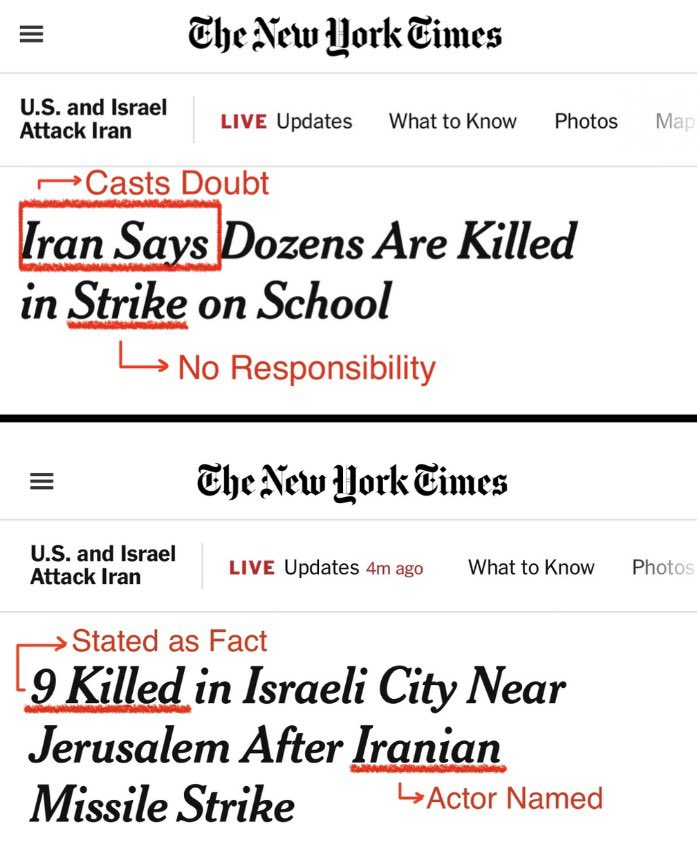
Assal Rad tweet media
English
2.4K
107.1K
572.1K
10.2M
Asim Ahmed retweetledi
Paul Williams
Paul Williams@freemonotheist·
‘When they are told, “Do not spread corruption in the land,” they reply, “We are only peacemakers!”’ ~ Quran 2:11
English
118
5.6K
22.5K
342.4K
Asim Ahmed retweetledi
Krystal Ball
Krystal Ball@krystalball·
This is a disgusting and cowardly statement handwringing about process and the need for a briefing. No you idiot. This war is a horror and a disaster and must be directly opposed. Any Democrat who can’t say that needs to resign and ESPECIALLY the ones in leadership.
Jake Sherman@JakeSherman

NEW -- SCHUMER STATEMENT “When I talked to Secretary Rubio, I implored him to be straight with Congress and the American people about the objectives of these strikes and what comes next. Iran must never be allowed to attain a nuclear weapon but the American people do not want another endless and costly war in the Middle East when there are so many problems at home.   “The administration has not provided Congress and the American people with critical details about the scope and immediacy of the threat. Confronting Iran’s malign regional activities, nuclear ambitions, and harsh oppression of the Iranian people demands American strength, resolve, regional coordination, and strategic clarity. Unfortunately, President Trump’s fitful cycles of lashing out and risking wider conflict are not a viable strategy.    “The administration must brief Congress, including an immediate all senators classified briefing and in public testimony, to answer these vital questions. The Senate should quickly return to session and reassert its constitutional duty by passing our resolution to enforce the War Powers Act.   “My prayers are with our brave American servicemembers.”

English
102
666
4.9K
265.7K
Asim Ahmed retweetledi
Thomas Massie for Congress
Thomas Massie for Congress@MassieforKY·
I’m not the only Republican who campaigned on putting America First, I’m just the one who’s keeping his word. The Israeli lobby has spent $5 million against me because I don’t support sending our troops to fight their war. Please help me put America 1st secure.thomasmassie.com/donate
English
5K
9.8K
61.4K
906.3K
Asim Ahmed retweetledi
Ounka
Ounka@OunkaOnX·
AMERICAN Palestinian Christian responds to Mike Huckabees lies
English
541
6.3K
14.1K
244.9K