Anish Moonka@anishmoonka
We use the word "vanilla" to mean plain and boring. The real thing is the second most expensive spice in the world, beaten only by saffron, and it's so hard to make that about 99 times out of 100, the vanilla you're tasting is actually a fake, a single chemical cooked up in a factory from wood pulp or oil. Real vanilla, the kind scraped straight from a bean, packs more than 200 different flavors and smells into one pod. The one you've heard of, vanillin, is just the loudest note. A good scoop of real vanilla ice cream tastes deep and rounded because of all the quieter ones humming away underneath it. The cheap kind tastes flat because there is nothing playing under that top note.
Vanilla is also the only orchid in the world that grows a fruit you can eat. Its flower opens for just one day a year, and someone has to pollinate it by hand within about twelve hours or no bean ever grows. Out in the wild, one kind of bee in Mexico was the only thing on Earth that could pull it off. So for more than three hundred years after the Spanish first carried vanilla home from Mexico, anyone who planted it somewhere else watched their vines flower right on schedule and grow nothing.
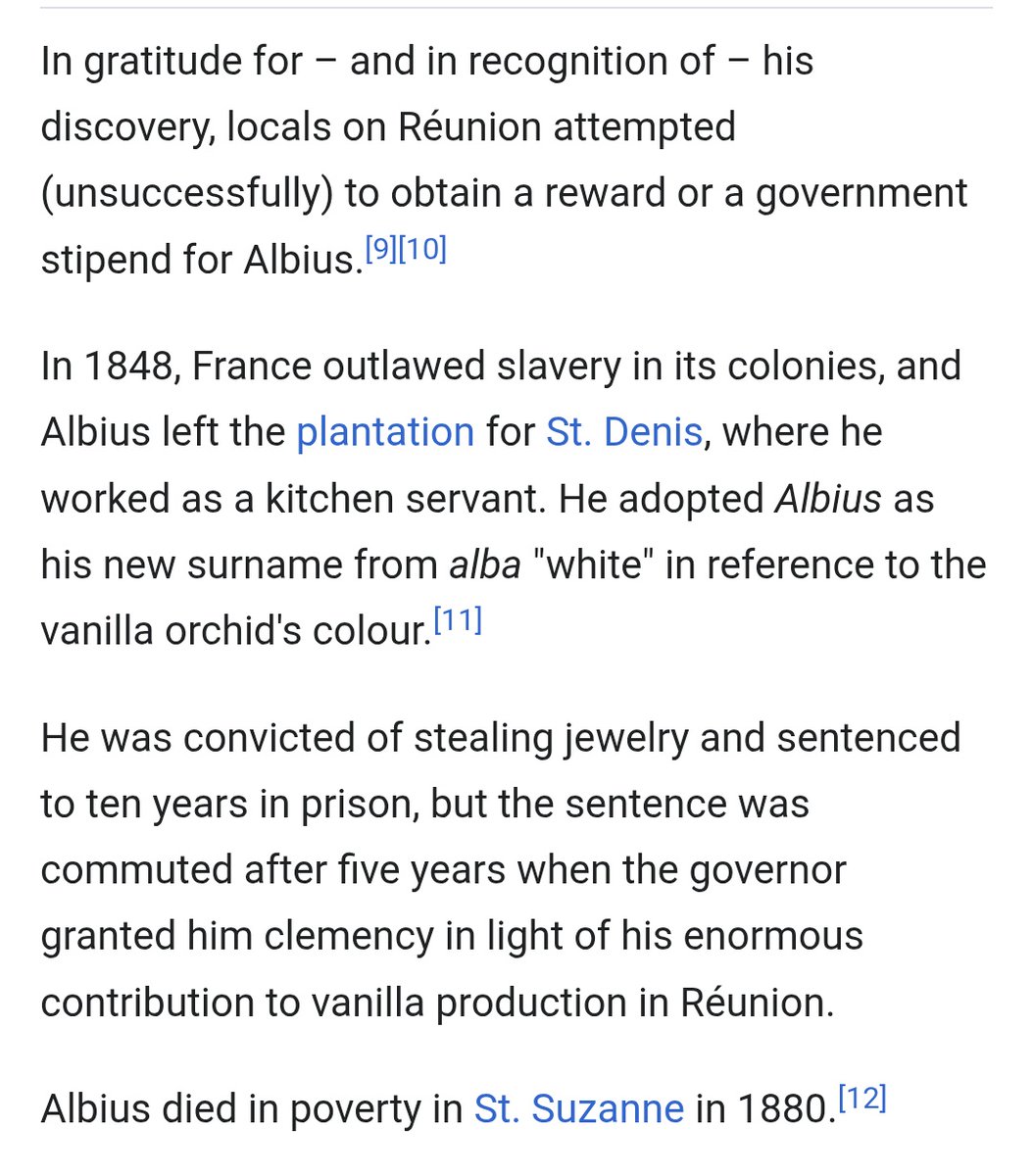
The fix came in 1841 from a twelve-year-old boy named Edmond Albius, a slave on a small French island in the Indian Ocean. Using a thin splinter of wood and his thumb, he worked out how to lift a tiny flap inside the flower and press its two halves together by hand. That exact little motion is still how almost every vanilla bean outside Mexico gets made today. He didn't get his own freedom until France ended slavery seven years later.
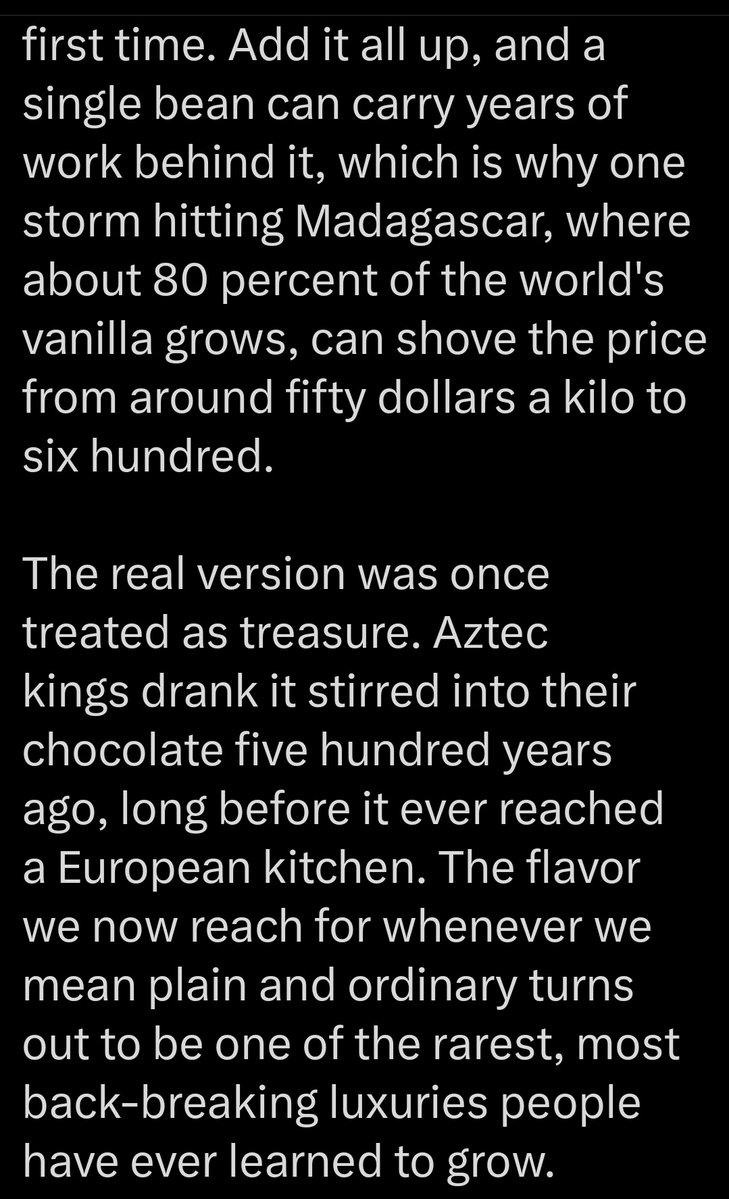
Even after the flower is pollinated, the bean sits on the vine for eight or nine months, then spends months more sweating and drying in the sun before it smells like anything. A fresh green pod has no scent at all. The vine itself takes about three years just to flower for the first time. Add it all up, and a single bean can carry years of work behind it, which is why one storm hitting Madagascar, where about 80 percent of the world's vanilla grows, can shove the price from around fifty dollars a kilo to six hundred.
The real version was once treated as treasure. Aztec kings drank it stirred into their chocolate five hundred years ago, long before it ever reached a European kitchen. The flavor we now reach for whenever we mean plain and ordinary turns out to be one of the rarest, most back-breaking luxuries people have ever learned to grow.