Johnny Rockenstire (Author)

1.8K posts

Johnny Rockenstire (Author) banner
Johnny Rockenstire (Author)

Johnny Rockenstire (Author)

@author_johnny

Author of the historical novel 'Crucible Along the Mohawk' with several more in the works. U.S. Marine Corps veteran CompTIA Security+

Upstate NY, USA Katılım Kasım 2020
360 Takip Edilen184 Takipçiler
Johnny Rockenstire (Author)
Johnny Rockenstire (Author)@author_johnny·
@KaiserLoengramm Came across his channel with a video on King Philip's War and actually liked it. After a few months of watching his videos, I had to stop. He became an insufferable clown.
English
1
0
57
2K
Kaiser von Lohengramm
Kaiser von Lohengramm@KaiserLoengramm·
Atun Shei started with debunking the lost cause. Now he has fake blood on his shirt, is dressed like the Nostalgia Critic, and now is making videos fantasizing about killing American patriots in a civil war, which is liable to turn into a reality at your local Christian school.
Kaiser von Lohengramm tweet media
English
94
285
4.1K
60.9K
Johnny Rockenstire (Author)
Johnny Rockenstire (Author)@author_johnny·
I'm not sure on Guderian, but I know Rommel was nearly killed or captured multiple times by being out front - any one of which would have had a significant negative effect on the Germans. Dumb luck rather than skill saved him more than once. Commanders need to know when to lead from the front, and when to delegate that authority down to subordinates. History is likely full of commanders who were brilliant, but we'll never know their names because they were taken out in their first engagement.
English
1
0
5
225
Skip10
Skip10@tnsampson2·
@author_johnny @EchoesofWarYT He was ahead of his time. The best commanders were usually at the front during attacks. Read about Guderian, Rommel and Balck and you'll see hints of Jackson.
English
1
0
1
230
Echoes of War
Echoes of War@EchoesofWarYT·
Was Stonewall Jackson actually that good? Let me end this debate. In the spring of 1862, the Confederacy was losing. McClellan was marching 100,000 men up the Virginia Peninsula toward Richmond. The capital was about to fall. The war was about to end. Then a weird, lemon-sucking, ex-VMI physics professor changed everything. Thomas J. Jackson had 17,000 men in the Shenandoah Valley. The Union had three separate armies under Banks, Frémont, and Shields totaling over 60,000, all converging to crush him, then reinforce the assault on Richmond. What Jackson did next is still taught at West Point, Sandhurst, and the Israeli Defense Forces' command college. In 48 days, his "foot cavalry" marched 646 miles through the Blue Ridge. He fought five battles, McDowell, Front Royal, Winchester, Cross Keys, Port Republic, and won every single one. He used interior lines to appear in three places at once. He marched his men until their shoes fell off, then marched them more. He told no one his plans, not even his generals. When asked where he was going, he'd say "to do my duty." He didn't just defeat three armies. He paralyzed them. Lincoln personally diverted 40,000 reinforcements away from Richmond to chase a ghost. McClellan's offensive collapsed. Richmond was saved. He had done it with a third of the men. Then came Chancellorsville, May 1863. Lee was outnumbered 130,000 to 60,000 by Hooker's army. Most generals would've retreated. Lee split his army. Then Jackson split it AGAIN, taking 28,000 men on a 12-mile flank march directly across the front of a numerically superior enemy, a maneuver textbooks call suicidal. At dusk, his men exploded out of the woods into the unsuspecting Union right flank. The XI Corps disintegrated. It is, to this day, one of the most audacious tactical movements in the history of warfare. Hours later, riding ahead in the dark to plan a night attack, his own men shot him by mistake. His arm was amputated. He died of pneumonia eight days later. Lee, on hearing it: "He has lost his left arm, but I have lost my right." Patton studied him. Rommel studied him. Moshe Dayan reportedly modeled parts of the Six-Day War on his Valley Campaign. MacArthur called him the greatest natural military genius America ever produced. He was 39 years old. You can hate the cause. But pretending Jackson wasn't one of the most lethal field commanders in military history is just bad history. The man was a problem.
Echoes of War tweet media
English
206
907
6.4K
228.1K
Johnny Rockenstire (Author)
Johnny Rockenstire (Author)@author_johnny·
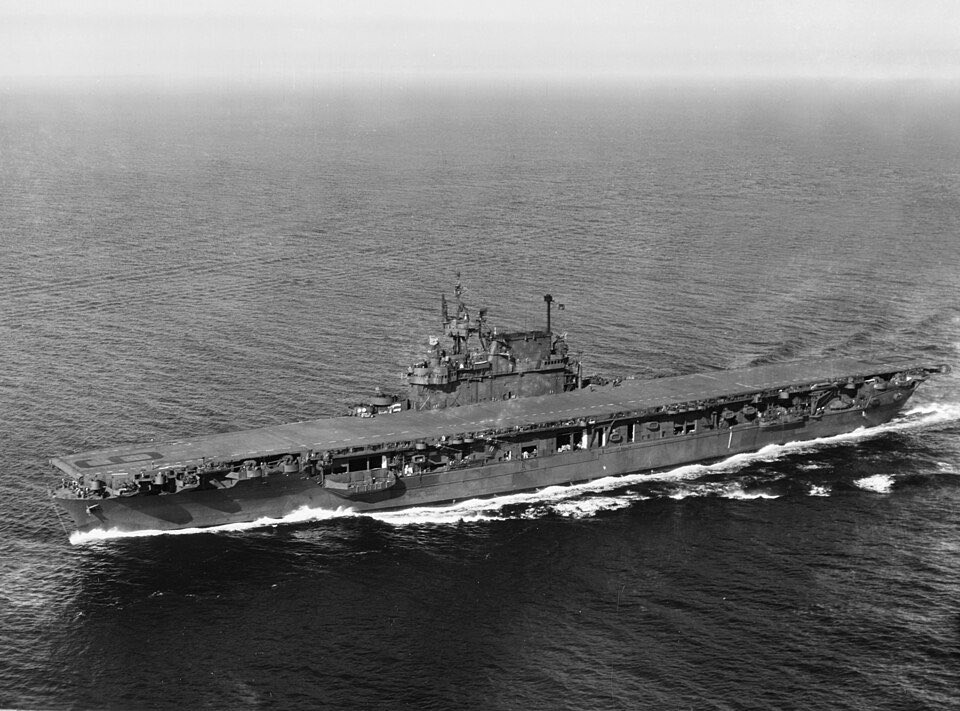
If there's one thing that historically will never fail to piss the United States off, it's when you mess with our boats.
Johnny Rockenstire (Author) tweet media
English
0
0
3
22
Johnny Rockenstire (Author)
Johnny Rockenstire (Author)@author_johnny·
@ManifestHistory 3,500? That will be used up in days in the peer-level adversary conflict they say they're gearing up for. They will need to add at least two 0's to that number.
English
0
0
2
14
Manifest History
Manifest History@ManifestHistory·
The Marine Corps fielding 3,500 FPV attack drones is a wake-up call. Drones are the future of warfare, but the Defense Industry won't make the profits that they do on these high-tech weapons. Now the question: will the Pentagon adapt tactics—or will the uniparty turn this into another boondoggle contract cycle?
Military Times@MilitaryTimes

The U.S. Marine Corps had zero first-person view drones in service as of October 2025. militarytimes.com/industry/techw…

English
3
5
20
955
History With Jacob
History With Jacob@HistoryWJacob·
Which George would you rather have a beer with?
English
85
7
84
8.5K
Johnny Rockenstire (Author)
Johnny Rockenstire (Author)@author_johnny·
@HistoryWJacob I have to go with Patton because Washington had a problem with profanity and I'd likely annoy him with my language. Plus, I'd absolutely love to hear some war stories from old blood & guts himself
English
0
0
4
36
Johnny Rockenstire (Author)
Johnny Rockenstire (Author)@author_johnny·
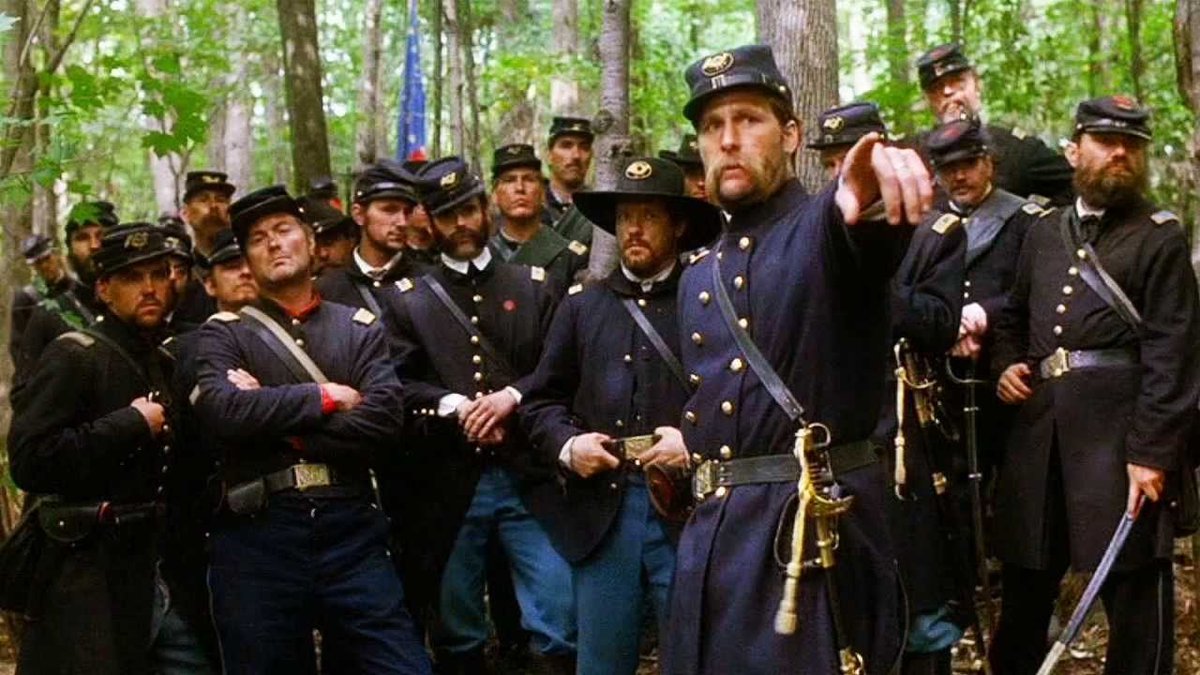
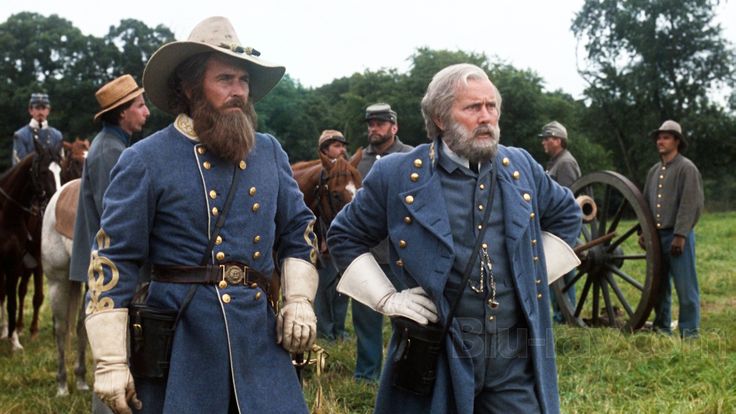
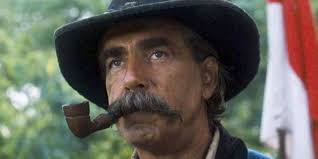
@MilHistNow Fun fact: he has a cameo in the movie as a Confederate officer under Gen. Armistead during Pickett's charge, where he shouts "let's go boys" and then is shot
English
3
0
40
1.8K
Military History Now
Military History Now@MilHistNow·
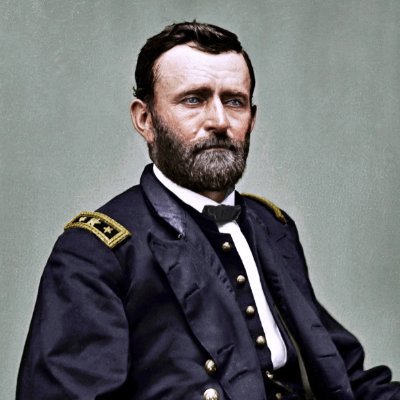
Thanks, Ted Turner (1938 – 2026), for giving us 'Gettysburg' (1993).
Military History Now tweet mediaMilitary History Now tweet mediaMilitary History Now tweet mediaMilitary History Now tweet media
English
106
425
5K
205.4K
GokuWhite
GokuWhite@Goku__White·
@NavalInstitute Congrats, hopefully this won’t affect Bill’s participation in the wonderful Unauthorized History of the Pacific War Podcast!
English
1
0
7
219
Ancient History Hub
Ancient History Hub@AncientHistorry·
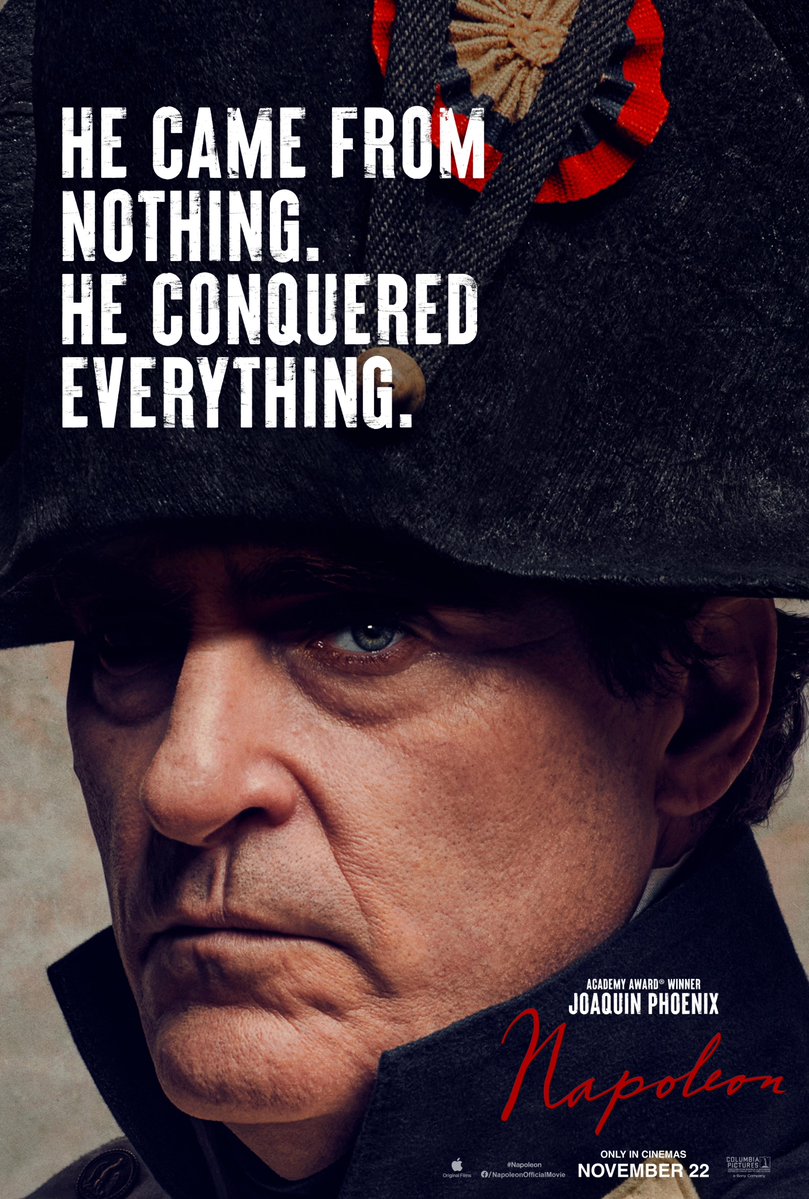
How do you rate the movie?
Ancient History Hub tweet media
Ancient History Hub@AncientHistorry

205 years ago today, Napoleon Bonaparte died on a tiny British prison island in the middle of the South Atlantic. He was 51. He had ruled most of Europe. And he changed the world so thoroughly that you are still living inside the systems he built. Start with the obvious one. The Napoleonic Code. He commissioned it in 1800, sat in on the drafting sessions personally, argued with the lawyers, and pushed it through in four years. Equality before the law. Property rights. Religious freedom. The end of feudal privilege. It is still the basis of civil law in France, Belgium, the Netherlands, Italy, Spain, Portugal, most of Latin America, Quebec, Louisiana, and chunks of the Middle East and Africa. About a third of the planet writes contracts using rules a Corsican artillery officer wrote between battles. He sold Louisiana to Thomas Jefferson in 1803 for 15 million dollars. Roughly four cents an acre. It doubled the size of the United States overnight. Without that deal there is no St. Louis, no New Orleans as an American city, no Lewis and Clark, no Manifest Destiny. The American century starts with Napoleon needing cash for a war. He invaded Egypt in 1798 with an army and, weirdly, 167 scientists, mathematicians, and artists. They found the Rosetta Stone. That single slab is the reason we can read hieroglyphs at all. Egyptology as a field exists because Napoleon brought scholars to a war. He built the Bank of France, which still runs French monetary policy. He created the lycée system that still educates French teenagers. He shoved the metric system across Europe at sword-point until it stuck. He emancipated the Jews of every territory he conquered, tearing down ghetto walls in Rome, Venice, Frankfurt. He abolished serfdom in Poland. He standardized road networks, civil registries, and tax codes that European governments still operate from. And then there's the soldiering. He fought around 60 major battles and won most of them. Austerlitz, in 1805, against the combined Russian and Austrian empires, is still taught at West Point as one of the closest things to a tactically perfect battle ever fought. He was outnumbered, baited the enemy onto ground he had pre-selected, and broke them in a single afternoon. Three emperors took the field that morning. Only one walked off it on his own terms. He slept four hours a night. He read constantly, dictated letters to four secretaries at the same time, and personally signed off on everything from cavalry boot specs to the seating chart at the Comédie-Française. Wellington, the man who finally beat him at Waterloo, was asked decades later who the greatest general in history was. He answered without hesitating. "In this age, in past ages, in any age, Napoleon." He lost, in the end, because he could not stop. Russia in 1812 swallowed his army whole. Six hundred thousand men marched in. Maybe a tenth came back. He abdicated in 1814, escaped from Elba, ruled France again for 100 days, and lost it all for good in a wheat field in Belgium in June 1815. The British shipped him to St. Helena, a volcanic dot 1,200 miles off the African coast, and waited. He spent six years there dictating his memoirs, gardening, complaining about the dampness, and quietly rewriting his own legend so effectively that Europe spent the next century arguing about him. He died on May 5, 1821, during a storm so violent it ripped up the willow tree he liked to read under. His last words trailed off into fever. France. The army. Joséphine. Nineteen years later France brought him home. Two million people stood in the snow to watch the coffin go by. He was a tyrant. He was a reformer. He started wars that killed somewhere between three and six million people. He also wrote the rulebook that a third of humanity still lives under. Most people who try to conquer the world are forgotten inside a generation. Napoleon has been dead for 205 years and we are still arguing about him because we are still using his furniture.

English
17
7
22
7.2K
American History & Studies 🇺🇸
If you could only pick one, what is the most legendary ship in American history? 🇺🇸⚓️ Drop her in the comments 👇
American History & Studies 🇺🇸 tweet media
English
398
37
425
27.4K