

t
15 posts


t retweetledi

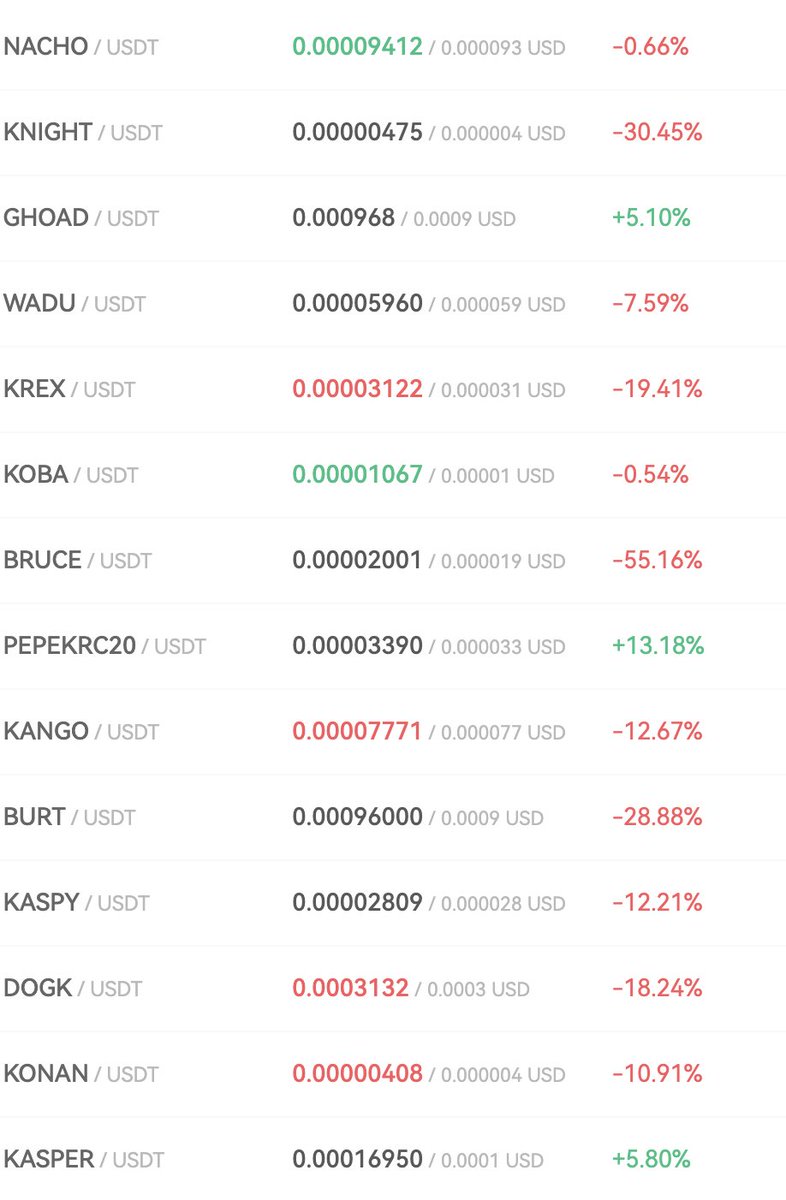
XT should immediately lower withdrawal fees, increase limits, and provide a public explanation for this incident. The community expects better service! #Kaspa #KRC20 @XTexchange 's handling of this situation is disappointing. We demand transparency and honesty!
The projects within the KRC20 ecosystem, need to stand united. @KrexToken @DagKnightDog @PepeKRC20 @PaskaCurrency @greenKnight_kas @NachoWyborski @kaspy_io @konanofkaspa @Bruce_kas @GhoadCoin @Wadu_on_KAS @Koba_ApeofKaspa
English
t retweetledi

t retweetledi


t retweetledi

#Kaspa 有一个这样的创始人,以及一个及其强大靠谱的核心团队,这不比那些VC币meme币更加值得投资吗?
更何况 $KAS 的叙事,还是加密货币最初的愿景。这不比那些乱七八糟的meme值得“炒”?
而且核心团队一直在实现他们“画的饼”,不停向着100BPS这个目标迈进。上哪找第二个这样的项目?
Shai (Deshe) Wyborski@DesheShai
Look what I found at the airport in Dubai
中文
t retweetledi

One way to think of it is that high bps pow provides the same guarantees as low bps just in-consensus-round. Eg bitcoin guarantees censorship reistance & competitive mining over the scale of an hour, 10+ bps over one Internet RTT. For finance and many apps this is a game changer
Šťoural@Audit1000
$KAS vs. MEV resistance (and a little bonus at the end) How Kaspa wants to tackle one of the most significant "bugs" of Decentralized finance? Majority of people does not even know what the term MEV means and how it affects the users of it. MEV = maximum extractable value or in other words it is the maximum value that a miner/validator can extract from a single transaction. It does not sound it could be any harmful to regular users, however, due to design of traditional blockchains (such as Ethereum, Solana, BTC, etc.) sophisticated players can attach your transaction to gain an extra profit at your expense (front-running, back-running, sandwich attacks, etc.). So how $Kaspa wants to solve this problem? With a credit to @MichaelSuttonIL I will use his picture of @hashdag recent presentation showing how parallelism can introduce an effective competing market amongst miners -> since blockDAG allows for a parallel confirmation of blocks you can see that at each point in time there are several blocks (see the parts in blue) -> and the more the blocks per second (currently mainnet 1bps, testnet 10bps and goal is 100bps) the more parallelism takes place and the better the competition is (Please note that all famous blockchains dont have parallelism and there is a monopoly for a successful miner/validator to decide if he/she behaves honestly or not) So having a high bps will not only increase the throughput (increase in speed will be unnoticeable for users) but most importantly it would drastically increase the level of competition between miners and thus it would significantlty increase the level of safety for a regular user. We should also touch the mechanics of this competition -> miners will set a percentage of mined transaction fee that they are willing to add back to the originator of a transaction -> and since the one who adds back the most wins there will be incentive to eliminate the MEV attacks because such miner would be unlikely to win the transaction auction. And now the little bonus :) ORACLE problem: The Oracle Problem in cryptocurrency and blockchain refers to the inherent challenge of reliably connecting blockchain systems, which are deterministic and trustless, with external data sources (referred to as "oracles") that are often centralized, mutable, and require trust. This problem arises because blockchains, by design, cannot directly access off-chain data, yet many decentralized applications (dApps), particularly in DeFi (Decentralized Finance), need real-world information such as price feeds, weather data, or event outcomes. Is there a way how to tackle this issue with a high parallelism Kaspa would once allow? In the recent presentation Yonatan Sompolinsky mentioned that he is working on a solution for the Oracle problem in a similar way as he developed for MEV. He just briefly touched this topic and did not go into any details but my understanding is that various data providers who would be responsible for transfer of outside the blockdag information to kaspa network would be competing in terms of reliability and those with a bad track record would not be used be users (defi applications) so there would be a natural incentive to bring correct oracle data to blockdag. This is very interesting thought and YS again proved all of us that he is always 2 steps ahead of the herd...what a legend :) youtube.com/live/VquMb8TUp…
English
@pdimitrakos $Kango is the best meme coin in the whole KRC20 ecosystem, and we are waiting for the big guys to let us bring the party to their exchanges
English


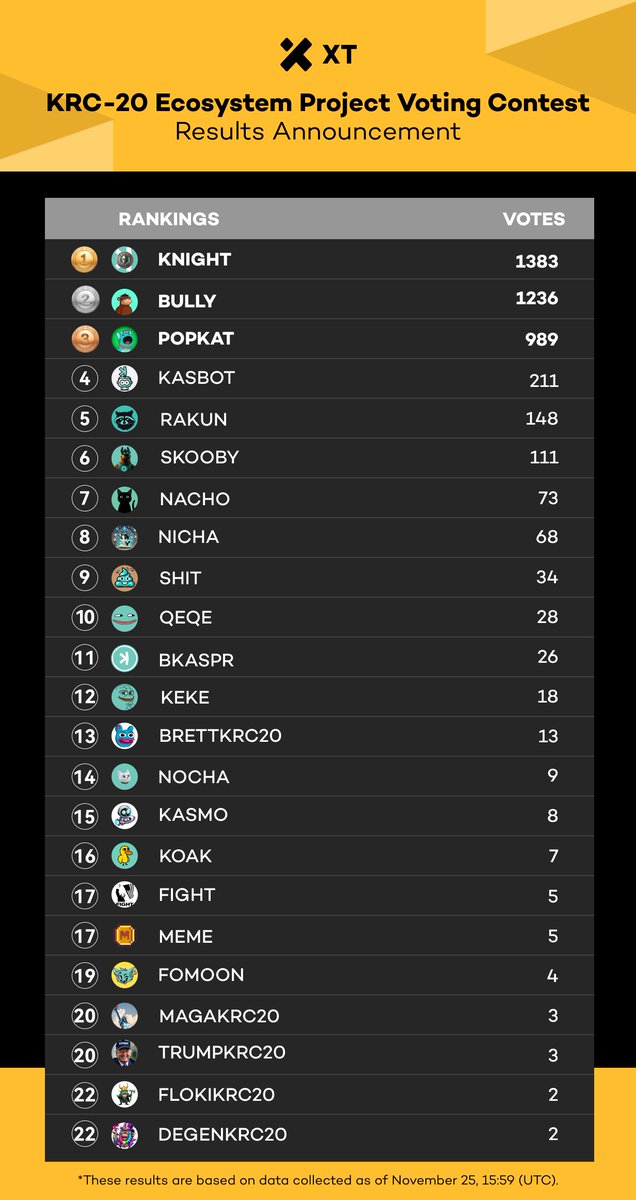
🪧 #KRC20 Ecosystem Token Listing Vote Results Announcement (based on data collected as of November 25, 15:59 (UTC). Cast your precious vote for your KRC20 ecosystem star! 🌟 #XT #Kaspa
Details: ✅ xtsupport.zendesk.com/hc/en-us/artic…
XT Exchange 🚀@XTexchange
🔥Vote for #KRC20 Free Listing on #XT! 📅Nov 19, 2024, 07:00 - Nov 25, 2024, 15:59 (UTC) 🎁Voting Rewards: ✅ Discord Voting: Share a $500 prize pool 👉discord.com/invite/KfDPunU… ✅ Google Form Voting: Share a $1,000 prize pool 👉forms.gle/Xfe39RWqtJGgoy… ✅ Support your favorite project of the month 👉 xt.com/en/accounts/as… 🔥 Details: xtsupport.zendesk.com/hc/en-us/artic…
English

$kas 核心开发大胡子从没给自己买过什么东西,但是这次他在飞机上弄丢了自己的任天堂游戏机,他打算给自己再买一个新的.
到目前为止,你用 $kas 套现给自己买过什么大东西吗?
Shai (Deshe) Wyborski@DesheShai
My fiance god bless her told me that I should just get another since I work so hard and never buy myself anything. So I did. If I lose this one too I guess there's nothing left to do but crawl to a ball and die of embarrassment.
中文
t retweetledi

YouTube
English
t retweetledi

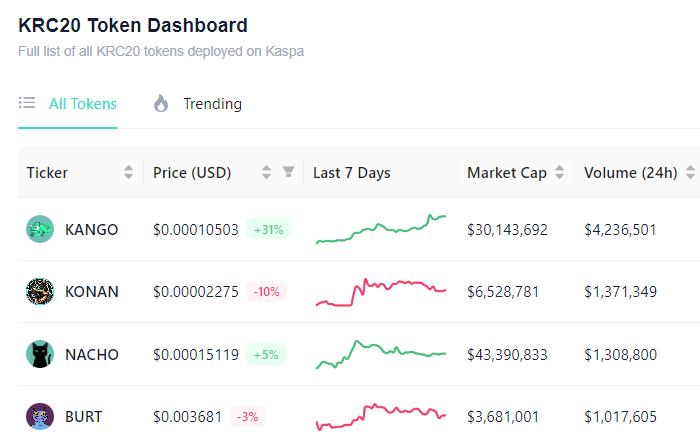
$KANGO seems to be emerging as the flagship #KRC20 meme token. It's currently in second place by market cap, but it's rapidly closing in on NACHO.
And it's already the undisputed king in terms of trading volume—which surpasses that of KONAN, NACHO and BURT combined. Insane!
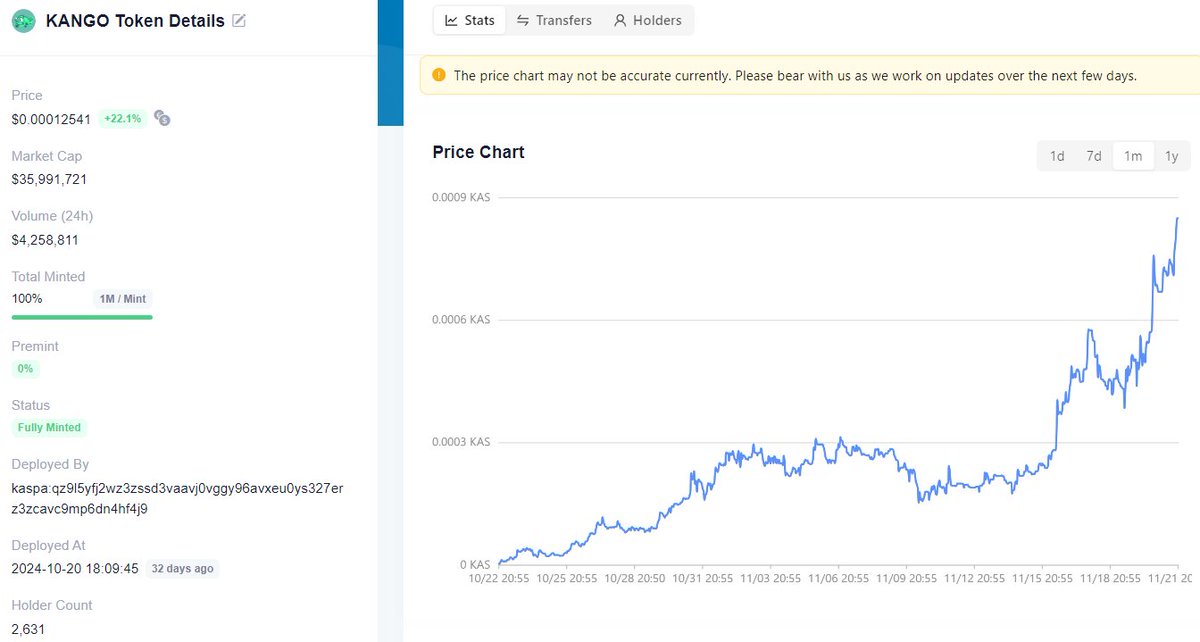
The chart also looks super bullish. This is a token to aggressively buy during pullbacks. Those you participated in the mint are sitting on 500x gains already!🔥🔥🔥
@KANGO_ON_KAS
English