
Marcus

299 posts

Marcus banner
Marcus

Marcus

@babakyusiti

Collecting digital artifacts across borders. Questioning what ownership means in a world without walls. 🌍

Katılım Nisan 2024
158 Takip Edilen14 Takipçiler
Marcus retweetledi
Indian Tech & Infra
Indian Tech & Infra@IndianTechGuide·
🚨 The Flipkart Glam Up Beauty Trends Report 2026 offers an interesting look at where India's beauty market is headed. According to the report, Beauty & Personal Care GMV grew 1.5x YoY on Flipkart, while consumers purchased 12 beauty products every second on the platform. With Redseer projecting India's beauty market to approach $39 billion by 2030, the report highlights how beauty is becoming one of the country's fastest-growing retail categories. Worth reading for anyone tracking consumer, retail, e-commerce, and beauty trends in India. moneycontrol.com/news/business/…
Indian Tech & Infra tweet media
English
14
131
1.4K
284.3K
Marcus retweetledi
host.eth
host.eth@onchainhost·
I really enjoyed this conversation with Commissioner @HesterPeirce. It was a rare opportunity to move beyond the usual abstractions around crypto regulation and discuss what a more coherent, proportionate, and innovation-conscious framework could actually look like.
RehashedDAO@Web3Rehashed

Revisiting our long-awaited conversation with SEC Commissioner @HesterPeirce. For years, Commissioner Peirce has remained one of the most intellectually rigorous and independent voices within the SEC on questions of digital assets. She has repeatedly challenged the tendency to treat technological experimentation as a regulatory threat by default, arguing instead for clearer standards, proportionate oversight, and a framework that does not punish innovation through ambiguity. Her perspective remains essential for anyone trying to understand the institutional tensions shaping crypto policy in the United States.

English
31
67
118
29.3K
RehashedDAO
RehashedDAO@Web3Rehashed·
The core news is not that @AnthropicAI temporarily took two models offline. It is that the United States has now treated access to frontier AI as something that can be controlled through export law, not only by geography, but by who the user is. Anthropic was reportedly ordered to suspend access to Fable 5 and Mythos 5 for any foreign national, including people physically located inside the United States and even foreign-national Anthropic employees. That is a very different regime from blocking chip shipments to China or limiting GPU clusters abroad. It is closer to saying: the intelligence itself has become a controlled strategic asset. 👇 ~~ Analysis by @onchainhost ~~ For years, the AI race has been framed around inputs. Who can buy the best GPUs. Who can secure HBM supply. Who can build data centers fast enough. Who can access advanced lithography, power capacity, and cloud credits. The US export-control strategy reflected that logic: restrict Nvidia-class hardware, constrain semiconductor tooling, limit advanced compute in adversarial jurisdictions, and slow down the ability to train frontier models. That framework made intuitive sense because chips are physical. They cross borders. They are manufactured, shipped, tracked, and sold through identifiable supply chains. But models are different. A frontier model can sit in a US data center while serving someone on the other side of the world through an API. Nothing physical crosses a border. No GPU is exported. No model weights need to leave the company. A few API calls can still deliver capabilities that used to require access to an entire research organization. That is why this @AnthropicAI episode matters. The Commerce Department directive reportedly required a license for foreign persons to access Fable 5 and Mythos 5, regardless of whether those users were in the US or abroad. Anthropic said it could not reliably separate its users by nationality, so the practical outcome was to disable both models for everyone. In other words, the state did not control the hardware. It controlled the ability to query the intelligence running on the hardware. That distinction may sound technical, but it changes the structure of the AI market. A frontier API is no longer simply a cloud product. It can become a licensed strategic service. Anthropic’s Fable 5 had been released as a generally accessible model with cybersecurity safeguards. Mythos 5 was more restricted, intended for a smaller trusted-access group where some cyber safeguards were lifted for defensive use cases. Anthropic itself described Mythos-class systems as a higher capability tier than its Opus models, particularly for software engineering, autonomous work, cyber defense, and scientific research. The government’s concern was reportedly that Fable’s safeguards could be bypassed in a way that enabled users to identify software vulnerabilities. Anthropic disputes the characterization. The company says the technique was narrow, non-universal, involved a limited number of previously known minor vulnerabilities, and did not demonstrate a capability unique to its models. It also argues that similar bug-finding behavior is available through other public models. The truth is that both sides may be describing a real problem from different angles. Anthropic is right that jailbreak resistance is not binary. A model can have strong protections and still be vulnerable in narrow contexts. That is the nature of frontier model security today: safeguards reduce the cost of defense, but they do not produce perfect containment. The government is also right about one thing: capability diffusion does not need to be perfect to matter. A model does not need to autonomously compromise a military network to create strategic risk. It may be enough for it to make skilled researchers, cyber operators, or intelligence teams materially faster at vulnerability discovery, exploit research, systems analysis, or code review. The issue is therefore not whether a model is “dangerous” in the abstract. The issue is whether certain increments of capability are significant enough that access itself becomes a national-security question. That is a much harder line to draw than the chip line. A chip can be classified by performance thresholds. Compute capacity can be estimated. Interconnect bandwidth can be measured. A model’s strategic value is more contextual. The same model that helps a defensive security team patch an aging banking system can help an offensive researcher find weaknesses in that system. The same agent that compresses months of software engineering into days can compress reconnaissance, reverse engineering, and exploit development. And the same model that can be used by a US cybersecurity firm through a legitimate API can potentially be used by a foreign actor through the exact same interface. This is why the “foreign national” language is the most consequential part of the story. The policy is not simply saying: do not serve sanctioned jurisdictions. It is applying the logic of deemed exports, where releasing controlled technology to a foreign person inside the United States can be treated as an export to that person’s country of nationality. That principle already exists in traditional export controls. What is new is applying it to real-time access to a commercial frontier model. This makes the situation less like a normal product restriction and more like an emergency intervention. And that uncertainty is itself a market signal. For enterprises building core workflows around frontier APIs, the risk is no longer limited to pricing changes, rate limits, outages, or model deprecation. There is now geopolitical dependency risk. A company in London, Seoul, Dubai, Singapore, or Istanbul can build its product architecture around a US model, integrate it deeply into engineering workflows, and then discover that access is conditional on a political or regulatory decision made in Washington. That is not a theoretical concern anymore. Anthropic’s own decision to disable access globally shows the operational reality. A compliance requirement aimed at foreign nationals became, in practice, a kill switch for everyone because identity verification, citizenship classification, licensing, corporate ownership analysis, and access enforcement are extremely difficult to implement across global cloud infrastructure. This is where the AI sovereignty conversation becomes much more concrete. For a long time, “sovereign AI” sounded like a policy slogan: countries wanting local language models, domestic clusters, national compute programs, or regional data residency. Now it has a more practical meaning. Sovereignty is not only about owning GPUs. It is about whether a government, company, university, security team, or startup can maintain access to the intelligence layer when geopolitical conditions change. That will make open-weight models more strategically attractive, even when they are less capable. Not necessarily because open models are better. But because a model that can run on infrastructure you control cannot be switched off by a foreign provider under an emergency licensing directive. That creates a major tradeoff. Closed frontier systems may remain ahead in capability, reliability, tool use, long-horizon reasoning, and safety infrastructure. But they also concentrate political and regulatory power inside the provider’s jurisdiction. Open-weight systems sacrifice some of that frontier performance, but they reduce dependence on a single company, a single cloud platform, or a single national export-control regime. For builders, this probably accelerates a multi-model future. The question will not only be: “Which model performs best?” It will increasingly be: “Which model can we still access under stress?” That could mean enterprises keeping secondary model providers, designing agent stacks that can swap inference backends, maintaining open-weight fallback systems, or avoiding architecture that assumes one frontier API will always be globally available. This does not mean the US will suddenly export-control every powerful model. The current action is specific to Anthropic’s Fable 5 and Mythos 5, and the facts remain contested. The government has not publicly released the full legal reasoning, while Anthropic maintains that the cited jailbreak was narrow and that broader restrictions would risk halting frontier deployment across the industry. Still, precedents matter more than permanence. Once a government demonstrates that it can regulate model access through export-control authorities, every other frontier lab has to plan around that possibility. @OpenAI, @GoogleDeepMind, @xai, @Meta, and the major cloud providers all now have a reason to ask the same uncomfortable question: At what level of capability does a model stop being software and start being controlled strategic infrastructure? The answer will shape more than AI policy. It will shape where startups build, how enterprises procure models, why countries invest in domestic compute, and whether the next generation of AI becomes globally accessible infrastructure or a fragmented network of national capability zones. The most important thing to watch is not whether Fable 5 comes back online next week. It is whether this becomes a one-off dispute around @AnthropicAI, or the first real template for governing frontier intelligence as an export-controlled resource.
RehashedDAO tweet media
English
41
83
246
41.8K
Marcus retweetledi
Kelson Lam
Kelson Lam@KelsonLam_·
各位投资者,Bybit 此次推出的“国际足球净胜球交割合约”无疑是当前市场的一项创新举措,它将全球瞩目的体育盛事与加密资产交易深度融合,为我们提供了独特的套利与风险管理机会。作为专业的市场参与者,我们应关注其以下核心价值: 1️⃣ 精准量化与策略执行: 该合约采用 价格 = 10 + (主队进球 - 客队进球) 的直观定价模型。这一机制将比赛结果直接转化为可交易的量化指标,极大地简化了市场分析。对于具备数据分析能力的投资者而言,这提供了基于预期净胜球的精准策略部署空间,有效规避传统体育博弈中的非量化风险。 2️⃣ 高频交易与即时风险对冲: 区别于传统金融产品,此合约支持比赛进行中的实时开平仓操作。这意味着,在关键进球瞬间或赛况发生重大变化时,投资者可迅速调整仓位,实现即时利润锁定或风险对冲。这种高流动性与即时响应能力,是优化投资组合、捕捉短期市场波动的关键。 3️⃣ 多元化交易工具与风险控制: Bybit 平台为该产品提供了多空双向交易、最高 5 倍杠杆以及完善的止盈止损功能。这不仅提升了资金使用效率,更重要的是,它赋予了投资者在不同市场预期下灵活配置策略的能力。通过科学的止盈止损设置,可有效管理潜在风险,确保资本安全,这对于任何成熟的投资策略都是不可或缺的。 此产品覆盖世界杯全程赛事,每场比赛均作为独立合约,为投资者提供了持续的交易窗口。建议各位深入研究其机制,将其纳入多元化投资策略考量。 详细产品公告:announcements.bybit.com/zh-MY/article/… 产品页面:bybit.com/zh-MY/derivati…
Kelson Lam tweet media
中文
0
11
27
3.6K
Marcus retweetledi
BTCC
BTCC@BTCCexchange·
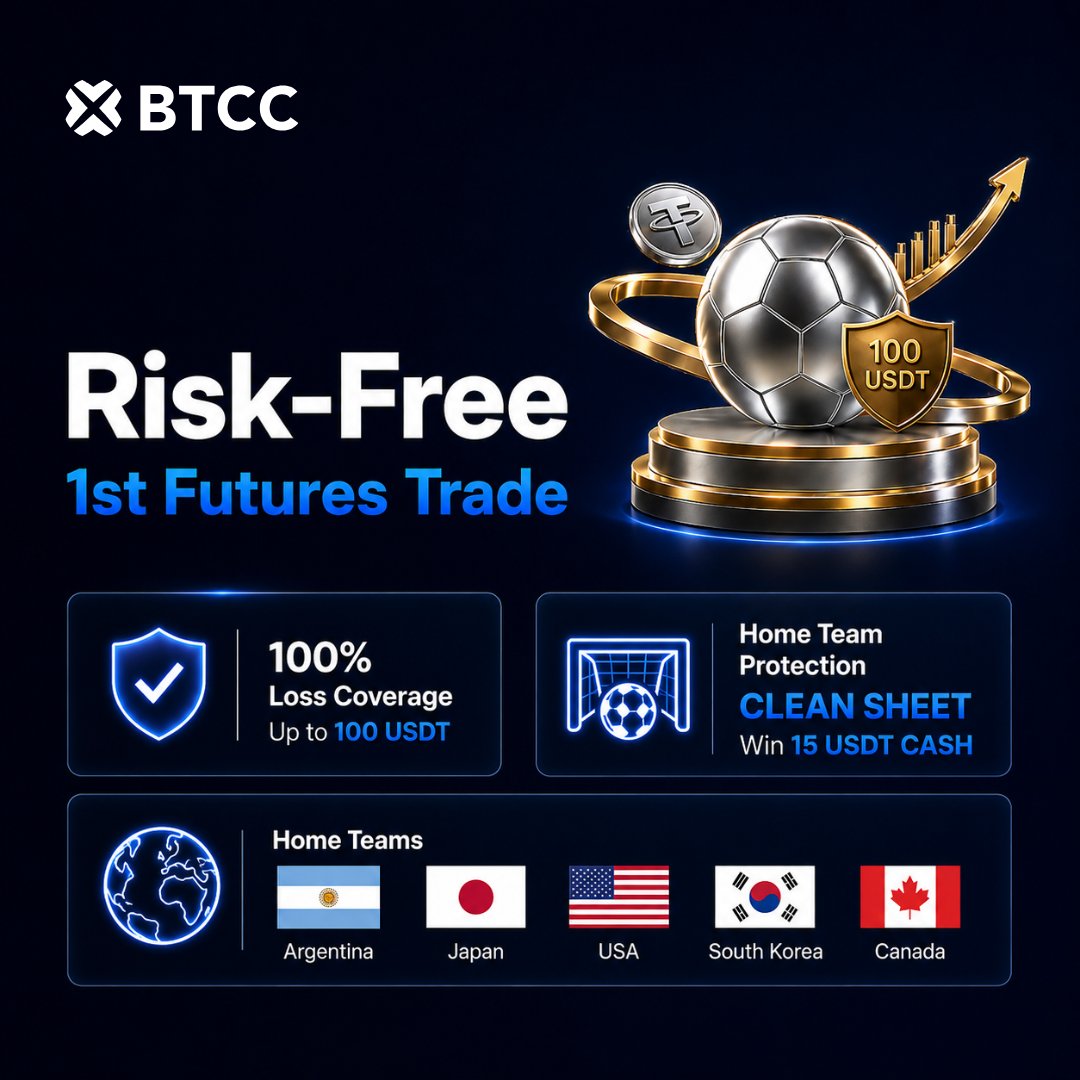
⚽️Win 15 USDT cash with ZERO risk! ✅100% Loss Coverage on your 1st trade (up to 100 USDT) ✅Home Teams keep a clean sheet 🔵Home Teams: 🇦🇷 🇯🇵 🇺🇸 🇰🇷 🇨🇦 Join now 👇24-hour window is ticking! ⏳ btcc.com/en-US/market-e… ▶️Deposit ≥200 USDT and complete your first futures trade within the window ▶️The window for each match opens 24 hours before kickoff and closes at kickoff #BTCC15 #BTCCxAFA #WorldCup2026
BTCC tweet media
English
27
20
72
27K
Marcus
Marcus@babakyusiti·
@MarioNawfal @realloys Genuinely well-framed tension: AI might redesign its own supply chain constraints before the West even builds the infrastructure to solve them. That's not optimism, thats a real strategic wildcard worth pricing in
English
0
0
0
14
Marcus retweetledi
Savior Of Health
Savior Of Health@SavoirOfHealth_·
Citigroup predicts $8 trillion in tokenized assets by 2030. Everyone's racing to tokenize real estate, bonds, commodities. But the most abundant, most personal, most undervalued asset on Earth? Your health data. 1M+ users are already turning it into something real. The tokenization era isn't coming. It's here. 🧬
Savior Of Health tweet media
English
0
14
21
4K
Marcus retweetledi
Betboo - Betboo Güncel Giriş - Betboo Kayıt
⚽️🏆Dünya Kupası heyecanı başladı, oranlar yükselmeye hazır! 🔥 Betboo’da maç keyfi, yüksek oranlar ve çılgın fırsatlarla devam ediyor. Dünya Kupası’nda yükseldiğin yer bu! 🚀 Betboo Giriş ▶️ tinyurl.com/3tzvppty #Betboo #DünyaKupası #YükseldiğinYerBu
Türkçe
0
62
46
91.1K
Marcus retweetledi
Yellow Media
Yellow Media@YellowMedia_HQ·
“It starts with community seeing where you can help, taking initiative, and building alongside others in the ecosystem.” — @rosanwomayowa Mayowa, Lead Organiser of @XRPLCanada, shared insights on building in the XRP ecosystem with @DeFi_Pop, Editor at Yellow Media.
English
23
23
93
15.1K
Marcus retweetledi
Michael Nicoletos
Michael Nicoletos@mnicoletos·
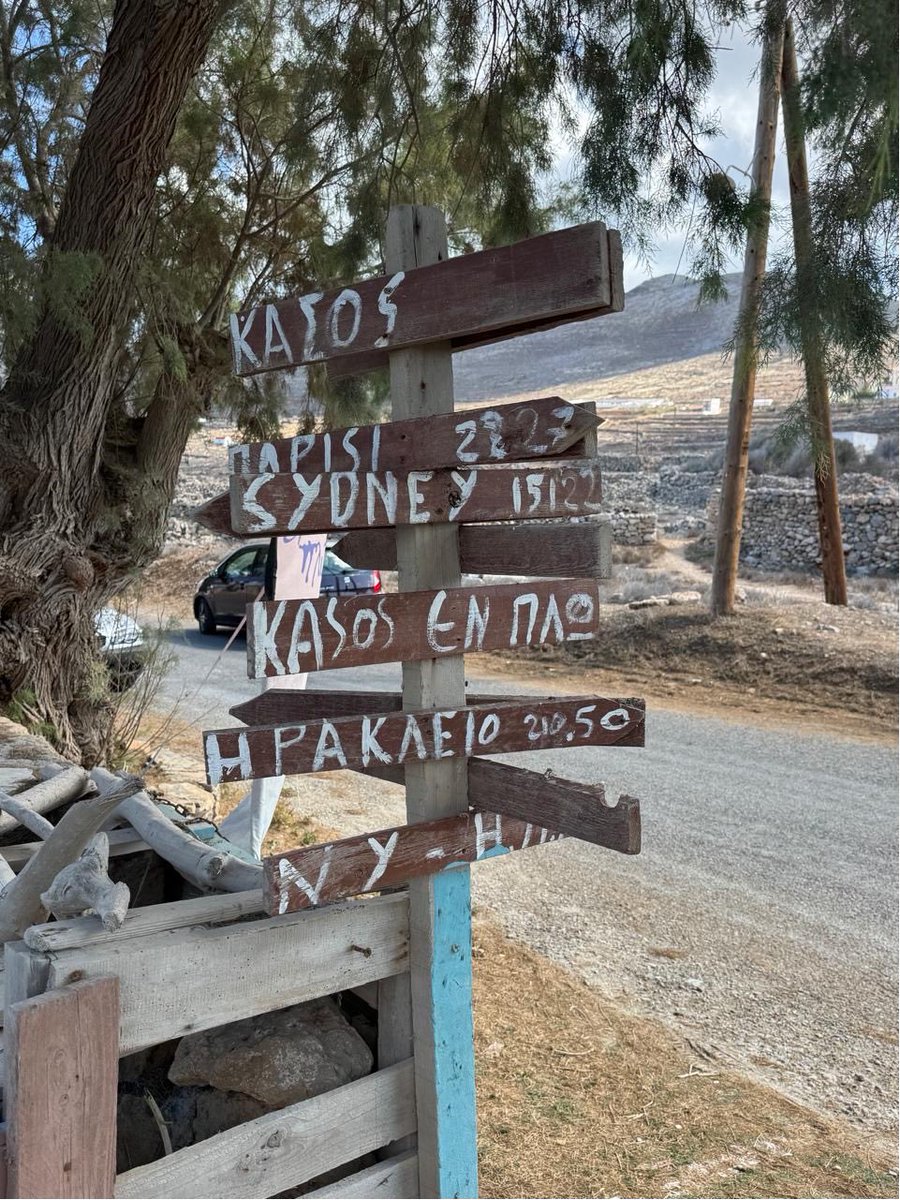
Happy New Year, Everyone! Wish you all an exciting 2026 full of health, joy, and adventure. The Curiosity We Forgot A short reflection on curiosity, meeting strangers, and finding the way out. open.substack.com/pub/michaelnic…
Michael Nicoletos tweet media
English
7
208
228
93.9K
Marcus retweetledi
Nick Roquefort-Villeneuve
Nick Roquefort-Villeneuve@mygreenhippo·
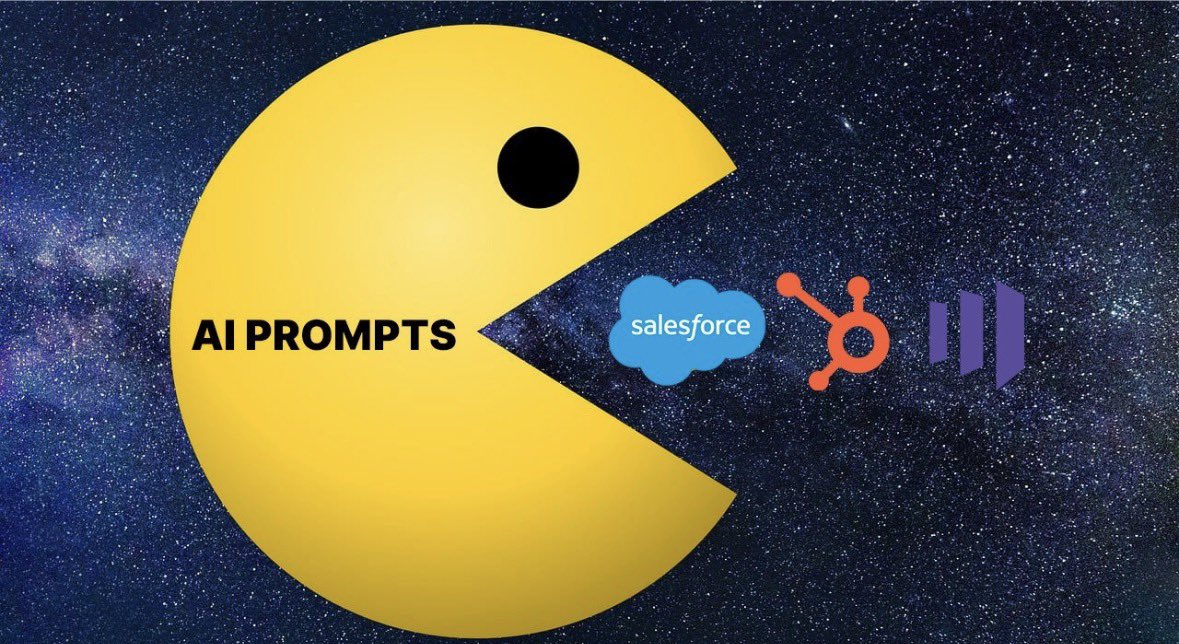
I replaced HubSpot + Salesforce thinking with 12 AI prompts. Not the CRM. The thinking layer. Result:
• $100K+ stack reduction
• Faster forecasting
• Sharper prioritization
• Better deal scoring
• 20x ROI AI isn’t an assistant. It’s a GTM operating system. 💡Link to the article in the comment below 👇
Nick Roquefort-Villeneuve tweet media
English
1
199
1
193
Marcus retweetledi
T.💎
T.💎@letmetakethist·
Bringing history back to life with AI. 🎩🕯️ Kling 2.6 on @Higgsfield_ai renders historical figures with terrifying realism. Native Audio makes them speak. The educational potential is endless. Uncensored and Unrestricted. Grab the Cyber Week Steal (70% OFF + Unlimited Images): 👉 higgsfield.ai/pricing
English
1
255
38
68K
Marcus
Marcus@babakyusiti·
@MarioNawfal Short answer: things are getting very complicated very fast
English
0
0
0
1
Mario Nawfal
Mario Nawfal@MarioNawfal·
INTERVIEW: U.S. Apache Down at Hormuz; Hezbollah Infiltrates Israel - w/ Major General Randy Manner
English
41
31
455
414.9K
Marcus retweetledi
For Traders
For Traders@fortraderscom·
🚨 BREAKING: During the afternoon hours yesterday, the 40% Margin Rule unexpectedly left us. It served faithfully, caused endless debates, and tested the patience of traders everywhere. May it rest in peace🕊️ Drop an RIP in the comments to pay your respects👇
English
12
6
65
3.7K
Marcus retweetledi
P A ♿️ O
P A ♿️ O@tollwaypaco·
To keep yall updated 🥂🤴🏾
English
0
199
5
343
Marcus retweetledi
Hamza Shaikh
Hamza Shaikh@hamzashaikhcan·
AI isn’t limited by intelligence. It’s limited by electricity. We keep talking about better models, bigger context windows, smarter agents. But the real constraint over the next 5 years isn’t chips or algorithms. It’s power. Training and running frontier models requires massive, continuous energy. Data centers are expanding faster than grids can handle. That’s why you’re seeing long-term geothermal, nuclear, and renewable deals everywhere. The next AI leaders won’t just be model companies. They’ll be infrastructure companies. Whoever secures scalable, reliable, affordable power wins. We’re entering the era where energy strategy is AI strategy. Most people are still debating prompts. The real race is happening at the power plant. What do you think becomes the bigger bottleneck first: compute or energy?
Hamza Shaikh tweet media
English
0
201
2
146