K

1.3K posts

K

K

@bahagiabunga69

Katılım Mayıs 2023
119 Takip Edilen4 Takipçiler
K retweetledi
clovey☘️
clovey☘️@cloriavey·
Emang kapitalis pengennya semua disabilitas mati aja apa gimana ya? Hidup di dunia abled-bodied/neurotipikal, sering dianggap beban, ga guna, tp giliran kita mau kerja buat menghidupi diri jg ga ada yg mau nerima Maunya apa sih?!
Jejak digital.@ARSIPAJA

Indonesia
53
5.5K
19.2K
310.4K
K retweetledi
Torch
Torch@writingtorch·
TIMELAPSE 100x: IHSG VS MR PRESIDENT'S SPEECH
English
203
5.9K
12.9K
295.1K
K retweetledi
DiaryTrader
DiaryTrader@WOLF_of_IHSG·
yang ga sempat nonton Pidato presiden, bisa "membaca" dari respon market $IHSG berikut... sudah saya buatkan resume nya Setiap ada apapun topik pada 'yapping' beliau, market langsung merespon. masih ada kelanjutannya, pidatonya belum selesai 😄
DiaryTrader tweet media
Indonesia
22
496
1.4K
50.3K
K retweetledi
Haye Targaryen
Haye Targaryen@_haye_·
Males nulis panjang lebar, tapi satu masalah serius Indonesia hari ini adalah hancur leburnya kredibilitas para Pejabat Pengambil Keputusan: Presiden, Menteri Keuangan, Bank Indonesia, Seskab dan Hulubalang lain. Mau tumpuk duit di jidat, gebrak meja sampai bolong, ga ngaruh.
Indonesia
1
4
8
612
K retweetledi
Pink Bourbon
Pink Bourbon@pinkbourbon8898·
RI1 said it. Straight up. Economy was mismanaged. That's not a small thing to say from that podium. The market asked for transparency. It got it, maybe more than it expected. Three things came out of that speech worth sitting with: One, the underinvoicing problem is being addressed. Routing exports through a single BUMN-controlled door is blunt instrument policy, but at least it signals the revenue leakage is being taken seriously. Two, Indonesia setting its own commodity reference prices is bold. It can work if the pricing is credible and consistent. If not, it just becomes another reason for buyers to route around you. The market will watch the execution closely. Three, and this is the one people will underestimate, he was transparent. After days of silence and noise, a leader standing up and saying "we got this wrong" is not nothing. That takes political will. Markets respect clarity even when the message is uncomfortable. Pros and cons on the policy substance. But on communication, this is exactly what was needed. God bless Indonesia. Now let's see the follow through.
English
9
122
413
14.3K
K retweetledi
Ricky Ho
Ricky Ho@rickyho_1989·
President Prabowo’s speech was interesting because it revealed both the strengths and weaknesses of the current policy direction. What I dislike is that there still appears to be insufficient discussion around upside inflation risk, fiscal vulnerability, and exchange rate stress if oil prices remain elevated for much longer than the government currently expects. Indonesia remains highly sensitive to energy prices through subsidies, imported inflation, fiscal pressures, and rupiah stability. If oil enters a prolonged higher-price regime, the impact on the budget deficit, subsidy burden, and external balances could become much larger than current assumptions imply. This matters because global conditions are already becoming more difficult. US yields remain high, global liquidity is tightening, and capital is becoming increasingly selective toward emerging markets. In that environment, fiscal credibility and exchange rate management become extremely important. That said, on the positive side, I do think Prabowo understands one of Indonesia’s deepest structural problems: the country’s persistently low tax revenue-to-GDP ratio. Indonesia has been blessed with enormous commodity wealth for decades, yet state revenue collection has consistently underperformed relative to the scale of natural resources extracted from the economy. A large part of the issue historically comes from leakages across the commodity ecosystem itself. One major mechanism is underinvoicing. For example, commodity exporters may sell coal, CPO, nickel, or other resources to related offshore trading entities at artificially lower declared prices. The offshore entity then resells the same commodities to final global buyers at the true market price. The profits effectively accumulate offshore rather than domestically, reducing taxable income reported inside Indonesia. Another mechanism often discussed globally is transfer pricing optimization. Large conglomerates with complex cross-border structures can shift profits between subsidiaries across jurisdictions through management fees, financing structures, procurement contracts, intellectual property arrangements, or intra-group commodity transactions. If not monitored carefully, taxable profits inside the producing country become artificially suppressed while profits appear in lower-tax jurisdictions instead. This is not unique to Indonesia. Resource-rich countries globally have struggled with similar issues for decades because commodities naturally involve international pricing, offshore trading hubs, and complicated ownership structures. That is why I can understand the broader strategic logic behind stronger state monitoring over commodity exports and FX flows. Assuming the execution remains disciplined and commercially rational, a stronger state presence could theoretically improve transparency around export proceeds, pricing declarations, royalty collection, and taxable income reporting. In turn, that could potentially increase state revenue available for infrastructure, healthcare, education, and poverty alleviation programs. Similarly, regulations requiring export proceeds to remain domestically within the banking system for a certain period may help stabilize FX liquidity and reduce pressure on the rupiah during periods of external volatility. In many ways, what Prabowo appears to be pursuing resembles a more assertive form of state capitalism where the state attempts to regain greater control over strategic sectors, commodity rents, and capital flows. The challenge, however, is always execution and balance. If implemented professionally with legal certainty, transparency, and predictable rules, stronger oversight could improve fiscal capacity and state effectiveness. But if execution becomes overly interventionist, politicized, or unpredictable, markets may instead interpret it as rising state intrusion and weakening investment freedom. That balance will define if this is a good move or not.
English
12
46
164
7.6K
K retweetledi
Bid Offer Runner
Bid Offer Runner@bornwithbliss·
20/05/2026 (Day 3) Notes dari aku, untuk aku, kembali ke aku : - Kepala suku lagi pidato yg mana ini katanya presiden pertama yg muncul. I can't confirmed is that true or not - Dia mau ngomongin fiskal
Bid Offer Runner tweet mediaBid Offer Runner tweet media
Indonesia
1
1
12
1.3K
K retweetledi
Ricky Ho
Ricky Ho@rickyho_1989·
Here is why I think President Prabowo should seriously reconsider the current Finance Ministry leadership: markets simply do not trust the messaging anymore. And whether people like it or not, credibility around the Ministry of Finance directly translates into confidence in Indonesia’s bonds, currency, equities, and broader investment climate. Financial markets are ultimately built on trust and perception. Investors need to believe that policymakers understand macroeconomics, global capital flows, fiscal risks, and how markets actually function. Once that credibility weakens, the risk premium attached to the country rises materially. One of the biggest concerns is communication style itself. Constantly lashing out at foreign economists, dismissing analysts because they “do not have a PhD,” attacking international financial media as “stupid,” and criticizing local media publicly creates the impression of defensiveness rather than confidence. That matters because sophisticated global investors tend to become even more skeptical when policymakers appear unable to tolerate criticism or alternative views. Markets generally prefer finance ministers who are calm, disciplined, technocratic, data-driven, and credible under pressure. They do not want policymakers who appear emotional, combative, or overly focused on narratives disconnected from market realities. Another major issue is the continued fixation on Indonesia’s relatively low debt-to-GDP ratio while downplaying more important concerns around debt servicing capacity, fiscal flexibility, interest burden trajectories, and the sustainability of government spending commitments. Debt sustainability is not simply about stock of debt. It is about the ability to service that debt without eroding fiscal stability, weakening the currency, or crowding out productive spending over time. This becomes even more important in a world where global yields are structurally higher and capital is becoming far more selective. The communication around the rupiah has also hurt credibility. Talking aggressively about strengthening the currency quickly only for the opposite to happen damages confidence further because markets dislike overpromising, especially on variables policymakers do not fully control. Similarly, repeatedly portraying GDP growth as evidence of broad economic strength while ignoring the increasingly visible role of government spending in supporting headline numbers creates skepticism among investors who can clearly see weakening purchasing power, soft manufacturing data, and deteriorating market sentiment underneath the surface. The issue is not whether Indonesia lacks long-term potential. The country still possesses enormous structural advantages through demographics, commodities, industrialization potential, and strategic geographic positioning. The issue is whether investors trust the macro stewardship guiding that potential. Importantly, President Prabowo already has credible alternatives within his broader policy circle. Figures like @ChatibBasri would likely be viewed far more positively by both domestic and international markets because of their technocratic credibility, understanding of global capital markets, and reputation for pragmatic macro management. In many ways, markets generally prefer policymakers who communicate discipline and realism rather than confrontation and overconfidence. A figure like Chatib would likely immediately improve investor sentiment because markets would interpret the appointment as a signal that Indonesia remains serious about fiscal credibility, institutional professionalism, and market confidence. As long as markets perceive fiscal management as lacking credibility, policy discipline, and institutional professionalism, Indonesia will continue facing pressure across the rupiah, bond market, and foreign capital participation. Ultimately, a finance minister’s job is not only managing budgets. It is also managing confidence.
English
5
30
99
6.6K
K retweetledi
marioo
marioo@bukanmarioo·
Dibalik rupiah yang semakin melemah, terdapat satu faktor yang menyebabkan rupiah melemah, yaitu MBG (Makan Bergizi Gratis) Rp1,2 Triliun per hari untuk MBG, tapi tidak ada undang-undang yang mengaturnya. Feri Amsari menyebut program ini dijalankan tanpa dasar hukum yang jelas. Niatnya terlihat mulia, namun secara konstitusi berbahaya karena minim regulasi dan pengawasan. Program besar tanpa payung hukum berpotensi melanggar UUD 1945. Apakah negara boleh menjalankan program sebesar ini tanpa aturan yang kuat?
Indonesia
61
3.5K
7.3K
119.1K
K
K@bahagiabunga69·
@WOLF_of_IHSG Besok sesi 1 siap2
Indonesia
0
0
0
234
DiaryTrader
DiaryTrader@WOLF_of_IHSG·
Siap siap besok Urutan agenda Rapat Paripuran besok. Catet ✍🏼 🕥 Jam 10:25 Pak Presiden mulai berpidato terkait Kerangka Ekonomi Makro dan Pokok Pokok Kebijakan Fiskal.
DiaryTrader tweet media
Indonesia
91
133
641
304.7K
K
K@bahagiabunga69·
@itsamarl Malaysia kak paling dekat sm aku skrg
Indonesia
0
0
0
14
ama
ama@itsamarl·
kalo indo bubar kalian mau kabur kemana ?
Indonesia
402
18
312
40.2K
K retweetledi
Mas Hara
Mas Hara@Hnirankara·
Simbol Salib Merah menurut gue dalem banget sih, cuma orang TOLOL yang tega babat hutan setelah liat simbol ini. Menurut kacamata gue, rakyat Papua ga ngerti harus minta tolong ke siapa lagi agar hutan (kehidupan) mereka gak dirusak oleh negara, sehingga mereka mengekspresikan "hopeless" itu menjadi Salib Merah. Ini kalo diulik lebih dalam pake kacamata Karl Marx yang agama adalah candu, bakal lebih ngena karna menurut gue emang dalem banget maknanya. Asli jahat banget nih negara sama korporasi, masa kerja di perusahaan sawit digaji 2 juta dipotong 1 juta buat keperluan makan. Pekerja nerima 1 juta doang per bulan bisa buat apa njir? Belum lagi soal tanah satu hektar yang diharhai cuma 300 ribu, kelen gila kah? Satu hektar loh masa cuma 300 ribu ya Allah😭
Mas Hara tweet media
Indonesia
71
4.9K
15.3K
218.5K
K retweetledi
Lambe Saham
Lambe Saham@LambeSahamjja·
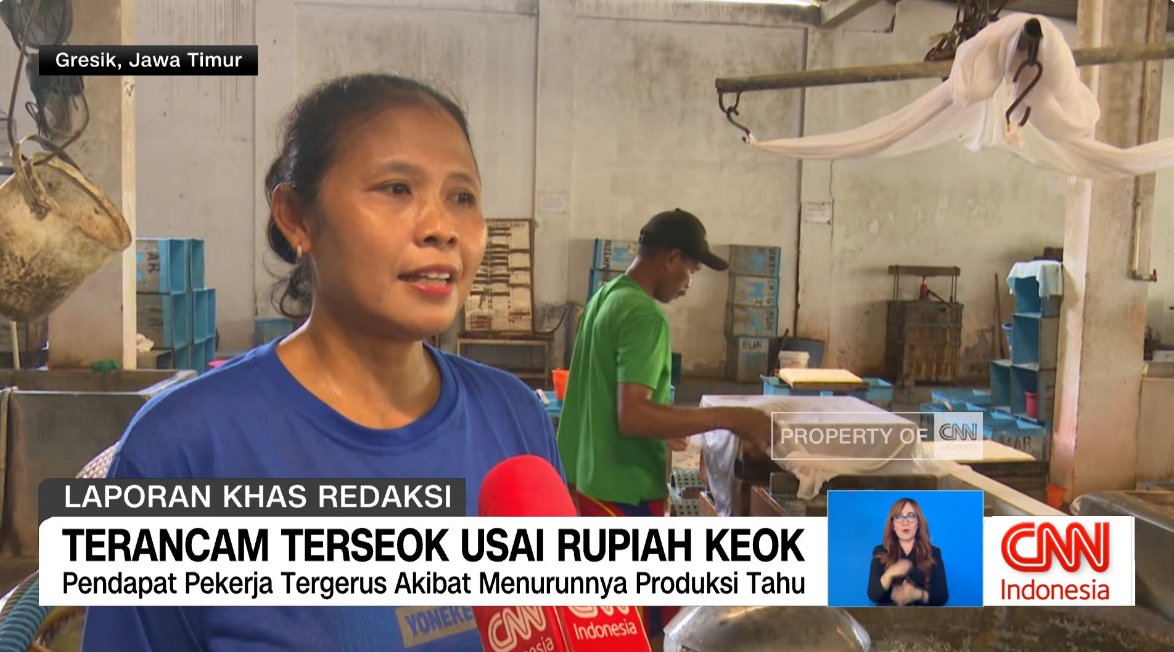
Guys, hari ini rupiah tembus Rp17.700 per dolar Dan CNN Indonesia baru meliput sesuatu yang menurut gue paling penting untuk disampaikan bukan angka di layar Bloomberg, bukan perdebatan di rapat DPR, bukan debat akademis soal definisi stabilitas. Tapi wajah Iswati. Siapa Iswati: Iswati adalah pemilik pabrik tahu Sumber Makmur di Gresik, Jawa Timur. Setiap hari dia butuh 1,5 ton kedelai untuk produksi. Kedelai yang 86,5%-nya diimpor dari Amerika dan dibayar dalam dolar. Ketika rupiah melemah harga kedelai naik dari Rp9.000 menjadi Rp11.000 per kilogram. Kenaikan Rp2.000 per kilogram. Dikalikan 1,5 ton per hari. Dikalikan 30 hari sebulan. Pendapatannya turun hampir 20% dalam sebulan. Bukan karena dia malas. Bukan karena bisnisnya buruk. Tapi karena satu angka di layar Rp17.700 per dolar yang kata presiden tidak perlu dikhawatirkan oleh rakyat desa. Dan ada Asna: Asna bekerja di pabrik tahu itu selama 20 tahun. Dua puluh tahun hidupnya bergantung pada pabrik itu. Sekarang produksi turun karena bahan baku makin mahal. Penghasilannya sebagai pekerja borongan ikut turun. "Kalau mahal ya ada ketakutan sedikit karena produksinya menurun." Sedikit. Kata yang dipilih dengan sangat hati-hati oleh perempuan yang 20 tahun hidupnya tergantung pada satu pabrik yang sekarang terancam tutup. Dan ini datanya: Indonesia mengimpor 2,56 juta ton kedelai per tahun. 86,5% dari Amerika. Nilainya di 2024 saat dolar belum Rp17.700 sudah Rp22,5 triliun per tahun. Sekarang dolar sudah lebih mahal. Artinya tagihan impor kedelai itu naik. Artinya harga tahu dan tempe naik. Artinya margin Iswati turun. Artinya Asna takut kehilangan pekerjaan. Dan ini baru satu komoditas. Satu industri. Satu pabrik. Di satu kabupaten. Multiply ini ke seluruh Indonesia: Gandum 100% impor dalam dolar. Mie instan, roti, biskuit semua terdampak. Obat-obatan sebagian besar bahan baku impor dalam dolar. Harga obat naik. Plastik bahan baku impor. Semua industri yang pakai kemasan plastik terdampak. Bahan baku tekstil sebagian impor. Industri garmen terdampak. PHK mengintai. Survei Apindo sudah menunjukkan sinyal: beberapa perusahaan sudah menyatakan siap PHK atau merumahkan karyawan kalau bahan baku terus langka dan mahal. Dan di tengah semua ini apa yang kita dengar dari pemerintah: Prabowo: Mau dolar berapa ribu kek kalian di desa enggak pakai dolar. Purbaya: Fundamental kita kuat. Kondisi sekarang berbeda dengan 1998. Gubernur BI Perry: Rupiah stabil volatilitasnya 5,4%. Sementara Iswati mengurangi ukuran tahu yang dijualnya supaya tetap bisa menutup biaya produksi. Sementara Asna takut kehilangan pekerjaan yang sudah dia jalani 20 tahun. Sementara konsumen di pasar mengeluh harga sayuran naik, BBM akan naik, makanan makin susah dijangkau. Dan ini yang paling mengerikan: Iswati dan Asna bukan investor asing. Bukan pelaku pasar modal. Bukan orang yang pergi ke luar negeri dan butuh dolar untuk belanja. Mereka persis orang-orang yang kata Prabowo tidak terpengaruh dolar. Tapi mereka yang paling merasakan akibatnya. Setiap hari. Di setiap kilogram kedelai yang harganya terus naik. Di setiap produksi yang terpaksa dikurangi. Di setiap upah borongan yang ikut turun. Rupiah Rp17.700 bukan sekadar angka. Itu adalah harga yang dibayar oleh Iswati setiap kali dia beli kedelai. Itu adalah ancaman yang dirasakan Asna setiap kali produksi berkurang. Itu adalah ketakutan jutaan pekerja di industri yang bahan bakunya masih impor dalam dolar. Dan selama pemerintah masih menggunakan argumen "rakyat desa tidak pakai dolar" untuk menenangkan publik sementara kedelai, gandum, obat, dan plastik yang menjadi tulang punggung kehidupan rakyat kecil semuanya dibeli dalam dolar ada kebohongan yang sangat mahal sedang dipelihara. Yang membayar harganya bukan yang mengucapkan kebohongan itu di podium. Yang membayarnya adalah Iswati. Dan Asna. Dan puluhan juta orang seperti mereka yang tidak pernah memegang dolar tapi hidupnya sudah lama ditentukan oleh kurs yang presidennya bilang tidak perlu dikhawatirkan.
Lambe Saham tweet media
Indonesia
35
153
292
13.8K
K
K@bahagiabunga69·
@kompascom Gak masuk akal….. di depan antek aseng dia menyiram pesawat supaya tumbuh subur kah
Indonesia
0
0
0
845
Kompas.com
Kompas.com@kompascom·
Siram Air Bunga ke Jet Rafale, Prabowo Resmikan Deretan Alutsista untuk TNI ~RS
Indonesia
230
78
490
1.4M
K
K@bahagiabunga69·
Udalah cutloss eh kepotong biaya materai mulu tiap hari 10rb gr2 ihsg junam tak berkesudahan
Indonesia
0
0
0
17
K retweetledi
Abul Muzaffar
Abul Muzaffar@abulmuzaffar10·
Jadi gini ceritanyaa.. IHSG crash karena ada rumor pendirian badan ekspor komoditas. Kabarnya, setiap eksportir yang ingin jual CPO dan Batubara, tidak lagi bisa memjual langsung ke pasar dunia. TAPI, HARUS LEWAT BADAN ITU. Yang jadi masalah, tidak ada yang tahu menahu soal pendirian badan ini. Purbaya tidak tahu, bahkan Bahlil pun tidak tahu. Mereka bilang : tunggu pengumuman Presiden. Katanya sih, bada ini mau menekan praktik pelaporan nilai ekspor yang lebih rendah dari nilai sebenarnya. Supaya penerimaan negara dari pajak, royalti, dan devisa lebih optimal. Tapi pasar membaca itu sebagai upaya ngontrol mereka, mengurangi margin mereka, inefisiensi dan potensi penyalahgunaan kekuasaan oleh badan pengekspor. Lagipula praktik bandel seperti under-invoicing harusnya bisa ditegakkan dengan Dirjen Pajak dan Bea Cukai. Penegakan hukumnya harus lebih kuat. Ga perlulah bikin badan2 baru.
Strategi + Bisnis@Strategi_Bisnis

Ihsg crash gara2 ada rumor pendirian badan ekspor komoditas. Idenya agak aneh. Bikin birokrasi baru dan amat rentan kongkalikong. Crazy. Udah gitu katanya mau diumumkan besok saat pasar lagi liar dan rupiah kolaps. Double crazy. Makin ambyar dab.

Indonesia
110
1.3K
4.4K
242.4K
K
K@bahagiabunga69·
@bornwithbliss Minum air putih teh biar ke refill air matanya
Indonesia
1
0
0
32
Bid Offer Runner
Bid Offer Runner@bornwithbliss·
Air mata sampe kering sialan 😭
Indonesia
1
0
0
159
K
K@bahagiabunga69·
@stockmapping Sy juga pulang kerja masih makan mie ayam bang walau abis CL
Indonesia
0
0
0
255
Alda | #LawanJudolDenganInvestasi
Setelah berdiri lama di depan tukang kebab dan memperhatikan sekitar, saya melihat banyak kendaraan berlalu lalang tanda ekonomi baik2 saja.
Indonesia
13
2
53
4.4K
K retweetledi
Blue Candle
Blue Candle@bluecandleway·
Jangan dikira palak memalak hanya terjadi di tingkat bawah, semisal kepada para pedagang dan pebisnis kecil. Hal tersebut juga terjadi pada skala yang lebih tinggi. YTTA.
Indonesia
1
1
4
382