

Bart Mroz
11.5K posts
Bart Mroz
@bartmroz
Dad, Partner, https://t.co/UNw46X1AbB | Former CEO, SUMO Heavy (acquired) | Building what's next ... https://t.co/pNGbZIEDDx and https://t.co/XOSUqnwJYt
Norwalk, CT Katılım Şubat 2007
382 Takip Edilen1.9K Takipçiler

Check out my latest article: Your Agency Is a Restaurant Business. You Just Don't Know It Yet. linkedin.com/pulse/your-age… via @LinkedIn
English
@paulofehlauer @itsolelehmann @plainlogic24 I also just bumped into this. github.com/rohitg00/skill…
English

@itsolelehmann @plainlogic24 I mean, I know how to set up a repo, but how do I make all Claude instances read from it?
English

anthropic should add a simple feature to sync skills between claude chat, claude cowork and claude code and between teams
i see how much people are struggling with this
English
@paulofehlauer @itsolelehmann @plainlogic24 Maybe putting it the repo link in to global instructions might work...

English
Hey @gregisenberg the video about Obsidian and the OS stuff was awesome .. but have you considered using Git as the repository of context for AI.
English

What are we using instead of paying Docusign $65/month now?
English
Bart Mroz retweetledi


Take away my API access, and I take away my credit card.
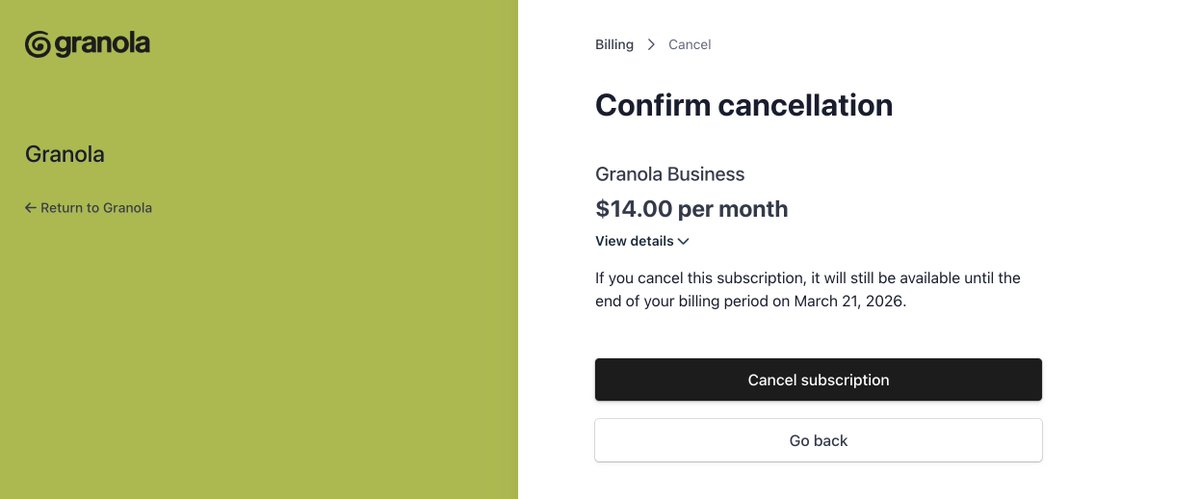
What are the best alternatives to Granola?
Would love to hear what you are using.
English
Bart Mroz retweetledi
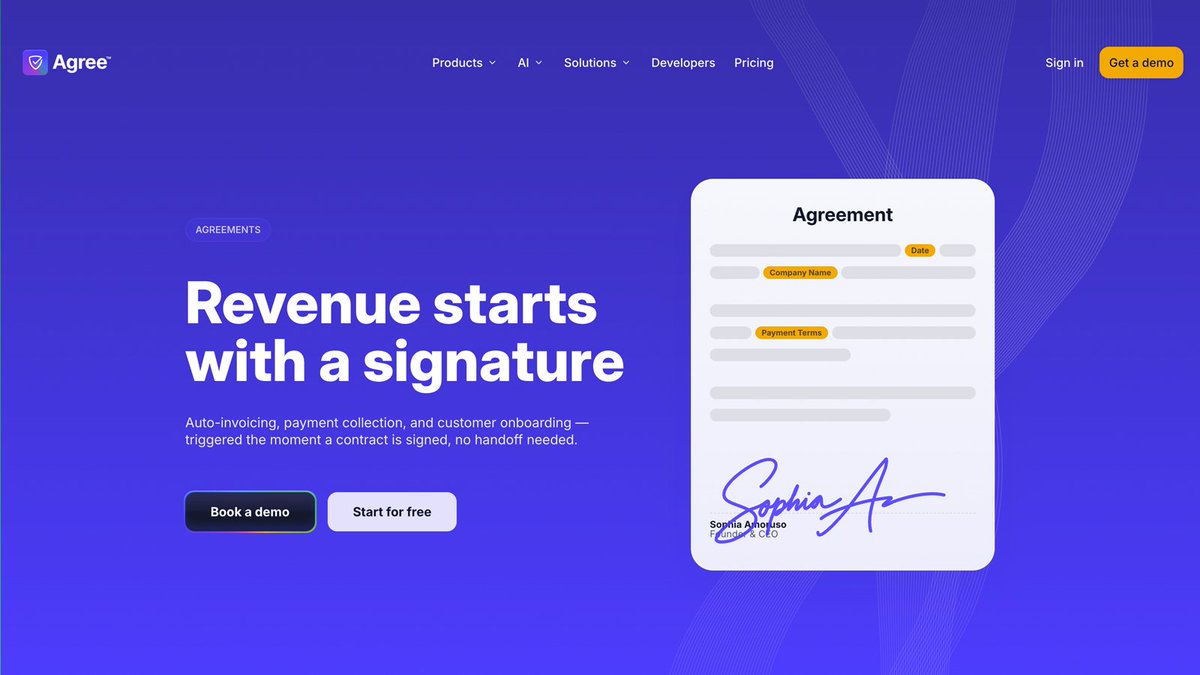
Today, we're excited to launch the next version of the Agree.com website that better showcases our agentic-first revenue stack from Contract → Invoice → Billing → Payments → Collections/Recovery — All-in-one.
Over the past 12-months, we've built the fastest contract-to-cash platform on the market. We've been doubling the invoice volume every 6-to-8 weeks, we just surpassed +100,000 users, we've raised over $10M, and have had many of the biggest silicon valley and Fortune 100 brands in the industry signing and paying on platform.



English
AI is faster and cheaper than your team at a lot of things. Summaries. First drafts. Research. If you're not using it to accelerate workflow, you're already behind.
But speed isn't strategy.
A Forbes piece by Kevin Cochrane pointed to a NielsenIQ study: most AI-generated ads tested as more annoying and boring than traditional ones. Worse, they damaged how audiences perceived the brands behind them. Negative brand halo.
For agencies, that's a death sentence. Your product isn't content or code. It's trust.
I keep coming back to something I call Crafting Care. Not customer service. Not account management theater. The actual craft of knowing a client's business well enough to push back when they're wrong. Following up because you said you would, not because your CRM reminded you. Listening when their voice gets tight over something you could dismiss.
AI clears the table. It doesn't serve the meal.
The agencies that grow over the next three years won't be the ones that automate the most. They'll be the ones that use automation to free up bandwidth for the work that builds accounts. The hard conversations. The creative risks. The moments where a client feels like you're actually in their corner.
Here's the playbook:
Let AI handle research, first drafts, reporting. Spend the time you saved on relationship depth. The check-ins. The proactive ideas. The quarterly conversations that have nothing to do with a deliverable.
That's the moat. Not the tools. The trust.
At AgencyFocus.xyz, this is the whole game. Growth isn't about finding more leads. It's about building the kind of business where clients don't leave because you've given them a reason to stay.
Cochrane's piece is worth reading if you're thinking about where AI fits:
forbes.com/councils/forbe…
English
Testing assumptions has become faster and easier, not just something you discuss in meetings. Last night at a small brewery, we had a real talk about a new feature. Instead of just guessing on paper whether it would work, we built a version in two hours, got a few friends to try it out, and listened to what they said. That kind of hands-on work gives you real insights you won't get from whiteboard brainstorming. Product design has changed forever.
English
The gap between "I have an idea" and "I have a product someone can use" is gone.
It feels like we are living through the biggest power transfer in the history of the internet. I don't know how else to describe it.
It's all I can think about.
Please tell me I'm not alone.
English
Bart Mroz retweetledi

Your close rate is 20%. You think it's a sales problem.
It's not.
It's a positioning problem. And it's costing you more than lost deals.
There's a tax every generalist agency pays. It doesn't show up on your P&L. But it shows up everywhere else.
In the proposals that go nowhere.
The sales calls where you stumble when asked "what makes you different?"
The projects you take because you need revenue, not because you're the right fit.
The clients who treat you like a vendor because that's how you showed up.
This is the Niche Avoidance Tax. Most agency owners pay it every month without realizing it.
When you stay general, you compete on availability and price. Prospects make you prove yourself repeatedly. Longer sales cycles. Longer proposals. More discounting. Fewer wins. And when you do win, it's usually because you were the cheapest option still breathing.
Generalists close 1 in 5 proposals. Specialists close 1 in 2. That gap shows up in how much of your month goes to unpaid sales work versus delivery.
When you're the "full service agency," your ceiling is whatever the market will bear for a generalist. When you're the "only agency that does X for companies like Y," you set the price. Nobody negotiates with the specialist.
I watched this firsthand.
When SUMO Heavy did everything, we competed on rate and justified scope in every conversation. When we focused on complex e-commerce integrations, everything changed overnight. Clients called us as the answer to a specific problem. Shorter RFPs. Bigger projects. We stopped losing to shops charging half our rate because the comparison stopped making sense.
Specialists close faster, retain longer, and get referrals that convert because people know exactly what they're getting.
So why do agencies avoid it?
Three reasons:
1. Fear of leaving money on the table.
You worry narrowing means turning away work. What actually happens: you stop chasing work that was never yours to win. That twelve-hour proposal for the prospect "just getting bids" was never real revenue. It was hope dressed up as pipeline.
2. Founder identity.
Ten years of being the person who figures anything out makes niching feel like admitting a limitation. It's not. It's charging for what you're actually best at instead of discounting everything else.
3. Market anxiety.
What if the niche dries up? What if there aren't enough clients? Almost always theoretical. Agencies that pick a niche run out of bandwidth, not market.
What focused positioning requires:
Start by being known for one thing while finishing existing work. Update how you talk about yourself. Website. Proposals. LinkedIn. Conference intros.
Pick the lane first. The work follows.
The niche doesn't have to be a vertical. It can be a problem, a client type, a methodology, an outcome. What matters: when the right prospect reads your positioning, they think "that's exactly us." Not "I guess they could help."
That recognition makes everything cheaper.
English