

Ben Denckla
828 posts

It’s a great article!
This makes perfect sense in an oral society. And so it’s not surprising at all to find cantillation on the Mishnah in manuscripts and printings [*]. When these texts are recited monotonously, they’re not just more boring but also much harder to remember.
What’s weird to me is when I see a verse printed in a siddur without cantillation. “Um, how am I supposed to read this?”
[*] I just discovered this amazing printing: rosetta.nli.org.il/delivery/Deliv……
English
וְאָמַר רִבִּי שְׁפַטְיָה אָמַר רִבִּי יוֹחָנָן: כׇּל הַקּוֹרֵא בְּלֹא נְעִימָה וְשׁוֹנֶה בְּלֹא זִמְרָה, עָלָיו הַכָּתוּב אוֹמֵר: ״וְגַם־אֲנִי֙ נָתַ֣תִּי לָהֶ֔ם חֻקִּ֖ים לֹ֣א טוֹבִ֑ים וּמִ֨שְׁפָּטִ֔ים לֹ֥א יִֽחְי֖וּ בָּהֶֽם״.
R. Shephaṭiah further said in the name of R. Yoḥanan: If one reads [Scripture] without a melody or reviews [Mishnah] without a tune, of him the verse says: “Moreover, I gave them laws that were not good and rules by which they could not live” (Eze 20:25).
sefaria.org/Megillah.32a.12
Heimish Humor@HeimishHumor
It's hilarious how in both Havdalah and the Megillah reading Jews take the happiest verse in Tanach and say it in unison in the most robotic, monotone way possible - "Layehudim, hysa, orah, vesimcha, vesasson, veekar."
עברית
@K_L_Phillips Nice! I think it is also worth noting that, as I think is typical, the erasure is only done partially, since "whitespace matters"! I.e. the non-erased parts become "space fillers".
English

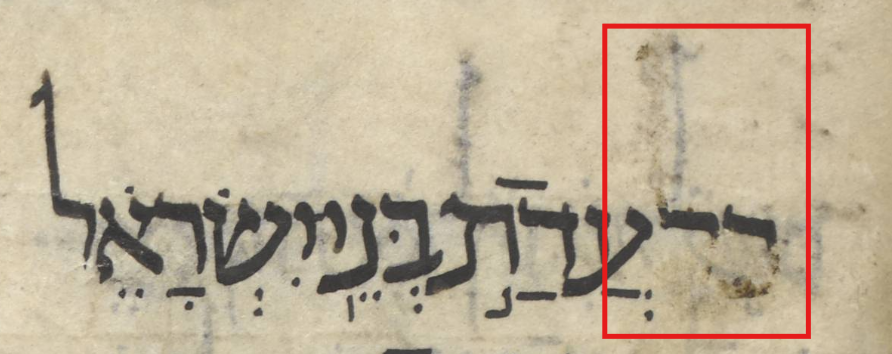
Like the rest of us, early scribes were prone to writing what they were used to, rather than what was actually there.
In this picture you can see that the scribe behind codex Or.4445 made exactly this mistake: he added the word 'all' (כל) and then had to scratch it out.
English
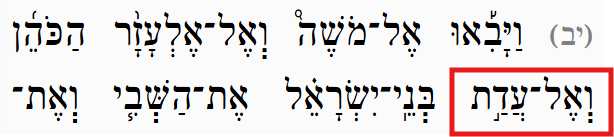
The danger of familiar phrases.
In Numbers 31:12 the army brings the plunder "to the congregation (of the sons of Israel)". This phrase is unique. Elsewhere it is always "to <the whole of> the congregation...'
Its only one word in Hebrew: כל
English
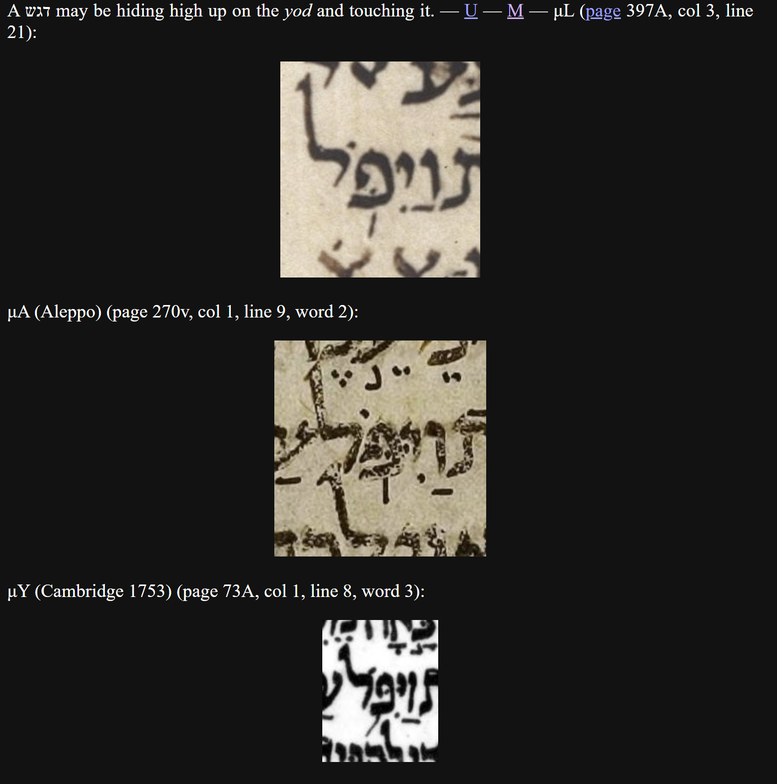
It is interesting to see a big set of words across multiple Tiberian-style manuscripts. Such a set of 160 words is a by-product of my sprawling critique of BHQ Job: bdenckla.github.io/book-of-job/
English
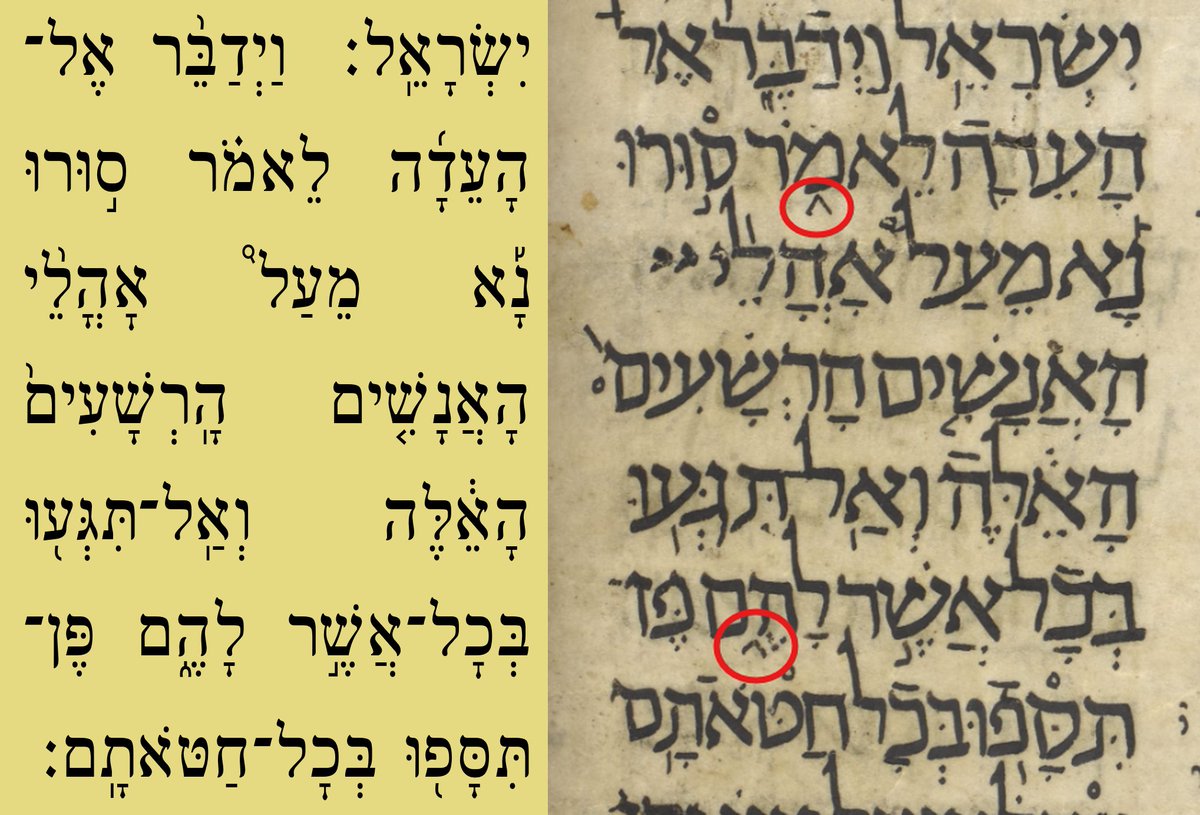
@K_L_Phillips Wild! As you point out, the double אתנח is the wildest thing, but the accents of all of the first three chanted words are non-standard. Is that מרכא כפולה under וידבר?! My attached image shows yours with a consensus text in parallel.
English
When learning the accents in the #MasoreticText, rule 101 is that you can only have one Atnah per verse, dividing the verse as a whole into two parts.
Looks like codex #Or4445 didn't get the memo.
(Numbers 16:26; fol. 135v)
You can see for yourself at ihbmr dot com/manuscripts
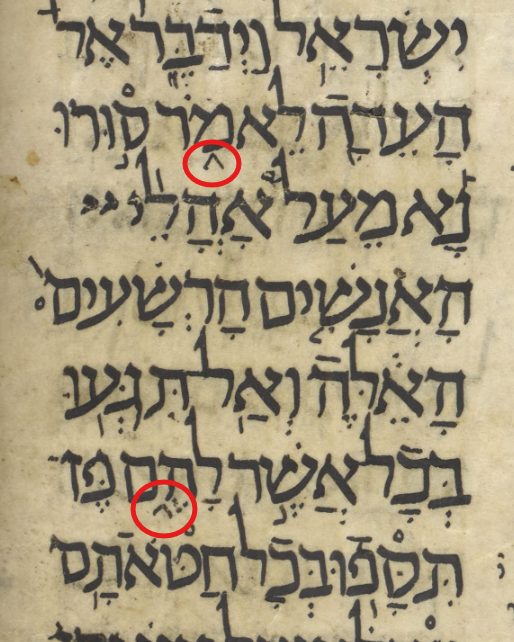
English
@charles_loder Wouldn't it be nice for the computer to be able to zoom you in on where a word probably is in the Aleppo Codex? I can now do that for any word in the 24 pages of Job, because I painstakingly added some annotations to MAM describing the physical layout of each page. For example:
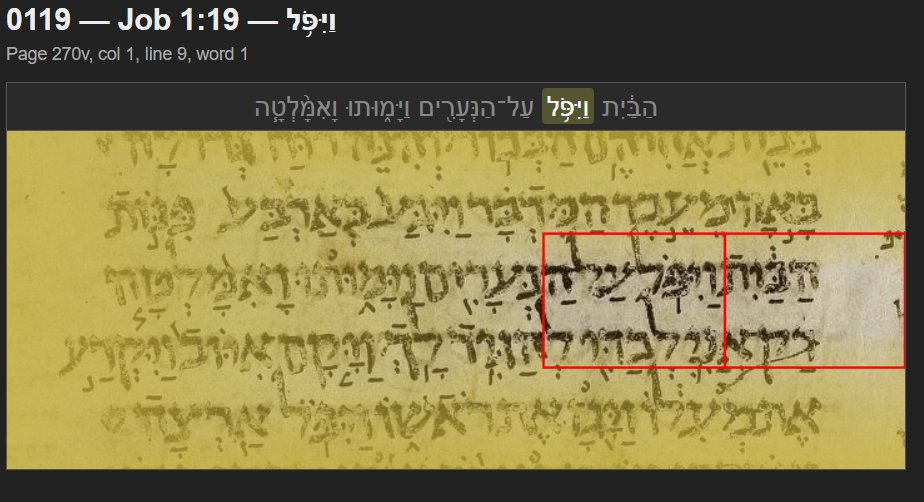
English
Here's a screen snip from an Aleppo Codex line break editor I had Claude Opus 4.6 write me in Visual Studio. @charles_loder you'll "get" what this is, I bet!

English
@DavidRegev @charles_loder That's one of the applications I have in mind. The main one is to be able to jump to the image of the line of any word.
English
@bdenckla @charles_loder Is your goal to recreate the Aleppo Codex’s layout digitally somewhere (like in MAM)?
English
@noah_nonsense @charles_loder Allows me to mark up a "flowing" (unformatted) Biblical text according to the exact breaks (line, column, and page) found in the Aleppo Codex.
English
@bdenckla @charles_loder Interesting project. What does it do?
English
@charles_loder I wish! Not as automated as you suggest: I had it write me an editor that allowed *me* to divide the text into the layout found in the AC (two columns since I'm working on Job). So, AI coded the app that helped me use good old human vision (mine) for markup!
English

@bdenckla Oooh is the base text MAPM and you had it divide the text into a 3 col layout acc. to A?
English
It may come as a surprise to some that BHQ Job does not include, at its core, a modern scholarly edition of the Masoretic Text. See my review: bdenckla.github.io/book-of-job/jo…
English
@charles_loder This could accelerate my work a lot, if someone would fund it!
English
Excited to share the MVP I've been building: a IIIF-powered application for reading medieval Hebrew manuscripts, powered by AI annotations.
English
WLC Considered Harmful (a review of A Hebrew Reader for the Pentateuch): docs.google.com/document/d/1XV…
Other rants/reviews by me: github.com/bdenckla/docum…
English
@K_L_Phillips A very late follow-up: these two דחי-then-רביע (Ps 89 & 7) and one more (in Job 11) are all now noted in UXLC: tanach.us/Notes/Psalms/P…, tanach.us/Notes/Psalms/P…, & tanach.us/Notes/Job/Job.….
English
TLDR:
The #SonOfDavid and His #unbreakable, #perpetual #covenant, wrought in #love, form the centre of these lines, just as they form the solid, firm heart of God's universe.
#ResurrectionSunday
#NewCreation
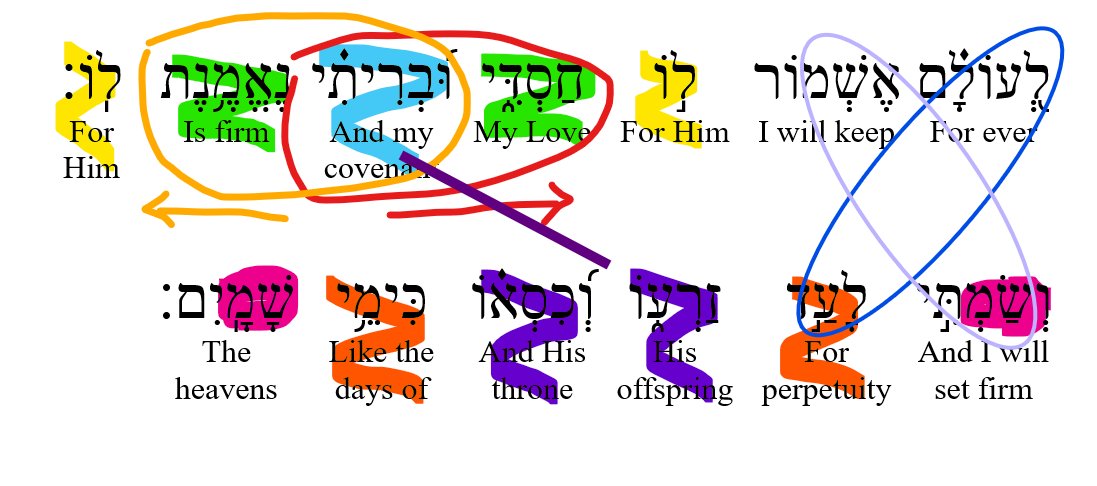
English
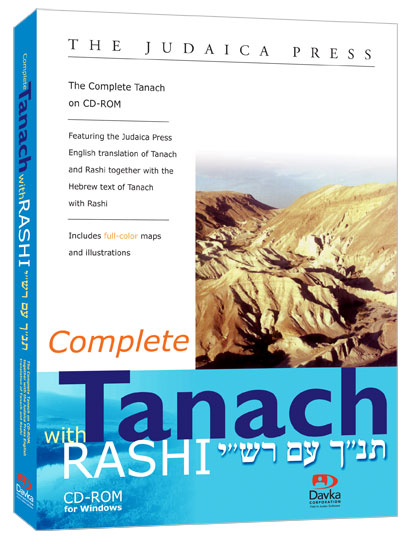
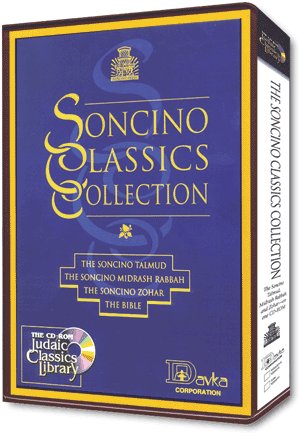
Complete Tanach with Rashi & Soncino Classics Collection: does anyone know anything about how the Bibles in these products came to be (and then came not to be?
English
Chabad has the weirdest and possibly the worst Tanakh on the web. See my review: bdenckla.github.io/MAM-with-doc/m…
English
@DavidRegev Regardless of "who" (the font or another program) would be responsible for interpreting the format you propose, it would make representing inconsistent texts a little burdensome. I.e. it shines only for texts that consistently either use or don't use stress helpers.
English
True, but we do already have such a notion, such as initial and final forms in Arabic. That requires looking at nearby characters. My idea requires looking ahead more than one character, though, so it’s admittedly more complex. Still, if layout engines handle do it, I don’t think that should be a limitation.
English
My sprawling proposal for Hebrew stress helper accents in Unicode: 1drv.ms/b/c/1a2a340dcd…. Digresses into topics as varied as the Michigan-Claremont encoding, the Austrian National Library’s Cod. Hebr. 4, and the accentuation of YHVH.
English
@DavidRegev Fonts can look ahead more than one base character, but even looking ahead one base character is the kind of thing I'm trying to get away from in my proposal!
English
@DavidRegev The main reason that my proposal didn't "have wings" was the current system, where font must figure out what's a helper and what is not, works well enough (in the absence of mid-word formatting)
English
@bdenckla Huh! Why wouldn’t your proposal fly?
As for my proposal, why do you think it’s less relevant to Unicode? Is that due to being too un-visual?
English