Marco (∎, ∆)

10.5K posts

Marco (∎, ∆) banner
Marco (∎, ∆)

Marco (∎, ∆)

@Be1garat

Scaling @zksync | Executive Director at ZKsync Foundation

Singapore Katılım Kasım 2010
1.2K Takip Edilen5.8K Takipçiler
Sabitlenmiş Tweet
Marco (∎, ∆)
Marco (∎, ∆)@Be1garat·
Why Crypto? For me: From Paternalistic to Independent From Entitled to Empowered From Subject to Sovereign From Duties to Incentives From Passive to Active From Rights to Powers From Obey to Enforce From Trust to Verify
English

24
15
132
30.6K
Marco (∎, ∆) retweetledi
mon
mon@moninvestor·
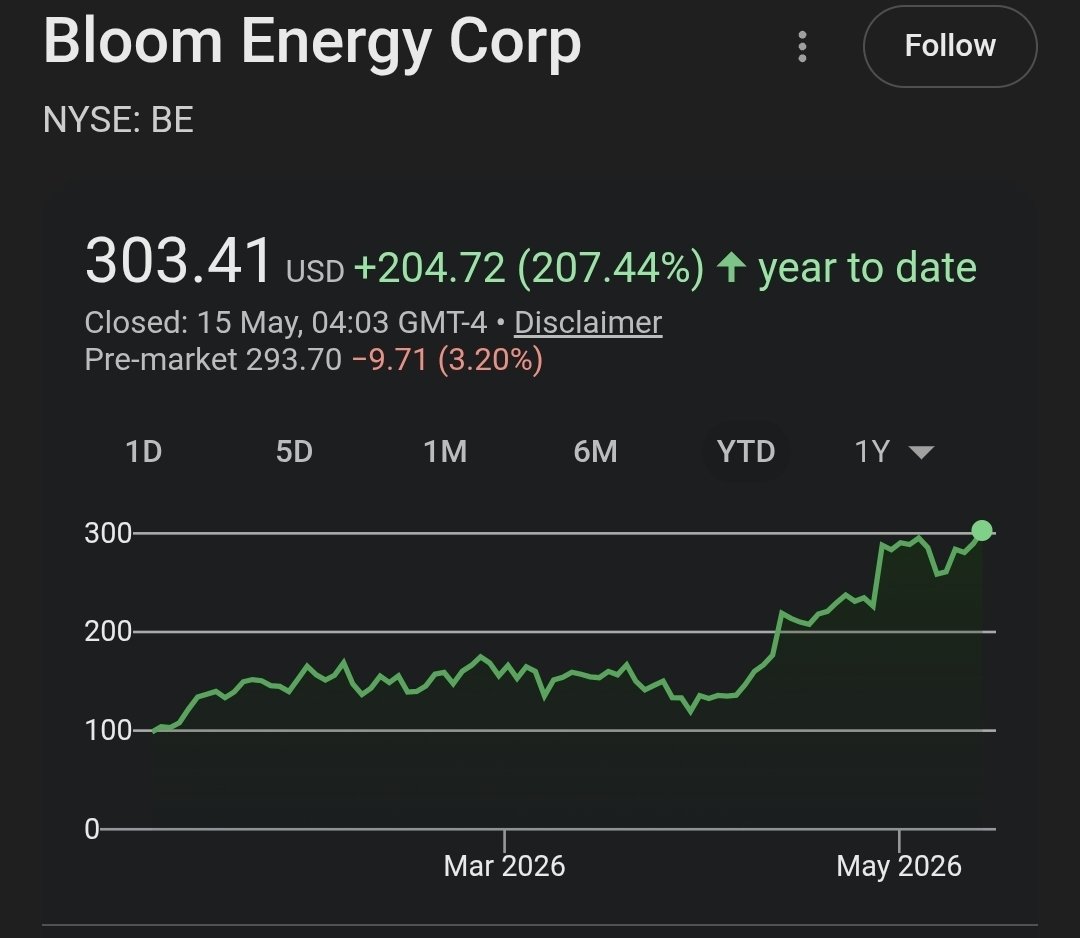
Today, Leopold Aschenbrenner's Situational Awareness 13F drops. The 24 year old former OpenAI researcher turned a viral AGI manifesto into a multi-billion dollar hedge fund. His #1 position: Bloom Energy $BE, already up +200% YTD and 1,400% over the past year. His thesis was simple: > AGI is bottlenecked by electrons, not chips. > Hyperscalers can't wait years for grid hookups, so they're racing to plug data centers into on-site fuel cells. > Bloom sells the fuel cells. He saw it months before the rest of the Street. Expect every name in today's filing to be picked apart.
mon tweet media
Leopold Aschenbrenner@leopoldasch

Virtually nobody is pricing in what's coming in AI. I wrote an essay series on the AGI strategic picture: from the trendlines in deep learning and counting the OOMs, to the international situation and The Project. SITUATIONAL AWARENESS: The Decade Ahead

English
28
71
1.2K
509.9K
Marco (∎, ∆) retweetledi
DCo
DCo@Decentralisedco·
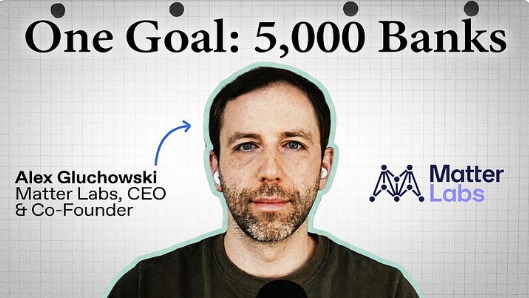
What do institutions need in a chain for them to consider it seriously? @gluk64 joins us to talk about how @zksync is going after 5,000 banks with Ethereum as their moat.
English
2
11
38
12.2K
Marco (∎, ∆) retweetledi
Barren Waffett #ZK maxi
Barren Waffett #ZK maxi@buildyourplanb·
Is this the endgame for #ZK? 👀 The CLARITY Act could be the moment when crypto stops being “the wild west” and starts becoming part of the global financial system. For @zksync this means one thing: institutions, banks and enterprises can finally build with less fear of SEC uncertainty. 1. More regulation clarity → more adoption. 2. More adoption → more chains. 3. More chains → more interoperability. 4. More interoperability → more demand for ZK infrastructure. If the U.S. finally gives crypto a legal framework, projects with real tech and scalability could benefit the most. #ZK is not just another token anymore. It’s infrastructure for the next financial era. 🚀
Barren Waffett #ZK maxi tweet media
English
5
7
57
1.7K
Marco (∎, ∆) retweetledi
The ZKnomist
The ZKnomist@TheZKnomist·
.@ZKsync just introduced a new mechanism for protocol fees: $ZK Token Fee Flow System. A system designed to route protocol fees into onchain $ZK demand, with governance deciding how that $ZK is ultimately used. Let’s break it down 🧵
ZKsync@zksync

📢 Now On The Forum: ethereum:0x66a5cfb2e9c529f14fe6364ad1075df3a649c0a5 Fee Flow System Following up on the previous ethereum:0x66a5cfb2e9c529f14fe6364ad1075df3a649c0a5 Token Proposals, @ScopeLift is introducing the ethereum:0x66a5cfb2e9c529f14fe6364ad1075df3a649c0a5 Fee Flow System. A set of smart contracts that allows ZKsync Governance to route protocol fees through an onchain mechanism it controls.

English
5
3
44
3.9K
Marco (∎, ∆) retweetledi
ZKsync
ZKsync@zksync·
📢 Now On The Forum: ethereum:0x66a5cfb2e9c529f14fe6364ad1075df3a649c0a5 Fee Flow System Following up on the previous ethereum:0x66a5cfb2e9c529f14fe6364ad1075df3a649c0a5 Token Proposals, @ScopeLift is introducing the ethereum:0x66a5cfb2e9c529f14fe6364ad1075df3a649c0a5 Fee Flow System. A set of smart contracts that allows ZKsync Governance to route protocol fees through an onchain mechanism it controls.
English
12
28
168
26.2K
Marco (∎, ∆) retweetledi
Christian Catalini
Christian Catalini@ccatalini·
Nothing says "we let the AI write our policy memos" like citing an academic paper that argues the opposite of your position. @bankpolicy filed evidence against itself and called it advocacy. 🍿
Christian Catalini tweet media
English
0
10
39
3.1K
Marco (∎, ∆) retweetledi
ZKsync
ZKsync@zksync·
A bank is a Zone. A network of Zones is a new economy. This is how new financial infrastructure is born. One Zone at a time, until it's inevitable.
English
11
25
217
8.7K
Marco (∎, ∆) retweetledi
Ventura
Ventura@raadheyyyyy·
Your Bank Account on Blockchain? $ZK Prividium Makes It Possible 👀❤️ @ZKsync Prividium lets your NORMAL BANK ACCOUNT work like this: (5 banks with a combined $600B+ in deposits are already building on Prividium. so let’s look at what actually changes for them below.) ♦️Send cash to another person or business in seconds, any time, day or night. ♦️Your dollars turn into a simple digital version that stays fully backed by the bank and insured. ♦️Only you and the bank see the details. No public list of what you do, but still on blockchain. ♦️Set up automatic rules for payments or savings that run by themselves. ♦️Everything stays safe inside the bank system but moves with blockchain speed. 📍It upgrades your everyday checking or savings account. Same money. Same protection. Just faster and smarter transfers. No extra apps or new wallets needed in the end. Just better bank tech.
Ventura tweet media
English
4
9
39
1.9K
Marco (∎, ∆)
Marco (∎, ∆)@Be1garat·
Panetta is right that cross-border payments are expensive and slow but the key reason in my opinion is because money is trapped across two fragmented silos: fragmented balance sheets and fragmented settlement layers. Today, value must move through incompatible bank ledgers, prefunded accounts, correspondent relationships, local compliance stacks and jurisdiction-specific settlement systems. Stablecoins confirm there is demand for more portable money: people want faster, cheaper and global money. But stablecoins alone do not solve the institutional problem. Regulated finance is coming in with tokenized deposits and compliant portable money in a way that interoperate without collapsing into another closed network of semi-modernized silos. The regulator’s instinct will be to coordinate this into existence by policy. That will produce a slightly better version of what already exists: more standards, more bilateral integrations, more messaging, more institutional committees and more supervision. But the real upgrade is ZK. With ZK, institutions can keep control of their perimeter and issuers (like central banks in the context of money) can define the rules that govern their liabilities. ZK integrity guarantees those rules are followed by code, not by policy; programmatically, not manually. That makes cross-border money movement not just a scale of magnitude faster and cheaper, but also more compliant and more secure. And ZK allows for this to happen with privacy. Settlement layers and balance sheets can become unified from a utility perspective without becoming transparent from an information perspective. Money can route across shared infrastructure without leaking customer data, counterparty relationships or sensitive institutional flows. We are bulding this today with @zksync bancaditalia.it/pubblicazioni/…
English
5
2
11
492
Marco (∎, ∆) retweetledi
bartek.eth
bartek.eth@bkiepuszewski·
The will of the community to build truly trustless bridges is next to zero. Users instead are being told to trust Vendor B instead of Vendor A or build their own bridge. If we go with the latter advice we will end up with tens of thousands of individual bridges. Some maybe quite good, some horrible. No one will know or care to monitor that mess until the next hack Layer after layer of offchain infra is being proposed as a security improvement. The only problem with that is that this is unverifiable. Who still remembers Multichain that advertised the most advanced MPC setup only to be found that the majority of keys were on a founder's laptop ? rekt.news/multichain-rek… Maintaining complex, secure setup is costly - who will guarantee that what's set up securely today will be secure in two years after cost cutting, team change, tech upgrades ? You cannot trust what you don't see and can verify yourself. But bridging turns to be one of few really good businesses in Web3 while building trustless bridges is essentially creating public goods infra.
English
5
5
41
9.7K
Marco (∎, ∆) retweetledi
Lawyey
Lawyey@ItsLawyey·
Real talk. I'm a ZK maxi, and I genuinely don't care if the price pumps or dumps. I've been studying this ecosystem for years, and I'll be here for many more to come. ZKsync is playing a big game. Yeah, so big. But big games take time. Banks, financial institutions, central banks none of them move overnight. Yet for days now I've been reading about banks - even central banks - rapidly researching tokenization and tokenized deposits. ZKsync is here to build something massive with the biggest players in the room. The funny thing is, most of those big players want exactly what ZKsync is already doing. To the letter. All that's left is time and the ability to actually achieve adoption. We'll all witness it together.
Lawyey tweet media
English
9
4
49
4K
Marco (∎, ∆) retweetledi
Brzluxe™
Brzluxe™@brzluxe·
$27 trillion is sitting in bank accounts right now, doing absolutely nothing.** Not invested. Not deployed. Just parked, because the global financial system is so fragmented that banks need to pre-fund accounts with each other just to move money across borders. That's the hidden tax of infrastructure built in the 1970s still running the world's finances in 2025. The problem was never that finance lacked scale. Global deposits exceed $100 trillion. FX markets turn over $7.5 trillion every single day. The problem is that at every step, value leaks, into intermediaries, reconciliation delays, and capital sitting idle to manage risks that better infrastructure would eliminate entirely. Institutions know this. They've known it for years. What they didn't have was a way to move onto programmable infrastructure without exposing sensitive transactions to public networks, until @zksync built Prividium. Zero-knowledge proofs let institutions keep execution private, prove compliance to regulators without revealing underlying data, and still settle on Ethereum with full cryptographic finality. Privacy and verifiability. Sovereignty and connectivity. Not a tradeoff, both, simultaneously. Deutsche Bank. First Abu Dhabi Bank. Five U.S. regional banks with $600B+ in deposits. They're not experimenting. They're deploying. $ZK is the native asset of this network. One asset. Fixed supply. No inflation. Built for what's coming. The inefficiency had a number. Now it has an exit.
Brzluxe™ tweet media
English
41
10
134
12.3K
Marco (∎, ∆) retweetledi
Nomad
Nomad@JourneyMacro·
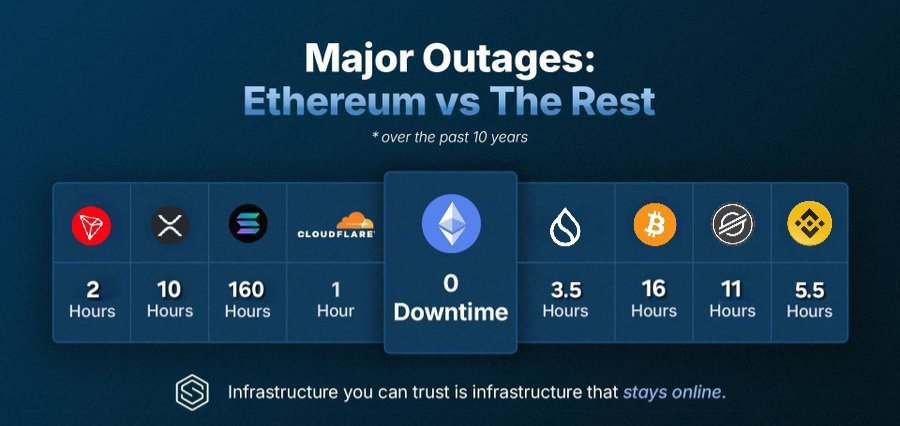
@brian_armstrong I'll leave this here Ethereum never goes down
Nomad tweet media
English
0
2
32
334
Marco (∎, ∆) retweetledi
ZKsync
ZKsync@zksync·
Network effects in financial infrastructure are slow at first. Then they aren't. Every Zone that connects makes every other Zone more valuable. The network compounds. The market is global Finance. All of it.
English
9
57
212
32.9K
Marco (∎, ∆) retweetledi
ZKsync
ZKsync@zksync·
ICYMI: ethereum:0x66a5cfb2e9c529f14fe6364ad1075df3a649c0a5 is now accessible to +15 million @Revolut users across the UK and EEA. One network. One asset. ethereum:0x66a5cfb2e9c529f14fe6364ad1075df3a649c0a5
ZKsync@zksync

$ZK, the native token of ZKsync, is now live on @Revolut. More than 15 million users across the UK and EEA can now access $ZK directly within one of the most trusted fintech apps in the world with seamless fiat onramps and 0% FX fees. Here’s what this unlocks 👇

English
19
30
209
20.7K
Marco (∎, ∆)
Marco (∎, ∆)@Be1garat·
"Good plumbing changes what becomes intolerable: - If internal liquidity can move faster, external liquidity looks trapped - If internal settlement becomes programmable, external settlement looks slow and expensive - If internal reconciliation gets cleaner, cross-bank reconciliation looks absurd This is what I think will drive network effects"
Marco (∎, ∆)@Be1garat

x.com/i/article/2051…

English
0
2
12
277