Beatriz Fernandez Fernandez

6K posts

Beatriz Fernandez Fernandez banner
Beatriz Fernandez Fernandez

Beatriz Fernandez Fernandez

@beaff26

Renal medicine, MD PhD, scientist-physician. Constantly moving forward, always learning .She/her.
Katılım Şubat 2014
2.2K Takip Edilen2.3K Takipçiler
Beatriz Fernandez Fernandez retweetledi
NDT
NDT@NDTsocial·
🎦Watch Dr Milica Bozic present the NDT publication: N-methyl-D-aspartate receptor inhibition protects against obesity-induced kidney disease 👇👇👇 oup.cloud.panopto.eu/Panopto/Pages/…
English
0
4
6
866
Beatriz Fernandez Fernandez retweetledi
Aamir Laghari , MD, FACC
Aamir Laghari , MD, FACC@DrAamirLaghari·
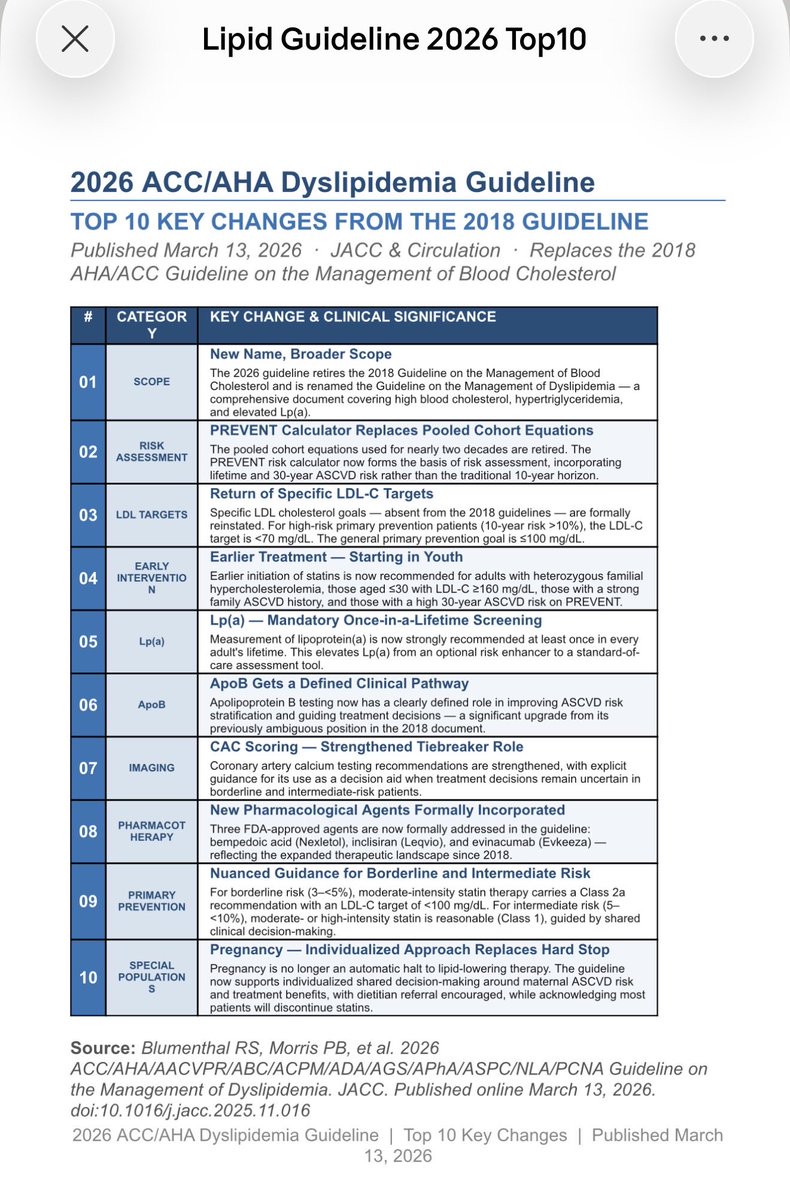
1 minute review for top 10 changes in 2026 lipid guidelines 🫀 Shared decision making always worked for me , patient compliance is great when you give them autonomy and a plan for decade ! @ACCinTouch
Aamir Laghari , MD, FACC tweet media
English
1
185
560
36.4K
Beatriz Fernandez Fernandez retweetledi
Prof Kamlesh Khunti
Prof Kamlesh Khunti@kamleshkhunti·
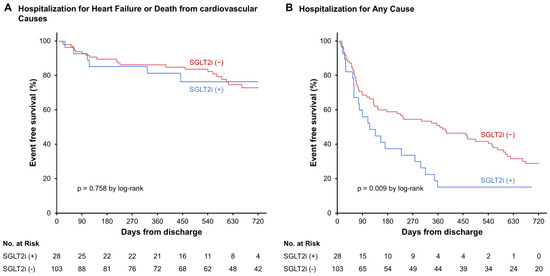
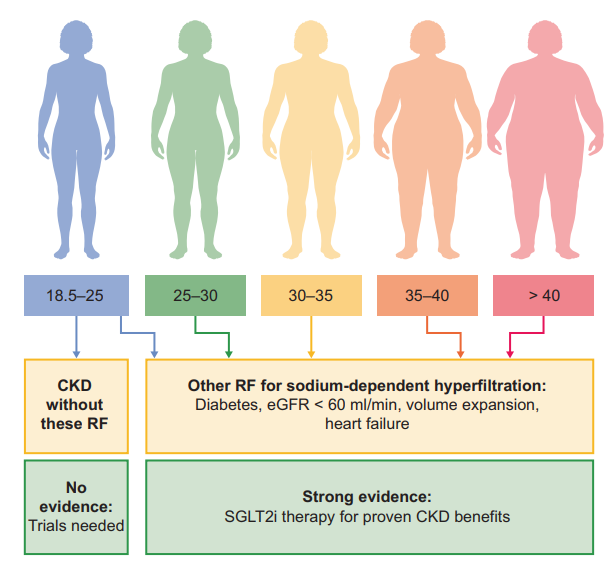
🫀 SGLT2 inhibitors in underweight HF patients In a prospective study (BMI ~17, median age 81): • ❌ No reduction in CV death/HF hospitalisation • ⚠️ Higher all-cause hospitalisations • 📉 Further BMI reduction 📊 Benefits seen in HF trials may not translate to very low-BMI populations. #HeartFailure #SGLT2 #CardioMetabolic mdpi.com/2077-0383/15/5…
Prof Kamlesh Khunti tweet media
English
10
71
187
20K
Beatriz Fernandez Fernandez retweetledi
Hans-Joachim Anders
Hans-Joachim Anders@hjanders_hans·
Finerenone meets primary endpoint in pivotal Phase III FIND-CKD study in patients with non-diabetic chronic kidney disease bayer.com/media/en-us/fi…
English
0
11
38
1.7K
Beatriz Fernandez Fernandez retweetledi
Abdelhamid Hamdy
Abdelhamid Hamdy@abdelhamed012·
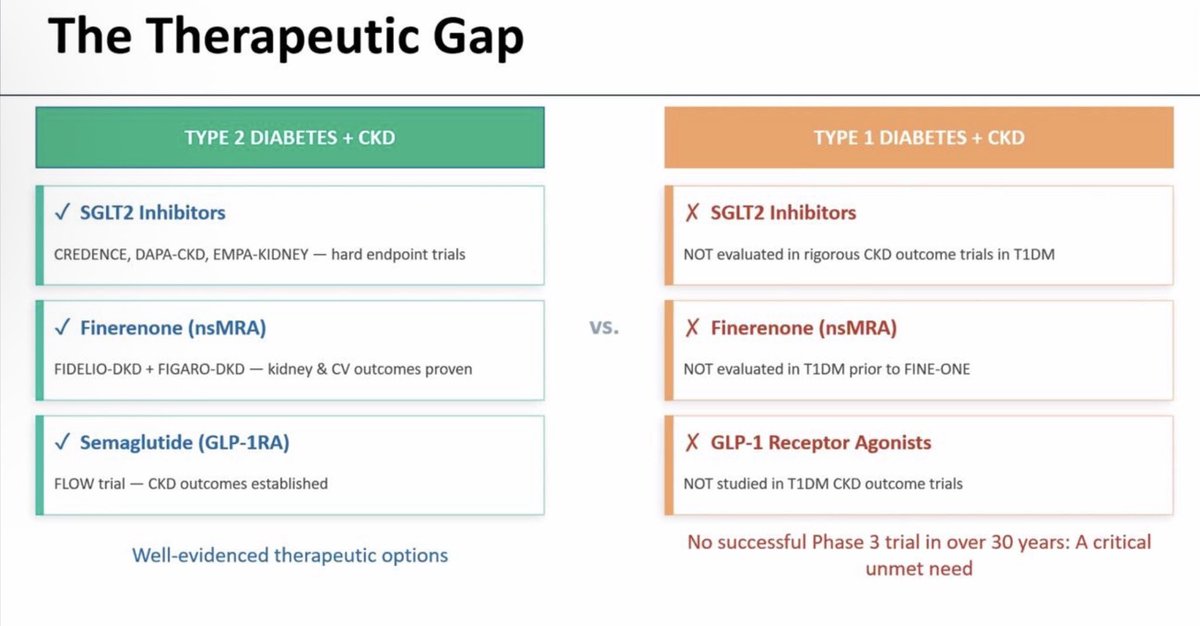
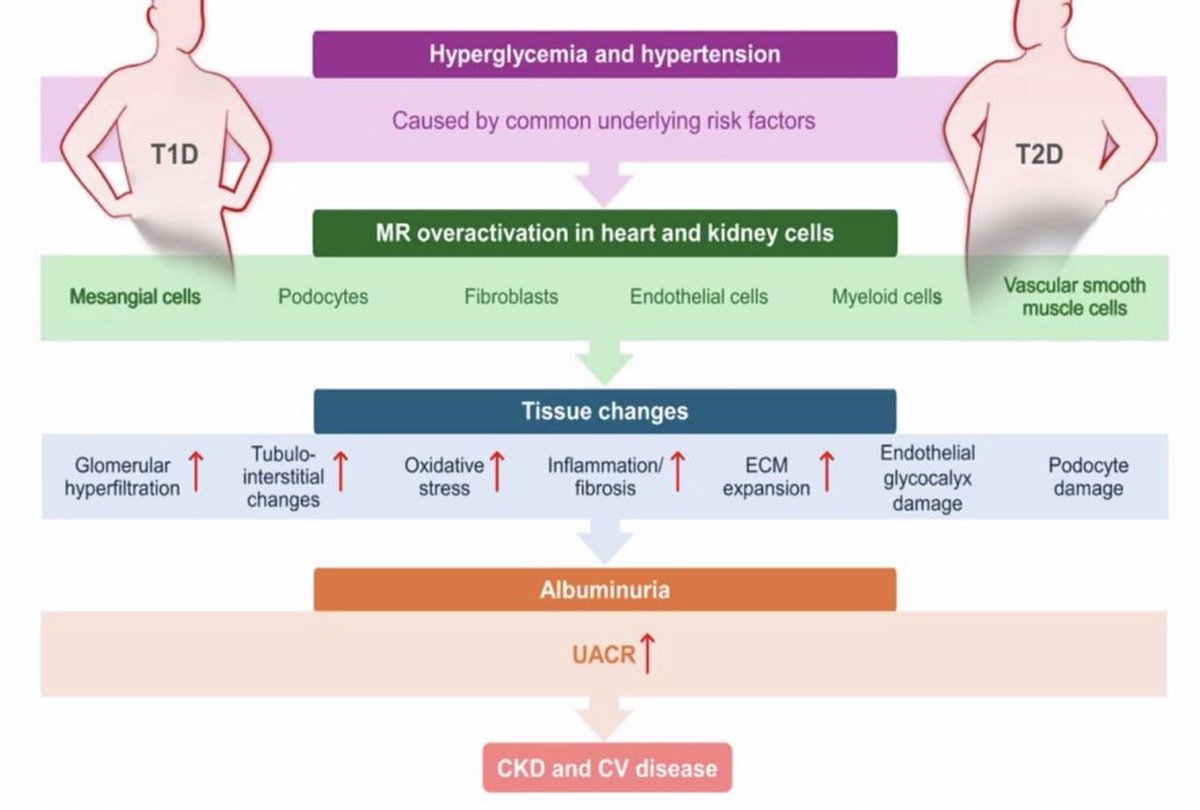
FINE-ONE & FINE-CKD finerenone in non diabetic CKD and type 1 DM CKD patients
Abdelhamid Hamdy tweet mediaAbdelhamid Hamdy tweet mediaAbdelhamid Hamdy tweet mediaAbdelhamid Hamdy tweet media
English
0
23
48
1.7K
Beatriz Fernandez Fernandez retweetledi
Almudena Castro Conde
Almudena Castro Conde@almucastro01·
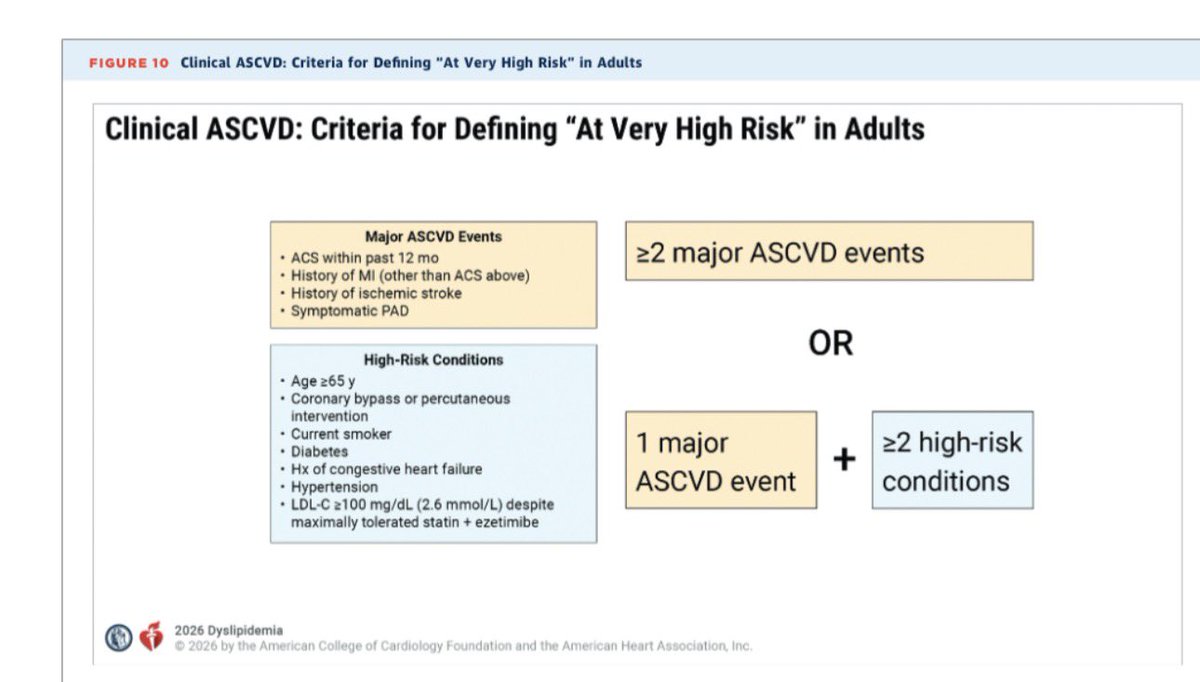
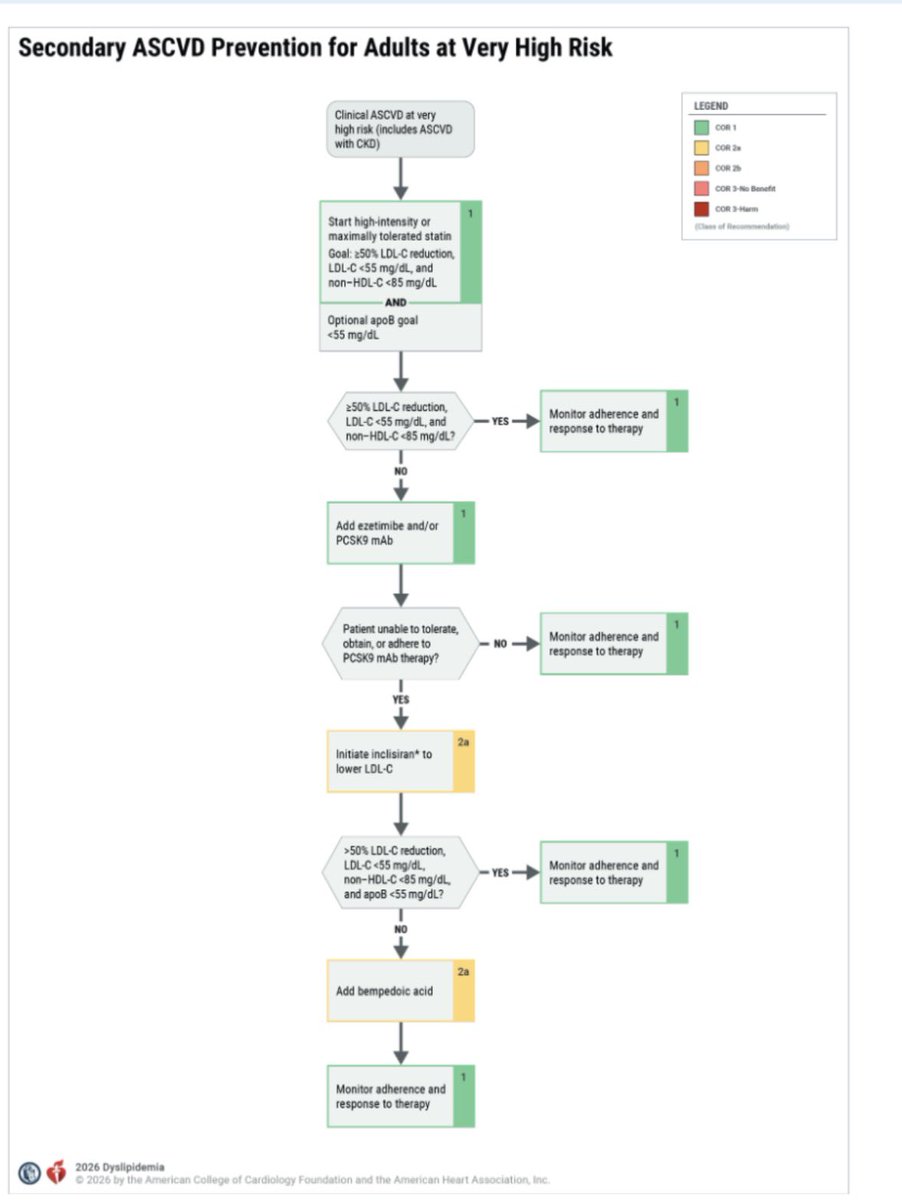
Mi resumen de las guías de lípidos 2026 ACC/AHA ⚠️GRAN CAMBIO EN ENFERMEDAD CARDIOVASCULAR⚠️ jacc.org/doi/10.1016/j.… Pero empecemos por el principio: 1. Se prefiere MH o S/NIH al Fridewald para estimar LDL✅ 2. Apo B para decidir si intensificación de tto. ‼️ojo que bajan a <55 mg/dl en muy alto riesgo‼️ ✅ 3. Lp(a) en todos los adultos por lo menos una vez en la vida✅ 4. PREVENT como 🧮 de riesgo ✅: yo la prefiero a los SCORE2 porque incluye IC y tiene en cuenta FG 5.PCR en riesgo borderline (3%-<5%) para decidir estatinas ✅ 6. En conjunto para pacientes sin ECV, la percepción es que bajan el umbral LDL, incluso para riesgo borderline 7. Búsqueda aterosclerosis subclínica. CAC para reclasificar✅. 8. Buen resumen del mecanismo de acción de los hipolipemiantes ✅ 9, AHORA VIENE EL GRAN CAMBIO: no todos los pacientes con un evento cardiovascular previo tienen muy alto riesgo. Se define: MUY ALTO RIESGO: =o> 2 eventos CV mayores 1 evento CV mayor + 2 o más FR ALTO RIESGO: ECV que no están en la categoría anterior 10. MUY ALTO RIESGO: LDL < 55; NO-HDL < 85 y ApoB <55 mg/dl O <50% reducción LDL Inicio: estatinas alta dosis, alta potencia. ( no tx combinada) Si no objetivos: Ezetimiba o iPCSK9 Si preferencia o adherencia o tolerancia: cambiar a inclisiran Si no objetivos: Ácido bempedoico. Empieza el debate pero como clínica, es algo que llevo pensando desde hace tiempo: Ahora que tenemos tx potentes de reducción de LDL: empezar con EST+EZE a veces deja al paciente en el limbo de 70-100. Con este nuevo enfoque, ponen en 2º escalón la tx PCSK9 y dejan claro que la decisión de elección de esta vs ezetimiba debe ser según el nivel de reducción que se necesita Mucho que comentar aún!!! Impactante el cambio de rumbo de estas guías!!! Mañana más ….
Almudena Castro Conde tweet mediaAlmudena Castro Conde tweet media
Español
9
167
554
30.6K
Beatriz Fernandez Fernandez retweetledi
Maria Jose Soler
Maria Jose Soler@PepaSolerR·
#DMR2026 Gracias @Dr_Bqg por dar visibilidad a la Enf renal. **Cuidando la gente, protegiendo el planeta**
Español
0
12
16
807
Beatriz Fernandez Fernandez retweetledi
Orlando RPN
Orlando RPN@OrlandoRPN·
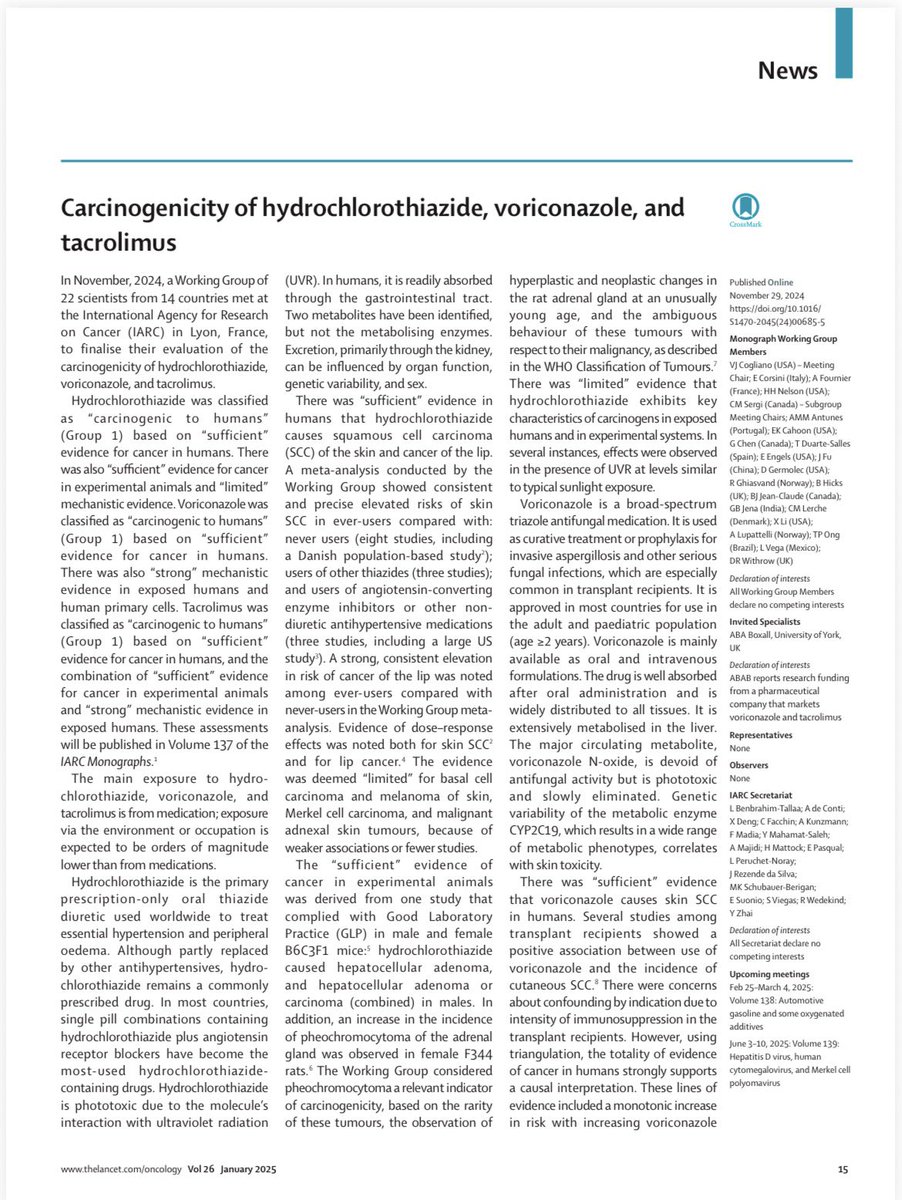
🚨 ALERTA 🚨 uno de los Antihipertensivos más comunes, la Hidroclorotiazida, acaba de ser catalogada de Riesgo Clase 1 para Cáncer de Piel y Labios… si tu lo usas o tus pacientes, la mejor opción es cambiarlo por otro medicamento lo mismo con el Voriconazol y el Tacrolimus…
Orlando RPN tweet media
Español
96
1.5K
4.2K
344.6K
Beatriz Fernandez Fernandez retweetledi
CME INDIA
CME INDIA@CMEINDIA1·
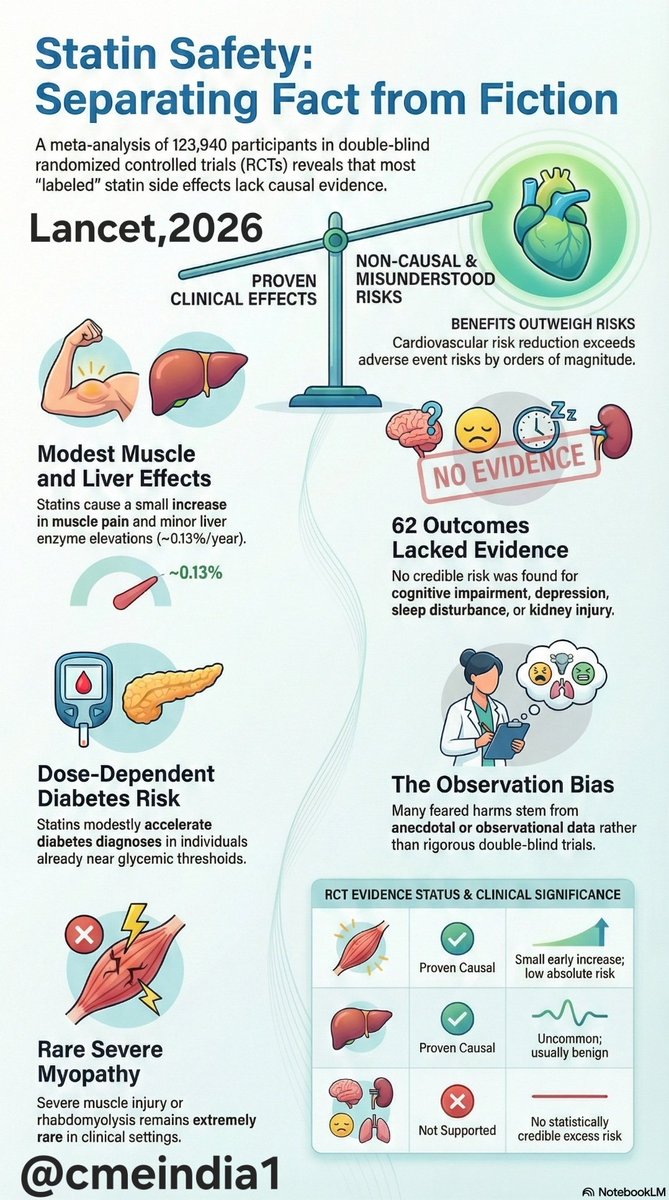
Statin Safety: What 123,940 Double-Blind RCT Participants Really Show, Lancet, 5th February,2026 Statins remain among the most rigorously evaluated drug classes in cardiovascular medicine. This individual-participant data meta-analysis from the Cholesterol Treatment Trialists’ Collaboration examined adverse outcomes listed in statin product labels using only large, double-blind randomised trials — the highest level of safety evidence. The findings substantially refine the true risk profile. 🔹 Muscle effects are real but modest. Statins cause a small, mainly early increase in muscle pain/weakness. Severe myopathy or rhabdomyolysis is rare and biochemically defined. Absolute risk is low relative to cardiovascular benefit. 🔹 New-onset diabetes occurs — dose dependent. Statins modestly increase diabetes diagnoses, predominantly in individuals already near glycaemic thresholds. This represents metabolic acceleration rather than de novo disease. 🔹 Liver enzyme elevations are uncommon and usually benign. Statins increase abnormal liver biochemistry slightly. The absolute excess is ~0.13% per year, with dose dependence. Clinically meaningful liver injury is extremely rare. 🔹 Most labelled adverse effects are not causally supported. Across 62 prespecified outcomes — including cognitive impairment, depression, sleep disturbance, neuropathy, erectile dysfunction, acute kidney injury, and lung disease — no statistically credible excess risk was detected after rigorous false-discovery correction. 🔹 Minor signals of uncertain clinical relevance. Small increases were seen in urinary composition changes and oedema, without evidence of serious downstream harm. 🔹 Bias matters. Many historical statin safety concerns arose from observational or case-report data. Double-blind RCT evidence shows that true drug-attributable harms are far fewer than label lists suggest. 🔹 Benefit–risk ratio remains overwhelmingly favourable. Absolute cardiovascular risk reduction from statins exceeds adverse event risk by orders of magnitude, especially in secondary prevention. Clinical Bottom Line Statins cause small, predictable metabolic and muscle effects and very rare biochemical liver abnormalities. Beyond these, most feared harms lack randomised evidence. Statin labels likely overstate risk, and clinicians should counsel patients using high-quality trial data rather than anecdotal concerns. thelancet.com/journals/lance…
CME INDIA tweet media
English
6
51
135
8.6K
Beatriz Fernandez Fernandez retweetledi
NEJM
NEJM@NEJM·
For patients with a preserved left ventricular ejection fraction after myocardial infarction, the benefit of beta-blockers is unclear. Research findings from a meta-analysis of five trials are summarized in a Quick Take video. nej.md/3MoSjoj
NEJM tweet media
English
3
16
62
11.3K
Beatriz Fernandez Fernandez retweetledi
CME INDIA
CME INDIA@CMEINDIA1·
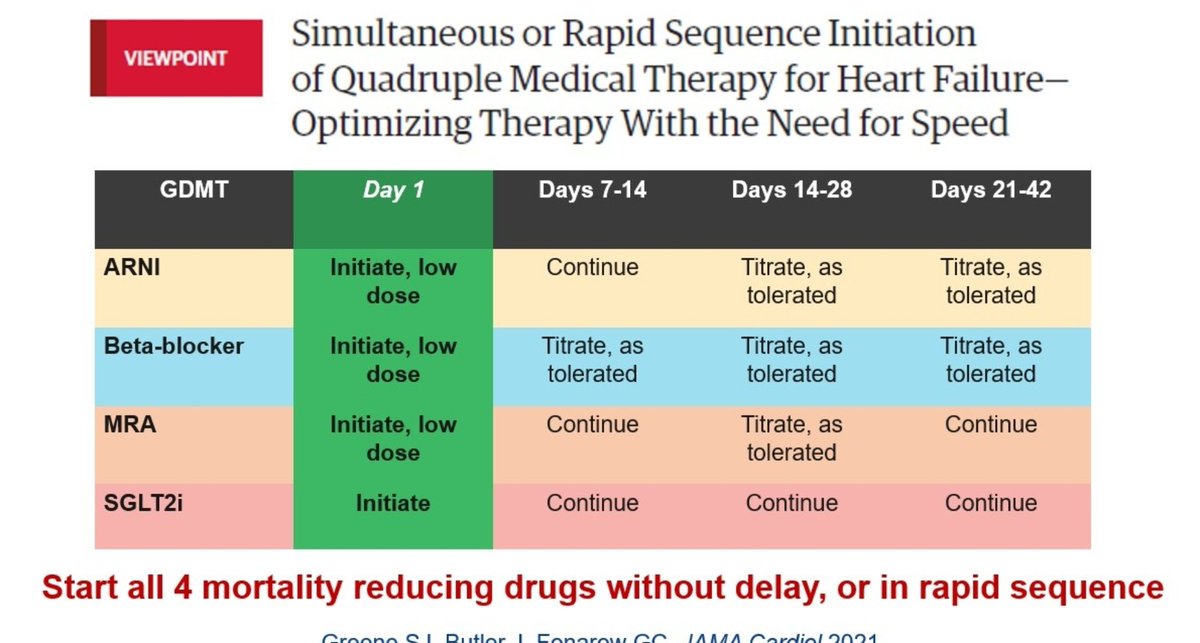
Rapid Initiation of Quadruple Guideline-Directed Medical Therapy (GDMT) in HFrEF: “Treat Early, Treat Together” The contemporary heart-failure paradigm has shifted from slow, sequential drug introduction to early, near-simultaneous initiation of all four mortality-reducing pillars. The rationale is straightforward: most survival benefit occurs within weeks, not months, and delay exposes patients to avoidable risk. Core therapeutic pillars (HFrEF) ARNI (or ACEi/ARB if ARNI not feasible) — neurohormonal blockade with reverse remodeling Evidence-based β-blocker — sympathetic modulation, arrhythmic protection Mineralocorticoid receptor antagonist (MRA) — antifibrotic, potassium-sparing neurohormonal control SGLT2 inhibitor — rapid hemodynamic and metabolic benefit independent of glycemia Practical rapid-sequence strategy Day 1 (index visit / stabilization phase) Initiate ARNI + β-blocker + MRA at low dose, plus SGLT2 inhibitor (standard dose). The emphasis is breadth before depth: establish all four classes early rather than maximizing one agent in isolation. Weeks 1–2 Clinical reassessment: blood pressure, renal function, potassium, congestion status, and symptoms. Begin gentle titration where tolerated. Weeks 2–6 Progressive up-titration of ARNI and β-blocker toward target doses; maintain MRA and SGLT2 inhibitor unless contraindications emerge. Monitoring cadence should be tight during this window. Why speed matters Event curves in major trials separate within 2–4 weeks Early multi-pathway blockade reduces hospitalization risk rapidly SGLT2 inhibitors confer immediate hemodynamic stabilization Combined therapy is synergistic rather than additive Clinical safeguards Avoid initiation during hemodynamic instability or severe volume depletion Monitor creatinine and potassium within 1–2 weeks of MRA/ARNI start Expect modest BP reduction — prioritize continuation over aggressive discontinuation Reassess diuretic needs as GDMT improves congestion Implementation pearl Think in terms of “therapeutic stacking”: introduce all four survival therapies early, titrate pragmatically, and individualize pace — but do not defer class initiation without a clear clinical reason. Bottom line — CME INDIA 2026 message: In HFrEF, the safest delay is no delay. Early quadruple GDMT initiation maximizes survival benefit while patients are still stable enough to receive it. jamanetwork.com/journals/jamac…
CME INDIA tweet media
English
0
34
93
5K
Beatriz Fernandez Fernandez retweetledi
Arenita
Arenita@adelaidosa_·
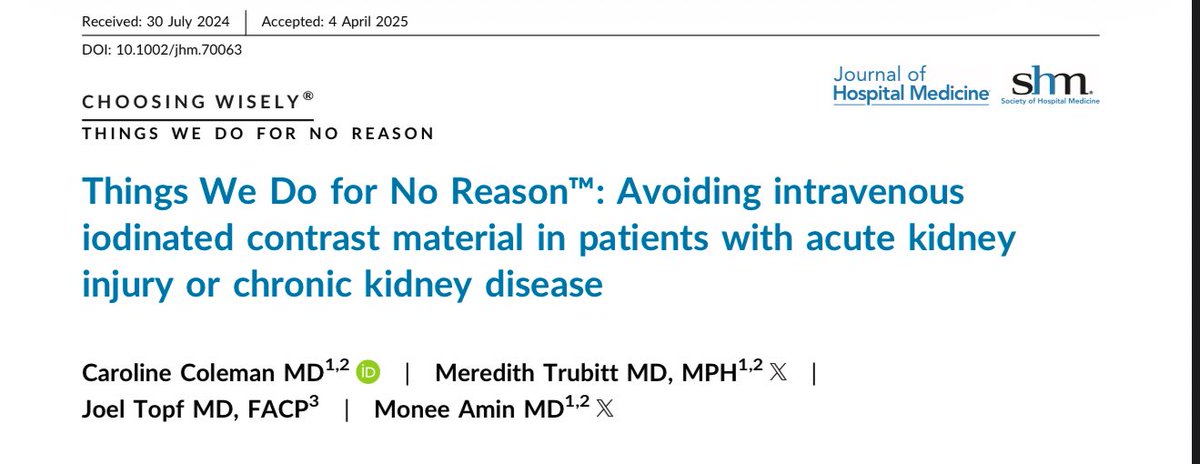
MIP: —Doctora, dicen en rayos X que no le pueden hacer el estudio al paciente con esa creatinina Yo: —Pues como dijo un sabio llamado Maluma: dile al que te está informando que te está malinformando que te informe bien. Hace cuántos años viven en esa mentira. Me tienen harta
Arenita tweet media
Español
14
259
2K
97.5K
Beatriz Fernandez Fernandez retweetledi
AJKD
AJKD@AJKDonline·
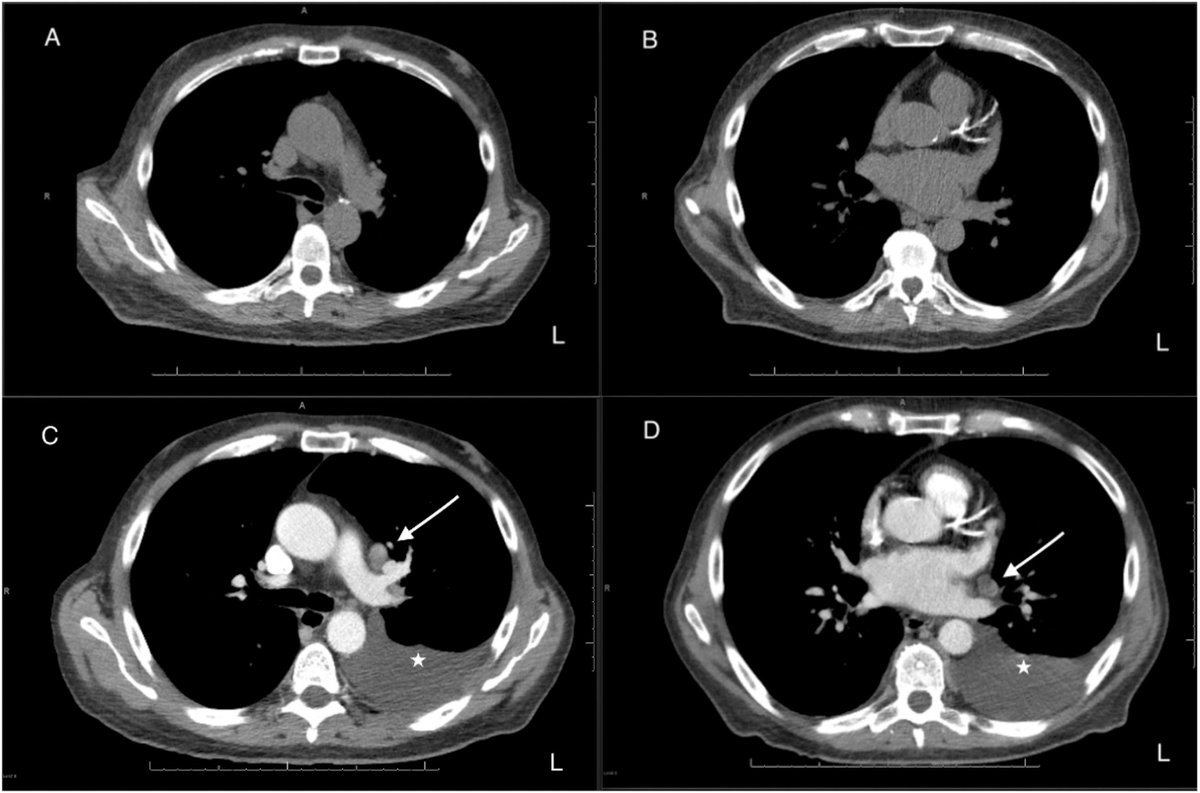
A 55-year-old man with ESKD owing to diabetic nephropathy post kidney transplant 4 years ago presented to the clinic with 1 month of fatigue and poor appetite. What is the differential diagnosis for hypercalcemia in a patient with a kidney transplant? bit.ly/46o1qfG
AJKD tweet media
English
1
9
27
2.5K
Beatriz Fernandez Fernandez retweetledi
Luis A. Morgado-MD
Luis A. Morgado-MD@DrCriticalCare·
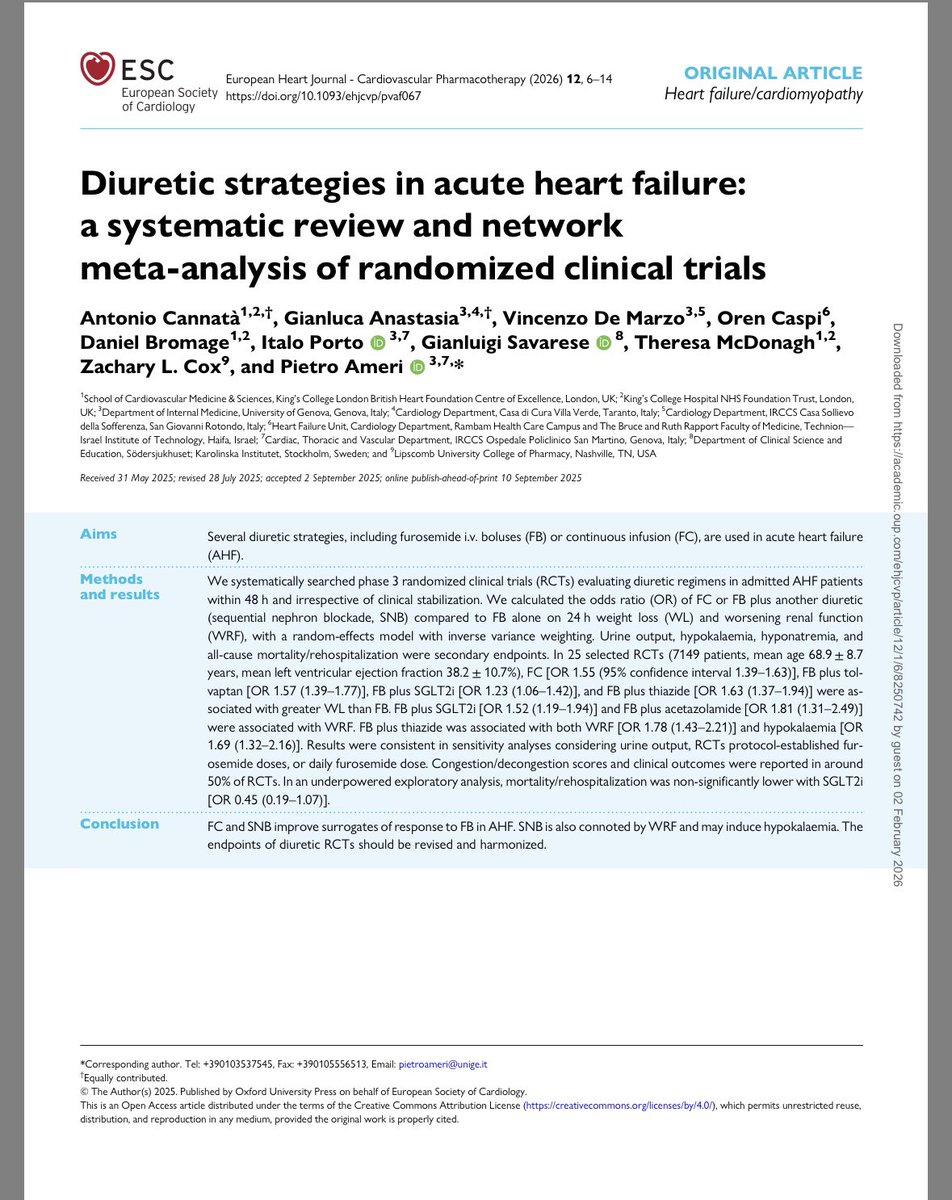
Revisión Sistemática y Meta-análisis Estrategias Diuréticas en Insuficiencia Cardiaca Aguda !!!! ✅ Mejores Resultados en combinaciones con Diuréticos de asa con Isglt2, tolvaptan, Tiazidas y acetazolamida : En Pérdida de Peso, Producción de Uresis, disminución de la pérdida de la función renal.
Luis A. Morgado-MD tweet mediaLuis A. Morgado-MD tweet media
Español
1
66
249
9.8K