Lora

21.7K posts

Lora

Lora

@beepy13

Those who deserve love least need it most!

Virginia, USA Katılım Şubat 2011
446 Takip Edilen640 Takipçiler
Lora
Lora@beepy13·
@TNTJohn1717 Our brains are simply amazing! The power it holds. I found your bitterness & pride writings helpful & convicting.This also helped me by saying get thee behind me Satan I've already given it to God when those thoughts come across! Praise be the Lord for all His help too me, ty 2❣️
English
1
0
1
26
PaulsCorner-VerseQuest
PaulsCorner-VerseQuest@TNTJohn1717·
imagination? Do you confess the moment you fail, or do you let it build a nest? The difference between many victorious believers and many defeated believers is not that one group never experiences temptation. It is that one group learned to deal with it earlier and more violently. That kind of warfare requires humility and vigilance. A proud Christian assumes he can handle a little more than he should. A vigilant Christian knows he cannot afford to toy with the edge. A proud Christian lets thoughts drift in and out unchallenged because he feels above the danger. A vigilant Christian knows the devil is patient, the flesh is traitorous, and the mind is too valuable to leave unguarded. So he acts quickly. He prays quickly. He quotes Scripture quickly. He changes course quickly. He confesses quickly. He refuses to let the playground stay open after hours. The war for holiness is largely a war for the mind. That is where many saints either win early or lose slowly. The outward life is often only the public report of what the inward life has been doing for some time. Men may blame circumstances, people, timing, or pressure, but the deeper issue is often that thoughts were not governed. The devil had too much room to plant, repeat, decorate, and reinforce his suggestions. The mind became a place of play instead of a place of discipline, and from there the trouble spread outward. But there is no reason for a believer to surrender this field. Christ has not left His people helpless. The Holy Ghost indwells them. The word of God is living and powerful. The throne of grace is open. Strongholds can be torn down. Imaginations can be cast down. Thoughts can be taken captive. The mind can be renewed. Patterns can be broken. Old grooves can be challenged. A believer may have to fight hard, consistently, and humbly, but he is not called to inevitable defeat. He is called to sober warfare with supplied weapons. So let the title stand exactly where it belongs: The Devil’s Playground is Your Mind - Sin always starts with a thought. That is not a dramatic line for effect. It is a biblical warning for survival. Guard the gates. Watch your thoughts. Feed your mind with Scripture. Reject what should be rejected quickly. Confess what must be confessed honestly. Do not build secret rooms in your imagination for the devil to enjoy. The battle begins before anybody else sees it, and victory often begins there too. The saint who learns to win in the mind will find that many outward battles never get as far as they once did.
English
1
0
1
343
PaulsCorner-VerseQuest
PaulsCorner-VerseQuest@TNTJohn1717·
The Devil’s Playground is Your Mind - Sin always starts with a thought. One of the most dangerous mistakes a Christian can make is to think the real battle begins only when sin becomes visible. By the time sin shows up in words, actions, habits, and consequences, it has usually already been living somewhere else for quite a while. It was first entertained in the mind. It was first tolerated in imagination. It was first rehearsed inwardly before it was ever acted outwardly. That is why some believers are shocked by their own falls. They think the collapse happened in one bad moment, one weak night, one sudden temptation, one unexpected burst of flesh. But that is almost never the whole story. The real trouble began earlier in the inward man, where thoughts were allowed to linger, fantasies were permitted to breathe, grudges were fed, doubts were coddled, fears were magnified, and imaginations were given a room to live in without being arrested by the word of God. The devil understands that if he can get the mind, the life will usually follow in due time. This is why the mind is one of the most contested territories in the Christian life. Satan does not need immediate possession to create devastation. He only needs suggestion, intrusion, misdirection, and space. He knows how to plant a thought, repeat a thought, intensify a thought, and then disguise that thought until the person begins to treat it as his own natural conclusion. He knows how to take a passing temptation and turn it into a mental pattern. He knows how to work through memories, wounded pride, curiosity, fear, lust, bitterness, envy, doctrinal confusion, offense, and vanity. He knows how to make the soul feel sophisticated for doubting, justified for resenting, strong for fantasizing, and careful for worrying. All the while he is building a mental atmosphere where sin can eventually feel normal, reasonable, and even necessary. By the time the outward act appears, the inward resistance has already been softened. The Bible never treats thoughts as a minor matter. God does not merely judge deeds. He weighs spirits, motives, intents, imaginations, and inward meditations. The Lord Jesus Christ made that plain when He said a man could commit adultery in his heart and murder in his heart long before the outward act came to full bloom. That is not because thoughts and deeds are identical in earthly consequence, but because God sees the spring from which both emerge. He sees the root as well as the fruit. The devil does too, which is why he loves the battlefield of the mind so much. It is less visible there. It is easier to hide there. People can maintain a religious image while nurturing inward rot. They can sit in a pew, sing a hymn, quote Scripture, and still be losing the war in their thoughts every single day. That is why this subject matters so much. The devil’s playground is your mind, and sin always starts with a thought. 1. The First Battlefield Is Inward, Not Outward The first battlefield in the Christian life is not the street corner, the liquor cabinet, the movie screen, the phone, or the visible relationship. It is the inward arena where thoughts are accepted or rejected. Men often want to fight temptation only once it has already ripened into desire so strong that they feel overtaken by it. But the real place to fight is earlier than that. A thought comes in. A picture flashes across the mind. A resentment rises. An anxious scenario starts replaying. A proud comparison begins to whisper. A fantasy begins to sketch itself. That is the opening engagement. If the believer does not deal with it there, it tends to gain force. Sin does not usually begin as a chain around the wrists. It begins as a thought asking for room. That is why Scripture places so much emphasis on the inward man. “Keep thy heart with all diligence; for out of it are the issues of life.” The issues of life do not emerge first from the environment. They
PaulsCorner-VerseQuest tweet media
English
2
17
36
1.1K
Lora
Lora@beepy13·
@TNTJohn1717 Church history is a doozy! They sure loved long words back then, ones I had to continue to look the definitions up. I'll ck out your course. Im excited 4 that! I wanted to know where we all went wrong. You've got so much that interests me that I can spend all my time reading 🙃
English
2
0
4
215
PaulsCorner-VerseQuest
PaulsCorner-VerseQuest@TNTJohn1717·
🚨‼️Let me make something clear before the Catholic debates start rolling in. I am not coming at Roman Catholicism as someone who watched three YouTube clips and grabbed a handful of anti-Catholic talking points. I grew up around Catholicism. My family is Catholic. I have been around priests. I studied church history in seminary. I studied it through years of personal reading. I have taught my own course on church history, which is available on VerseQuest. And then I went a step further and took Yale University’s course, A Journey through Western Christianity: from Persecuted Faith to Global Religion, which walks through early Christianity, medieval Catholicism, the rise of the papacy, monasticism, crusades, councils, the Reformation, Trent, Catholic Reform, and the Jesuits. So no, I am not afraid of Catholic history. I have studied it from Protestant sources, Catholic sources, academic sources, and even from inside the kind of academic institutions Catholics love to appeal to when they think Bible believers are just ignorant fundamentalists. I went the extra mile because I wanted to understand the system, not misrepresent it. But here is where the debate must stay honest: history can explain how Rome developed, but history cannot make Rome biblical. A council can define a doctrine, but a council cannot turn an unscriptural doctrine into apostolic truth. A tradition can become old, beautiful, emotional, and deeply embedded in religious culture, but age does not equal authority. The question is still, “What saith the scripture?” So I have no problem debating a Catholic who wants to deal honestly with the issue. But I am not debating stained glass, cathedrals, incense, emotional pageantry, or the claim that “we are old, therefore we are right.” Show me Rome in the Bible. Show me purgatory. Show me Mary as mediatrix. Show me prayers to saints. Show me papal supremacy. Show me transubstantiation. Show me the Mass as a repeated sacrifice. Show me where Peter acts like a pope. Show me where the apostles taught the Roman system. I know the history. I have studied the development. I understand the arguments. And after all of that, I am still a King James Bible-believing Christian because the issue is not whether Rome has history. The issue is whether Rome has Scripture.
English
53
43
245
6.4K
Lora
Lora@beepy13·
@TNTJohn1717 “only he who now letteth will let, until he be taken out of the way”.... ask your followers who exactly "he" is...so much confusion in the world.. if only more trusted the Holy Spirit for guidance when reading the Word! Let God be true and every man a liar, also, psalm 118: 8-9
English
0
0
1
50
PaulsCorner-VerseQuest
PaulsCorner-VerseQuest@TNTJohn1717·
🚨‼️You’re not spotting a discrepancy, you’re confusing two different passages and building an argument on it. 2 Thessalonians 2 does not say the Church must see the man of sin revealed before the rapture. It says that day will not come “except there come a falling away first, and that man of sin be revealed” (2 Thess. 2:3), and then immediately explains that something is restraining his full revelation: “only he who now letteth will let, until he be taken out of the way” (v.7). You’re actually proving the pre-trib position without realizing it. The restrainer is removed, then the man of sin is revealed openly. That is the order in the text. The problem is you’re blending “the day of the Lord” with “our gathering together unto him” (v.1–2) as if they are the same event, when Paul is correcting that exact confusion. The Thessalonians thought they were already in the day of the Lord. Paul tells them no, because certain things tied to that day haven’t happened yet. He is not saying the rapture happens after those things. He is distinguishing the events and calming them down. There’s no contradiction here at all, just a misread. If you slow down and let the passage speak instead of forcing a sequence onto it, it clears up immediately.
Lee Mills@LeeMills393918

Paul, perhaps you can answer this question for me. Pre-trib rapture states that the church must be raptured in order that the "man of sin" can finally be revealed, correct? That the church is the "restrainer". And yet, Paul clearly states that the church will not be raptured until the "man of sin" has been revealed. - 2 Thess 2. Do you see the discrepancy here?

English
3
2
17
1.4K
Lora
Lora@beepy13·
@TNTJohn1717 Hebrews 10:31 It is a fearful thing to fall into the hands of the living God. Sometimes I wonder how many understand "fear of the Lord" even I am guilty but I've asked, seeked, & knocked & I'm being guided with more understanding. Holy, holy, holy is the Lord God Almighty
English
0
0
2
23
PaulsCorner-VerseQuest
PaulsCorner-VerseQuest@TNTJohn1717·
to read hard passages as though heaven needs a public relations manager. They rush to explain that God is not really as severe as the text sounds, not really as angry as the prophets say, not really as jealous as scripture declares, and not really as warlike as Deuteronomy reveals. But that whole instinct is rotten. It is born from fear of man, not fear of God. When a believer starts blushing over what God has plainly said, he is already halfway to compromise. The right response is not arrogance or fleshly harshness. It is trembling submission. You do not read passages like Deuteronomy 2 with swagger. You read them with fear and faith. You say, “Let God be true, but every man a liar.” You let the text correct your sentimentalism. You let the severity of the Lord teach you the fear of the Lord. And you stop trying to rescue the Almighty from the opinions of sinners. He does not need your apology. You need his mercy. That is the proper order of things. This also means preaching must recover some backbone. A generation raised on soft religion needs to hear that God is not mocked. They need to hear that divine patience is not divine weakness. They need to hear that Christ is not a passive spectator to rebellion. They need to hear that the Lord who saves sinners by grace is also the Lord who destroys wickedness in righteousness. If preachers keep trimming those truths to protect the feelings of rebels, they will produce churches full of people who know how to sing but do not know how to tremble. And a church that has forgotten trembling has forgotten God. When God fights like a man of war, scripture is not showing you a contradiction in his character. It is showing you the burning edge of his holiness. Deuteronomy 2:30-34 strips away the sentimental lies men tell about God and presents him as he is: sovereign over kings, righteous in judgment, terrible against wickedness, and unstoppable in battle. Sihon’s heart was hardened for destruction. His cities fell. His people were utterly destroyed. The sword of judgment did not hesitate because the Lord of hosts does not negotiate with evil when the hour of reckoning has come. That truth is offensive to a generation that wants a God who affirms but never confronts, comforts but never condemns, and saves but never rules. But the Christ of the Bible cannot be shrunk into that shape. He is gentle with the broken and dreadful to the wicked. He is the friend of sinners and the judge of rebels. He laid down his life as the Lamb, and he will return as the Warrior King. There is no contradiction in that. There is only the fullness of divine glory, which men accept only when grace has taught them to bow. So stop apologizing for the God of scripture. Stop trying to sand down his edges so he can pass inspection in a world that hates him anyway. Let Deuteronomy say what it says. Let the Lord be the man of war he declares himself to be. Let Christ be more than the weak religious mascot of pop-Christianity. The God who fights is the God who saves, and the God who saves is the God who judges. Blessed are they who take refuge in him now, before the day comes when his warfare breaks across the earth in final fury and every false picture of him burns up in the light of his appearing.
English
1
0
5
442
PaulsCorner-VerseQuest
PaulsCorner-VerseQuest@TNTJohn1717·
When God Fights Like a Man of War Deuteronomy 2:30-34 There is a fake Jesus running loose in modern Christianity, and he looks like he was invented by a youth pastor, a coffee shop philosopher, and a nervous seminary professor who all got together and decided the God of the Bible was a little too intense for the taste of the age. Their christ never raises his voice, never judges a nation, never destroys wickedness, never commands battle, and never appears with wrath in his eyes. He just wanders around like a soft-spoken therapist in sandals, nodding sympathetically while men mock God, corrupt truth, butcher children, pervert nations, and spit on scripture. That effeminate counterfeit is not the Lord Jesus Christ of the King James Bible. The Christ of scripture can bless children, forgive sinners, heal the brokenhearted, and still return with a sword proceeding out of his mouth to smite the nations. The same Bible that says “God is love” also says in Exodus 15:3, “The LORD is a man of war: the LORD is his name.” If a man does not know both sides of that truth, he does not know the God of the Bible. Deuteronomy 2:30-34 puts the matter in plain sight. Israel is not dealing with a helpless tribal skirmish or a misunderstood political dispute. The Lord is moving in judgment. Sihon king of Heshbon would not let Israel pass through because “the LORD thy God hardened his spirit, and made his heart obstinate, that he might deliver him into thy hand” (Deuteronomy 2:30). Then Israel smote him, took all his cities, and utterly destroyed the men, the women, and the little ones, leaving none to remain. That is the text. It is not sentimental. It is not polished. It is not designed to flatter the moral vanity of twenty-first century readers. It is divine warfare executed under divine command. It reveals a side of God that pop-Christianity spends its life trying to hide. But the Holy Ghost did not write Deuteronomy for the approval of soft men who apologize for every passage that sounds too much like heaven’s King means business. What offends modern readers is not merely the severity of the judgment. What offends them is the revelation of a God who does not ask permission from their conscience before acting in righteousness. Men today think God should be answerable to the moral intuitions of creatures whose minds have been warped by Hollywood, humanism, and half a century of watered-down preaching. But scripture does not put God on trial. Scripture puts man on trial. The issue in Deuteronomy 2 is not whether the Lord can be made to look acceptable to a degenerate culture. The issue is whether the Judge of all the earth does right. He does. When God fights like a man of war, it is not because he has lost control. It is because holiness has drawn the sword. It is because wickedness has reached the point where judgment must march. It is because the Lord of hosts is not a mascot for religious feelings. He is the King of glory, terrible in majesty, and when he rises to battle, whole nations learn what it means to fall into the hands of the living God. 1. The Divine Warrior Is a Biblical Reality Modern Christianity has spent so much time domesticating God that many churchgoers act shocked when the Bible presents him as a warrior. Yet from Genesis to Revelation, the Lord appears not only as Shepherd, Father, Redeemer, and Bridegroom, but also as Captain, Judge, Avenger, and Man of War. He drowned Pharaoh’s army in the sea. He thundered from Sinai. He led Israel by the pillar of fire. He broke kings in the land of Canaan. He is the one David praised when he said, “Blessed be the LORD my strength, which teacheth my hands to war, and my fingers to fight” (Psalm 144:1). And at the Second Coming, he does not arrive carrying a flower bouquet and a counseling manual. Revelation 19 shows him coming on a white horse, in righteousness judging and making war. That is not an embarrassing appendix to the character of God. That is part of who he is.
PaulsCorner-VerseQuest tweet media
English
2
17
46
1.6K
Lora
Lora@beepy13·
@TNTJohn1717 I gave fleeting thought abt Mark 9:50 recently & I thank you sincerely 4 the tie to Leviticus 2:13..I will give it more study and prayer. My heart is broken with what I see in our churches. I also loved the understanding of bitterness, working on the pride one.self examination ❤️
English
1
0
1
24
PaulsCorner-VerseQuest
PaulsCorner-VerseQuest@TNTJohn1717·
gospel preaching to apostasy over time. They did not fall off a cliff in one afternoon. They permitted the salt to be lacking. They softened one doctrine, then another, then another, until the whole thing stank with unbelief and moral compromise. The rot did what rot always does. That warning applies to individuals too. A believer can lose sharpness. He can stop reading the Bible with reverence. He can start tolerating compromise in speech, entertainment, doctrine, and fellowship. He can become spiritually bland. And once that happens, his testimony no longer preserves anything. He blends in. He no longer checks corruption around him because corruption has moved into him. That is why the call is urgent. Do not let the salt be lacking. Keep sound doctrine close. Guard your speech. Guard your fellowship. Guard your mind. Let the word of God season you until the world can tell that something preserving and incorruptible has gotten into your soul. Leviticus 2:13 is one of those verses that looks small until you realize it reaches from the tabernacle to the Church Age pulpit. Salt on every offering declared that what belonged to God was not to be left to decay. It signified purity, preservation, covenant faithfulness, and incorruptible truth. The Lord tied that salt directly to the covenant because His own character stands behind the preservation of what He ordains. He does not build rot into His worship. He does not leave His truth at the mercy of corruption. He commands salt. That truth comes forward in full force through Jesus Christ and His Church. We are told to have salt in ourselves. Our speech is to be seasoned with salt. The Church is to be the pillar and ground of the truth. That means we are not here to sweeten error, decorate decay, or entertain a dying culture while its doctrine spoils. We are here to preserve truth, speak plainly, hold sound doctrine, and keep the witness of God from becoming tasteless in a rotten world. The age does not need another soft church trying to be liked. It needs a church with salt. So let Leviticus 2:13 search you. Ask yourself whether the salt is lacking. In your preaching, in your church, in your Bible reading, in your conversation, in your convictions, is there enough preserving truth to resist corruption? Or have you let sweetness replace sharpness and friendliness replace faithfulness? The God of the covenant still requires salt. His truth still cannot spoil. And the Church still has no business serving up bland, rotting religion to a world that is already choking on decay. Keep the salt in the offering. Keep the salt in the mouth. Keep the salt in the church. Keep the salt in the doctrine. Because once the salt is gone, the rot is not far behind.
English
1
2
3
422
PaulsCorner-VerseQuest
PaulsCorner-VerseQuest@TNTJohn1717·
Salt of the Covenant - Preservation of Truth Passage: Leviticus 2:13 There are some little commands in the Book of Leviticus that look almost too small to matter until the Holy Ghost opens them up and shows you that they are loaded like a cannon. Leviticus 2:13 is one of those verses. It says, “And every oblation of thy meat offering shalt thou season with salt; neither shalt thou suffer the salt of the covenant of thy God to be lacking from thy meat offering: with all thine offerings thou shalt offer salt.” That is not God giving Moses kitchen advice. That is not the Lord pausing in the middle of sacrificial law to discuss seasoning preferences. That is doctrine. That is God attaching a visible, tangible, unmistakable emblem to the truth that what belongs to Him is not to rot, decay, ferment, corrupt, or spoil. Salt stands in that verse as a witness to preservation, purity, and enduring covenant reality. God’s truth is not a soft thing that wilts under pressure. It is not a fad that changes with the century. It is not a flavor of religion to be swapped out when the culture gets bored. It is preserved, fixed, seasoned, and marked by God Himself. That is why this verse is desperately needed right now. We are living in a day when churches have learned how to market emotion, platform personality, soften doctrine, and perfume compromise until it smells acceptable to carnal people. They know how to entertain goats, flatter rebels, and reassure compromisers, but they do not know how to preserve truth. They have traded the salt of the covenant for syrup. They have replaced sharp doctrine with vague inspiration. They do not want truth that bites, cleanses, preserves, and exposes. They want something sweet enough to keep attendance up and soft enough to keep conviction down. But the God of Leviticus did not say, “With all thine offerings thou shalt offer sugar.” He said, “with all thine offerings thou shalt offer salt” (Leviticus 2:13). Salt stings. Salt preserves. Salt keeps corruption from spreading. Salt tells you that what God ordains is not to be left to the natural process of decay. If the altar is God’s altar, then salt belongs on it. And when you come into the New Testament, that truth does not disappear. It sharpens. Jesus Christ said, “Ye are the salt of the earth” (Matthew 5:13). Then He told His disciples, “Have salt in yourselves” (Mark 9:50). Paul told the Colossians, “Let your speech be alway with grace, seasoned with salt” (Colossians 4:6). That means the Church has not graduated beyond the doctrine of salt. If anything, we are under greater responsibility to carry it. The Church is supposed to preserve truth in a corrupt world, hold doctrine in a decomposing age, and keep speech, preaching, and testimony from turning putrid with compromise. Salt in Leviticus was tied to every offering. Salt in the Church is tied to sound doctrine, holy speech, faithful witness, and incorruptible truth. So if you want the theme in one line, here it is: the salt of the covenant means God’s truth cannot spoil, and the Church is still commanded to have salt. 1. Salt Was Required With Every Offering Because Truth Touches Everything Leviticus 2:13 does not say some offerings were to have salt and others could do without it. It says, “with all thine offerings thou shalt offer salt.” That universality matters. Salt was not optional garnish. It was required. That tells you something fundamental about God’s dealings. Preservation, purity, and covenant faithfulness are not side doctrines you can isolate in a theological hobby folder. They are built into the whole system. Every sacrifice coming near that altar had to bear the mark of salt. In other words, whatever was offered to God had to be connected to the truth that what He claims, He preserves. That is a tremendous rebuke to the modern habit of treating doctrine like an elective. Men will say, “Doctrine divides, let’s focus on Jesus,” as if Jesus floated down from
PaulsCorner-VerseQuest tweet media
English
1
9
18
861
Lora
Lora@beepy13·
@TNTJohn1717 I felt this so much! ❤️ Psalm 107 really hit me one day, and this....vs 8 &15..Oh that men would praise the Lord for his goodness, and for his wonderful works to the children of men!
English
0
0
0
16
PaulsCorner-VerseQuest
PaulsCorner-VerseQuest@TNTJohn1717·
7. Honest Prayer Should Move You Toward Trust, Not Away From It The final test of honest prayer is not whether it sounds raw enough. It is whether it moves the soul Godward. Biblical honesty does not exist to help a man stay centered in himself forever. It is meant to bring the truth of his inner condition into the presence of God so that he can be led toward trust, surrender, and clearer sight. First Peter 5:7 says, “Casting all your care upon him; for he careth for you.” That is honest prayer. It casts care. It does not merely describe care in poetic detail and then carry it back home untouched. It transfers the burden to the Lord. This is why so many of the Psalms shift direction. They begin in complaint and end in praise. They begin in darkness and end with remembrance. They begin with enemies and tears and end with confidence in God’s mercy. That does not mean the pain was fake. It means honest prayer became a vehicle for renewed trust. The saint went in wounded and came out steadied. Sometimes not instantly. Sometimes after a long struggle. But the biblical pattern is movement toward God, not permanent self-occupation. Honesty that leaves a man more locked into himself, more bitter, and more convinced of his own moral centrality has gone wrong somewhere. Even the Lord Jesus in Gethsemane shows this. He says, “If it be possible, let this cup pass from me” (Matthew 26:39). That is honest. Then He says, “nevertheless not as I will, but as thou wilt.” There is the destination. Honest expression and surrendered trust. That is the pattern the believer needs. He can say, Lord, I do not want this. Lord, this hurts. Lord, I am weary. Lord, I am afraid. But he must also learn to say, Nevertheless. Thy will. Thy wisdom. Thy way. Honest prayer is not complete until it bends the knee. Conclusion So can you be honest with God about how you really feel? Yes, absolutely. In fact, if you are not, much of your praying will remain artificial, shallow, and spiritually clogged. God already knows the heart. The Psalms prove that His people can cry, question, groan, lament, and speak truthfully from deep places. He does not require polished emotional theater. He invites the real heart into His presence. That is one of the great mercies of prayer. You do not have to come pretending before the One who already knows. But that honesty must still be governed by reverence and truth. It is not a license to accuse God falsely, enthrone your feelings, or treat emotional intensity as moral authority. The saint may come raw, but he must still come bowed. He may bring tears, confusion, fear, grief, even holy complaint, but he must bring them into contact with the God who remains right. Real prayer tells the truth about the soul and then lets God tell the truth back. That is what keeps honesty from becoming rebellion. And that is where the beauty of it all lies. The believer does not have to choose between honesty and faith. Biblical prayer joins them. He can say, This hurts. I am confused. I am weary. I do not understand. And then he can still say, But You are God. You are good. You are right. You are near. You care for me. You hear me. That is not weak prayer. That is some of the strongest prayer a saint will ever pray, because it is the kind that leaves pretense behind and clings to God in the dark.
English
2
1
8
500
PaulsCorner-VerseQuest
PaulsCorner-VerseQuest@TNTJohn1717·
Can I Be Honest With God About How I Really Feel? Introduction A great many Christians live under the strange idea that prayer is supposed to sound cleaner than the human heart really is. They think that when they come to God they have to straighten up all the furniture of the soul, sweep the dirt under the rug, iron out every wrinkle in their emotions, and speak as though they are never confused, never troubled, never disappointed, never hurt, never angry, never afraid, and never shaken. So what they end up offering God is not always prayer. Much of the time it is a polished religious performance. It is language without blood in it. It is vocabulary without truth in it. It is the kind of praying that sounds respectable in a church hallway but does not sound much like the cries of David, Jeremiah, Job, Habakkuk, or even the groanings Paul speaks about in the New Testament. The Bible does not present prayer as a stage act for cleaned-up feelings. It presents prayer as real men and women coming before the living God with the truth about what is going on inside them. Now that does not mean every feeling is right. It does not mean every emotional reaction is holy, balanced, or worthy of being obeyed. The human heart is still capable of deceit, distortion, exaggeration, self-pity, and unbelief. “The heart is deceitful above all things, and desperately wicked: who can know it?” (Jeremiah 17:9). So being honest with God is not the same thing as giving your feelings authority over God’s truth. That is where many people get confused. They think if they are raw enough, loud enough, and sincere enough, then the feeling itself becomes the standard. But the Bible never puts human feeling on the throne. God stays on the throne. His word stays right. His character stays holy. His wisdom stays perfect. Yet inside that framework, the saint is invited to come honestly. Not to hide. Not to pretend. Not to varnish his grief until it sounds spiritual. But to come and tell the truth in God’s presence, under God’s authority, with a heart that still bows even while it bleeds. That is one of the glories of biblical prayer. The Lord does not invite His people to bring Him fake emotions. He already knows the real ones anyway. “O LORD, thou hast searched me, and known me” (Psalm 139:1). He knows the thought afar off. He knows when the saint is afraid, confused, exhausted, wounded, bitterly tempted, or almost at the breaking point. So the question is not whether God can handle the truth about what you really feel. He can. The real question is whether you will bring those feelings to Him in a way that is honest without becoming rebellious, raw without becoming irreverent, and truthful without turning your emotions into a false gospel. The Bible’s answer is yes, you absolutely can be honest with God about how you really feel. In fact, if you are not, much of your praying will remain shallow, and much of your soul will remain needlessly tangled. 1. God Already Knows What You Feel Before You Say a Word One reason it is foolish to fake your way through prayer is because the Lord is never fooled by your presentation. Men may be. Churches may be. Friends may be. Social media certainly may be. But God is not. He knows what is sitting in the soul before a sentence ever leaves your lips. Psalm 139 says, “There is not a word in my tongue, but, lo, O LORD, thou knowest it altogether” (Psalm 139:4). Christ said the Father knoweth what things ye have need of before ye ask him (Matthew 6:8). That means prayer is not informing an ignorant God. It is approaching an all-knowing God. So what exactly is gained by pretending before Him? Nothing. The mask does not impress Him. It only hinders you.
PaulsCorner-VerseQuest tweet media
English
3
18
58
1.8K
Lora
Lora@beepy13·
@TNTJohn1717 "Holy, holy, holy, Lord God Almighty, which was, and is, and is to come."
English
0
0
2
18
PaulsCorner-VerseQuest
PaulsCorner-VerseQuest@TNTJohn1717·
Himself. So the shut way of Genesis 3 is not the end of the story. It is the beginning of the greatest story ever told, that God would make a lawful way for rebels to return without compromising one atom of His holiness. The flaming sword and the shut way are among the most solemn witnesses in all Scripture to the seriousness of sin. Man did not simply bruise himself in the garden. He was expelled. He lost access to life. He was shut out from holy nearness. The tree of life was barred. The cherubim were stationed. The sword turned every way. Nothing in that scene suggests that fallen man can casually wander back to God by goodwill, religion, sincerity, or effort. Genesis 3 closes the door on every human recovery scheme before it even gets started. That is why the whole Bible must be read in light of that loss. Fig leaves will not do. Human religion will not do. Moral effort will not do. Mystical ascent will not do. The sword turns every way against every human shortcut. But what the sinner cannot do, God does in Christ. He provides the covering. He provides the sacrifice. He provides the Mediator. He provides the blood. He provides the way. The tree of life that was shut away in Genesis is promised again in Revelation, not because man found the route, but because the Lamb secured the right. So the proper response to this study is not merely sadness over Adam’s exile, though sorrow is fitting. The proper response is worship. Worship the God whose holiness did not relax when man fell. Worship the God whose justice barred the way. Worship the God whose mercy purposed from the beginning to open a new and living way through His Son. And never forget this: every flaming sword in the Bible points to the seriousness of approaching a holy God, but every drop of Christ’s blood declares that the holy God Himself has made the only way a sinner can come near and live.
English
3
0
6
460
PaulsCorner-VerseQuest
PaulsCorner-VerseQuest@TNTJohn1717·
The Flaming Sword and the Shut Way There are some scenes in the King James Bible that ought to stop a man cold the moment he reads them, and one of the most solemn in all of Scripture is the closing scene of Genesis 3. Adam and Eve have sinned. The serpent has done his dirty work. The woman has eaten. The man has followed her into transgression. Their eyes have been opened, but not into wisdom. They are opened into shame. They hide among the trees. They sew fig leaves together. They hear the voice of the LORD God walking in the garden in the cool of the day, and instead of running toward Him in joy, they retreat from Him in fear. Then, after the judgment is spoken and the sentence is laid out, the chapter closes with one of the most dreadful lines in the whole Bible. The man is driven out. Cherubim are placed. A flaming sword turns every way to keep the way of the tree of life. That is not merely dramatic language for children’s Sunday school material. That is the Holy Ghost showing you that after the fall, access to life is shut, guarded, and barred by divine holiness. Now if you do not understand that scene, you will not understand the rest of your Bible. The Bible is not merely the story of good advice given to troubled people. It is the story of lost access and God’s answer to that loss. It is the story of a shut way and the opening of a new and living way by blood. It is the story of a race driven out from the holy presence of God and a Redeemer who comes into the world to bring sinners back under conditions that glorify God’s righteousness and not man’s pride. Genesis 3 does not merely tell you that man made a mistake. It tells you that man lost something he could not recover by his own effort. He did not merely lose comfort. He lost open fellowship. He did not merely lose a garden. He lost access to life. He did not merely lose a pleasant dwelling. He lost the way. That is why the flaming sword matters. That is why the cherubim matter. That is why the phrase “to keep the way of the tree of life” matters. Modern religion loves to talk about God’s love, and thank God for His love, but modern religion hates to linger where the Bible lingers on holiness, judgment, exclusion, and guarded access. Yet the very gospel itself only shines in its proper brightness when you see what Genesis 3 actually did to the human race. This essay is going to dwell there. We are going to look at the lost access to life after the fall, the shut way, the meaning of the cherubim and the sword, the failure of man’s own coverings, the reason no sinner can simply stroll back into paradise, and the glorious truth that what Adam lost in the first garden, Jesus Christ answers in a far greater way through redemption. If you feel the weight of Genesis 3, you will feel the glory of Calvary more deeply. If you understand the shut way, you will understand the opened way. If you see the flaming sword clearly, you will love the cross more than you ever have before. 1. The Fall Did Not Merely Injure Man, It Expelled Him When many people think about the fall, they think almost entirely in moral terms, and of course morality is involved. Adam disobeyed. Eve was deceived. Sin entered. Death followed. All that is true. But the Bible goes further than that. The fall did not merely stain man internally. It altered his position before God. It expelled him. Genesis 3:24 says, “So he drove out the man.” There is force in that wording. Adam is not gently escorted to a neighboring field to think over what he has done. He is driven out. He is removed from the place where he once stood in ordered fellowship. That means the fall is not only corruption. It is exile. That exile should never be softened in the mind of a Bible believer. Adam was not simply made uncomfortable in Eden. He was no longer fit for it. The problem was not merely that the garden was now awkward for him emotionally. The problem was that holiness and rebellion cannot
PaulsCorner-VerseQuest tweet media
English
1
11
24
1K
Lora
Lora@beepy13·
@TNTJohn1717 Favour is deceitful, and beauty is vain: but a woman that feareth the Lord, she shall be praised. Give her of the fruit of her hands; and let her own works praise her in the gates. -Proverbs 31: 30,31
English
0
0
2
23
PaulsCorner-VerseQuest
PaulsCorner-VerseQuest@TNTJohn1717·
So the final lesson is plain. God did not leave man alone because that was not good. He did not solve the problem with more beasts, more work, or more scenery. He made a help meet for him. The wise man receives that doctrine with reverence. The rebellious generation mocks it to its own destruction. But the Book still reads the same. God’s answer to solitary man was not chaos, rivalry, or flattening the sexes into sameness. It was a fitting helper, a corresponding counterpart, and a design so wise that the whole Bible keeps building on it.
English
1
0
3
421
PaulsCorner-VerseQuest
PaulsCorner-VerseQuest@TNTJohn1717·
A Help Meet for Him Main Passage: Genesis 2:18, 20 The phrase “help meet” is one of the most abused expressions in the Bible because men with soft hands and crooked doctrine keep trying to force it into one of two ditches. One ditch is the old fleshly abuse that treats the woman like a servant animal, a domestic accessory, or a convenient helper in the lowest sense of the word. The other ditch is the modern feminist revolt that hears the word “help” and immediately assumes insult, oppression, and inferiority because it cannot think in biblical categories anymore. But Genesis 2:18 will not fit either ditch. The verse says, “And the LORD God said, It is not good that the man should be alone; I will make him an help meet for him.” Then verse 20 confirms, “but for Adam there was not found an help meet for him.” That means the woman is God’s answer to the “not good” of solitary man. She is not an afterthought, not a beast, not a rival sovereign, and not a decorative extra. She is a divinely designed counterpart fit for him. That word “meet” is what the modern reader keeps missing. It means fitting, suitable, corresponding, answering to the need God identified. The woman is not merely a helper in the sense that a shovel helps, or a horse helps, or an employee helps. She is a help meet for him - a help corresponding to him, suitable to him, answering him, matching the human order God intended. The Lord did not say, “I will make him a slave beneath him.” He did not say, “I will make him a competitor against him.” He said He would make him an help meet for him. That means she is for him in design without being beneath him in humanity, and she is with him in dignity without being identical to him in role or form. The verse is wiser than both the tyrant and the rebel. This is why Genesis 2 is so hated by the age. The age cannot stand complementarity because complementarity requires fixed order, meaningful distinction, and divine intention. But Genesis gives you all three. The woman is necessary, fitting, and purposefully designed. Adam alone is “not good” in the incomplete sense God identifies. The beasts do not answer the lack. The woman does. So this is not a small side issue about marriage etiquette. This is a foundational doctrine of creation order. If you get “help meet” wrong, you will get marriage wrong, sex roles wrong, companionship wrong, authority wrong, and eventually the gospel pictures tied to marriage wrong as well. The phrase is not a little domestic proverb. It is one of the deepest statements in Scripture about human complementarity under the hand of God. 1. “Help Meet” Was God’s Idea, Not Man’s Invention The first thing that has to be settled is where this idea came from. Genesis 2:18 says, “And the LORD God said.” That means the phrase “help meet” is not Adam’s preference, not ancient patriarchy inventing a social structure, and not Moses projecting tribal customs back into Eden. It is God speaking. The Lord identifies the need, and the Lord defines the answer. That means whatever “help meet” means, it must be received as part of the original creation design, not as a later cultural accident. Men may twist it, but they did not invent it. That alone crushes a lot of foolishness. The world keeps treating biblical male-female order as though it were just one more social model among many, open to revision whenever a rebellious age gets restless. But Genesis says otherwise. The woman as help meet is grounded in creation itself. She is not a late arrangement imposed after the fall. She is not the result of sin. She is not the by-product of agricultural society. She belongs to the good order of Eden before the curse, before sorrow, before sweat, before history’s miseries begin piling up. That means if you attack the help-meet design, you are not attacking Victorian manners or church tradition. You are attacking creation.
PaulsCorner-VerseQuest tweet media
English
2
13
27
1.5K
Lora
Lora@beepy13·
@TNTJohn1717 I got in a convo w/my mom the other day what exactly does it mean for one to honor your father and mother. Anyone else ever given this thought and search to what exactly is biblical honor? How do you honor them, honor Christ? Go search scriptures...What are your conclusions?
English
0
0
0
20
PaulsCorner-VerseQuest
PaulsCorner-VerseQuest@TNTJohn1717·
🚨‼️Wrong. You do not honor the Father by lowering the Son. Jesus said, “I and my Father are one” (John 10:30), and the Bible says, “He that honoureth not the Son honoureth not the Father” (John 5:23). We do not merely imitate Christ, we worship Him as the manifest Son of God, one with the Father. Your correction is not biblical. It is confusion.
Yarah@sl4Yahweh

@TNTJohn1717 The only change I would make to your beautiful and truthful post is to have it speaking of the Father—Yahweh— not the Son, Yahshua. We serve Yahweh. We imitate Yahshua Messiah.

English
4
2
28
2.2K
Lora
Lora@beepy13·
@TNTJohn1717 I often think of Romans 15:4 regarding the OT and all the things Israel went thru. And what we today should learn. My God is merciful and full of love but he's also holy and a consuming fire
English
0
0
1
13
PaulsCorner-VerseQuest
PaulsCorner-VerseQuest@TNTJohn1717·
God overreacting. That is a holy God answering sustained rebellion with righteous judgment. The force of the passage still lands now, even after right division is honored. These are Israel’s covenant curses, tied to the Mosaic order and national life in the land. But the God who revealed Himself here has not changed character. He still opposes pride. He still chastens disobedience. He still judges those who harden themselves against His word. The forms of His dealings differ across covenants, but the moral seriousness of rebellion remains. No church, no nation, no family, no soul should read this chapter and imagine that God has become indifferent to stubborn sin. So the right response to Curses for Rebellion is not merely to admire the severity of the passage from a distance. It is to let it search the heart. Where am I refusing to hear? Where am I despising what God has said? Where am I treating early warnings like inconveniences instead of mercy? Leviticus 26 is not in the Bible to satisfy curiosity. It is there to make men fear the God who blesses obedience and judges rebellion. And any man who learns that lesson before the heavier rod falls has learned something precious indeed.
English
1
1
2
349
PaulsCorner-VerseQuest
PaulsCorner-VerseQuest@TNTJohn1717·
71 of 100: Curses for Rebellion Leviticus 26:14–39 Disobedience Brings Judgment Leviticus 26:14–39 is one of the most terrifying passages in the law because it tears the mask off the lie that God is too soft, too distracted, or too sentimental to judge His own people when they harden themselves against His word. This is not the language of a weak deity begging for relevance in the middle of human rebellion. This is the voice of the covenant God of Israel declaring, with awful plainness, what happens when His people despise His statutes, break His covenant, and refuse His authority. The chapter begins with blessings for obedience, but it does not stop there. It turns the page and says, in effect, if you will not hear Me in blessing, then you will hear Me in judgment. That is the great burden of this section. Disobedience brings judgment. That truth is necessary because sinful man always imagines he can have God’s name, God’s promises, God’s covenant identity, and God’s outward privileges while still disregarding God’s commands. He wants the crown without the government, the blessings without the boundaries, the inheritance without the obedience, and the sanctuary without the fear of the Lord. But the Bible never permits that fantasy for long. Leviticus 26 will not let Israel imagine that covenant privilege makes rebellion safe. It makes rebellion more accountable. The nearer a people stand to divine revelation, the heavier their judgment becomes when they trample it. The Lord does not threaten because He is unstable. He threatens because He is holy, truthful, and unwilling to let men turn His covenant into a license for rebellion. And if you read this section with the whole Bible in your hand, you realize it is not merely ancient national law. It is a revelation of how God deals with hardness. Yes, these specific curses belong to Israel under the Mosaic covenant, tied to the land, the nation, their enemies, their cities, and their sanctuary. A man must say that plainly. The church is not Israel, and the Christian does not read this as though every famine, invasion, or plague maps directly onto the church age in the same covenant form. But the God speaking here is still the same God. He still opposes pride. He still resists stubbornness. He still chastens. He still judges when men harden themselves against His word. So while the covenant administration is Israel’s, the moral force of the chapter is universal in its warning: the God who blesses obedience also judges rebellion, and His judgments are not empty words. 1. Rebellion Begins by Refusing to Hear God The section opens with the words, “But if ye will not hearken unto me, and will not do all these commandments” (Leviticus 26:14). There is where rebellion begins. It does not begin with armies at the gate or cities in ruins. It begins with not hearkening. It begins in the ear. It begins with the refusal to hear God as God. That is why judgment is always morally justified. God does not begin by smashing a people for no reason. He speaks first. He commands first. He warns first. Rebellion starts when men stop listening while pretending they still belong to Him. That is one of the deepest truths in Scripture. The root problem in man is not lack of data but refusal of divine authority. Israel was not in danger because God had been unclear. He had spoken. The problem was that they might refuse to hear Him. That is still where ruin starts. A man does not wake up in the deepest forms of judgment all at once. He begins by no longer trembling at the Book. He treats God’s words as background noise, optional guidance, negotiable boundaries, or theological furniture. Once that happens, the collapse has already begun in seed form, because the ear has turned away before the feet wander outward. The New Testament says the same thing in another setting. “See that ye refuse not him that speaketh” (Hebrews 12:25). That is not a minor exhortation. It is life and
PaulsCorner-VerseQuest tweet media
English
1
10
15
864
Lora
Lora@beepy13·
@Chris__X__ One best hope ya on a hill, even a slight incline😁
English
0
0
0
1
Chris 𝕏
Chris 𝕏@Chris__X__·
You haven't really lived until you've had to push a car with a dead battery, jump in, throw it in 1st gear, and pop the clutch like a pro. Old-school struggles and unforgettable memories.
English
2.7K
982
18K
309.3K
Lora
Lora@beepy13·
@acoutremen32691 @TNTJohn1717 James 1:27 -Pure religion and undefiled before God and the Father is this, To visit the fatherless and widows in their affliction, and to keep himself unspotted from the world.
English
0
0
0
7
PaulsCorner-VerseQuest
PaulsCorner-VerseQuest@TNTJohn1717·
10 Reasons the Devil Needs You to Believe the NASA Narrative 1. It shifts your awe from the Creator to the creation. The Bible says men “worshipped and served the creature more than the Creator.” That is exactly what this narrative does. Instead of looking at the heavens and glorifying the God who made them, people are trained to marvel at “space,” rockets, astronauts, planets, and the supposed genius of man. The devil always wants worship redirected. 2. It makes God seem distant and unreachable. The farther away God feels, the more alone man feels. That is part of the spell. The message is always the same: you are a tiny accident floating in an endless cold void, and God is nowhere near. That is the opposite of Scripture, where God is near, present, and plainly revealed through what He made. 3. It replaces biblical cosmology with man-made mythology. The Bible speaks of the firmament, the heavens, the earth being established, and God stretching things out by design. The NASA narrative rewires people from childhood to laugh at that and trust a different story instead. Once the devil can get a man to distrust the plain reading of Genesis, he has already moved the battle line. 4. It conditions people to trust institutions over Scripture. A child is taught to trust the diagram, the textbook, the museum, the expert, the talking head, and the government agency more than the Book of God. That is never accidental. The devil loves any system that trains people to say, “Well, the Bible says one thing, but the experts say another.” 5. It glorifies proud ascent, which is Satan’s language. Lucifer said, “I will ascend.” Babel was about reaching upward in rebellion. The whole spirit of this thing is ascent, penetration, breakthrough, conquering the heavens, and going farther than man has ever gone before. That upward obsession is not neutral. It is the ancient spirit of pride in modern form. 6. It baptizes paganism in scientific language. Apollo. Artemis. Diana. Pagan symbols. Ritualized countdowns. Reverent voices. Public awe. The world says it has outgrown mythology, but it keeps naming its greatest upward ambitions after false gods. The devil loves disguises, and one of his favorites is pagan religion dressed up as progress. 7. It keeps people mesmerized by spectacle instead of truth. The devil knows that dazzled people are easy to manage. Give them a launch, a logo, a dramatic image, a heroic soundtrack, and a “historic moment,” and they will stop asking questions. Spectacle is one of the easiest ways to shut down discernment. Keep people staring upward, and they will stop looking behind the curtain. 8. It normalizes elite control and public submission. The average man gets none of the benefit, but he is expected to fund it, celebrate it, and trust it. This is not really his future. It is an elite fantasy sold as humanity’s destiny. The devil loves systems where the masses pay, the rulers rise, and everyone is told to call it noble. 9. It hardens people against the true upward hope. The world mocks the rapture, laughs at the catching away, and rolls its eyes at the blessed hope, yet it will stand and applaud a rocket launch like it just witnessed a miracle. That is the inversion. The devil wants men to reject God’s way up through Jesus Christ while celebrating man’s counterfeit way up through machines and pride. 10. It makes deception feel normal. Once people accept one giant managed narrative because it is wrapped in authority, they are easier to deceive everywhere else. If they will believe polished imagery, controlled scripts, half-truths, and institutional theater here, they will be primed to believe the next lie too. That is why this matters. It is not just about rockets. It is about training minds to submit to deception.
English
101
362
1.1K
35.4K
Lora
Lora@beepy13·
@TNTJohn1717 One of my fav proverbs is 9:10 Fear of the Lord is the beginning of wisdom: and knowledge of the holy is understanding. Wish more Christians read their Bibles depending on the Holy Spirit for guidance in knowledge Psalm 118:8-9 (center Bible Verses) ❤️
English
0
0
1
6
PaulsCorner-VerseQuest
PaulsCorner-VerseQuest@TNTJohn1717·
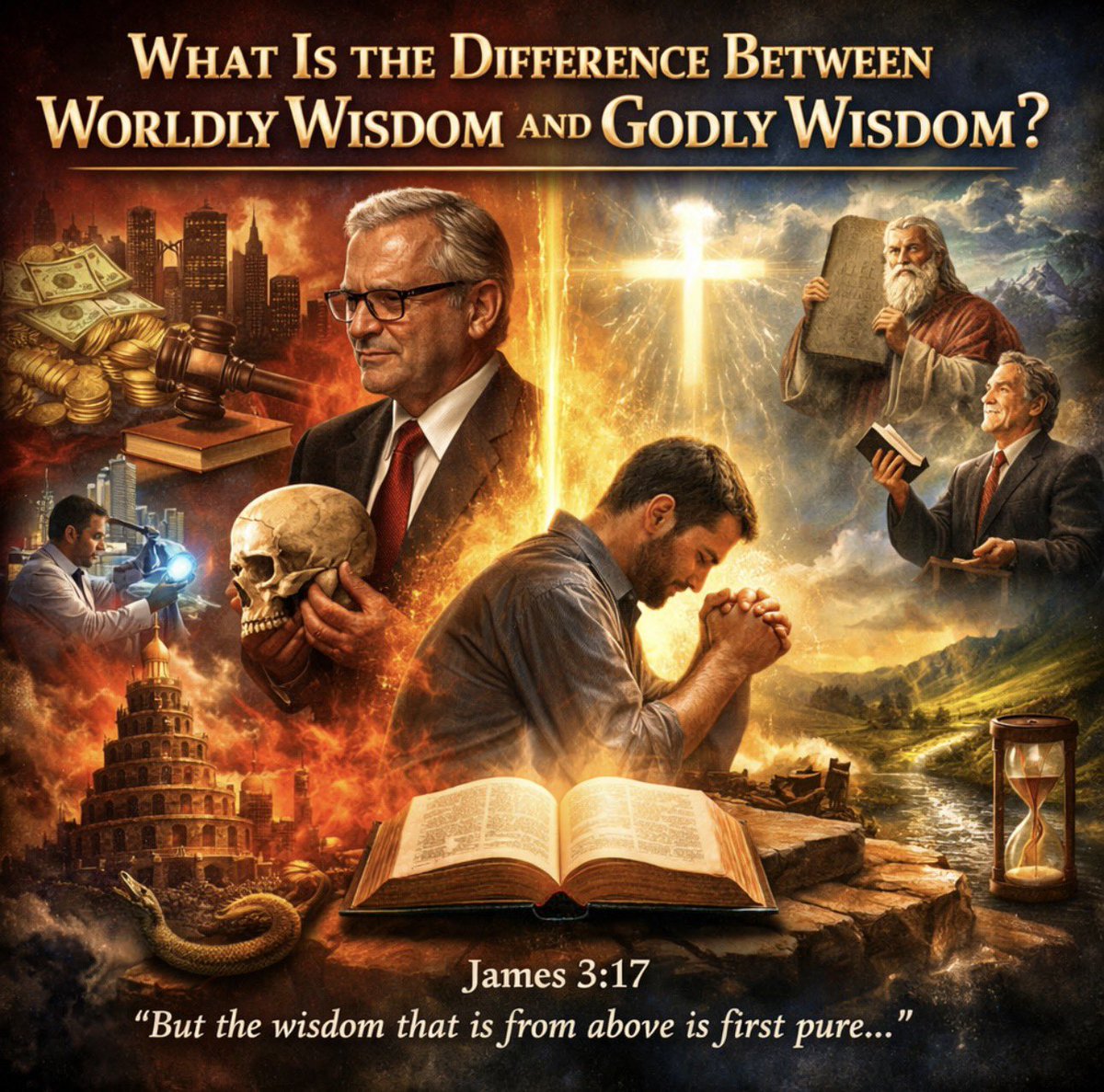
What Is the Difference Between Worldly Wisdom and Godly Wisdom? Introduction One of the greatest deceptions in this present evil world is the lie that intelligence and wisdom are the same thing. They are not. A man can have degrees stacked to the ceiling, a vocabulary long enough to impress a television audience, and a brain sharp enough to solve technical problems all day long, and still be an absolute fool in the sight of God. The world has always confused cleverness with wisdom, polish with depth, and information with truth. That confusion is not new. It was around in Egypt when Pharaoh’s magicians stood up in their learning and resisted the truth. It was around in Babylon when the wise men could not tell Nebuchadnezzar his dream. It was around in Athens when philosophers spent their time in nothing else but either to tell, or to hear some new thing (Acts 17:21). And it is around now in a civilization drunk on data, addicted to expertise, and starving to death for the fear of the Lord. The difference between worldly wisdom and godly wisdom is not small. It is not a minor shade of meaning. It is the difference between light and darkness, between what rises from beneath and what comes down from above. A great many Christians get tangled up here because worldly wisdom often looks impressive. It knows how to package itself. It knows how to speak with confidence. It knows how to make righteousness sound narrow, compromise sound compassionate, and rebellion sound enlightened. It can quote experts, manipulate language, redefine terms, and dress corruption in expensive clothes. Worldly wisdom knows how to flatter man while quietly insulting God. It tells the sinner to trust himself, celebrate himself, heal himself, affirm himself, and follow his own heart, even though the Bible says, “The heart is deceitful above all things, and desperately wicked: who can know it?” (Jeremiah 17:9). Godly wisdom comes in with a sword and cuts through the whole rotten show. It says, “The fear of the LORD is the beginning of wisdom” (Psalm 111:10). That means wisdom does not begin in the laboratory, the classroom, the think tank, or the senate chamber. It begins when a man bows before his Maker and admits that God is right and he is wrong. The trouble is that this battle does not just happen out in the world. It gets inside churches, pulpits, families, ministries, and personal decisions. A believer can start listening to worldly wisdom without even realizing it because worldly wisdom often borrows religious language while keeping the same God-defying center. It tells Christians to be practical when it means faithless. It tells them to be balanced when it means spineless. It tells them to be nuanced when it means silent about sin. It tells them to be loving when it means surrender the truth. So this subject matters because every saint is choosing between two wisdoms every day. One is earthly, sensual, devilish (James 3:15). The other is from above, pure, peaceable, gentle, easy to be intreated, full of mercy and good fruits, without partiality, and without hypocrisy (James 3:17). If you cannot tell the difference, this world will eat your lunch and call it discipleship. 1. Worldly Wisdom Begins With Man, but Godly Wisdom Begins With God The most basic difference is the starting point. Worldly wisdom begins with man. It begins with human reasoning, human experience, human desire, human pride, and human independence from divine authority. Even when it says something true here and there, it still puts man at the center of the system. That is why the world is forever asking what works for you, what feels right to you, what seems reasonable to you, and what makes sense to the human mind apart from revelation. It is always circling back to the creature instead of the Creator. Paul said, “Professing themselves to be wise, they became fools” (Romans 1:22). That is worldly wisdom in one sentence. It boasts, struts, preens,
PaulsCorner-VerseQuest tweet media
English
5
23
51
1.8K
Lora
Lora@beepy13·
@TNTJohn1717 Praise the Lord for His wonderful works! I am guilty of not doing this in the past and slid so far but praise His holy name He showed me my path. I paid dearly in His chastisement but this is beautiful and I highly encourage others to do! The closer I am to Him the happier I am❤️
English
0
0
1
56
PaulsCorner-VerseQuest
PaulsCorner-VerseQuest@TNTJohn1717·
Seven Questions to Ask Yourself at the End of Every Week Introduction One of the easiest ways for a Christian to drift is to keep living from week to week without ever stopping long enough to look back and ask what in the world is actually happening to his soul. He gets up, goes to work, deals with people, pays bills, fights temptations, sits in traffic, scrolls through distractions, survives pressures, maybe gets to church, maybe reads his Bible some, maybe prays some, and then the whole thing starts over again. Before long, weeks are sliding by like fence posts out the window of a speeding train, and the man has not seriously examined where his heart has been, where his thoughts have been, where his time has gone, and whether he is actually walking closer to Jesus Christ or just getting older in a religious routine. That is a dangerous way to live. A man can drift a long way while still calling himself faithful. The Bible says, “Examine yourselves, whether ye be in the faith; prove your own selves” (2 Corinthians 13:5). That verse has a doctrinal edge to it, but the principle of honest self-examination runs all through Scripture. David said, “I thought on my ways, and turned my feet unto thy testimonies” (Psalm 119:59). There is the key. He stopped, thought, and then turned. A lot of believers never get to the turning because they never get to the thinking. They stay busy enough to avoid reflection. They move fast enough to keep conviction blurry. They keep enough noise in their life that the Holy Ghost has to shout over a crowd just to get their attention. But the Christian who will stop at the end of a week and ask honest questions may catch a problem while it is still small enough to deal with. He may also notice mercies, progress, answers to prayer, and quiet victories he would otherwise forget. Now let me be plain. This kind of weekly self-examination is not meant to turn you into a gloomy, self-absorbed, neurotic Christian staring at your own spiritual pulse every ten seconds like a hypochondriac with a thermometer in his mouth. The point is not morbid introspection. The point is honest stewardship. You are watching over your own soul. You are asking whether the week pulled you nearer to Christ or farther from Him, whether your mind got cleaner or dirtier, whether your tongue got sharper or softer, whether your prayers got stronger or weaker, whether your obedience got clearer or fuzzier. These seven questions can help you do that. Asked honestly, before God, with an open Bible and a willing heart, they can save you from a lot of wasted weeks and a lot of unnecessary spiritual damage. 1. Have I Walked With God or Just Carried Christian Labels? The first question to ask yourself at the end of every week is this: Have I walked with God or just carried Christian labels? It is possible to call yourself a Bible believer, attend church, know doctrinal terminology, have all the right opinions on the wrong crowd, and still not have actually walked with God through the week. Labels are easy. Fellowship is costly. A man can wear the uniform without ever staying near the Captain. He can speak Christian language without having a very Christian heart. He can even defend the truth in public while neglecting the God of truth in private. That is why this question is so important. It cuts through image and asks about reality. Enoch “walked with God” (Genesis 5:24). That is one of the simplest and deepest descriptions in all the Bible. It means there was companionship, agreement, direction, nearness, and ongoing fellowship. Amos 3:3 says, “Can two walk together, except they be agreed?” That means if your week was marked by stubbornness, fleshly indulgence, bitterness, compromise, and self-will, then no matter how many Christian things you touched outwardly, you did not really walk with God in those moments. You may still be saved, but the walk was not right. Walking with God involves prayer, obedience, sensitivity,
PaulsCorner-VerseQuest tweet media
English
2
18
44
2K
Lora
Lora@beepy13·
@TNTJohn1717 Beautiful ❤️ I never thought about it that way but it's once again spot on.
English
0
0
1
38
PaulsCorner-VerseQuest
PaulsCorner-VerseQuest@TNTJohn1717·
The Rapture and the Flight of the Dove Before the Storm Genesis 8:9 Introduction There are certain scenes in the Bible that look simple until the Holy Ghost turns the light just right and you realize you are looking at one of God’s great prophetic patterns hiding in plain sight. Genesis 8:9 is one of those scenes. Noah has sent forth the dove, and the verse says, “But the dove found no rest for the sole of her foot, and she returned unto him into the ark” (Genesis 8:9). On the surface, it is part of the flood narrative. It is about waters, judgment, waiting, and the searching flight of a bird over a drowned world. But under that historical reality is a pattern too sharp to ignore. The dove goes out, finds no rest in the judged world, and returns to the place of safety prepared by God. That is not accidental detail. That is divine design. The Holy Spirit does not waste ink, and when He gives you a dove with no rest in a judged world, He is showing you something about separation, safety, and the refusal of heaven to settle down in a cursed scene. Now let me say plainly what needs to be said before some doctrinal policeman who cannot tell the difference between interpretation and application starts blowing his whistle. Genesis 8 is first of all a literal historical record. Noah was real. The flood was real. The ark was real. The waters were real. The dove was real. This is not allegory replacing history. The event happened exactly as the Book says it happened. But because it is true history written by the Holy Ghost, it also carries patterns, types, and prophetic pictures that reach beyond itself. The ark pictures salvation. Noah’s deliverance before the new beginning pictures preservation through judgment. The dove, especially in light of the Spirit descending like a dove in the Gospels, opens a rich field of spiritual truth. So we are not denying the history when we draw the picture. We are honoring the Author who built the picture into the history in the first place. That is where the Rapture comes into view. The Church is living in a world that cannot finally give rest to the things of God. The Spirit of God indwells the believer, yes, and works through the Church, yes, but this world is not His resting place in the covenant sense of final satisfaction. It is a field of witness, warfare, sorrow, labor, resistance, and groaning. It is not home. And before the full storm of divine judgment rests in its final prophetic form upon the earth, the Lord will call His people home. The dove found no rest and returned to Noah in the ark. The Church, indwelt by the Spirit and led by that Spirit, will find her final rest not in this present world system, but in Christ, before wrath runs its course in the tribulation. The flight of the dove before the storm is a beautiful picture of the Spirit’s work in calling the Bride home before judgment settles on the earth in its final fury. 1. The Dove Is a Fitting Figure of the Spirit of God The first thing that gives this picture its force is the biblical association of the dove with the Holy Spirit. At the baptism of Jesus Christ, “the Holy Ghost descended in a bodily shape like a dove upon him” (Luke 3:22). That does not mean the Holy Ghost is literally a bird any more than Jesus being called a Lamb means He was woolly and four-legged. But it does mean God Himself chose the dove as a fitting visible likeness for the Spirit’s descent. That matters. The dove is not a vulture. The dove is not a raven. The dove carries connotations of purity, gentleness, peace, and heavenly innocence. So when Genesis 8 gives you a dove going out over the waters of judgment, the Bible reader who has spent time in the New Testament immediately feels the pull of that association. That is especially important because Genesis itself gives you both birds. Noah first sends out a raven, and then he sends out a dove. The raven is content in a world of death and floating corruption. The raven
PaulsCorner-VerseQuest tweet media
English
5
25
53
2.8K
Tim Anderson
Tim Anderson@AssocAnderson·
Doing a Utah/Virginia concealed carry class in Williamsburg today and the tolerant and kind folks on the left has decided to have a no kings protest at my location. So after the class I intend to go make some friends with the people out there with my new hat. I will identify today as a monarch. My kingdom ? Anderson, King of the Sane. It’s a nice kingdom. Criminals stay in jail. Victims are protected. Everyone has guns. Taxes don’t exist on the people that live there. We only tax tourists visiting. We all work to provide for ourselves. Only Women give birth to children. Kids go to school to learn how to think. It will be hot later - so I will try to bring some ICE for everyone to stay hydrated. Not sure why thy don’t like ice? 🧊 Ice is essential!
Tim Anderson tweet media
English
101
154
1.2K
35K
Lora
Lora@beepy13·
@TNTJohn1717 Thank you for this... I look forward to reading ❤️
English
1
0
1
27
PaulsCorner-VerseQuest
PaulsCorner-VerseQuest@TNTJohn1717·
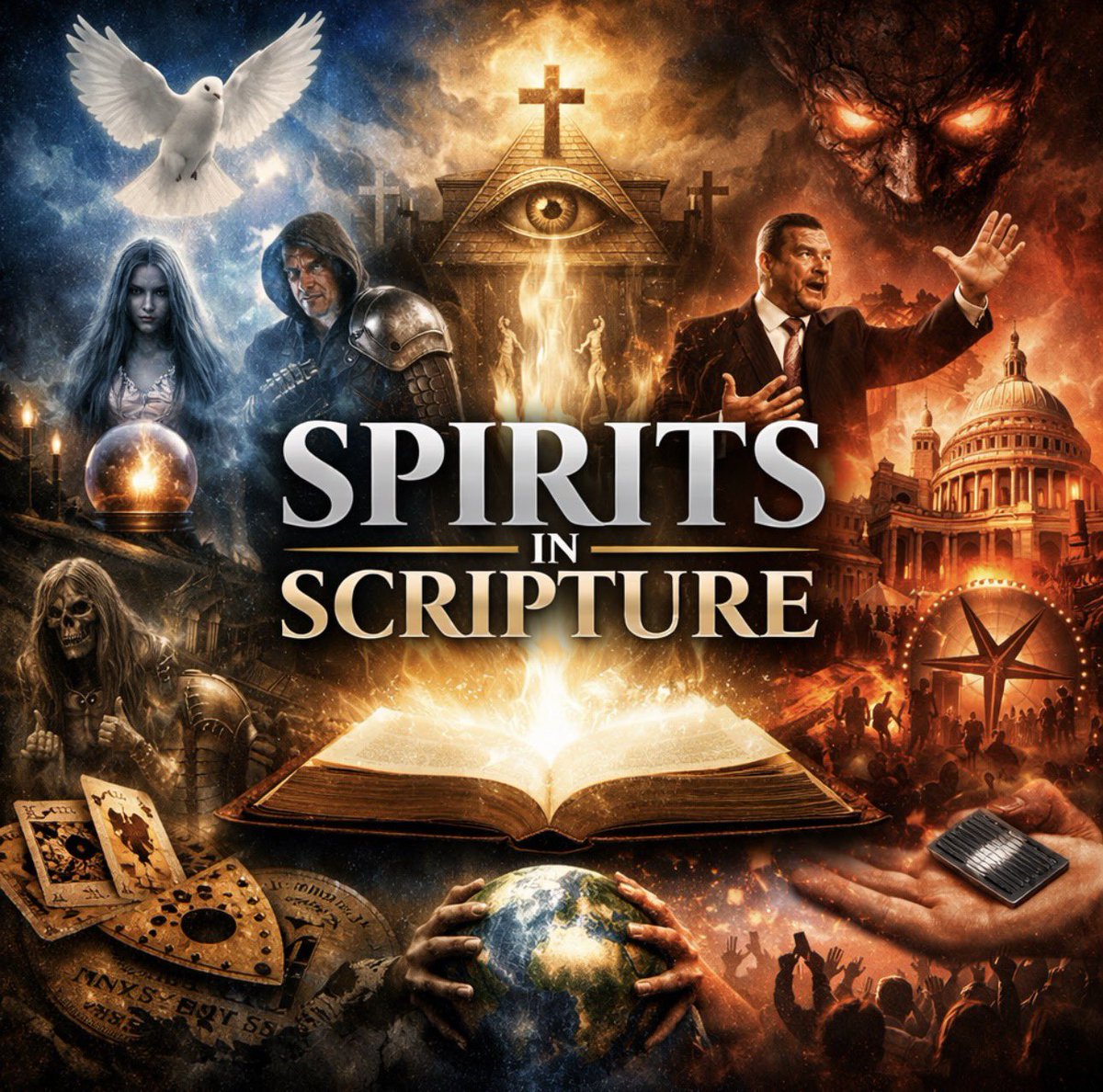
🚨🚨 versequest.com/wp-content/upl… 🚨🚨 NOW LIVE! VerseQuest Exclusive Series: Spirits in Scripture (25 Parts) “Spirit” is one of the most abused words in modern Christianity. This series locks it down Bible-first and KJV-clear. No vibes religion. No deliverance circus. No occult curiosity dressed up as “spirituality.” We’re defining the Spirit of God, the spirit of man, angels, unclean spirits, familiar spirits, lying spirits, and the spirit of antichrist, then trying the spirits by the Book the way God commanded. If you want discernment that actually works, doctrine that stays clean, and a study that prepares you for last-days deception without sensationalism, this is it. Scripture-heavy. Truth-driven. Gospel-centered. #VerseQuest #SpiritsInScripture #KJV #BibleStudy #Discernment #SpiritualWarfare #HolySpirit #EndTimes #TryTheSpirits #JesusChrist
PaulsCorner-VerseQuest tweet media
English
4
9
18
1K
Lora
Lora@beepy13·
My thoughts and feelings in a nutshell...
PaulsCorner-VerseQuest@TNTJohn1717

🚨‼️The older I get, the more I despise being lied to and deceived. That’s not bitterness, that’s discernment earned through experience. After enough years of seeing how people operate, you begin to recognize patterns. Not everyone is like that, but there are people who will take advantage if given the opportunity. And once you see it clearly, something in you changes. You stop chasing crowds. You stop trying to be everywhere with everyone. You start valuing your time, your peace, and your walk with God more than social acceptance. That’s not isolation, that’s clarity. At this stage in life, I find myself pulling away from things that once consumed my time. Not because they are all inherently evil, but because they are distractions if left unchecked. Politics, for example, I’ve stepped away from completely. I used to believe one side had more virtue than the other, but over time I’ve come to see that the motives behind it all are not rooted in Scripture. There may be moments of good, but the foundation is still corrupt. Sports, same thing. I used to know every stat, every player, every detail. Now I couldn’t tell you who’s playing. It’s not that sports are sinful, but they can quietly steal your time, your attention, and your focus if you let them. And then there’s entertainment and celebrity Christianity. That one took time to see clearly. I used to give the benefit of the doubt, thinking at least they’re doing something good, at least they’re reaching people. But that’s where compromise creeps in. Because the question isn’t just “Are they reaching people?” The question is “What kind of fruit are they producing?” If what they reproduce is shallow, unstable, and disconnected from Scripture, then something is wrong at the root. That’s not being harsh, that’s being honest. What’s more troubling is that this isn’t just out in the world, it’s inside churches. Not everything done in the name of Christianity is scriptural. Not everything that feels spiritual is from the Spirit. There are people trying to manufacture something that looks like the Holy Spirit without actually being led by Him. And the deeper you get into the Word of God, the easier it becomes to recognize it. That’s why it feels worse when it comes from professing Christians. Because there should be a standard there. And here’s the real issue. People today are not following the Word, they’re following trends, personalities, and brands. One moment they stand on truth, the next they adjust it to fit what’s popular. One moment they preach doctrines clearly found in Scripture, the next they soften or abandon them to avoid offense. That’s not growth, that’s instability. That’s taking the ruler God gave and shaving it down to match what feels comfortable. The Word of God doesn’t need to be adjusted. It needs to be believed. Because once a person starts doubting what it plainly says, their growth stops right there. The Bible says if you lack wisdom, ask God. But if you ask and then doubt what He shows you, don’t expect to receive more. And that’s exactly where many people are. They’ve hit a ceiling, not because God stopped teaching, but because they stopped believing. A baby doesn’t question the milk it’s given. It receives it. That’s why Scripture calls it the sincere milk of the Word. You don’t grow by analyzing it to death or reshaping it to fit your preferences. You grow by receiving it, believing it, and letting it do its work in you. My desire is simple. To get closer to God, to go deeper into His Word, and to help others do the same. Not by promoting personalities or trends, but by pointing back to the Book. Because everything we need is already there. And the more you love the truth, the more you will hate every false way.

English
0
0
0
28
Lora
Lora@beepy13·
@TNTJohn1717 This has been the best read I've read for a long long while ❤️ You have a way with explaining and words! I copied this to share w/my mom & aunt, I pray you don't mind. I gave you a follow and look forward to your posts.
English
0
0
1
26
PaulsCorner-VerseQuest
PaulsCorner-VerseQuest@TNTJohn1717·
Grace turns service into response. Paul says, “the love of Christ constraineth us” (2 Corinthians 5:14). That is not the same as terror constraining us. Love constrains us. Then again in Romans 12:1, after eleven chapters of grace-rich doctrine, Paul says, “I beseech you therefore, brethren, by the mercies of God, that ye present your bodies a living sacrifice.” By the mercies of God. That is grace logic. Because God has been merciful, therefore present yourself. Service is not payment for redemption. It is a yielded answer to redemption already accomplished. Even Paul’s labor is framed this way. “Yet not I, but the grace of God which was with me” (1 Corinthians 15:10). Grace does not make a man lazy. It makes him fruitful. But it keeps the fruit in the right orbit. Under law the worker becomes weary, resentful, and often self-congratulatory. Under grace the worker can labor abundantly while knowing the strength, motive, and outcome all belong to God. One man says, I must serve so God will accept me. The other says, God has accepted me in Christ, therefore let me spend and be spent for His glory. Conclusion So what is the difference between living by law and living by grace? It is the difference between standing before God in your own performance and standing before Him in Christ. It is the difference between fleshly striving and Spirit-enabled living. It is the difference between bondage and liberty, condemnation and sonship, external pressure and inward transformation, fearful service and grateful obedience. Law can diagnose the disease, but grace provides the cure. Law can expose the sinner, but grace unites him to the Saviour. Law can command, but grace can teach, empower, and sustain. That does not mean grace is soft on sin. Not for one second. Grace is far holier than legalism because grace goes deeper than appearances. Legalism is content to make a corpse sit up straight in church clothes. Grace raises the dead. Legalism can produce Pharisees. Grace produces saints who know they are nothing without Christ and therefore cling to Him all the more. The law is good in its place, but it was never given as the believer’s ladder to climb into favor or his engine for sanctification. The believer is complete in Christ, indwelt by the Holy Spirit, and called to walk accordingly. So if a Christian finds himself dry, fearful, scorekeeping, critical, proud, or crushed, he had better stop and ask what spirit he is breathing. Is he living as though the Christian life is Moses standing over him with a rod, or Jesus Christ holding him by grace? “For the law was given by Moses, but grace and truth came by Jesus Christ” (John 1:17). Thank God for that. Because if I have to stand before God in law, I am ruined. But if I stand in grace through the righteousness of Jesus Christ, then I can live, serve, fight, grow, and finish to the glory of God.
English
2
0
8
449
PaulsCorner-VerseQuest
PaulsCorner-VerseQuest@TNTJohn1717·
What Is the Difference Between Living by Law and Living by Grace? Introduction A great many Christians talk about grace while living like Galatians who got bewitched somewhere between Sunday school and the church parking lot. They say salvation is by grace, but then they try to live the Christian life as if God handed them a new birth and then shoved them back under a system of pressure, fear, scorekeeping, and fleshly self-improvement. That confusion has wrecked more believers than open worldliness in some places, because law has a way of looking respectable while it quietly strangles liberty, joy, assurance, and fruitfulness. A man can be sitting in a Bible-preaching church and still be living like he is climbing a ladder to keep God from dropping him. He gets saved by faith in the blood of Jesus Christ, then starts acting like sanctification is just Moses with a louder voice and a more religious haircut. The Bible does not leave this muddled. It draws a sharp line between law and grace. “For sin shall not have dominion over you: for ye are not under the law, but under grace” (Romans 6:14). That is not a small sentence. That is a dividing line that separates two whole ways of life. Law says do and keep doing or face the curse. Grace says Christ has done, and now the saved man lives out of a new standing, a new life, and a new power. Law addresses man in the flesh and demands righteousness from him. Grace gives the believer righteousness in Christ and teaches him to walk in the Spirit. Law says perform and live. Grace says live in Christ and then perform out of that life. If a man mixes those two up, he will either become proud because he thinks he is doing well, or crushed because he knows he is not. The issue here is not whether the law is holy. It is. “Wherefore the law is holy, and the commandment holy, and just, and good” (Romans 7:12). The issue is what the law can and cannot do, and what grace does that law never could. The law can expose sin, condemn sin, define righteousness, and shut every mouth before God. But it cannot regenerate a sinner, empower holy living, or make the flesh better. Grace not only saves, but teaches, strengthens, and sustains the believer in union with Jesus Christ. So when we ask what the difference is between living by law and living by grace, we are not asking an academic question. We are asking why one Christian walks around dry, fearful, proud, and defeated while another is anchored, humble, grateful, and fruitful. The answer has everything to do with whether he is living like a servant under a taskmaster or a son under the favor of a Father. 1. Living by Law Means Relating to God Through Performance, While Living by Grace Means Relating to God Through Christ The first great difference is the ground of relationship. Law places a man before God on the basis of what he does. Grace places a believer before God on the basis of what Christ has done. Under law the question is, Have you kept the standard? Under grace the question is, Are you in the Son? That is why Paul says, “To the praise of the glory of his grace, wherein he hath made us accepted in the beloved” (Ephesians 1:6). Notice the wording. Accepted in the beloved. Not accepted in your personal record. Not accepted in your religious effort. Not accepted because you had a good week. Accepted in Christ. Law speaks in terms of demand. “The man which doeth those things shall live by them” (Romans 10:5). That is the legal principle. Do and live. But the trouble is that fallen man cannot keep that standard. “For as many as are of the works of the law are under the curse” (Galatians 3:10). Why? Because the law requires continuance in all things written in the book of the law to do them. Not most things. All things. All the time. With no stain. With no interruption. With no inward corruption. No sinner has ever managed that except the God-man, Jesus Christ. So if a man tries to relate to God through law, he places himself on
PaulsCorner-VerseQuest tweet media
English
2
25
59
2.5K
Lora
Lora@beepy13·
@PlumblineFaith I think you're right. I just came to the conclusion differently. I guess it's due to my different walk in life. I really enjoy your posts ❤️
English
0
0
1
24
Plumbline Faith
Plumbline Faith@PlumblineFaith·
@beepy13 The whole chapter defines faith, and is squarely in line with full allegiance as evidenced by acts of fidelity.
English
1
0
1
64
Plumbline Faith
Plumbline Faith@PlumblineFaith·
When I hear someone say “by faith alone,” I sometimes ask them to define what faith is. Often, they’re stumped and can’t give a cogent answer. Although it includes the concepts of “believing” and “trusting,” if you study the Greek word for faith in the New Testament, it ultimately means living in committed allegiance to someone or something. So “putting our faith in Christ” means far more than what we feel, think, or believe. It’s also our loyalties … And how we act in fidelity to them. When I took the time to study this decades ago, it changed my whole theological framework. It also finally resolved so many theological debates that revolve around oft-repeated slogans … Without understanding the underlying words as Scripture actually meant them.
Plumbline Faith tweet media
English
25
6
42
2.4K