Sabitlenmiş Tweet
Brian Gray
9.1K posts

Brian Gray
@beggug1
Writer/Author - I try to write stories where people fall into the pages and never come back out again...
Invisible on Twitter NO DMs Katılım Şubat 2016
1.4K Takip Edilen1K Takipçiler

@JuliaBramble No for asking them to read this...but suprisingly two nuns who attended the group read it and debated the book with me...

English

@DNicholsAuthor True. I remember getting a wonderful review from a young boy in Columbia...
English

I love the idea that the fictional world we create could end up touching someone on the other side of the world. It could end up inspiring someone, make someone escape their problems for a while. The power of our words is endless!
#WritingCommunity
GIF
English

@emmagraeauthor That is so hard. But all l can say is chin up because there is always a new oppertunity on the horizon...
English

@SDDonovan Can't see if you are following me or not. I know l was following you, but hey ho...
English
Brian Gray retweetledi

🧵Query Letter Talk: Let's talk about comps (comparable titles) in your query letter. It's a very important item in your metadata paragraph that can be the difference between an agent continuing to read or an autopass. #writingcommunity #amquerying
English
Brian Gray retweetledi

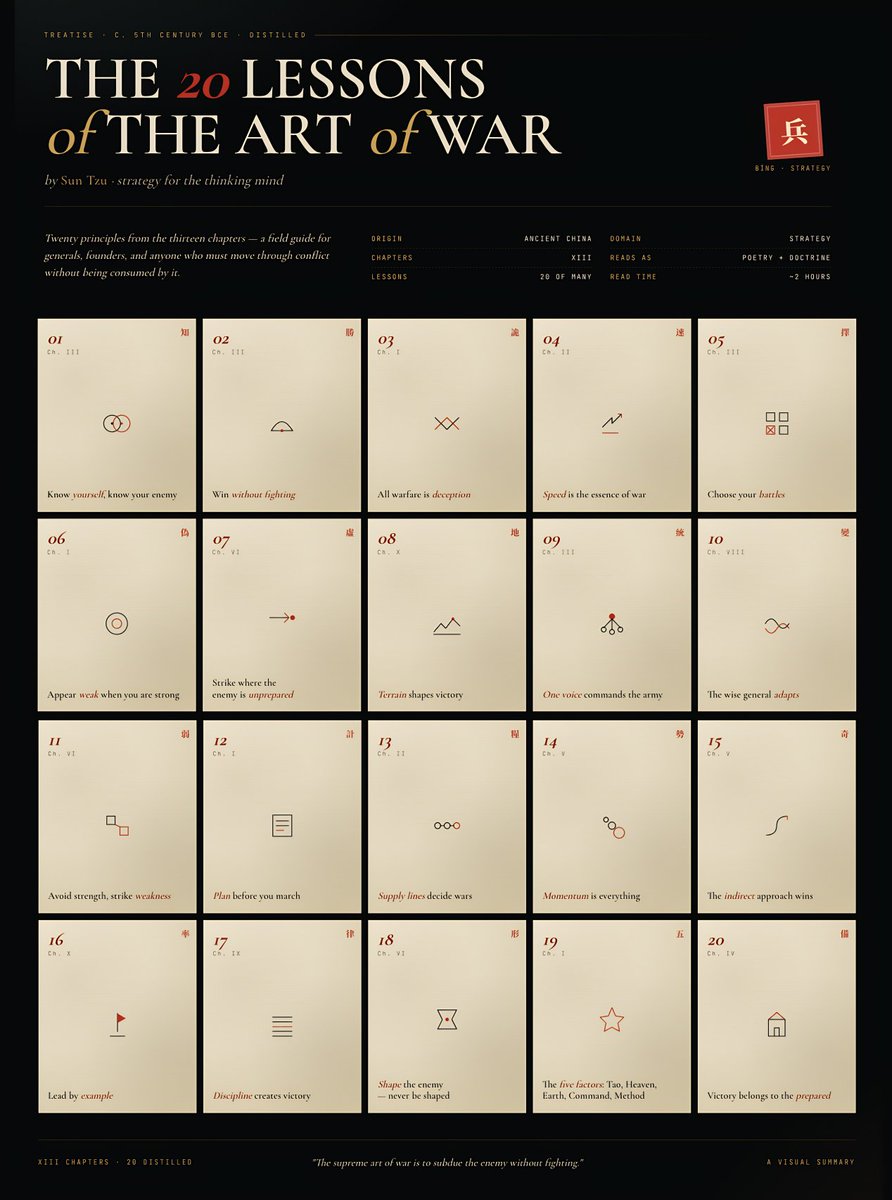
The most famous strategy book in history is not about fighting.
Most people who quote Sun Tzu have never understood that.
"The Art of War" was written by a general who believed that any battle you actually have to fight is a battle you have already half-lost. The entire point of the book is how to make fighting unnecessary.
Here is the framework he built, and why it applies to everything except war.
Sun Tzu lived in China around 500 BC, during a period historians call the Warring States era. Dozens of kingdoms were constantly collapsing into and consuming each other. Generals who lost battles did not retire. They died. Their families died. Their entire lineage was erased.
In that environment, Sun Tzu sat down and wrote something that nobody expected.
Not a manual on weapons. Not a guide to troop formations. A book about information, patience, and positioning. A book whose opening argument was that the supreme art of war is to subdue the enemy without fighting at all.
He called it wu wei. The way of winning through non-action.
Here is what that actually means in practice.
The first idea in the book is the one that most people skip because it sounds like philosophy instead of strategy. Sun Tzu says all warfare is based on deception. He does not mean lying. He means that the side that controls what the other side believes about reality controls the outcome before a single move is made.
If your competitor thinks you are weak, they underinvest in defending against you. If they think you are retreating, they move resources away from the thing you are actually targeting. The battle is won in perception long before it is won in execution.
Amazon did this for two decades. They convinced the entire retail industry they were a bookstore while quietly building the infrastructure layer that would run a third of the internet.
The second idea is the one that changed how I think about every decision with a deadline attached to it.
Sun Tzu writes that the general who wins makes many calculations in his temple before the battle is fought. The general who loses makes but few calculations beforehand.
He is not talking about overthinking. He is talking about preparation so complete that when the moment arrives, you are not deciding. You are executing a decision you already made.
Most people do the opposite. They move fast, figure it out as they go, and call it agility. Sun Tzu would call it gambling. The appearance of boldness covering the reality of unpreparedness.
The third idea is the one that I have thought about most since I read it.
He says do not repeat tactics that have won you victory before. Let your methods be regulated by the infinite variety of circumstances.
Every person who has ever had one successful year followed by a mediocre decade has violated this principle. What won the last war is almost never what wins the next one. The circumstances changed. The enemy adapted. The tactics became expected. And the general who kept running the same play lost to someone who had spent that entire time studying how to beat it.
The fourth idea is buried in Chapter 3 and most readers walk straight past it.
Sun Tzu says: if you know the enemy and know yourself, you need not fear the result of a hundred battles. If you know yourself but not the enemy, for every victory gained you will also suffer a defeat. If you know neither the enemy nor yourself, you will succumb in every battle.
This is not motivational. It is a diagnostic framework. And the middle category is where almost every ambitious person lives.
They know themselves reasonably well. Their strengths, their work ethic, their vision. What they skip is the deep study of the thing they are competing against. They assume their quality will be enough. Sun Tzu says quality is not a strategy. Knowing your enemy so well that you can predict their next move before they make it is a strategy.
The fifth idea is the one that has no equivalent in any modern business book I have read.
Sun Tzu writes that victorious warriors win first and then go to war, while defeated warriors go to war first and then seek to win.
Read that again.
Most people enter competition hoping to win. Sun Tzu's entire framework is built around the idea that hope is not a strategy. You should only enter a battle whose outcome you have already determined through preparation, positioning, and information. If you cannot see the conditions that will make you win before you start, you are not ready to start.
This is why The Art of War gets read by generals and hedge fund managers and startup founders and championship sports coaches. Not because war and business are the same thing. Because the underlying logic of competition does not change across domains.
The terrain changes. The weapons change. The opponents change.
The principles do not.
Sun Tzu wrote 6,000 words and never wasted a single one of them. Every sentence in that book is load-bearing. Every line assumes you are serious enough to apply it.
The people who quote it at dinner parties never changed their behavior.
The people who actually used it never had to fight as hard as everyone else.

English
Brian Gray retweetledi


@MadelaineLucyH To take time out l always read snippets of Oliver Sacks
English
Brian Gray retweetledi

Walking now. Was washing the pots until we got a dishwasher, which now happens to be a New York Times best selling author...
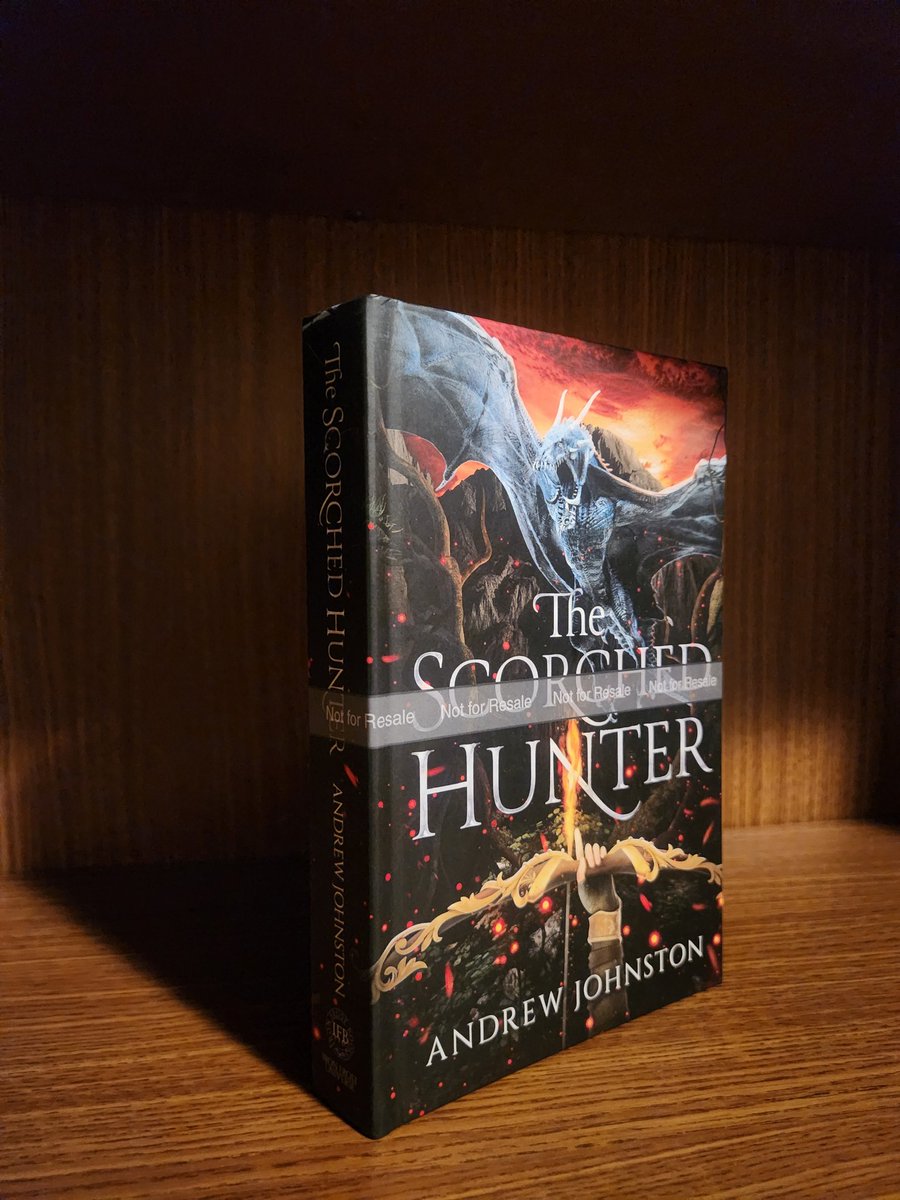
Andrew Johnston@hwjohnston7
What activity helps give you story ideas? I cut grass and plot out scenes.
English

That is very enlightening and thank you for the story idea that derives from it. I will get around to writing it next week.
But truly, a good post.
Zunaira Ai@ZunairaAi
A millionaire once told me about the "Cemetery Theory." That was when I stopped procrastinating:
English
Brian Gray retweetledi

THINGS ANIMALS KNOW THAT HUMANS DON'T:
1. Elephants can detect rain falling 150 miles away through vibrations in the ground, felt through their feet, and will begin walking toward it before any meteorological instrument registers the incoming storm.
2. Dogs can smell cancer, Parkinson's disease, epileptic seizures before they happen, and changes in blood sugar with accuracy rates that consistently outperform early-stage medical testing equipment.
3. Sharks can detect one drop of blood diluted across an Olympic swimming pool worth of water. Their electrosensory system can also detect the heartbeat of a hidden animal through solid sand.
4. Pigeons have magnetite crystals embedded in their beaks,a biological compass that allows them to navigate using the Earth's magnetic field with an accuracy that GPS navigation still cannot consistently match.
5. Crows can recognize and remember individual human faces for years. They hold grudges, pass information about specific humans to their offspring, and have been documented leaving gifts for humans who treated them kindly.
6. Bees make collective decisions democratically. When a hive needs a new home, scouts return and perform dances indicating different locations other bees evaluate and vote, and the option with the most sustained enthusiasm wins.
7. Mantis shrimps can see 16 types of color receptors compared to humans' three. They perceive colors, ultraviolet, and polarized light simultaneously experiencing a visual reality so complex humans have no framework to even imagine it.
8. Migratory birds navigate partly by seeing the Earth's magnetic field as a visual overlay on their normal vision essentially they have a built-in map projected onto their sight that humans are completely blind to.
9. Whales sing in dialects. Different populations have distinct songs that are culturally passed down, evolve over time, and change when populations come into contact with each other exactly like human language evolution.
10. Rats show measurable empathy. In experiments they consistently freed trapped companions even when doing so gave them no reward and would share food with hungry strangers before eating themselves.
11. Octopuses have neurons distributed throughout their arms each arm can taste, feel, problem-solve, and act semi-independently of the brain. They experience the world as eight semi-separate thinking entities simultaneously.
12. Elephants are among the only animals that recognize death as death. They return to the bones of deceased family members years later, handle them carefully, and display behavior that has no practical survival function only what looks like grief.
13. Dolphins have been documented teaching their young to use tools specifically placing sea sponges on their snouts to protect themselves while foraging on sharp ocean floors. This is culturally transmitted knowledge, not instinct.
14. Some species of jellyfish are biologically immortal. When stressed or aging, Turritopsis dohrnii reverts to its juvenile state and restarts its life cycle,it has no known natural lifespan limit.
15. Cats don't meow at other cats in the wild. The meow was developed specifically and exclusively as a communication tool directed at humans,they learned to talk to us in a frequency that mimics an infant's cry because it gets results.
English
Brian Gray retweetledi

🧵Query Letter Talk: Let's talk about genre in your query letter. It's a very important item in your metadata paragraph that can be the difference between an agent continuing to read or an autopass. #writingcommunity #amquerying
English

And can this trick be done in Nigeria where you are posting from. The scam country of the world?
The Brain Box2.0@_Brainboxx
Do you know there’s a hidden trick most people ignore — and it could turn your regular TV into a smart one.
English
Brian Gray retweetledi

Jumping on this trend because FUCK I'm OLD! 😂
66 in June!
You're all half my age FFS!
Son took this one on the beach last September.
I know it's not a competition, but anyone in the #writingcommunity older?
@virtuallyleslie we'll have to work fast on my books before I die! 😅

H. L. Docherty@HLDocherty
21 for the 15th time in February
Littlehampton, England 🇬🇧 English
Brian Gray retweetledi

DARK PSYCHOLOGY TRICKS:
1. Never explain yourself unless asked twice.
2. Let silence do the work in tense moments.
3. Mirror someone's words back to confuse them.
4. Ask questions you already know the answers to.
5. Never show excitement when you get what you want.
6. Agree with people openly, disagree through actions.
7. Speak less in groups,it makes every word count.
8. Watch reactions, not words faces never lie.
9. Withdraw attention suddenly to regain control.
10. Act unbothered even when something stings deeply.
11. Never deny rumors,just smile and stay quiet.
12. Use people's names sparingly,it signals authority.
13. Let others underestimate you,it's your advantage.
14. Never chase what walked away,let it return.
15. Disappear occasionally absence rewrites your value.
English