Fay Godwin (1931 – 2005) was a British photographer known for her black-and-white landscapes of the British countryside and coast. #WomensArt#LandscapeArtWeek
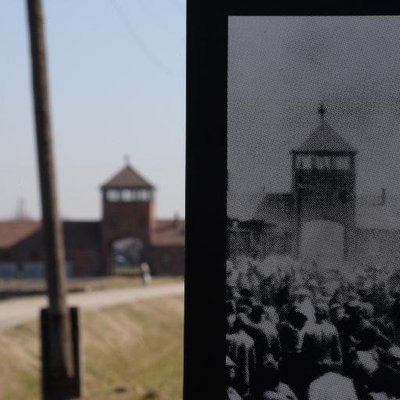
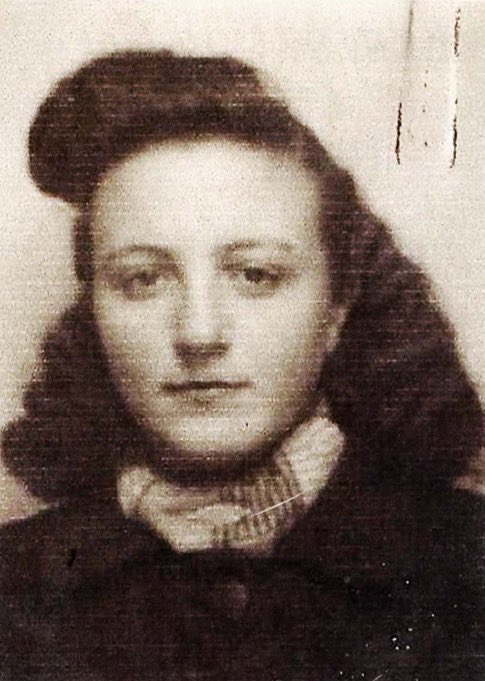
22 March 1928 | A French Jewish girl, Rosa Bravarski, was born in Paris.
She arrived at #Auschwitz on 9 August 1942 in a transport of 1,069 Jews deported from Pithiviers and Beaune-la-Rolande. She was among the 794 people murdered after selection in gas chambers.
---
▶ A short video about gas chambers and crematoria of the Auschwitz camp: youtu.be/-A05i25j9Ck
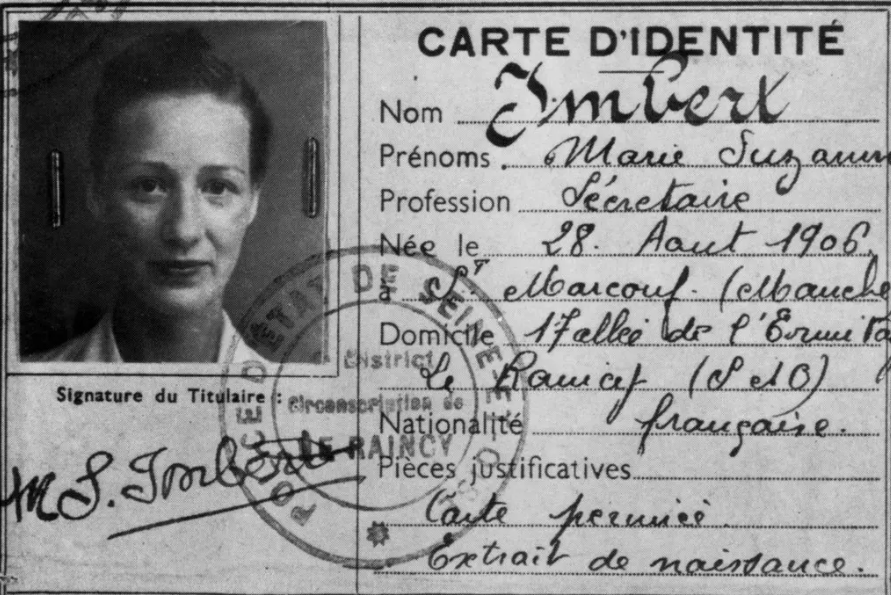
This is Marie-Madeleine Fourcade’s false identity card.
During the Second World War, she led the French resistance network Alliance.
She escaped the Gestapo twice – once by slipping naked through the bars of her prison cell.
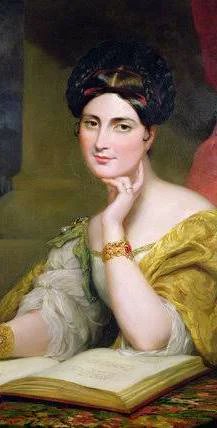
Woman of the Day feminist and author Caroline Norton born OTD in 1808 in London whose intense lobbying of Parliament and Queen Victoria was instrumental in the passing of three Acts of Parliament that gave married women long overdue legal rights for the first time.
It was the beginning of the end of coverture, the common law principle imported by those robbing Normans in 1066: that a married woman was no more than a chattel of her husband. Property. And property cannot own property.
Caroline married at 19. Her family, though well-connected, was penniless. It was a mistake. George Norton was happy to use his wife’s social connections to gain advancement but failed to earn money as a barrister. Hardly surprising. He was a nightmare: jealous, possessive, violent, abusive and a drunk. She left him when she 28, and managed to support herself and her children for a while by writing books and poems, but in those days, a woman’s earnings belonged to her husband. She was just a chattel, remember.
He confiscated Caroline’s income, leaving her in poverty. She fought back: running up bills in his name, and when creditors came to collect, telling them to go after him. He retaliated by kidnapping their three sons, hiding them with relatives in Scotland, and refusing to tell her where they were.
Children then were the legal property of their father and there was nothing Caroline could do to regain custody. A woman’s voice carried no weight. (You might think that’s still the case today but I couldn’t possibly comment).
Norton accused her of an affair with the Prime Minister, Lord Melbourne, and tried to blackmail Melbourne for £10,000 (£1.3 million in today’s money) to avoid scandal. The PM refused to pay so Norton took him to court. At the end of a nine-day trial, the jury threw out Norton’s claim, siding with Melbourne, but the publicity almost brought down the government.
The scandal eventually died, but Caroline’s reputation was ruined.
He still refused to let her see her sons and blocked her from divorcing him. When one of their sons died in an avoidable accident, he relented and let Caroline see her other children, but still refused her custody. She had no redress. He had complete power over her.
Parliament finally debated divorce reform in 1855 and Caroline submitted a detailed account of her own marriage to MPs, describing the obstacles faced by women as the result of existing laws.
An English wife may not leave her husband's house. Not only can he sue her for restitution of "conjugal rights," but he has a right to enter the house of any friend or relation with whom she may take refuge...and carry her away by force...”
“If her husband take proceedings for a divorce, she is not, in the first instance, allowed to defend herself...She is not represented by attorney, nor permitted to be considered a party to the suit between him and her supposed lover, for "damages."
“If an English wife be guilty of infidelity, her husband can divorce her so as to marry again; but she cannot divorce the husband ‘a vinculo’, however profligate he may be.”
Largely through Caroline’s intense campaigning, including writing to Queen Victoria, Parliament passed the Custody of Infants Act 1839, the Matrimonial Causes Act 1857, and the Married Women’s Property Act 1870.
Although Caroline did not herself benefit, those Acts gave married women - for the first time ever - a right to their own children and a law allowing divorce. By virtue of the Married Women's Property Act 1870, married women finally had the right to inherit property and take court action on their own behalf. It also granted married women, for the first time, a separate legal identity from their husbands.
Caroline was finally free of Norton when he died in 1875. She remarried in 1877 but died just three months later at the age of 69. I hope she found some peace and contentment in that too brief time.
“Those dear children, the loss of whose pattering steps and sweet occasional voices made the silence of my new home intolerable as the anguish of death...what I suffered respecting those children. God knows…under the evil law which suffered any man, for vengeance or for interest, to take baby children from their mother.”
Coverture, a Norman legacy, was finally knocked on the head in 1990 when married women were finally taxed independently on their own incomes and given their own personal allowances.
1990. It only took 924 years.
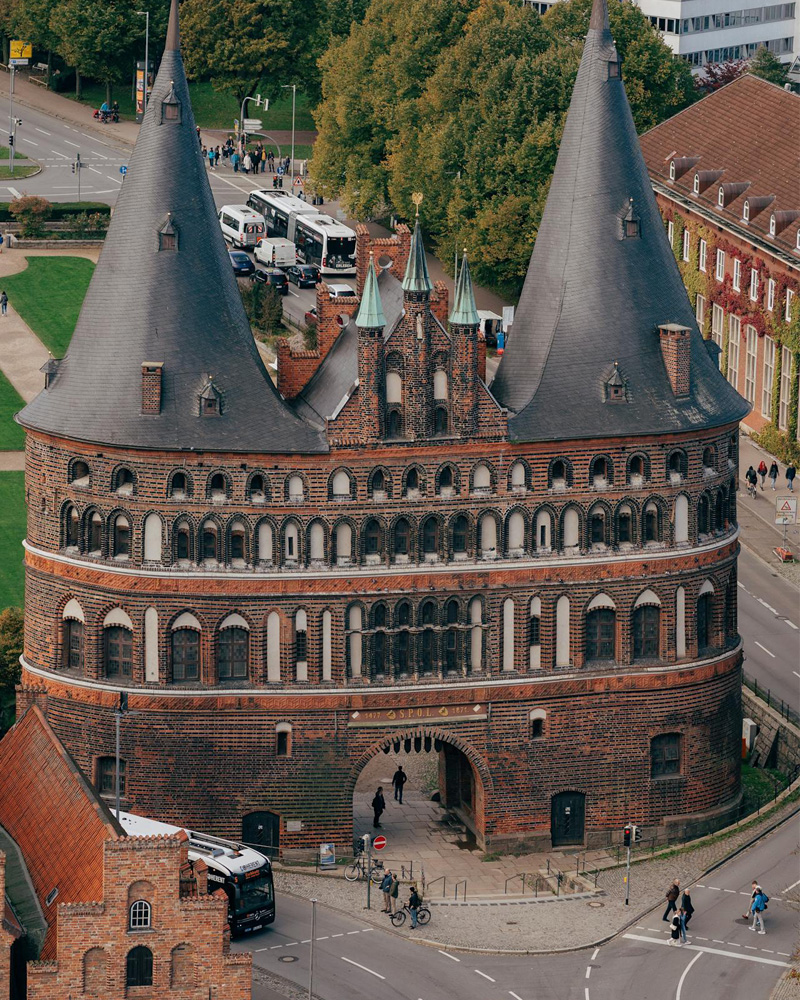
A city gate straight out of a fairytale.
The Holstentor in Lübeck, Germany was built between 1464 and 1478 and became one of the most famous symbols of the old Hanseatic city. With its twin towers, arched gateway, and striking Brick Gothic design, it once formed part of Lübeck’s medieval fortifications.
Jar lid decorated with a little bird just hatched from one of the eggs.
Found in 1922 in the tomb of Tutankhamun.
Egyptian alabaster, wood, and ivory. New Kingdom, 18th Dynasty, c. 1336-1327 BC.
Grand Egyptian Museum, Cairo 📷 by me
#Archaeology
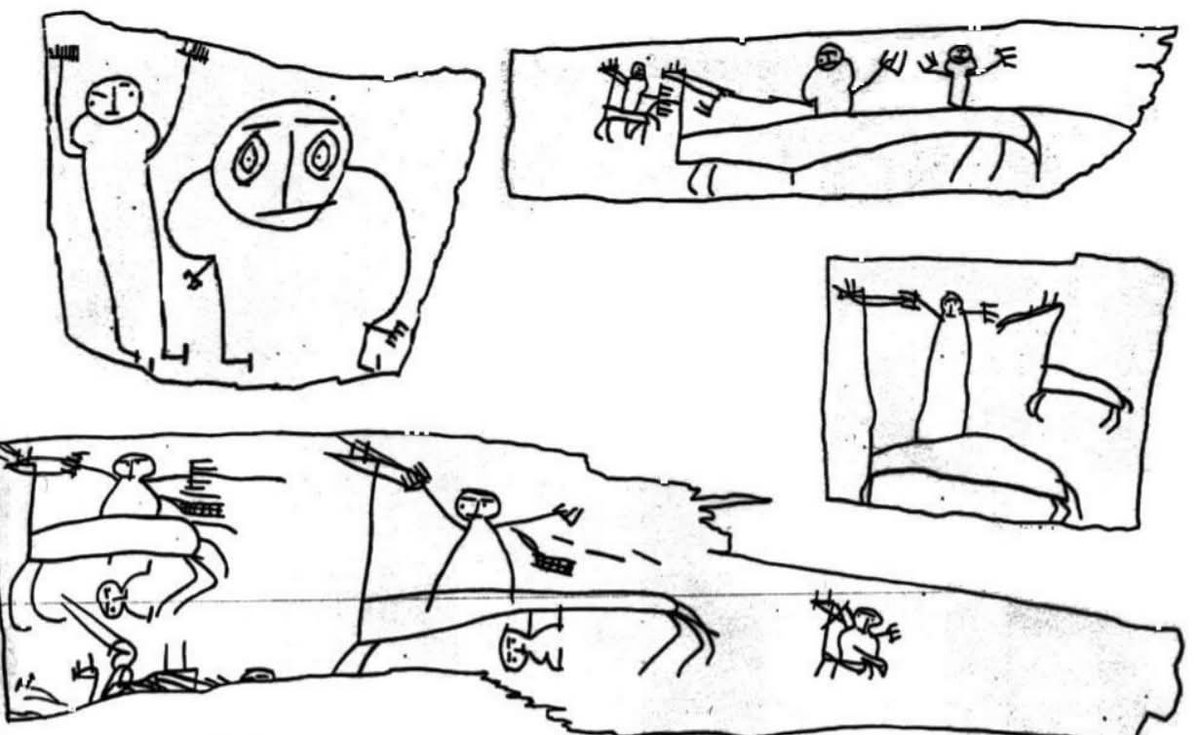
Classroom doodles of 6 or 7 yo boy Onfim from Novgorod around 800 years ago...
Onfim's drawings, scratched into pieces of birch bark around the 13th century, were discovered by archaeologists in the 1950s. Novgorod’s wet, clay-rich soil preserved them remarkably well. Alongside practice exercises in early Cyrillic writing, Onfim sketched scenes of battles, animals, and even himself as a warrior, one of the earliest known examples of a child’s imagination captured so directly.
At the time, birch bark was a common writing material in the region, far cheaper and more accessible than parchment. Over 1,000 birch-bark documents have been found in Novgorod, offering rare insight into everyday life, letters, shopping lists, schoolwork.
Onfim’s writings include early alphabet exercises, suggesting he was likely around 6–7 years old, making his work one of the oldest identifiable examples of a child practicing literacy in medieval Europe.
#archaeohistories
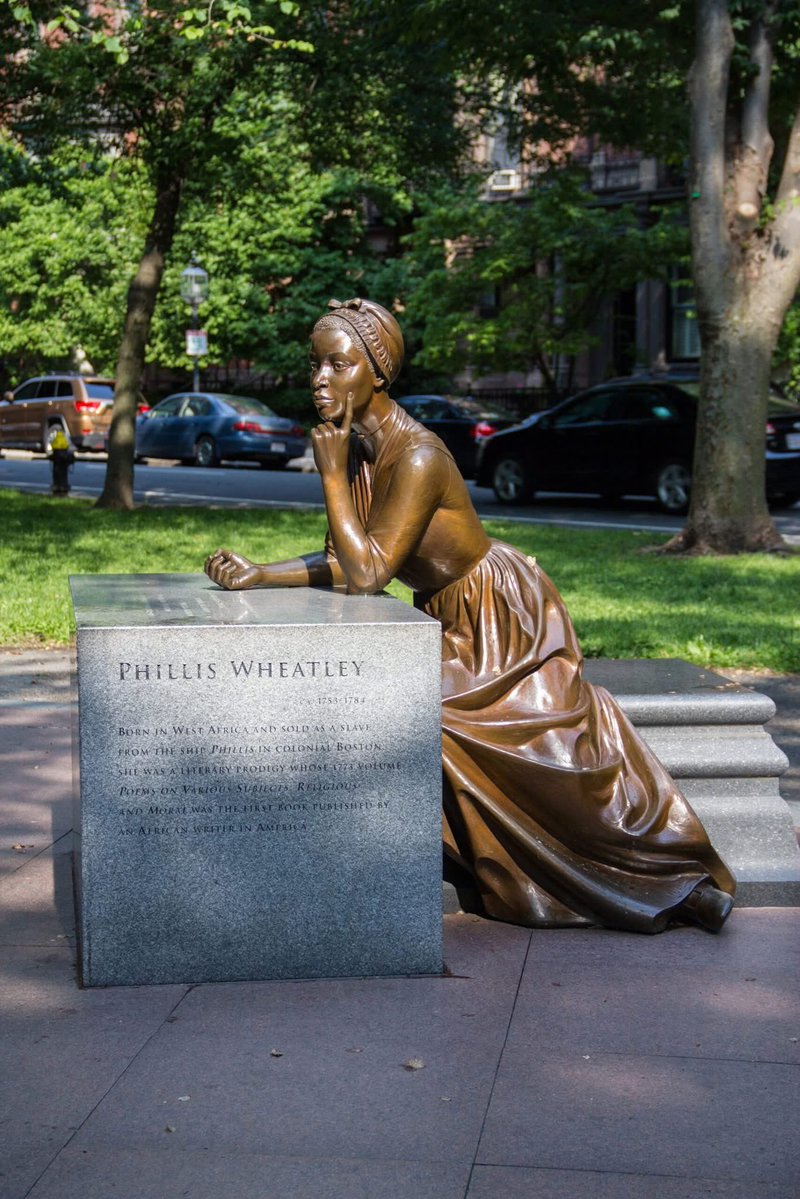
This young lady was called Phillis because that was the name of the ship that brought her, and Wheatley, the name of the merchant who bought her. She was born in Senegal 🇸🇳.
In Boston, the slave traders put her up for sale: “She's 7 years old! She will be a good mare!”
She was felt naked by many hands.
At thirteen, she was already writing poems in a language that was not her own. No one believed that she was the author. At twenty, Phillis was questioned by a court of eighteen so-called enlightened White men in robes and wigs.
She had to recite passages from Virgil and Milton and verses from the Bible, and vow that the poems she composed were not copied.
From a chair, she underwent her lengthy examination until the court approved her: she was a woman, she was Black, she was enslaved, but she was a poet.
Phillis Wheatley was the first African-American writer to publish a book in the United States 🇺🇸
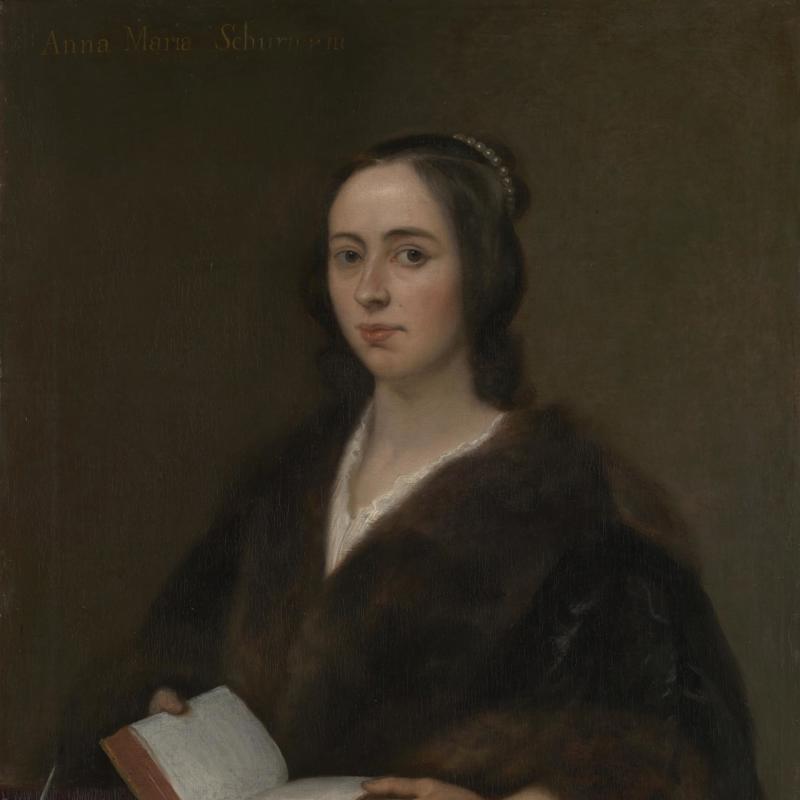
In 1607, a girl was born in Cologne with the kind of mind that did not fit the mold laid out for her.
Her name was Anna van Schurman. And the path expected of her was a narrow one. Stay quiet. Marry well. Keep your thoughts to yourself.
She didn’t.
By the time she was three, Anna was reading. By eleven, she was quoting Seneca in Latin. That was just the start.
She went on to learn Greek, Hebrew, Aramaic, and Arabic. She studied philosophy, astronomy, theology, and law. She painted with the skill of a master. Wrote poetry. Carved cameos. There wasn’t a subject she didn’t try to master. And when her family moved to Utrecht, the university took notice.
But there was a problem. Women weren’t allowed in. So they made a compromise.
She could attend, but only if she sat behind a curtain. Out of sight. The professors were worried the boys might get distracted by a girl with books.
Anna agreed. She sat in silence. Took it all in. Then wrote a dissertation in flawless Latin arguing that women had the same intellectual capacity as men and should be educated in the same way. It landed like a thunderclap.
Philosophers read it. Clerics debated it. Even Descartes paid attention.
She became known as the Star of Utrecht. She published essays. Sent letters across Europe. Joined the conversation normally reserved for men with titles and power. And she did it all without raising her voice.
Later in life, she walked away from the fame. She joined a religious group that treated women as equals. Critics called her foolish. She called it freedom.
She didn’t start a revolution. She didn’t lead a protest. But her words did something else. They stayed.
Anna van Schurman lit a fire with ink and parchment. And centuries later, it’s still burning.
#archaeohistories