vinit Gurjar

1K posts

vinit Gurjar banner
vinit Gurjar

vinit Gurjar

@bhaktkage

AI @tcs • REPOSTING X

Indore Katılım Ekim 2021
1.7K Takip Edilen233 Takipçiler
vinit Gurjar retweetledi
Ahmad
Ahmad@TheAhmadOsman·
INCREDIBLE The MOST COMPLETE GUIDE for understanding LLMs from first principles is now available online to read for free Covers the model mechanics - Tokens / tokenizers - Transformers - Attention - KV cache - Prefill vs decode - Decoding controls - Model packages - Chat templates - Long context - RAG - Agents / tools - Fine-tuning - Multimodal models Then connects that to running models locally - What "local" really means - Open-weight vs opensource - Quantization - VRAM math - Hardware tiers - File formats / load safety - Runtimes / serving modes - Model selection - Privacy - Failure modes - Benchmarks - Practical setup paths You should read this, and if you cannot now then you most definitely wanna bookmark it for later Opensource AI FTW
Ahmad@TheAhmadOsman

x.com/i/article/2057…

English
26
164
1.2K
172.7K
vinit Gurjar retweetledi
Ahmad
Ahmad@TheAhmadOsman·
DROP EVERYTHING The bible for running LLMs locally is now available online to read for free Covers what to use on - Laptop / edge / odd hardware - Mac-first workflows - Single RTX GPUs - 2-4+ NVIDIA / CUDA GPUs - General production serving - Long-context / MoE / routing - NVIDIA max performance - Cluster orchestration Software - llama.cpp - MLX / MLX-LM - ExLlamaV2 - ExLlamaV3 - vLLM - SGLang - TensorRT-LLM - NVIDIA Dynamo You should read this, and if you cannot now then you most definitely wanna bookmark it for later Local AI FTW
Ahmad@TheAhmadOsman

x.com/i/article/2057…

English
44
234
1.8K
233.6K
vinit Gurjar retweetledi
Turing Post
Turing Post@TheTuringPost·
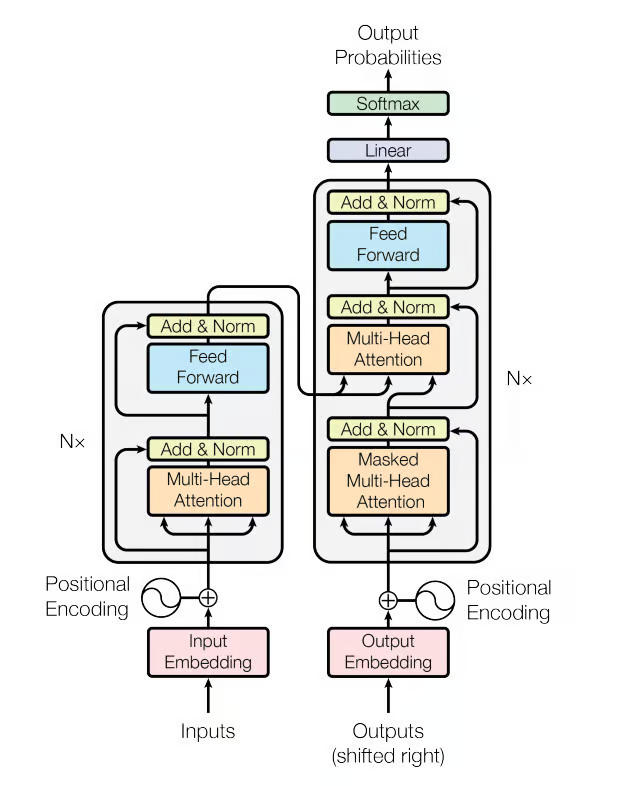
Attention in AI is a dynamic relevance computation in vector space. Here’s what Transformers do step-by-step: 1. Tokens become embeddings that represent meaning. The Transformer starts with embeddings + positional encodings injecting word order information. 2. These vectors are projected into 3 representations: Query (Q): what the token is looking for Key (K): what the token exposes about itself Value (V): the information the token can contribute 3. The model compares queries against all keys, searching for relevant tokens. Higher similarity = higher attention 4. Then the model computes a weighted sum of the value vectors, producing a richer contextual representation for each token. This process repeats across all layers and all tokens, gradually refining contextual representations. But there are some nuances you should know about the attention concept and its computation. Here is your full guide to attention: turingpost.com/p/your-ultimat…
Turing Post tweet media
English
7
21
117
5.9K
vinit Gurjar retweetledi
David Ondrej
David Ondrej@DavidOndrej1·
Hermes Agent just shipped /goal And this might be the most important feature of 2026 In this 26 min video, i'll show you everything about /goal in Hermes Agent
English
10
36
424
19.1K
vinit Gurjar retweetledi
Mr. Buzzoni
Mr. Buzzoni@polydao·
Atlassian's revenue: $1.79 billion last quarter Atlassian's move: fire the engineer who built their infrastructure his move: post a 38-minute breakdown of every system he built, free for anyone to copy what he revealed: > Envoy proxy instead of enterprise load balancers > sidecar architecture for auth, logging, rate limits > DynamoDB + SQS for async provisioning > Packer + SaltStack for automated VM deployments at scale Atlassian charges per employee across 350,000 customers this guy just handed you the enterprise playbook for free save this
English
392
5.3K
53.8K
20.7M
vinit Gurjar retweetledi
Anatoli Kopadze
Anatoli Kopadze@AnatoliKopadze·
Godfather of AI: "If you sleep well tonight, you may not have understood this lecture." This 47-minute lecture is the best thing I saw about AI in the last few months. It will definitely help you understand how it actually works and where it's going. Geoffrey Hinton built the neural networks behind every AI alive, then quit Google to warn the world about it. The part nobody wanted to hear: > AI is already developing abilities its creators didn't intend > in most cognitive tasks it's already ahead of us > the question is no longer if it surpasses us but when > the only decision left is which side of that line you're on Right now the average person opens Claude, types something, gets an answer, closes the tab. They think they're using AI. they're using maybe 10% of it. I went through his entire lecture, built a practical system from what he was describing. 18 steps to actually use Claude the right way, with copy-paste prompts that work today. Full guide in the post below.
Anatoli Kopadze@AnatoliKopadze

x.com/i/article/2053…

English
167
2K
9.2K
1.8M
vinit Gurjar retweetledi
AI Engineer
AI Engineer@aiDotEngineer·
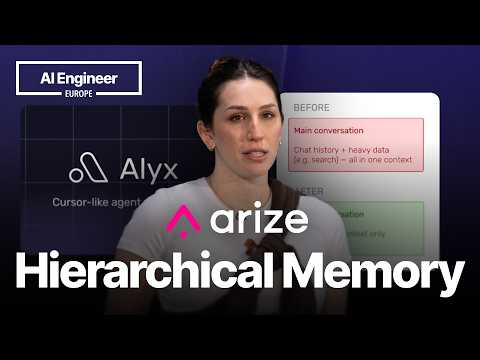
Hierarchical Memory: Context Management in Agents youtube.com/watch?v=esY99n… Sally-Ann Delucia from @arizeai spent a year building an AI agent that had to analyze the very trace data it was generating. The naive solution was truncation. The obvious solution was summarization. Neither worked. The talk covers the vicious loop, what actually held (head/tail preservation with a retrievable memory store), long session evals, and sub-agents for context that gets too heavy for one conversation. Plus what they found when they went looking for secrets in the Claude Code source release.
YouTube video
YouTube
AI Engineer tweet media
English
7
11
122
6.3K
vinit Gurjar retweetledi
Ahmad
Ahmad@TheAhmadOsman·
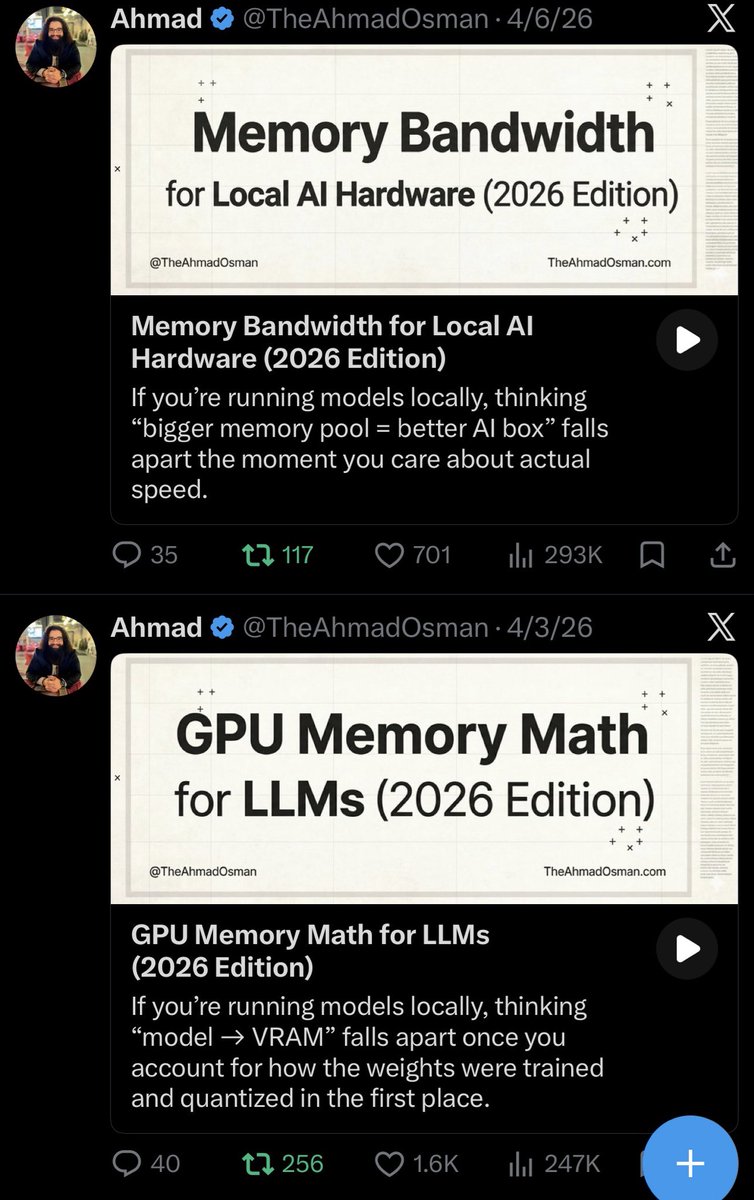
If you’re interested in Local AI, I highly recommend reading those 2 articles BEFORE making any hardware purchases Find them under the articles tab on my profile
Ahmad tweet media
English
15
29
298
13.9K
vinit Gurjar
vinit Gurjar@bhaktkage·
Boycott democracy,🤬
Anuradha Tiwari@talk2anuradha

मैं वर्षों से SC/ST Act के दुरुपयोग के खिलाफ बोल रही हूँ, पर सोचा नहीं था कि एक दिन खुद ही इसका निशाना बनूँगी। मेरे 3 साल पुराने tweets खंगालकर @NCSC_GoI & Delhi Police द्वारा मेरे खिलाफ कार्रवाई की जा रही है। यह एक सोची-समझी साज़िश है- हमारी आवाज़ दबाने की । #SCSTActMisuse

English
0
0
1
8
vinit Gurjar
vinit Gurjar@bhaktkage·
@talk2anuradha @neha_laldas कानून व्यवस्था सनातन सिद्धांतों के विपरीत है । Boycott the system, Jai shankar jai manuwad 🌞
0
0
0
4
Anuradha Tiwari
Anuradha Tiwari@talk2anuradha·
मेरा नाम अनुराधा तिवारी है । मैं उत्तर प्रदेश के एक छोटे से गाँव के ब्राह्मण परिवार से आती हूँ। बचपन से हमेशा यही सुनने को मिला - “तुम ब्राह्मण हो, तुम्हारे पास तो सब कुछ होगा”, जबकि हमारी वास्तविकता संघर्ष और सीमित संसाधनों से भरी थी। बिना किसी Reservation या govt scholarship के मैंने पढ़ाई की, सरकारी कॉलेज से इंजीनियरिंग की, खुद का startup खड़ा किया और विदेश में काम किया। TEDx speaker रही और कई सम्मान प्राप्त किए। एक जिम्मेदार नागरिक के रूप में मैंने हमेशा उन मुद्दों पर आवाज़ उठाई जो आम लोगों को प्रभावित करते हैं - poor infrastructure, food adulteration, freebies, caste-based politics ब्राह्मणों व सवर्णों के खिलाफ बढ़ती नफरत। मैंने कभी किसी समुदाय के खिलाफ नहीं बोला। लेकिन समस्याओं का समाधान निकालने के बजाय अब मेरे 3-4 साल पुराने tweets खंगाले जा रहे हैं। @NCSC_GoI और Delhi Police द्वारा SC/ST Act के तहत कार्रवाई की कोशिश यह दिखाती है कि हालात कितने गंभीर हो चुके हैं। क्या आज अपने विचार रखना भी अपराध है? क्या आज के भारत में सवर्ण होना ही अपराध बन चुका है?
Anuradha Tiwari tweet media
हिन्दी
900
6.1K
15.2K
175.9K
vinit Gurjar retweetledi
Shikhar
Shikhar@shekhu04·
Meet Supriyo Datta (Every chip that uses electron spin instead of electricity, he invented that) > Born in Dibrugarh, Assam, 1954 > B.Tech from IIT Kharagpur, 1975 > PhD from University of Illinois, 1979 > Joined Purdue University in 1981. Never left. > For over 40 years, one man, one university, one obsession > In 1990 proposed the Datta-Das Spin Transistor > The first ever concept for a spintronic switch Instead of using electric current to power devices, use the spin of electrons > A completely new way to think about computing It focused the entire world's attention on a field called spintronics > Which is now at the heart of quantum computing research worldwide > Called "one of the most original thinkers in nanoscale electronics" > Fellow of both IEEE and the American Physical Society > In 2012 elected to the National Academy of Engineering > In 2024 elected to the National Academy of Sciences > One of the very few people ever elected to both A boy from Assam spent 40 quiet years at one university and rewrote how the world thinks about electrons No Silicon Valley. No startup. No noise. Just a desk, a question and 40 years of obsession. "Science emphasizes conceptual advances. Engineering emphasizes practical impact. Nanoelectronics involves both." He lived both. Simultaneously. For four decades
Shikhar tweet media
English
29
85
476
34.7K
vinit Gurjar retweetledi
Kyros
Kyros@IamKyros69·
🚨 An Anthropic engineer who wrote “Building Effective Agents” just explained how to actually build agents the right way. 14 minutes. free. no fluff this is how agents are actually supposed to be built. watch it. bookmark it. most developers spend months figuring out what this covers in minutes. then go through the guide below.
Avid@Av1dlive

x.com/i/article/2044…

English
0
8
24
2.3K
vinit Gurjar retweetledi
CG
CG@cgtwts·
Mark Cuban just dropped a message every young person should pay attention to AI agents are about to sweep through small and mid-size businesses. But most owners won’t know how to build or use them. His advice: - learn Claude. - learn agentic workflows. - understand how AI actually works. Then go help these businesses, because they’re a lot of opportunities in the real-world.
Rohit@rohit4verse

x.com/i/article/2044…

English
10
10
41
4.9K
vinit Gurjar retweetledi
Karan🧋
Karan🧋@kmeanskaran·
My LLM Engineering stack: 1. PySpark for Data Engineering 2. HuggingFace datasets for data 3. Unsloth for SFT/RLHF/QLoRA fine-tuning 4. vLLM for Inference optimization 5. FastAPI for backend 6. Redis for cache 7. Qdrant for vector database 8. Celery for task queue 9. Kafka for event-driven scenario 10. Perfect for orchestration 11. LangGraph for agents 12. DeepEval for LLM evaluation 11. Langsmith for LLM observability 12. Ollama for naive LLM calls 13. Postgres for storing data and conversations 14. Docker for containerization 15. AWS for deploying compute-heavy system (Kubernetes cluster) 16. Railway for agentic projects 17. Next JS for UI 18. Prometheus/Grafana for system observability 19. Ray for distributed systems 20. Slack for system alerts What else am I missing?
English
14
109
860
30.3K
vinit Gurjar retweetledi
Karan🧋
Karan🧋@kmeanskaran·
"AI will take your job." But These opportunities will rise: - Inference Engineering for LLMs/VLMs - Demand Forecasting with RL Agents - Data Engineering at scale (evergreen) - GTM Engineering & Strategist - AI Product Managers - DevRel for B2B AI - Mathematician for AI Research - Federated/Distributed Engineering - Networking and Security for AI - AGI R&D Engineering - CUDA GPU kernels - Technical Content Creation with human taste - Sales & Marketing (evergreen) - Teaching AI by Humans - Observability in AI - Solo founder with AI team - Quant Finance with ML - Multi-agent system engineering - Cloud Deployment for AI services - LLMs/SLMs in IoT All technical skills require architecture design, business alignment, and distribution. Coding will never be that tough, but understanding the basics is important. Why? So things won’t be a black box for you. Basics mean concepts, not syntax. Learning these is mandatory to stay relevant: 1. Neural Networks 2. Transformers & LLMs 3. RL 4. Inference for LLMs 5. Linear Algebra 6. Distributed Systems 7. Ops 8. Content Creation (text or video) 9. Marketing and Sales 10. Public Speaking Keep basics clean to stay relevant in next tech wave.
English
14
127
942
34.9K
vinit Gurjar retweetledi
Akhilesh Mishra
Akhilesh Mishra@livingdevops·
> Server + virtualization = VMs > VMs + containerization = Docker > Docker + orchestration = Kubernetes > Kubernetes + GitOps = ArgoCD > ArgoCD + infrastructure as code = a system that deploys itself This is how modern software get shipped
English
3
32
206
5.4K
vinit Gurjar retweetledi
Manthan Gupta
Manthan Gupta@manthanguptaa·
This resonates a lot with what I have been seeing. I have been moving away from giving agents 40-50 abstracted tools and just letting them write the code they need. What this post shows very clearly is that even "helpers" are abstractions, and the model ends up fighting them more than using them. The raw CDP point is especially interesting. Instead of wrapping everything (click, type, scroll), just expose the lowest level interface the model already understands and let it figure things out. Turns out the "complexity" we try to hide is actually what the model is best at handling. The self-healing loop they describe is an interesting addition. There is a missing helper? The agent just edits the code file and adds it. Something breaks in the code? It reads the error and retries. That's difficult to get when everything is predefined. There is a change coming in the agentic pattern from: define tools -> constrain agent to: Give a minimal environment -> let the agent extend itself And yeah, seeing this work so well for browser use just reinforces what I was saying earlier. LLMs are much better at writing focused code than navigating layers of abstractions.
Gregor Zunic@gregpr07

x.com/i/article/2047…

English
4
9
70
10.3K