Walter Blain Herman

1.7K posts

Walter Blain Herman banner
Walter Blain Herman

Walter Blain Herman

@bhermbeats

@webfx // drums

York, PA Katılım Şubat 2011
329 Takip Edilen230 Takipçiler
Walter Blain Herman retweetledi

Alvaro Cintas
Alvaro Cintas@dr_cintas·
Let me introduce you: GPT-4.5
Alvaro Cintas tweet media
English
113
442
6.4K
1.6M
Walter Blain Herman retweetledi
Brodie Clark
Brodie Clark@brodieseo·
10 best SEO Chrome extensions to use in 2024: 1. Detailed 2. Keywords Everywhere 3. SEO Minion 4. Google Search Console Date Selector 5. SEO Pro 6. Robots exclusion checker 7. SEO Peek 8. View rendered source 9. SEOQuake 10. Ahrefs What is missing from this list?
English
22
59
261
20.3K
Walter Blain Herman retweetledi
Andrew Reed
Andrew Reed@andrew__reed·
Finally made a triple venn diagram I can be proud of
Andrew Reed tweet media
English
74
463
5.4K
856.5K
Walter Blain Herman retweetledi
Andrej Karpathy
Andrej Karpathy@karpathy·
# On the "hallucination problem" I always struggle a bit with I'm asked about the "hallucination problem" in LLMs. Because, in some sense, hallucination is all LLMs do. They are dream machines. We direct their dreams with prompts. The prompts start the dream, and based on the LLM's hazy recollection of its training documents, most of the time the result goes someplace useful. It's only when the dreams go into deemed factually incorrect territory that we label it a "hallucination". It looks like a bug, but it's just the LLM doing what it always does. At the other end of the extreme consider a search engine. It takes the prompt and just returns one of the most similar "training documents" it has in its database, verbatim. You could say that this search engine has a "creativity problem" - it will never respond with something new. An LLM is 100% dreaming and has the hallucination problem. A search engine is 0% dreaming and has the creativity problem. All that said, I realize that what people *actually* mean is they don't want an LLM Assistant (a product like ChatGPT etc.) to hallucinate. An LLM Assistant is a lot more complex system than just the LLM itself, even if one is at the heart of it. There are many ways to mitigate hallcuinations in these systems - using Retrieval Augmented Generation (RAG) to more strongly anchor the dreams in real data through in-context learning is maybe the most common one. Disagreements between multiple samples, reflection, verification chains. Decoding uncertainty from activations. Tool use. All an active and very interesting areas of research. TLDR I know I'm being super pedantic but the LLM has no "hallucination problem". Hallucination is not a bug, it is LLM's greatest feature. The LLM Assistant has a hallucination problem, and we should fix it. Okay I feel much better now :)
English
686
2.4K
14.8K
2.4M
Walter Blain Herman retweetledi
Andrej Karpathy
Andrej Karpathy@karpathy·
New YouTube video: 1hr general-audience introduction to Large Language Models youtube.com/watch?v=zjkBMF… Based on a 30min talk I gave recently; It tries to be non-technical intro, covers mental models for LLM inference, training, finetuning, the emerging LLM OS and LLM Security.
YouTube video
YouTube
Andrej Karpathy tweet media
English
530
2.8K
16.6K
5.1M
Walter Blain Herman retweetledi
Himanshu Sharma
Himanshu Sharma@analyticsnerd·
You can track traffic from 'featured snippets', 'People Also Ask' or other highlighted search results in #GA4. When searching on Google, you are likely to see a section called 'People Also Ask' (PAA). This section lists the most frequently asked questions by Google users. When a user clicks on a link in the PAA, the URL often contains the contain "#:~:text=" For example: https: //infotrust .com/articles/google-analytics-4-dsar-and-deletion-requests/#:~:text=Google%20Analytics%20has%20a%20User,the%20associated%20records%20to%20delete. The #:~:text= in the URL above is called Text Fragments. This feature allows a link to specify a text snippet in the linked document, and upon clicking the link, the browser will scroll to and highlight that specific text snippet if it is found on the page. This feature is particularly useful for highlighting specific parts of long articles or documents online. In its SERPs, Google often uses text fragments for ‘featured snippets’, ‘People Also Ask’, or other highlighted search results. Learn more >> optimizesmart.com/tracking-peopl…
Himanshu Sharma tweet media
English
0
6
8
1.4K
Walter Blain Herman retweetledi
Mordy Oberstein
Mordy Oberstein@MordyOberstein·
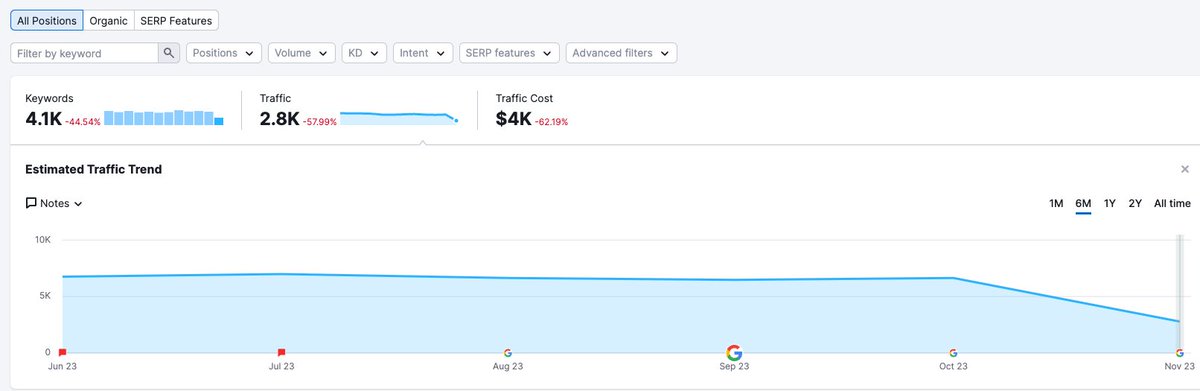
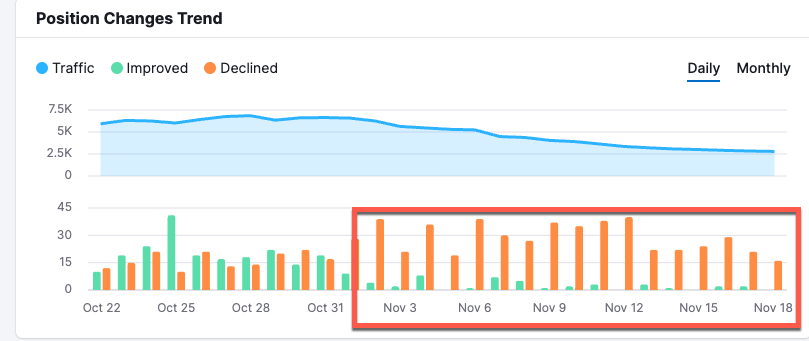
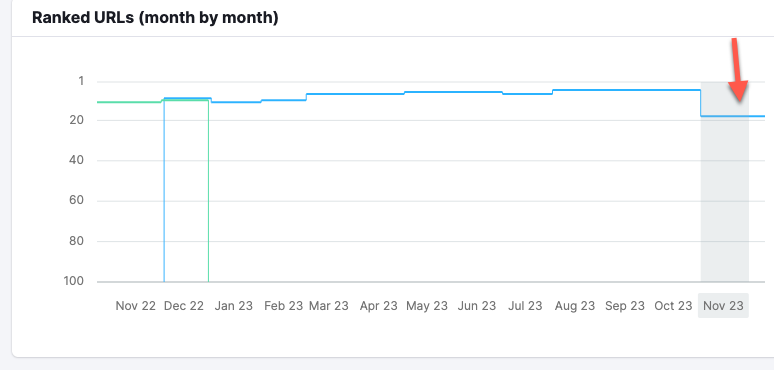
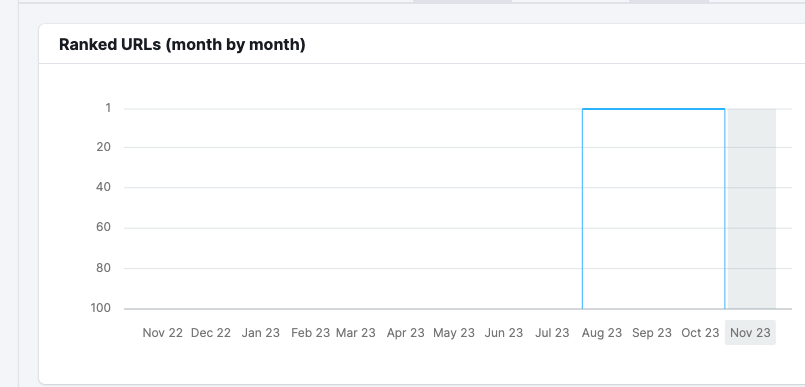
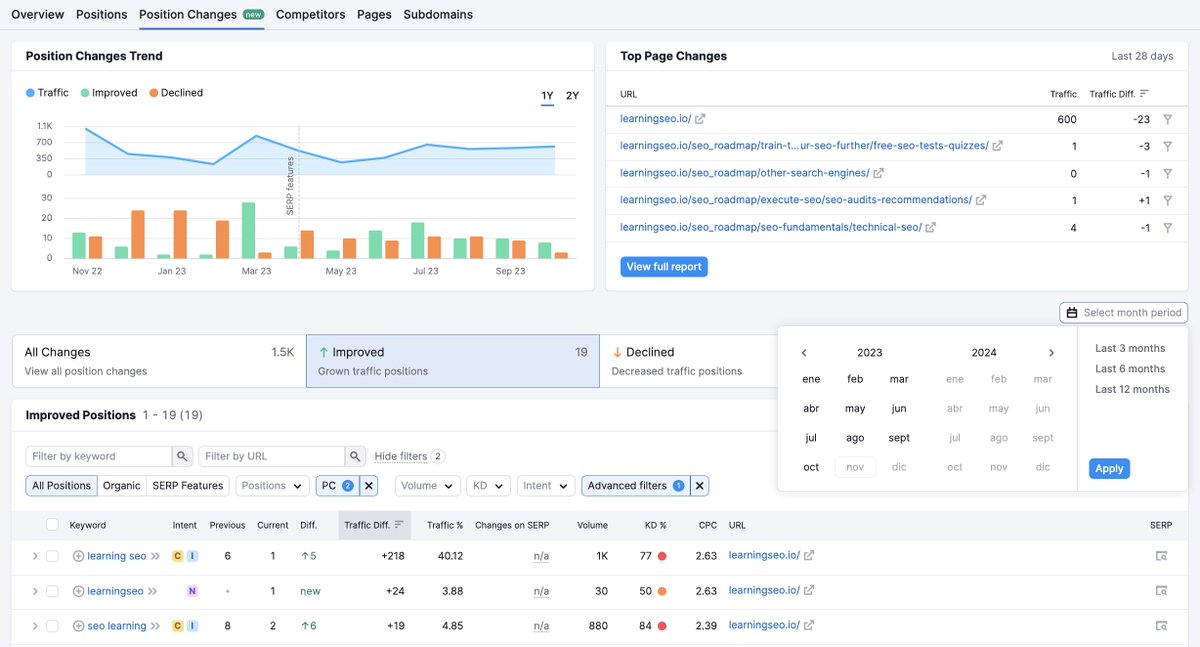
Sometimes you need to go deeper beyond "site level trends" to see how the algo is relating to your site. If we look at the overall performance it looks like the site 1st got hit with the Nov. core update. (1st image) Clearly you can see the KW declines kick in with the Nov Core Update (Image 2) [Also shoutout to @semrush - love the new graph here - very helpful) However, yes there are KWs that lost with the Nov update (thus far) - (Image 3) But if you poke around you can find patterns the aggregate data won't show you. In this case - a TON of KWs that were "tested" at higher ranking positions during the August core update that saw reversals with the latest update I think those sorts of patterns are significant in telling the wider story of the site and seeing where the issues really are!
Mordy Oberstein tweet mediaMordy Oberstein tweet mediaMordy Oberstein tweet mediaMordy Oberstein tweet media
English
2
3
15
3.5K
Walter Blain Herman retweetledi
Aleyda Solis 🕊️
Aleyda Solis 🕊️@aleyda·
Whoa! @semrush has a new Position Changes report that is SO much better than the previous one 👏 It allows you to select any monthly periods, for which you can see changes in positions, search features and traffic for any given query 👌 quite handy for Core Update analysis!
Aleyda Solis 🕊️ tweet media
English
5
18
129
19.2K
Walter Blain Herman retweetledi
Charly Wargnier
Charly Wargnier@DataChaz·
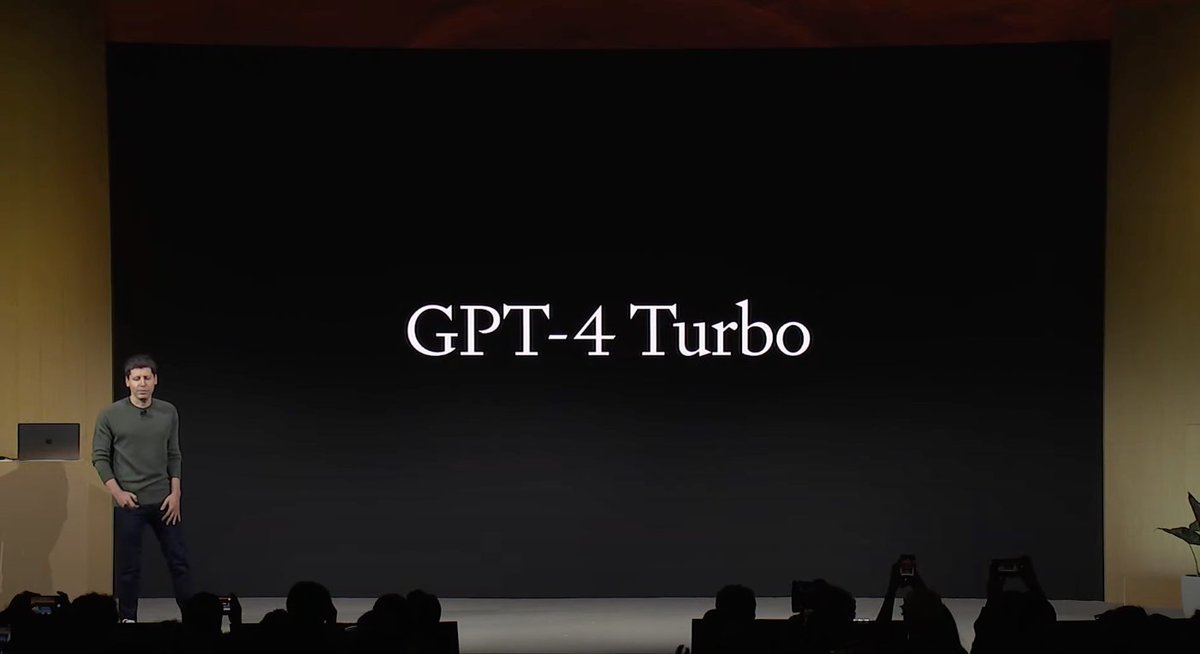
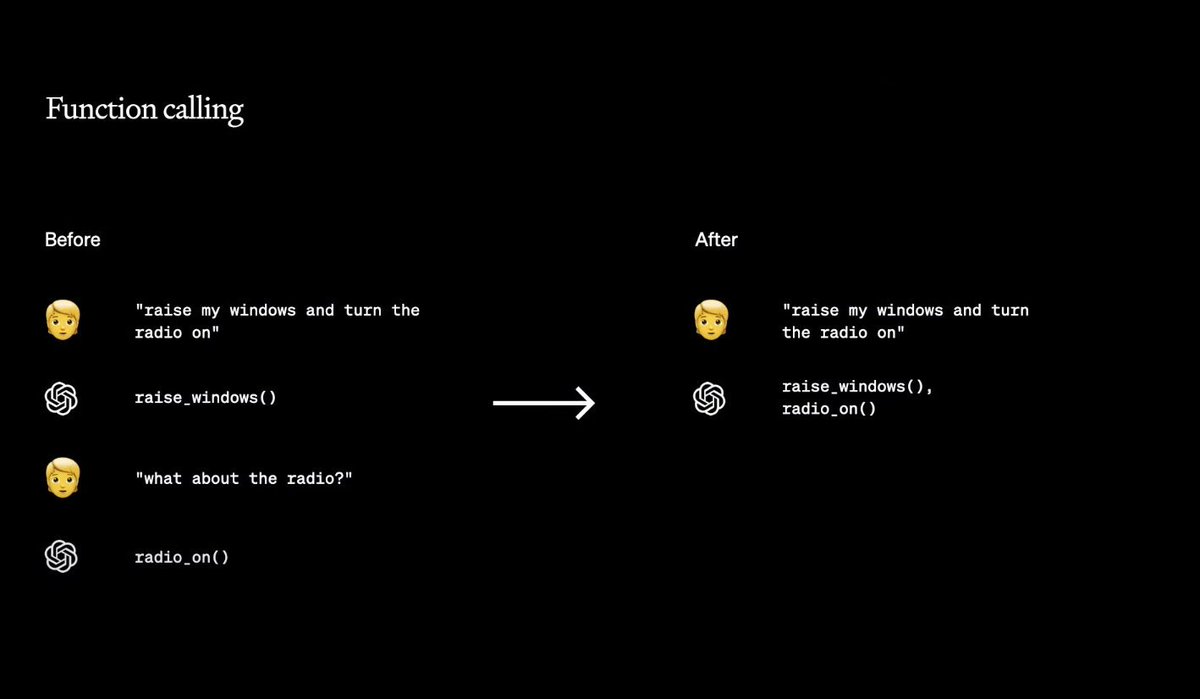
GPT4 Turbo is ~3x cheaper than GPT4! 🤯 - OpenAI's longest ever Context length: 128k. - "GPT4 Turbo is a smarter model than GPT4" (GPT4.5 confirmed!) - Better JSON/function calling. - Higher Rate Limits - 2x tokens per minute, request raises in account settings. - Knowledge: built in RAG and April 2023 cutoff. - Customization: GPT3 16k, GPT4 finetuning, Custom Models services. - Dall-E 3, GPT4-V, and TTS model all in API today. - Whisper V3 open sourced (coming to API). - GPT4 Turbo is approximately 3 times cheaper than GPT4. #OpenAIDevDay
Charly Wargnier tweet mediaCharly Wargnier tweet media
English
17
46
311
76K
Walter Blain Herman retweetledi
Aidan LaPorta
Aidan LaPorta@AidanLaPorta69·
Going to sleep knowing my team employs Nick Nurse, Joel Embiid, Tyrese Maxey, and Kelly Oubre
Aidan LaPorta tweet media
English
8
57
1.3K
46.4K
Walter Blain Herman retweetledi
Cyrus SEO
Cyrus SEO@CyrusShepard·
It here! The DOJ finally released "Life of a Click" - explaining how Google used clicks for ranking 3 Pillars of Ranking: • On-page • Links+Anchors • User-interaction 1/5 🧵
Cyrus SEO tweet media
English
16
132
521
135.7K
Walter Blain Herman retweetledi
Brodie Clark
Brodie Clark@brodieseo·
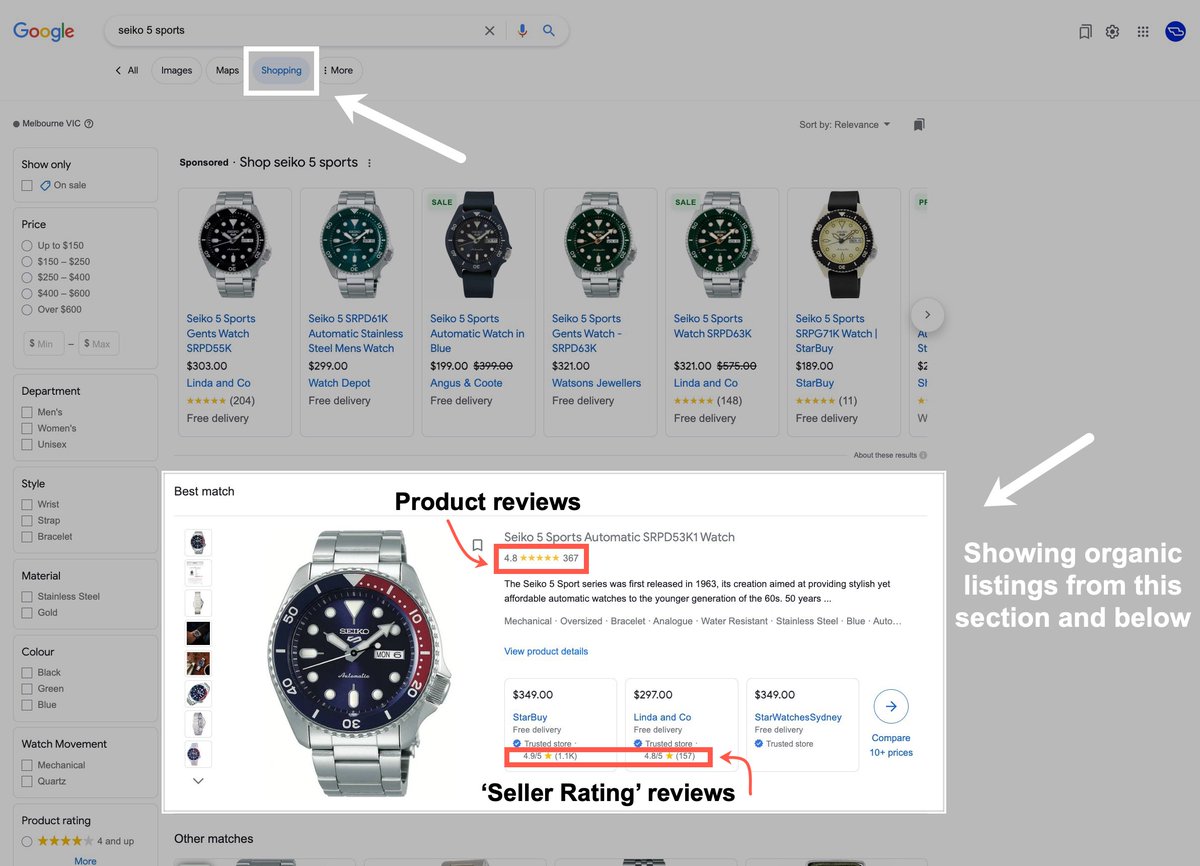
If you're working on eCommerce SEO, you must become an evangelist for pushing for product reviews (but there's a catch). A very underrated traffic and sales driver is within the 'Shopping' tab. Within this section of Google, the majority of the listings are organic, which wasn't always the case. Toward the end of 2020 Google expanded their free product listings program to be available within the Shopping tab, now with global application. At the moment, the best way to track performance within unpaid listings within the Shopping tab is within Merchant Center (with recent connection via GSC). You're able to see this data in the Performance report and selecting 'Organic'. What many eCommerce SEOs are unaware of is the impact that your Seller Rating can have on performance within the Shopping tab. This is often a responsibility left to the Paid Ads department, but that responsibility should be shared. In fact, Google has now started to show Seller Ratings for standard organic listings on mobile by default in the US, with there also being recent testing in desktop search results. This can have a noticeable impact on your CTR. While collecting both 'product' and 'Seller Rating' reviews are important, I find that the Seller Rating is one that is often neglected and can make a big difference to performance in the unpaid listings. To check your Seller Rating, add your domain name: https://www(dot)google(dot)com/shopping/ratings/account/lookup?q={yourwebsite} If you're an eCommerce site and you don't have any Seller Rating reviews, then you need to get to work. The important step here is how reviews are requested and saved, and whether you're using a supported provider. For more details, make sure that you're familiar with Google's latest guidance: support.google.com/google-ads/ans… #seo #searchengineoptimization #google
Brodie Clark tweet media
English
8
55
214
37.6K
Walter Blain Herman retweetledi
Himanshu Sharma
Himanshu Sharma@analyticsnerd·
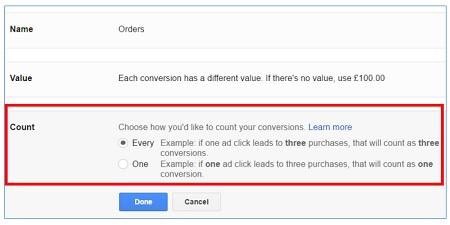
Difference between Google Ads and Google Analytics Conversion Tracking. If you deal with #GA4 and Google Ads then this article is a must read. It will help you understand why certain conversions are recorded in GA4 and not in Google Ads and vice versa. Any why you would be better off using the native Google Ads conversion tracking rather than importing conversion data from GA4. optimizesmart.com/difference-bet…
Himanshu Sharma tweet media
English
3
9
35
3.5K