
add retweetledi
add
8.7K posts


add retweetledi

add retweetledi



add retweetledi


add retweetledi


iPhone 改定位,以前要么连电脑,要么折腾越狱。
现在有个新方案,直接在手机上就能搞定苹果的网络定位。
最近 GitHub 上有个很火的开源项目 wloc,通过修改 Apple 的 WiFi/基站网络定位结果,实现 iPhone 网络定位切换到世界各地。
GitHub:github.com/Yu9191/wloc

中文

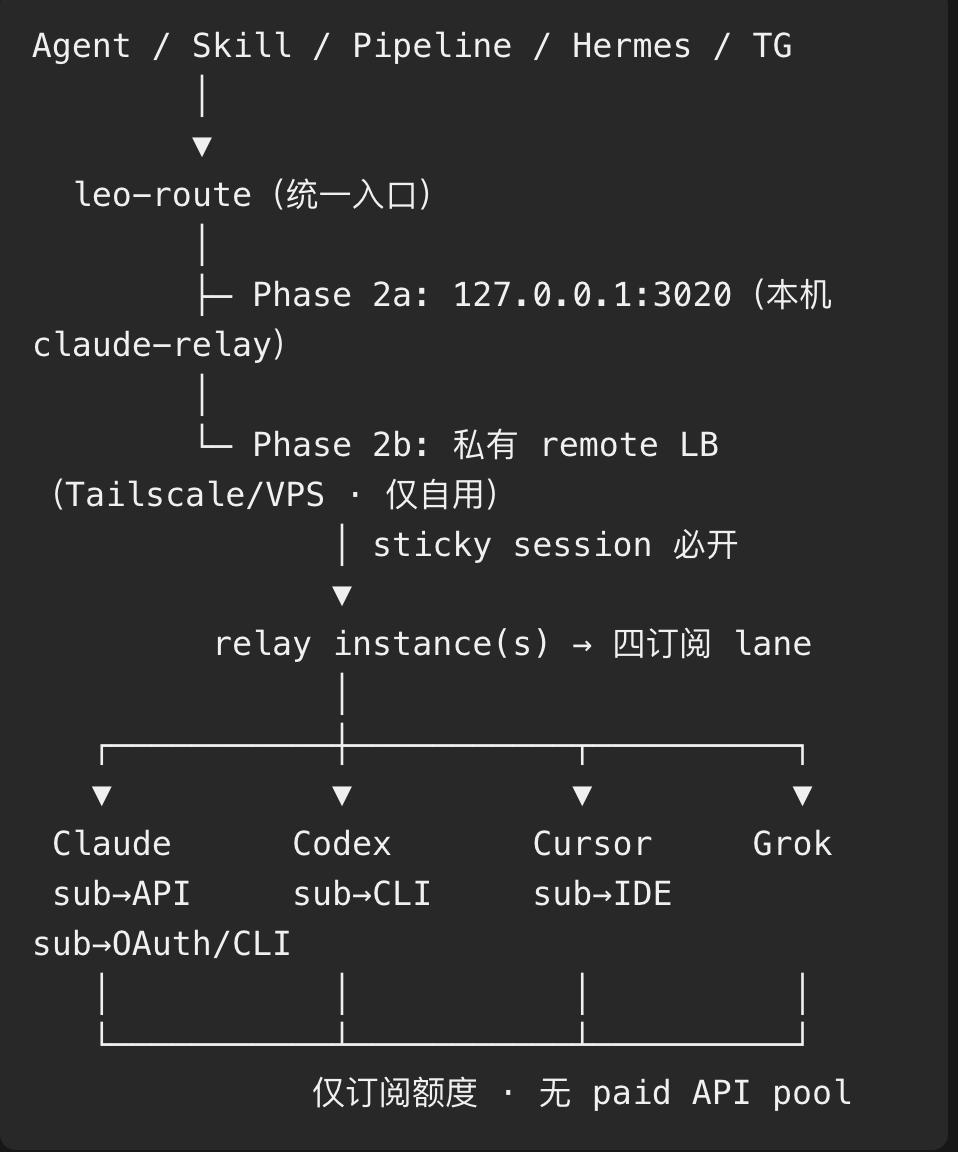
为了解决这个问题,准备在VPS 上采集“docker-compose + LiteLLM + Postgres + Caddy 自动 HTTPS”搭建一套仅供自已使用的中转站,把 OpenAI、Gemini(Google One会员送的)、ollama Cloud 订阅集中在一起。同时为了减少被封的可能,使用 Tailscalle 把所有设备组成一域,统一出口出去。思路来自某位推友的方案(截图)。
佐仔@huangjinbo
我越来越不喜欢使用 AI 中转站了。并不是说它们不好,只是这段时间用了不少之后,感觉稳定性始终是最大问题。先不谈模型有没有掺水,光是频繁波动、报错或不可用,就很难让人长期依赖。对 AI 服务来说,能力固然重要,但稳定可用才是持续使用的基础。
中文

For the next tutorial, I will teach you how to build a collaborative browser automation workflow builder with endless possibilities - here i instructed the agent to configure a new Porsche 911 and send me an email with the configuration link 😎
English
add retweetledi





Google AI Studio 正式开放了每分钟 100 万 token 的免费额度。开发者现在可以直接调用顶级的算力资源,无需绑定信用卡,也不需要支付任何月费。通过这种方式,你可以零成本获取原本价值数千美元的计算能力。如果你开发高并发、长上下文的项目,可以按以下路径接入:
1. 直接访问 Google AI Studio 平台。2. 获取官方 API Key。3. 在代码中配置请求频率(Rate Limit)以适配每分钟百万级的调用规模。这种无需订阅即可使用的策略,极大降低了大规模模型应用的开发门槛。

中文
add retweetledi

OpenClaw is now on iOS + Android 🦞
📱 Native mobile apps, finally
💬 Agents in your pocket
🔔 Channels, tasks, replies on the go
Run agents from wherever your thumbs are.
iOS: apps.apple.com/us/app/opencla…
Android: play.google.com/store/apps/det…
English

哈哈,早上看到 @YuLin807 发帖老外们做出类似漂亮的动图,我尝试了下用动图总结下我这个文章的项目,没想到很快就出来了
QingYue快来看看,效果可以不,可以我就整个skill 开源出来🐶
GIF
岚叔@LufzzLiz
中文
add retweetledi

everyone is talking about agent loops, harnesses, and self-evolving agents.
but almost no one is talking about the actual hard part:
you cannot run a company on one giant agent with every tool, every file, and no accountability. that's not autonomy. that's a fog machine.
here's how we're building an agent company OS inside Matrix.
—
the stack:
Workspace Brain
→ Matrix Runtime Orchestrator
→ Department Verticals
→ Department Lead Agents
→ Worker Agent Pool
→ Proof / Check-in Loop
Matrix is not a chatbot. it's an operating system for autonomous work.
—
the workspace brain is the company boundary.
it gets loaded with the things a real company actually runs on:
→ product docs
→ codebase context
→ chats, files, goals
→ operating rules
→ prior runs + examples of good work
→ approvals, memory, skills
this isn't "context." it's the shared operating layer. it knows what the company knows, what it's trying to do, who owns what, what good looks like, and what must be proven before work counts as done.
—
on top sits the Matrix Runtime. it coordinates wake, cron, department messages, OKR state, permissions, worker dispatch, proof ledger, memory updates.
under the runtime, work is organized into departments.
a department is not a chat thread. it's a long-running agent with identity, memory, skills, goals, history, tool boundaries, taste, and accountability.
Founder Strategy. Product Engineering. Growth. Ops. Research.
each one has a lead agent that decides what happens, reads the relevant Memory Skill, breaks work into scoped tasks, and picks the right execution seat.
—
sometimes that seat is a native Matrix worker.
sometimes Codex.
sometimes Claude Code.
sometimes a browser / computer automation worker.
the point is not "one model does everything." the point is:
→ the right agent
→ with the right context
→ inside the right boundary
→ using the right tools
→ with a clear definition of done
—
this is why scoped workers matter.
a "do everything" agent is too vague. but:
→ a release worker with repo context, tests, and approval gates → very good
→ a Codex worker scoped to one patch and one validation path → very good
→ a Claude Code worker doing deep repo analysis → very good
→ a browser worker with a specific flow and proof requirement → very good
narrow scope reduces drift. Memory Skill keeps narrow agents from going blind. proof prevents fast output from pretending to be progress.
—
that is the loop:
Workspace Brain → Department Lead → Worker → Artifact → Proof → Check-in → Memory Skill update
every cycle, the company gets smarter. that's the real self-evolution. not a single agent rewriting its own prompt in a void — but a whole org compounding through proof.
—
each workspace is an isolated agent company. its own brain, departments, memory, workers, proof ledger.
workspaces can talk when needed. but context should not bleed by default.
isolation is not a limitation. it's what makes the system usable.
—
once a department pattern works, you fork the pattern — not the raw context. you still customize memory, examples, approval gates, tools, voice, definition of done.
but you're not starting from zero. you might already have 70% of the OS for that kind of work.
—
what this actually changes:
a small team of strong operators can now run surfaces that used to require entire departments.
but only if the agents are actually good. and good agents don't come from connecting more tools. they come from source material, taste, iteration, narrow scope, workflow design, proof, memory, and human judgment.
vague agents just create vague output faster.
Matrix is our attempt to build the opposite:
an agent company OS where autonomous work has structure, memory, ownership, and proof.
the loop is the product.

English
add retweetledi

this is f*cking dangerous
someone just open sourced the entire "LOOP ENGINEERING" framework for free
build a hedge fund printing alpha 24/7 by feeding it into claude code with my article below
bookmark before someone takes it down

Roan@RohOnChain
English
add retweetledi


Nobody saw this coming
Japan is now officially in the AI race
and they’ve released a model that performs on par with Claude Mythos
Sakana AI@SakanaAILabs
Introducing Sakana Fugu: A full multi-agent orchestration system accessible via a single model API. Our ‘Fugu Ultra’ model matches the performance of Fable and Mythos, delivering frontier capability without the risk of export controls. Try it: sakana.ai/fugu 🐡
English