

John Saviour
270 posts

John Saviour
@bigjohnsaviour
Investor | Lawyer @onchaintermapp team
Katılım Eylül 2013
4K Takip Edilen759 Takipçiler

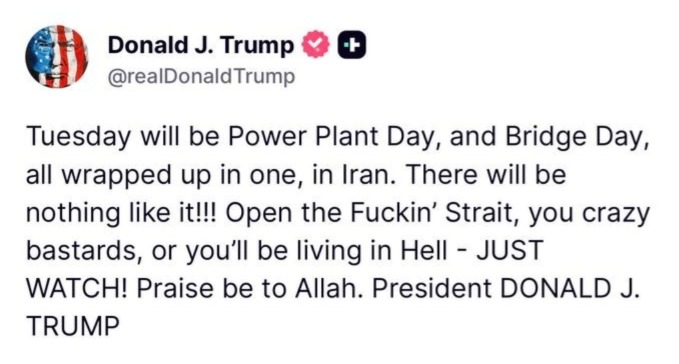

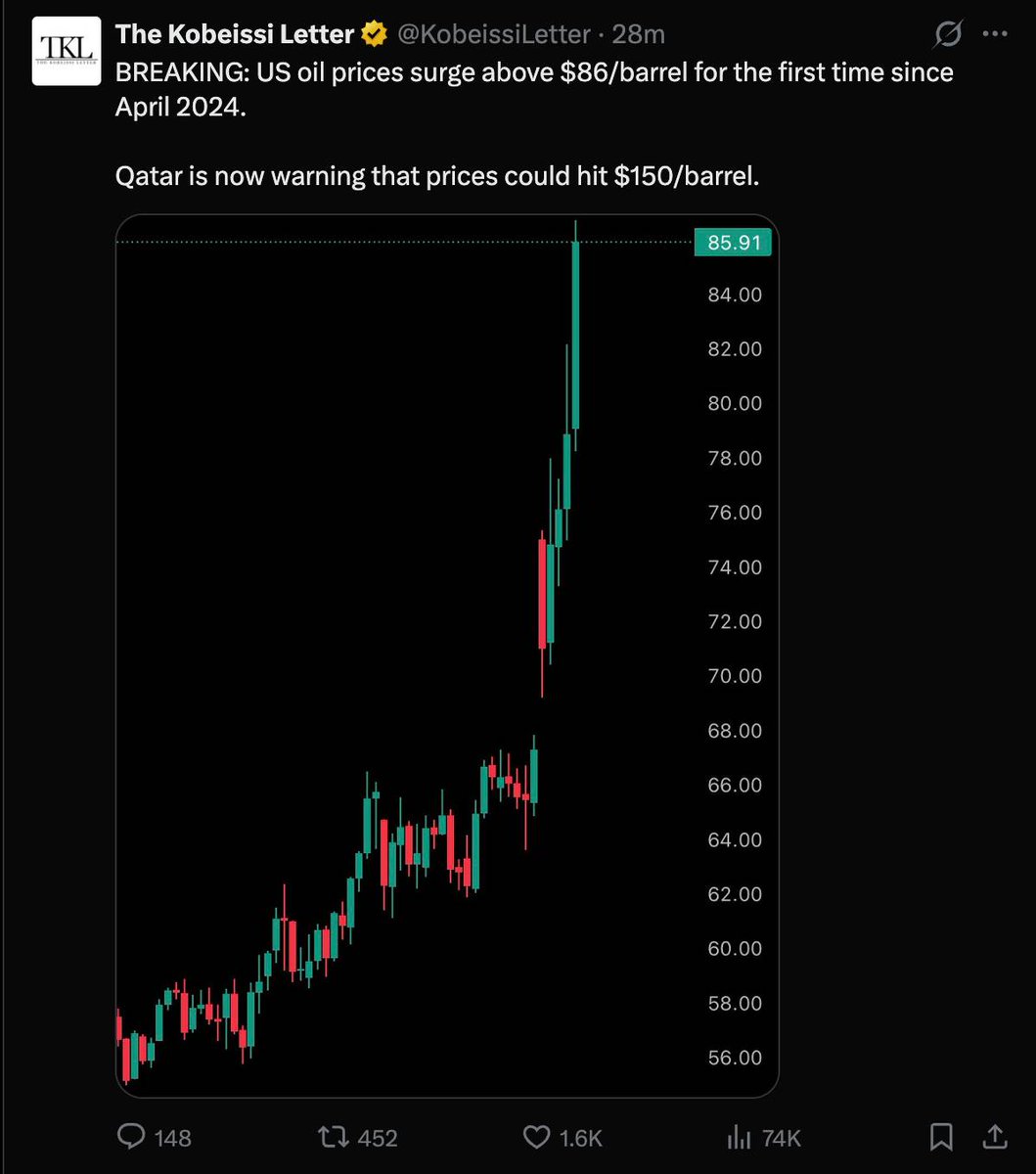
Watch this if you’re trading oil
Jaymes R.@jaymesrosenthal
The $135 Million Oil Short HAPPENING NOW That's Punishing Retail Traders
English
@QuintenFrancois Yes it's possible. Bitcoin is not a speculative asset anymore, it's a store of value
English

Imagine we have to wait until 2029 just to see $160,000
Beardo@BeardoTrader
Bitcoin. Could it really be that simple?
English
@Geiger_Capital 48 hours hiding in Iranian mountains while the IRGC hunts you, and your boys keep air cover 24/7, that's loyalty
English
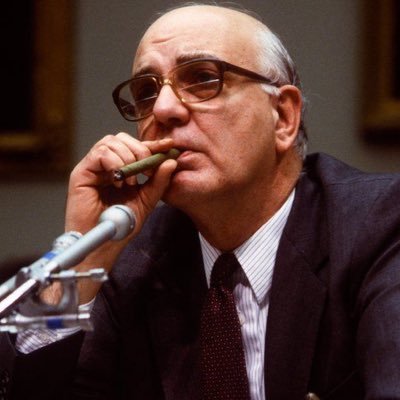
Shot down on Good Friday.
Rescued early on Easter Sunday.
Hollywood couldn’t write it… 🇺🇸
Geiger Capital@Geiger_Capital
This movie is going to be insane… American WSO ejects over Iran and spends ~48 hours hiding in the mountains while the IRGC hunts him. We cover him with 24/7 air support until US Special Ops can get to him, only for their Plan A planes to get stuck on the rural airstrip we setup deep in Iranian territory. They blow up the planes so Iran can’t recover them, fly in 3 new ones for extract, and still manage to get everyone home alive. No man left behind. 🇺🇸
English


TODAY: Michael Saylor announces the Bitcoin four-year cycle is "dead."
English
@AshCrypto It's just a matter of time until we see BTC back up
English

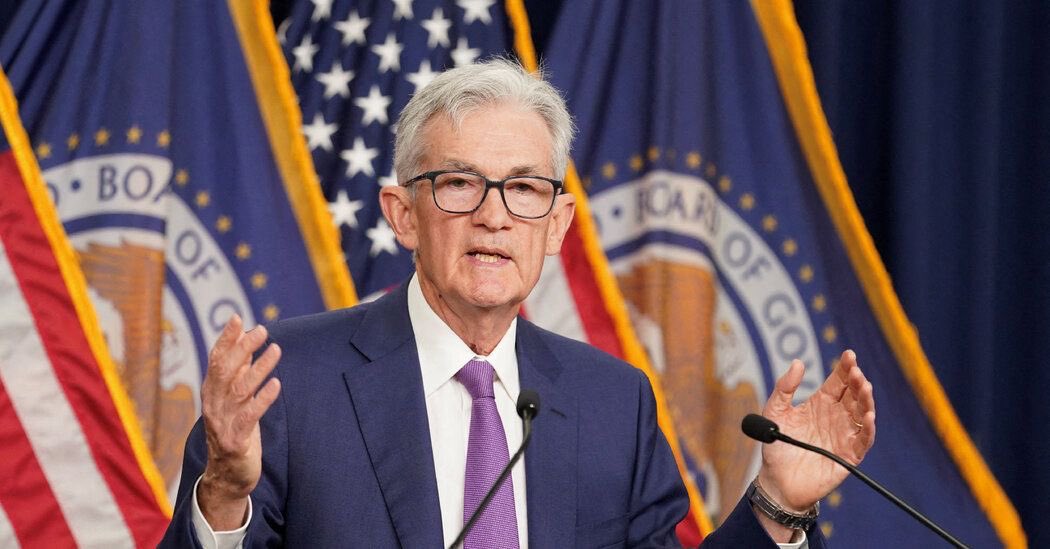
🇺🇸 Fed bought $14.7 billion in T-bills this week.
🇺🇸 Treasury bought $15 billion in T-bills this week.
🇨🇳 China injected ¥1.3 trillion in liquidity this week.
🇺🇸 Treasury injected $92 billion into the economy this week.
Liquidity is flowing into the markets again, and the only thing stopping a pump is the US-Iran war.
If a ceasefire happens, this could be bullish for the markets.

English

John Saviour retweetledi

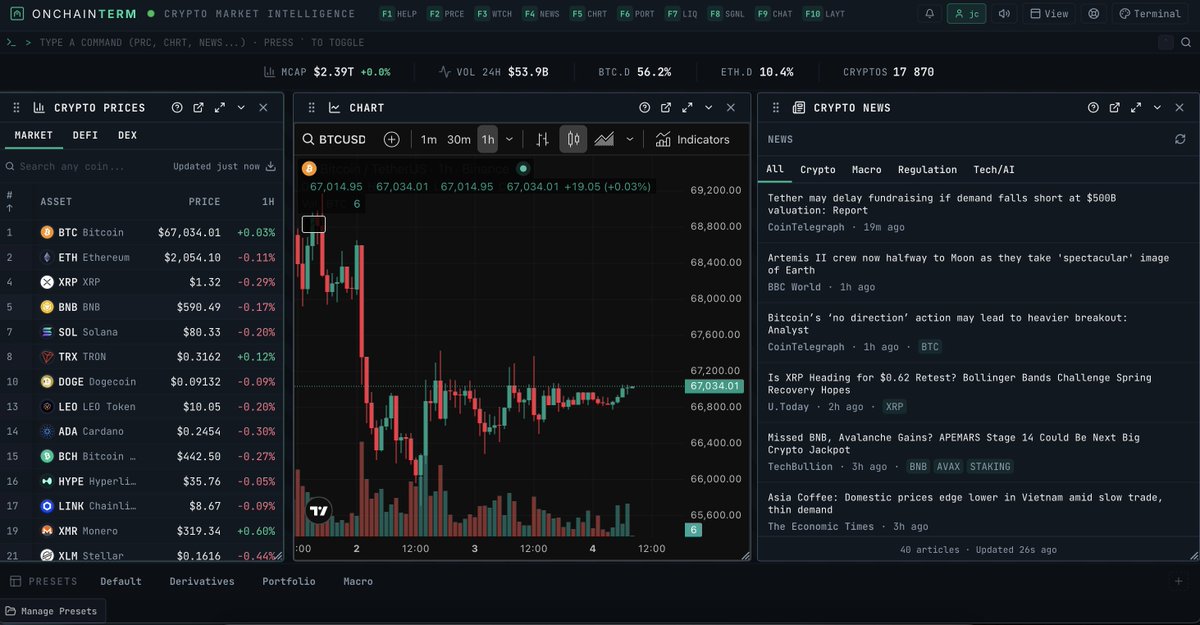
Everyone is turning bearish on BTC.
This is exactly when the market squeezes.
English

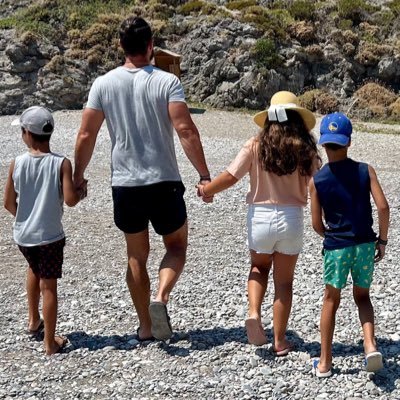
I purchase more land, and I am growing the capabilities.
This isn’t finished, we will change the olive oil world.
Sack of Potatoes 🥔@SpudCannon3000
@realpeteyb123 I remember you said you were gonna start an olive oil operation. You selling any yet?
English


I am recruiting an army of able-bodied warriors to defeat degenerate scum across the world. If you would like to join me in battles like this in your home city, DM me your credentials.
Tyler Oliveira@tyleraloevera
Fighting Scammers in Paris! (fart spray gun 🔫 + pepper spray + violence)
English

IMPORTANT ANNOUNCEMENT ON MILES
Miles has been detained by Saudi intelligence on false charges from an American who has created several fake reports through a bribed, corrupt journalist in order to make money on Polymarket.
We are aware that someone who bet on the “no” option on polymarket has bribed a journalist from polymarket to put out fake news about Miles, manipulating the Saudi police so they would detain him to investigate potential terrorist ties. As we know, Miles has no criminal record in England and has never been convicted of anything terrorist related, otherwise the UK, US, EU etc authorities would have detained Miles long ago.
However, the Saudi police obviously have taken this rather seriously. Some people have put Miles in danger and misfortune so they can make money off him failing his fast.
He has also spent two weeks without seeing sunlight and remains in custody.
His communication is limited but he will try to give updates on his situation as often as he can.
Please pray for him.
English
@SilbergleitJr The problem is the cooked books, cvna will report record profits lol
English

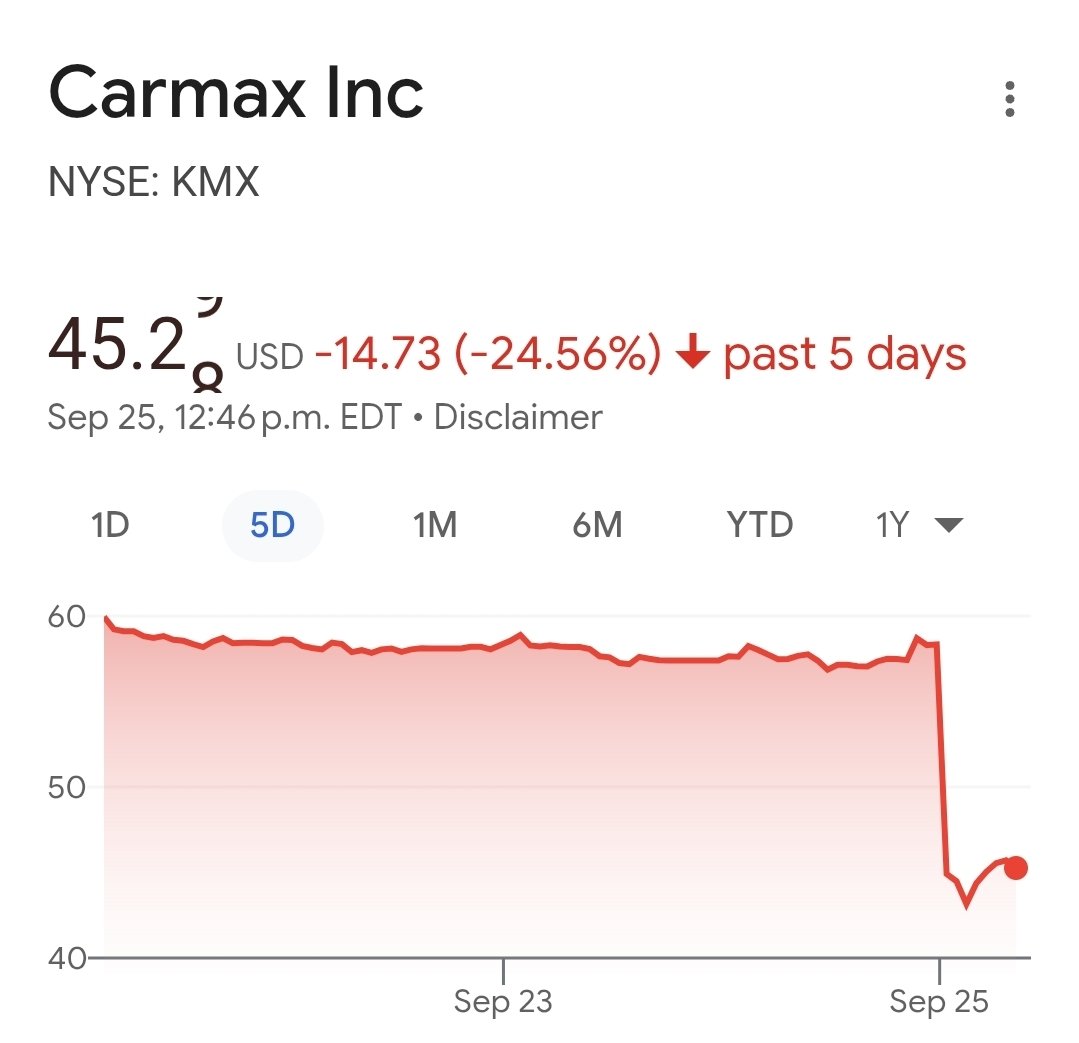
CarMax $KMX, the largest used car reseller in the US, breached its 52-week low after disappointing Q2 results due to lower retail sales and higher loan loss provisions.
There is absolutely no chance that Carvana $CVNA is thriving in the current environment given the deterioration in used car reselling market.
Once again, I'm reiterating my price target of $37 on Carvana.

English