TejasBill

3.8K posts

TejasBill

TejasBill

@bill_tejas

Katılım Ocak 2020
198 Takip Edilen100 Takipçiler
TejasBill
TejasBill@bill_tejas·
Art@ZarkFiles

Texas voter IDs are integers. Whole numbers. No decimals, ever. The Bexar County primary poll book contained 4,110 IDs like this: 1,253,115,467.79993 That alone proves something fishy. But the math goes further — and it’s airtight. When those 4,110 records are sorted in order, the spacing between every consecutive pair is 22,084.82189 — the same non-integer value, repeating 4,109 times. That uniformity is already impossible by accident. Then: 90,746,533.16339 ÷ 22,084.82189 = 4,109.0000 The total span of the sequence, divided by the gap, returns a perfect integer with zero remainder. A randomly generated or accidentally corrupted sequence cannot do that. Only deliberate computation produces that result. Every one of these fractional IDs was created after polls closed — and we can prove it from the IDs themselves. The gap value of 22,084.82189 was derived from the alphabetical positions of specific voters within the completed check-in list. Those positions cannot be known until every voter has checked in and the full list is in hand. The fractional IDs could not have existed before the genuine list existed. They are timestamped by their own construction. The records were not random fabrications. Each was anchored to a real registered voter. 735 real people each had 5 or 6 synthetic duplicates generated in their name — up to 4,110 fraudulent ballot opportunities in a single county primary, executed by someone with back-end write access to the poll book system. The attack vector was an internet-accessible poll book platform reachable from anywhere in the world with a valid username and password. No VPN. No hardware credential. No cryptographic verification on the export that produces the official check-in record. The post-election export workflow contains no hash check and no independent audit mechanism. Anyone with valid credentials could alter the official record for any participating jurisdiction remotely, at any time. That access was used. The fractional ID components functioned as a precise machine-executable deletion key — invisible to poll workers under normal display settings, but recoverable by a single database query after the fact. The injection itself broke the chain of custody. The file was then replaced before formal examination could occur, compounding an evidentiary void that was already irreversible. Officials attributed the anomalies to an export error or electronic glitch. Neither explanation survives contact with the data. A glitch does not solve a two-equation integer system, sort 735 voters alphabetically, derive sequence endpoints from algebraic positions within that sort, and optimize its output for numerical elegance. Glitches do not have specifications. This one did. The fraud in this election is proven. The scale of its impact cannot be determined from any currently available record. An election whose outcome cannot be separated from an unknown quantity of fraudulent ballots cannot be legally certified The same platform operates across 29 states. The Bexar County file was caught only because it was captured during the active window before deletion. A more careful cleanup leaves nothing. The absence of detected anomalies in other jurisdictions is not evidence of integrity — it is evidence that no one was looking at the right moment. This is not a software reliability problem. Unreliable software fails randomly. This algorithm solved a two-equation integer system, sorted 735 names alphabetically, derived its sequence endpoints from algebraic positions within that sort, and deliberately discarded six real voter records in order to produce output whose internal quantities share a common factor of 15. That is a specification. Glitches do not optimize for numerical elegance. The conclusion is the same whether you approach it from this specific case or from my multi-state database analysis published in the Journal of Information Warfare earlier this week: electronic poll book and voter registration systems built on internet-accessible architectures with no cryptographic audit trail cannot be trusted. Not this platform. Not any platform built on the same design. Partial fixes and software patches do not solve the problem when the attack surface is the architecture itself. The only remedy that eliminates rather than mitigates the risk is full replacement — paper poll books, hand counts conducted publicly at the precinct, results posted before anything leaves the building. A paper system cannot be altered from a laptop at 11pm by someone with a stolen password. Peer-reviewed multi-state analysis: Journal of Information Warfare, 2026, 25.2 If you are in one of the 29 states, this concerns you.


English
0
0
0
18
Art
Art@ZarkFiles·
@_MyDude_ NY's voter database has a secret mathematical pattern built into the ID numbers — one that no legitimate system needs. Someone designed it in 2007 and it's still running. The pattern lets you sort and identify voters in ways the public was never supposed to notice. We noticed.
English
5
46
199
5.7K
Art
Art@ZarkFiles·
New York's voter ID system contains a hidden algorithm. I reverse-engineered it. The complete solution is in this thread. 🧵
English
40
213
542
29.4K
TejasBill
TejasBill@bill_tejas·
Art@ZarkFiles

Texas voter IDs are integers. Whole numbers. No decimals, ever. The Bexar County primary poll book contained 4,110 IDs like this: 1,253,115,467.79993 That alone proves something fishy. But the math goes further — and it’s airtight. When those 4,110 records are sorted in order, the spacing between every consecutive pair is 22,084.82189 — the same non-integer value, repeating 4,109 times. That uniformity is already impossible by accident. Then: 90,746,533.16339 ÷ 22,084.82189 = 4,109.0000 The total span of the sequence, divided by the gap, returns a perfect integer with zero remainder. A randomly generated or accidentally corrupted sequence cannot do that. Only deliberate computation produces that result. Every one of these fractional IDs was created after polls closed — and we can prove it from the IDs themselves. The gap value of 22,084.82189 was derived from the alphabetical positions of specific voters within the completed check-in list. Those positions cannot be known until every voter has checked in and the full list is in hand. The fractional IDs could not have existed before the genuine list existed. They are timestamped by their own construction. The records were not random fabrications. Each was anchored to a real registered voter. 735 real people each had 5 or 6 synthetic duplicates generated in their name — up to 4,110 fraudulent ballot opportunities in a single county primary, executed by someone with back-end write access to the poll book system. The attack vector was an internet-accessible poll book platform reachable from anywhere in the world with a valid username and password. No VPN. No hardware credential. No cryptographic verification on the export that produces the official check-in record. The post-election export workflow contains no hash check and no independent audit mechanism. Anyone with valid credentials could alter the official record for any participating jurisdiction remotely, at any time. That access was used. The fractional ID components functioned as a precise machine-executable deletion key — invisible to poll workers under normal display settings, but recoverable by a single database query after the fact. The injection itself broke the chain of custody. The file was then replaced before formal examination could occur, compounding an evidentiary void that was already irreversible. Officials attributed the anomalies to an export error or electronic glitch. Neither explanation survives contact with the data. A glitch does not solve a two-equation integer system, sort 735 voters alphabetically, derive sequence endpoints from algebraic positions within that sort, and optimize its output for numerical elegance. Glitches do not have specifications. This one did. The fraud in this election is proven. The scale of its impact cannot be determined from any currently available record. An election whose outcome cannot be separated from an unknown quantity of fraudulent ballots cannot be legally certified The same platform operates across 29 states. The Bexar County file was caught only because it was captured during the active window before deletion. A more careful cleanup leaves nothing. The absence of detected anomalies in other jurisdictions is not evidence of integrity — it is evidence that no one was looking at the right moment. This is not a software reliability problem. Unreliable software fails randomly. This algorithm solved a two-equation integer system, sorted 735 names alphabetically, derived its sequence endpoints from algebraic positions within that sort, and deliberately discarded six real voter records in order to produce output whose internal quantities share a common factor of 15. That is a specification. Glitches do not optimize for numerical elegance. The conclusion is the same whether you approach it from this specific case or from my multi-state database analysis published in the Journal of Information Warfare earlier this week: electronic poll book and voter registration systems built on internet-accessible architectures with no cryptographic audit trail cannot be trusted. Not this platform. Not any platform built on the same design. Partial fixes and software patches do not solve the problem when the attack surface is the architecture itself. The only remedy that eliminates rather than mitigates the risk is full replacement — paper poll books, hand counts conducted publicly at the precinct, results posted before anything leaves the building. A paper system cannot be altered from a laptop at 11pm by someone with a stolen password. Peer-reviewed multi-state analysis: Journal of Information Warfare, 2026, 25.2 If you are in one of the 29 states, this concerns you.

English
0
0
0
5
TejasBill retweetledi
Art
Art@ZarkFiles·
Texas voter IDs are integers. Whole numbers. No decimals, ever. The Bexar County primary poll book contained 4,110 IDs like this: 1,253,115,467.79993 That alone proves something fishy. But the math goes further — and it’s airtight. When those 4,110 records are sorted in order, the spacing between every consecutive pair is 22,084.82189 — the same non-integer value, repeating 4,109 times. That uniformity is already impossible by accident. Then: 90,746,533.16339 ÷ 22,084.82189 = 4,109.0000 The total span of the sequence, divided by the gap, returns a perfect integer with zero remainder. A randomly generated or accidentally corrupted sequence cannot do that. Only deliberate computation produces that result. Every one of these fractional IDs was created after polls closed — and we can prove it from the IDs themselves. The gap value of 22,084.82189 was derived from the alphabetical positions of specific voters within the completed check-in list. Those positions cannot be known until every voter has checked in and the full list is in hand. The fractional IDs could not have existed before the genuine list existed. They are timestamped by their own construction. The records were not random fabrications. Each was anchored to a real registered voter. 735 real people each had 5 or 6 synthetic duplicates generated in their name — up to 4,110 fraudulent ballot opportunities in a single county primary, executed by someone with back-end write access to the poll book system. The attack vector was an internet-accessible poll book platform reachable from anywhere in the world with a valid username and password. No VPN. No hardware credential. No cryptographic verification on the export that produces the official check-in record. The post-election export workflow contains no hash check and no independent audit mechanism. Anyone with valid credentials could alter the official record for any participating jurisdiction remotely, at any time. That access was used. The fractional ID components functioned as a precise machine-executable deletion key — invisible to poll workers under normal display settings, but recoverable by a single database query after the fact. The injection itself broke the chain of custody. The file was then replaced before formal examination could occur, compounding an evidentiary void that was already irreversible. Officials attributed the anomalies to an export error or electronic glitch. Neither explanation survives contact with the data. A glitch does not solve a two-equation integer system, sort 735 voters alphabetically, derive sequence endpoints from algebraic positions within that sort, and optimize its output for numerical elegance. Glitches do not have specifications. This one did. The fraud in this election is proven. The scale of its impact cannot be determined from any currently available record. An election whose outcome cannot be separated from an unknown quantity of fraudulent ballots cannot be legally certified The same platform operates across 29 states. The Bexar County file was caught only because it was captured during the active window before deletion. A more careful cleanup leaves nothing. The absence of detected anomalies in other jurisdictions is not evidence of integrity — it is evidence that no one was looking at the right moment. This is not a software reliability problem. Unreliable software fails randomly. This algorithm solved a two-equation integer system, sorted 735 names alphabetically, derived its sequence endpoints from algebraic positions within that sort, and deliberately discarded six real voter records in order to produce output whose internal quantities share a common factor of 15. That is a specification. Glitches do not optimize for numerical elegance. The conclusion is the same whether you approach it from this specific case or from my multi-state database analysis published in the Journal of Information Warfare earlier this week: electronic poll book and voter registration systems built on internet-accessible architectures with no cryptographic audit trail cannot be trusted. Not this platform. Not any platform built on the same design. Partial fixes and software patches do not solve the problem when the attack surface is the architecture itself. The only remedy that eliminates rather than mitigates the risk is full replacement — paper poll books, hand counts conducted publicly at the precinct, results posted before anything leaves the building. A paper system cannot be altered from a laptop at 11pm by someone with a stolen password. Peer-reviewed multi-state analysis: Journal of Information Warfare, 2026, 25.2 If you are in one of the 29 states, this concerns you.

Art tweet media
English
246
2.4K
5.3K
94.1K
JayRock
JayRock@JayRock_QueenCi·
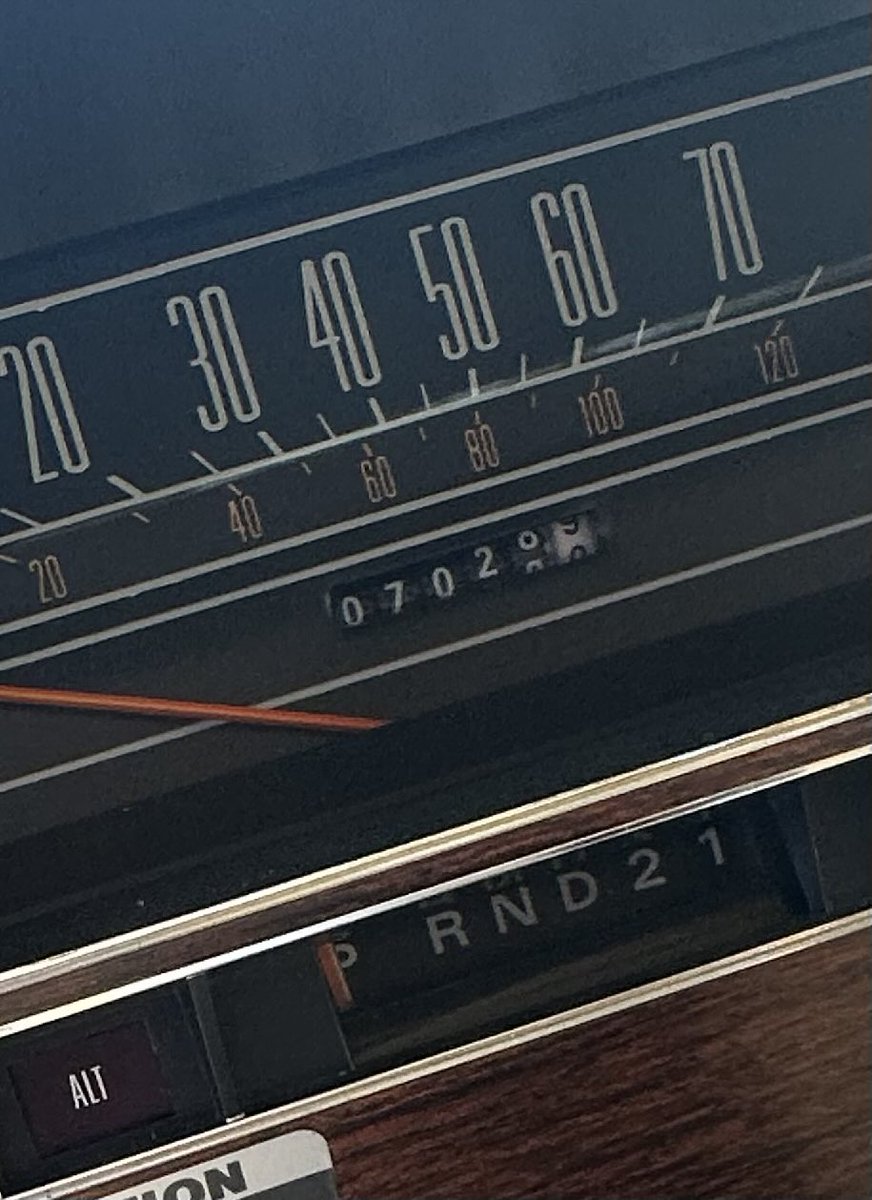
I just bought a 1978 Ford LTD for almost nothing from my wife’s grandfather, who just wanted to be rid of it. It’s only got 7k original miles on it and has been garage kept its entire life. It runs like it came off the lot. I have no idea what I’m going to do with it.
JayRock tweet media
English
959
70
2.2K
120.5K
The White House
The White House@WhiteHouse·
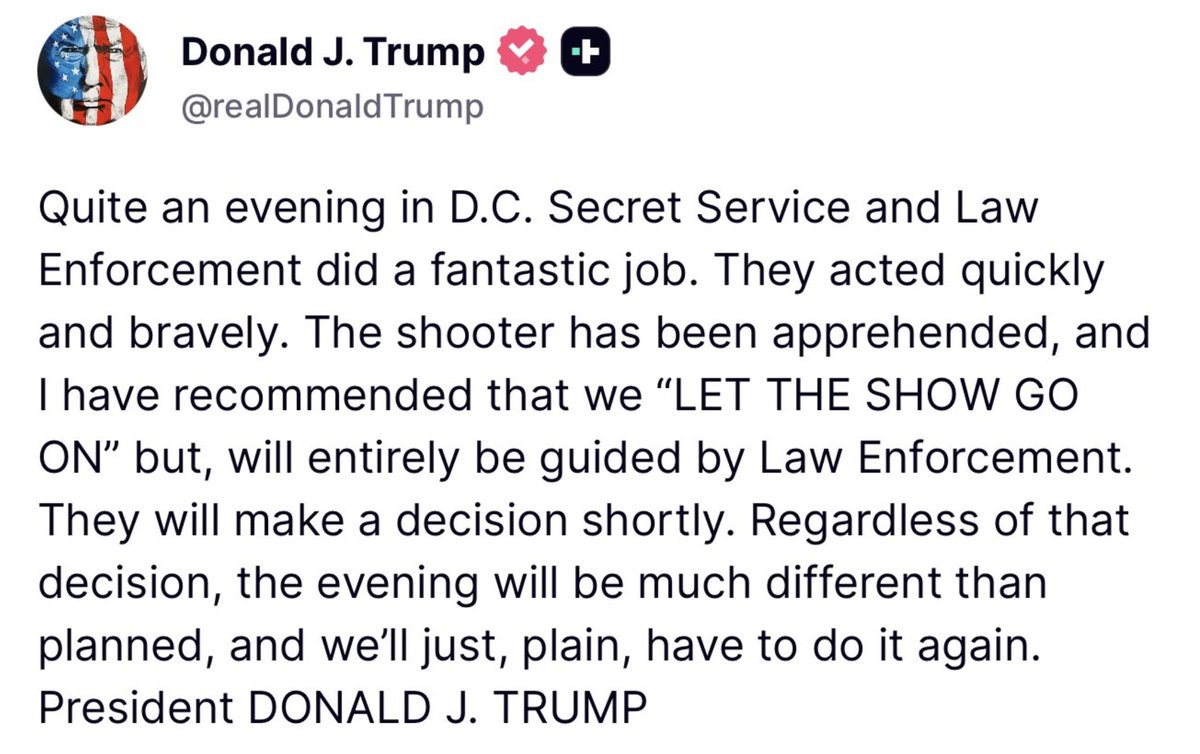
Update from President Donald J. Trump
The White House tweet media
English
2.4K
9K
48.6K
1.9M
TejasBill
TejasBill@bill_tejas·
@ChadHastyRadio Not a surprise. Spirit agreed to merge with JetBlue. Otto Penn DOJ blocked the deal. Federal judge agreed. Spirit said if it did not merge, it would go bankrupt.
English
0
0
0
51
JohnCn
JohnCn@JConcilus·
The New Glenn booster “Never Tell Me the Odds” should be renamed “Don’t Tell Me This Thing Has Been to Space”! Blue Origin birds burn liquid oxygen & liquid methane (Methalox). Falcon 9 boosters use liquid oxygen (LOX) & RP-1 kerosene (Kerolox), which leaves black soot. 🤩🚀⛴️
English
3
7
37
3.6K
Joe Pags Pagliarulo
Joe Pags Pagliarulo@JoeTalkShow·
Data Brokers MUST remove you when told to do so. Take your privacy back. Stop the SPAM calls, texts and emails. #branded
English
2
14
82
3K
TejasBill
TejasBill@bill_tejas·
@ThoNg676733 This played often on MTV. I had the biggest crush on her.
English
0
0
8
694
🎼🌺Music Love♥️
🎼🌺Music Love♥️@ThoNg676733·
During the Cold War, Nena's guitarist Carlo Karges wrote "99 Luftballons" after seeing balloons at a Rolling Stones concert in West Berlin drift over the Berlin Wall, imagining them mistaken as a military threat, sparking disaster.
English
34
283
2.1K
162.7K
TejasBill
TejasBill@bill_tejas·
@Ducnghia16 Some years later, a friend gave me a book on Archie Bunkerisms. The book mentioned that Those Were the Days was the opening theme song of the show. I eagerly tuned in the watch All in the Family. It was a different song.
English
0
0
0
44
TejasBill
TejasBill@bill_tejas·
@Ducnghia16 November 1968. We moved. Drove there by car. This song was big and played often on the radio. I wanted to hear the song again, but we did not have a radio in the house yet. Later, I tried to listen for it, but it was no longer popular.
English
1
0
12
2.7K
🌸🎵 Beautiful Melody 🎶💖
I was around 3 when I first heard this song and felt the pain in it, telling my mom I miss the good old days! I was 3! Early melancholic nostalgic. ❤️
English
115
347
2.3K
108.6K
Tedex
Tedex@chinmarinero·
@XFreeze But New Glenn is supposed to be a big deal...
English
2
1
2
124
X Freeze
X Freeze@XFreeze·
The US Space Force just confirmed what everyone already knew SpaceX is the only reliable ride to orbit This realization cost the military something they can't buy back: time ULA's (a joint venture between Boeing and Lockheed Martin) Vulcan rocket has been grounded twice in 18 months for the exact same problem: solid rocket booster nozzles literally burning through mid-flight Here is what's happening now: → 4 GPS satellite launches already swapped from Vulcan to Falcon 9 → The latest swapped GPS satellite is literally launching on a Falcon 9 TOMORROW → Space Force 3-star general: Vulcan failures "absolutely" shape future contracts ULA has a backlog of 70 launches and has only flown 4 times since January 2024 SpaceX flies more rockets in a single week than ULA flies in a year For political reasons, the government threw billions at ULA to keep them alive even when they know they can't do it, wasting time and taxpayer money on an unproven rocket instead of fully backing the clear winner SpaceX They handed the lion's share of the money and missions to ULA's unproven "paper rocket" just to prop up the old guard They bet on expendable rockets from the old guard, and it backfired. You simply can't afford that mistake in a reusable world
X Freeze tweet media
English
110
465
2.6K
81K
Arctic Climate
Arctic Climate@ArcticClimate·
@XFreeze It is a bad idea to give everything to Musk. I hope Bezos succeeds, and then ULA will be eliminated.
English
6
1
5
776
TejasBill
TejasBill@bill_tejas·
@atensnut Not true. Our parents applied for our SSNs later in our lives after we had moved from the state of our births.
English
0
0
1
7
TejasBill
TejasBill@bill_tejas·
@WALLACHLEGAL Kalshi placed ads last weekend for the Masters and this weekend for the NBA playoffs. If you replace trade with bet and trading with betting, the ad has the same meaning.
English
0
0
0
87
Daniel Wallach
Daniel Wallach@WALLACHLEGAL·
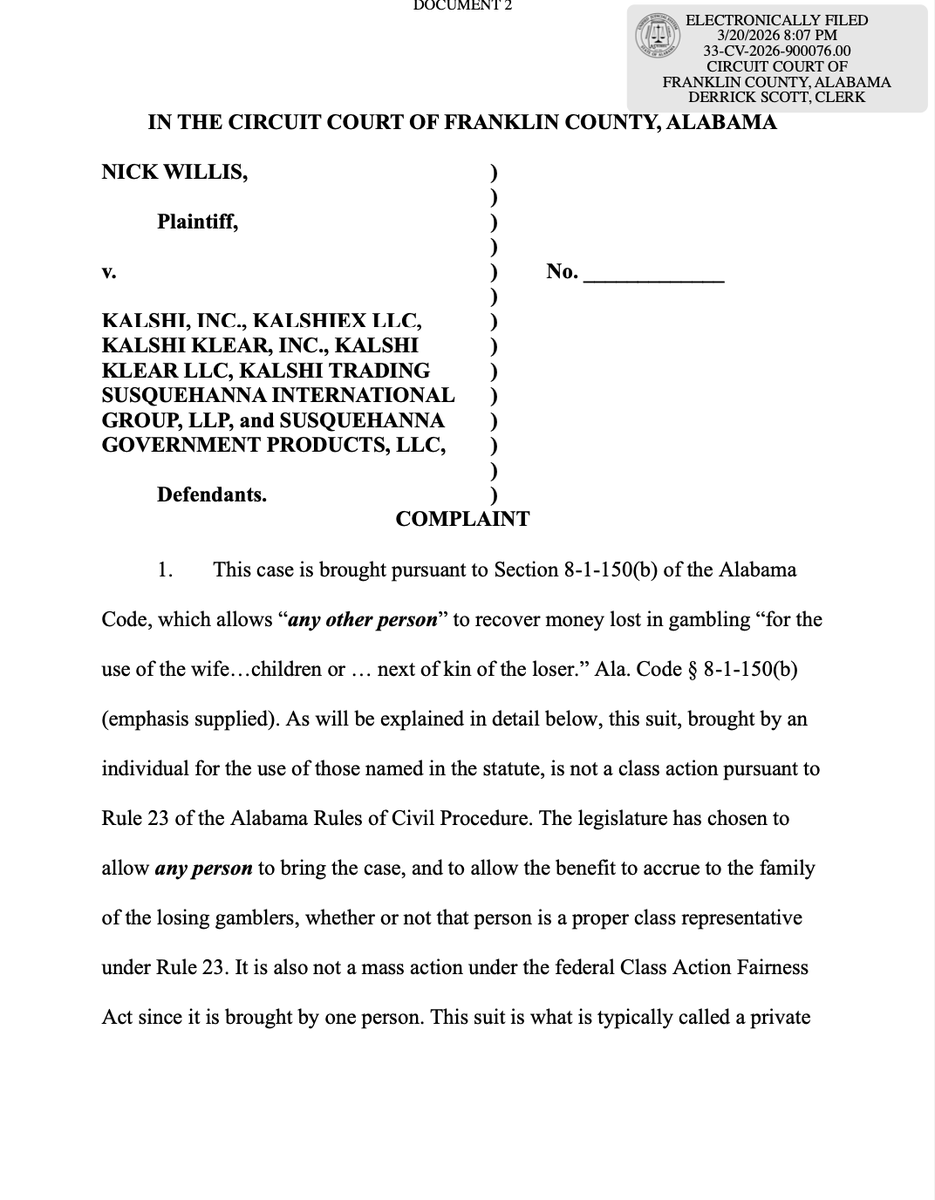
NEW: Kalshi has been hit with a second class action lawsuit in Alabama for operating an illegal sports betting website. (AL has among the strictest anti-gambling laws in the US; 40+ sweepstakes casino lawsuits). The plaintiffs' class action bar is now training its sights on PMs.
Daniel Wallach tweet media
English
2
6
20
4.2K
TejasBill
TejasBill@bill_tejas·
@Adriksh Can the compiler safely assume that strcmp will not modify either a or b so that it can use the same copy for both? It does not know that I did not write my own strcmp which does something totally different.
English
2
0
1
1.6K
Adriksh
Adriksh@Adriksh·
what gets printed?
Adriksh tweet media
English
56
7
169
54.3K