
Giuseppe Rota

6.8K posts

Giuseppe Rota banner
Giuseppe Rota

Giuseppe Rota

@bittastic

I've been known to push electrons around.

algeciras, spain Katılım Mayıs 2010
542 Takip Edilen302 Takipçiler
Giuseppe Rota retweetledi

Peter Dedene
Peter Dedene@dedene·
"We care deeply about your privacy" is a bold claim when: 1. ZDR is locked strictly behind Enterprise plans. 2. I had "share data" disabled since the beginning, but 8 of my private repos were still uploaded anyway. Another researcher observed the exact same behavior, Codex confirmed this as well from inspecting the grok binary: the toggle is practically a placebo for exfiltration: gist.github.com/cereblab/dc9a4… "The opt-out governs training, not whether your code is uploaded/stored... Opting out does not stop your repository from leaving the machine."
SpaceXAI@SpaceXAI

We care deeply about your privacy and respect customer choice. For teams using zero data retention, no trace and code data is ever retained. All API key use of Grok Build also respects ZDR. If ZDR is disabled, the /privacy command is available in the CLI to disable data retention, which also deletes previously synced data. Run the /privacy command to view or change your settings at any time.

English
32
74
848
37.7K
Giuseppe Rota retweetledi
Braeden
Braeden@BraedendotTECH·
Last month I upgraded to Claude Max 20x. $200 a month. I told my girlfriend it was “infrastructure.” She asked what I was building. I said “leverage.” She stopped asking. I’ve shipped 14 projects this year. None of them have users. But all of them have landing pages. The landing pages have waitlists. The waitlists have 40 signups. 38 are bots. 1 is my mom. 1 is me, testing the form. I call that “early traction.” My codebase is 40,000 lines. I wrote maybe 200. I don’t read the rest. Reading is a bottleneck. The tests pass. Claude wrote the tests. Claude also wrote the code the tests test. I’ve decided not to think about that. Last week prod went down at 3am. I pasted the stack trace and went back to sleep. It was fixed when I woke up. I don’t know what was wrong. I don’t know what fixed it. I posted “shipped a hotfix before coffee ☕” It got 400 likes. I hit my usage limit on a Tuesday. I screenshotted it. “When you’re shipping too fast for the rate limits 😤” That tweet outperformed the product. The product does not exist. I’m building in public. The building is the public part. The public is the product. I pivoted three times last month. B2B SaaS to AI agent to “AI-native workflow layer.” Same code. I just changed the README. Claude wrote the README. I applied to YC. Claude wrote the application. I got rejected. I pasted the rejection into Claude and asked what it meant. It said it was a learning opportunity. I said thanks. I say thanks a lot now. I don’t know if that’s healthy. My technical cofounder is Claude. We haven’t discussed equity. I assume it’s fine. My MRR is zero. But my ARR is a narrative. Investors don’t buy revenue. They buy velocity. Velocity means commits. Commits means green squares. Green squares means momentum. Momentum means I’m early, not wrong. Someone asked what my moat is. I said “we move fast.” He asked fast toward what. I said “iteration.” He nodded. He’s an angel investor. He also doesn’t know. The subscription renews Friday. I’m keeping it. $200 is cheap for an identity. I don’t know what I’m building. But I know what it’s for. It’s for the feeling. The feeling of the terminal filling with code I didn’t write.
English
107
76
743
60.5K
Giuseppe Rota retweetledi
Eric S. Raymond
Eric S. Raymond@esrtweet·
This is a certain kind of talk around LLMs that I find increasingly puzzling. That is all of the people bitching that LLMs constantly generate crap code and hallucinate solutions, and are worthless for programming. This has almost never happened to me, and never during the last two model generations I have used (chat GPT 5.4 and 5.5). Occasionally a model used to get a little deranged when I pushed its context limit, but under codex that doesn't happen anymore; instead I got a red-highlighted warning when the limit has been exceeded and I need to clear my session. I've applied AI to feature changes, refactoring, and debugging over 63 different projects written in C, Go, Rust, Python, and shell. I've written documentation with it. I've decompiled a DOS binary into readable source code. It's now routine that whenever I have to touch one of my projects I start by running the regression tests, then fire up codex and asking it to audit the code for bugs and suggest improvements. My experience is that LLMs are excellent and tremendously empowering tools. Their worst limitation is a kind of architectural tunnel vision - they're extremely good at generating code to specification but sometimes blind to higher-level patterns. Which is okay, it's my meatbrain job to be good at that. The most valuable thing I find about LLMs is exactly that they *don't* screw up details and edge cases. I'm a very, very good coder by human standards (I'd better be, with 50 years of experience!) but the LLMs are better than me. Because if a code change needs to touch (say) five places in the code, they reliably find all five rather than doing the human thing of fixing four and then having to debug for hours before you figure out that there's a fifth one you missed. Are the downshouters living in a different universe than me? Are they using old, weak models? Or do they have some kind of skill issue that I can't see because I have mental habits and communication skills that are a good fit for the handles on these tools? I don't know. And I think this is an important thing to figure out, because I'm seeing lots of stories in the news that suggest billions of dollars are being wasted on misdirected token spend. It all seems very simple to me. Be clear in your thinking, tell the model what you want with precision, and good things happen. What...what am I missing here?
English
337
147
1.8K
134.2K
Giuseppe Rota retweetledi
vittorio
vittorio@IterIntellectus·
you must see LLMs as intelligence amplifiers and their amplification depends on your actual intelligence so, if your IQ is 135+, with AI you can perform at the current AI maximum and it feels like real magic if you’re 120-135, you get a good 50% buff If you’re 105-120, you get a 25% 90-105, nothing changes below 90 it makes you more stupid
Ryan Brewer@ryanbrewer

It’s shocking to me that LLMs didn’t create an educational renaissance. Shouldn’t I be able to learn a language in a month? What did we get wrong?

English
272
449
6.1K
370.1K
Giuseppe Rota retweetledi
Royally Sage
Royally Sage@sage1411·
My brother posts this every year in the family chat on the 4th. Still hilarious.
English
854
15.2K
104.4K
6.4M
Giuseppe Rota retweetledi
Arnaud Bertrand
Arnaud Bertrand@RnaudBertrand·
After reflection, this new narrative by Palantir is probably much more consequential than people may assume. Palantir is basically being the canary in the coal mine announcing the death of two major assumptions propping up the US economy right now: 1) that AI labs will be able to extract significant economic rent - as opposed to AI models being mere commodities 2) that other countries can accept structural dependency on US technology and services without pushing back on sovereignty concerns Why are Palantir specifically starting to be vocal about this? First off, major middle-powers, even US “allies”, are one by one showing them the door. In June, France announced that the DGSI - its domestic intelligence agency, which had relied on Palantir since the 2015 Paris attacks - would replace it with French firm ChapsVision, with Prime Minister Lecornu explaining (theguardian.com/world/2026/jun…) that France “cannot accept new strategic dependencies in the digital sphere” and shouldn't depend on the goodwill of companies “capable of turning off the tap.” Germany moved even earlier: its domestic intelligence service, the BfV, also selected ChapsVision over Palantir (politico.eu/article/german…), and the German military has said it will no longer use Palantir at all. Then, just this week, Spain instructed state-controlled companies - including strategic firms like Telefónica, Indra and Navantia - to avoid signing any new contracts with Palantir (aa.com.tr/en/europe/spai…). Even in the UK, Washington's most loyal vassal, the NHS's £330 million data contract with Palantir is under review following parliamentary pressure (reuters.com/business/healt…), and London Mayor Sadiq Khan blocked a proposed £50 million Palantir contract with the Metropolitan Police. Palantir making a lot of noise around them caring about sovereignty makes a lot of sense: it's damage control since they keep being told they're a sovereignty risk. I doubt it will work - because it's true: they are a sovereignty risk - but the fact that they feel the need to be vocal around this tells you where the wind is blowing: they're not shaping the narrative, they're reacting to one they're losing. What they're saying against closed-source AI (basically a broadside attack on OpenAI and Anthropic), is again highly self-serving. Palantir's sudden love of open-weight AI models conveniently coincides with them launching 2 days before a partnership with Nvidia to sell exactly that: open models models (NVIDIA's Nemotron) in sovereign environments. So it's essentially a product launch. It doesn't make what they're saying wrong: it is factual that the value proposition of closed-source AI labs looks increasingly unsustainable. I mean: you're paying 10X the price of Chinese open-source AI models for something that's not really better (or just marginally) and on top of that you have zero control over your data, or the models themselves. When Palantir says that "the architecture that maximally preserves sovereignty is one that enables institutions to own their tribal knowledge, and to compound it as alpha," they're right. I'd add that this also means you shouldn't trust Palantir either with that "tribal knowledge"... they obviously left this part out 😉 When you take a step back, these two things have major implications on many other US companies. SpaceX - which just went public at the largest IPO valuation in history - is one clear example as I describe in my latest article on the new space race with China (arnaudbertrand.substack.com/p/musk-built-a…). If countries like France concluded with Palantir that they couldn't depend on a company “capable of turning off the tap” when it’s merely analyzing their data, what should they conclude about a company that aims to literally control their entire connectivity - at one man's whim, from space? What percentage of SpaceX's crazy market cap is based on the assumption that foreign governments will not do to Starlink what they're currently doing to Palantir? And SpaceX - or Palantir - aren't alone: a significant proportion of the top US tech giants, who rose in a world where no one questioned American technological hegemony, now face an environment that's much less conducive to the kind of lock-in their business models - and valuations - depend on. When you pair this with the fact that it increasingly looks like the US made a wrong bet with closed-source AI - an extremely expensive wrong bet - the picture that emerges is of a country that bet its economic future on two things - proprietary AI and captive allies - and is losing both at the same time. And to compound the problem, it doesn't help that the official narrative of the US government - via the voice of Jacob Helberg, the Under-Secretary of State (x.com/UnderSecE/stat…) - is to be vocally opposed to "AI Sovereignty": essentially telling everyone "you know what, your worst fears are real, our tech companies are really out to undermine your sovereignty." Read Helberg's post (the one I linked) and put yourself in the shoes of - say - a European or Asian leader and ask yourself how you'd react to being told that building your own AI capabilities is "marching in perfect formation into the past," that your pursuit of sovereignty is really just "synchronized mediocrity," and that your only path to the future runs through American technology. If it was me in a position of power, I'd read this as a massive wakeup call: when another country's official position is that your sovereignty is a problem, history says you're about to need it. So yes, it looks like - unexpectedly - Palantir, of all companies, is being quite the canary in the big tech mine. Yes they obviously do this for self-serving and cynical purpose, and yes they're of course also very much part of the problem and not the solution. But it doesn't make them wrong: sometimes it takes a vulture to tell you something is dying.
Palantir@PalantirTech

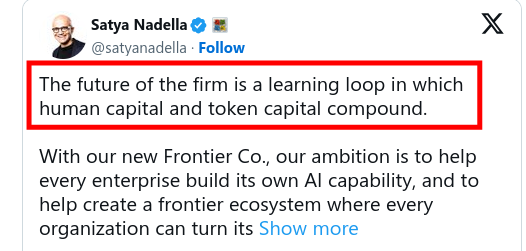
Our thoughts on the importance of AI sovereignty. 1. Your AI sovereignty dictates your institution’s future. Sovereignty is the precondition for choice. Relinquishing sovereignty transfers the future choices of your institution to others, who are likely to exploit it for their gain and your loss. 2. Data retention is your treasure. Transfer it at your own peril. Your ability to win is dictated by your ability to recognize and use your unique edges, and you keep winning by compounding the underlying data to generate new insights. Transferring that data hands over access to your pre-existing winning plays and yields the means of production for new ones. 3. Tokenmaxxing hijacks your value orientation and decreases your institutional fortitude and intelligence. The pursuit of high token usage incentivizes disposable scripts over robust software — with the addictive feeling of false progress. There is a reason why those selling tokens refuse to charge based on value. 4. Controlling your weights is controlling your fate. Weights are the distilled form of hard-won, accumulated institutional knowledge. If you let others control your weights, you are allowing them to migrate the alpha of your business to theirs. 5. There is no contradiction between sovereignty and alpha. The architecture that maximally preserves sovereignty is one that enables institutions to own their tribal knowledge, and to compound it as alpha. 6. Politicizing the technical issues involving sovereignty is what your adversary wants. Techno-politicization is the wellspring of false sovereignty. Techno-politicization drives decisions that seem to reduce dependency, but ultimately limit agency — especially on the battlefield in the West. 7. Real expertise is existential. Allowing politics or favoritism to determine your technical decisions rewards whoever is best at politics, not whoever is right. Listen to those closest to the problems, not those speaking most compellingly about them. 8. Learn from institutions that are winning or that have consistently delivered. Institutions facing existential threats do not have the luxury of making technical decisions based on political preferences. 9. Only listen to institutions, countries, and people who have a proven record of being right. A track record of correctness is the best and only signal for future correctness. Judging something as right or wrong based on who you like is exceedingly misguided.

English
325
1.6K
6.5K
2.1M
Waylon Payne
Waylon Payne@AusWay69·
@valigo He always talks like this, says many words while saying nothing of meaning.
English
1
0
5
515
Valentin Ignatev
Valentin Ignatev@valigo·
I'm so tired man, what the fuck does this even mean???
Valentin Ignatev tweet media
English
426
137
2.7K
266.2K
Giuseppe Rota retweetledi
sophie
sophie@netcapgirl·
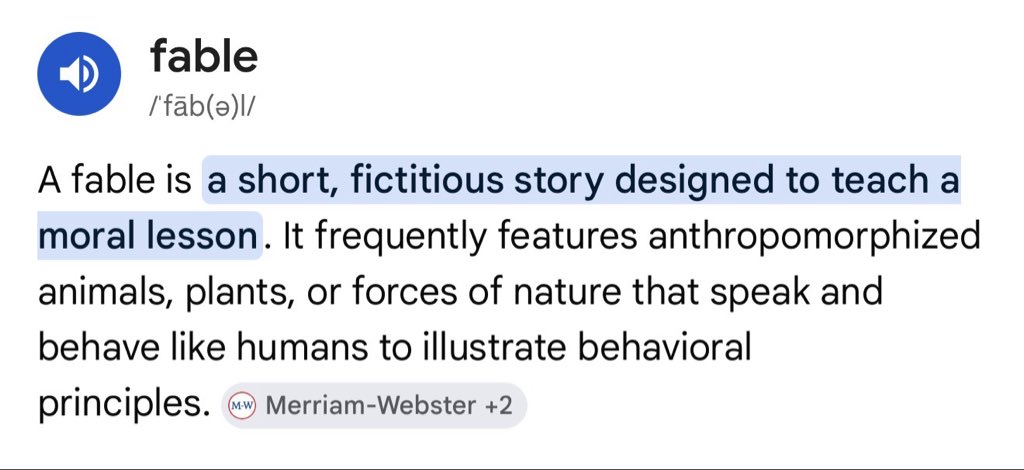
fable 5 when you ask it for the bedtime story your grandma used to tell you about enriching uranium
sophie tweet media
English
168
1.5K
28.5K
900.3K
Giuseppe Rota retweetledi
Zed A. Shaw, Writer
Zed A. Shaw, Writer@lzsthw·
Do you use Jira?
English
96
171
2.2K
149.5K
Giuseppe Rota retweetledi
Ethan Mollick
Ethan Mollick@emollick·
A thing I am noticing is the number of folks who believe AI is “real” is larger, but now there is a growing division between people who know that we are on an exponential & those whose mental model is that we are at a sort of steady state. The difference leads to misunderstanding
English
50
49
777
66.9K
Giuseppe Rota retweetledi
The Knowledge Archivist
The Knowledge Archivist@KnowledgeArchiv·
"A good man without strength is only hoping evil has mercy." — Sun Tzu, The Art of War
The Knowledge Archivist tweet media
English
97
4K
17.3K
304.2K
Giuseppe Rota retweetledi
Not Jerome Powell
Not Jerome Powell@alifarhat79·
Europeans refusing to touch the AC so their carbon footprint stays low
Not Jerome Powell tweet media
English
134
406
5.9K
126.6K
Giuseppe Rota retweetledi
saraaaaaaa 💽
saraaaaaaa 💽@saraaa7447·
Webdevs: PLEASE STOP setting your website language based on the user's location.
English
254
430
16.3K
721K
Giuseppe Rota retweetledi
jack
jack@jackbutcher·
jack tweet media
ZXX
356
2.4K
22.4K
1.6M
Giuseppe Rota retweetledi
Joscha Bach
Joscha Bach@Plinz·
Btw, Anthropic is not the first company that keeps the good models to themselves. Google’s internal coding models are trained on their own codebase, and are not available publicly
English
92
45
2.4K
178K
Giuseppe Rota retweetledi
Marcos Agustín
Marcos Agustín@marcosagusstinn·
Italy is the clearest example of how a rich country can slowly destroy itself through decades of bad management. Since the late 1990s, Italy has had almost zero productivity growth. Real wages have stagnated. And public debt is now around 137% of GDP, projected to move toward 139% overtaking Greece as the highest in the eurozone. It is the result of 25 years of 1. Low innovation and very low adoption of new technologies 2. Family and insider succession in many companies, weakening meritocracy 3. Underdeveloped VC industry, startup ecosystem and R&D base 4. Political capture by lobbies and organised crime 5. Extreme administrative, judicial and business bureaucracy 6. Political fragmentation 7. Demographic collapse No country can remain rich forever if productivity does not grow, debt keeps rising and politics only manages decline instead of reversing it.
Marcos Agustín tweet media
English
109
347
1.2K
80.6K
Giuseppe Rota retweetledi
Claude
Claude@claudeai·
We’ve agreed to a partnership with @SpaceX that will substantially increase our compute capacity. This, along with our other recent compute deals, means that we’ve been able to increase our usage limits for Claude Code and the Claude API.
English
4.7K
11.8K
130K
24M
Giuseppe Rota retweetledi
Emmett Shear
Emmett Shear@eshear·
It’s an honor just to be nominated
English
217
243
9.8K
622.4K
Giuseppe Rota retweetledi
kache
kache@yacineMTB·
you can outsource your thinking but you cannot outsource your understanding
English
288
4.2K
18.6K
2.9M